Latest Comments

Guest - Max Mustermann The True Cost of Driving a Car.
06. November 2026
Great breakdown — the non-fuel costs are exactly the bit most people forget when they compare cars. ...
Guest - Harma Phew. Now it gets involved!
21. Oktober 2026
Have fun at these events.
Guest - Aislinn Dyestuff Citizen Science.
09. Oktober 2026
This is a great project. I look forward to the results. Thanks for letting us know.
Guest - Aislinn Time for...
09. Oktober 2026
Looks delicious!
Guest - Katrin Sprang Discussion
18. September 2026
Hi Rachel, I have looked for more photos of you, but that was not very successful. I found a link on...
FEB.
06
0

Chicken! (Or, well... probably not.)

Archaeology usually is the discovery of quite, um, durable stuff. There's a good reason why ceramics are the key find category, and also key dating things - ceramic objects were a staple of daily use as vessels, containers, and tableware plus a few other things; thus they were subject to change over time, with changing tastes and preferences of the buyers. There's quality differences in clay, and in production quality. Rim forms change over time,  quickly enough to be useful for dating (though in some cases still keeping things vague). Best of all for the archaeologist, ceramic is rather breakable and the shards cannot be recycled as easily as broken metal can be, or destroyed as used-up wooden items can.

Eggs, now, eggs are a totally different thing - and not something you usually find. Not even eggshells, as they are basically a thin mineral shell, which tends to dissolve in the soil - doubly so in acidic soil, which most environments have.

However, as unlikely as it is, an excavation in Berryfields in the UK has hit the Roman era jackpot and unearthed, literally, four chicken eggs from Roman time - one of them intact. You can read more about this in the Current Archaeology article here (including a picture of the egg).

I confess that the first thought I had when I saw the title of the article, even before I clicked the link, was "Yay Jurassic Parc!" as in chickens are basically small dinosaurs, and it would be beyond cool to get the DNA from that egg and clone a real, honest-to-goodness Roman era chicken. Be.Yond.Cool.

Unfortunately, though not unexpectedly, the article mentions nothing about DNA analysis or chicken cloning. Still. I'm hoping. It's basically the closest we can get to a time-machine transporting a past chicken into our day, right?
0
FEB.
05
0

Digital Manuscripts.

Digitalised medieval manuscripts are a wonderful thing - though, I have learned, they can also be a wonderful time sink. However, when you are looking for image sources for medieval stuff, those illuminated texts can be a treasure trove. Calendar illuminations are one thing I have found especially helpful in quite a lot of cases, as they show working people doing agricultural jobs - dressed in simple, suitable clothing for the most parts.

One very nice digitised manuscript is the Bamberger Psalter, dating to 1220-1230. It has a lot of text (of course!) but includes both a calendar and some splendid full-page illuminations, one of them showing a knight in shining (well, more or less) armour (fol 63r, looks like David vs. Goliath to me).

You can have a look at the Psalter on the webpage of the Bamberger Staatsbibliothek. Have fun!

 
0
FEB.
04
0

Spring is coming nearer.

 
I actually managed to forget posting this yesterday - so you're getting it today instead, and I'm sorry for the unexpected blog silence.

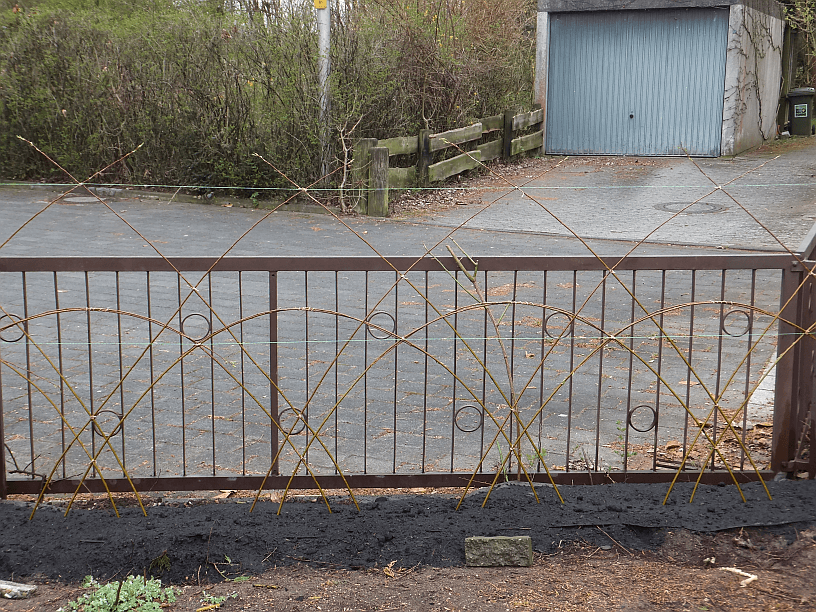
Spring is coming slowly nearer here, and I'm working on getting the willow fence into shape (as in pruned completely) before it's actually growing time again. There was some progress, as you can see here:


I'm not as far along as I would like to be, but there is some progress, and the weather is forecast to be pruning-friendly during the next few days as well.

The fence was put in in Spring 2012, so it's going to be 8 years now. It has changed a lot from the very orderly, very slender beginnings:


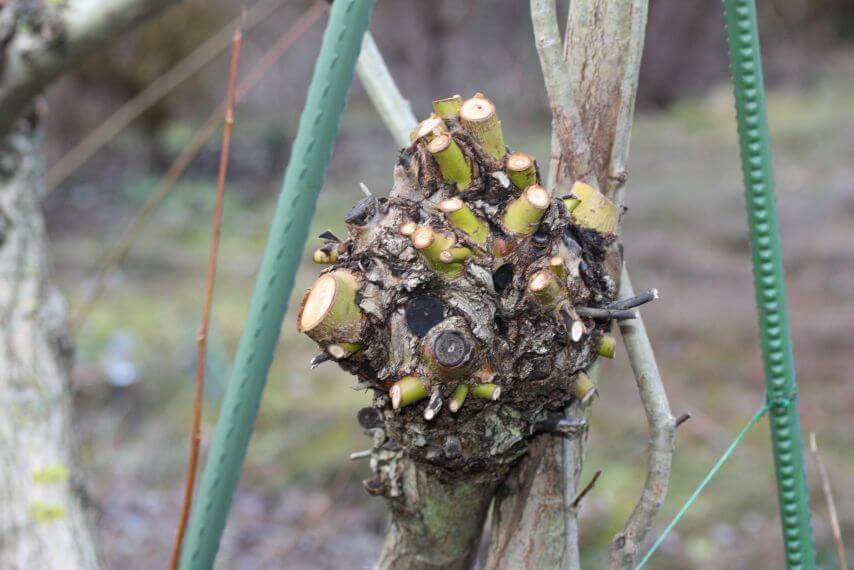
I find especially fascinating how the "heads" develop where the rods are pruned off every year:


They have their own kind of weird beauty, I think.

0
JAN.
31
2

Shenanigans! And sad truths.

I'm off for the weekend - it's time for the Historical Sewing Meet-Up in Rothenfels, where I'll be having fun and coffee and the happy occasion of giving a few workshops... about brocading in tablet-weaving, fingerloop braiding, and tailoring.

There's also the presentation about medieval fabrics that will be having its first outing this weekend, and I confess I'm very, very curious about how it will be received. I've tried to pack in both the specific information requested by some of the Meet-Up participants and to provide some background to properly understand medieval fabrics. I've also found myself in the awkward position to include all the Bad News (TM) regarding the sources available, and the differences between historical and modern fabrics... so I'm fully expecting to see some sad faces following the presentation.

However, I do believe that it's better to know the facts and know where the compromises start (and how big they are) than to bumble on in happy oblivion. After all, many of us who wear medieval clothing at events are also passing on knowledge to the public - and, whether we talk to the event visitors or not, we're helping form their view of the Middle Ages.

Which means that every bit of knowledge counts double - and every little step towards a better representation of the current state of research regarding history does as well, even if that means facing sad truths, or letting go of much-beloved things from one's (re)presentation and kit.
0
JAN.
30
2

No end to the linen yarn.

I've finally managed to get the remaining two kinds of linen yarn into the shop system - a white one and a thicker beige one, both from organic Belgian linen. They've been wound and ready to go in for a while now, but I had not gotten around to writing the description and making the photos.

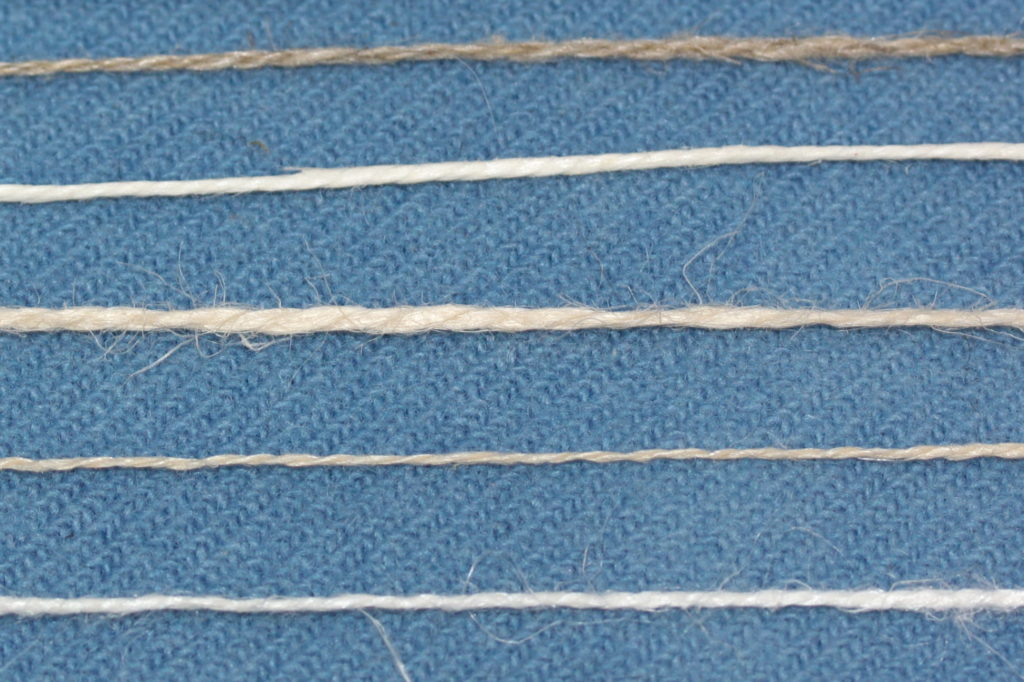
Which has both happened now - and I've taken the opportunity to do a comparison pic of all the thicker linen yarns in the shop, which looks like this:


From top to bottom, these are the thick linen yarn in unbleached and in white, the thick half-bleached organic yarn, the goldbeige yarn, and the white organic yarn. They are all Z-/ss yarns (which means they consist of two individual plies, both s-spun, plied together in Z direction), they are all strong, and especially the white organic yarn has a very nice, tight ply.

You can find them all in my shop in the yarn section, in case you now find yourself in need of some linen threads...
0
JAN.
29
0

Samite, woven.

On my task list for the upcoming weekend is a presentation about medieval fabrics... and on my personal task list for this thing is "explain samite". Because I believe that, if you are interested in the fabrics used in the Middle Ages, you need to have at least a very basic understanding of what complex weaves are, as they were used for high-status garments throughout the High and Late Middle Ages.

There are very few people these days who still make medieval-style complex weaves, and one of them is Sylvia Wiechmann, who runs a weaving workshop in Munich. She made a reconstruction of a type of samite called "Kölner Borten" a while ago, and has a video on Youtube showing how they are made, and explaining the process. In German - but maybe watching it is still interesting for you even if you don't understand the text:


0
JAN.
28
0

Netherlands Archaeology

While doing my prep for the weekend (so many fascinating things trying to side-track me! So many things I'd like to do more research about! So many questions remaining!), I stumbled across an open access online journal about Archaeology of the Low Countries. Sadly, this lovely little journal only had a few issues before coming to a stall, but the Journal for Archaeology in the Low Countries website might still be worth a visit for you - especially since vol. 2, published in 2010, includes an article by Chrystel Brandenburgh about early medieval textile remains.

 
0

By accepting you will be accessing a service provided by a third-party external to https://pallia.net/

Kontakt