Latest Comments

Guest - Max Mustermann The True Cost of Driving a Car.
06. November 2026
Great breakdown — the non-fuel costs are exactly the bit most people forget when they compare cars. ...
Guest - Harma Phew. Now it gets involved!
21. Oktober 2026
Have fun at these events.
Guest - Aislinn Dyestuff Citizen Science.
09. Oktober 2026
This is a great project. I look forward to the results. Thanks for letting us know.
Guest - Aislinn Time for...
09. Oktober 2026
Looks delicious!
Guest - Katrin Sprang Discussion
18. September 2026
Hi Rachel, I have looked for more photos of you, but that was not very successful. I found a link on...
OKT.
29
0

Things and Links.

While we're at the current in-topic of tablet weaving, here are some links:

Lise Ræder Knudsen has updated her publication list, so you can now read her work about tablet weaving from Verruchio in Italy and "Ancient Running Animals" from Fort Milan in the Taklamakan Desert, China.

Not tablet-weaving, but textiles from far abroad: Vikings purchased silk from Persia.

And being on the topic of Norway, here's a film about the Jellstad Ship...

enjoy!

 
0
OKT.
26
0

What goes into a Workshop.

Since I've been talking about needing guinea pigs, I thought I might give you a little bit of background on the development of my workshops in general.

I love giving workshops, or courses, or lessons, or whatever you want to call it. I really enjoy being able to pass on knowledge - theoretical and practical - and see how people start to become friends with a new technique. No matter whether it's braiding, knitting, weaving, or any other craft, every single person has his or her own, personal pattern of movements, and preferences on how to do things, or handle elements and tools. It's always fascinating for me to see this unique, personal finger dance develop, and it makes one part of why I like teaching so much.

Just like with many other things, though, a lesson does not spring from nothing to full perfection - it needs an astounding lot of work and preparation to develop a workshop or course.

This starts with making a basic concept. What do I want to teach? Are the students adults or children? What do they want and expect from the course? How likely is it that they have previous experience with the technique? How long can I make the course, and how deep into the technique can we go?

Usually, I try to put a lot of information into each workshop, to make sure that everyone goes out with a good, solid understanding of the basics and the tools to develop this further. This means structuring the workshop carefully so that I can set a relatively high pace, while still allowing enough time to try out things and get a bit of practice.

Once the basic concept stands, it's on to test runs and thinking about logistics. I usually do several test runs of the course, working the course programme and babbling to myself. I'm also checking how long each step takes me (and then, obviously, extra time gets factored in for having several people doing this the first time ever), and trying to find the best sequence of tasks. For some workshops, I've also done "live test runs" with a few willing people, testing out if things all work like they are supposed to do.

Logistics are another thing that needs consideration. How much space do I need per person? Table space and floor space can both be an issue depending on the venue. How many tools do I need? What are the materials necessary? How much extras need to be available in case of calamities? Will participants want to bring (maybe to test) their own tools as well?

Keeping in mind that there are several persons who need to do something at the same time, tool count can rack up quickly. One of the reasons why it took me so long to develop the tablet-weaving course range was that I had to bite the bullet and buy a freakishly large amount of clamps. To fit up to 8 people into the course, I need four clamps each for the warping method I use - and that means 32 clamps. These have to be bought (and it is worth it to get good quality ones, as they are gently but consistently abused), transported, and stored. Similar things are true for other crafts. I need to have enough netting needles for a course - these, at least, are lightweight and easy to store, though having them made is an investment as well. Sprang courses require having a frame available for each participant, plus some large demonstration frame to show the whole class the movements and what happens with the threads. These, too, need to be designed, made, paid for, and stored.

Once all this is done, I can sit down and write the final workshop script that will keep me on track while I'm teaching, and make sure I don't forget mentioning a crucial detail when it is necessary to do so (because these crucial details often get so ingrained if you have done the craft for a while that you are not aware of them anymore).

And then, finally, I can work on the course description and set the price. So if you've ever wondered what goes behind a workshop I give, and why I charge as much for it as I do - there you are.
0
OKT.
25
0

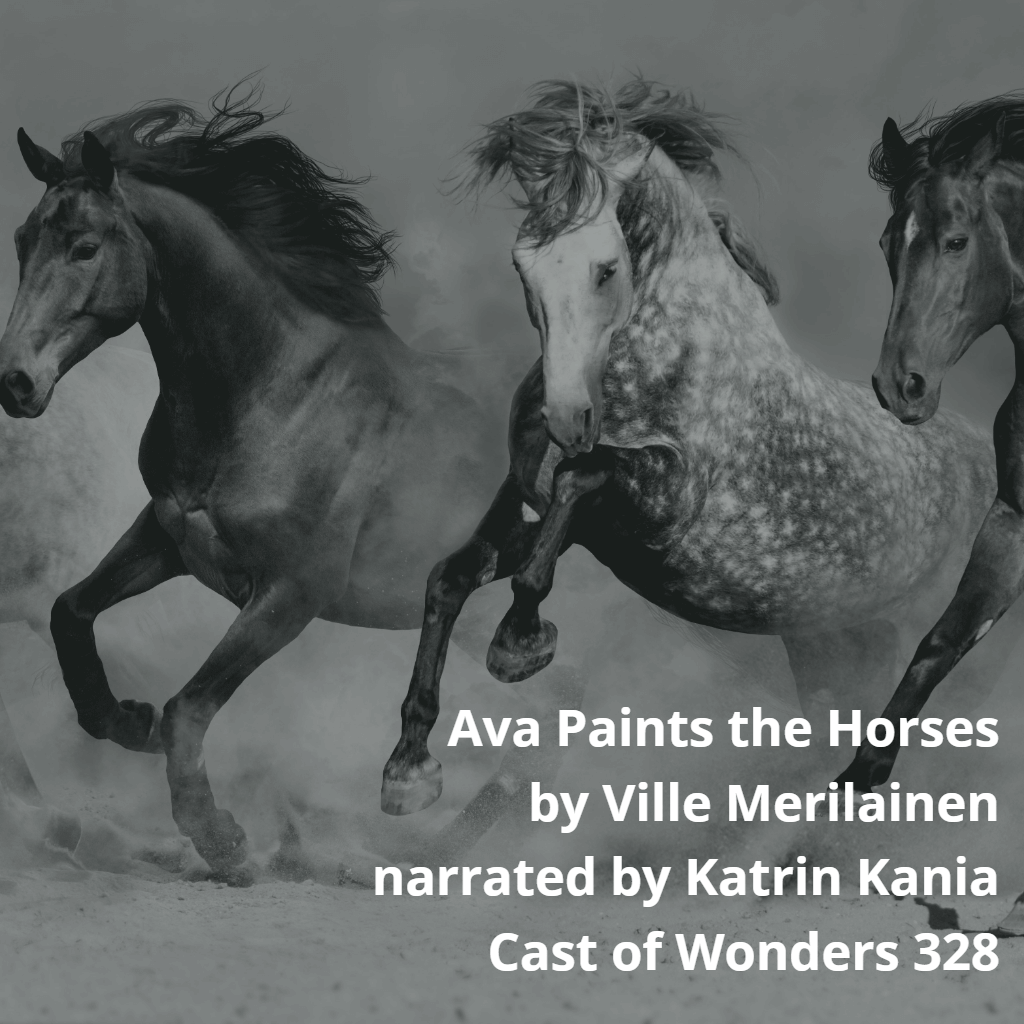
Ava Paints the Horses

If you've been following this blog for a while, you will know about my love for EscapePod, the weekly free science fiction podcast. I also like its sister podcasts PodCastle and Cast of Wonders.

In fact, I like them so much that a few years ago, I offered to narrate for them. Now... I'm no native English speaker, and my accent and voice are a bit, let's call it "unique", so I am not a voice that's called on often.

Which means I've only done it once before - so my delight was immense when, a while ago, I got the opportunity to do it again, with a wonderful and slightly weird story by Finnish writer Ville Merilainen.


The episode is live now, and you can listen to it via the CoW website - or with your favourite podcatcher.
0
OKT.
24
0

Conferences!

On May 20-23, the first conference on Wild and Domesticated Mammal Hair will take place in Budapest, Hungary. There's no programme online yet, but you can register for the conference via a form on the website, and you can also book workshops in addition to the basic programme.

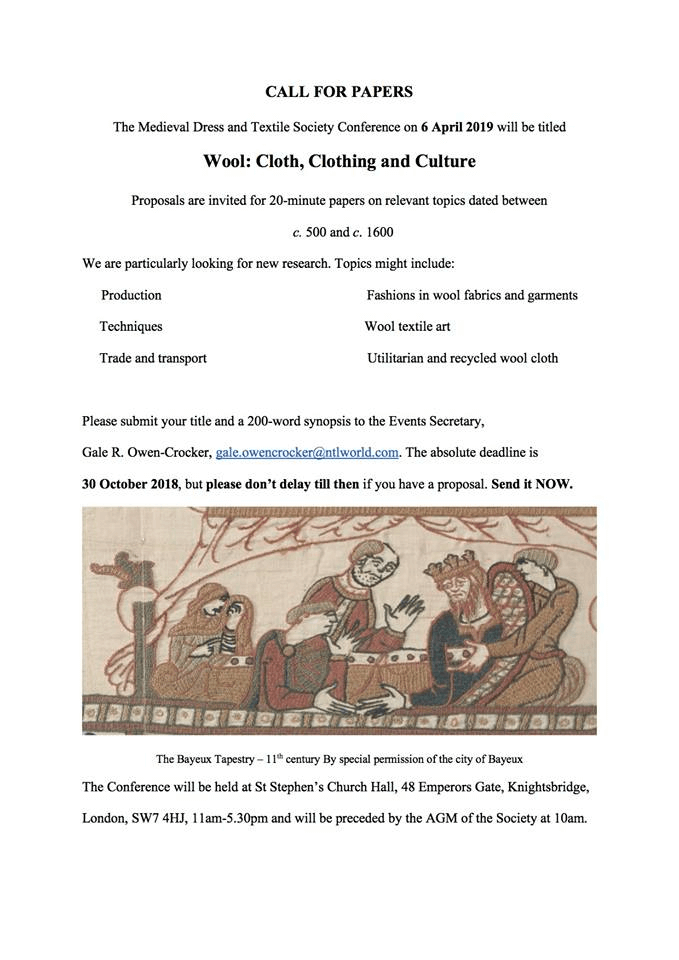
The MEDATS is also organising a conference, and their CfP is open for a few more days:


I'm tempted, but I think I won't manage to squeeze in a paper proposal between now and the deadline...

And just in case you are going to a conference and are asked to chair a session - here are some thoughts from the Researchwhisperer blog on how to do so successfully.
0
OKT.
23
13

Guinea Pigs needed.

I need some guinea pigs. Or, as the Germans call it, "Versuchskarnickel".

I have mentioned I was planning to make a video workshop on the pattern-free tablet weaving method, right?

Well, the "planning to" has progressed to "I have a script, and a camera, and I am getting started". Which is nice. However, since this is the first thing in that line of work, and since I want to make sure that what I am doing is going to work for those who will be watching the videos, I need some guinea pigs to give me feedback on the test runs of the lessons.

What does that mean? It means I will send you download links to the videos I have made, taking you through the course from start to finish, with probably some wait times inbetween as things get into the way or I get sidetracked or have technical issues. You will be getting test run videos that are probably badly cut (I will not invest oodles of hours into the test run) and contain the occasional verbal blunder. Some of them will not be made with the final materials.

Your task, if you are joining the merry band of furry victims, will be to watch the videos, follow the instructions, and tell me everything that was not good, not clear, not helpful, or otherwise shitty. (And yes, I fully expect to hear a lot of "this was shitty" - after all, it's first steps in many regards for me.) That starts with the instructions themselves, obviously, but goes on to camera work and camera angle, lighting, or maybe just the fact you find that my beheaded upper body is twitching too much while holding shears and bits of yarn into the camera. (I will also ask you to provide your full contact data, and sign an agreement form that you will not pass on or publicise the videos or parts of them in any way.) I'm not keen on hearing that I am doing a lot of things badly, but I much prefer hearing about them from a band of testers with minds steeled against weird takes than from the paying customers later on.

What do you need to join in? Basically, just the will to do it, and enough time for doing the tablet weaving according to the instructions. It will eat some hours, as it is a slow task, but if you are interested in this, you will probably find it fun and not tedious. You do not need to be an expert in tablet weaving - in fact, I'd be happy to have one or two absolute beginners in the group, and you will be able to follow along just as well, as we're doing the system from scratch.

You will also, apart from your general willingness, a way to watch the downloaded videos, and the time to do stuff and then give me feedback, need 30 tablets plus yarn to weave with... and two points to tie your warp to. There will be a video bit about tools and materials, so you'll be informed properly. (Or so I hope.)

I am aiming for about a dozen folks. So... if you are interested, let me know via mail, or contact form, or through the comments here - preferably with a short summary of your previous tablet weaving experience, so I can get a basic idea, and I'll get back to you with further info!
0
OKT.
22
2

Update on Current Things.

I'm currently busy preparing for the European Textile Forum - which mainly means writing lists, writing even more lists, and dragging things into heaps according to the lists to minimise the risk of my forgetting some crucial tool or material.

Also - last-minute ordering of things I've run out of, or that will be necessary. We will be doing another run of the Pompeii dyeing experiment (looking at the influence of metal kettles on the dyeing outcome), as we've found somebody willing to do an analysis of the mordanting and dyeing liquids to see how much metal ions are in them, so I've harvested birch leaves (currently residing in the freezer), and I will need to make sure we have enough yarn, fabric, and alum for the dyeing experiment.

And on top of all this, I should actually be sitting down, finalising my bits of presentation. Which includes having my tablet weaving test band set up so I can use it at the Forum. Fortunately, the warp is already done, so I only need to get some initial wefts in. I have a few additional plans for that test warp, though (and you will hear about this soon), and if I can in some way manage, I want to do the associated weaving before the Forum too.

Can someone hand me an extra day, maybe, please? Or two?
0
OKT.
19
0

Proofs!

To my and Heather's great delight, we are in the very, very last stage of getting Ancient Textiles, Modern Science 2 all done and set - the last proofs have arrived, and it's only a matter of giving the book a very last read, catching the very last typos, before it's all good to go to print.

Yay! Getting this book done was a string of pitfalls and delays, due to all kinds of things - crashing computers and illnesses only being two of them. So I'm really happy to get this to a close, and consequently proof-reading is what I am doing now!

If you want to have a look at what the book will contain, it's already listed on the Oxbow website, and you can even pre-order at a special price!

 
0

By accepting you will be accessing a service provided by a third-party external to https://pallia.net/

Kontakt