Latest Comments

Guest - Max Mustermann The True Cost of Driving a Car.
06. November 2026
Great breakdown — the non-fuel costs are exactly the bit most people forget when they compare cars. ...
Guest - Harma Phew. Now it gets involved!
21. Oktober 2026
Have fun at these events.
Guest - Aislinn Dyestuff Citizen Science.
09. Oktober 2026
This is a great project. I look forward to the results. Thanks for letting us know.
Guest - Aislinn Time for...
09. Oktober 2026
Looks delicious!
Guest - Katrin Sprang Discussion
18. September 2026
Hi Rachel, I have looked for more photos of you, but that was not very successful. I found a link on...
JUNI
16
0

Sad news from Scotland.

A sad thing from Scotland - the Scottish Crannog Centre, a reconstructed Iron Age roundhouse, has burned down on last Friday night. Here is a short article about this from the Guardian.

Fire is, and has always been, both a life-saver providing warmth and light, and a danger to people, animals and dwellings. Even with our modern fire-fighting technologies, fire can still do a lot of damage before being extinguished; Notre Dame springs to mind, of course.

At least in modern times, with so little actual open fire being used in daily life, the chances of flames getting out of hand are much reduced compared to a few centuries ago...
0
JUNI
15
5

Whew.

You can tell that I've had a full day if the blog post comes up after 8 in the evening... like today, which included doing some of the usual daily emailing and shop work, then attending the CTR anniversary conference, then going to donate blood, and then...

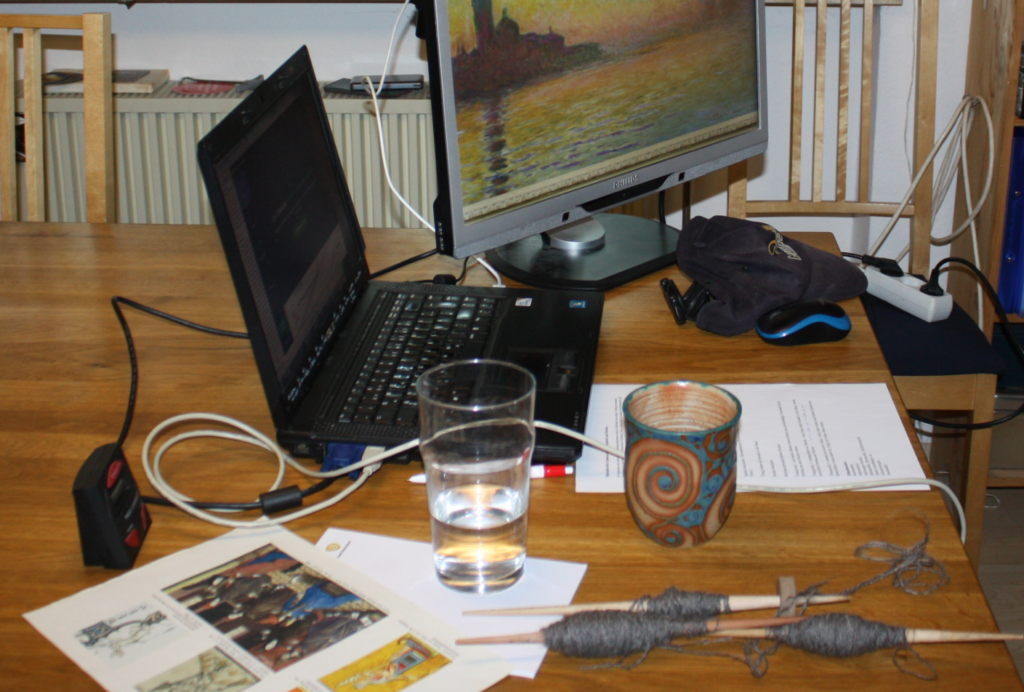
Setup for the online spinning workshop, with two screens and spindles on a table

...then my computer moved into the other room, and some spindles did too, and there were three screens in total and three cameras, and a mouse, and a hot drink, and some water.

And there were people joining me on Zoom, and soon they were all spinning medieval style with spindle and distaff. I'm still amazed on how well this online teaching works - not least, actually, due to the three cameras (and the third screen, which is essential for the use of one of the cameras).

So - here's a challenge for you.

I'm using three cameras in total, one of which I could do without. Two of the three cameras are on this photo, including the one that I'm most happy with, and that makes the course work so well. Can you spot it?
0
JUNI
14
0

Sleeping Bees.

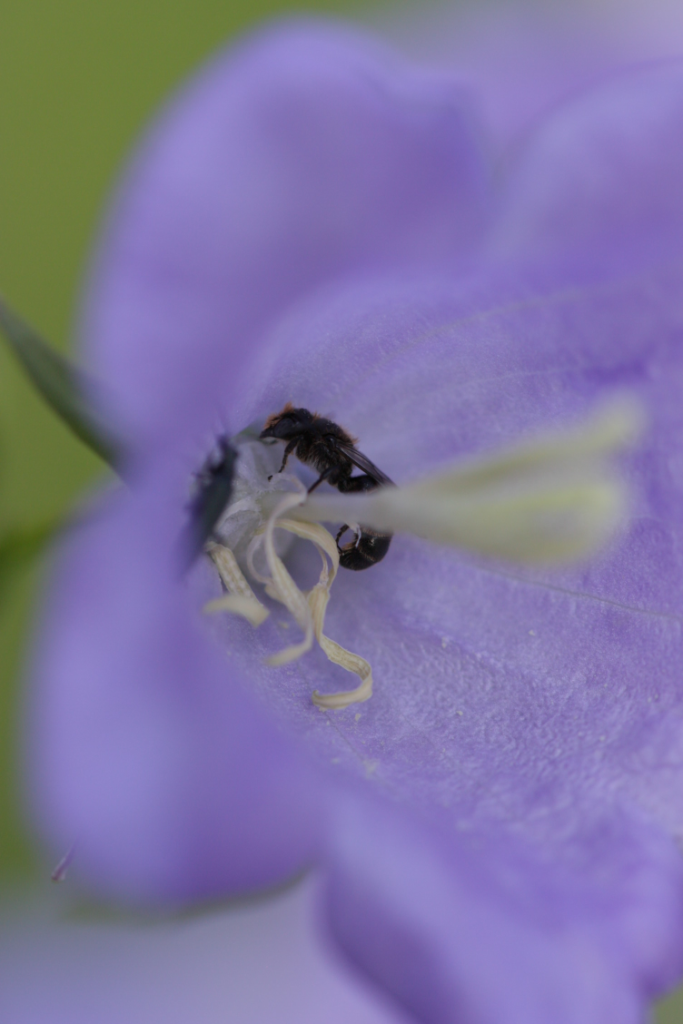
What do bees do at night? Well, they sleep. Sometimes, if you have a lot of (native) flowers in your garden, and there's consequently a lot of bees... you can find them sleeping there. Like this tiny bee, who curled up for a cosy night on the bottom of a bellflower:


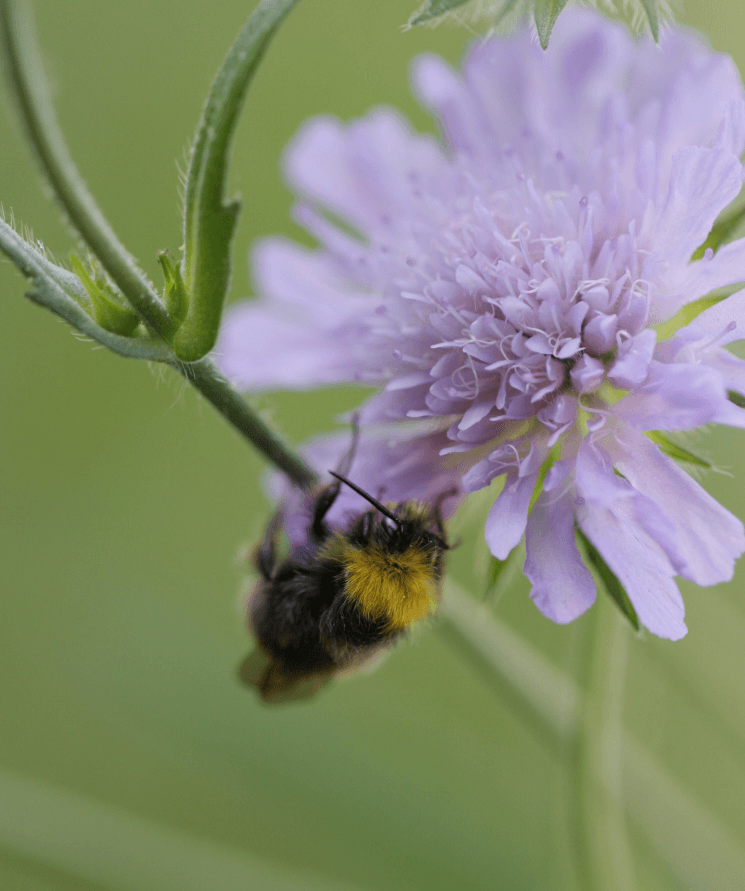
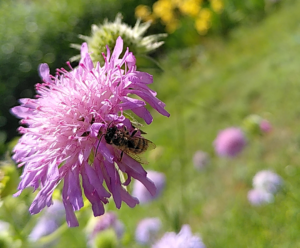
Or this bumblebee, who hung underneath a scabiosa flower:


When they sleep, they are certainly much easier to photograph than when they are flitting around!
0
JUNI
11
2

Update on Things.

Things here are busy, busy, busy - but in a good way. There's sending out of goods ordered through the online shop, I've just sent back the corrected final proof for a paper (about spinning), and I've also sent out the results of a museum/writing project that I did together with Helga Rösel-Mautendorfer, my wonderful colleague from Austria. It's information about Iron age clothing, and how to make it, intended for use by schools to make these kinds of garments for the children.

There's also, to my great delight, more European Textile Forum planning going on. It does look like numbers are falling about everywhere, and that we can go ahead with our Forum plans. So there will be a newsletter as soon as I can manage, and a website update, and much more planning in the background.

Having the Forum to look forward makes the loss of the real-life NESAT a bit more bearable for me... a week or so ago, an email came announcing that NESAT would be online only. Finland is apparently quite restrictive regarding people coming into the country, and the organisers of the conference didn't want to risk issues with participants not being allowed in, or having to quarantine. So it will be a virtual conference only.

I'm really sad about this, though I can understand the reason behind it, and wouldn't want to be caught myself in quarantine in Finland instead of actually attending the conference. Hopefully there will be another chance to visit Finland at some point in the future, and there will surely be a next NESAT which, unless a new pandemic strikes, should be a proper real-flesh-and-blood one!
0
JUNI
10
0

MEMS Festival, 17-19 June

Even more online conferences: The Medieval and Early Modern Studies Festival will take place on June 17 to June 19. It's theoretically in Kent, but with the pandemic, this too has gone online.

There's a lot of interesting papers and two workshops, and participation is free - you can see the programme and register on their website.

 
0
JUNI
09
0

Garden Pics!

It's getting summery warm here, and things in the garden are sprouting - including, to my great delight, the old variety of beans that I've been sent last year. Yay!

A lot of other things are already in full bloom. Including the potato plants:


Most modern potato varieties have been bred to not bloom anymore, so they spend all their energy on making potatoes. It's a little sad though, with the really nice look that these flowers have.

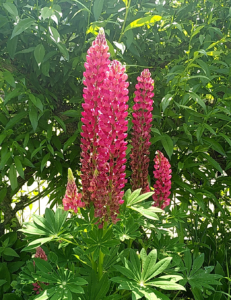
The lupine is also blooming:


And there's lots and lots of wild bees, honey bees and bumble bees around, getting their nectar and pollen from the flowers in the garden.

small wild bee sitting on a flower

That's a quite small wild bee. Unfortunately it's quite hard to classify these critters, not only because they are hard to catch well enough on a photograph, but also because there's quite a lot of species and sub-species that look very similar to each other.

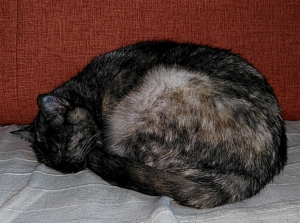
Meanwhile, the cat is utterly unimpressed by all this and spends half her time sleeping in the wintergarden on a chair, and the other half sleeping indoors on the sofa:

Cat curled up and sleeping

 
0
JUNI
08
1

Tutankhamun's Collar.

One of the lovely things about doing the Textile Forum organisation is that I'm always learning new things, and getting to know more from other, quite far-away bits of the textile world. Case in point? This article about Tutankhamun's Collar.

I wasn't aware of the fact that a lot of textiles were found in Tutankhamun's grave - though I will mention right now that Ancient Egypt is quite a bit away from the European Middle Ages, which are my main field. The article about the reconstruction shows very, very nicely some of the many different methods that can be used to re-create or re-construct something, for different purposes. It also shows that it is well worth to repeat a process, after comparing the outcome of the work with the original and maybe looking at some additional sources again.

Also: What an ingenious piece of weaving! I'm already looking forward to seeing more of this at the Textile Forum!
0

By accepting you will be accessing a service provided by a third-party external to https://pallia.net/

Kontakt