Latest Comments

Guest - Aislinn Dyestuff Citizen Science.
09. Oktober 2026
This is a great project. I look forward to the results. Thanks for letting us know.
Guest - Aislinn Time for...
09. Oktober 2026
Looks delicious!
Guest - Katrin Sprang Discussion
18. September 2026
Hi Rachel, I have looked for more photos of you, but that was not very successful. I found a link on...
Guest - Beatrix Sprang Discussion
15. September 2026
That lozenge pattern element is not a photograph, but a scan. So it should be to scale. But I pinned...
Guest - Katrin Sprang Discussion
15. September 2026
I was not referring to Rachel's reconstruction (is the reconstruction you refer to the one photograp...
JUNI
19
0

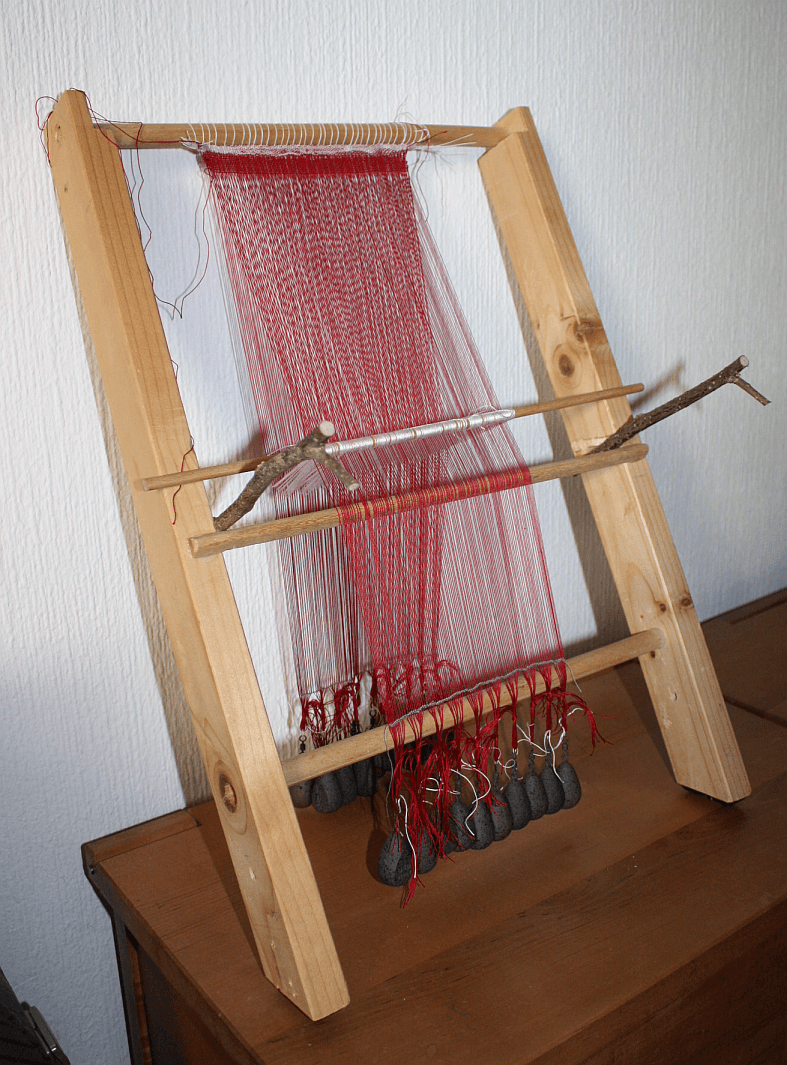
More from the Mini-Loom, Part 1: Warping.

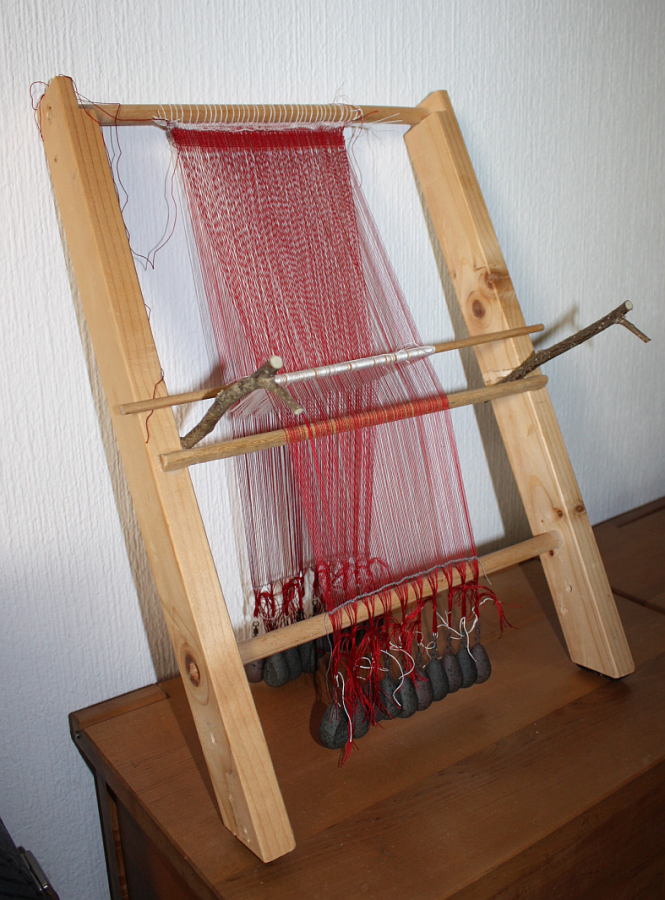
The miniature model loom is set up, and functioning, and it was a really fascinating project to do - plus I'm really, really happy with the result. Which looks like this:

loom_1
Setup took quite a long time - as was to be expected, as I'm a) not super-experienced regarding warping and loom setup, and b) not everything scales down to model size, especially not the time needed to do each individual task.

So... it all started with warping the red threads with help of the white starting border. You set up a warping frame and a rigid heddle for the band (at least that is what I used), weave a few passes on the starting border band, and then you draw loops through each band shed, bringing the loop around the warping frame.

This was a pleasant task, though I did end up with slightly irregular lengths of warp thread, and the edge of my starting border was not as nice as I'd have liked (but that was possible to fix after setting up the warp, at least to an extent). If I had already decided on how many warps to a weight I would set up, I could have separated the batches in this stage; but as everything sort of was still in flow decision-wise, I just did three batches (which also accounts for the warp length irregularity).

Thread length irregularity, by the way, is another thing that will not scale. You'll easily end up with one or two centimetres length difference, maybe even more if you have stretchy thread and real tension issues, and that will be no real issue on a warp length of, say, 2 metres. If your whole warp length is only about 35-40 cm, though, 2 cm difference are a lot, percentage-wise!

So once that warping was done, I attached the starting border to my top beam. On a proper large loom, that beam would have a lever and brake so it could turn to wind the woven cloth onto it. In my model, it is firmly glued in between the sides and thus not turning, so there'll be no demo of how to take up the woven cloth. Should I ever build another model loom, though, I would consider making a proper top beam, even though it adds another weak point in regards to transportability.
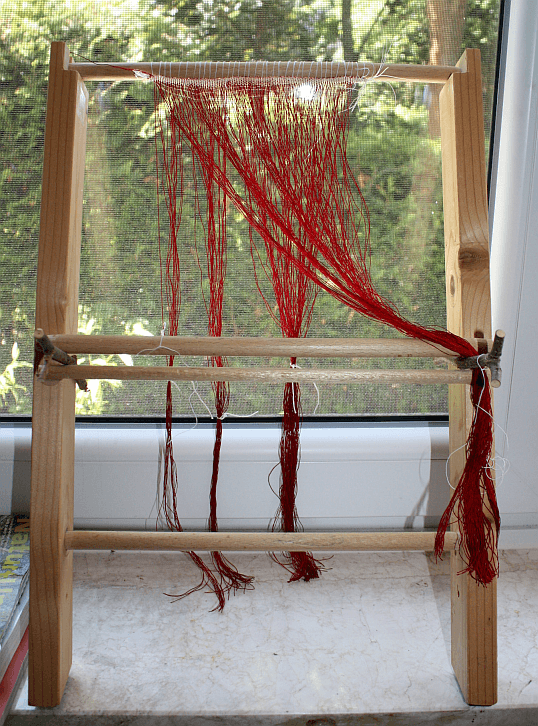
little_loom
You can see the attached warp in its irregular bundles here, and you can also see the very, very messy bottom edge of my starting border, due to bad tensioning in the warp of the border and to bad alignment of the warping setup. (Which I didn't bother to correct, as I was counting on being able to fix it to a good enough state later on. Yes, yes, I know. Shocking.)

The finished warp is about 16 cm wide and has two layers of 109 threads each. Warp threads are a plied mercerised cotton yarn (intended for embroidery, originally) and the starting border is white linen yarn. I had thought about using wool for the cloth, but for several reasons settled on the cotton. First of all: durability. Not that wool isn't durable, mind you - but the model might sit in a basement cupboard for longer periods of time, and I don't want to pull it out again after, say, a year or so to find that some moth has found her way to my loom model and decided it would be a fine thing to feed her offspring. Then, second: scaling/tensioning issues. Wool tends to be a bit stickier than cotton or linen, and that might require more weight per thread, which I'd rather not have; also, doing it properly with wool would have meant doing it properly using single yarns spun in the correct direction, and while I have quite a bit of handspun yarn that might suit hanging around here, with my lack of practice regarding loomy things, I'd rather not do the first try for something like that on a miniature model. So cotton it was.
0
MäRZ
30
0

Spring Cleaning.

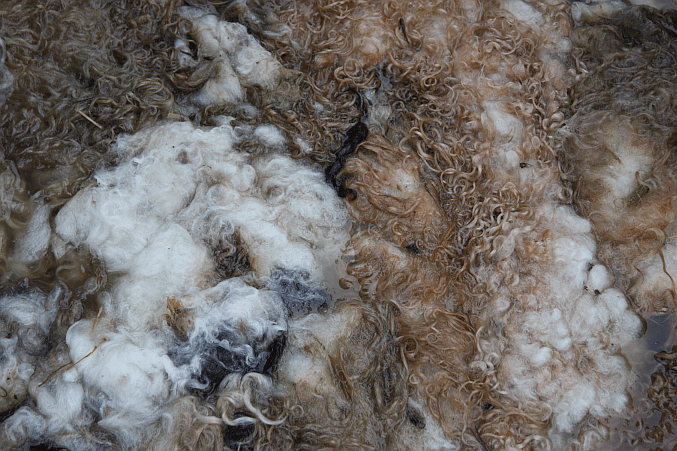
It's really warm and sunny outside, almost unseasonably so. Since it has been frost-free for a while and there has been some rain, that means it is warm enough, and there is water enough, to finally wash the wool from the last shearing of my brother-in-law's Valais Blacknose sheep.

This is how the wool looks, soaking for the first time happily in its little bath:

wool_soaking
It's much, much whiter and cleaner once all the washing is finished and it is out to dry. Which the first batch now is - with the second one getting its first soak. I'm all excited that I finally get to clean this stuff, Valais Blacknose is lovely fibre, and I've been out of stock for it for quite some time, as the shearing before last was way too late, resulting in felted fleeces unsuitable for spinning.

I'm still trying to figure out what to do with these felted fleeces - though I have a few ideas, I haven't gotten around to trying any of them. But I'm sure in time something will turn up!
0
FEB.
02
0

More spinning angle pics.

I've done a few more shenanigans with the spinning angle changes conundrum - and here are pictures for you to look at.

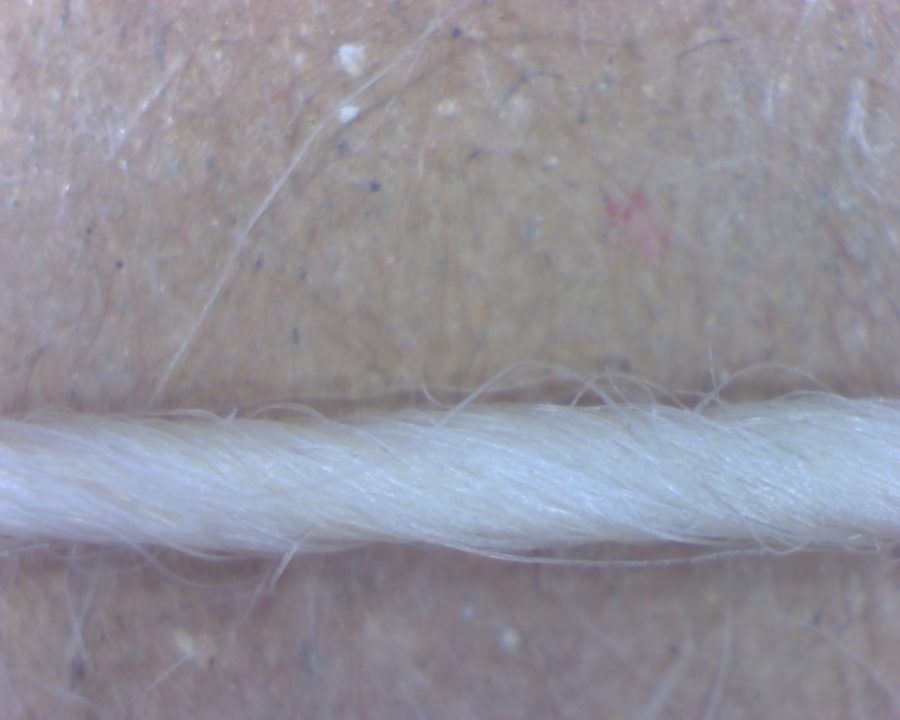
Here's a pic of yarn before steaming:

schuss_vorher1
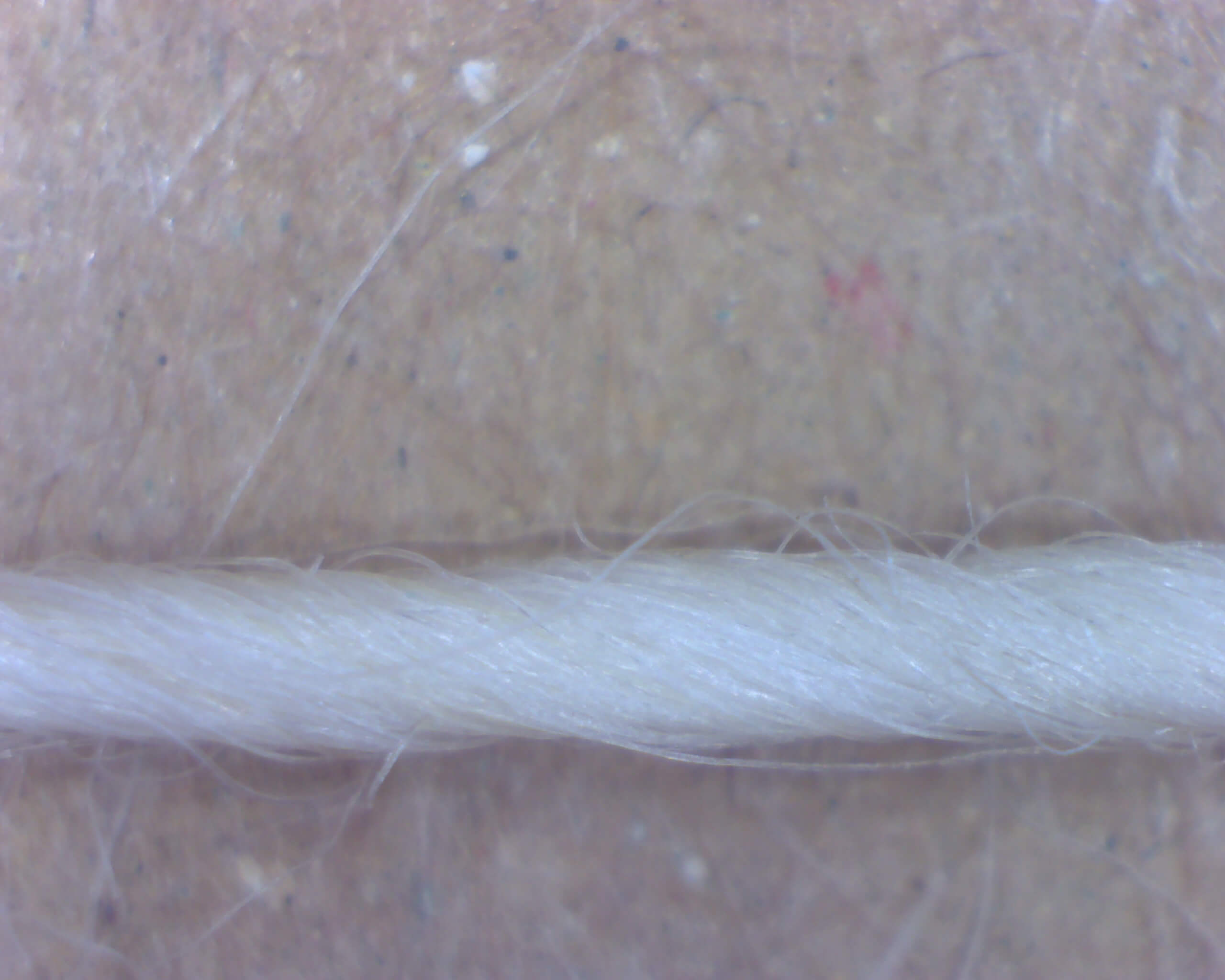
and of a second bit of yarn after steaming:

schuss_nachher1
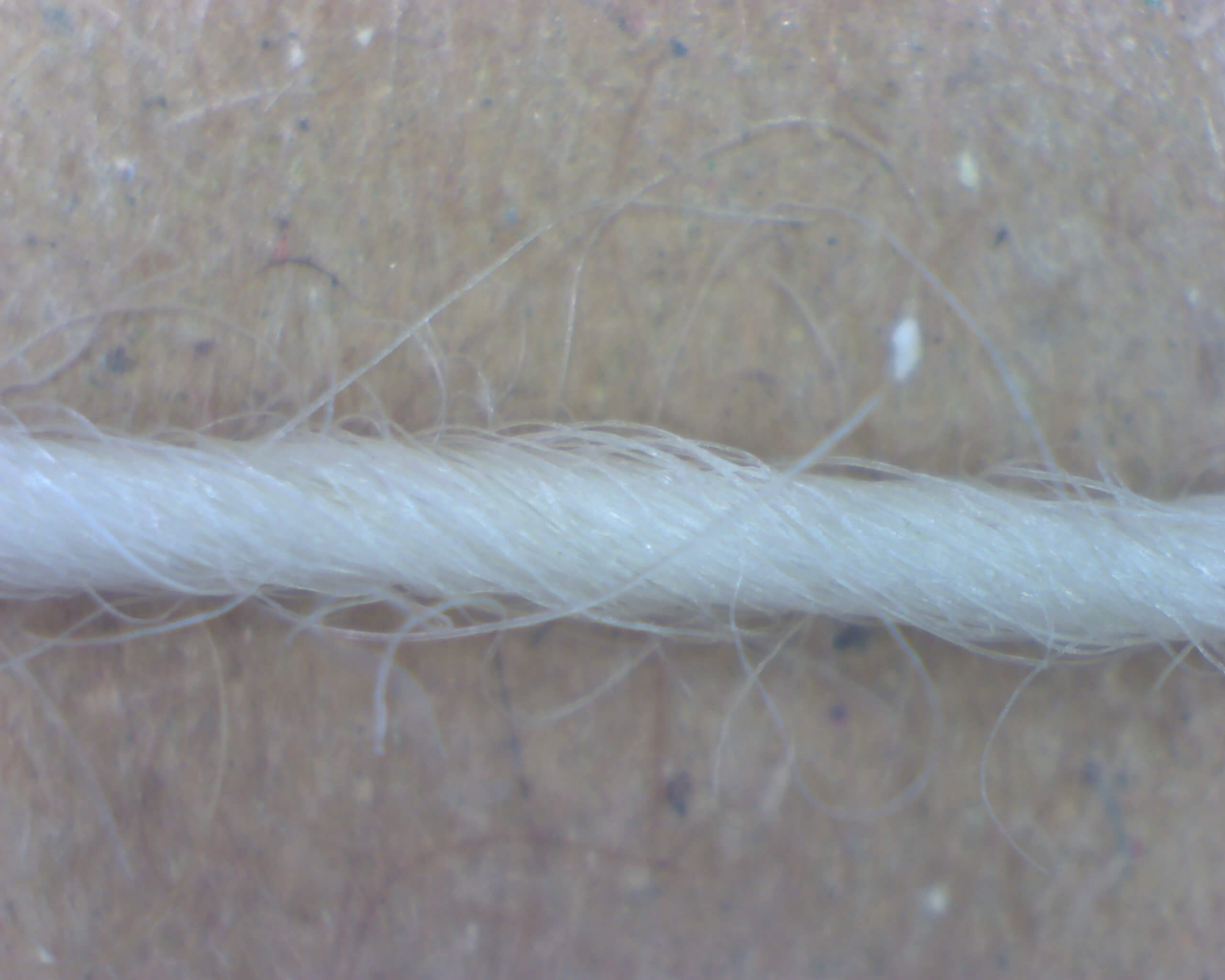
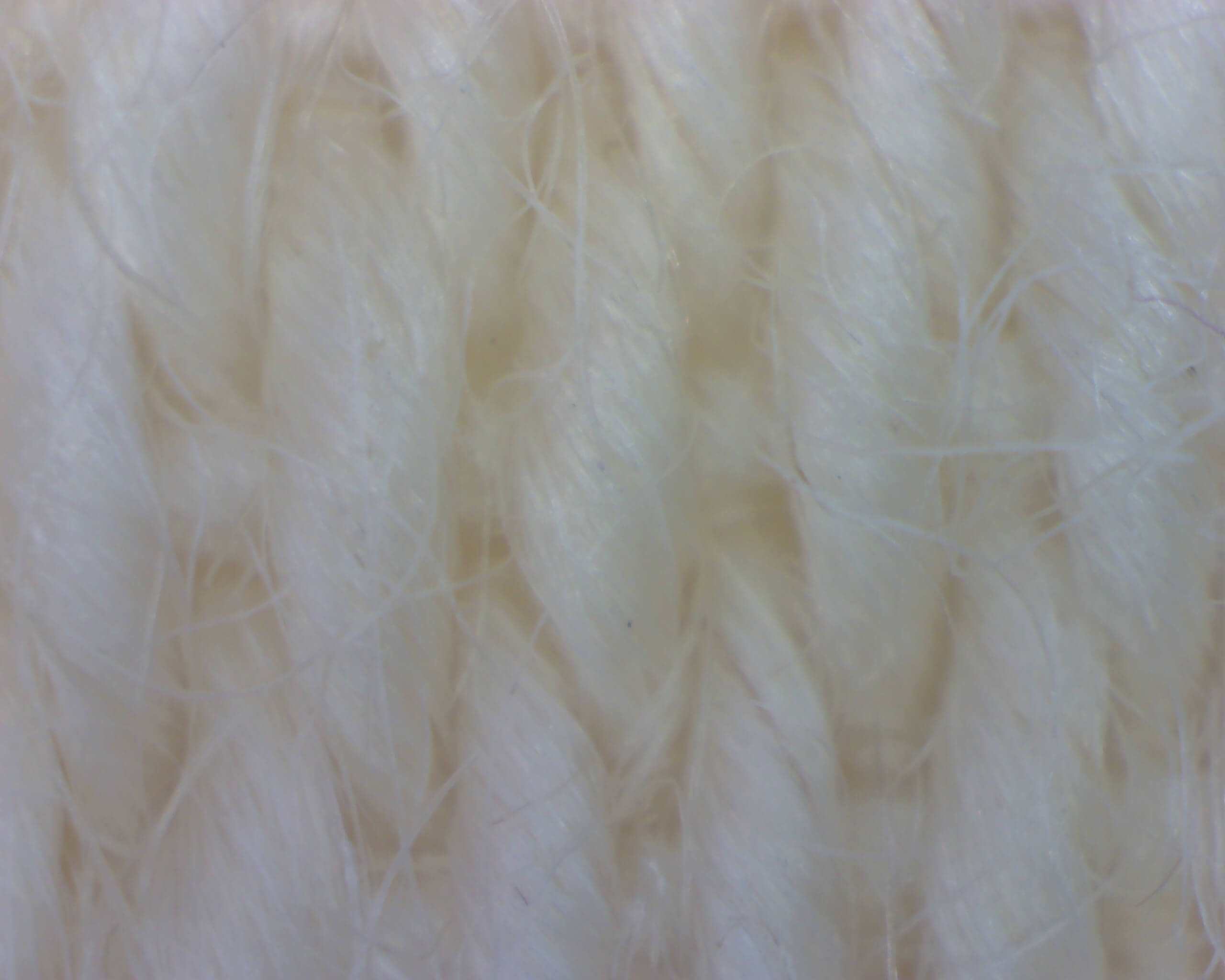
and the same yarn used as weft for weaving a sample:

[caption id="attachment_2887" align="alignnone" width="640"]testgewebe_kettequer_1 Weft is running vertically here, and the thing is quite weft-faced plain weave (I only had a puny frame with huuuuge warp spacing for the quick test...). I'd have preferred a more balanced plain weave, but well. Maybe next time.


In the weaving, the warp yarn was spun to about the same spinning angle, and the same thickness, only in the other direction. (Again - hitting an exact angle and keeping to exactly that angle is really hard, and there will always be digressions.)

So. Can you see differences?
0
NOV.
01
0

Spinning Demonstration on the Great Wheel.

First of all, sorry for the blog silence yesterday - I was away from the computer most of the day, and during the time I did spend physically close to it, we had internet connection issues. These do happen here occasionally, and they are normally no big deal when they do, as they will be over after two or three hours at most... but yesterday, it did mean no access during the time window I had for blogging.

Today is a holiday in Germany, so I had planned to blog yesterday and tell you there'd be no blog post today. Well, plans and how they work out... anyway, this means you are getting this picture today instead of yesterday:

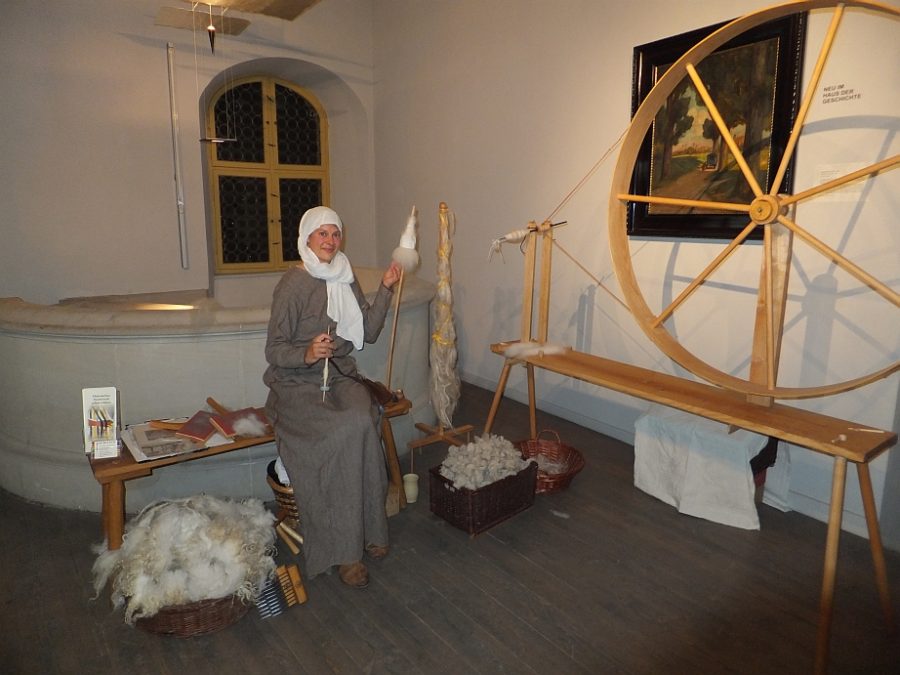
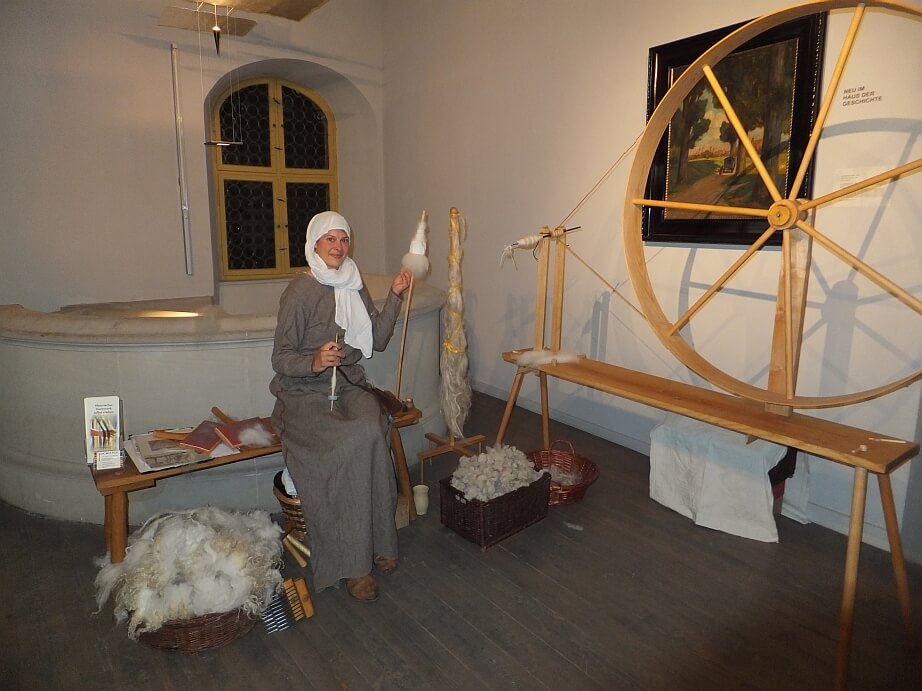
dinkelsbuehl
That was my setup on the Long Night for spinning in Dinkelsbühl. It was a wonderful evening with many, many people stopping by for watching the spinning and asking questions. The picture was taken during one of the rare and short moments when there were no visitors there, right at the end of my presentation.

Time really flew by, and the evening was over before I knew it! I loved all of it, and it gave me the opportunity to demonstrate how much of a difference the fibre and the fibre preparation made when spinning on the Great Wheel. I had rolags made from Eider wool (industrially combed, smooth medium-staple wool that I just rolled together with the cards), from Bergschaf wool (industrially carded, crimpier wool with a shorter staple that I rolled together with the cards similarly to the Eider stuff) and from Rouge de Roussillon wool that I carded up from the washed fleece myself. The differences were astounding, with the smoothest, most even thread coming out of the Eider wool and the clumpiest, least even one out of the Rouge. That was partly due to my bad sorting and carding of the Rouge fleece I brought with me, though, and I am sure that with a bit more getting used to that specific fibre, the thread would also have improved a lot.

Demonstrations like these always yield some thread, but they rarely result in wheel spinning output that I'd find acceptable or even good quality. Talking to people to explain the spinning takes away some concentration from the spinning itself, and while I can happily chat along when making my standard yarn on the spindle and distaff, the wheel does take more concentration for me to get a good thread. Another factor is the quality of the rolags that I work with during those demos.

Even though I explain to people during these demonstrations that textile work takes time, and patience is oh so important, I usually skimp on the preparation of the rolags to speed things up a bit. I also make a rolag or two, then spin them up, then explain something else, then make rolags again - and that results in differences each time, which also has an impact. Finally, the combination of explaining and trying to show off the spinning speeds possible with the wheel means I'm not making the best possible thread out of the fibre I have, and switching frequently between spindle and wheel plus carding and combing means it is hard to find the rhythm and workflow for any of these tasks - because obviously, explaining and demonstrating the individual steps and how they work together is much, much more important on these events than making the best yarn possible.

So in case you are at a crafts demonstration one day and have somebody demo-ing with a lot of explanation, you might get to see slightly sloppier work than they normally do, because the priorities have shifted - from working towards the best result possible with the tools and materials available to giving the best explanation and demonstration for you. And that, I'd say, is one of the best reasons that somebody can have for not working up to the usual standards!
0
SEP.
01
0

Aaand... preparation time again.

It's time again to prepare for a fair - the Ravelry Meetup at Wackershofen is this weekend, and I'm getting ready for it. I will be selling stuff in one of the houses - Haus Frank - where I will share the "Gut Stub" with Margit from Alte Künste.

On Sunday, I'll be giving a workshop in spinning with spindle and distaff.

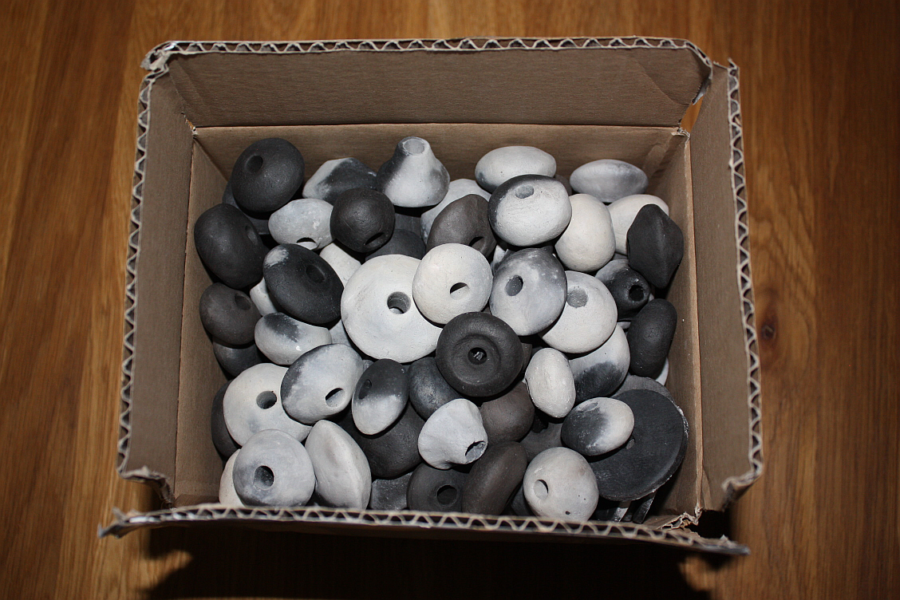
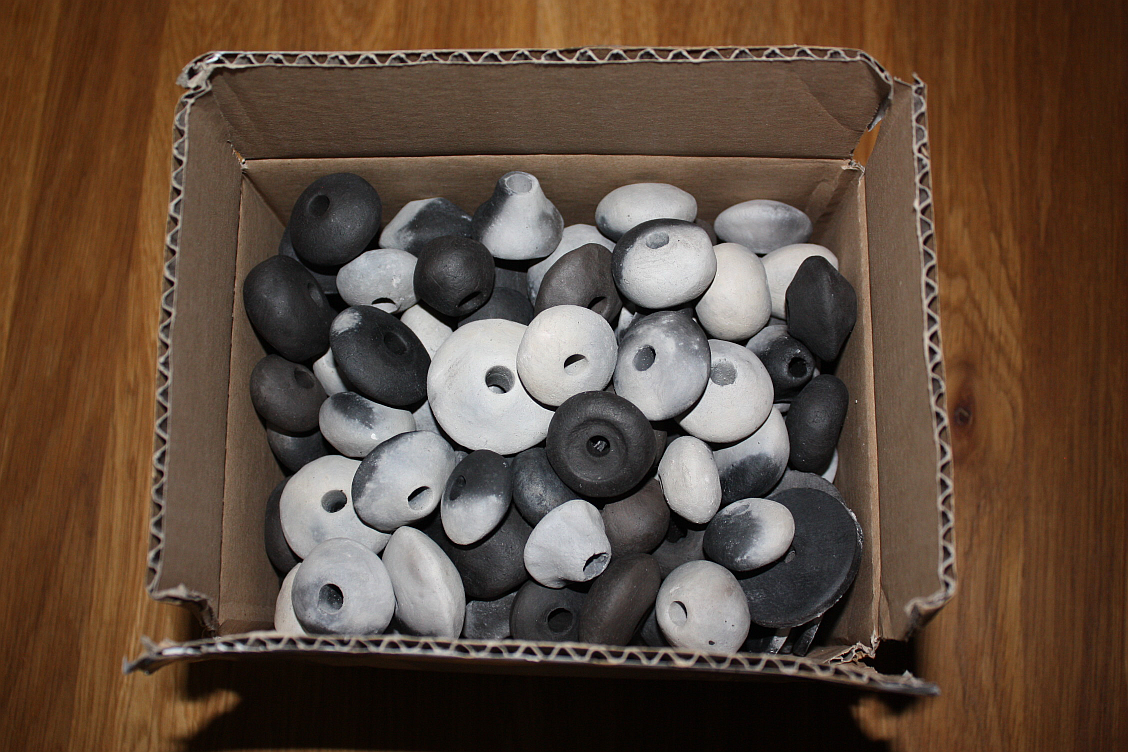
So, as you can imagine, last-minute preparations are in full gear. Yesterday, I fired new spindle whorls:

wirtel
so they got sorted today, and now I can restock the spinning kits.

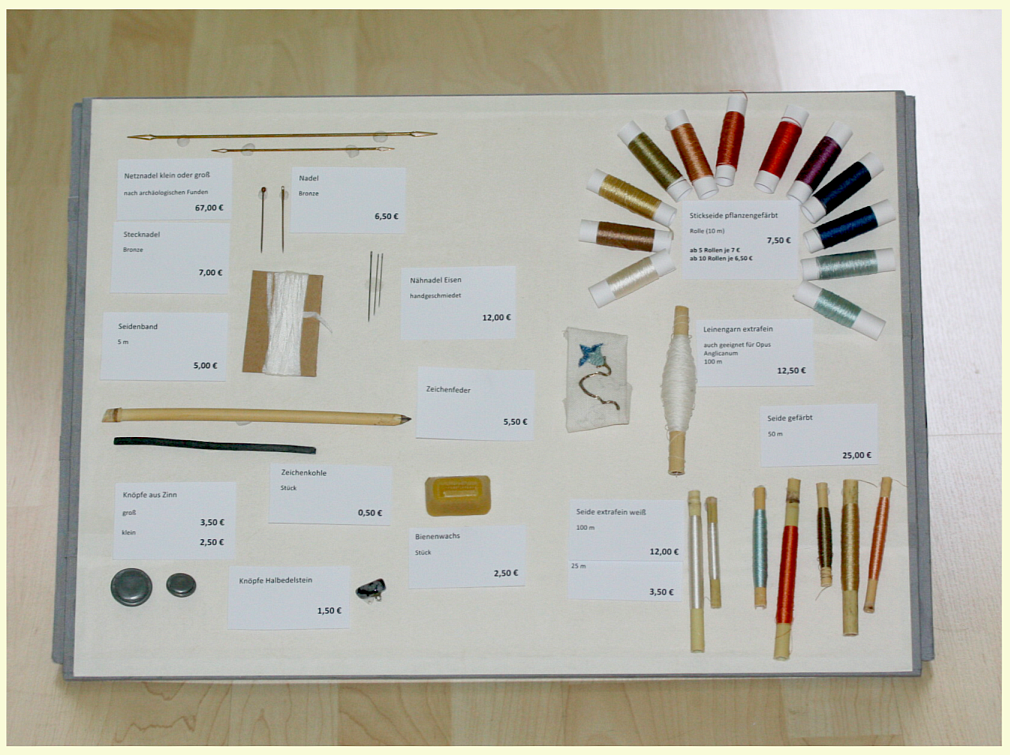
Also on the list for today: find a good transport solution for my lovely new display boards. I made these to finally put an end to the endless and nerve-wracking game of pulling a gazillion samples out of a gazillion boxes and arranging them on a table.

displaybrett1
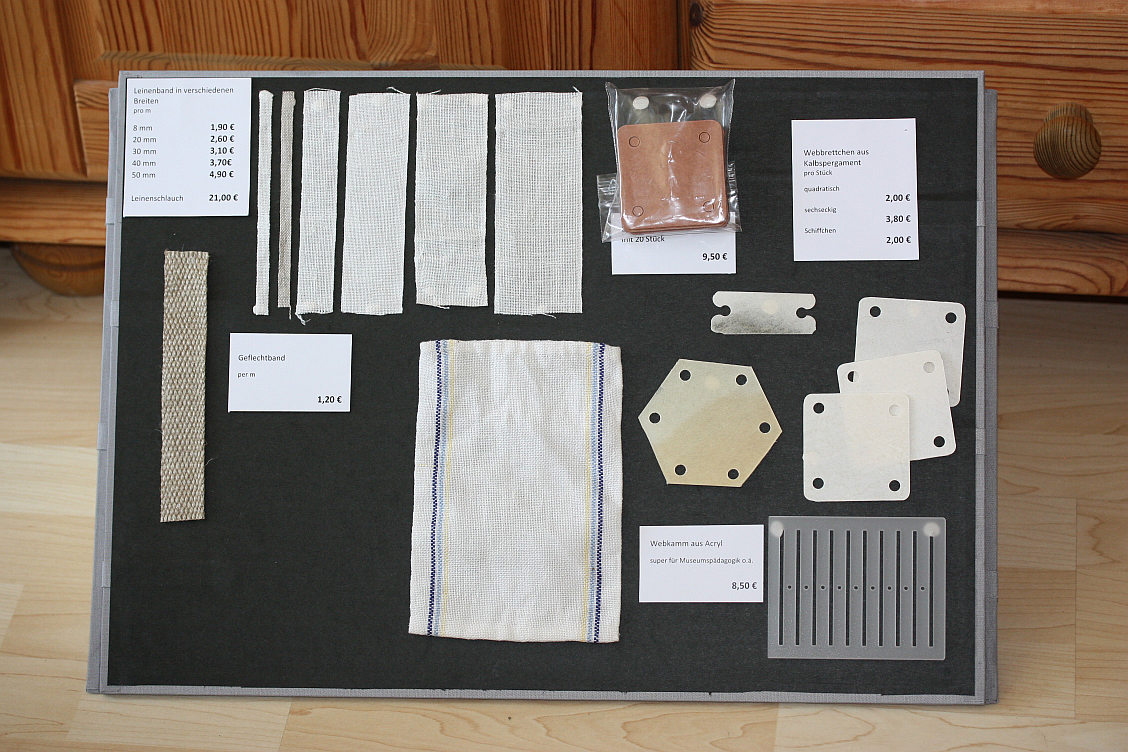
Now I have boards that the gazillion samples can just stay on. These are, thus, incredibly helpful in setting up the table quickly, which is always good. And, of course, in packing up quickly. The boards are made with a black and a white(ish) surface, so I can also display light-coloured things on a dark background:

displaybrett2
and the only thing necessary now is some way to transport them safely and securely... so I'll have to find, or cobble together, a suitable box.

One thing that I can tell you for sure: It never gets boring here!
0
AUG.
23
0

Enter title here, it says.

I'm not entering a title, though. I'm not. Because today is somehow... weird. I did manage to get a stack of stuff done, most of it in preparation for the next fairs, but I'm still feeling way behind, and would have liked to be much, much faster. Story of my life.

Parts of that stack of stuff done today include:

Updating and printing my spinning instructions. (While the downloadable version is available for free through my shop, you get the printed-out instructions in the spinning kit, so I need to print some more from time to time).

Getting together with Gillian for a chat - we're planning a crossover blog interview in celebration of the Beast's release as paperback, and it was my turn to get interviewed. I'll have the pleasure of pestering Gillian with questions next week, and you will see the results here on the blog.

Taking photos of the oil lights in action. I'm still totally in love with these things - they have been produced for ages (the three-bladed swimmer has been made, unchanged, since 1808) and they are just so incredibly nice to use, both for atmospheric lighting and for keeping your tea hot. However, the concept of using these swimmers is rather forgotten today, so people often stand in front of the swimmers at my table, looking puzzled. So I obviously need some explanatory thing to sit around on my stall table at a fair - and this, also obviously, needs photographs.

[caption id="attachment_2574" align="alignleft" width="265"]oellicht_weinglas Atmospheric lighting. With a wineglass, a bit of water and some oil... and the swimmer, of course.


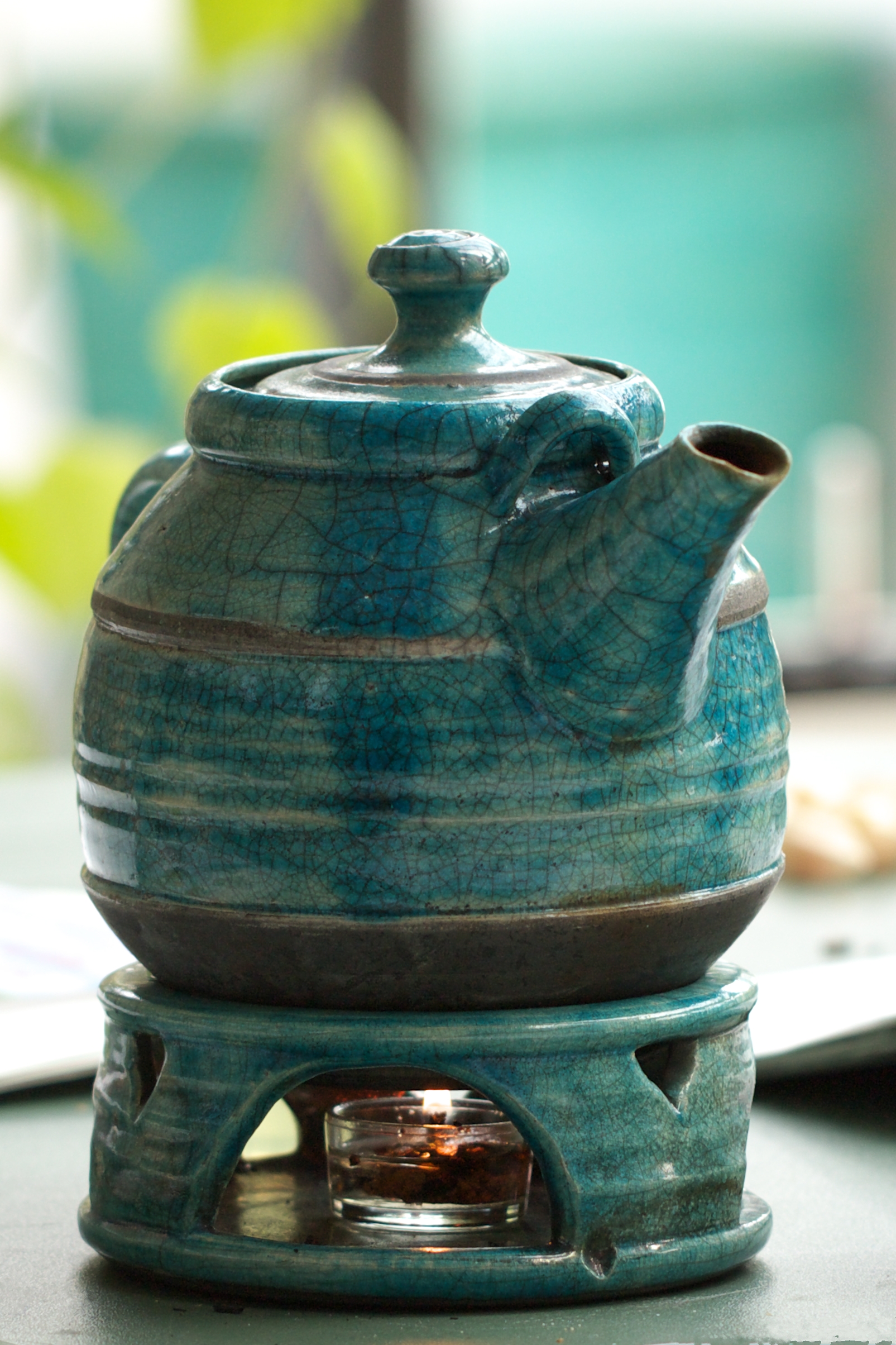
[caption id="attachment_2580" align="alignright" width="265"]glafeystoevchen Keeping tea hot. Because life is better with tea, and tea is better when hot. Obviously, right?


Actually that was the main bits I did today, as these things all tend to eat up more time than you'd guess at first. (Photos, in particular. Never underestimate the amount of time needed to take good photos - especially if they involve tricky lighting conditions. Or gold embroidery.) The rest was eaten up by the usual day-to-day things such as sorting out emails and working on the current paper/presentation projects. And having coffee. Plus tea. Tea was obligatory since I had to take teapot warmer pictures!
0
AUG.
05
2

The Incalculability of Wool.

I've been washing wool - and since I buy the wool from my suppliers, and sell it on after washing, sorting, and fluffing it up, I need to make sure to do the maths so my prices are okay. And I can tell you... wool maths is special. Also, it tends to make me grumpy, due to all this specialness. Want to share some of the grumpiness? Here you go.

Let's start with the basic inbuilt fudge factor that wool has. This lovely fibre can take up a lot of water before feeling moist, and while this is a glorious thing when you are wearing wool garments or sweating into them is a nasty thing when you are trying to weigh it. I try to make sure my wool is dry, and the weather is not humid, when I am weighing wool or portioning it out - but sometimes, there is no choice, so you have to estimate how much moisture is in the fibre.

So even clean wool can have weight differences due to different levels of humidity in the air. When you have raw wool, though, there's even more fudge factor.

One of the things the raw wool contains (apart from vegetable matter, which in the best case should not be relevant for weight at all) is lanolin. Then there's sheep sweat. In the bits that are usually removed, there can also be feces and urine. And there's also dirt, sticking nicely to the lanolin that coats the fibres.

So when you are buying a raw fleece, you are paying per kilo of fleece - and you might get a much, much lower yield out of your purchase, weight-wise, if things are unfavourable. For instance, if you buy a very dry skirted fleece (all the really dirty bits removed) with no vegetable matter, little lanolin and very little dirt, you can end up with a washed fleece that is about 15 or 20% lighter than the raw one. If, on the other hand, you pay for a fleece that still has a good bit of humidity inside, contains a lot of lanolin and a lot of dirt and has not been skirted fully, you can end up with a lot more loss in weight - up to 50%. That's half your raw fleece weight in washed fibre... which, if you have been counting on a specific amount of fibre to work with, can make for a nasty surprise indeed.

Just the amount of dirt and lanolin alone, by the way, can account for a lot - I've had a well-skirted fleece of about 3.8 kilo lose 1.3 kg of dirt and lanolin through washing; that's almost a third of the raw fleece weight.

Which means if you are buying raw wool, check it out thoroughly: Has it been skirted? Is there a lot of lanolin and dirt trapped between the fibres? Is it dry weather (cool temperatures are always less humid than warm ones) or is it humid? Count on a weight loss of at least 25% from raw fleece to washed fibre to avoid nasty surprises, and remember there will be some more loss when you are prepping the fibre for spinning or felting. When in doubt, do as usual when buying yarn or fibre for a project: add a generous amount on top, as a safety margin.

Wool maths. Grrr.
0

By accepting you will be accessing a service provided by a third-party external to https://pallia.net/

Kontakt