







Latest Comments

Guest - Aislinn Dyestuff Citizen Science.
09. Oktober 2026
This is a great project. I look forward to the results. Thanks for letting us know.
Guest - Aislinn Time for...
09. Oktober 2026
Looks delicious!
Guest - Katrin Sprang Discussion
18. September 2026
Hi Rachel, I have looked for more photos of you, but that was not very successful. I found a link on...
Guest - Beatrix Sprang Discussion
15. September 2026
That lozenge pattern element is not a photograph, but a scan. So it should be to scale. But I pinned...
Guest - Katrin Sprang Discussion
15. September 2026
I was not referring to Rachel's reconstruction (is the reconstruction you refer to the one photograp...
FEB.
22
0

Done!

I've finished preparing, practising, and fine-tuning the presentation for Syke tomorrow evening - so all that remains to do in preparation for tomorrow is packing my stuff (including the computer, of course, and the presentation on an extra USB stick, just in case).

Because I was curious, I looked at my time tracker and did the math on how long it actually took me to put together the presentation. It was a nice, fun, and good thing to revisit all the stuff, and to be fair it was an unusual type of presentation because usually I can re-use or adapt already existing slides... but yes, it did eat up quite a few hours.

As a general rule, academic-style presentations get a small monetary honoration. As a second part of that general rule, that is never enough to cover the actual time invested in preparing and practising the presentation - even if you're fairly quick about it. Third part of the general rule: As these presentation invitations usually mean going somewhere to meet colleagues, being able to present your work, and then connecting and discussing and sort of having something like a mini-conference, nobody really minds.

I'm rather happy with the whole thing too, now that it's all prepped and set, and hope the listeners will be, too. 

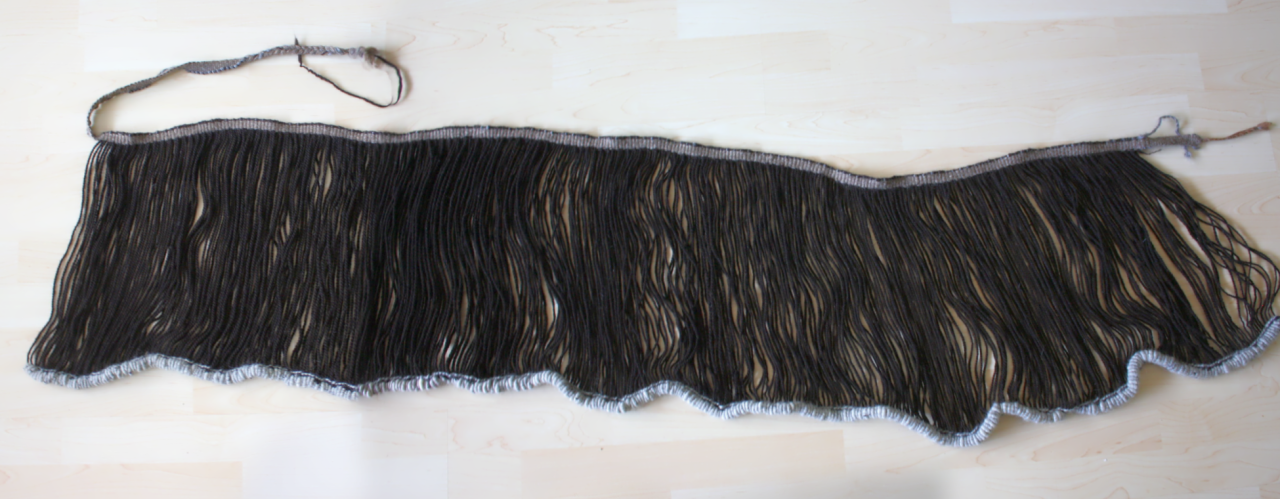
Also it made me finally put together the individual images of the corded skirt for the panorama picture:

and that, due to some reason, makes me really happy as well.

As I'll be travelling tomorrow and on Friday, there will be blog silence - see you again on Monday!

1
FEB.
20
1

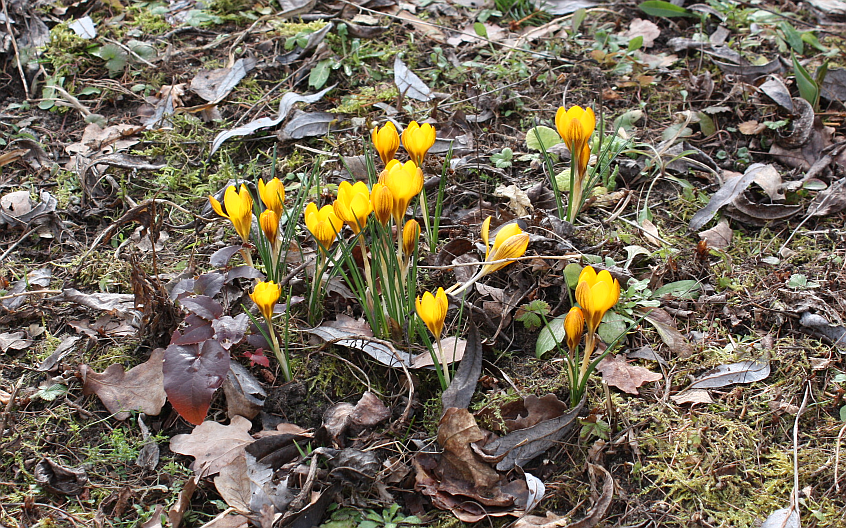
Spring is coming!

It's beautiful and sunny and warm outside - spring is definitely coming! The crocuses have started blooming: 

We've almost finished pruning the willow fence, and it's high time for this before the shoots start trying to make leaves. There will be another little pruning session later this afternoon - once I've finished the post stuff, and dealt with the rest of the emails, and finished the other paperworky things that have to be dealt with today.

Sometimes I wonder why there seems to be more desk work on the days with splendid weather...

0
FEB.
16
0

Mummification.

And now for something completely different: Researchers have found out details about how corpses in Egypt were mummified. There was a number of substances used, in specific mixtures for specific parts, and we now know this due to the discovery of an embalming workshop in Saqqara, dating to the 26th dynasty.

You can read more about it in this Open Access article at nature.com, or if you prefer a short German summary, here is one.  

(I think I'd still prefer to get buried in a grave mound instead of getting mummified and put into a pyramid...)

0
FEB.
10
0

A Bit of Jane Austen.

I'm one of the many, many fans of Jane Austen's works. I can't really say what makes her books so fascinating to me (well, apart from Emma, which does exactly what the author intended it to do, that is get on my nerves via the insufferable protagonist). Is it the glimpse into a world of the past, but not so far in the past that there's too much conjecture? The slightly different etiquette and societal rules? Or the fact that, in the end, it's straight-up lovely happy-endy chick lit, and thus just a read that's good for the soul?

In the end, it doesn't really matter. I've read Pride and Prejudice, which is my favourite of her books, more times than I remember to count, and we have several versions of it as a film, and those do get viewed again and again too. 

If you like Jane Austen stuff, maybe this video about some of her surviving letters, showing a glimpse of her personal life, will delight you as well:

0
FEB.
08
0

EuroWeb Book Talk: "Paul Gout's 157 Colours"

It's a little short notice - but: Are you interested in historical textile dyes, dying crafts and colours in general? Then you might be interested in the EuroWeb Bookcorner this afternoon!

Dominique Cardon, one of the foremost experts on historical dying and the history of colour, presents her and Iris Brémauds brand new book, «Les 157 couleurs de Paul Gout/ Paul Gout's 157 colours» (Les Mots qui portent, 2023) today (February 13) at 16:00 CET.

Registration for this new installment of the EuroWeb Book Corner is necessary to attend, but it's free. You can register here: https://bit.ly/3JDqVPx
 

0
FEB.
03
1

Sheep are not all alike...

... of course they are not.

I've had the pleasure, a while ago, to work with Icelandic wool (for the Bronze Age garments project), and it is a fascinating material. Just like older sheep breeds here in Europe, Icelandic sheep are double-coated, which means they have coarser outer hair and softer, finer underwool. (The Waldschaf is one of the breeds still rare but surviving hereabouts that also has a double coat of similar style.) The Icelandic sheep, just like the Icelandic horse, was brought to the island when it was settled, and like so many things in that area, not much has changed since then. 

The difference between the fibres of the outer and inner coat is really astounding, with the inner ones being all fine and soft, and the outer ones very long and strong (and rather coarse). For my project, I only used the inner coat fibres, but I did get a sample of the full fleece to play with, and some of the outer coat taken out. (I haven't done much with it yet apart from admiring it, though.)

If you'd like to read a bit more about Icelandic wool, you can find a blogpost from a small fibre mill in Iceland here, and the same writer explains a bit more about her white colours here. The many different shades of "white" in wools are also something that have fascinated me for quite a while. Just like black is not the same in natural colours, depending on how you dye, with what dyestuffs, and on what (colour) basis, there's a range of whites just like there's a range of blacks. Or, indeed, of any other colour. 

0
JAN.
27
0

Friday!

How nice that it's Friday again - only downside to it: I had wanted (or even planned) to get a bit more stuff done this week. However, I won't complain too much. At least the new batch of pins has been finished,  and a few other odds and ends have been taken care of. Among them some prep for the workshop weekend next weekend.

Now, though: weekend! (Well, a little more work to do, but then.)

And because things are always better with cat pictures, here's one for you. Poor cat must have felt very dirty!

0

By accepting you will be accessing a service provided by a third-party external to https://pallia.net/

Kontakt