Latest Comments

Guest - Aislinn Dyestuff Citizen Science.
09. Oktober 2026
This is a great project. I look forward to the results. Thanks for letting us know.
Guest - Aislinn Time for...
09. Oktober 2026
Looks delicious!
Guest - Katrin Sprang Discussion
18. September 2026
Hi Rachel, I have looked for more photos of you, but that was not very successful. I found a link on...
Guest - Beatrix Sprang Discussion
15. September 2026
That lozenge pattern element is not a photograph, but a scan. So it should be to scale. But I pinned...
Guest - Katrin Sprang Discussion
15. September 2026
I was not referring to Rachel's reconstruction (is the reconstruction you refer to the one photograp...
JAN.
12
2

Whew.

I'm home again from my TV thingie - and as expected, it was great fun! Everybody was really nice, and it did go very well. We did the three little scenes that were planned over and over again to get shots from all directions, so now I can almost repeat the dialogue in my sleep... maybe I'll mumble it tonight.

Apart from the "yay TV!" thing, I vastly enjoyed the afternoon for another reason as well: I'm always fascinated by stuff happening behind the scenes. For a few minutes of screen time*, there's a lot of logistics and work happening beforehand (such as scenes being done several times). There's lights and audio stuff involved (fancy microphones!), there's huge cameras and gear and many other things, of course, though none of that can be seen later on. It's a little like textile work, really - a lot of time, effort, and know-how goes into the finished product, though it all stays hidden to most people.

But the best of all the TV work, at least for me, are the people. All the TV folks I've yet had the pleasure to work with were not only totally nice, but also really happy with their job. They were also really, really good at said job, and very professional and efficient... which made it an utter joy to work with them. Today's audio technician, when I chatted with him, told me that it feels more like working among family than just colleagues - which is very much of how it feels to work in Living History. (I'm also really happy I didn't kill him by accidentally hitting the microphone, hidden inside my dress, with something making lots of noise!)

The scene will be part of the children's quiz show 1,2 oder 3 (which has been running since forever - I used to watch it when I was small), and it's planned for being aired on May 27, ZDF, at 8:10 in the morning. So if you can receive that programme and want to have a look at my part - you can!


*To give you an idea: the whole thing today took a bit more than three and a half hours, including setup time. (Fortunately, my Great Wheel wasn't as fiddly to get to run smoothly as it has already been - setup wasn't perfect, but it did spin well enough for the purpose. (I've also done much, much better yarn on it; it really makes a difference whether you can get into the flow or not.)) Screen time resulting from this work will be... drumroll... two minutes.
0
JAN.
11
0

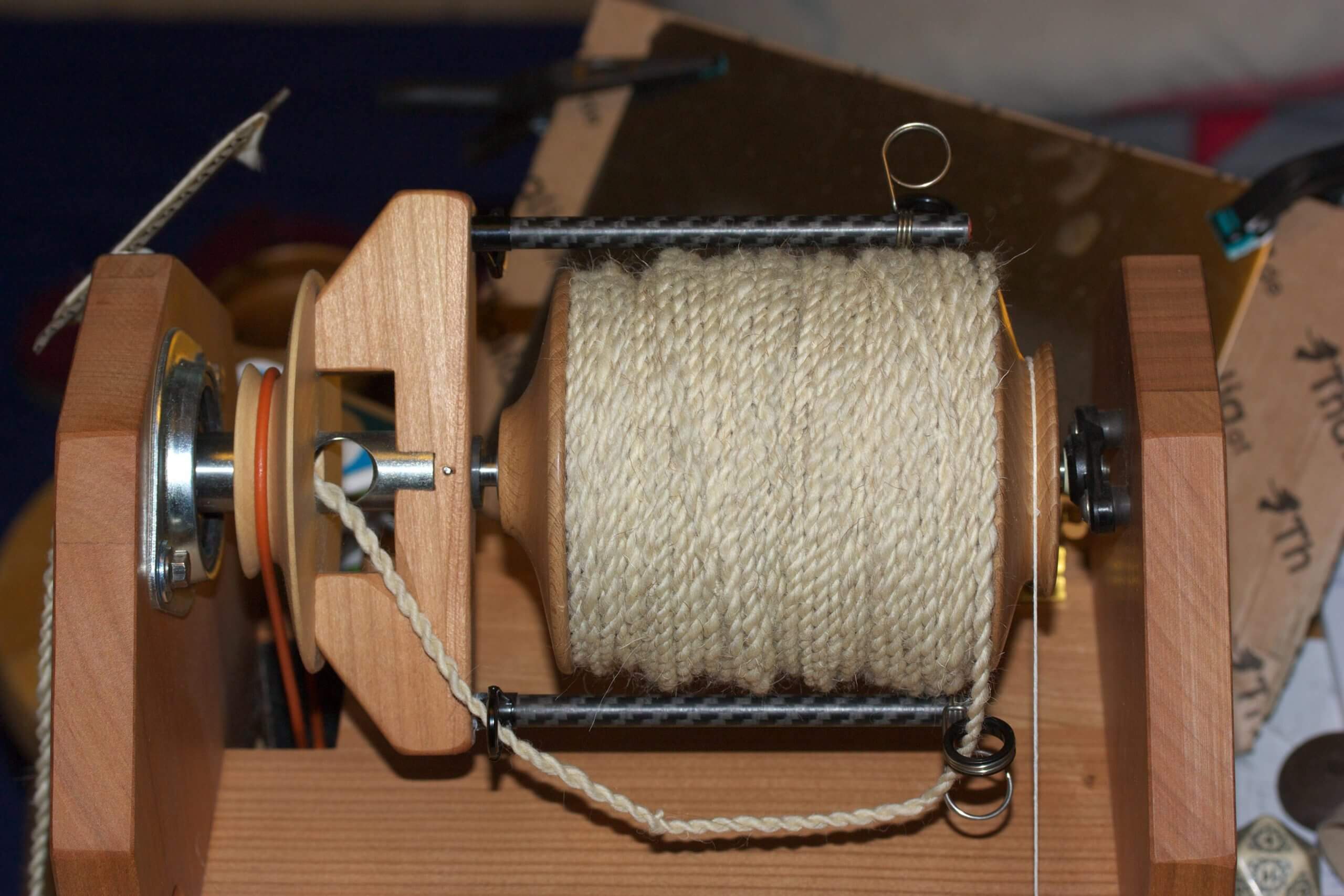
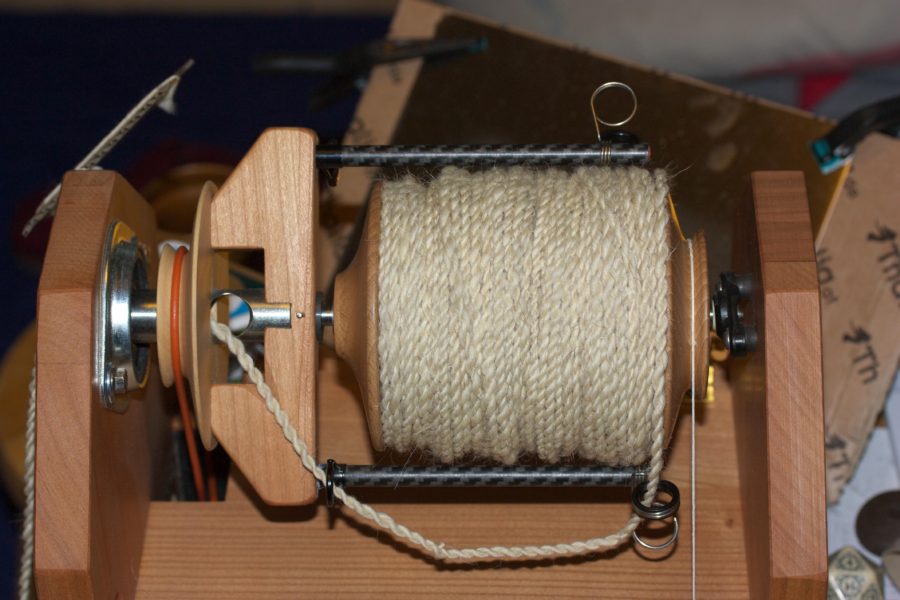
This bobbin is full.

Really, really full. As in "no more yarn shall wind onto it" full:

IMG_1726
And it took a fraction of the time to fill a bobbin with the thicker yarn (of course). Soon I'll find out how many metres of yarn we are looking at here - and then I will have a rough estimate of how much more of that rope I need to spin for the fabric sample!
0
JAN.
10
1

Excitements galore!

The year starts off excitingly... the first of the handspun fabrics has arrived here today and now waits to be fulled a bit for getting finished (exciting!). There's more spinning going on, and the first bobbin for the two-ply fabric now is full, with the second one started, so tomorrow might already see the first bit of plying taking place (also exciting!).

If not tomorrow, then Friday - because Thursday will be eaten up by... TV stuff. I'll be on television some time in the future! Only for a very short bit, but if it's like the last time I've done TV stuff, filming will be a heap of fun. Also, you guessed it, very exciting - especially since the Great Wheel will be part of the thing.

So. More hot motivational drinks for me right now, more spinning, and making lists plus planning and preparing for Thursday - there are some rolags that want to be rolled!
0
JAN.
09
0

Happy New Year!

Happy New Year to all of you - may it bring joy and wonderful adventures and many successful, happy projects!

I'm back home from a wonderful time off. There was time spent with family, and time spent with friends; there was roast goose and cookies and cake, gingerbread and chocolate; coffee and tea were consumed in no little quantity, and we had walks in the snow and the now-traditional mousse au chocolat to toast the new year at midnight on the 31st.

Now it's back to work - the usual gazillion of emails to sort out, and of course the spinning. The first batch of yarns for the first piece of fabric was done just before the holidays, and now I will spin up about 2 km of really thick yarn from Coburg Fox wool for the reproduction of a packaging fabric.

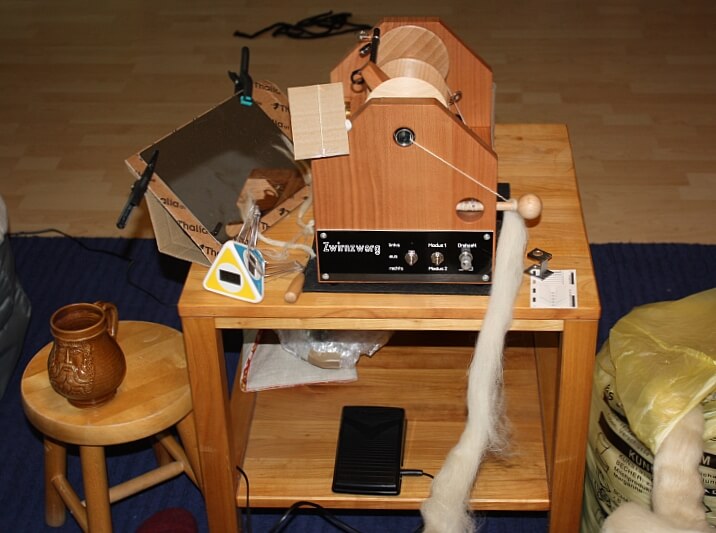
The workplace is already all set up, and I've started off:

emballage1
The thread for this fabric is a two-ply (it is one of the quite rare medieval fabrics where plied yarn was used for weaving), and it's about 3-5 mm thick - so I'm spinning singles that feel really, really chunky to me. This is quite a challenge, as I'm very used to spinning fine and very fine yarns, but not yarns this size (or, as I usually call them, ropes).

Because the thread is so thick, I have mounted an "aim for this"-sample card on the left side of the spinner. On the plus side for spinning bulky yarns: Checking the twist angle does not require a magnifying glass for this thread. Also, the spool fills up much, much faster with this kind of yarn!
0
DEZ.
19
2

Spinning Pictures.

You've seen enough pictures of bobbins now - time to see more spinning pictures, but with actual spinning in them:

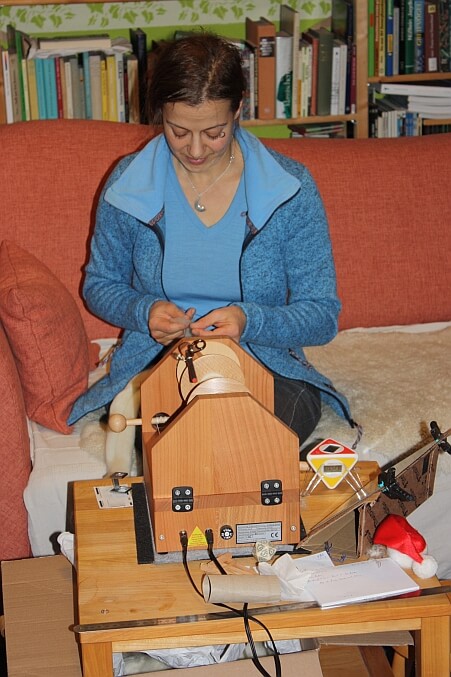
[caption id="attachment_2827" align="alignnone" width="451"]Spinning happily along - now working on the weft thread for one of the fabrics. Spinning happily along - now working on the weft thread for one of the fabrics.


It is coming along nicely, the spinning work. Not every day is like every other one, but today felt like a really good one - which is nice, as I want to have a good batch done and ready to go into the post by the end of this week.

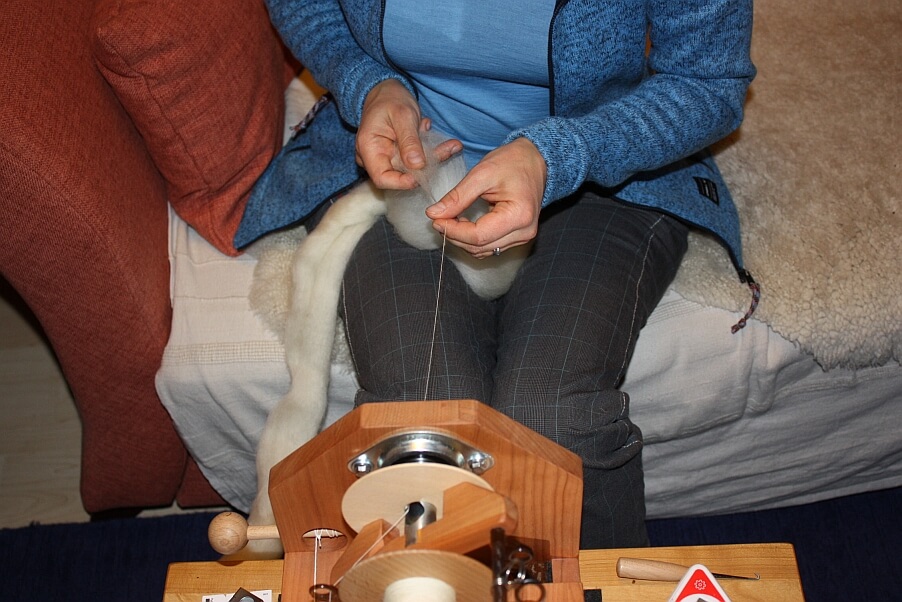
[caption id="attachment_2824" align="alignnone" width="640"]Drafting from the Romney top... Drafting from the Romney top. You can see the difference between the fluffed-up loosened (pre-drafted) fibres beneath my hands and the original top hanging down beside my leg.


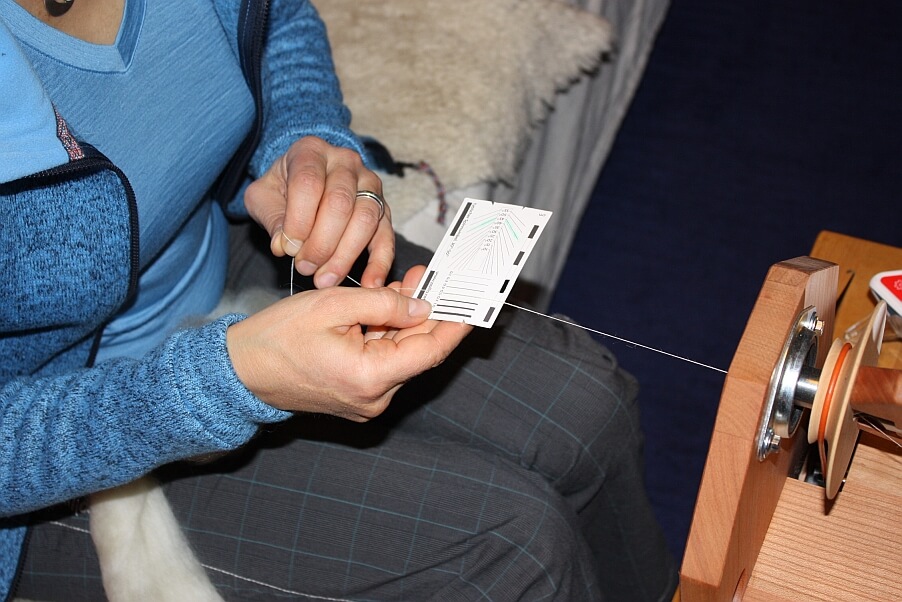
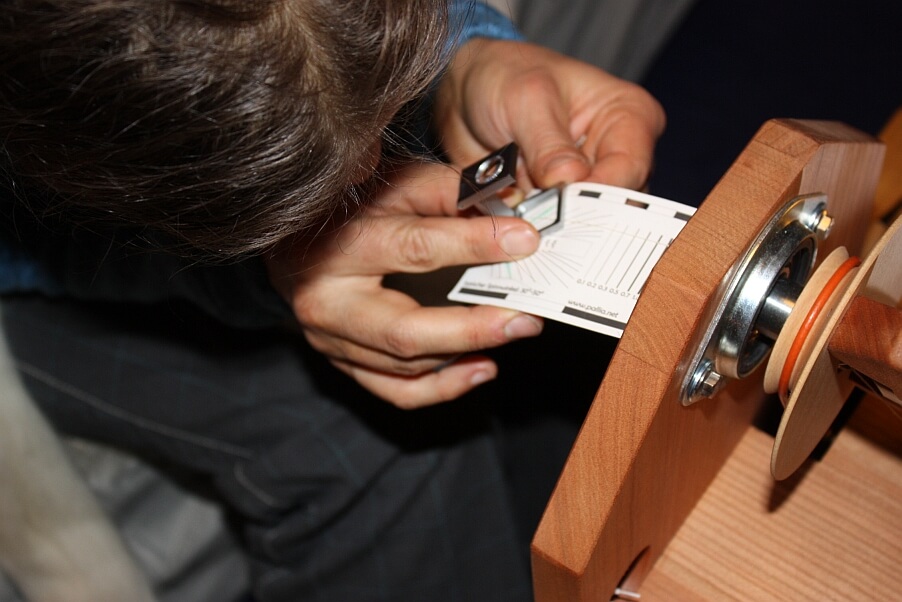
There is, of course, also the periodical checking of thread thickness and spinning angle:

[caption id="attachment_2826" align="alignnone" width="640"]First the thickness... which should be around 0.5 mm for this one... First the thickness... which should be around 0.5 mm for this one...


[caption id="attachment_2825" align="alignnone" width="640"]...and then the angle with help of my thread counter. ...and then the angle with help of my thread counter.


For today, though, I'm done spinning. More thread will be made tomorrow!
0
DEZ.
16
0

New things in the shop!

Just before the year runs out, there are a few new things in the shop - two new kinds of combed top and two versions of a really helpful little tool.

Have I made you curious?

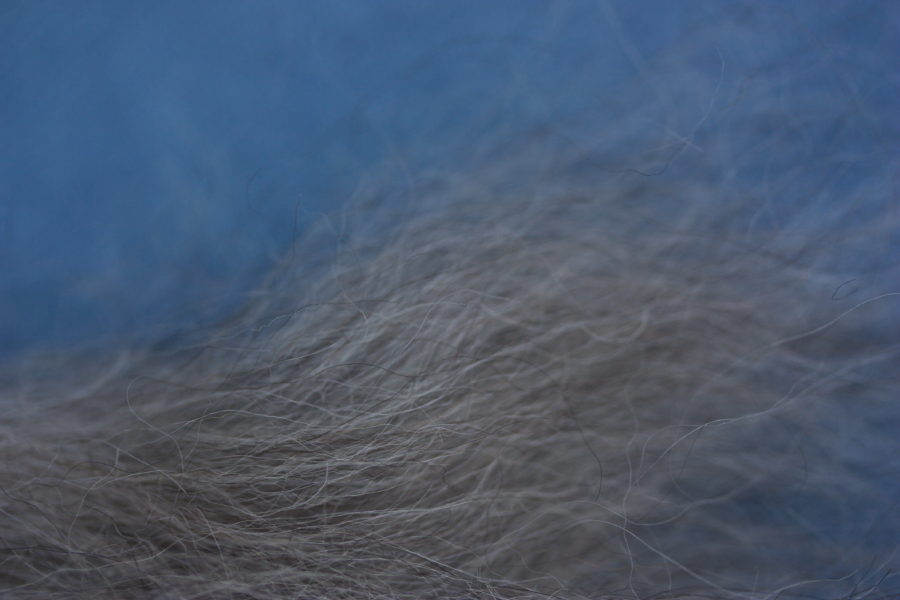
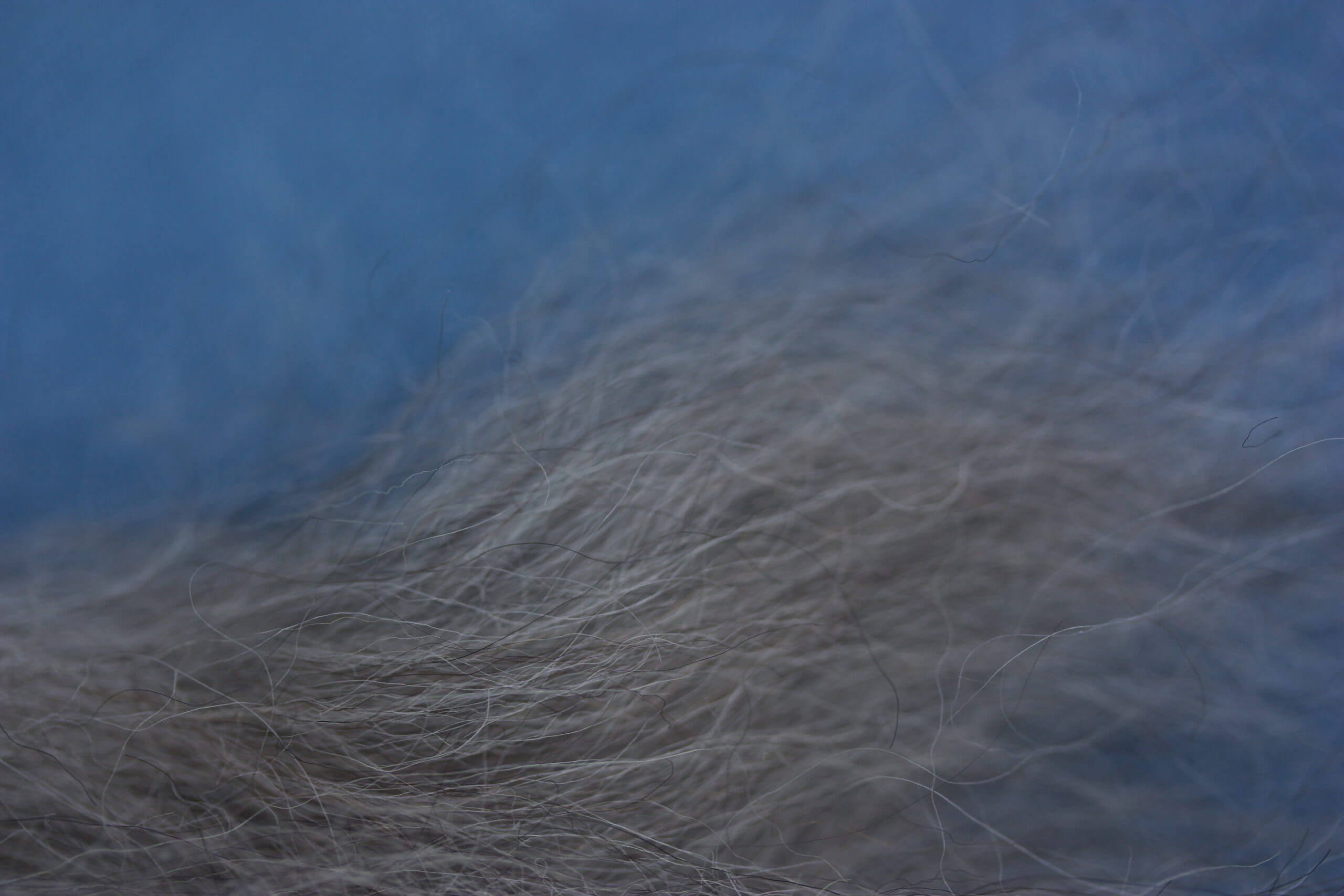
One of the new wools is Gotland wool, consisting of light and dark fibres of similar diameter, which results in a grey overall appearance - but the yarn will, on closer look, show the dark and light fibres. It makes for a fascinating spinning, and a similarly fascinating yarn!

[caption id="attachment_2821" align="alignnone" width="640"]Black and white... makes grey. A really beautiful one in this case. Black and white... makes grey. A really beautiful one in this case.


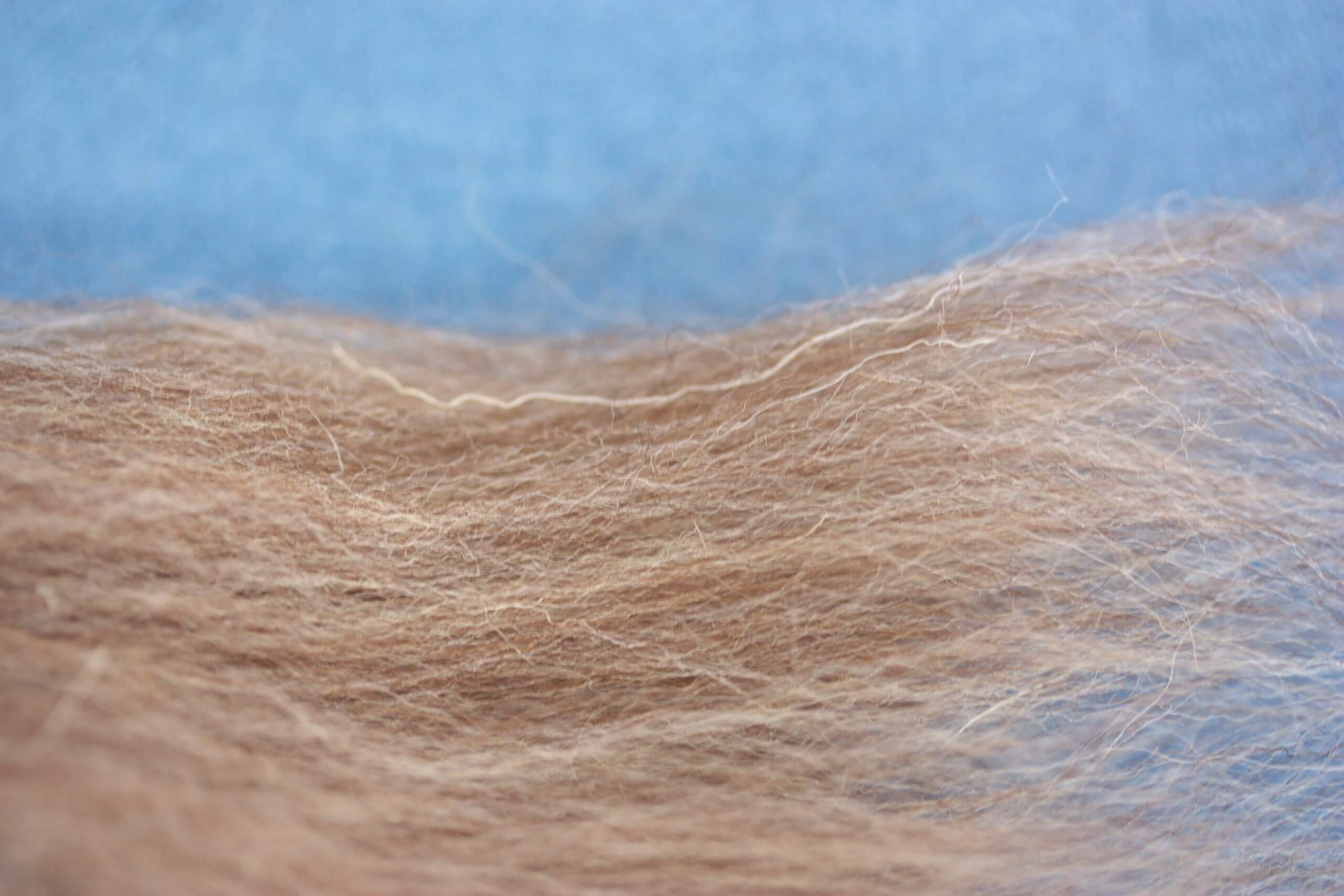
The other wool is similarly inhomogenous - but it also has different fibre diameters. It's light almost-white to dark brown in the individual fibres, resulting in a light to medium brown wool overall:

[caption id="attachment_2820" align="alignnone" width="640"]Have some variety. In your fibre diameter and in the colour! Have some variety. In your fibre diameter and in the colour!


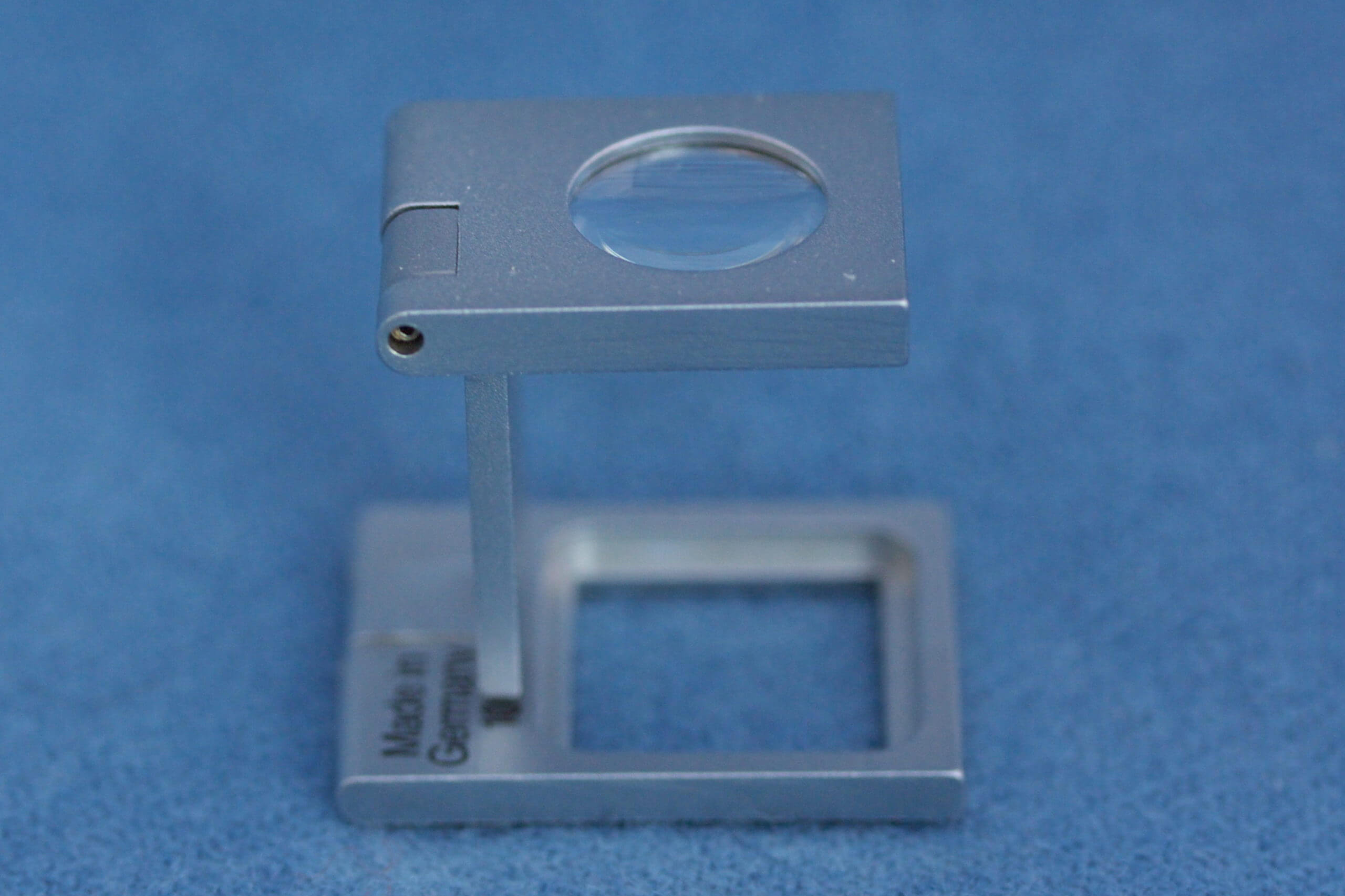
I'm even happier, though, about finally having a special kind of helpful tool in the shop: Thread Counters. One a little pricier, but with a higher-quality lens and made from sturdy metal:

[caption id="attachment_2819" align="alignnone" width="640"]Metal Thread Counter Metal Thread Counter


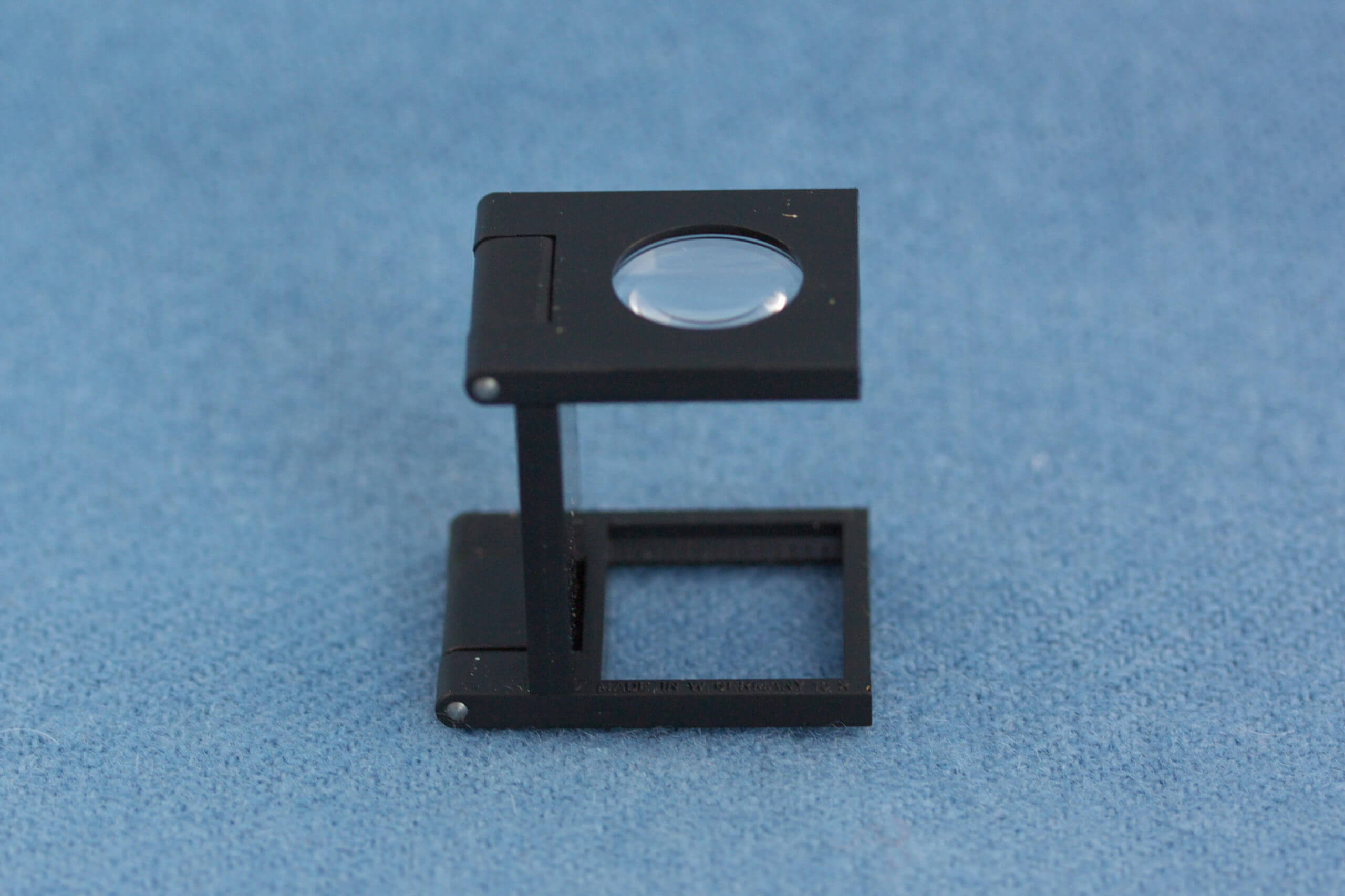
and the other, as the even more affordable option, made from high-quality plastic with a very good lightweight plastic lens:

[caption id="attachment_2818" align="alignnone" width="640"]Plastic Thread Counter Plastic Thread Counter


Both kinds are made by Eschenbach Optik (that have their company in the next large town over, which delights me no end, being a believer in regional trade and such) and they are made in Germany. Both have a tenfold magnification, which is the upper end of what thread counters usually do. I've used a thread counter for ages now (it's what I use for checking spinning angle, for instance), and having a good one really is incredibly helpful.

You can get more information about all these things in the shop - click the links in the text to get directly to the individual items, or this one here to get to the shop front, where they should all be waiting for you with their new friends...
0
DEZ.
14
0

Tips for Production Spinning.

Production spinning - as in making lots and lots of yarn, as consistently as possible, for a specific project - is a nice thing, but it's also a time-consuming task. So before you dive into a spinning project for a handwoven cloth or a hand-knitted sweater (and I'm not talking about a bulky baby sweater here), it is well worth investing some time and effort to make sure that you are not going to sink with your project half-way. So here are some things about production spinning that I find helpful - and maybe you will, too.
  1. Have a solid idea of what you want.
    In case where you are spinning for a fabric reproduction, that is rather easy as it is predetermined by the original. When you are spinning for something else, though, you are free to decide what you want - lots of twist, and thus a resilient and hard yarn? or rather a softer yarn that might not be as durable? Single or plied? Thick or thin? You might want to do a few test runs to find out if the thing you are spinning really suits the thing you want to make with it later - you don't want to invest many, many spinning hours to sit on a lot of handspun that you can't use afterwards.
  2. Get or make yourself a reference thingie.
    Once you have figured out what you want, make sure you'll be able to spin exactly that kind of yarn. Yes, that sounds like a Thank You Captain Obvious, but chances are that you might drift away from the yarn you make at the start. Changes in fitness level, concentration level, the amount of attention you pay, how tense and excited you are at the start versus a bit in - all these can affect the yarn you are spinning. Danger of drifting off what you planned is higher if the yarn you are aiming for is further away from your "mindless spinning standard yarn" - so you will want something to compare your current spinning to, allowing you to recalibrate in case of drifting. This something can be a spinning angle and thickness card like the one I use, or a sample piece of your test yarn stuck onto a card. Whatever you use, it should allow you to compare both the thickness and the amount of twist of your current yarn with your goal yarn. Use it periodically, for instance when you need to stop spinning anyway because you need to have a sip of tea, or change the hook on the spinning wheel flyer. Making these checks a habit will not lose you a lot of time, but might just save you a bad disappointment later.
  3. Be consistent.
    Hand-spun yarns will always have irregularities; it's in the nature of the thing and cannot be avoided. Sometimes they are caused by the fibres, sometimes by a bit of inattention of the spinner, or a snag by the tool. They just do happen.
    However, you can try keeping them down as much as possible by having as much consistency as possible. Set up your workplace the same way, have the same good suitable lighting, the same position or seat, prep your fibre the same way - it will all help.
  4. Prepare your fibre.
    Speaking of fibre prep, this is helpful even if you are working with industrially prepared fibre (just like I do for those projects, usually). Your batt or top will have sat for a while before you take it into your hands for spinning, and it might be compressed; if it was dyed after combing or carding, it will definitely be slightly felty. Even if you don't see any compression, though, it is a good idea to loosen up the fibres by pre-drafting them.
    For the pre-drafting, take the top or the strip of batt, grab the end and gently pull on the fibres until they start to move apart. Change your grip to the place where they moved, and repeat the procedure, working your way along your top or batt. This loosens up the compressed fibres and makes your drafting for spinning much smoother and easier.
    For better consistency, I use a diz for that (though I am generous and call everything with a hole that I use for drafting a diz). The diz also clearly indicates when I am nearing the end of the pre-drafted part of my top (I don't tear off pieces if I can avoid it) and have to pre-draft some more.
  5. Watch yourself, and take breaks as necessary.
    This ties in with the drifting bit - spinning, especially if it is not your can-do-it-in-my-sleep yarn, takes concentration. After a while, this will result in less consistent drafting, more variation, slower speed or something else, or a combination of whatever you are prone to do when your attention gets worse. So keep an eye on your spinning efficiency, and take a break, or stop for the day when the symptoms get bad enough. (You get to decide yourself when that is. If you don't care about a bit more variation in the yarn and have to get it finished soon, you will obviously have a different break-off point than somebody trying to go for the perfect yarn and having lots of time to do that.)
  6. Calculate for enough time.
    Speaking of breaks, and stops - make sure you have calculated for enough time for your spinning project. Spinning is not a fast thing, and you might not be able to spend several hours per day on it either, depending on the project, your other work or obligations, and your level of practice.
    Also - when calculating approximate work time needed, don't forget that you also have to get the yarn off the bobbins and set the twist. Skeining off a few hundred or even a few thousand metres of yarn is not done in split seconds!
  7. Get (and make!) enough material.
    That should be obvious, but it is worth mentioning it - when you are buying your material, make sure you get enough. Especially if you are doing high-twist yarns, they will have more weight at the same thickness than low-twist, fluffy yarns... and running out of material just before the end is not only awkward, but also annoying.
    Speaking of which - when spinning specific amounts, go a little over as well to make sure you have a bit of spare in case there are more breaks that need to be fixed, or something else goes wrong. Yes, theoretically you could just spin up more when it is needed, but in practice... that is also really annoying. And if you are like me, you will want to be finished with that step at some point!
0

By accepting you will be accessing a service provided by a third-party external to https://pallia.net/

Kontakt