



Search the Blog






Latest Comments
Guest - Aislinn
Dyestuff Citizen Science.
09. Oktober 2026
This is a great project. I look forward to the results. Thanks for letting us know.
Guest - Aislinn
Time for...
09. Oktober 2026
Looks delicious!
Guest - Katrin
Sprang Discussion
18. September 2026
Hi Rachel, I have looked for more photos of you, but that was not very successful. I found a link on...
Guest - Beatrix
Sprang Discussion
15. September 2026
That lozenge pattern element is not a photograph, but a scan. So it should be to scale. But I pinned...
Guest - Katrin
Sprang Discussion
15. September 2026
I was not referring to Rachel's reconstruction (is the reconstruction you refer to the one photograp...
Surprise, surprise!
The fabric turned out wonderfully after being fulled - soft and lush and beautiful. It also surprised me a lot.
It's a fourshaft twill, which means every thread goes over two and under two, staggered to give diagonal lines. In a fairly balanced weave with a similar amount of warps and wefts per cm, that should result in a fabric that looks the same on both sides.
Well, guess what this cloth does not do?
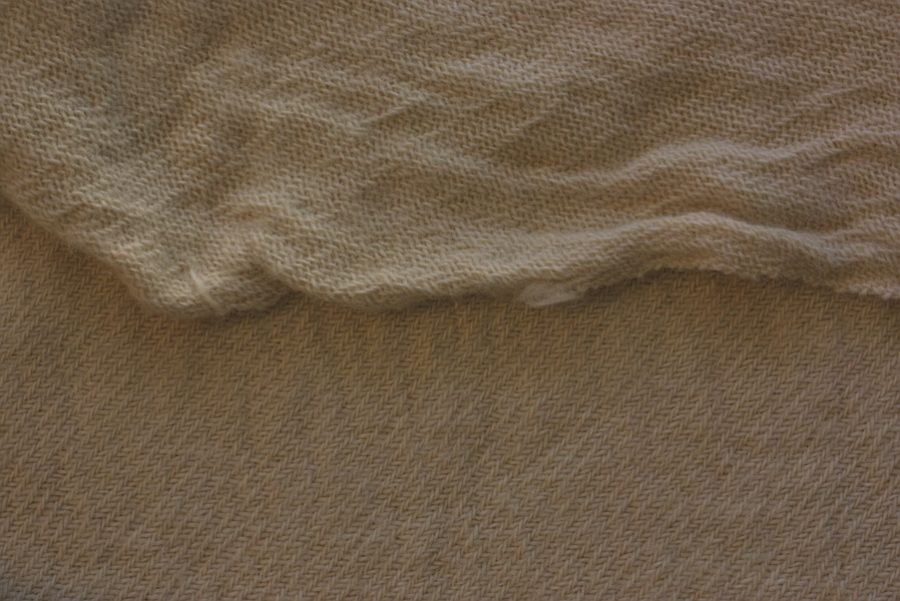
Look the same on front and back.
There you go. Be surprised along with me! (Probably has to do something with the spin direction in relation to the twill direction...)
It's a fourshaft twill, which means every thread goes over two and under two, staggered to give diagonal lines. In a fairly balanced weave with a similar amount of warps and wefts per cm, that should result in a fabric that looks the same on both sides.
Well, guess what this cloth does not do?
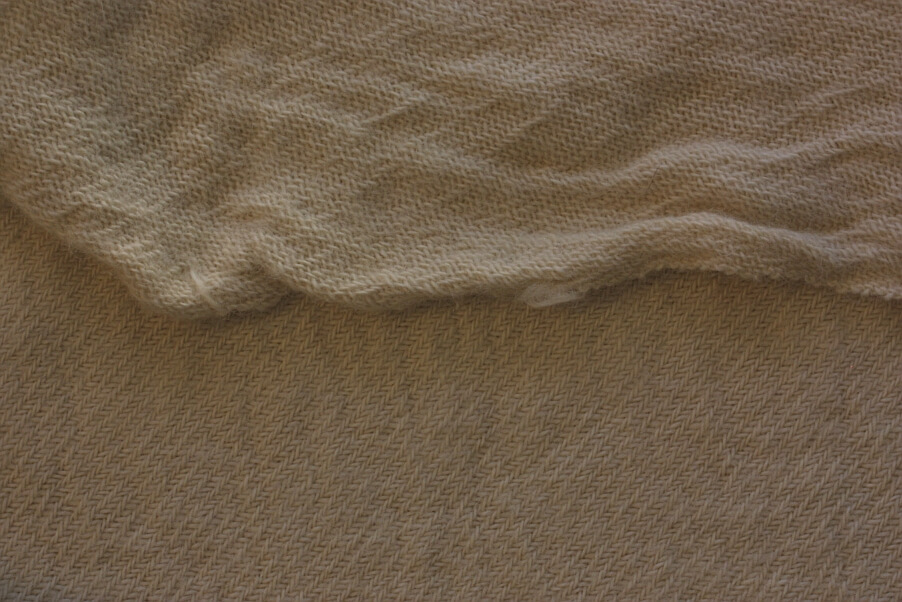
Look the same on front and back.
There you go. Be surprised along with me! (Probably has to do something with the spin direction in relation to the twill direction...)

By accepting you will be accessing a service provided by a third-party external to https://pallia.net/