Latest Comments

Guest - Max Mustermann The True Cost of Driving a Car.
06. November 2026
Great breakdown — the non-fuel costs are exactly the bit most people forget when they compare cars. ...
Guest - Harma Phew. Now it gets involved!
21. Oktober 2026
Have fun at these events.
Guest - Aislinn Dyestuff Citizen Science.
09. Oktober 2026
This is a great project. I look forward to the results. Thanks for letting us know.
Guest - Aislinn Time for...
09. Oktober 2026
Looks delicious!
Guest - Katrin Sprang Discussion
18. September 2026
Hi Rachel, I have looked for more photos of you, but that was not very successful. I found a link on...
JUNI
16
3

Too little yarn error. Again.

skein
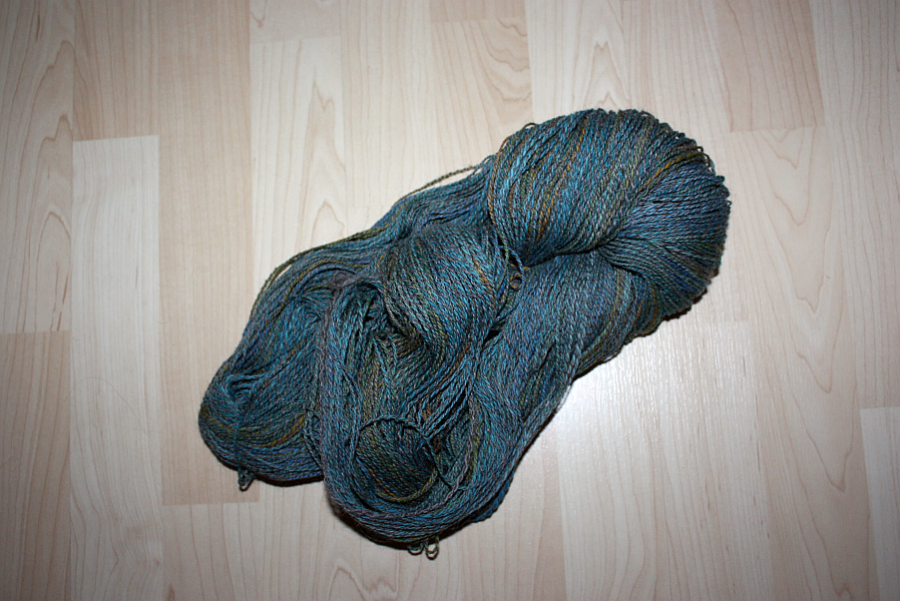
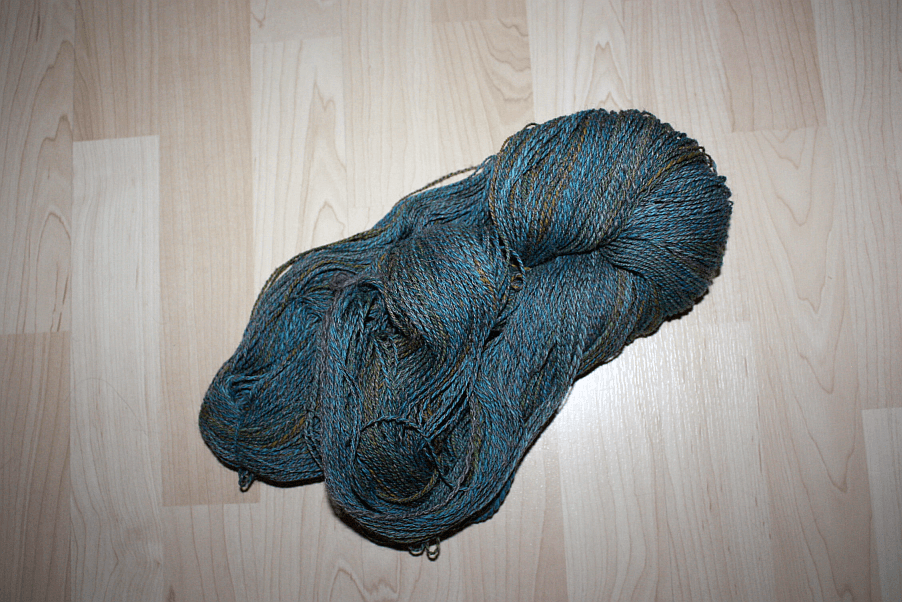
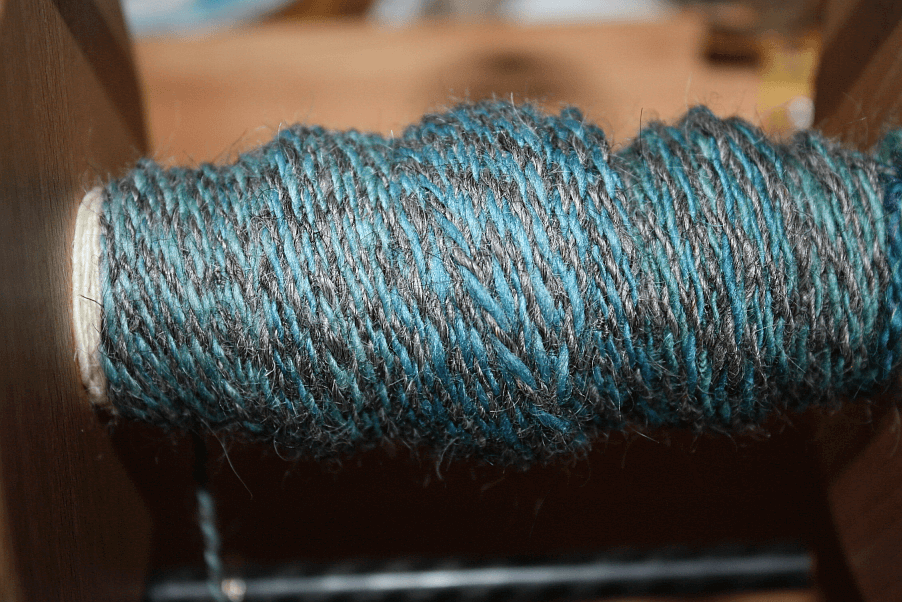
I've told you about my spinning project, and my glorious decision to ply the yarn spun from the dyed top with nice, grey Gotland yarn, to get more length. Well, it is finished now, and it looks really nice. It also knits nicely, and results in a pleasing fabric. Only problem?

It's not much. I have 278 g of yarn, but this weight only runs to a scant 458 m according to my length-measuring thingie. (Damn you, high twist resulting in high-density yarn!) Which is definitely not enough for something sweater-like... so now I have the usual not-enough-yarn problem again.

Sigh.

Maybe if I spin up some more plain Gotland, ply that, and use the two threads alternatingly?
0
JUNI
15
0

Holiday reading!

It's a holiday here today, so you're getting some reading stuff from around the net which will hopefully amuse you:

Making a disease from a remedy - how Trotula gets misinterpreted in medicine papers.

Disability, fraudulent beggars and medieval surveillance.

Fictional languages get a real-world breakdown. This is a really fascinating video, and if you are at all interested in languages and pronounciation, I thoroughly recommend it.
0
JUNI
14
4

More miniature stuff.

There's some more mini stuff going on here at the moment, though this time, it is actually work-related... and weaving-themed.

When I explain textile techniques, one of the basic things that come up again and again is weaving - especially the topic of warp-weighted looms. Explaining the natural and artificial shed, and how weaving is done on that loom type, is easier done as demonstration, but obviously there's not always a loom available.

So, when in the situation of having to explain this stuff ages ago for a seminar, I cobbled together a small functional model of a warp-weighted loom. The "cloth" that I set up for it, though, was very narrow, and the heddles were not well done, and the weights were... well, let's say "cobbled together" does really just do it justice.

Now there's another explaining occasion coming up on the horizon (well, actually, on the pretty close horizon), and I decided to set the loom up again, properly this time. Which means actually doing a bit of maths to figure out a sensible loom weight weight (does that make sense?) and thinking about scale a little.

Scaling down textile stuff... it's a pain in the neck. One of the basic problems of scaling down things for models is getting the textures right. If we're thinking textiles and especially garments, this includes fall and drape of the things - and that typically means yo need to use a much finer, thinner material than the original is made of.

This can be possible in some instances, but when you have a fine, drapey fabric from the start, you'll run into the nigh-impossible very soon. This, by the way, is the main reason why I have never done garment reconstructions on a smaller scale than human-sized, and why I am not a fan of showing clothing (reconstructions) on dolls. It just won't work with the original material, and scaling down small stitches and seams is another can of worms I'd rather not open.

Another scaling-down problem is the size-to-weight ratios of things. Obviously, for a for-show-only thing, this is not relevant - but if you want a functioning model for demonstration purposes, it will bite your behind quicker than you can say "volume". If you take a cube with 2 cm side length, its volume is 8 cm³. Double its side length to 4 cm, and it will have 64 cm³ volume. Now if you want to scale down a warp-weighted loom and wish it still to function, you need a minimum tension for each thread, and you'll have more threads per cm on your loom than in the original fabric, so you will need more tension per cm - and you have less space for loom weights if they are supposed to look roughly in scale. Which means... you need a material with higher density than the original.

For the first instance of the loom, I just used wooden globes with a bore through the middle, giving just enough weight for the shed to open (albeit a little unwillingly). That does not look good, though, nor does it work really well, and especially won't really work for a wider weave.

Since I want to get sensible tension on the threads, though, I might find myself in a fishing tackle store later today, to buy lead weighs originally intended to lure carp to their doom. And then I can move on to get this loom set up - because right now, it looks like this:
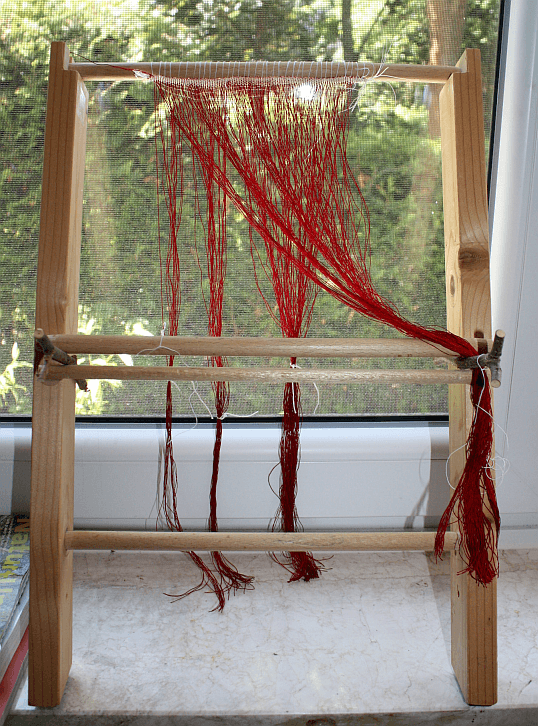
little_loom
...and that's a little unfinished, and a little sad. Also, I'd like to have it working properly on Monday... what was that quip about the last minute being so important, or else nothing would ever be finished?
0
JUNI
13
0

Was lange währt...

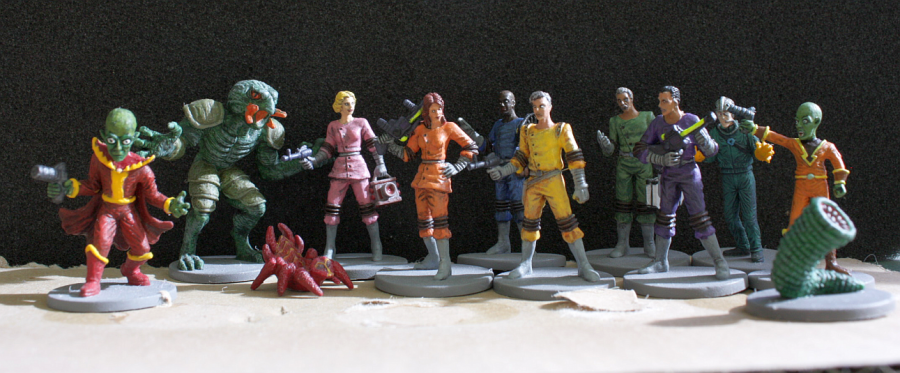
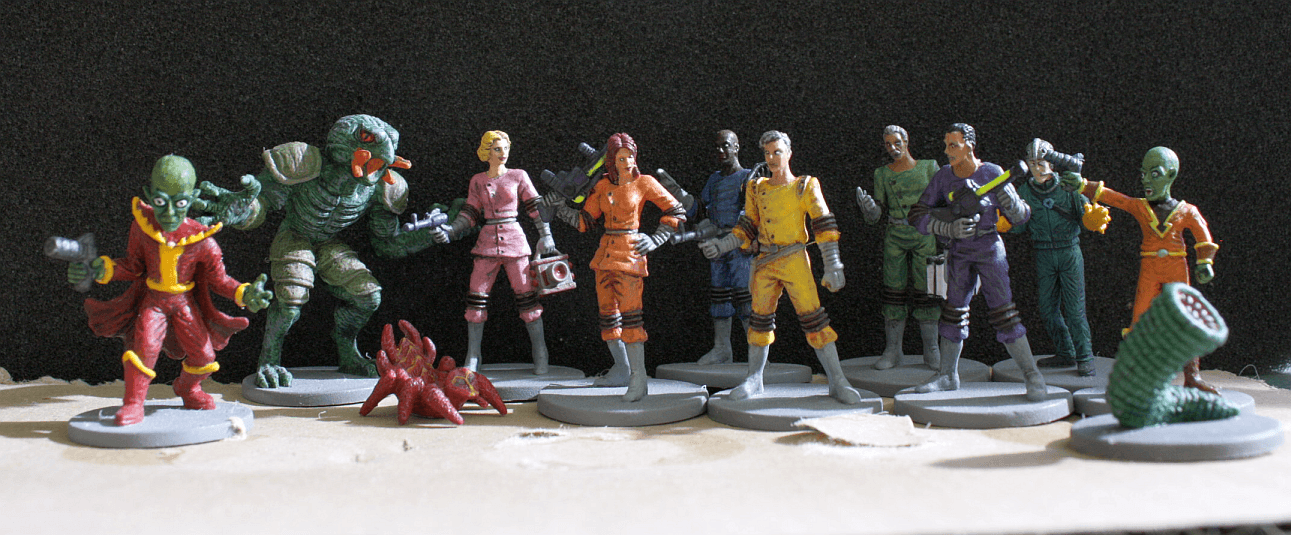
The trusty online dictionary tells me that the English equivalent to the German "Was lange währt, wird endlich gut" is "Good things come to those who wait". Which is a fancy way to tell you that finally, finally... the miniatures for the Space Cadets game are painted and varnished and matte-varnished.

FINALLY.

I've had a lot of fun with them, and then I sort of fell into the trap of wanting to have them perfect, which meant that it was still fun, but a very long-term type of it. Also, some of them were really hard to paint with all the nooks and crannies, and tiny details. Which meant that I had to be relaxed and awake and fit enough for the painting, and there had to be enough light, and that was not always the case, especially not when there were lots of other things to do, so they took a bakcseat for a while, until I pulled them out again, and did some more work on them.

Then they were finished, and we did our research homework on how to seal them. The savvy Internet told us that a very good way would be to use glossy varnish as a first coat, as it's more durable than matte varnish, and then use an anti-shine coat on top. Which means that if you handle them a lot, they will get shiny first, before there's real damage to the paint - and you can just re-matte-coat them. (And that's probably way, way over-engineered, but hey. Who cares, right?)

So we had the plan, we had the varnish, but what we did not have was the coincidence of a) decent and warm enough weather, b) no wind and c) time and leisure to actually apply the coats.

Until this weekend, when all came together and I could finally, finally finish them off. So here, after this wall of text, is your picture proof:

minis_together
I'm quite happy with how they turned out - and now we can go and save the Earth as Space Cadets!
0
JUNI
12
1

Status here...

In case you couldn't see the blog these days - I'm trying to switch the site over to SSl, and as usual, not everything is going all smoothly all the time. So - some figuring out on how to get this switch done is on  the agenda.

Other agenda things: Write up the article for the NESAT publication. There was some Bernuthsfeld work done today (there's always a few more details that need to be looked for); there was some knitting-related stuff (Margit is writing up a pattern for socks, and we're planning to offer a few of the patterns she is showing as testknits). Emails with requests were handled - in short, it was one of these days where lots of small things happen, but in the end, it feels like nothing much was done. (Which is not true, but can be really irritating at times.)

So... a fairly typical Monday, I'd say. And now I hope this blog post will be nice and visible, and the comment section will behave, too (I've been told it has been acting up, but I haven't found out why yet).
0
JUNI
09
2

More about the Bernuthsfeld Man.

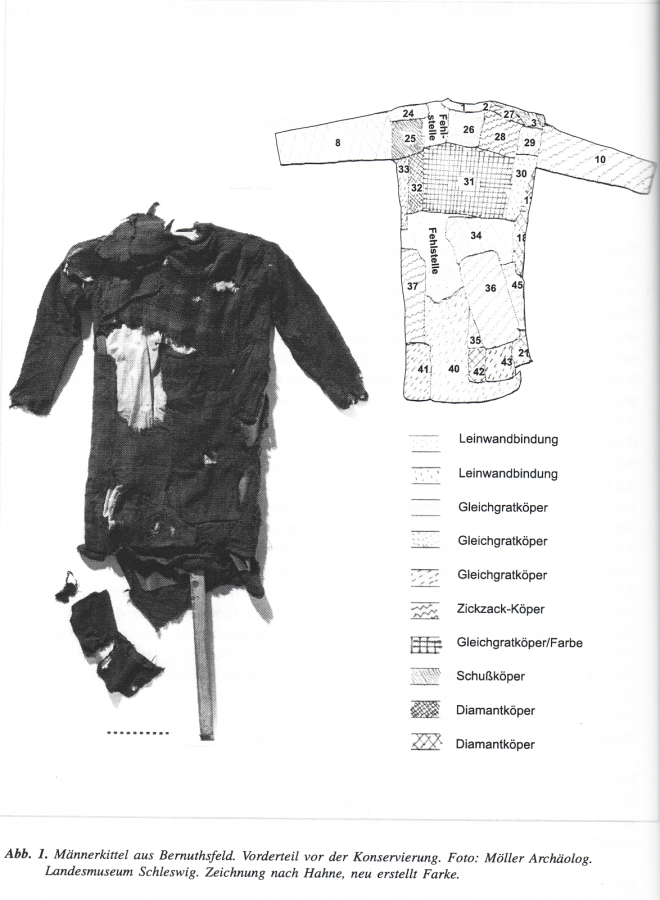
The Bernuthsfeld Man's tunic is really a rather special affair - a very, very simple cut, but it is put together from only patches. It's not a heavily worn tunic that was patched up.

Most publications about the tunic are in German, including one published in one of the NESAT proceedings, which includes this overview picture of the tunic's front:

[caption id="attachment_3151" align="alignnone" width="640"]nesat6_100 Picture from: Farke, Heidemarie. "Der Männerkittel aus Bernuthsfeld. Beobachtungen während einer Restaurierung." In Textiles in European Archaeology. Report from the 6th NESAT Symposium, 7-11th May 1996 in Borås, edited by Lise Bender Jørgensen and Christina Rinaldo, 99-106. Göteborg, 1998, p. 100.


As you can see, it's rather... patchy. The individual bits of fabric all show marks of wear from previous use, possibly in garments; there's lots of twill variations and only rather few plain weave bits. My count is 19 different fabrics, used for 43 patches. Some of them are folded double, others are used as single layer. The "cut", if you can call it that without there having been proper garment cutting, is as simple as possible.

Why that tunic looks like it does? Nobody knows - it is a singular piece (alas, like quite a few textile finds). With its patches, possibly in different colours, but at least in very different kinds of fabric, all looking old and worn, and with the very conspicuous checkered fabric #31 right on the breast in front, it would have been very obvious that this was not a "normal" member of society, though. There are a few late medieval images that show beggars dressed in very, very patched garments - so maybe this tunic was a beggar's work clothing?
0
JUNI
08
0

More spinning... but just for fun.

While I was at it, and the Zwirnzwerg was out, I finally finished spinning up that nice, dyed top that had been hanging out here for a good while. It was about 150 g altogether, which means it's a rather generous amount for a pair of socks, but way too little for anything sweater-like. I have more than enough pairs of socks, though (the sock drawer is overflowing), and I also have more scarf- or shawl-like objects than I actually wear. Same goes for hats. Which means... sweater-like things are currently high on the list of stuff I'd like to knit.

So out came some of the Gotland sheep wool. There must be an upside to having different kinds of wool for sale, right? And obviously, from time to time, I have to check whether the quality is good and it spins nicely...

Well, I can tell you - it did. The fibre is really lovely, with a soft, silky feel to it, and the colour is ever so slightly variegated, since the grey effect is achieved by a mix of dark and white individual fibres. It looks very nice, and very chic all on its own.

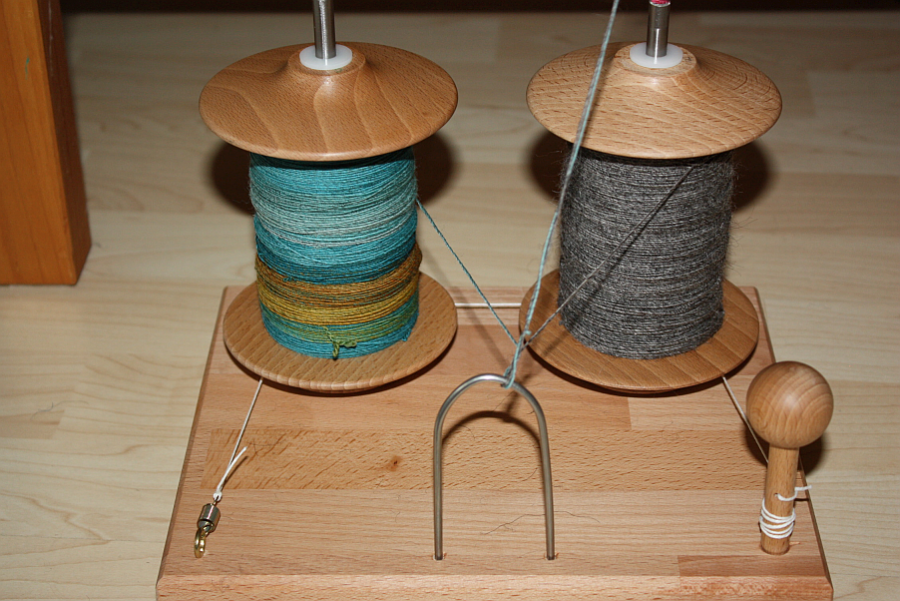
So. Spinning took place, which means that after a while, I had this:

lazykate
...which turns into something like this when plied together:

pliedyarn
And that's the current status. Which will not progress at all until tonight, when I will hopefully have a nice hour or two on the sofa, with the spinning dwarf in front of me, humming away quietly and turning these two singles into lovely, lovely yarn to knit with...
0

By accepting you will be accessing a service provided by a third-party external to https://pallia.net/

Kontakt