Latest Comments

Guest - Max Mustermann The True Cost of Driving a Car.
06. November 2026
Great breakdown — the non-fuel costs are exactly the bit most people forget when they compare cars. ...
Guest - Harma Phew. Now it gets involved!
21. Oktober 2026
Have fun at these events.
Guest - Aislinn Dyestuff Citizen Science.
09. Oktober 2026
This is a great project. I look forward to the results. Thanks for letting us know.
Guest - Aislinn Time for...
09. Oktober 2026
Looks delicious!
Guest - Katrin Sprang Discussion
18. September 2026
Hi Rachel, I have looked for more photos of you, but that was not very successful. I found a link on...
SEP.
28
0

The weirdest animal ever.

I stumbled across something that must be the weirdest animal ever: the tardigrade. If you never heard of it before, you're probably in good company...

These critters have been around since, like, forever. They are water animals, they can live about everywhere and survive extreme heat and extreme cold; they are tiny (usually half a millimetre long), and they look really weird. Really, really weird - and at the same time somehow cuddly (no wonder that they are also called "water bears").

Aliens. Well, almost.

 
0
SEP.
27
0

Rainbow Wool.

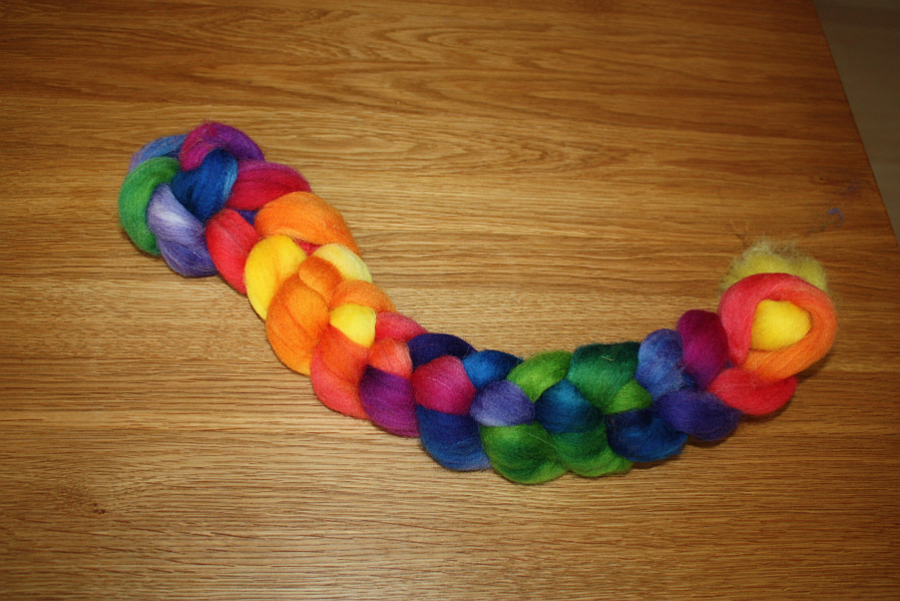
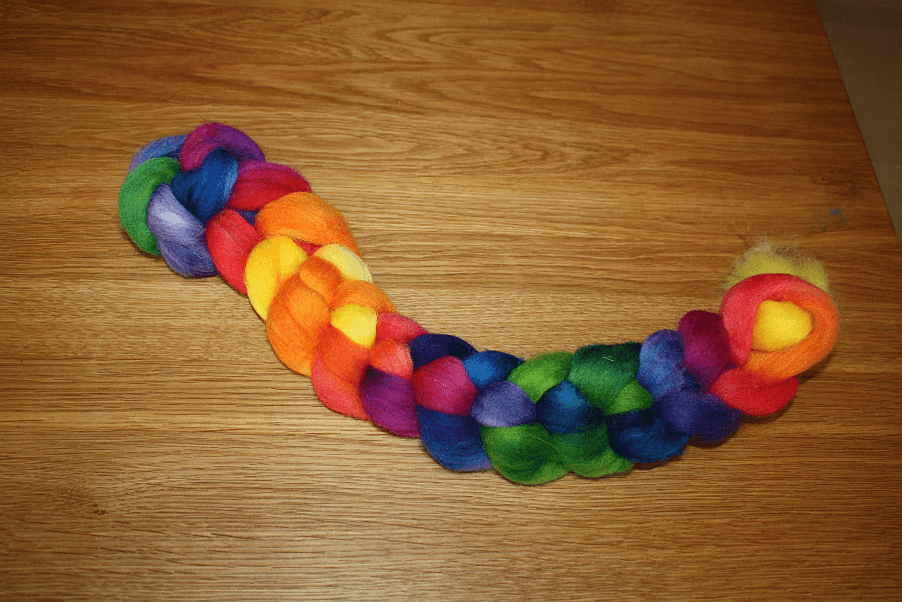
The lovely colourful skein of wool which originally started out as this:

rainbowwool
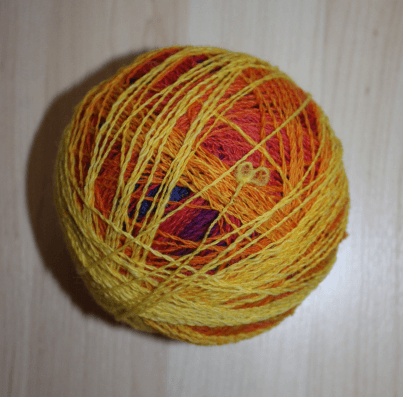
has turned into a ball now:

rainbowwoolball
I'll have a good, long think about what I will do with 745 m of this fine two-ply rainbow. Currently, the thing that sounds most attractive is to take some dark yarn in a similar thickness and eventually knit something wearable in a mosaic pattern.

In case you don't know mosaic knitting - it's a slip-stitch technique where you work with two colours, making incredibly complex-looking patterns that are fairly easy to knit. There's a nice tutorial in a back issue of Knitty to get you started, and if you want more patterns, Barbara Walker has published a whole book called "Mosaic Knitting".
0
SEP.
26
0

Opus Anglicanum Exhibition coming up

Twitter can be really useful sometimes - I learned there that the V&A London will open its new exhibition "Opus Anglicanum, Masterpieces of English Medieval Embroidery"  on 1 October 2016, and the exhibition will run until 5 February 2017.

There's a programme of events related to the exhibition here, and the main page about the special exhibition is here. It looks like a  spectacular line-up of gold embroidery, so if you can manage to get to London during the exhibition, it is surely worth a visit!
0
SEP.
23
1

Really Old Indigo Dyeing.

In Peru, cotton textiles have been found that are the earliest evidence for indigo dyeing to date - about six thousand years old. Both the LA Times and the Smithsonian Magazine have an article about these finds.

It really is an amazing find - firstly because these textiles have survived at all for six thousand years, in a condition good enough to still see the blue colour, even though it's faded, with the naked eye. Secondly, it's not just a few fragments, it's thousands of them. Thousands!

The fragments have been cleaned and partly analysed; you can read an article about the dye analysis here.
0
SEP.
22
2

First Times.

I'm a late convert to knitting - I only learned how to knit when I was 30. Though we were supposed to learn how to knit in school, I only got taught the basics of crochet. In my middle teens, I had asked a great-aunt to teach me, and she dutifully did - she loved knitting, and did a lot of it - but I ran out of steam, and interest, about 30 square centimetres in. (That's about 6 cm length of a 5 cm wide headband, if you want to know.) It was... boring. Drab. Slooow.

When I got into historical textile stuff, my excuse for not doing knitting was that a) a lot of people already know about it and do it, so it's not in danger of becoming forgotten, and b) it's a rather young technique, only coming up into its own in the early modern times, with sparse bits starting in after about the 13th century. So no need for me to get into knitting... at all.

Two things did change my mind: My friend, who gifted me with hand-knit socks (my first pair, that fit totally perfectly, and I fell in love with hand-knit socks at that moment), and one of the colleagues-since-turned-friend at the first Textile Forum, who knit 17th-century long stockings from very fine yarn on homemade wire needles (because you don't get needles that fine anymore). A technique that is used for something as crazy as that? I definitely need to learn it.

So learn I did, while knitting the thing I really wanted to have: Socks. From there, I moved on to more socks - patterned socks, socks knit two-at-a-time on dpns, socks knit two-at-a-time with magic loop (I suffer from a specific variety of second sock syndrome, in which the second sock ends up being two sizes smaller than the first one if I don't knit them simultaneously), hats and lace stuff.

What I never did yet, though, is a sweater. Or pullover. Or (what I like best) a cardigan.

In the end of 2015, I finally had decided that I really want to knit one now, and I picked out a pattern and took my measurements and bought a ton of yarn for it (you remember that "before" photo from a few days ago, right?). I knit a swatch, and washed and petted it, and I was good to go... and then came that book debunking the diet myths. No use in knitting a sweater in a size I won't ever wear again, especially with the incredible speed I knit (read: I do knit moderately quickly, but in the end, it is quite slowly as I tend to put it aside and not work on it for longer stretches of time). I was also not willing to guesstimate any measurements - so the wool went into storage.

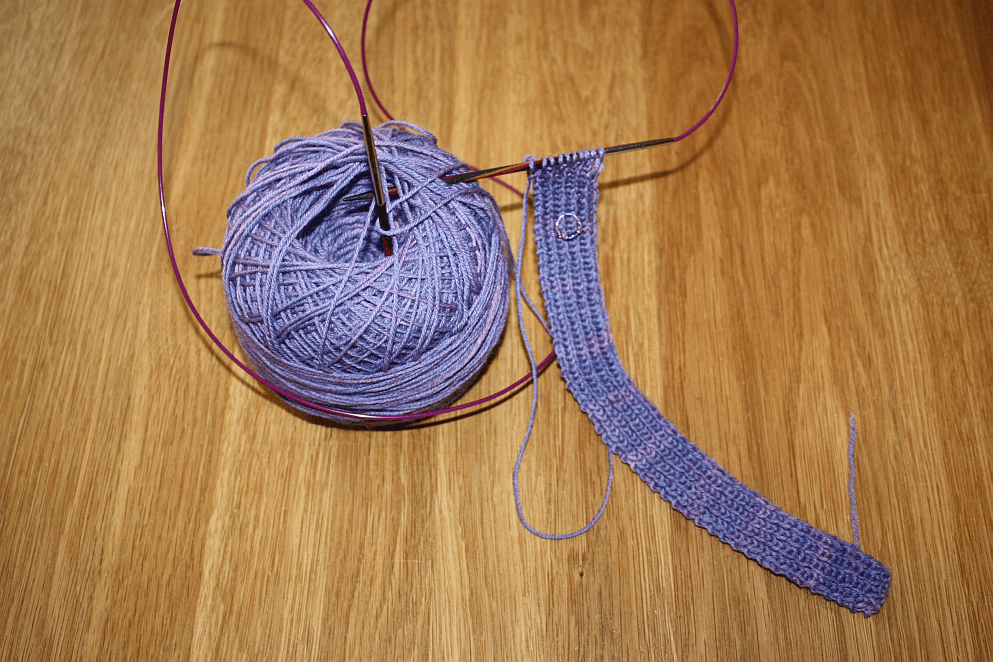
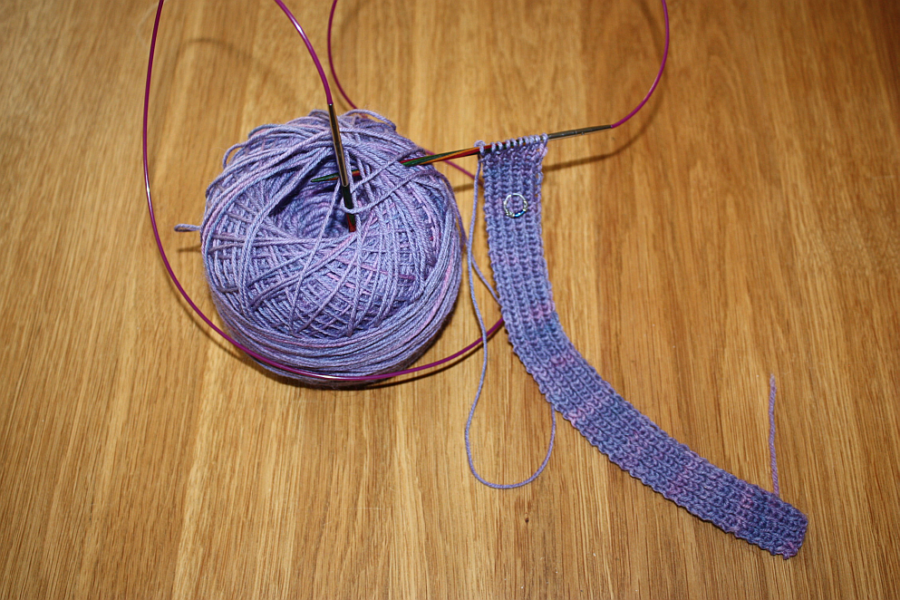
It's still in storage. I got a new pattern, though, and new wool (it's not my fault, these skeins just sort of ended up coming home with me, and yarn that comes home with you while you technically have a yarnbuying embargo in place only doesn't count as new yarn if you have a project in mind for it and cast on sort of immediately, right?) and yesterday... I cast on Vignette.
vignette_back_bottom
I'm totally excited. My first upper body garment thing. I really, really hope it will turn out well!
0
SEP.
21
0

Links to things.

My browser has been acting up for a few hours - which meant no procrastinating by surfing the web.

It also meant that, while I took advantage of this no-procrastinating thing and did all the stuff without browsering on my list, all the work-related things actually done through browsering got stuck in the queue.

Now that everything is working smoothly again (including me!), here are a few links you will hopefully enjoy.

21 more or less amusing things from academic publishing.

Boardgames in the V&A Images collection.

Instead of fat, sugar is becoming the new dietary arch-villain - there's a long article in the Guardian about sugar and the researchers Robert Lustig and John Yudkin. It's not only interesting if you are into nutrition, but also gives a nice (or, rather, not-so-nice) insight into what can happen if one scientist has a hypothesis that is contradicting a lot of other folks' beliefs.
0
SEP.
20
0

Have an old embroidery book.

The next few events are drawing nearer - the European Textile Forum and the Nobilitas-Akademie, so I'm rather busy preparing for these. While the cat, helpful as ever, is sleeping in her cat bed beside my desk, making small adorable sleepy cat noises... that are more an incentive to cuddle her or curl up for a nap than to be as busy as I should be. Oh well.

Since I'm working on the presentation for the Akademie right now, I'm looking at embroidery-related stuff... and I have stumbled across a very early Italian pattern book that is freely available on the net: Alessandro Paganino's book "Il Burato". The book was published in 1518 and contains lots of patterns, plus the famous picture on how to transfer patterns to the fabric.

While you're at the website of the Textile Research Centre in Leiden, to get that pdf, do have a bit more of a look around - there is a lot of content, embroidery- and other textile craft-related, that is really worth exploring!

 
0

By accepting you will be accessing a service provided by a third-party external to https://pallia.net/

Kontakt