Latest Comments

Guest - Max Mustermann The True Cost of Driving a Car.
06. November 2026
Great breakdown — the non-fuel costs are exactly the bit most people forget when they compare cars. ...
Guest - Harma Phew. Now it gets involved!
21. Oktober 2026
Have fun at these events.
Guest - Aislinn Dyestuff Citizen Science.
09. Oktober 2026
This is a great project. I look forward to the results. Thanks for letting us know.
Guest - Aislinn Time for...
09. Oktober 2026
Looks delicious!
Guest - Katrin Sprang Discussion
18. September 2026
Hi Rachel, I have looked for more photos of you, but that was not very successful. I found a link on...
MAI
13
0

Sounds from the Middle Ages.

We are so far removed from the Middle Ages that there are very, very few sensory things left that we can still experience in the knowledge that people in the twelfth century would have had the same experience. We can try to recreate recipes, for instance, but we will never know if a medieval cook would have seasoned something to the same taste... and even deeper than that, many of the foods available today have changed a lot through breeding, so in some cases it has become impossible to use a similar basis for the cooking itself already.

There are some things that have remained much the same, and we can still experience them. Wood fires are an example of this - wood will burn just like it did in 1140, and if it's dry it burns better than if it's wet, and different kinds of wood burn with a different heat, and burning wood gives off light and warmth. And smoke.

However, for most of us today, a fire is something special, not an everyday tool - which is very different from medieval times. Fire was an omnipresent tool, the heat and light supplier, and wood smoke consequently permeating everything. All the time. Which means... when we experience a fire today, we tend to notice the smell of burning wood as something special, while it would have been just like a city smell in our times: so much part of everyday life that it is hardly ever noticed.

We might get a little closer with something that has not changed as much from everyday to special, though - something that would have been noted in the Middle Ages, due to its significance, as it would be noted still today. Such as a church bell.


This bell is called the Theophilus-Glocke (Theophilus Bell) and was cast around 1140 by "Meister Wolfger". It is one of the oldest surviving church bells we have. The fact that we can still hear it ring? Absolutely utterly awesome.

(h/t to Matthis from the Schauhuette blog.)
0
MAI
12
3

Spinning instructions!

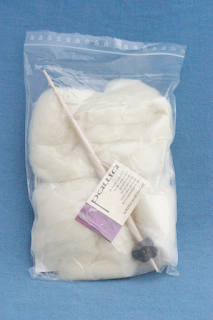
As posted a while ago, I wrote up some spinning instructions to go with a hand-spindle kit.


It did get ready in time for the wool festival at Backnang, and now I have finished translating the instructions into English.

The German version is already available in the online shop - it should be downloadable for free, if there should be any trouble, please let me know. Before I post the English version to the shop, though, I'd like to have a native speaker give it the once-over to catch any stupid bits of Denglish (which tends to happen when translating, unfortunately).

Any volunteers?
0
MAI
11
0

Springtime Lily. Gilded.

The lily of the valley outside in the garden bloom like there's not tomorrow, smelling sweetly, and the iris (who in German are called Schwertlilie, literally sword-lily) are getting ready for their bloomtime too.

So what better time of the year to finally do the prototype for a new gold embroidery kit? I've been offering the starter kit for a good while now, but several people have told me they would prefer something that comes with a motif, thus making the start easier.

Gold embroidery, a nice motif that will appeal also to non-living history folks, preferably not hard to embroider for a beginner? There's a clear winner for this: the French Lily, or fleur-de-lis.

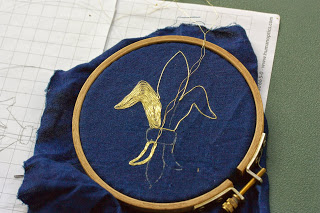
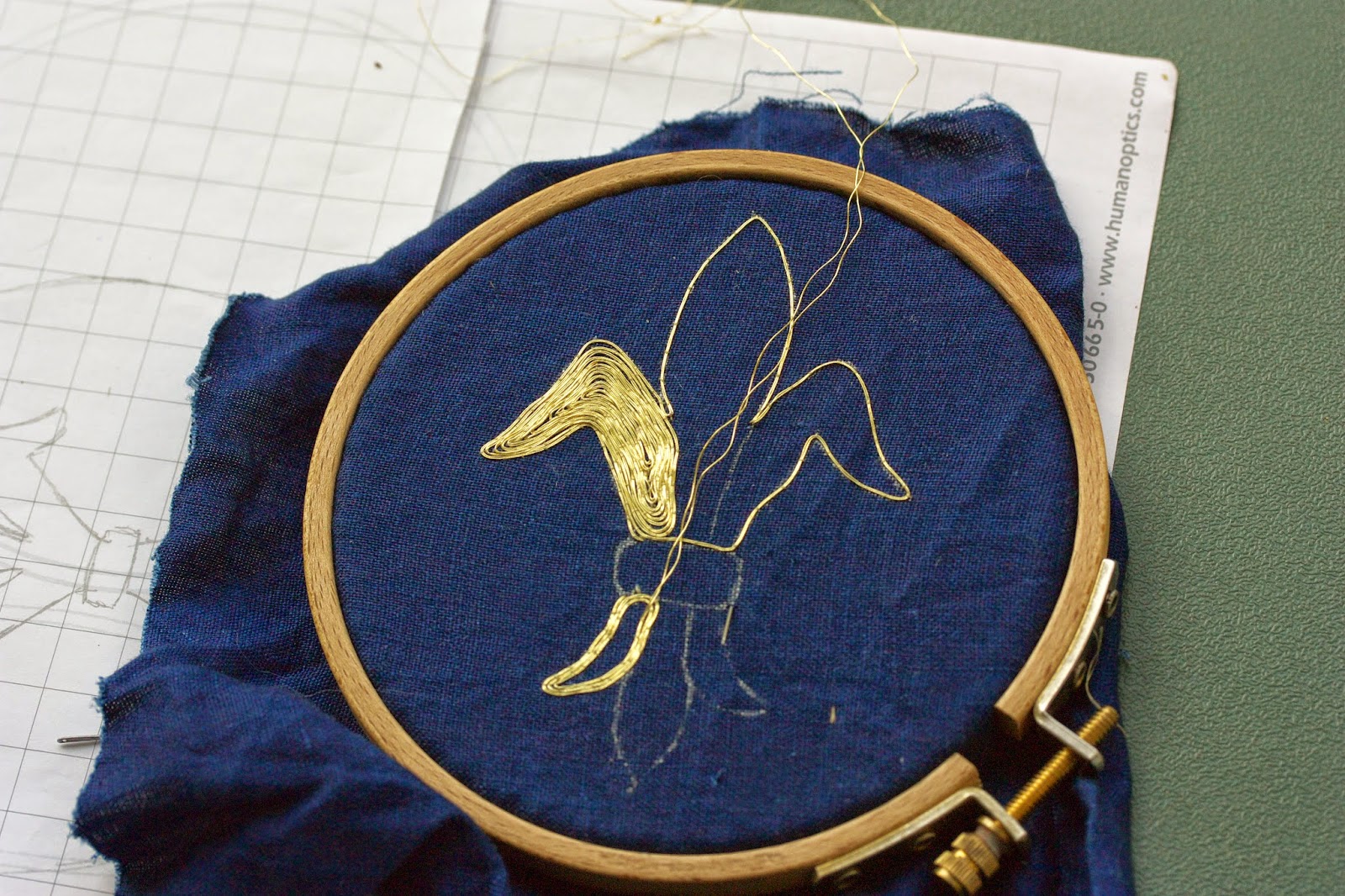
So with the Beast off the table and a lovely fair coming up in the autumn (more about that soon), I finally found time to do some maths, some planning, and now I'm working on the prototype:


If all goes according to plan, the final assembly will be an all-you-need kit, including detailed step-by-step instructions, suitable needles, indigo-dyed linen fabric with the motif pre-drawn, gold and silk thread and an oval embroidery frame that, after finishing the embroidery, can be used as a frame to hang the piece on a wall.

This will make the kit a mix of medieval and modern - historically correct fabric and yarns, but modern tools (especially the frame). This will, however, be very clearly explained in the pattern instructions - and I think that giving more people the opportunity to enjoy this fascinating technique is the main object here!


0
MAI
08
1

Friday Links.

Friday, linktime...

Amica and Maria, two textile nerds (according to their own description) have started a new blog called Historical Textiles.

Gillian Polack is collecting recipes from SF fandom, and she wants yours too. The recipes will end up in a book - fandom deliciousness!

apc has a monograph about an excavation from York online, and it includes textile-related finds (among them a needle): Blue Bridge Lane & Fishergate House.

More research literature? Uni of Groningen has a publications database that might make you happy.

If you prefer something with more pictures, here's a collection of bizarre images from medieval manuscripts.

Sad things are happening too, unfortunately: The Tsock Tsarina has returned to her blog, but for the worst of all reasons - to announce that she has terminal cancer. I learned how to knit while following her instructions on how to make socks in "Tsocks 101", and her sock designs are something that always make me smile. Fuck cancer.


0
MAI
07
2

The Joy of Non-Cooperative Software.

I've been working on new stuff for the online shop - distaffs, for instance, and little glass containers for the oil-light wicks. And now I'm all blocked in my enthusiasm, as somehow my shop system refuses to let me upload the pretty pictures.

It stumps me - I've already checked the usual culprits, and everything seems to be in order. I've updated the shop system and checked the database... nothing. So I will have to add the things without pictures for now, and hope I can solve the problem soon.

Meanwhile, have some more pictures taken at Freienfels, where I did an outdoor test of the oil light wicks in a medieval-style glass lamp:


 The lamp and the chains were a present to me from several years ago, together with a different kind of wick-holder - a metal bridge that was supposed to hang across the oil surface and hold the wick. It did work, but not very well, as the holder and wick needed very frequent adjusting for a good flame.


Not so with the floaters - as long as there is oil to burn, it burns quietly and like a charm. Towards the very end, there are some quiet sputtering noises, warning you that the lamp will soon run out of fuel, so you have time to refill with some oil, or you can just wait until it has burned itself out.

We had the lamp hanging outside, and with the water level low enough, it was even relatively wind-resistant. I really enjoyed having it hang there, and it was giving a lot of light all around: the beauty of the glass lamp is that it's also illuminating the things right below the lamp, as opposed to a lantern or candle-holder. I will definitely use this lamp a lot more often in the future!
0
MAI
06
2

Pictures from Freienfels.

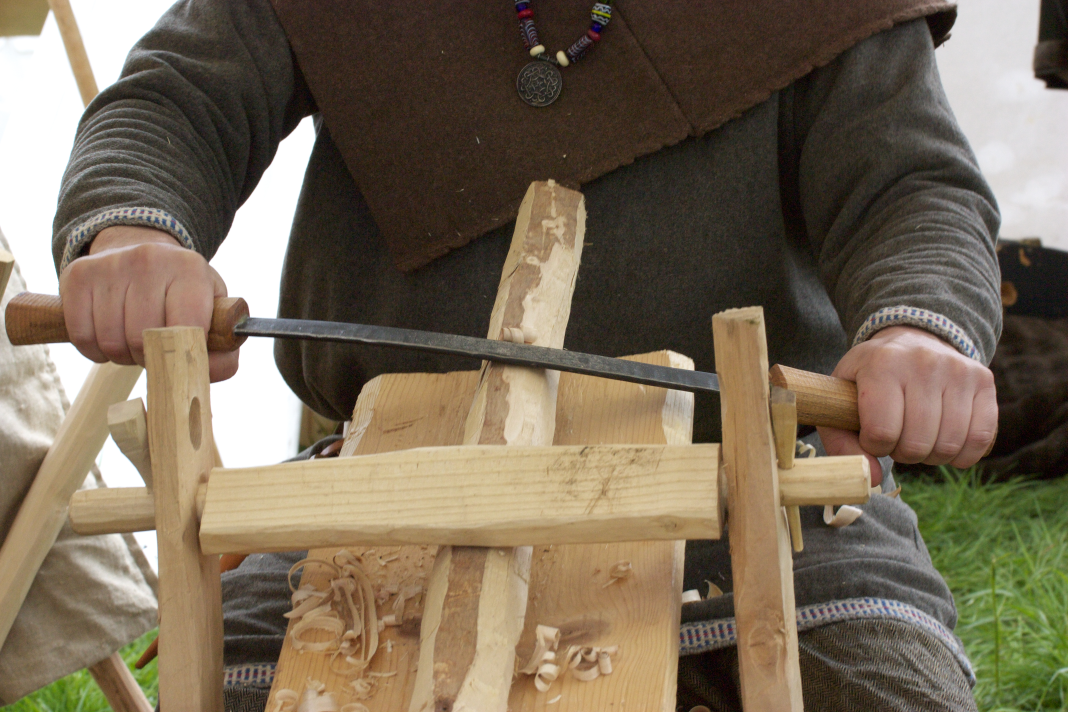
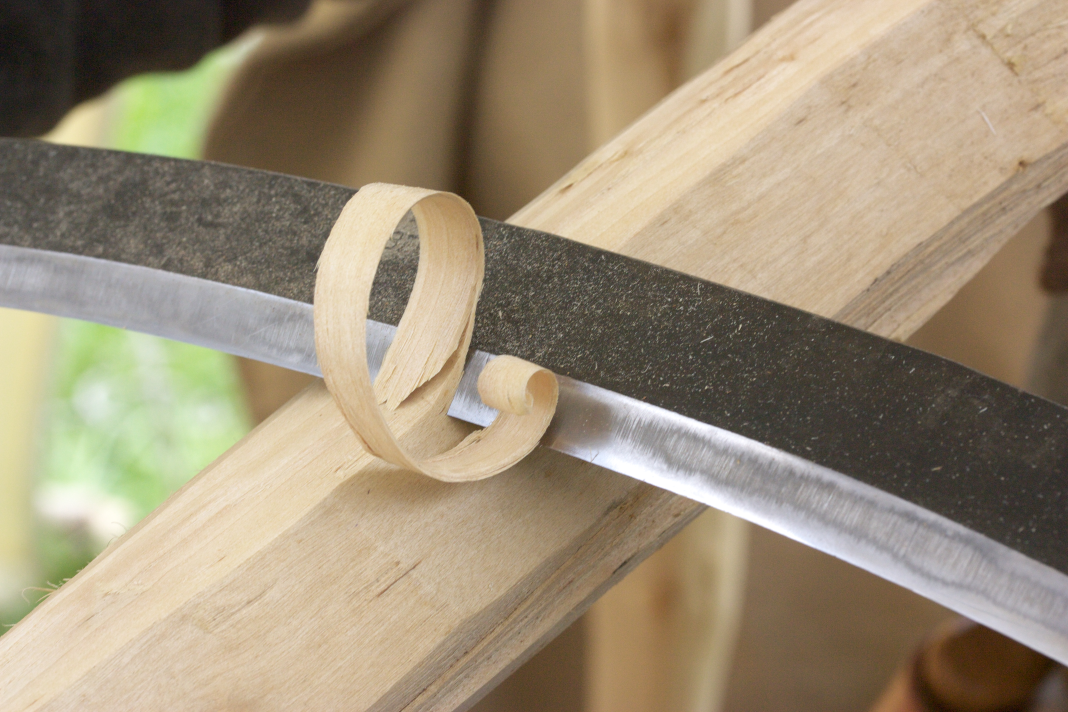
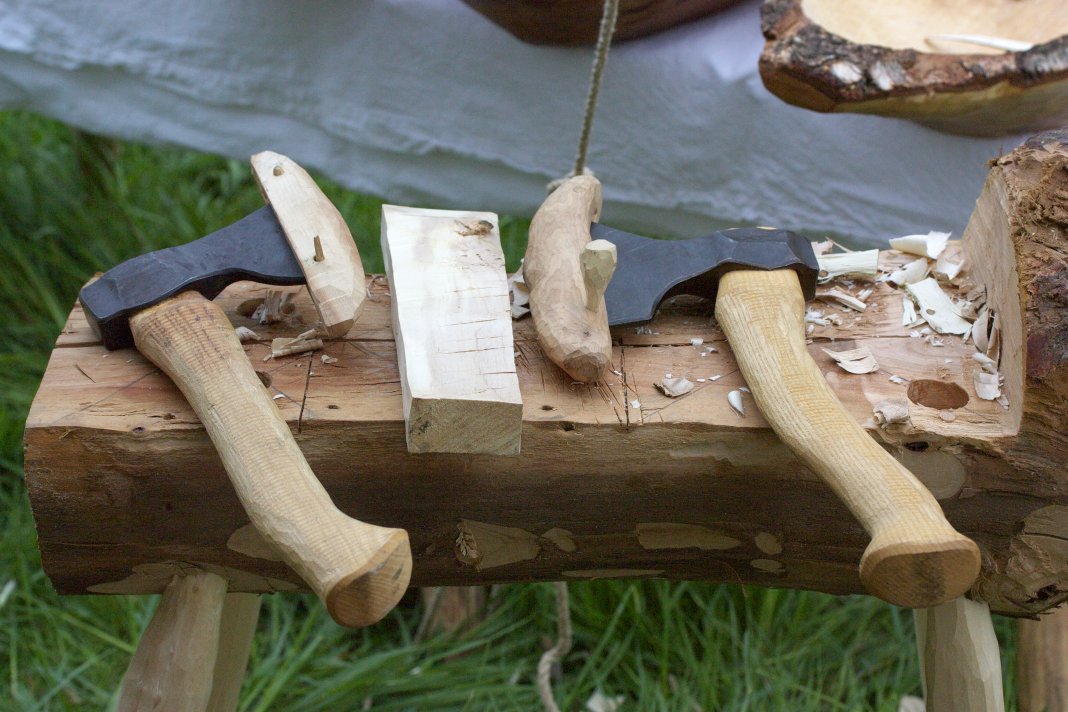
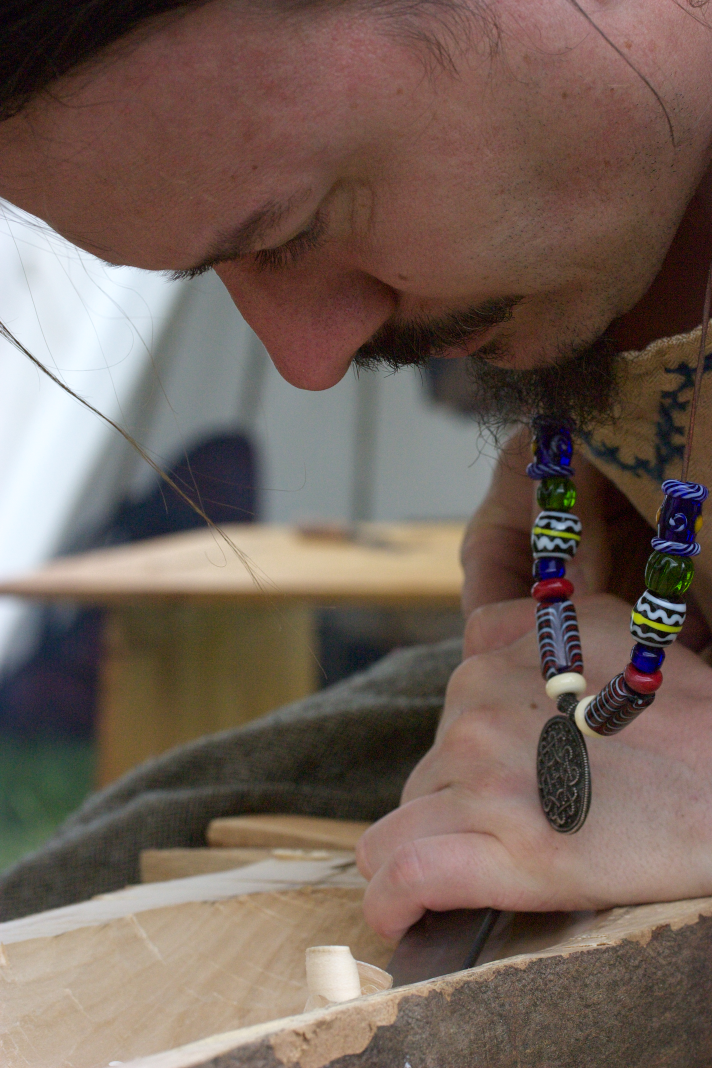
Freienfels was uncommonly picture-heavy - as usual, we stood together with a few friends, one of them a woodworker. Who was in need of a few nice pictures of his equipment and himself while working... so I took the opportunity, brought my camera, and had a lot of fun documenting different woodworking techniques.

Working with a drawknife...


there's a very special kind of beauty to really sharp tools doing their thing with wood.

There also were axes, protected by sheaths made after a find from Haithabu...


... and irons of different sizes and shapes for finishing troughs.


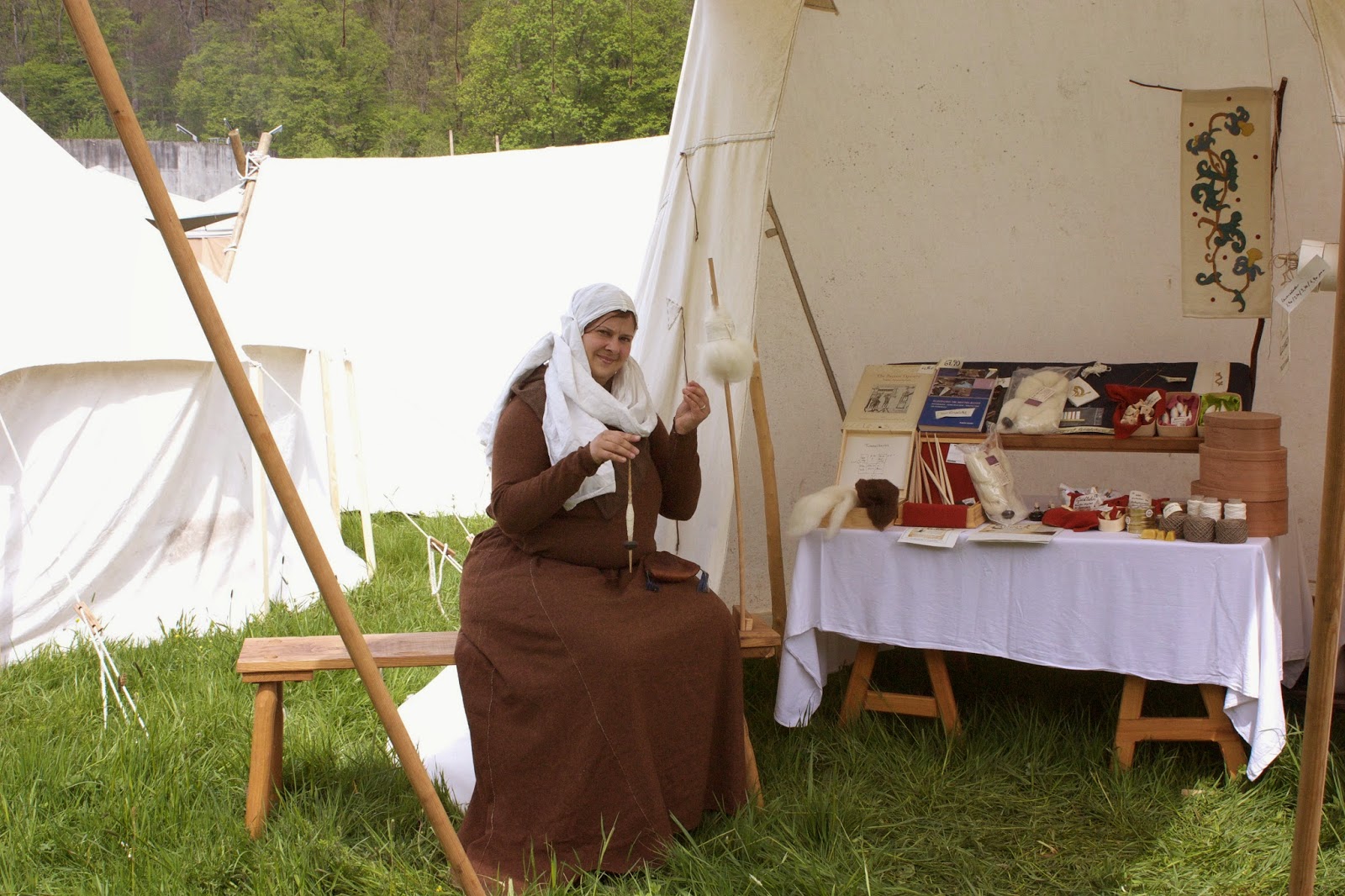
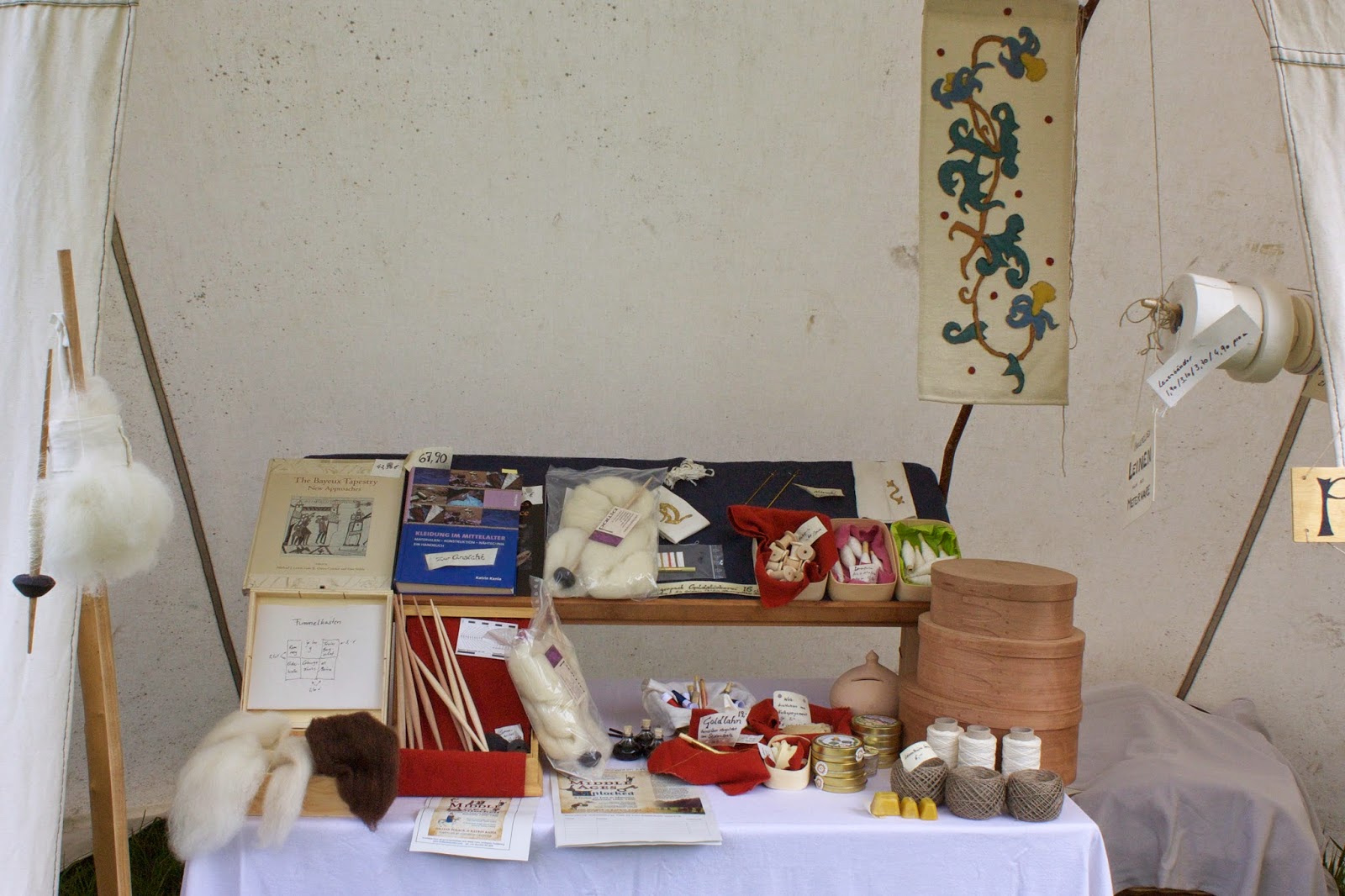
Of course there were also a few photos that I did not shoot myself, such as this one - spinning on my bench with distaff-holder, in front of my trusty little market stall.


And a closer look at the table with goods:


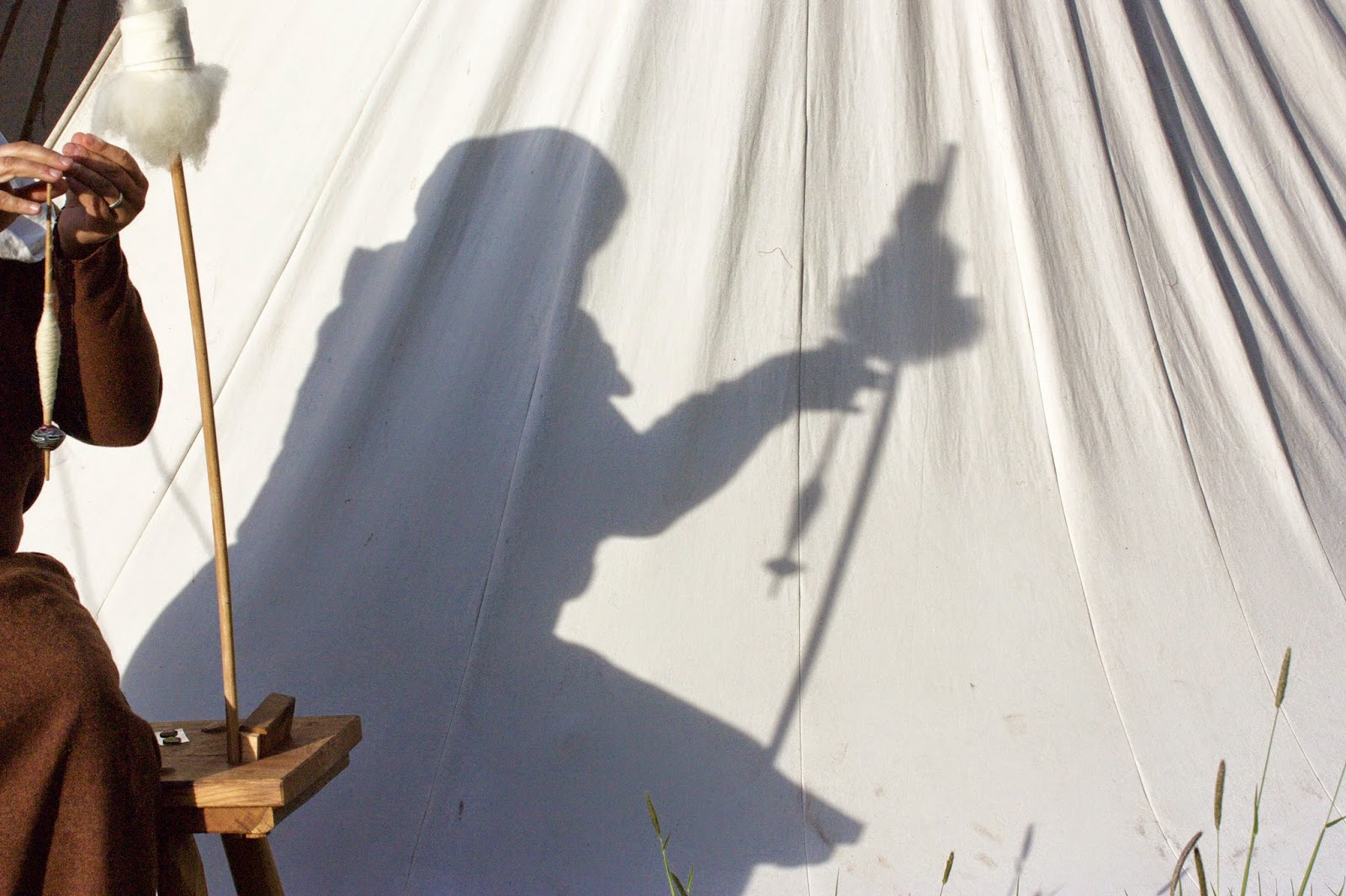
I did a lot of spinning this weekend, trying out a theory regarding spindle whorls. Added bonus for this? A very special photo - the light and shadows of spinning!


0
MAI
05
0

Where the book money goes.

The topic of getting paid for books, and how much you get as an author, and how much you make if you sell books came up again in one of my conversations this weekend - need I mention that I talked about the Beast a lot?

The conversation, however, reminded me that this is something not everybody knows, and probably a good thing to blog about.

Anyone who has ever heard something about authors and royalties knows that you will not get rich by writing.* From the cover price of the book, about 2-15% end up in the author's bank account.** So where does the rest go?

A good chunk of the money is consumed by the actual printing of the physical book and related costs - storage, transport, shipping, logistics involved with that. Then there's the people working in the publishing house who have to pay for their lives as well. About half the cover price is deducted for booksellers (which can include authors, if they choose to sell their own book as well). And that's it.

Since book prices are more or less fixed***, that means you can decide where your book-buying money goes to, with no difference (or very little of it) to your own bank account.  The publishing house and the author get a fixed amount for every book sold, but then there's the seller's profit, which is about 30-50% of the cover price.

Your choice of where you get the book decides who gets this money. Want to support a certain publishing house because you just love everything they turn out? Order your books directly from them - it means they get their profit plus the bookseller's profit. You have a favourite bookstore, online or brick-and-mortar? Buy your books there. (Since price differences are rather small, buying books not in the Big River Store, but from other companies, is a rather pain-free way to curb the monopoly of Amazon, too.) Your most beloved authors are selling books themselves? If you buy directly from them, they will get their royalties plus the bookseller's profit (which is usually a multiple of the royalties). I can't say how things will work out for the Beast yet, but for Kleidung im Mittelalter, I get about six times as much money if I sell it myself than if the publishing house or a bookshop sells it (and I'm getting a good royalty rate for this, so it will probably be an even bigger difference for the Beast).

So if you are ever wondering where to buy a book in the future, now you know that your decision will actually make a difference to the bookshop, publisher, or author. The most important thing, though, is that the book gets out there at all - to be read, enjoyed, talked about, and used in all the many possible ways that a book can be used. (Including as a doorstop or plant press, if necessary.)


*The very few exceptions to this are what proves this rule.
** If you google stuff, there are quite a few web sites that will tell you a standard royalty rate is 10-15%. This, however, is not true for all genres or types of books and all circumstances; if you are not writing a novel, things may be very different.
*** Book prices are completely fixed in Germany and Austria - books printed by publishing houses here have a price that you must ask when selling said book, or else. Prices are more fluid where this system does not apply, but a newly released book will sell for more or less a similar price wherever you buy it.

0

By accepting you will be accessing a service provided by a third-party external to https://pallia.net/

Kontakt