Latest Comments

Guest - Aislinn Dyestuff Citizen Science.
09. Oktober 2026
This is a great project. I look forward to the results. Thanks for letting us know.
Guest - Aislinn Time for...
09. Oktober 2026
Looks delicious!
Guest - Katrin Sprang Discussion
18. September 2026
Hi Rachel, I have looked for more photos of you, but that was not very successful. I found a link on...
Guest - Beatrix Sprang Discussion
15. September 2026
That lozenge pattern element is not a photograph, but a scan. So it should be to scale. But I pinned...
Guest - Katrin Sprang Discussion
15. September 2026
I was not referring to Rachel's reconstruction (is the reconstruction you refer to the one photograp...
FEB.
22
0

Honey Knowledge.

About a year ago, I sort of decided that keeping bees would be a nice thing to do, as there are too few bees around hereabouts, and it can never hurt to have some more. Bees are wonderful, astounding and fascinating creatures - they not only produce honey (which I don't eat so much of, but I still like it quite a bit), wax (one of the main reasons why they were cultivated in the Middle Ages - there's much less wax to be harvested from a hive than honey) and propolis (I always have a bottle of propolis dissolved in alcohol in my travelling kit), they are also the reason why we get to eat fruits and vegetables. Many, many edible things would not be there if it weren't for the bees...

However, before taking the lives and well-being of several thousand creatures (like 30-50.000) into my hands, I'd like to have some proper grounding in knowledge and experience. So I spent this Saturday learning about the many things that can befall bees and make them suffer, or even die.

One of the things every beekeeper these days has to cope with, and be on the lookout for, is the varroa mite. That is a parasite originally living off Asian honey bees, but it has spread to almost everywhere worldwide these days. The other bees, though, have never developed coping mechanisms for this parasite - so without treatment, the mites will suck on the bee brood and the adults, shortening their lifespan by about one third. Which means that without treatment, the winter worker bees will not survive until April, and die about at the end of January or in February instead. With a lot of the workers dead, the hive cannot generate enough warmth anymore, and there are not enough bees to get the colony going again in spring - so the whole hive will die off.

Another thing, that I will hopefully never have to see myself when keeping bees, is American Foulbrood. This is a bacterial infection that targets the bee brood, and the younger brood is very vulnerable to the bacteria - as little as a single one is enough to infect a one-day old larva. The honey from a hive with this disease is still safe for human consumption, and in some countries it is acceptable practice to keep the symptoms down with antibiotic treatment. However, this means that the honey you buy might contain spores of the bacterium - completely safe to consume for you, but dangerous to bees. If bees eat that honey, they carry the bacteria back to their hive, and there the nasty little buggers can wreak havoc. A hive that is infested with AFB has to be killed off, and the hive box and equipment has to be either burned to destroy it or disinfected completely. If you have AFB in Germany, you have to inform the authorities, there will be an off-limits area established around the stricken hive, and all hives inside the area will have to be tested for AFB as well. This disease? It's really, really nasty. And it can be spread by honey that is perfectly fine and healthy for humans to eat.

Which means... please don't spill honey outside, or leave honey for insects to find and eat. Make sure any honey containers are rinsed, or closed properly (or both) before tossing them. Your honey spills could kill off a bee hive - or even several.
0
FEB.
18
0

Lots of Links.

I have a stack of diverse links for you again - hope you'll enjoy them!

First of all, for those of you who understand German, here's a nice video about archaeological excavations of a Villa Rustica (a Roman villa):


Shit Academics Say has a really interesting article about quitting one's PhD study over at the blog - if you're struggling with your PhD and are not feeling happy with the thought of spending x more months doing this work, I'd definitely recommend it.

Historian Sasha Handley is just starting out with a blog about the history of sleep - go check out the very first post on the blog, if human sleep in Early Modern Age is of interest to you.

On an unrelated note: Edible Spoons! (Looks like the spoon-baking thingummy is just a prototype yet, though, and thus not really available.)

And finally, if you're non-white and an SFF fan, you can request assistance to be able to attend a con via Con or Bust. Including WorldCon 75 - application is possible until February 25. Helsinki! I'll be there too!
0
FEB.
17
0

Here's what I did yesterday evening...

... apart from some knitting, that is:

I went for a little walk with the most patient of all husbands, entered a building, handed a card over to an elderly lady, and received a sheet of paper with lots of boxes to tick in return.

Boxes were ticked. Then I brought the sheet into another room and handed it over to a guy in a white coat, who stuck something into my ear, asked me a few questions, scribbled some notes on the paper and signed it.

I carried it into yet another room, where yet another guy pricked my ear and did some stamping on the paper and the card, and a third one handed me an aluminum box with a few plastic items in it. And the sheet of paper, joined by a second and third one.

In yet another room (I carried the box there), I lay down on a comfy recliner, told some lady my name and date of birth (while she was looking at the papers), got handed one of the three sheets, and then she stuck a needle into my arm.

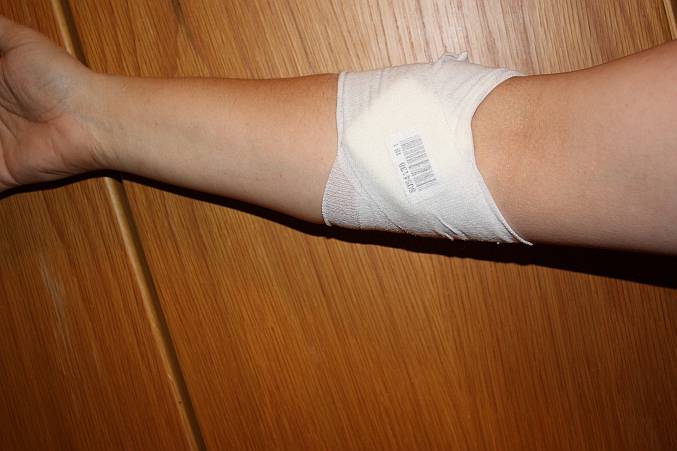
About ten minutes later, my right arm looked like this:

[caption id="attachment_2213" align="alignnone" width="677"]blutspendeverband The barcode in the wrap matches the barcode on my paperwork and the bag plus the test tubes that my blood went in. It's more or less just decorative on the arm, though!


And you've probably figured it out by now - we went to donate blood. I've been doing this since I turned eighteen, with a few years of hiatus inbetween, and it's a really nice thing to do. We usually team up with a friend or two, which makes this a nice and social evening for us. It's a good feeling to be able to help somebody else (plus you get your blood checked, and will be informed in case there's anything really amiss with you), there's lots of nice and friendly people there, and after the donation you get coffee and a bite to eat. Donating blood also has some health benefits for the donor, so it's an allround win-win situation. Yay!
0
FEB.
11
0

Textile Economics.

One of the things that come up frequently when I do presentations or demonstrations of textile techniques is the value of textiles. We're so used today to going into a clothes shop that sells things for ridiculously low prices that our estimation of textiles and their worth tends to be very low.

The ridiculously low prices are not without their own price, though - only it's usually not us here who are paying it, but cotton farmers, clothing factory workers in Bangladesh, or everyone in the area where cotton is grown when water supplies are used up and the groundwater level plummets (no wonder if up to 20 000 litres of water are used to produce one kilo of cotton), or is poisoned by herbicides and pesticides.

It's not fair, it's not sustainable, and a lot of people have been talking about this "fast fashion" and its problems in the last years. (Just plug "fast fashion problems" into your favourite search engine. You'll be surprised.) There's things we all can do, though - one of them is becoming more aware of what we buy, and how often. Another thing is to try and avoid conventionally grown cotton (organic is much kinder to both producers and the environment) and look for clothes that were not produced in Bangladesh, but more locally. Buy used clothing, mend things that can be mended, and give things you do not wear anymore away instead of tossing them into the bin.

The fact that textiles are such a cheap commodity today has coloured our perception of textile crafts, and our internal valuing of fabrics. This makes it hard for many people to understand why fabrics were so precious in the Middle Ages (and also way past that time, until rather recently). Clothes used to be a very valuable thing, in our past, and I do wonder if they will, one day, be again.
0
FEB.
05
0

Assorted Links

Assorted links for you on this Friday - and hooray, weekend is almost upon us!

First of all, a post about how little changes can have rather large effects overall, sometimes without us noticing it at first: How a lamp took away my reading, and a box brought it back.

For those of you who dcrochet and like peacocks, here's a pattern to crochet a peacock feather appliqué.

Discarding Images has a picture of a very fluffy cat.

And finally, I found an online bookstore that might be an alternative to the Big River (and, as they bought them, bookdepository): wordery.com. They are located in the UK, ship world-wide with free delivery, and I can feel the urge to buy a book or two coming up, just so I can check them out.
0
JAN.
27
0

Help save Italy's Archaeology.

 
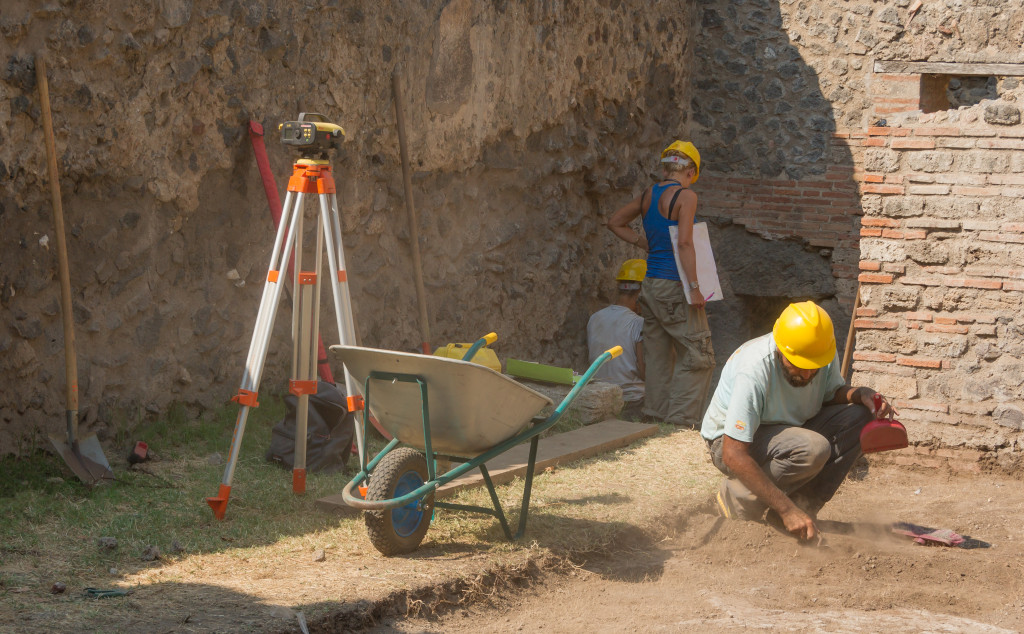
[caption id="attachment_2162" align="alignnone" width="640"] "French archaeologists at work 2015 Pompeii" by Jebulon - Own work. Licensed under CC0 via Wikimedia Commons - https://commons.wikimedia.org/wiki/File:French_archaeologists_at_work_2015_Pompeii.jpg#/media/File:French_archaeologists_at_work_2015_Pompeii.jpg


To me, Italy is the place where the Romans were, the place where culture had its heyday in Antiquity. The place where Things Happened that I had to learn about in school even though they happened in a country far to the South of Germany - because they were so important. (The founding of Rome. The Roman Empire. Latin. Well, that didn't happen, that was spoken, but it was a huge thing for a long time.)

So you'd think that a place like that would be proud of its heritage, right? And take good care of it, including the archaeological sites? Well. That would be nice, but unfortunately, it's not true.

The Italian Ministery of Cultural Heritage is planning to cancel the Archaeological Heritage Offices, through a reform that will impact Italian archaeology, including rescue archaeology. This is major bad news - if anything, Italian archaeology needs more funds, and more support, and more action. Case in point? Pompeii, the world-famous site, has been crumbling for years and is in ever more danger of falling apart completely.

As is usual today in cases like this, there's a petition going on at change.org to make the ministers re-think their decision. It's still fairly new, and thus still fairly small. Please help make a difference and help save Italian archaeology by signing, and spreading the word - thank you!
0
JAN.
25
0

Have a Kerfuffle?

When I looked into my twitter feed yesterday, I found a post mentioning the Oxford English Dictionary... and that led into finding a full-blown kerfuffle. The reason? This tweet.


What followed was... interesting. There was some agreement that this was not a good choice for a use-case example, and there was lots and lots of harrassing, attacking and snarking at both Michael Oman-Reagan and those who agreed with his critique.

There was also a, let's say, less than smart reply from the OED twitter account. They have since relented and promised to review their use-case example for rabid. Why does that matter? Here's what Michael writes about this thing. There are also a few other articles about the kerfuffle, such as this one at Geeking Bad, or this one at Metro UK, or this one at carbonated.tv.

This is not the first time somebody wrote something about the OED being sexist: Michael also mentioned an article, written in 2014, in his twitter feed, though that one seems to have gotten only little attention.

Words matter, and language and culture are closely connected to each other - so yes, what a dictionary gives as "typical example use" does matter. There will always be differences between men and women, unless science finds a way to enable men to become pregnant and give women the same muscle structure and muscle-to-fat ratios that men get. But while there may be differences - wouldn't it be a much nicer world if we even out the rest of the field as much as possible?
0

By accepting you will be accessing a service provided by a third-party external to https://pallia.net/

Kontakt