Latest Comments

Guest - Aislinn Dyestuff Citizen Science.
09. Oktober 2026
This is a great project. I look forward to the results. Thanks for letting us know.
Guest - Aislinn Time for...
09. Oktober 2026
Looks delicious!
Guest - Katrin Sprang Discussion
18. September 2026
Hi Rachel, I have looked for more photos of you, but that was not very successful. I found a link on...
Guest - Beatrix Sprang Discussion
15. September 2026
That lozenge pattern element is not a photograph, but a scan. So it should be to scale. But I pinned...
Guest - Katrin Sprang Discussion
15. September 2026
I was not referring to Rachel's reconstruction (is the reconstruction you refer to the one photograp...
FEB.
15
0

Old things, new open access.

Occasionally, really cool things happen in this world... such as the Met making its images all open access. That means 375,000 images of public domain works to share, remix, or use in any way you want to, under a Creative Commons Zero license.

This is wonderful!

You can go read more about the open access here, and here is the starting page for image and data resources so you can go have a rootle. They also have an extensive list of publications that are available online and for free, and you can find those here.

And I think the Met now has a few more people loving it...
0
JAN.
16
0

Links for your delectation.

Time for a link roundup again!

If you're interested in experimental archaeology, you might enjoy taking a look at the Butser Farm archives - Butser was one of the first places to do experimental archaeology, and still is a famous name among ExArchies.

Fur was an important clothing material right along with textiles - and if you'd like to read some more about it, Cotte Simple has a fur primer (with lots of pictures).

You prefer harder stuff? Like stone? COGA (creation of gothic architecture) is a website with detailed information about building phases of churches in France, for instance for Notre-Dame-du-Fort in Étampes. I find it utterly fascinating!

That was not the hard stuff you were thinking of? Medievalists.net has a link to a paper about medieval women and their recourse to arms.

I will recourse to the spinning thing now. There's still some more yarn to be made...
0
SEP.
20
0

Have an old embroidery book.

The next few events are drawing nearer - the European Textile Forum and the Nobilitas-Akademie, so I'm rather busy preparing for these. While the cat, helpful as ever, is sleeping in her cat bed beside my desk, making small adorable sleepy cat noises... that are more an incentive to cuddle her or curl up for a nap than to be as busy as I should be. Oh well.

Since I'm working on the presentation for the Akademie right now, I'm looking at embroidery-related stuff... and I have stumbled across a very early Italian pattern book that is freely available on the net: Alessandro Paganino's book "Il Burato". The book was published in 1518 and contains lots of patterns, plus the famous picture on how to transfer patterns to the fabric.

While you're at the website of the Textile Research Centre in Leiden, to get that pdf, do have a bit more of a look around - there is a lot of content, embroidery- and other textile craft-related, that is really worth exploring!

 
0
AUG.
19
0

Friday Resources and Things to Read

The 10th Experimental Archaeology Conference will be held in Leiden, Netherlands, on April 20-22 2017. The Call for Papers is still open until September 1, so if you'd like to offer a presentation, you should do so soon.

The Virtual Library for Art, arthistoricum.net, has a full-text server called ART-Dok, made available by Heidelberg University Library. It offers members of the academic community worldwide the opportunity to publish their texts in electronic format on the internet at no charge. As for now, it provides free full-text access to 4,194 publications. You can also do fulltext searches through the texts. Intrigued? Go here to find the publications archive.

Textilis has a blog post about transferring embroidery designs in the 18th century.

The paper about the dyeing experiments done at the European Textile Forum in relation to the Pompeii lead vats, published in EXARC, has now gone open access: Investigating the Influence of the Kettle Material on Dyeing in the Industry of Pompeii.
And finally, totally unrelated and only here because of its sheer weirdness - did you know that there was a trend to dye armpit hair in bright colours, a while ago? I didn't, until this morning...
0
JUNI
17
0

Helpful Things.

Here's a stack of things you might find helpful...

Dark Patterns - this is a library of tricks that some websites use to trick you into buying things or doing stuff you normally wouldn't (such as subscribing to a newsletter or service). It explains the different techniques and lists examples from websites doing it. I was surprised to find audible.com on one of the lists...

There's a new book out, called Agent-based Modeling and Simulation in Archaeology (editors G. Wurzer/ K. Kowarik/ H. Reschreiter). The book was published in the Springer Verlag, with the typical high price point, as Archaeologik rightly criticises (link to German review. You can find English reviews here and here). Still - it might prove to be a helpful tool for archaeologists trying to model things (not in the clothing sense, obviously).

The EXARC Journal issue 2014/2 is now free to read online.

There's a startnext project running called "Schaf und Schäfer" (sheep and shepherd) with the aim of buying wool from shepherds in Northern Germany for a fair price, and getting it washed and spun in the region. You can support the project and get a stack of knitting yarns, too (though there's not much of the yarn reward tiers left).

Aisling has posted another list of tablet-woven bands on her blog: bands from Late Antiquity and the early Middle Ages (in German).

Not as helpful as these links might be:

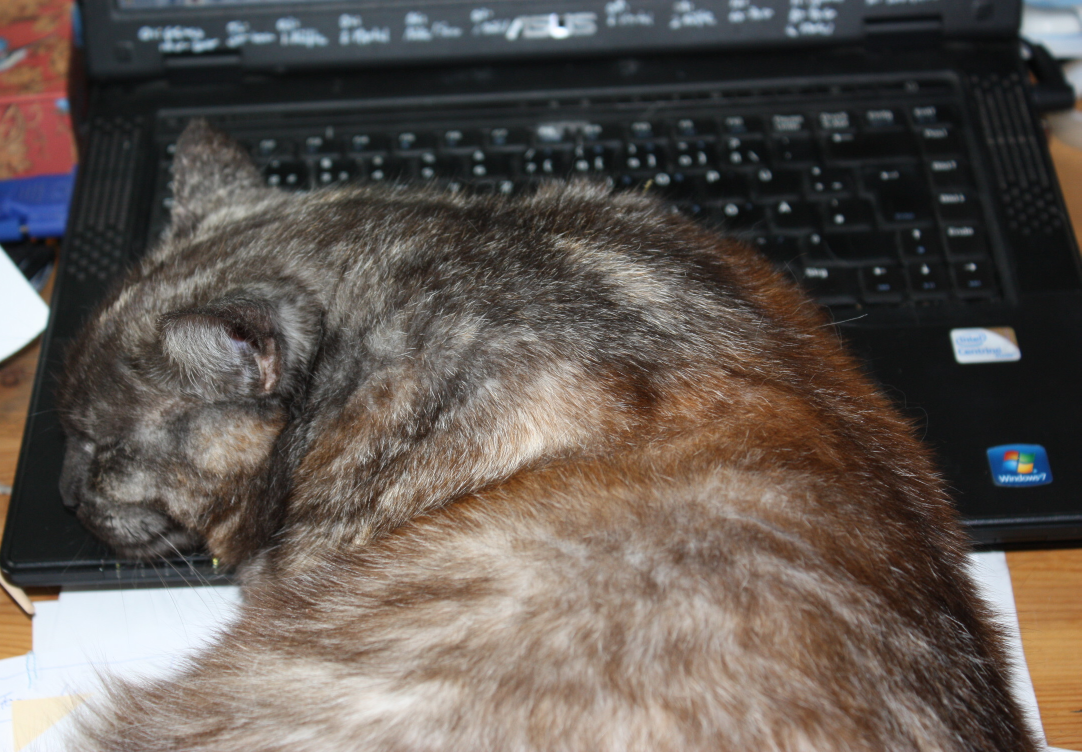
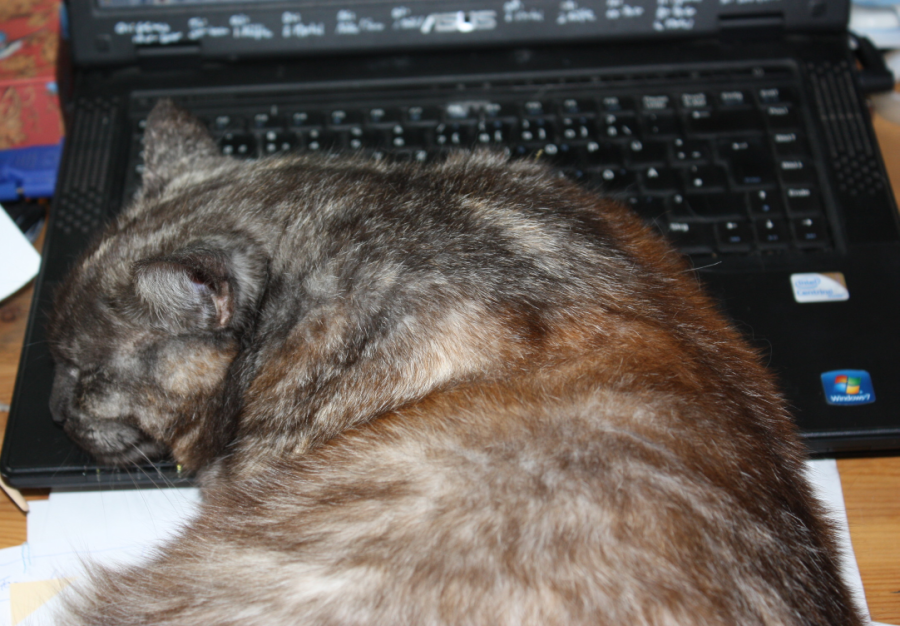
mieze_auf_rechner
The little cat, picking my laptop as her pillow-of-choice. She also manages to choose different positions where she places her paw on the touchpad... which is just as non-helpful.
0
MAI
12
2

An Assortment of Links!

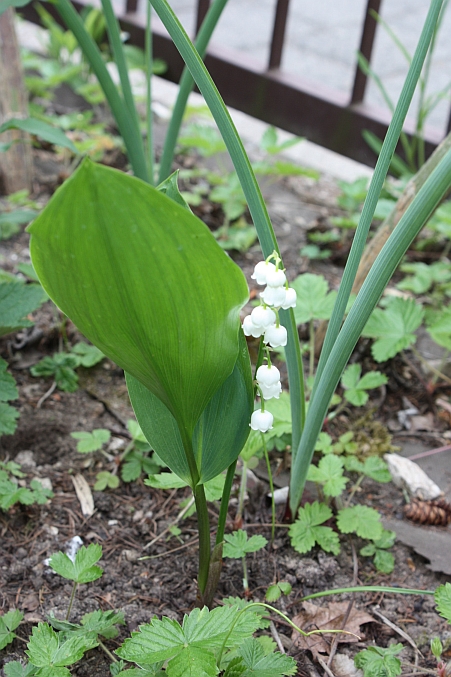
I have a stack of links to throw at you again - but before that, here's proof that our garden knows which month we have:

maigloeckchen
These are called Maiglöckchen in German - which literally translates to "May Bells". The German language seems to like flower names with a time of year in them - we not only have "Easter Bells" (daffodils) and "May Bells", but also "Whitsun Roses" (peonies).

Cathy from Loose Threads has something else: a list of tutorials. I haven't looked at any of them yet, but they range from medieval things to Victorian, and you might just find something that amuses you - or might prove helpful.

Erik Kwakkel at the medievalbooks blog has a fascinating post about medieval scripts, including a picture of a scribe's advertisement sheet.

Aisling has a list of tablet-woven bands from the Anglo-Saxon and Viking period found in Great Britain and Ireland.

Rainer Schreg has some thoughts about the Vienna Statement about the threat to cultural heritage in the Near East and North Africa. If you want more about that topic and don't mind a gruesome read, check out Heritage for Peace's newsletter about damage to heritage sites in Syria.

To end with a lighter note: There's a new Jane Austen film, "Love and Friendship", coming to theatres tomorrow. It's a screenplay adaptation of "Lady Susan" (a short epistolary novel). Here's an interview with filmmaker Whit Stillman. If you'd like to pass the time until then with more Austen film adaptations, you might want to check out this list.


0
APR.
04
0

Routledge Free Access Fortnight

Routledge is granting free access to their archaeology journals (everything after 1997) from today until April 17. The list of free journals (43 altogether) includes Medieval Archaeology, Journal of European Archaeology, and the Journal of the British Archaeological Association, so if you are interested in archaeology, it's definitely worth a look.

Access is possible via this page on Routledge - enjoy!
0

By accepting you will be accessing a service provided by a third-party external to https://pallia.net/

Kontakt