Latest Comments

Guest - Aislinn Dyestuff Citizen Science.
09. Oktober 2026
This is a great project. I look forward to the results. Thanks for letting us know.
Guest - Aislinn Time for...
09. Oktober 2026
Looks delicious!
Guest - Katrin Sprang Discussion
18. September 2026
Hi Rachel, I have looked for more photos of you, but that was not very successful. I found a link on...
Guest - Beatrix Sprang Discussion
15. September 2026
That lozenge pattern element is not a photograph, but a scan. So it should be to scale. But I pinned...
Guest - Katrin Sprang Discussion
15. September 2026
I was not referring to Rachel's reconstruction (is the reconstruction you refer to the one photograp...
FEB.
01
0

The day needs more hours.

I definitely need more hours in a day. Or more nights that miraculously turn out to be working nights, yet still deliver rest. Or something like that.

Yesterday, for instance, was totally gobbled up by work on the Textile Forum site (and no, it's not visible yet, I am working on a local copy of the page to make it into a nicer and more functional thing).

So somehow, all the small things that need to be done teamed up with the bigger things and ate the day. Again. It's not the first time this has happened to me, but I had only wanted to spend the morning on that page work, and do something else the rest of the day. Like planning for a possible kickstarter campaign (which is thoroughly scary), and doing some more archaeology-related writing, and some translating.

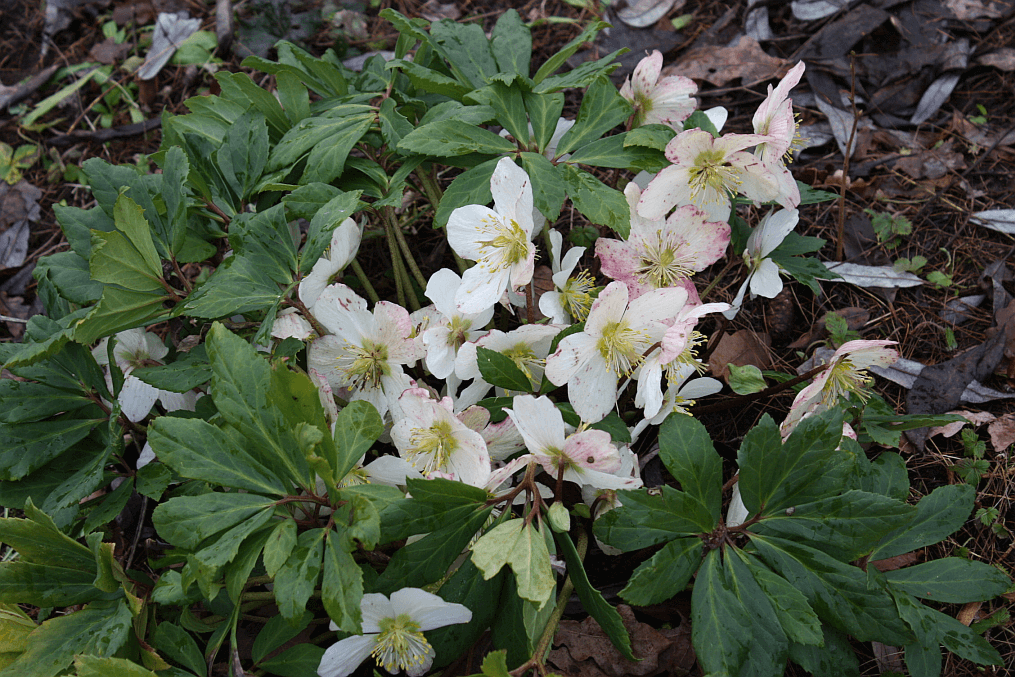
Sigh. At least I did manage to snap a photo of the nicely blooming hellebore out in the garden, which I can now share with you:

hellebore
0
DEZ.
18
0

The Tasting Thing.

The region I live in is the Promised Land if you like bread, pork-based meat dishes, sausages, beer, and baked goods in general. Germany is famous for its wonderful bread varieties, and Franconia has the best breads in Germany. But I'm actually not concerned with bread at all at the moment - my mind is much more seasonally and regionally occupied: with Lebkuchen.

Lebkuchen (which may or may not contain ginger in the spice mix, and thus may or may not be translatable as gingerbread) is especially famous if coming from Nuremberg (or the area), and the best kind are Elisen-Lebkuchen, which contain little or no flour. I have my own recipe for them, and I like the result a lot, but this year, we'll get our supply again from our favourite Lebküchnerei (which is a bakery, but making only - or almost only - Lebkuchen. Welcome to Nuremberg.)

We (and quite a few of our friends) are quite sure that those are the world's best ones. But of course, tastes differ, and there's always the (albeit small) chance that there might be something even better around. So what do you do, obviously?

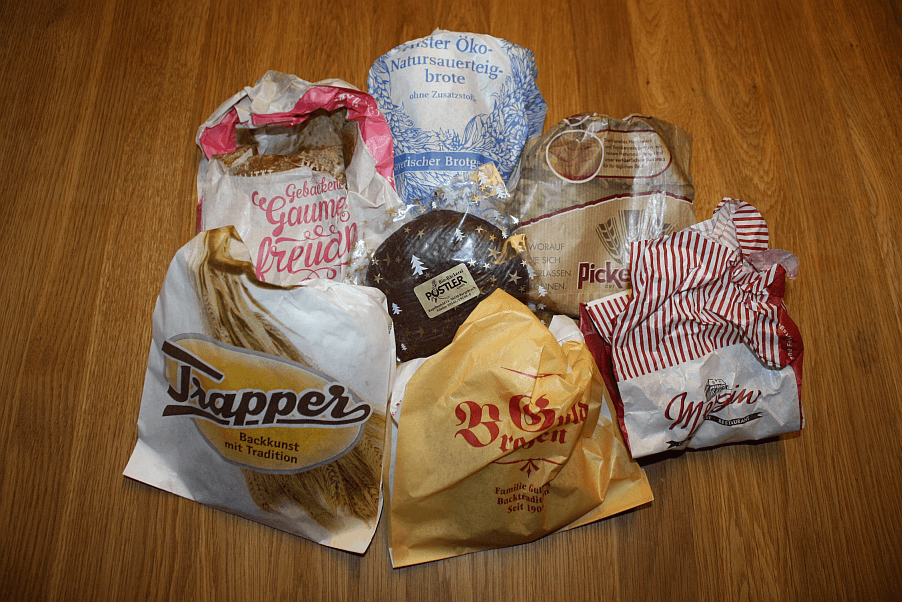
You team up with like-minded Lebkuchen-loving curious people and get a variety of individual ones from individual small bakeries. All hand-made. All of the "Elisen" variety. All covered with dark chocolate (because, really, there IS only that kind, if you ask me). Several of them claiming of being the best ones in town.

lebkuchen

And then you get together and cut them all into parts and taste them all to see which ones are best. Like a wine-tasting, only with tea instead of water to accompany the wine, and Lebkuchen instead of wine. (Friends of ours, by the way, did something similar with Bratwurst - there are so many good ones that it's really hard to find out which ones are best. They had a barbecue event and tried sausages from about a dozen different places. That's dedication!)

I'm really, really looking forward to finding out which one will be the best of the lot - and how they compare to our benchmark Lebkuchen.
0
DEZ.
06
0

Linzer Plätzchen.

There's a few recipes left that are among my usual candidates for the seasonal baking that I haven't shared with you yet - so this year, you are getting the Linzer Plätzchen. These have only been part of the selection for a few years now, but have become one of my firm favourites.

They are egg-free, slightly nutty, slightly spiced and I like them best with raspberry jam filling that still has the little kernels in, as it somehow feels more like proper raspberry for me then (even though it means that a kernel might get stuck between teeth now and then).

So here you go:

250 g butter
100 g powdered sugar
300 g flour
200 g hazelnuts, ground (I use medium-coarse ones)
2 teaspoons cinnamon, ground
about half a teaspoon each of powdered cardamom and cloves (the German measurement is "je 2 Messerspitzen", which is twice a small heap of powder on the tip of a knife)
2 tablespoons cocoa

raspberry jam for the filling

Soften the butter and stir in the powdered sugar until creamy, then knead the remaining ingredients into the mix. Set into a cool place for a while to rest.
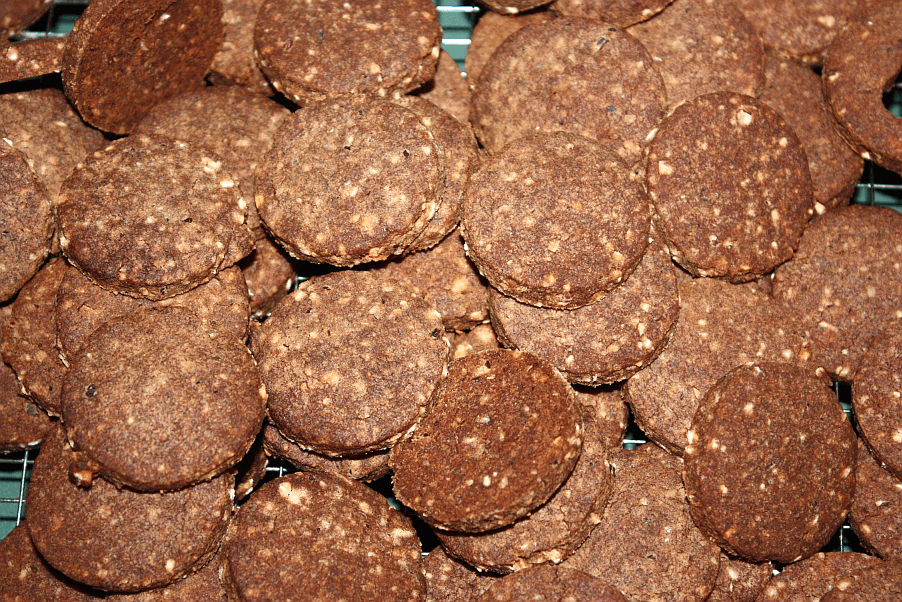
Knead the cold dough until malleable again. Roll out between sheets of foil (I use silicone baking mats for this, as they are re-usable and cause no extra plastic waste) to about 3-4 mm thickness, then cut out cookies. Bake at about 170-180° C for about 8 minutes, taking care that they don't turn too dark.

linzer_halb

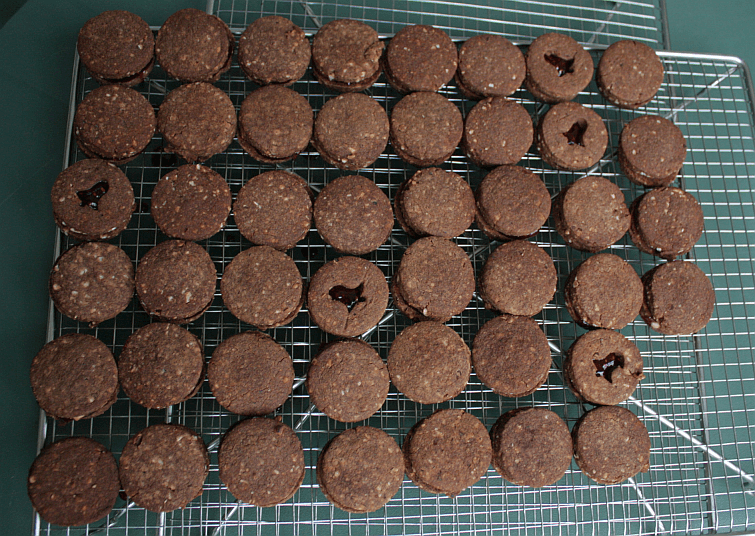
After they have cooled off, glue them together with a generous dollop of raspberry jam. Makes about 45 cookies.

linzer_fertig

Happy baking!

The other seasonal recipes that I blogged in the past are:
0
NOV.
29
0

Franconian Comfort Food.

It's drab and grey outside, there's lots and lots of rain (though no snow at all), December is almost around the corner, the festive season is getting ready to waft its gingerbread-smelling tentacles into our general direction...

which all means that I'm slowly getting ready for the baking spree. For which I've posted almost all of my recipes during the past years. So today, for a change, you get the recipe for a kind of comfort food, Franconian style.

If you've ever visited the area, you will probably know that local food is rather heavy on pork products - there's lots of meat dishes. There are also onions (grown in great quantity, traditionally, around Bamberg, which is called "Zwiebeltreterland" - "land of the people stepping on onions"). There's also wonderful pure rye bread.

And then, Franconia is divided into two parts: the beer part (where I come from, and where Bamberg still counts to) and the wine part (which is not very far from here, and has mostly white wines, and mostly dry ones).

Now... if you add pork sausages, onion, bread and wine together, throw in some spices and some vinegar, you get a dish called "Blaue Zipfel" (Blue ... well... ends. As in sausage ends.)

Success of this recipe depends on you being able to get good (or at least decent), fresh Bratwürste - that are sausages intended to be fried. The best of all of them, of course, are Franconian ones - they are, typically, pork, have a rather coarse consistency of the filling, and are seasoned with herbs, though not overwhelmingly so. For this recipe, they are not fried, but gently heated in a hot acidic broth until done.

The broth for four persons is made by mixing a litre of water (or a bit more), 200-500 ml of (preferably dry, preferably Franconian) white wine, 200-500 ml of white vinegar, and a bit of sugar to taste (recipes vary between no sugar at all and up to 100 g). Add about 1 teaspoon of peppercorns, 4 laurel leaves, 10 juniper berries, 10 cloves, 1 teaspoon of salt, and 1 tablespoon mustard seeds. The wine can be replaced by a bit more vinegar (or just left away completely), but it will add to the taste of home. At least if you're from hereabouts!

Peel and cut onions into half rings (recipes vary between one large onion per person to 250 g of onion per person). If you like to have more colour and more veggies, you can cut carrots into julienne strips as well (make sure they are not too long, so they can fit onto a spoon easily).

Bring the broth to a boil, add the onions and optional carrots, and simmer until the onions are done but still have a little bit of bite left. Then turn the temperature down even more, add the sausages (2 per person) and let them sit in the hot broth for 20-30 minutes.
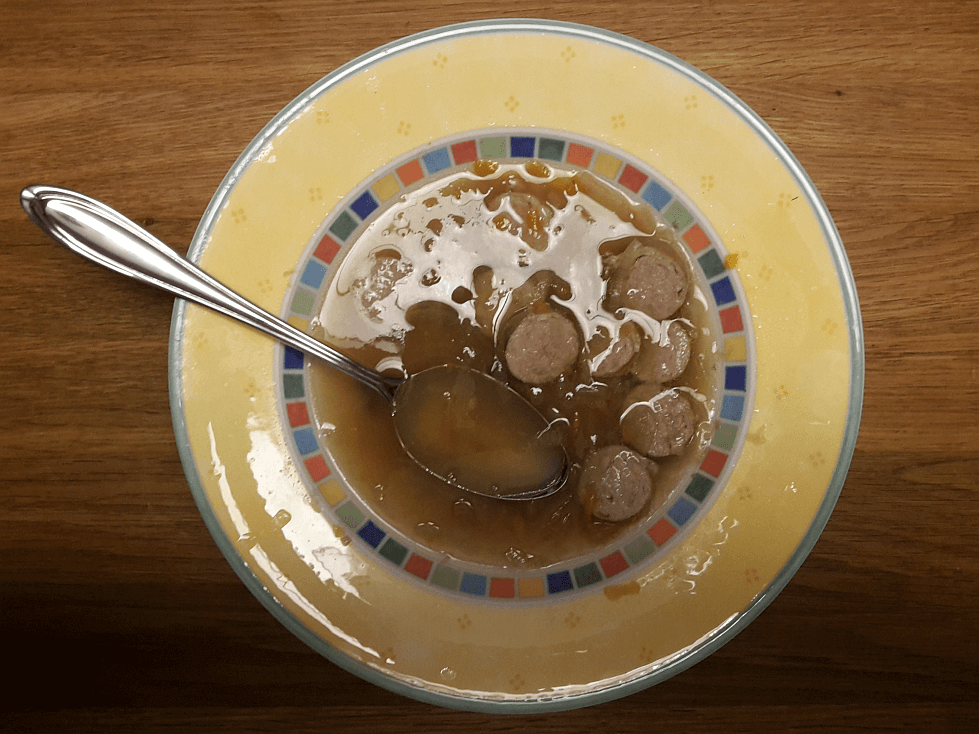
blauezipfel

This is traditionally served with rye bread (preferably, you guessed it, Franconian bread). It's not looking like much, it's quite acidic, it's warming, it's lovely - and for me, a true autumn-winter-comfort food.
0
SEP.
28
2

The secret of how not to cry over buttercream.

For last weekend, when my dad was celebrating his birthday, I made him a Donauwelle. Which, in case you are not familiar with that very German cake, is a cake baked on a sheet, with dough a bit like marble cake (light part at the bottom, dark part on top of it) with added cherries. That sheet cake, after baking, is topped off with a layer of vanilla buttercream and covered with a chocolate glaze. Because the cherries sink into the dough when baking and take the dark dough with them, it looks kind of wavy from the side - hence the name.

So. I did mention the buttercream layer, right?

Buttercream. I love buttercream. That stuff and I, we also have sort of a history... and it took me a lot of time to actually understand it. You see, there are plenty of really old buttercream recipes in my old-fashioned books, and they are basically butter, whipped together with powdered sugar, and some liqueur added.

Then, at some point, people sort of figured out that you can make it a little lighter and less calorie-dense if you add custard. So then you get recipes for buttercream with custard... which, once upon a time, was thickened with help of egg yolks.

Today, usually, most recipes call for the more modern and more convenient type of custard - the kind you make by mixing a packet of starch-based powder with added cocoa or aroma into hot milk and getting it to the boil. That gives you a fair custard, but it can also lead to a lot of trouble when you start mixing it into butter for buttercream.

Buttercream is, basically, a water-in-fat emulsion. Like all emulsions, it depends on emulgators for stability - and butter, on its own, only has a very limited amount of these. There will be a moment when you add a spoonful too much of the custard, which counts as water for these purposes - and your buttercream will break and separate into a grainy mass. Uh oh.

Now... egg yolk is an emulsifyer - and a really, really powerful one if it's raw. One egg yolk, according to Harold McGee's "On Food and Cooking - The Science and Lore of the Kitchen" is enough to make several litres of mayonnaise (which is an oil-in-water emulsion). Egg yolk loses a lot of its potency when you heat it up, but it will still pull some weight.

So making an older-fashioned buttercream with egg as a thickener for the custardy part will more probably result in non-grainy buttercream even if you add quite a bit of stuff to the butter. The starch-based custard, though... it brings nothing to the marriage. Well, nothing but trouble.

It took me one long afternoon of beating buttercream to grainy horribleness, starting over with fresh butter and repeating the process of breaking it and then cursing, until I finally started to think. And at long last, I realised I was breaking down the emulsion because I added too much liquid, and that I obviously need more emulsifyer if I want to add more than just a very little bit of custard (the Donauwelle recipe I have tells you to beat almost a full litre of milk's worth of custard into 300 g of butter).

So these days, I have a secret weapon. These days, when I bake the cake to go with the buttercream, I take a little bit of one egg yolk and put it to the side. About half a teaspoon is plenty - that much, or even a full teaspoon, will not be missed in the cake and it will not be noticeable in the buttercream, except by the good behaviour of the latter. Beat up the soft butter (room temperature or a bit warmer), beat in the bit of egg yolk, and then add the custard one spoonful at a time, beating it into the butter. I usually leave a little bit of custard in the pot when I get the feeling that it's enough now, but since I add the bit of yolk, I've never had a buttercream go grainy on me again, and I have had no trouble at all with adding warm custard to cooler butter either.

So there you go. May all your buttercreams be delicious and firm and buttery, and never go grainy on you.
0
SEP.
15
2

Bielefeld spinnt!

Today, I'm off to Bielefeld, to set up the shop there, give a workshop on spinning and have a fair amount of fun.

Today, by the way, is also my one year anniversary of reaching my goal weight, and I'm happy to say that I am still in the goal weight range (with fluctuations, depending on water retention levels, which are closely connected to stress levels), and still very, very happy about it.

While most of the time I manage quite well, there are times when it's not as easy for me to keep the right balance between eating enough and eating not too much. Especially in these times, I can really feel that both the years of being overweight and the wild ride I took as the weightloss phase certainly left their traces, and I get really odd trains of thought. These things usually happen when I have a good bit of water retention that is hard to explain and stays for more than a few days, making me rather... anxious. Yes, even if I can be pretty sure it's water, and will go away, and even though I know that in some cases it will take at least two weeks before it starts flowing out. In these times, I sometimes also have problems estimating how much food I'll need (with not-so-nice side effects if I underestimate too much)

Overall, though? Everything is fine and dandy. And I am happy.
0
SEP.
14
0

Garden pics.

Actually, this title is half a lie, because only one picture is an actual garden pic - this one:

gladiole
It's a surprise gladiolus that one day just turned up here, and now it's blooming brightly red and standing tall. Well, with a little help - the flower stalk actually had grown so tall that a heavy rain flattened it down to the ground, and it needed a support to keep it upright after that.

The other one is of a plant that resides in our wintergarden - sea kale.

meerkohl
This is a plant grown from seeds that I took from actual wild sea kale on one of our trips to Britain (so it's a pre-Brexit-Britain-exiter!). Sea kale doesn't grow easily from seeds, and it took about 20 of them to get me one single plant, which I then tried to coddle and coax into growing.

It was... rather uncooperative, languishing with only two or three small leaves... not very promising at all. So I kept it in the protective wintergarden environment, and then it got its very own nice large pot with water reservoir, and still... nothing.

I did know that sea kale is a halophyte, but as I also knew that it had been grown inland in former times, I had not added salt to its diet straight away. (The German wikipedia article about halophytes is much more elaborate than the English one, by the way, so if you read German, it's the better choice.) Then, finally, I started watering it with the water we had boiled our pasta in. Salty water. With lovely sea salt. And slowly, this little plant started to grow a few more leaves, and to get a little larger. It's still not very large - especially not compared to the huge, huge sea kale plants growing on the British Coast - but it might just need more salt, and I'm sort of afraid to overdo it, so I'm upping the dosage only slowly and slightly.

Moral of the story: there are plants that can tolerate salt, and plants that actually need salt, and the latter will not do well without it, even though they might survive (if barely) in normal soil. Salting the earth, in that case, is actually helpful!

Oh, and bonus proof it is a cabbage species:

schmetterlingseier
The little yellow dots are cabbage white butterfly eggs.
0

By accepting you will be accessing a service provided by a third-party external to https://pallia.net/

Kontakt