Latest Comments

Guest - Katrin Sprang Discussion
18. September 2026
Hi Rachel, I have looked for more photos of you, but that was not very successful. I found a link on...
Guest - Beatrix Sprang Discussion
15. September 2026
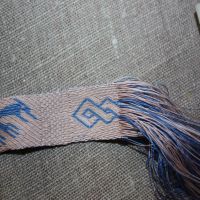
That lozenge pattern element is not a photograph, but a scan. So it should be to scale. But I pinned...
Guest - Katrin Sprang Discussion
15. September 2026
I was not referring to Rachel's reconstruction (is the reconstruction you refer to the one photograp...
Guest - Beatrix Sprang Discussion
14. September 2026
There is something Rachel did not mention. She told me: "Well, I worked with the measurements we too...
Guest - Katrin Sprang Discussion
14. September 2026
Well, this is certainly developing into an interesting discussion. Firstly, going from that lovely l...
APR.
30
1

Long Weekend Ahead.

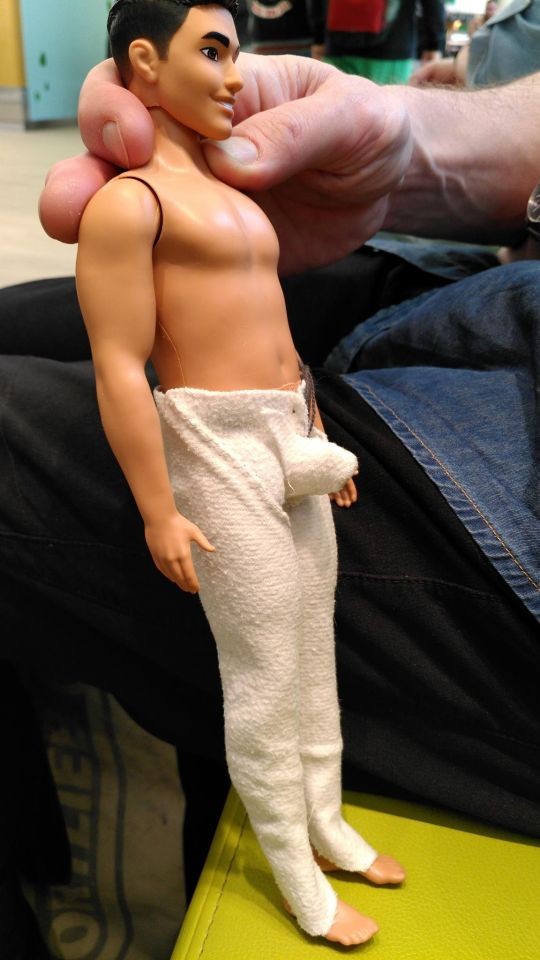
And while I am happily getting ready for the long weekend, here is an image of Barbie doll Ken (with, as they call it, the "broad body type" who is kindly modeling my small model of the Alpirsbach hose: 

It's still lacking the feet and the waistband, but otherwise, well! And you can guess that I was very happy about this happy chance fit! 

0
APR.
29
1

Very Helpful Cat.

The little cat has been helping me type this afternoon, softly purring on my desk (and my arm). Sadly I now have an appointment, so I have to pull out my arm once this blog post is done, and leave her all without her support cushion. Poor little kitty.

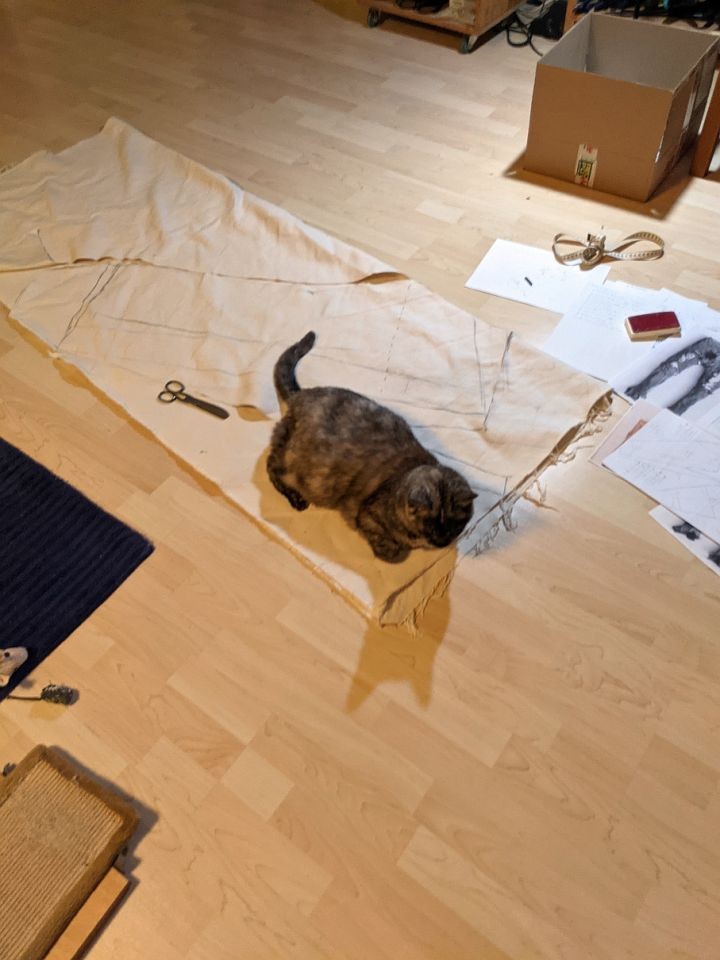
She is very helpful in general with my work. On this photo you can see her encouraging me to take a little break while cutting the first leg for the test piece in actual size, just to make sure I stay hydrated and have ample time to overthink      *------------++++++++++++++++++++++++++++++++ (these are courtesy of the little cat leaving the desk via the keyboard) my pattern-construction decisions.

In other words, I strongly believe that a lot of textile reconstructions contain a certain percentage of cat hair!

0
APR.
28
0

What you see and what you don't.

There's currently a lecture series going on at the Uni Bamberg about wood, and they are so very nice to also stream it online - which means that I got to listen in yesterday. It was very interesting, and it showed again how blind one can be regarding things that were really well researched in a different discipline - just because there is no awareness of that research. Case in point: Dendrochronology has its origins in the natural sciences. Looking at the wood pieces also means looking at their shape, though, and at the pegs that can be found in some of them. The pegs are what remains of the method to secure several logs together into a raft, which was very well researched in historical books and works - but it took a good long while for the dendro folks to realise that. Because... well, because they were not aware of that work, and had not yet stumbled across it by chance, or by research.

This phenomenon of missing something entirely that has been a research topic in a different discipline is not that rare, and while it might not always happen so obviously on such a high (basically the system) level, I have seen it again and again happen with individual research things (my own personal ones included). It's a weird feeling and an eye-opener when you find out that there's a whole cosmos already existing.

The lecture fell in wonderfully with a video discussion I had right afterwards where I had the pleasure to discuss a fabric reconstruction in the works. As usual, it's not really easy to get the appropriate yarns, and it makes a difference on whether they are twisted hard or soft, and which loom is used, and which reed, and so on. This also is a fascinating universe on its own, and I always feel like while I am not able to step across the threshold, I do know just enough to stand in the open door and look inside this other world, and stand in awe and wonder.

It is such a privilege to work with colleagues who step out of their way to open that door for me, and share their insights and their process. 

There also is a plan to do a little bit of a write-up and a publication after the project, about some of the aspects - the tool influence (which was nicely visible already), but also the process of getting to such a reconstruction. I'm mostly involved with sourcing the information (including images) about the fabric, sometimes also with the wool threads, but then most of the pondering and evaluation goes to the weaver, and I can happily stand by and enjoy the ride.

(Until the thing is finished and in my hands. Then it's time for chocolate, tea, and some more chocolate to gather enough courage for the cutting... but that is a story for another day.)



0
APR.
27
0

NESAT XVI announced!

Every three years, there's a NESAT, which is kind of a big deal to me. I've managed to go to all of them since the one in Copenhagen, and I am very much looking forward to the next one: NESAT XVI in Glasgow, Scotland, 2-4th June 2027.

There will eventually be a website, and a CfP, and planning - but for now, I have the date marked up in my calendar, and will be waiting for more news along the line.

0
APR.
23
0

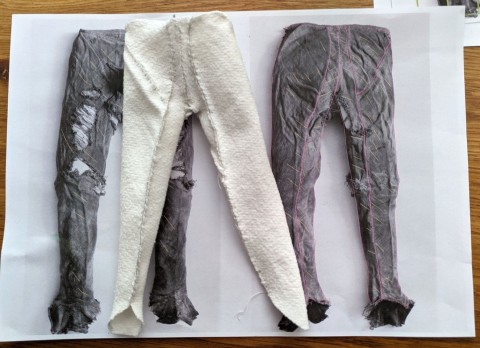
Teeny legs!

I'm not a huge fan of sized-down models for  testing garment patterns, but sometimes, well, sometimes it is not the worst idea. So it happened today - and the result is, I'd say, not that bad:

I have managed to invert sides (or would need to turn it inside out now), but overall, there's been a few insights, especially regarding the braguette. So... once all the other questions are solved, I might have a better idea of how to attach it!

(Still to crack: The "how to place it on fabric and so on" riddle.) 

0
APR.
22
0

Stuff that's happening.

I got a new battery for my trusty laptop today, as the old one is, well, trying to turn itself into a soft hillside. Not good. 

Still working on the Alpirsbach riddle, where lots of the grain directions on the actual photo don't match very well with the grain directions on the pattern drawing, and where the two legs were consequently probably designed/drafted individually and slightly differently in approach. Gnah.

One single white tulip is blooming.

There is a part of the Swedish Historical Museum website that has all the documentation drawings of the Birka excavations, and you can search the list and look at the individual graves all you want. Why do I know this? Because I had to find out today, when working on a translation from German to English, whether the thing with textiles attached in grave 901 was scissors or shears. (German can do a distinction if you write Bügelschere instead of Schere, but the latter can mean both, so unless there's an explicit Bügelschere, you never know. It was shears in the grave, by the way.) This translation issue reminded me of a friend's explanation why so many of the automatic translation programmes have issues with genders: Because it's much easier to have just one dataset for each language that goes to English and back, and to translate from, say, Finnish to Suaheli, you'd go Finnish - English - Suaheli. Which gets you odd effects if you are translating from a language with a certain distinction between things to English where this is lacking and back to another language that would in theory mirror the original distinction, but now it won't because the information got lost in the intermediate step. 

0
APR.
21
0

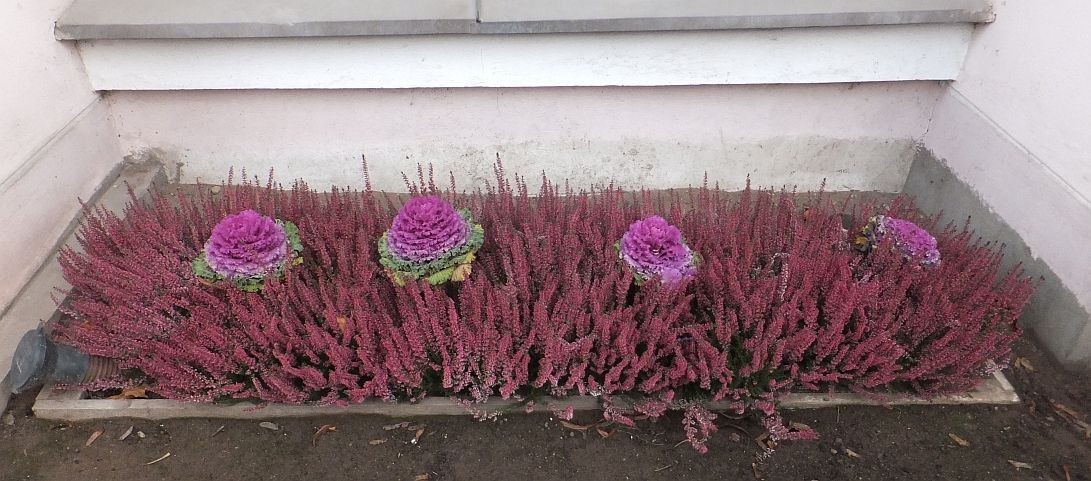
Cabbage.

Since I have nothing really relevant to blog about today, here's an image of decorative cabbages:

...and that's it. Nothing more to see here today.  

0

By accepting you will be accessing a service provided by a third-party external to https://pallia.net/

Kontakt