Latest Comments

Guest - Aislinn Dyestuff Citizen Science.
09. Oktober 2026
This is a great project. I look forward to the results. Thanks for letting us know.
Guest - Aislinn Time for...
09. Oktober 2026
Looks delicious!
Guest - Katrin Sprang Discussion
18. September 2026
Hi Rachel, I have looked for more photos of you, but that was not very successful. I found a link on...
Guest - Beatrix Sprang Discussion
15. September 2026
That lozenge pattern element is not a photograph, but a scan. So it should be to scale. But I pinned...
Guest - Katrin Sprang Discussion
15. September 2026
I was not referring to Rachel's reconstruction (is the reconstruction you refer to the one photograp...
AUG.
27
0

Dublin Stories.

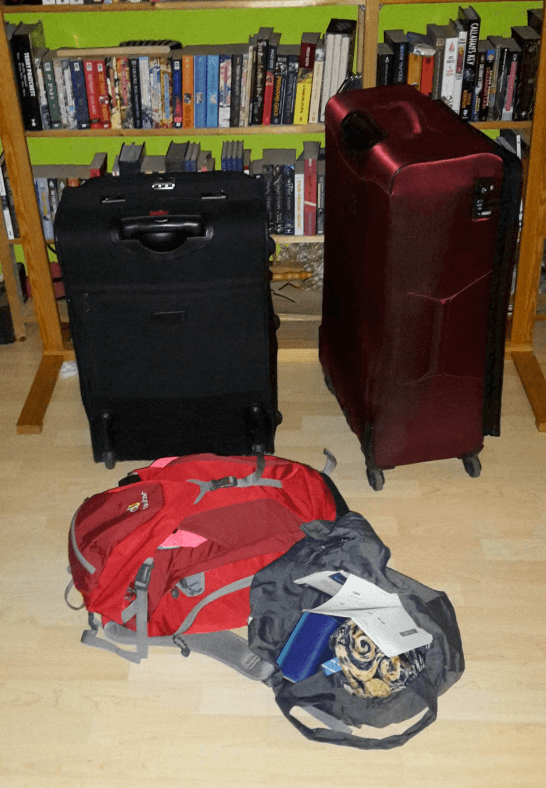
Dublin was... exciting, and wonderful, even though getting there was a tiny bit scary - I knew I'd be travelling alone, and taking two large suitcases. Plus a backpack. Plus a handbag... maxing out my luggage allowance on all counts.

[caption id="attachment_4776" align="alignnone" width="412"] Tell me again who is going to be lugging all this to Dublin?


Because I was rather nervous about not making the airport in time, I took a really early train, which meant, of course, that everything went smoothly and I arrived with plenty of time to spend knitting at the airport. Changing trains was also going well - I did have a helping hand for all exits and entrances that involved stairs, and a very friendly couple helped me (and a group of fellow travellers from Taiwan) to pick the right S-Bahn to get to Munich airport, as there were currently construction works going on, mangling the usual schedules. (Things like that are wonderfully reinforcing my belief that most of the human beings on this our planet are lovely people who are willing to help, and happy to make the world a little bit better by their actions. Thank you.)

So... everything went smoothly, we landed in Dublin wonderfully on time, I collected my things and went straight to this place:
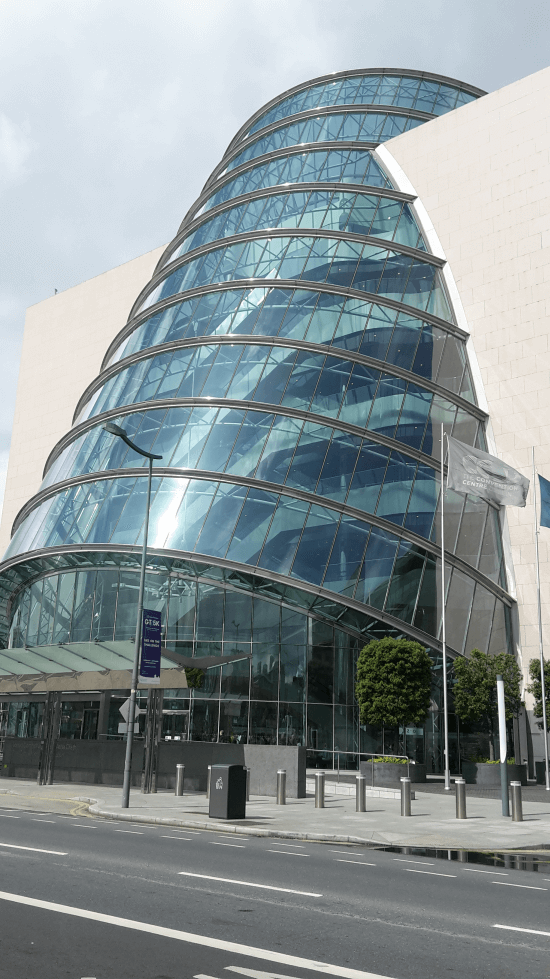


which is the Convention Centre Dublin. And then I started getting to work, as in getting my stall set up. I had some help from Gillian Polack, who was one of the volunteers in the Dealer's Hall, helping everybody to find their way around and to get set up. (Of course, as always, I had to hand-write a few of the labels. And also of course, as always, I finished set-up the next morning.)

In the end, the table looked like this - at least it did so at one point, things changed slightly in their layout as some stuff was sold out:
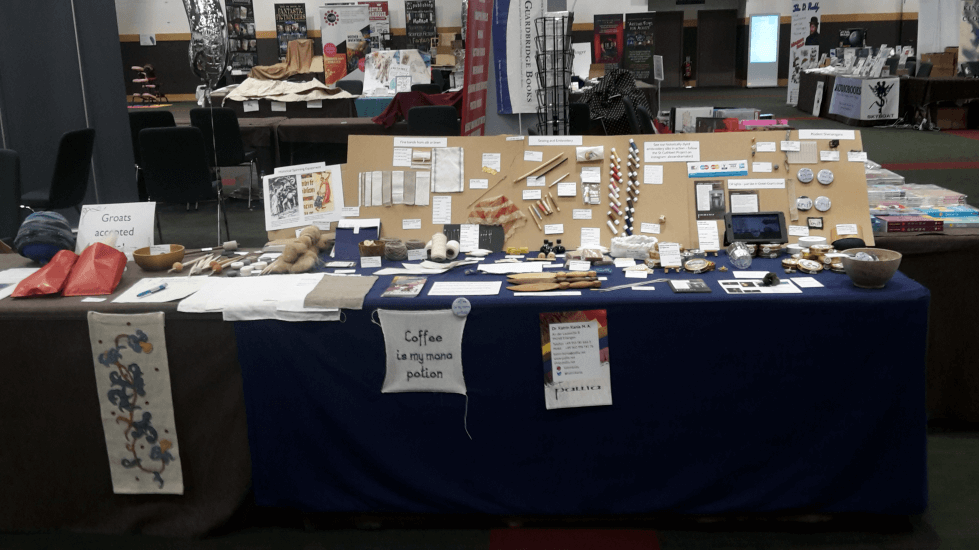


Being at a WorldCon is something lovely, and special, and exciting - and for me, being part of it by having a stall in the Dealer's Hall is something extra-special on top of all the "normal" WorldCon excitement and enjoyment. Every show and every fair has their own distinct flavour, so to say, but I think that the WorldCon flavour is far, far different from any of the other fairs that I have done until now. And personally, I find it very, very tasty.

Speaking of tasty - I was totally delighted when I found out my accommodation came with breakfast included, and actually treated me to the possibility of having a Full Irish Breakfast each day, complete with white and black pudding:
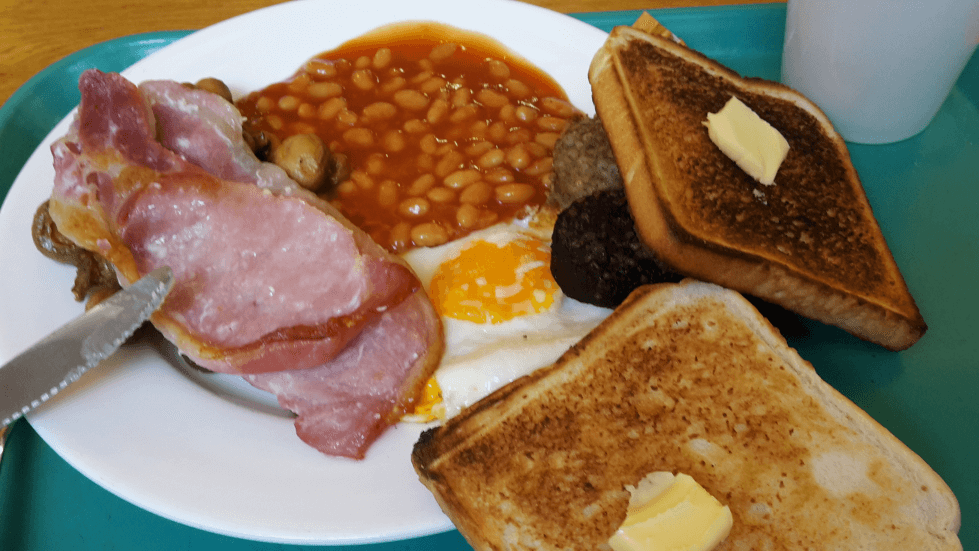


That set me up nicely for the day to come - which was good, because between the programme items I was on, the programme items I got to see, and standing at my table meeting so, so many wonderful people (plus looking at their t-shirts and badge ribbons) did not leave much time for eating!
 
0
JULI
17
0

CfP: Leeds 2020.

Leeds. If you're a medievalist, you automatically think of the International Medieval Congress (which is the European equivalent to Kalamazoo). It's a fantastic congress - I'm tempted to write "event" instead. I've only been there once, but eventually, I'll make it back again. There's always a huge programme, split into sessions with specific topics, and the sessions are organised by conference participants, who then look for papers fitting the topic.

One of my colleagues from the textile fraction is co-organising a session in Leeds next year, which will run on July 6-9. It's called

The Art of Borders: Examining the meaning and function of borders, edges and thresholds in early medieval art.

This session explores how medieval art incorporated, established or broke down borders in both real and metaphorical forms as understood through material objects. Drawing on physical, visual and conceptual engagement with borders and edges, the material forms of painting, manuscript illumination, stained glass, metalwork, sculpture, textiles and embroidery are all understood to use physical and imaginary borders to provide meaning and impart messages for those who came into contact with them. These encounters ranged from the moment of their creation, through their continued use and reuse, to their deposition or preservation and use today in the settings of contemporary scholarship and public display. We are seeking papers which explore the use of visual, metaphorical and conceptual borders in medieval art, exploring how these were understood and used both by early medieval society, and from a current scholarly perspective. Paper proposals are encouraged that focus on practical and sensory engagement with art, as well as those speaking from theoretical standpoints.

Paper topics might include but are not limited to:
  • How physical borders and edges create and craft meaning.
  • How the development of Visual Physiology has been used to help us explore the use and meaning of art in earlier societies.
  • What it means to draw attention to the edges of things in early medieval art.
  • The transformative and/or transgressional nature of borders and edges
  • The symbolic or material significance of borders on visual objects
Original proposals are sought for twenty-minute papers. Please submit a working title and a 250-word abstract by 1st September 2019 to Dr Alexandra Makin at Diese E-Mail-Adresse ist vor Spambots geschützt! Zur Anzeige muss JavaScript eingeschaltet sein. and Dr Meg Boulton at Diese E-Mail-Adresse ist vor Spambots geschützt! Zur Anzeige muss JavaScript eingeschaltet sein.
For information relating to the Congress, including information about fees and bursaries, please see https://www.imc.leeds.ac.uk/imc2020/.

0
JULI
05
0

Conferences and Book Preorder Stuff.

If you're looking for things to go to, or something to read, here are possibilities:

The EXAR conference, which will take place in Vienna on September 26 to 29, has its programme online. Registration is possible via their website, with a reduced fee if you register before August 15. As there is still space in their poster session, you are also welcome to hand in an abstract for a poster.

There will be a conference "Craftsmen and Metalworking in medieval cities: 35 years later" in Paris on September 12-14. The programme of the symposium is finished, but not available online yet; you can contact the organising committee via their website, though. Registration is open until September 5 or until the limited number of places is taken.

If you are looking for even more conferences, check out the "Conference" section on the RMBLF.be website, where there is a long list of all kinds of them, or the EXARC webpage.

Finally, the book thing - Jane Malcolm-Davies and Ninya Mikhaila are publishing "The Typical Tudor", which will be delivered in May 2020. If you are interested in Tudor-era clothing, this might be an interesting book for you; read more about it on their website (where you can also pre-order).
0
JUNI
20
2

Visiting Lauresham (part 2)


Here's more impressions from Lauresham:


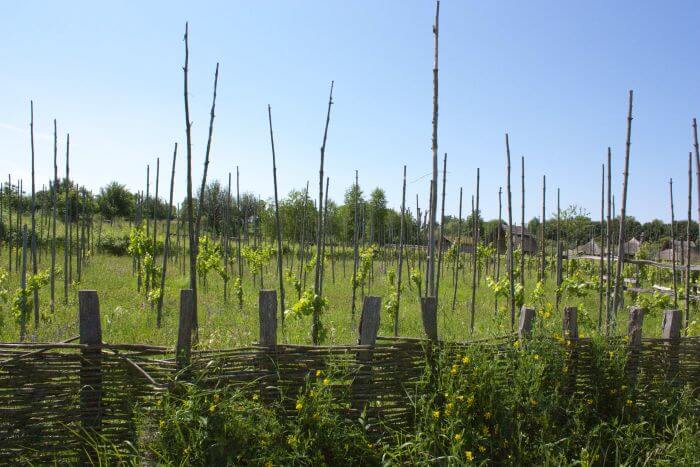
First of all, the vinyard:


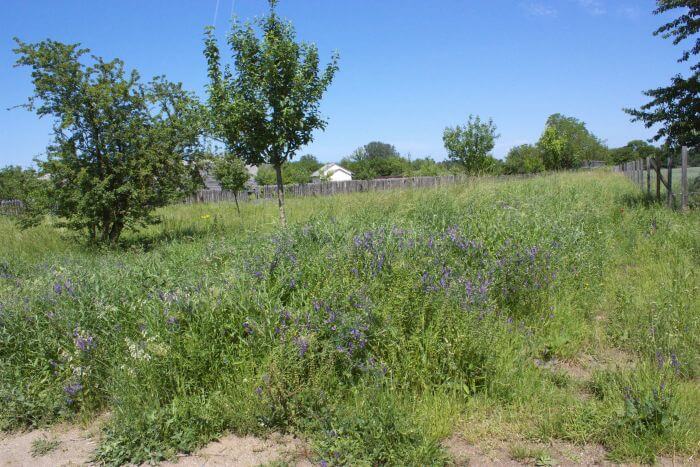
This time of year, everything was full of wild flowers, too.


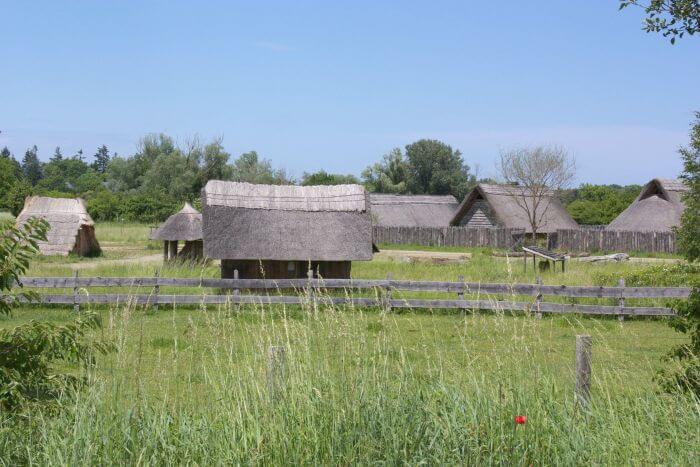
Of course it's not only fields and pastures and vinyard - there are the houses as well, which I have mostly omitted until now. Here they are, finally:


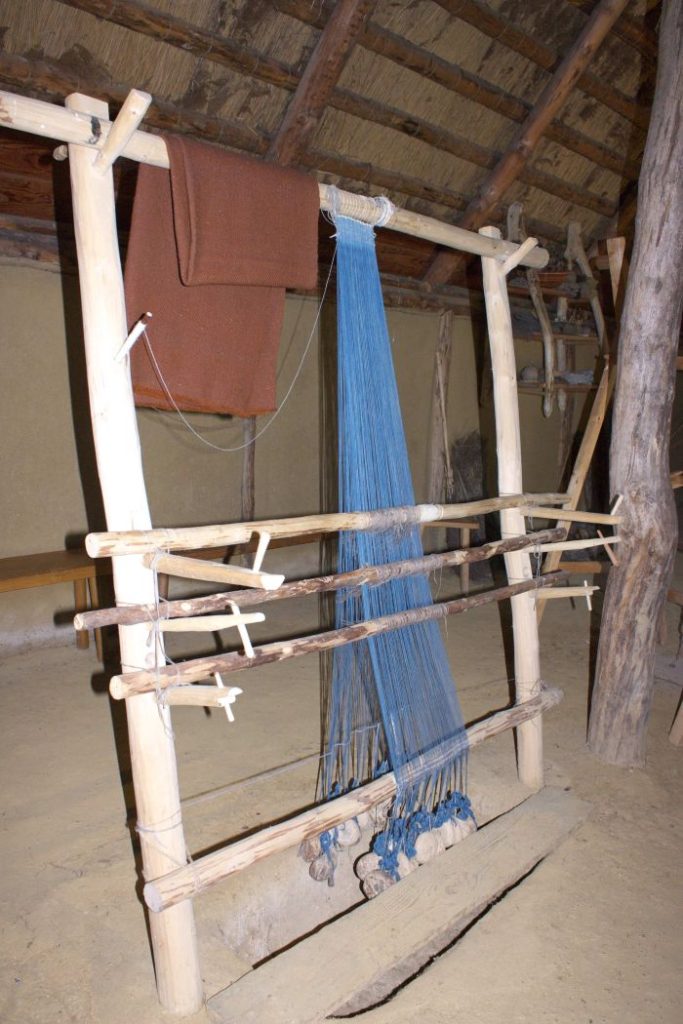
As you can surely guess, one of these houses was much more important for me to see than the others - the weaving house. We spent a little time inside that, so I could get an overview of the looms, tools, and loomweights available.


One of the permanently installed looms in the weaving house.


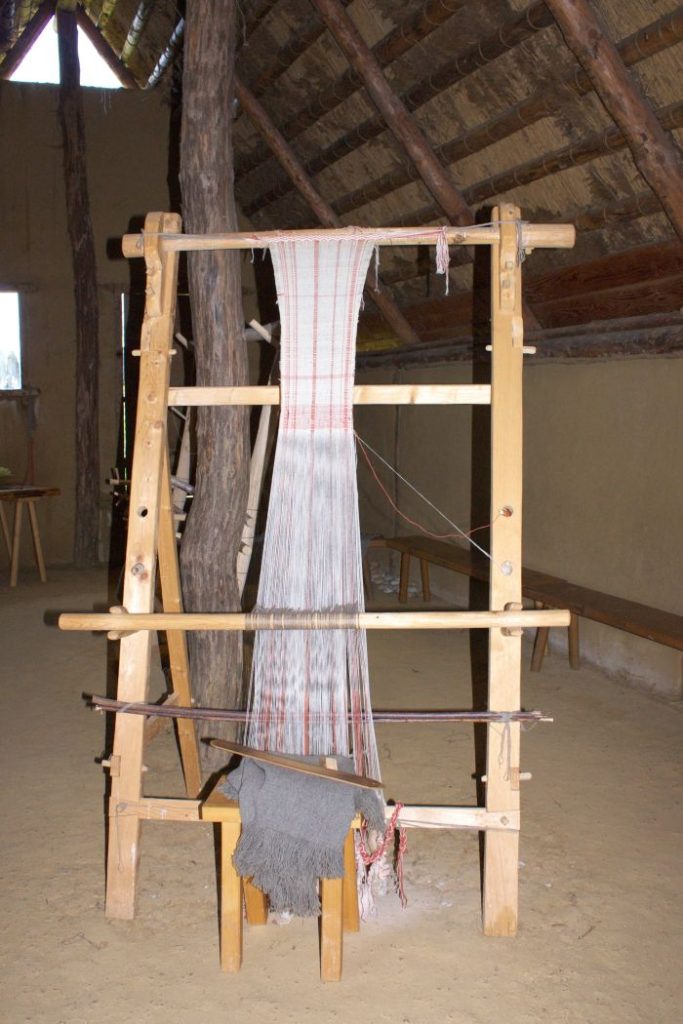
The house has three looms that are permanently installed there, plus a mobile loom that can be taken to wherever it is needed and used there. The looms are used for showing weaving technique to visitors, but also to test out things.


There's also a bunch of differently-shaped loom weights available, as well as some other textile equipment. I am already looking forward so much to working with all this at the Textile Forum.

0
JUNI
18
0

Visiting Lauresham (part 1)


Friday before last, I had a Grand Day Out - I hopped onto the train early in the morning to go to Lorsch, or rather to Lauresham, in preparation for the European Textile Forum.


Usually, we have this little conference in Mayen, at the Lab for Experimental Archaeology, but this year, LEA is due for some construction works. As it was not entirely clear in time when those works would be finished, we had to find an alternative place to hold the Forum, to be on the safe side.


To my great delight, as I have fond memories of working on archaeological digs in Lorsch, the good people at the Open-Air Laboratory for Experimental Archaeology Lauresham offered us their place to be. Because going to the venue for a visit is always a good thing (you don't want to plan a conference blind!), after figuring out most of the things that needed figuring out via mail and phone, off I was to meet with Claus Kropp, the leader of the Lab.


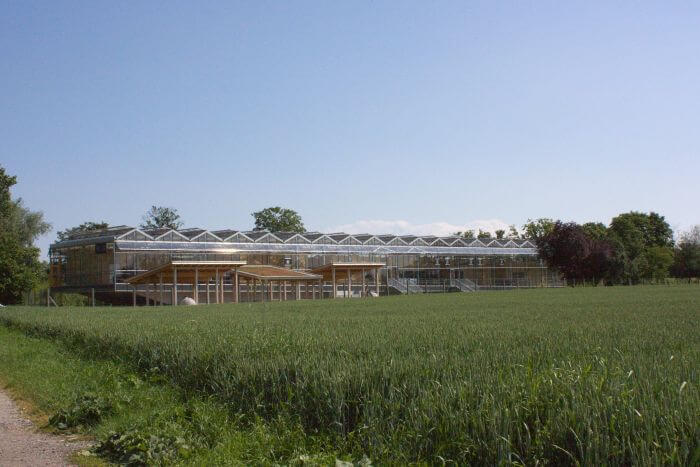
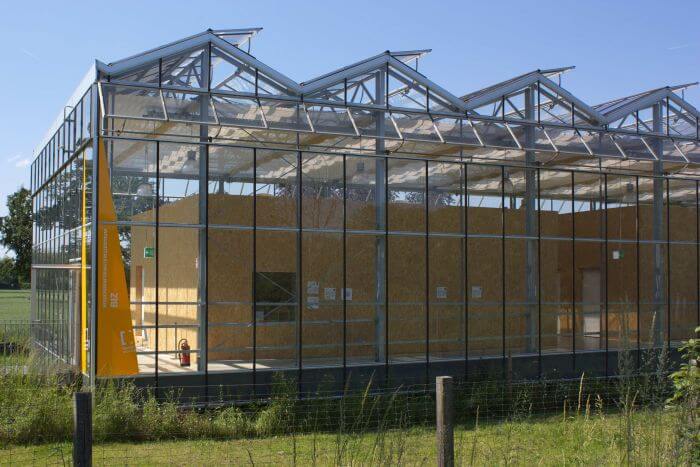
The place where we will be for our conference (at least mostly) is the Visitor Info Centre, which looks a bit like a glass house:


When you are closer, you can see that it's actually not a glass house to grow plants, but to grow knowledge:


There are rooms in the blocks inside for working, and things such as conferences, or school events, or small exhibitions. There's also space for exhibitions in the corridor, which - with all that glass - is very light and spacious-feeling. We will be a very happy group in that place!


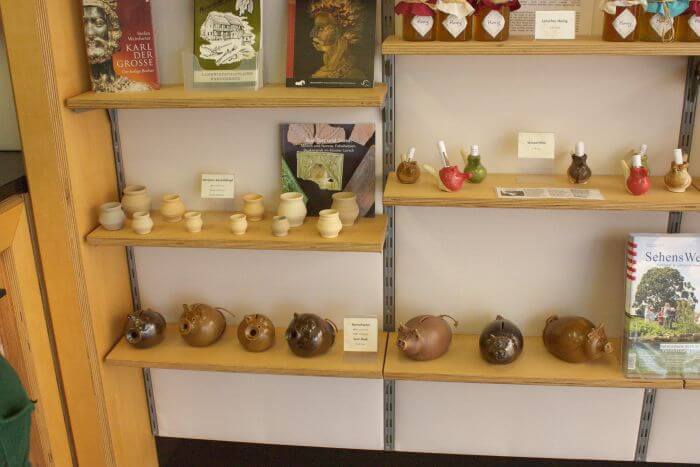
There is, of course, also a little museum shop where you can get all kinds of things: honey made by bees on the location (bees are important in Lauresham, not least because there is a manuscript with a bee-keeping prayer written in Lorsch in the 9th century), mugs with an artistic rendition of Lauresham, ceramic mugs and music instruments and piggy banks...


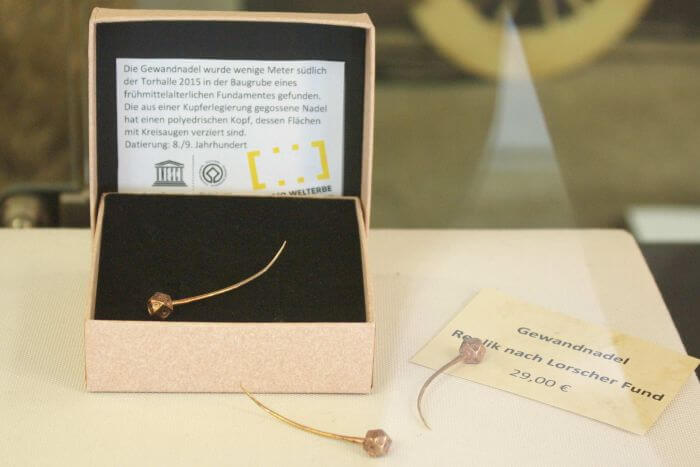
...and you can even buy a reproduction of a pin found directly in Lorsch, dating to the 8th/9th century:


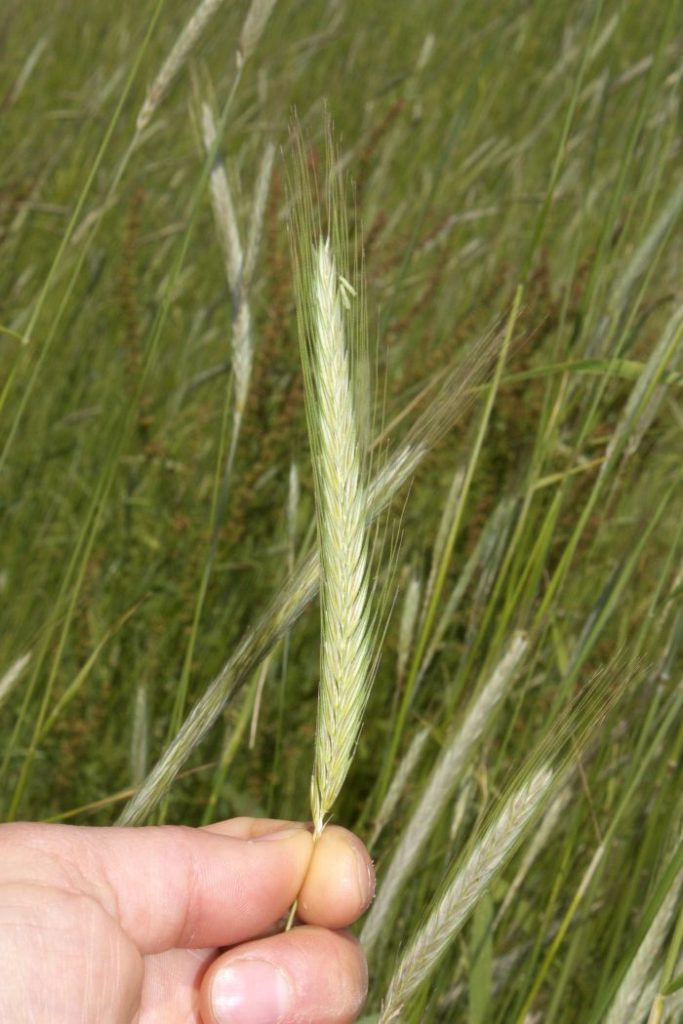
Besides checking out this building, I also got treated to a tour of the grounds of Lauresham proper. It was absolutely beautiful - there's a small vinyard, there are fields tilled with reconstructed ploughs using the working animals in Lauresham. The grains that are farmed here are of course old and often very rare kinds, such as this special type of rye, Waldstaudenroggen:


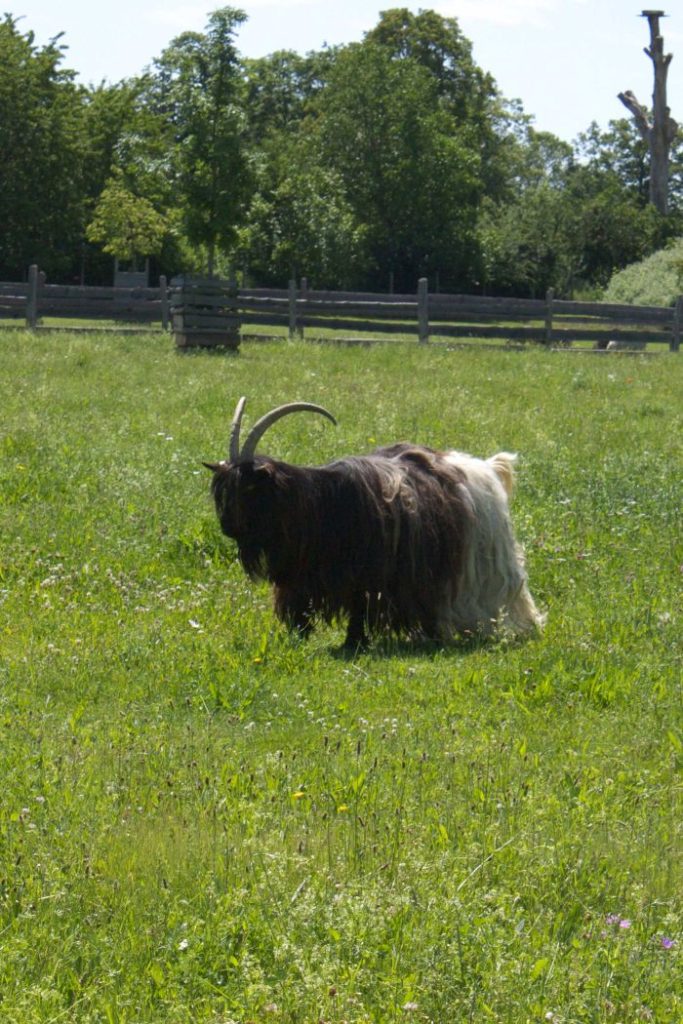
There are also Valais Blackneck goats, a very old breed:


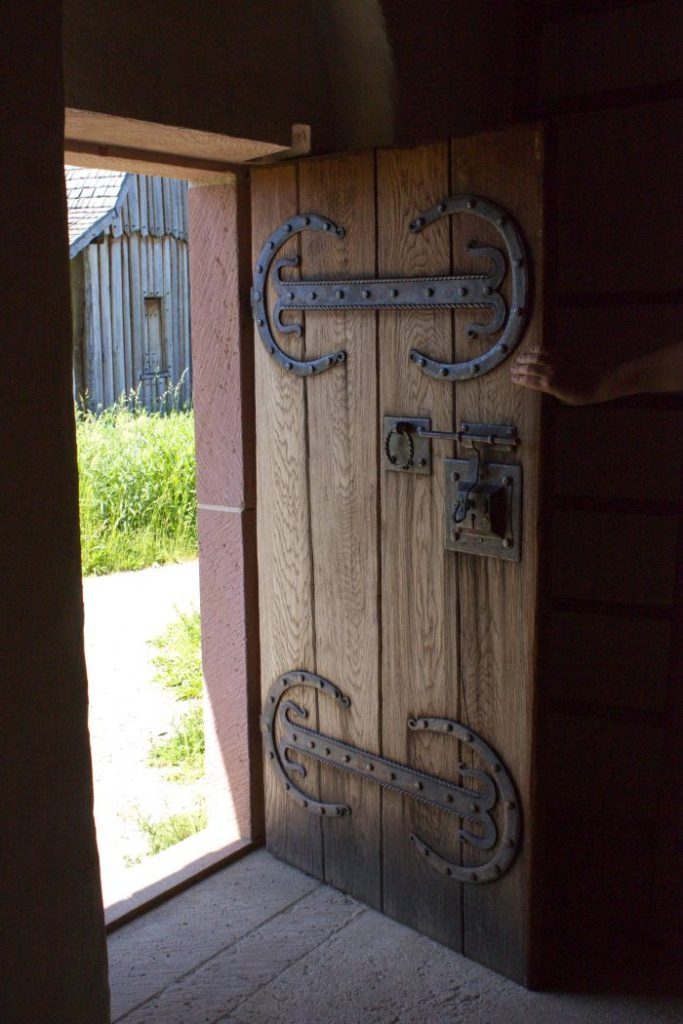
Lauresham, as an ideal-typical reconstruction of an early medieval manor farm also has a small chapel, with a door modelled after an original 8th century find from Germany:


More from my visit tomorrow!

0
JUNI
12
0

Courses and Conferences


Here's some stuff about places you could go at times when there are things that might be vastly interesting:


The CfP of the EXAR conference in Vienna, September 26 to 29 2019, is ending on June 15. You can send your paper proposal via their website.


If you are interested in Tudor clothing, there's a conference with a lot of event stuff around it called "Missing Persons". It will take place in Nottingham on April 3-5, 2020. You can register via the Tudor Tailor site; conference costs are 299 GBP (with an Early Bird registration until June 19 for 275 GBP).


The University of Sheffield will offer Zooarchaeology Short Courses in September 2019: Understanding Zooarchaeology on September 10-12 and Birds in Archaeology on September 13. The courses are directed to students, professionals and enthusiasts, no prior knowledge required, and the courses include hands-on practical activities. For more information, visit the website at the Uni of Sheffield.


The CfP for the European Textile Forum is also open; the Forum will run from November 4-10 in the Laboratory for Experimental Archaeology Lauresham, Lorsch, Germany. Focus topic this year is "Shared Warps, Shared Wefts", but other, non-weaving related papers or presentations are also welcome.


Finally, for those in Germany, I will be offering a two-day tablet weaving workshop on August 31 and September 1, teaching how to do tablet weaving patterns without a written pattern draft. As this is a system and we will start from the very beginning to learn the system, no previous knowledge about tablet weaving is needed. More information and booking possibilities are here via the pallia webshop.

0
MAI
28
0

Textile Forum Registration is Open


The thing I have to say today is short and sweet: The European Textile Forum registration is open!


I'm already looking forward so much to the conference. It's promising to be another lovely week full of textile research, networking, and exchange of knowledge and information. There will be warp-weighted looms. There will be really old architecture. There will be so, so much coffee... and probably almost as much chocolate...

0

By accepting you will be accessing a service provided by a third-party external to https://pallia.net/

Kontakt