Latest Comments

Guest - Aislinn Dyestuff Citizen Science.
09. Oktober 2026
This is a great project. I look forward to the results. Thanks for letting us know.
Guest - Aislinn Time for...
09. Oktober 2026
Looks delicious!
Guest - Katrin Sprang Discussion
18. September 2026
Hi Rachel, I have looked for more photos of you, but that was not very successful. I found a link on...
Guest - Beatrix Sprang Discussion
15. September 2026
That lozenge pattern element is not a photograph, but a scan. So it should be to scale. But I pinned...
Guest - Katrin Sprang Discussion
15. September 2026
I was not referring to Rachel's reconstruction (is the reconstruction you refer to the one photograp...
DEZ.
03
0

Japanese Weaving Exhibition in London.

If you're in London, or going there in the next two months, you might want to visit the Japanese Embassy building to have a look at their exhibition Hakata Ori: Weaving Through to the Present.

Hakata Ori is regarded as one of most well-known examples of woven textiles in Japan. Weaving in Hakata (now known as Fukuoka City) is said to date back to 1241 and this year is an auspicious one for local weavers as they celebrate 777 years since the beginnings of Hakata Ori.

Traditional Hakata obi (belts) became highly regarded for their strength and durability, enjoying popularity amongst samurai for the ability to hold their swords in place and also the patronage of the shōgun for many centuries.

This exhibition retraces the history of weaving from this area of Kyushu at the same time as putting the spotlight on its modern weaves. Protecting the heritage and customs of the past whilst preparing for the future is essential for any traditional craft to prosper in modern times. Today, Hakata Ori craftsmen create a broad array of items for display as well as for everyday use.

The exhibition runs until January 31, 2019; the embassy (101-104 Piccadilly, London W1J 7JT) is open on weekdays 9:30 to 17:30, closed on weekends, 25-26 December and 31 December – 3 January inclusive. Admission is free, but photo ID is necessary to gain entry to the Embassy.
0
NOV.
21
0

CfP: Trial by Fire and Animal Fibres

It's time again for some Calls for Papers! First a non-textile, but interesting-sounding one:
Trial By Fire Conference | 17-18 May 2019 | Institute of Archaeology UCL

A free interdisciplinary conference about the transformative power of fire

Whether your interest lies in archaeomaterials, burned bone, pyrotechnology, or accidental burning, fire always leaves its mark and a wealth of information behind.

This conference aims to explore these events by bringing together ideas from across archaeological and anthropological sub-disciplines. Abstracts will cover a range of topics and case studies, however the conference aims to answer the following questions:

Can fire be considered an artefact?
How have people engaged with fire over the course of history?
What can the aesthetics of a thermally altered object tell us about the burning event?
How has the study of fire evolved within the literature? How can fire be harnessed as an experimental tool moving forward?

You are invited to contribute your work towards the development of this interdisciplinary understanding of fire.

Abstracts are due by 31 January 2019. To submit, register, or for more information, visit trialbyfireteam.com
Fire is a fascinating thing, and I'm happy to see that a conference is dedicated to this topic. I hope it will be a flaming success!

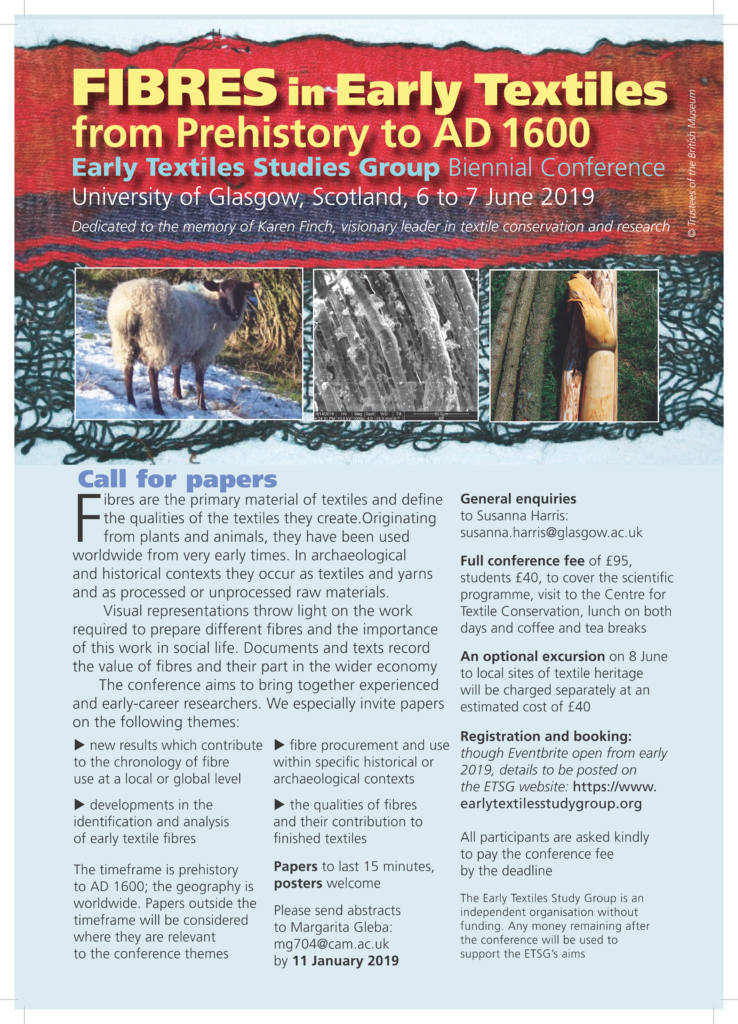
The second CfP is for the Fibres in Early Textiles Conference:


There you go - maybe one of these is something for you?
0
NOV.
20
0

Weekend Workshop: Understanding Tablet Weaving

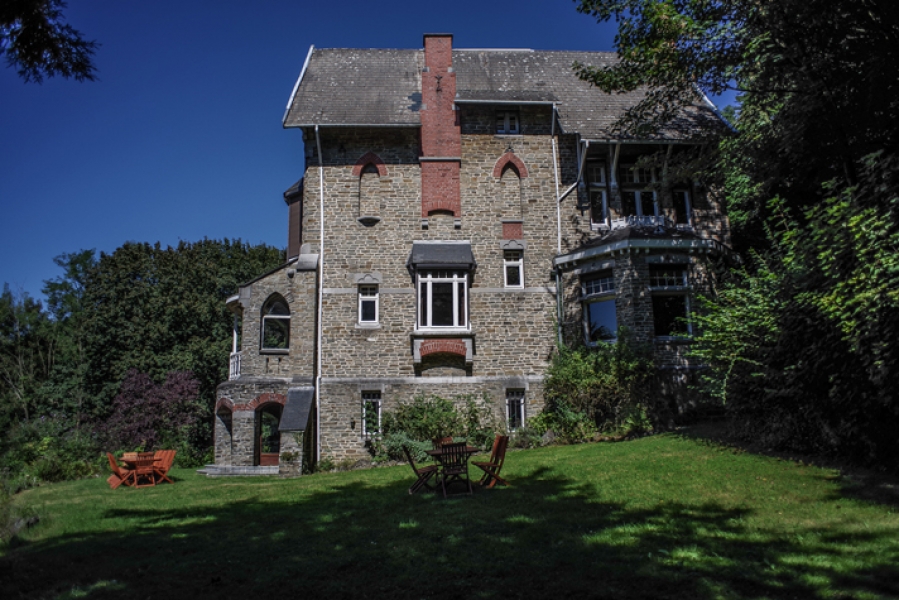
Sometimes, things just line up, and then exciting things happen. Such as a weekend workshop on tablet weaving that I will give, on January 18-20 2019 - in a stunningly beautiful house in Méry, Belgium. I am utterly, utterly thrilled by this - and maybe you are too?

The house is the Merveille de Méry, a 19th century country house, lovingly restored and beautifully situated in woody grounds. It's near Liège, which means it is easy to reach by train (and there will be a shuttle service to the house).


My workshop will run from Friday late afternoon to Sunday afternoon, and we will explore in depth the structures of tablet weaving. The aim is to give you a deep understanding of how patterning in tablet weaving works:

- the differences in s- or z-warping
- their relation to patterns and turn directions
- how to tell where you are in a pattern
- how to see which thread colours will appear next in your band
- how to fix mistakes
- how to transition from threaded-in patterns with two colours to doublefaced weaves

These things are taught as part of a system, starting with making a continuous warp. The deep understanding of how tablet weaving works, together with this system, will enable you to:

- analyse, understand, and copy bands that you see
- draft your own patterns with two or more colours
- weave patterned bands without any pattern draft, similar to how bands have been woven in the past.

This workshop may even take you to the basics of weaving 3/1 broken twill - the type of patterning used in the most complex of medieval tablet woven bands.

Workshop start is Friday, January 18, 6 pm; you can arrive at the house from 2 pm. The workshop ends on Sunday, January 20, at 4 pm. If you are travelling by train, a shuttle service from Liège to Méry on Friday and back on Sunday is possible.

I'm so delighted to be able to offer this - I've been wanting to do a larger tablet weaving workshop for a while now, and to have the opportunity to do it in such a stunning house, where we will have one room dedicated to our weaving and the rest of the house to relax between sessions, this is just awesome.

If you are interested, you can book your spot - including food and drink! - via my shop. If you book before December 10, you get the Early Bird Special Price of 395 €; after this, the regular fee is 425 €.

I'm already looking forward to this so much!
0
NOV.
05
0

It's Textile Forum Week!

Textile Forum, for me, is like a party and a family reunion and a conference and a fair and a week of crazy textile stuff all rolled up into one. It's the one week in my year that's making me run in circles a huge lot beforehand, packing up loads of stuff, losing lots and lots of sleep over fretting if all will go well (and the occasional late-night doing of stuff), and writing more lists than for anything else in my year.

It's also the week making me absurdly happy because it's bringing textile folks together, and there is so much networking and learning and sharing taking place. I'm part of this, and that is a wonderful feeling for which I gladly pay the price in sleep and coffee over-consumption.

Finally, it's the week that is making me really, really tired - so there will be no blogging from tomorrow on until I've recovered from the Textile Forum, which, according to experience, takes me about a week as well... which means I'll be back on the blog on Monday, November 19.

See you then - and happy textile and non-textile shenanigans until then!
0
NOV.
02
2

Sprang Test Runs.

In 2017, Anja got together with me to organise a weekend meet-up for sewing, chatting, and having some workshops with me, called "Historisches Nähtreffen", and that was such a success that we decided to do it again.

So we asked people if they would like a second one (they did!) and what kind of workshops they would like, and in the end, we decided on the basics of sewing and on how to spin with distaff and spindle, just like last year, and two new kids on the block: medieval embroidery and an introduction to sprang.

Which means I've been sitting down doing some sprang in the last weeks, too - to find out about possible frame solutions for the workshop, to test materials and, of course, to make a plan for the actual workshop. As in "what to teach and in what sequence".

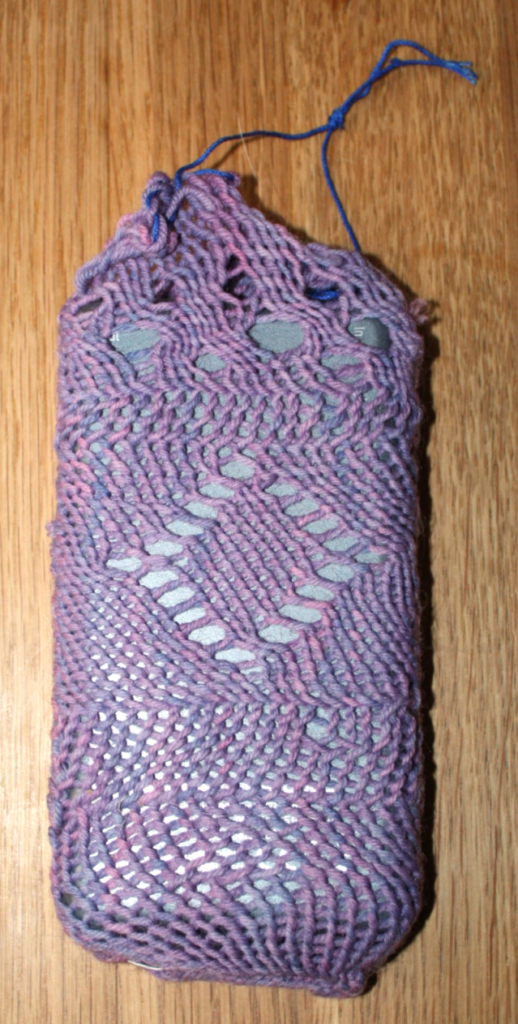
The result? This:


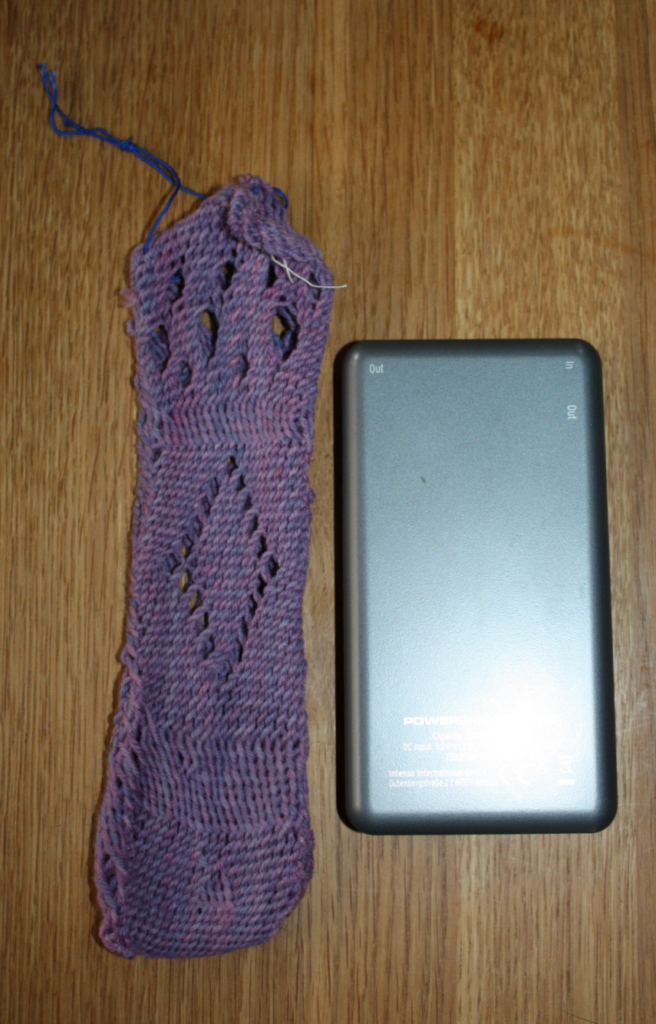
That's the preliminary test run, and there will be more tests - but I really like how this came out, and that it is actually large enough to fit a phone (or a powerbank, in this case). I'm also amazed, as usual, how stretchy this is. When it came off the frame, it was really long and really narrow, and I had my doubts that it would actually fit. It still gets longer and narrower when taken off:


Sprang. Fascinating.
0
OKT.
26
0

What goes into a Workshop.

Since I've been talking about needing guinea pigs, I thought I might give you a little bit of background on the development of my workshops in general.

I love giving workshops, or courses, or lessons, or whatever you want to call it. I really enjoy being able to pass on knowledge - theoretical and practical - and see how people start to become friends with a new technique. No matter whether it's braiding, knitting, weaving, or any other craft, every single person has his or her own, personal pattern of movements, and preferences on how to do things, or handle elements and tools. It's always fascinating for me to see this unique, personal finger dance develop, and it makes one part of why I like teaching so much.

Just like with many other things, though, a lesson does not spring from nothing to full perfection - it needs an astounding lot of work and preparation to develop a workshop or course.

This starts with making a basic concept. What do I want to teach? Are the students adults or children? What do they want and expect from the course? How likely is it that they have previous experience with the technique? How long can I make the course, and how deep into the technique can we go?

Usually, I try to put a lot of information into each workshop, to make sure that everyone goes out with a good, solid understanding of the basics and the tools to develop this further. This means structuring the workshop carefully so that I can set a relatively high pace, while still allowing enough time to try out things and get a bit of practice.

Once the basic concept stands, it's on to test runs and thinking about logistics. I usually do several test runs of the course, working the course programme and babbling to myself. I'm also checking how long each step takes me (and then, obviously, extra time gets factored in for having several people doing this the first time ever), and trying to find the best sequence of tasks. For some workshops, I've also done "live test runs" with a few willing people, testing out if things all work like they are supposed to do.

Logistics are another thing that needs consideration. How much space do I need per person? Table space and floor space can both be an issue depending on the venue. How many tools do I need? What are the materials necessary? How much extras need to be available in case of calamities? Will participants want to bring (maybe to test) their own tools as well?

Keeping in mind that there are several persons who need to do something at the same time, tool count can rack up quickly. One of the reasons why it took me so long to develop the tablet-weaving course range was that I had to bite the bullet and buy a freakishly large amount of clamps. To fit up to 8 people into the course, I need four clamps each for the warping method I use - and that means 32 clamps. These have to be bought (and it is worth it to get good quality ones, as they are gently but consistently abused), transported, and stored. Similar things are true for other crafts. I need to have enough netting needles for a course - these, at least, are lightweight and easy to store, though having them made is an investment as well. Sprang courses require having a frame available for each participant, plus some large demonstration frame to show the whole class the movements and what happens with the threads. These, too, need to be designed, made, paid for, and stored.

Once all this is done, I can sit down and write the final workshop script that will keep me on track while I'm teaching, and make sure I don't forget mentioning a crucial detail when it is necessary to do so (because these crucial details often get so ingrained if you have done the craft for a while that you are not aware of them anymore).

And then, finally, I can work on the course description and set the price. So if you've ever wondered what goes behind a workshop I give, and why I charge as much for it as I do - there you are.
0
OKT.
24
0

Conferences!

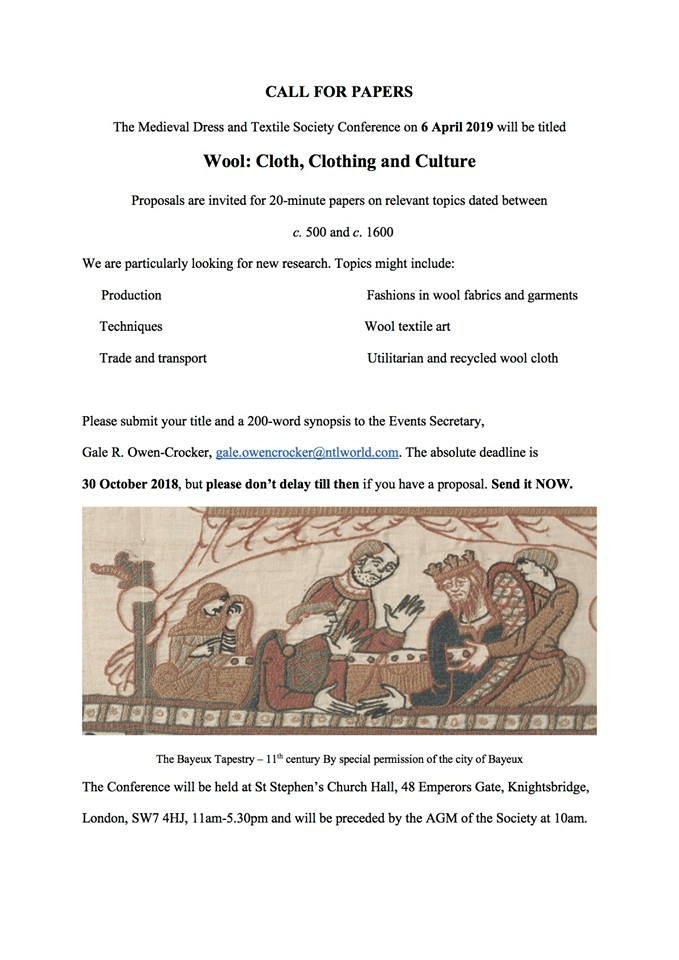
On May 20-23, the first conference on Wild and Domesticated Mammal Hair will take place in Budapest, Hungary. There's no programme online yet, but you can register for the conference via a form on the website, and you can also book workshops in addition to the basic programme.

The MEDATS is also organising a conference, and their CfP is open for a few more days:


I'm tempted, but I think I won't manage to squeeze in a paper proposal between now and the deadline...

And just in case you are going to a conference and are asked to chair a session - here are some thoughts from the Researchwhisperer blog on how to do so successfully.
0

By accepting you will be accessing a service provided by a third-party external to https://pallia.net/

Kontakt