







Latest Comments

Guest - Aislinn Dyestuff Citizen Science.
09. Oktober 2026
This is a great project. I look forward to the results. Thanks for letting us know.
Guest - Aislinn Time for...
09. Oktober 2026
Looks delicious!
Guest - Katrin Sprang Discussion
18. September 2026
Hi Rachel, I have looked for more photos of you, but that was not very successful. I found a link on...
Guest - Beatrix Sprang Discussion
15. September 2026
That lozenge pattern element is not a photograph, but a scan. So it should be to scale. But I pinned...
Guest - Katrin Sprang Discussion
15. September 2026
I was not referring to Rachel's reconstruction (is the reconstruction you refer to the one photograp...
MäRZ
23
1

Friday Linkapalooza!

It's time to throw some unsorted links at you again. Most of the stuff is in German - sorry for those of you who don't read it, but they are just too interesting to pass them up.

Anke Domaske is making fibres from milk that is leftover and spoiled - a brilliant example of upcycling, to put it that way. The fibres are versatile, and are getting used in a variety of ways already. (Article in German.)

Archäologentage 2018 are taking place April 12-15, and the topic is Migration. More information can be found here (info material in German and French).

Christa Schwab has tried to find out a good mixture for making a vegetarian sausage after a medieval recipe. You can read more about what she did, and how it worked, over at her blog (in German, but with pictures).

More food-related stuff - remains of Iron-Age feasting, or at least eating, have been found at the Cairns broch, Orkney, Scotland.

Not recent, but still interesting: an article about traditional Icelandic embroidery, via Medievalists.net.

It looks like there might be a cure for the Varroa mite problem that is threatening the European Honey Bees - I do hope that this will be a full success. (Article is in German.)

Sometimes, your colleagues have surprising hobbies - one of my archaeology colleagues, for instance, writes music and sings. In this case, an eulogy on a house from 1534 that was recently demolished. It's in English, too.

Also in English: Some new research on one of the tablet-woven bands from Hallstatt (Halltex 152) by Maikki Karisto, together with Mervi Pasanen and Karina Grömer. Mervi's blogpost includes the new pattern draft.

Textilis has a study of knitting sheaths from North Yorkshire.

And that's it for today - finally a few less tabs open in the brower!
0
FEB.
21
0

Events and Conferences.

There's a number of conferences coming up, and I thought you might be interested, so here they come:

African Experimental Archaeology Conference, March 20-22, Johannesburg. More info and registration here.

The 12th North American Textile Conservation Conference will take place in Canada, September 23-29, 2019. Their CfP is now open, and the topic is "Lessons Learned: Textile Conservation - Then and Now".

There's a conference on experimental Music Archaeology, April 12-14, in Brandenburg; more info and contact information here.

The CTR in Copenhagen is running a Saxo Summer School programme: "Textiles and Fashion in Theory and Practice through 3000 Years". It's a 10-day programme, more info on the CTR homepage.

The Dombauhütte Paderborn will have a bell founding event June 23-29, where a bell of 11th century style will be cast using 1th century methods. More info can be found on the facebook event page and on the Dombauhütte website.

 
0
FEB.
20
0

European Textile Forum News!

After the conference is before the conference, or so it is said... I think. Well, it's true, after all, and planning for the next European Textile Forum has started - we do have a date fixed for the conference, which will be November 5-11, 2018. There is no focus topic fixed yet, though (suggestions are welcome).

We're also thinking about making a few changes to the conference structure to make it easier for people to attend. As we'd much prefer making things better by knowing exactly what to do, we've drawn up a survey to get a better idea of what you like and don't like, and what you would prefer to see unchanged. If you are interested in the conference, you can help us a lot by going here and filling out the survey. We want to get people together to network - both from the academic and from the practical side. Connecting craft experience with academic research is immensely helpful for both sides, and we'd like to do an even better job at this in the future.

While drawing up the survey, I've also finally managed to give the website a long-due overhaul. It now has a nicer, cleaner design; there's a section with result summaries added, with the first ones already in, and hopefully more to come in the nearer future, and it is now a secure site, using https.

So. Some work done, more to come - and I'm very curious to find out what the survey results will be. The first ones are already in, with some very helpful remarks to think about!
0
FEB.
07
0

Things going on here.

Here, stuff is progressing. Coffee is being drunk.
I'm still hard at work on the Forum webpages, getting them into a nicer order and stuff on them easier to access. Putting more stuff in there, too - which means I might need to up my contract with my provider a notch, to have more space for the stuff.

I'm also trying to finalise a little survey about the Forum to see where we might be heading. I love the format of having one full week, and the combination of a lecture and some practical part, but it might pose too much of an initial hurdle to those not already straddling the line between theoretical or academic work and crafts practice and experience. I also have the suspicion that a full week is too long for quite a few people - so Sabine and I have talked it over, and Michael and I have, and we might do a bit of a change, this year or next, depending on how it goes.

The survey is not quite finished yet, but I hope to get it done and out and tested later today, and then it will be time for a newsletter and spreading it out, hopefully gaining a lot of insights. Ideally, I'll also get the site done and polished before it goes out, but I think I might not, and I'd rather have more time for the survey than less - so it all depends on how productive I'll be today. And possibly early tomorrow. So... I should get back on it, right?
0
FEB.
01
0

The day needs more hours.

I definitely need more hours in a day. Or more nights that miraculously turn out to be working nights, yet still deliver rest. Or something like that.

Yesterday, for instance, was totally gobbled up by work on the Textile Forum site (and no, it's not visible yet, I am working on a local copy of the page to make it into a nicer and more functional thing).

So somehow, all the small things that need to be done teamed up with the bigger things and ate the day. Again. It's not the first time this has happened to me, but I had only wanted to spend the morning on that page work, and do something else the rest of the day. Like planning for a possible kickstarter campaign (which is thoroughly scary), and doing some more archaeology-related writing, and some translating.

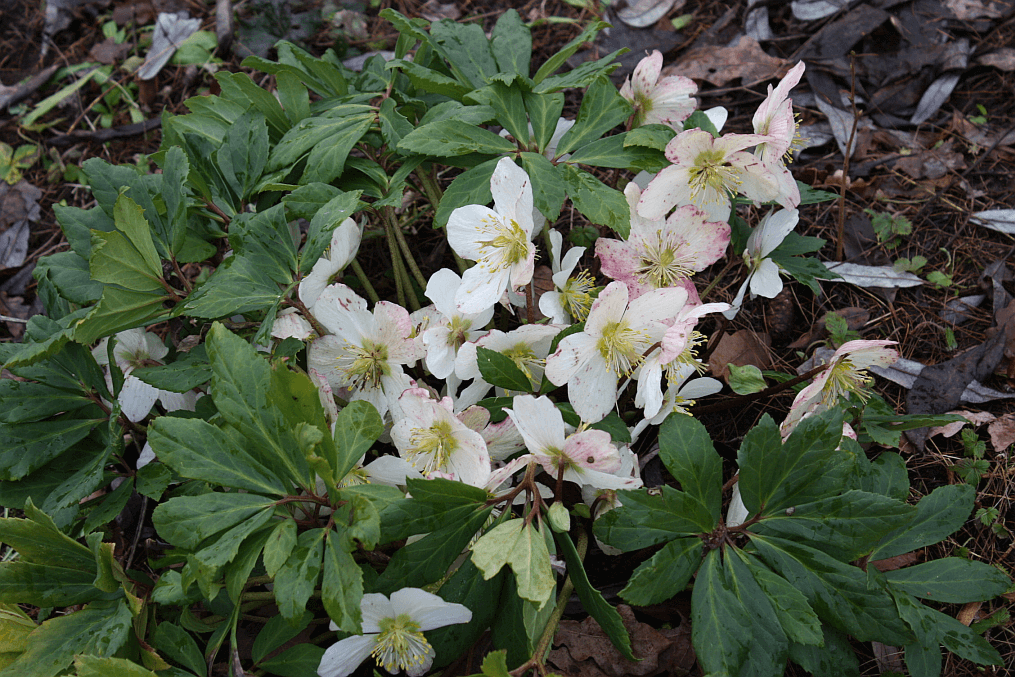
Sigh. At least I did manage to snap a photo of the nicely blooming hellebore out in the garden, which I can now share with you:

hellebore
0
JAN.
19
0

CfP: "Elite culture" at the EAA Annual Meeting

Just in case you are looking for an excuse to travel to sunny Spain in September, there will be the European Association of Archaeologists' conference. And if you happen to be interested in and researching about Elite culture, here's a specific call for papers for a session about this, that is session #431: “Elite culture in medieval and post-medieval archaeology” at the 24th EAA Annual Meeting, which will be held in Barcelona, Spain from 5-8 September 2018 (https://www.e-a-a.org/EAA2018/).

Session organisers are Assoc. Prof. Dr. Rainer Atzbach, Aarhus University, Denmark, PD Dr. Felix Biermann, University of Greifswald, Germany and Prof. Dr. Ulrich Müller, Christian-Albrechts-Universität Kiel, Germany.

Their session seeks to explore new ways to identify elites in the archaeological source material during the 12th until the 18th centuries. Elite is understood as a group of persons belonging to the upper echelons of society in a town, territory or dominion in terms of military, economic, religious or political power, and even education. This group of peers is characterised by being involved in decision-making processes in their homestead. Moreover, its network includes contacts to similar groups in other areas. The contributions in this session are invited to focus upon archaeological approaches available to identify remains of this powerful group. Therefore, presentations should discuss diachronic or supra-regional features and not just single contexts such as graves, monuments, latrines, or outstanding precious finds. Critical reviews of traditional approaches based upon import, prestigious goods, written sources etc., or new perspectives on these classic elite markers are welcome.

The session intends to discuss the following questions:
Theoretical background - what characterises elite? Staging and distinction – is elite defined by other societal classes and/or its members? How far is it possible to spot elite while tracing innovative or traditional products? In terms of norms and practice: is it possible to identify rule setters and rule breakers in archaeological source material? Do the upper layer of society and the elite group always coincide? Supply and demand: what is the relationship between procurement of exotic/import/vintage goods and elites? Between conspicuous consumption and understatement – what does elite show off?

The Call for Papers is now open at: https://eaa.klinkhamergroup.com/eaa2018/
For submitting your abstract you have to verify your EAA membership with your EAA credentials (EAA ID, username, password). For assistance with retrieving your credentials, please contact the EAA Secretariat at Diese E-Mail-Adresse ist vor Spambots geschützt! Zur Anzeige muss JavaScript eingeschaltet sein.. New members, please sign up for EAA membership first at www.e-a-a.org. You can either pay your membership fees upon signing up or at any time before 31 March 2018 when registering for the Annual Meeting at www.e-a-a.org/eaa2018.

Deadline for sending your abstract is the 15th of February 2018, 23:59 CET.

 
0
NOV.
23
1

Exhibition "Expedition Mittelalter"

As one of the programme points during the Textile Forum, we went on an excursion to see the special exhibition "Expedition Mittelalter" at the Schnütgen-Museum in Cologne. If you can arrange it, I heartily recommend going there, as you will get treated to a lot of beautiful things usually buried in the archives. This includes, obviously, textiles.

Among them: a puzzling (at least to me!) embroidery of a horse or unicorn on a black (yes, black) linen background, dated to the 15th century. An incredibly beautiful reliquiary bag embroidered with silk in counted stitch and with a flat gold strip (also puzzling, because I have no real idea on how that strip was stitched in, and oh what would I give to see the back of that thing!). Plus a plethora of other textiles. Oh, and the Anno chasuble - a samite cloth dyed with real mollusc purple, dating to about 1000.

As opposed to most special exhibitions in German museums, in this case all the objects are from the hosting museum's own archives, and so you are allowed to take photographs for private purposes (no flash and tripod, so come prepared with a steady hand).

The only downside is that there is no catalogue. There's a comic book that you can complete with a kind of treasure hunt during the exhibition, which is nice and fun in its own way, but nothing even remotely helpful if you're trying to learn more about the individual objects. But yes, that's the only downside, and the pieces themselves are really making a visit worth its while.

The exhibition will run until January 28, 2018, so there's still a bit of time to travel there.
0

By accepting you will be accessing a service provided by a third-party external to https://pallia.net/

Kontakt