Latest Comments

Guest - Aislinn Dyestuff Citizen Science.
09. Oktober 2026
This is a great project. I look forward to the results. Thanks for letting us know.
Guest - Aislinn Time for...
09. Oktober 2026
Looks delicious!
Guest - Katrin Sprang Discussion
18. September 2026
Hi Rachel, I have looked for more photos of you, but that was not very successful. I found a link on...
Guest - Beatrix Sprang Discussion
15. September 2026
That lozenge pattern element is not a photograph, but a scan. So it should be to scale. But I pinned...
Guest - Katrin Sprang Discussion
15. September 2026
I was not referring to Rachel's reconstruction (is the reconstruction you refer to the one photograp...
NOV.
18
1

Textile Forum 2016 - Pompeii Dyeing Experiment.

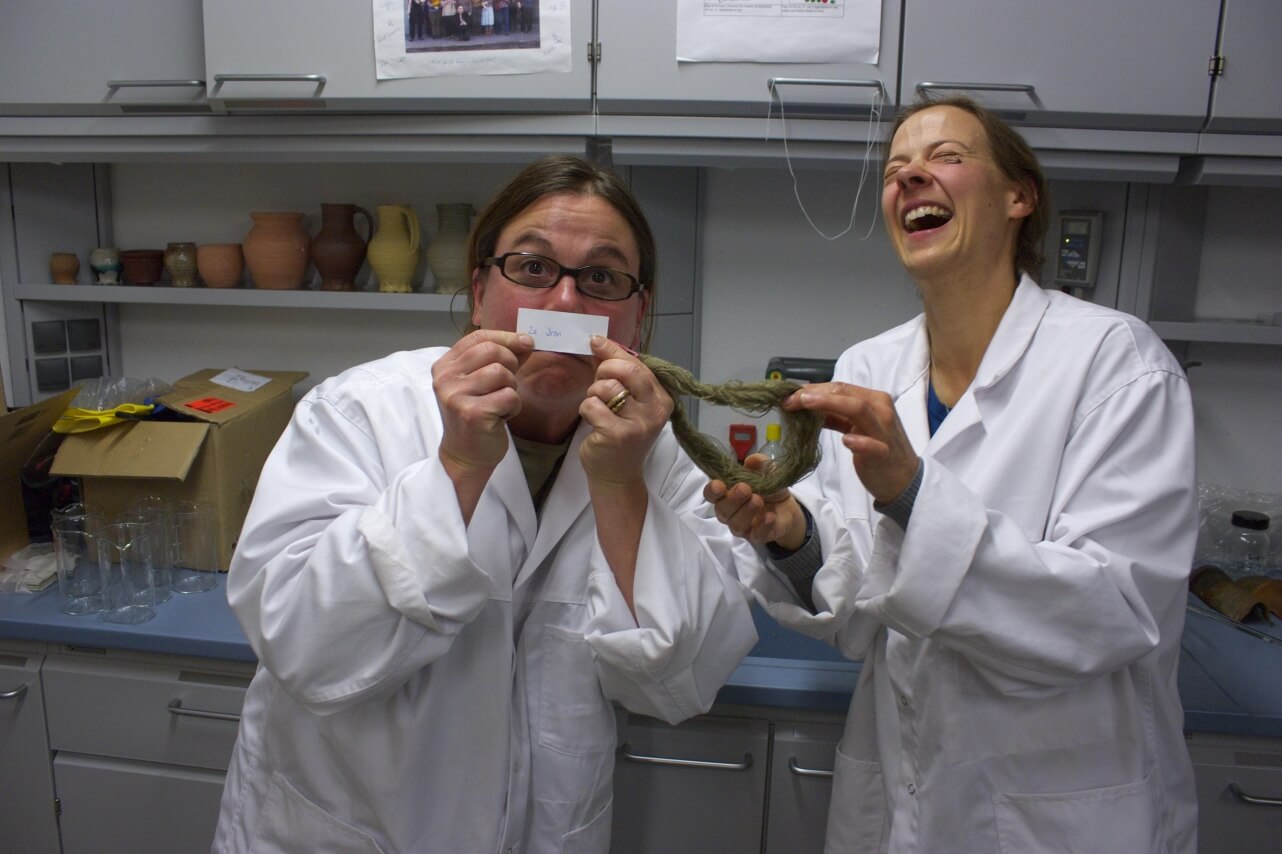
Back in 2012, we already did a dyeing experiment at the Forum, investigating the influence of kettle materials on the colour outcome. Our outcome showed a significant difference between the kettle materials that we tested - which were lead, copper, and iron. The results of this experiment were published in EXARC journal (you can read the article here).

In 2013, I was able to do an add-on to this original experiment, investigating whether the influence was larger in the mordanting or in the dyeing process. Sadly, I omitted the reference (NEVER leave out the reference!!) so there was no way to compare the original experiment and the add-on with each other. (Any comparison would have been limited anyways, as they were two different runs with different batches of birch leaf - but having two references to compare would have given good information about the similarity of the dye batches. Well.)

And ever since 2012 and the original experiment was done, I've been looking for somebody who would like to repeat the experiment... but nobody took the bait.

So this year at the Forum, we did the repetition ourselves. We did the full run this time around, though, combining the original experiment (metal in both the mordant and the dye) with the add-on (metal only in the mordant, or only in the dye). This caused some serious brain-bending and thought-knotting in the preparation as I was trying to make the run as efficient and as sensible as possible while avoiding any contamination between the skeins and any other issues.

There were two reasons for this re-run: One, to see how the three different batches (metal in mordant only, in dye only, in both) compare to each other. Two, to finally have an archaeological experiment repeated (something that, to my knowledge, has never happened before).

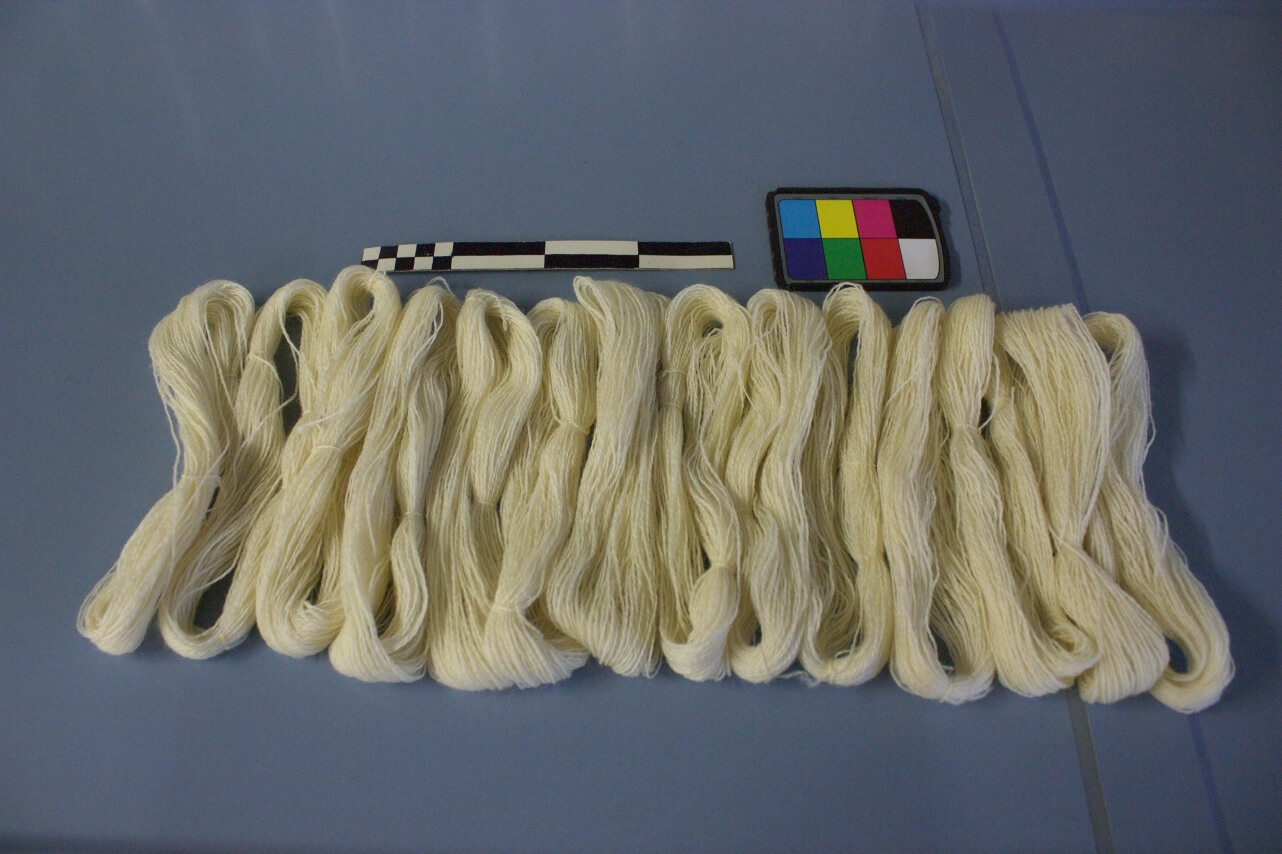
So things happened. Skeins were wound...
IMG_9733
...and mordanted...

IMG_9769
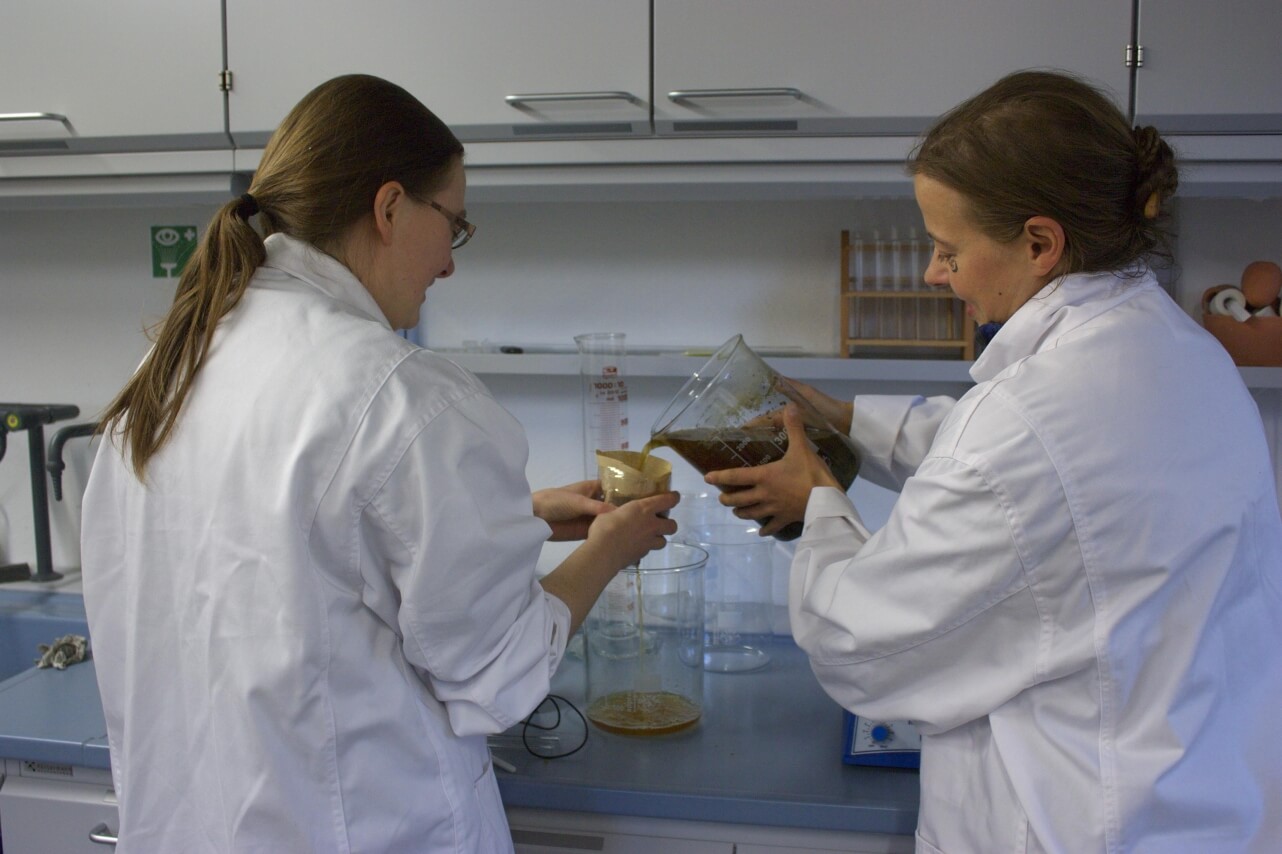
... dye liquid was boiled, and filtered off...
IMG_9926
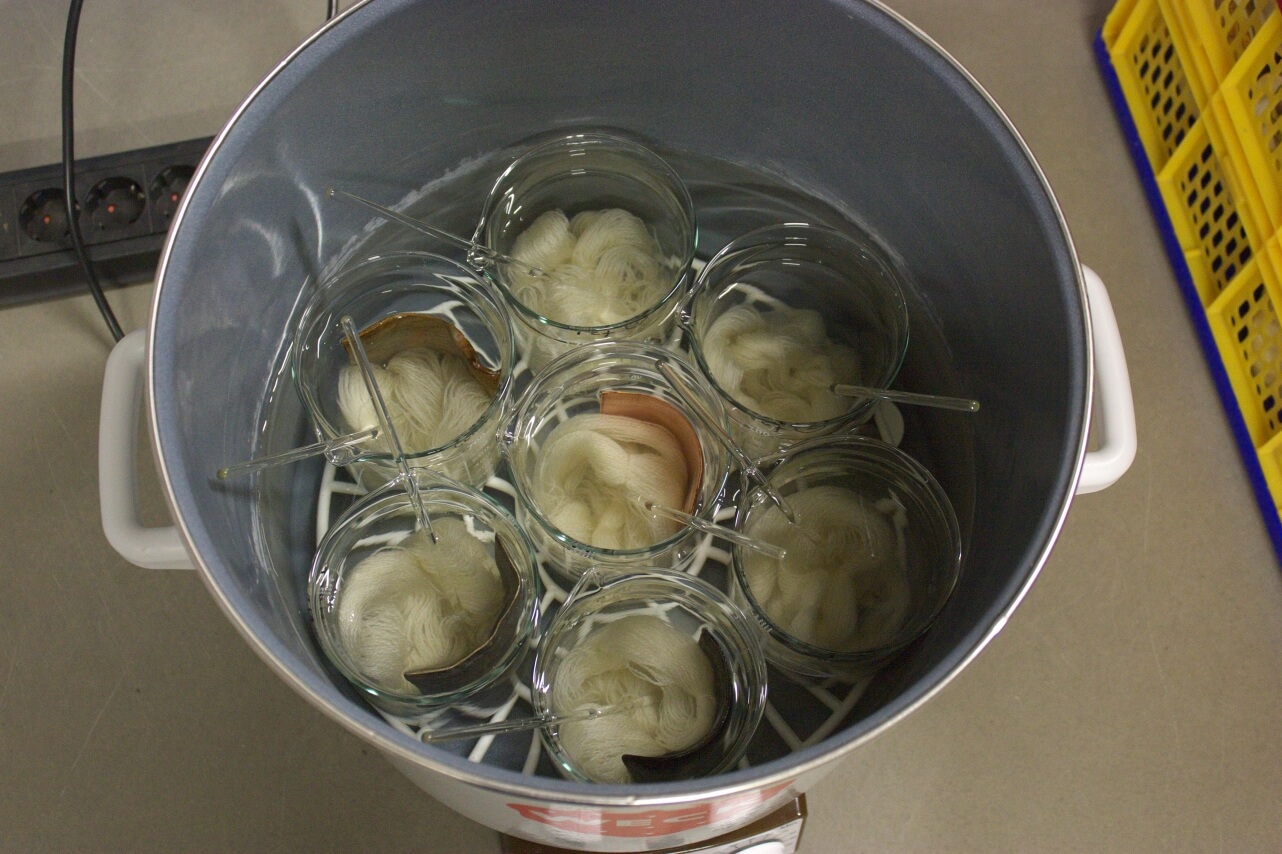
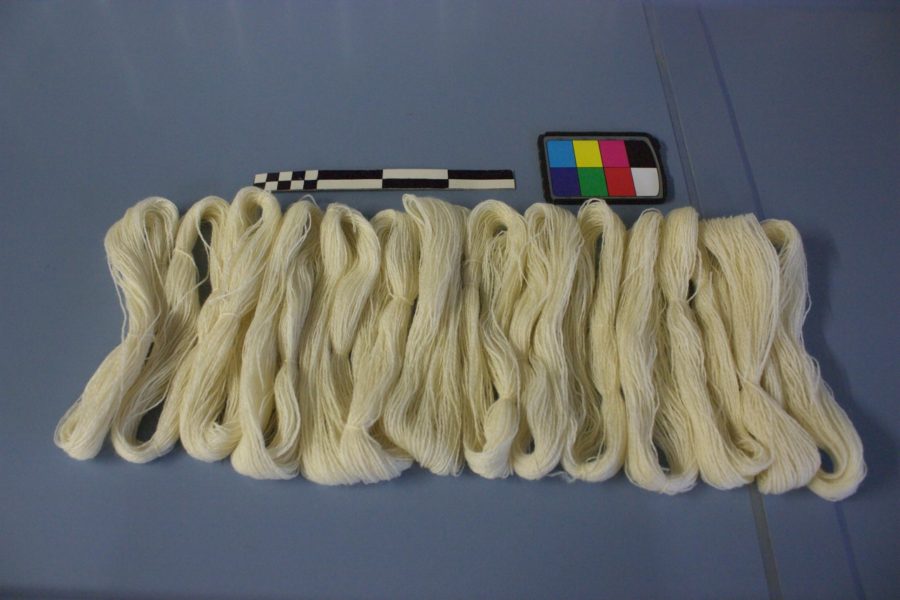
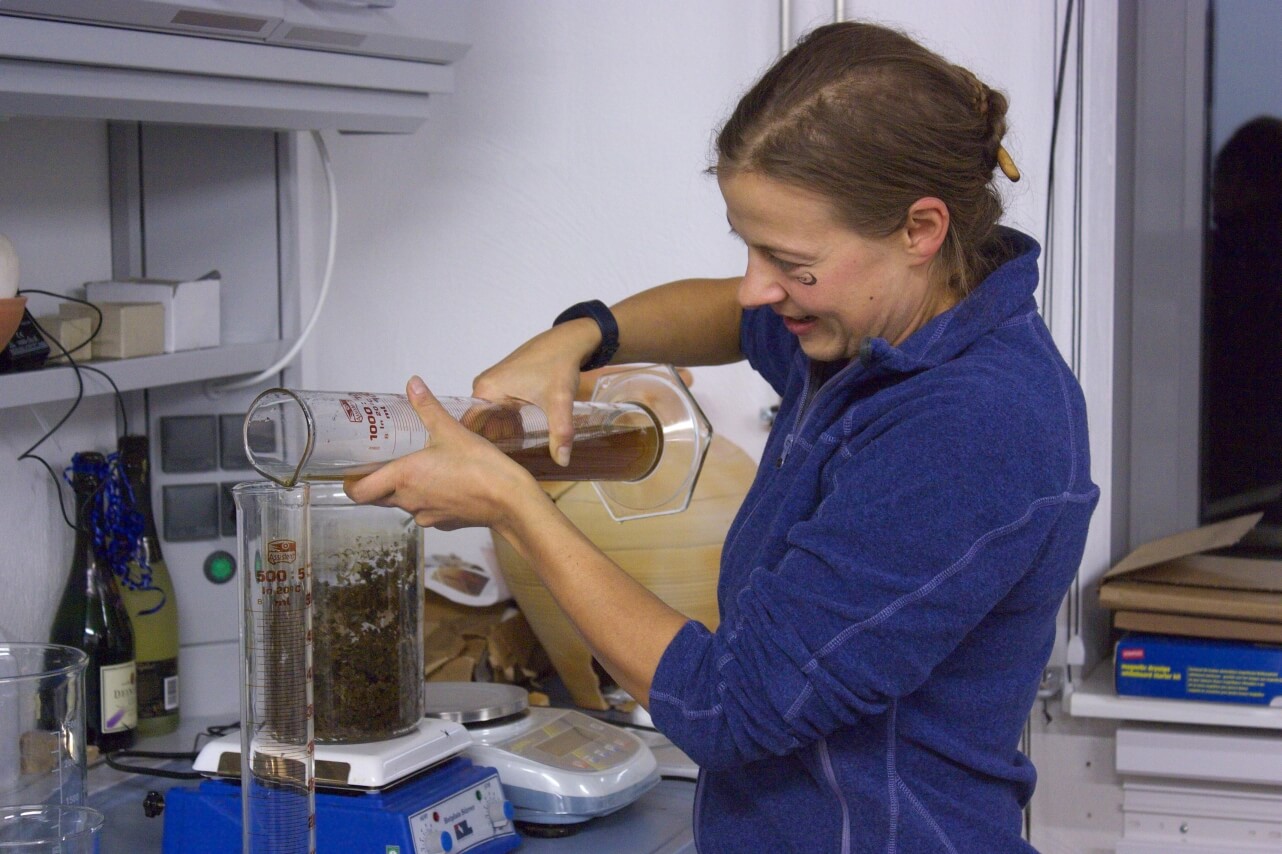
...and split up between fourteen pots.
IMG_0087
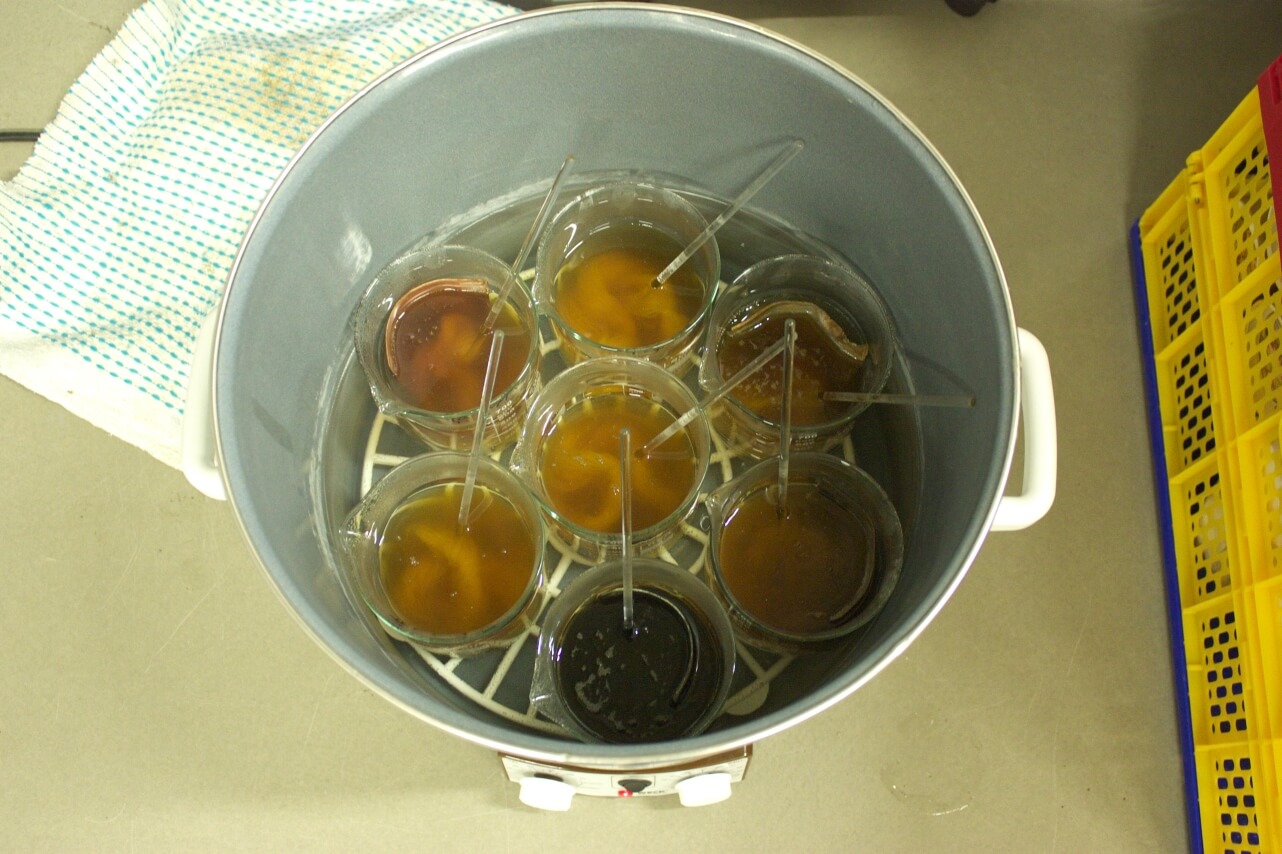
Then, skeins were dyed (that was a long night!).
IMG_0108
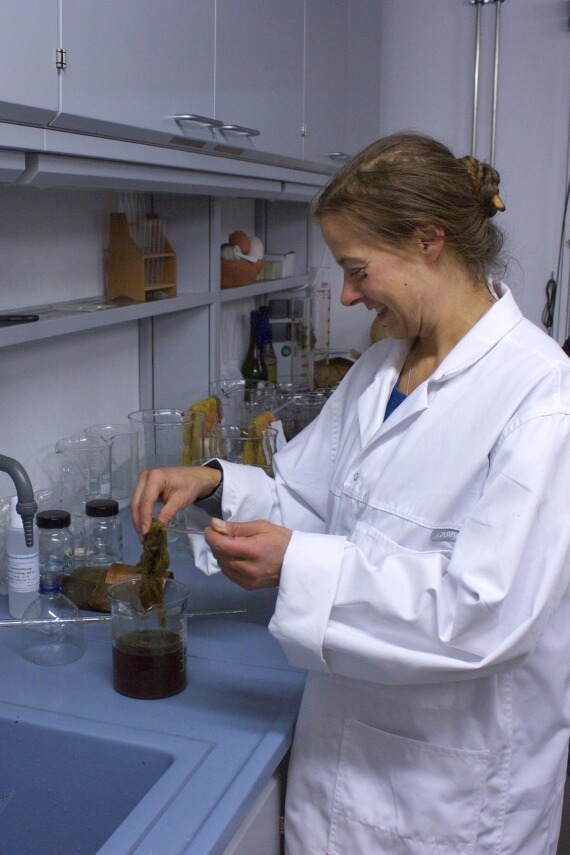
They were rinsed, and labelled, and dried.
IMG_0700
IMG_0605
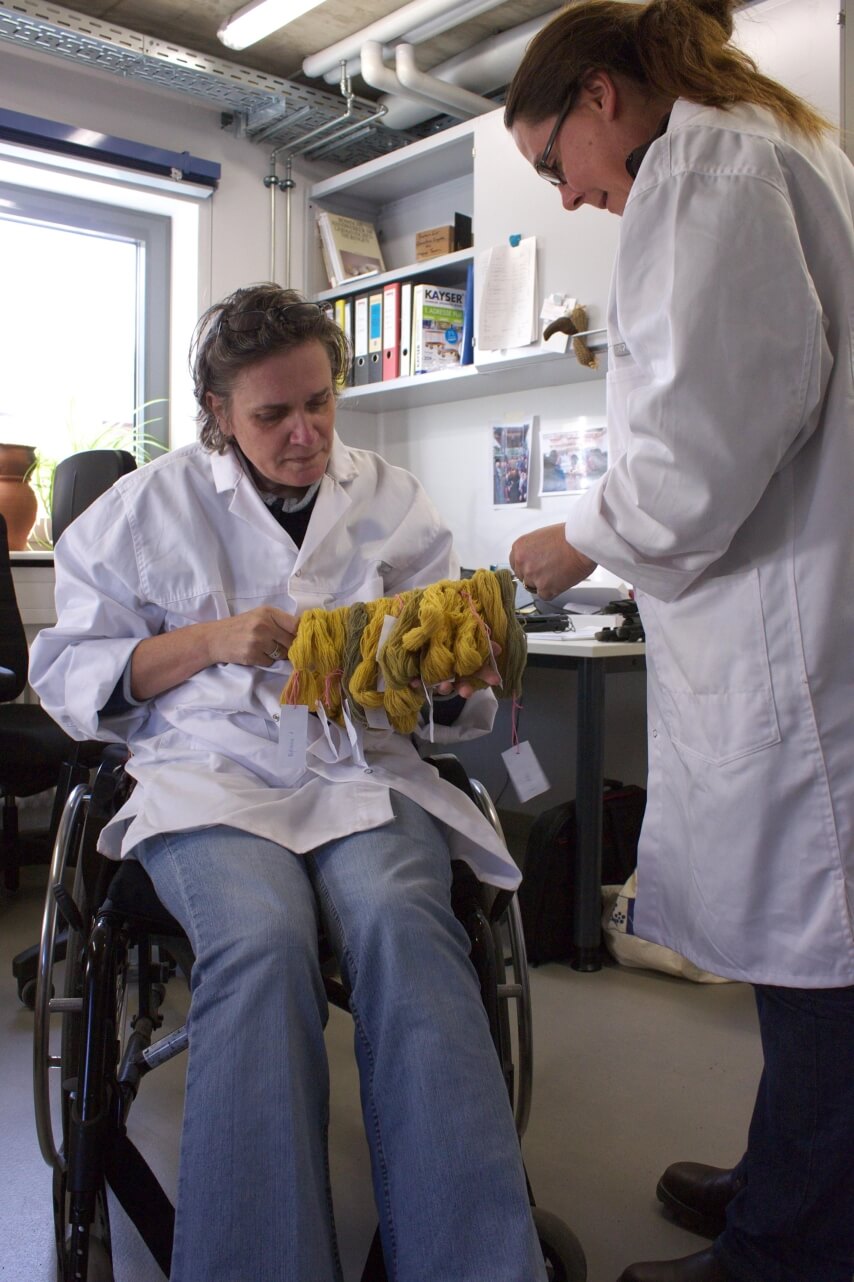
And, of course, they were discussed!
IMG_0816
So, the outcome?

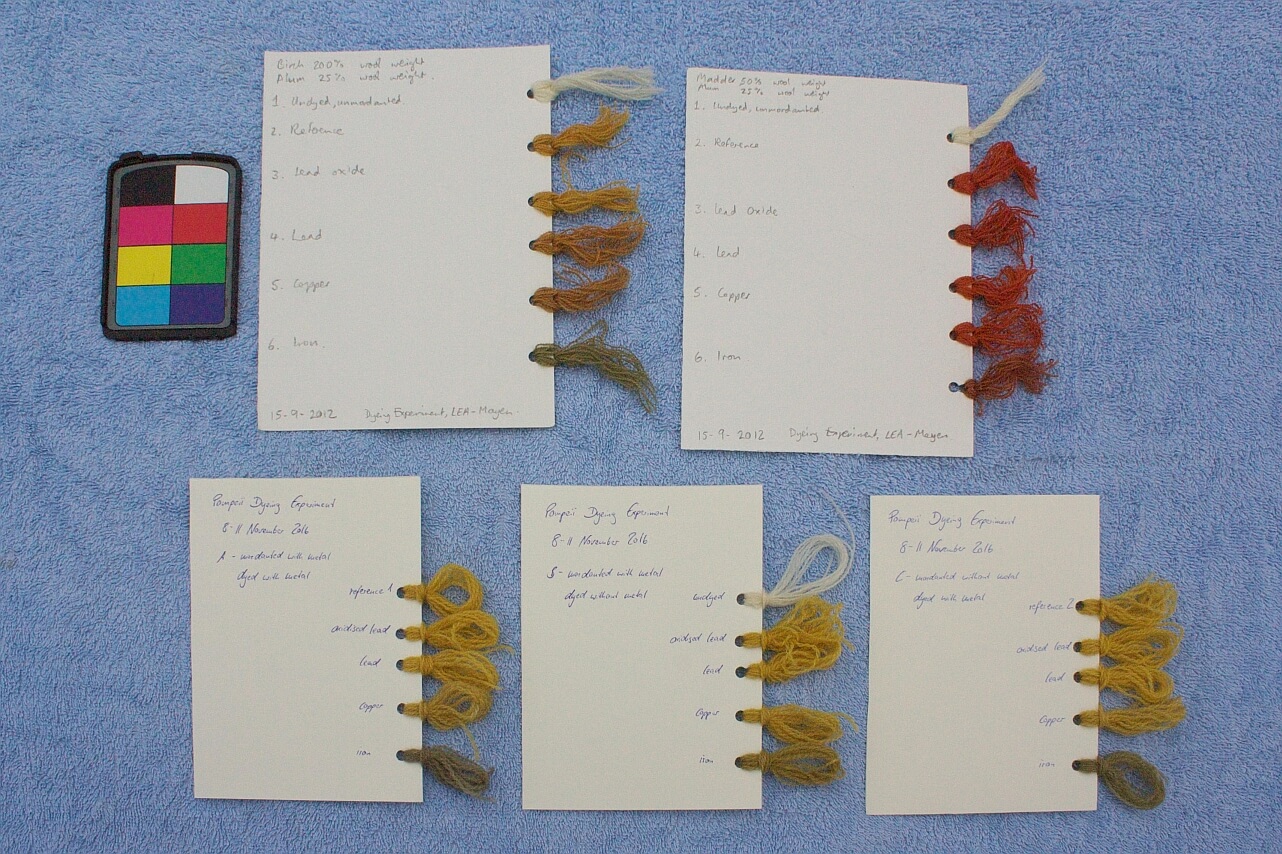
Our experiment was successfull on both counts. One, it does show that there is a more pronounced influence of the kettle wall when dyeing than when mordanting, and that it adds up when the metal is present in both. Two, that it is really important to repeat archaeological experiments, because the natural stuff that is part of almost all of them can result in weird outcomes, or in huge differences.

You can see the differences here - top left is the original experiment result in birch (top right was a madder dye run). On the bottom left, metal was present while mordanting and dyeing; bottom middle, metal only when mordanting; bottom right, metal only when dyeing.
IMG_1462
Time well spent, I'd say.
0
NOV.
17
1

Textile Forum 2016 - Dye Penetration Experiment

I'm back home!

It was a wonderful time away - both the Nobilitas-Akademie and the Textile Forum were amazing experiences, and I had a blast at both. I'm equally happy to be home again now, though, and ease myself back into the familiar routines in my familiar surroundings. A full week of intense work (which the Forum always turns out to be) really does make a person tired!

It was well worth getting tired over, though. This year's Forum was very, very heavy on experiments, with two full-fledged ones and two additional runs of tests, all of them involving dyeing. Which means we had a lot of work being done for those experiments, by a good number of people... and I learned again that experiments take an insane amount of time. Every time.

One of the experiments was dubbed "Dye Penetration Experiment", and it is exactly that which we were testing.

Dyeing can be done either in the fibre (in the fleece), in the yarn (in the skein) or in the cloth (in the piece). All three have their advantages and disadvantages, and there is evidence pointing towards all three methods having been used in historical times (though there is not always evidence for all three at a similar time in one region).

This has led to quite a bit of debate on which method was the most common one - and it is very hard to tell without knowing how well a method can be seen on the textile. If there are white spots between threads in a fabric, it must have been piece-dyed. If there are white cores in yarn, it must have been dyed in the skein. But what if the dye can penetrate completely? Then it would be impossible to tell whether the textile was dyed in the fleece, in the skein or in the piece.

Which leads to the question at the core of our experiment: How easily does dye penetrate the fabric?

We had two possible influences on the permeability of the fabric - yarn twist (yarns with higher twist are denser) and fabric density. Which resulted in the setup of having three different yarns hand-spun, to about 0.5 mm thickness and with three different twist angles (c. 20°, c. 30° and c. 45°), and three different fabric densities (12, 10 and 8 ends/cm in the warp).

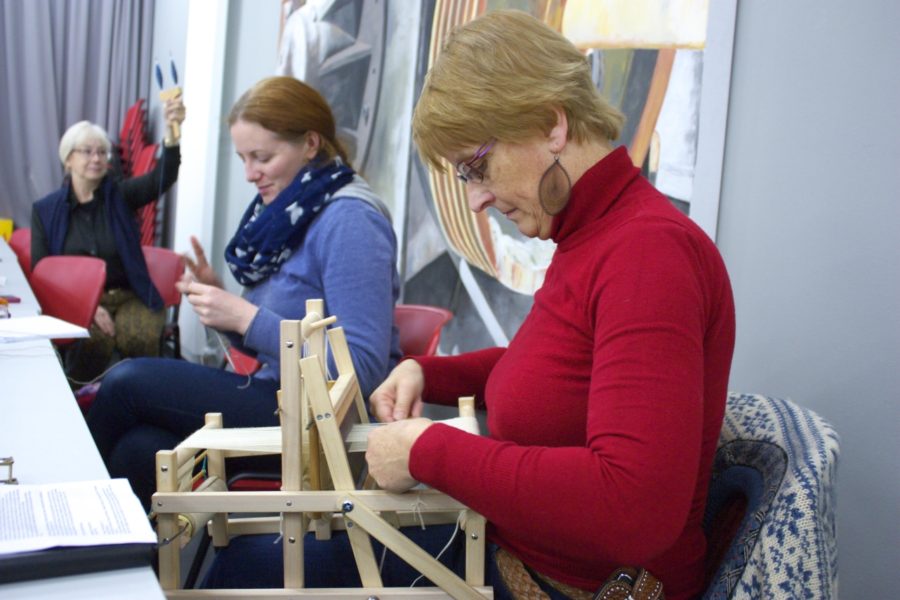
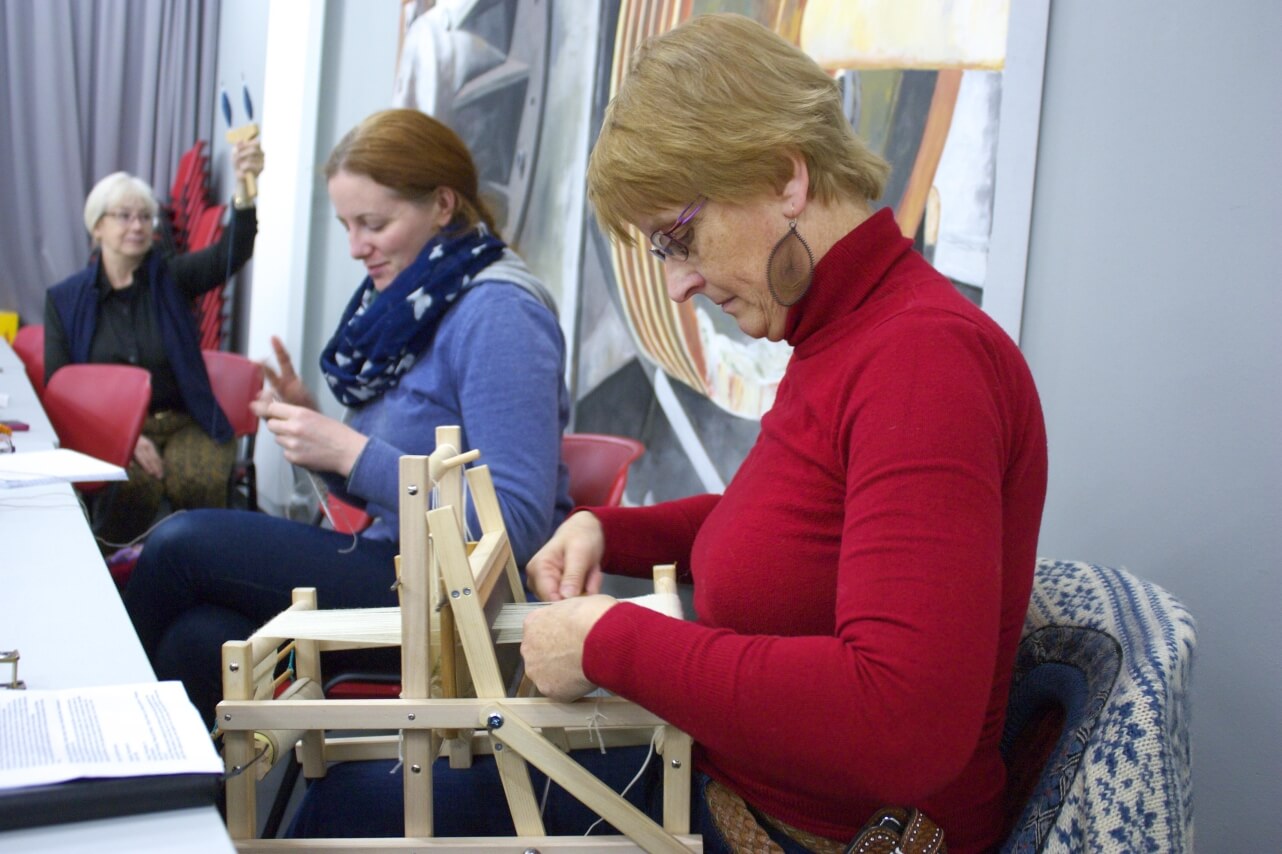
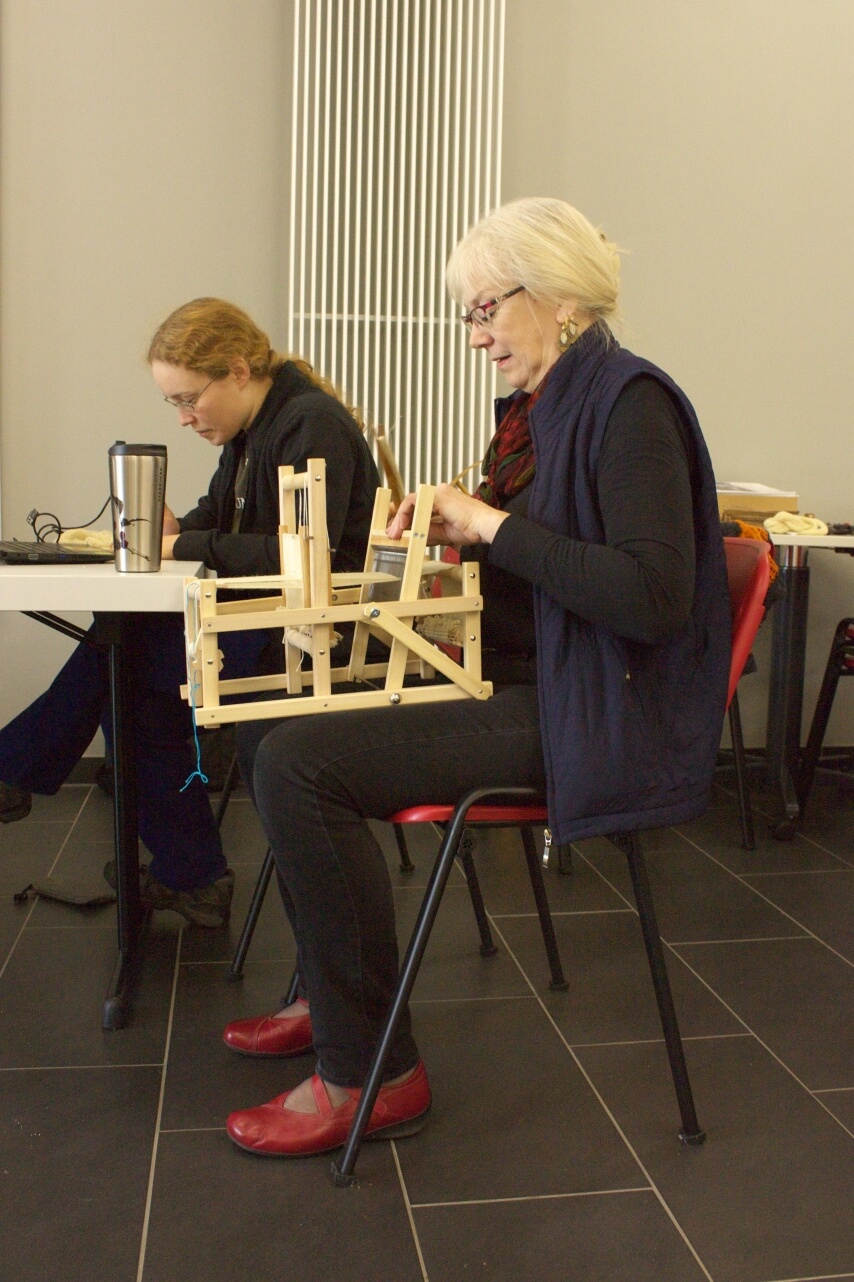
The spinning was finished before the Forum, but there was a lot of weaving being done during it, by Harma Piening and Ruth MacGregor:

IMG_0072 IMG_0783
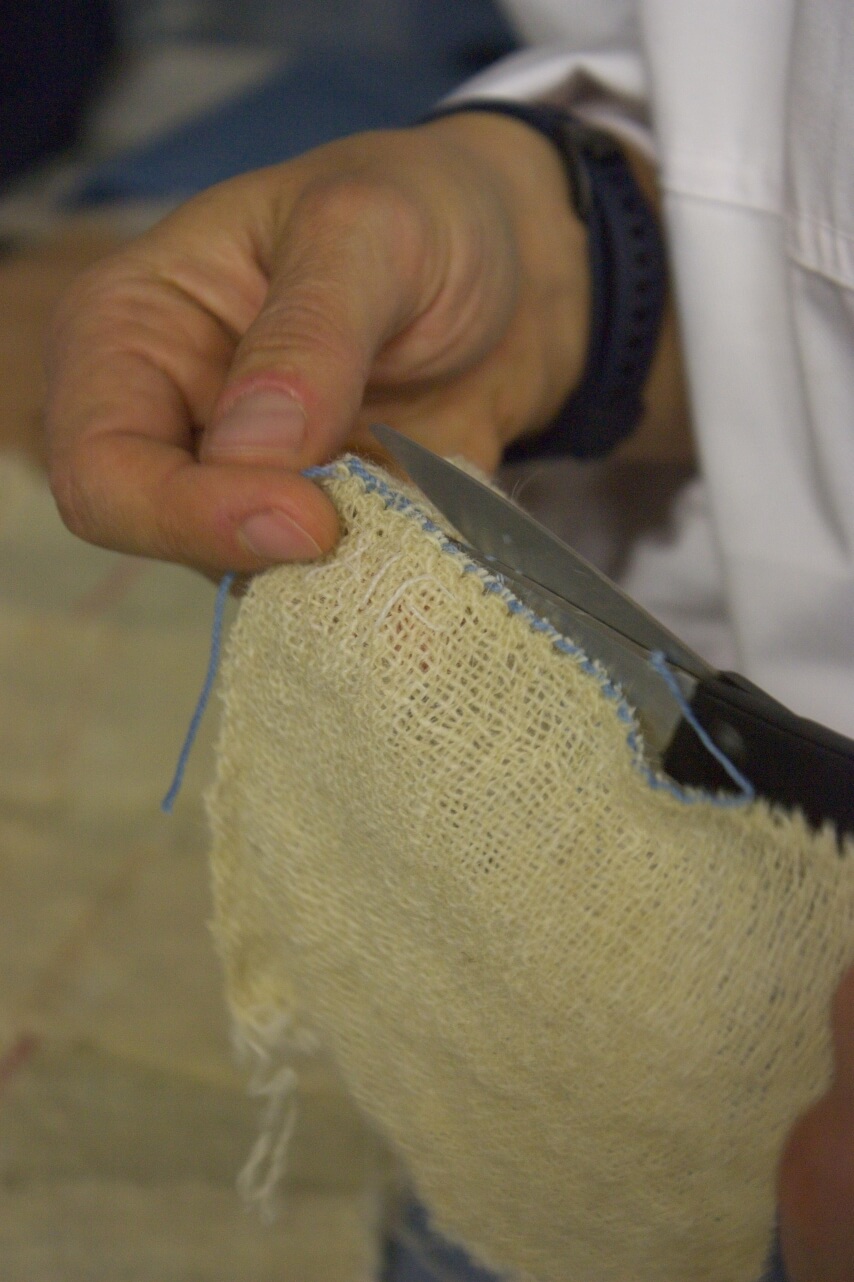
... followed by careful finishing of the fabrics. Then I got to cut them apart:

IMG_1141
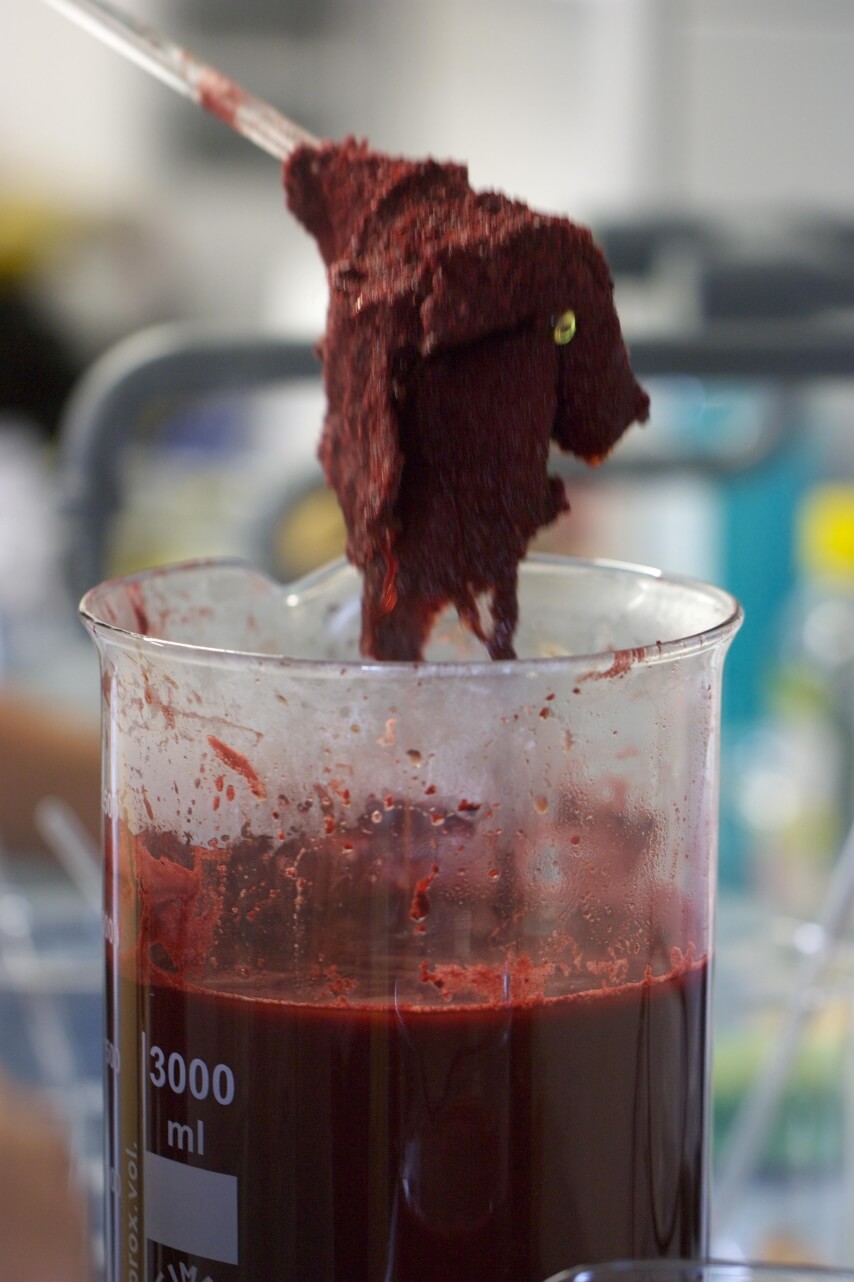
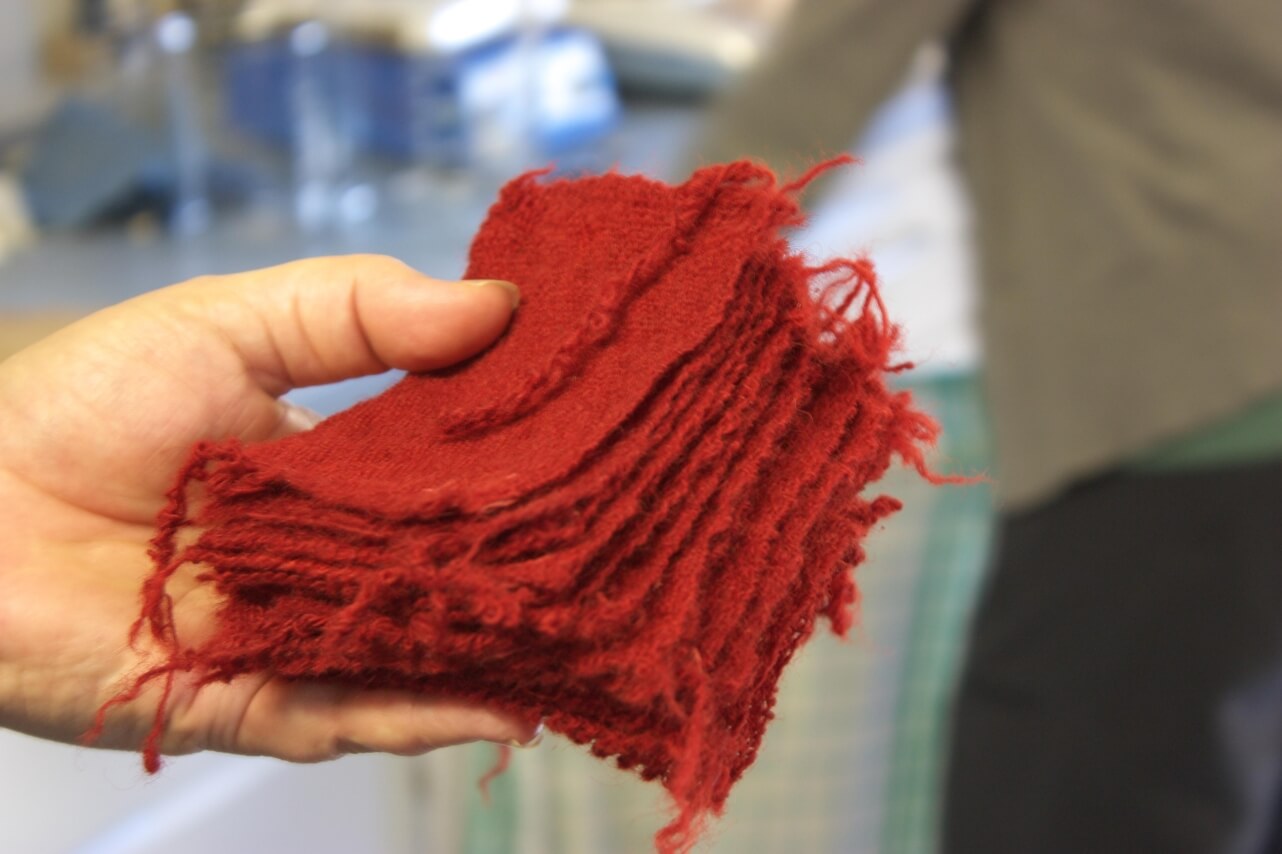
... and then some of them were fulled, and most of them were dyed madder red.

IMG_1310 IMG_1326
This meant that I got a bonus lesson in how to dye with madder from Sabine Ringenberg - and her speciality from many years of working as a professional historical dyer is red. Small wonder the colour turned out quite nicely!

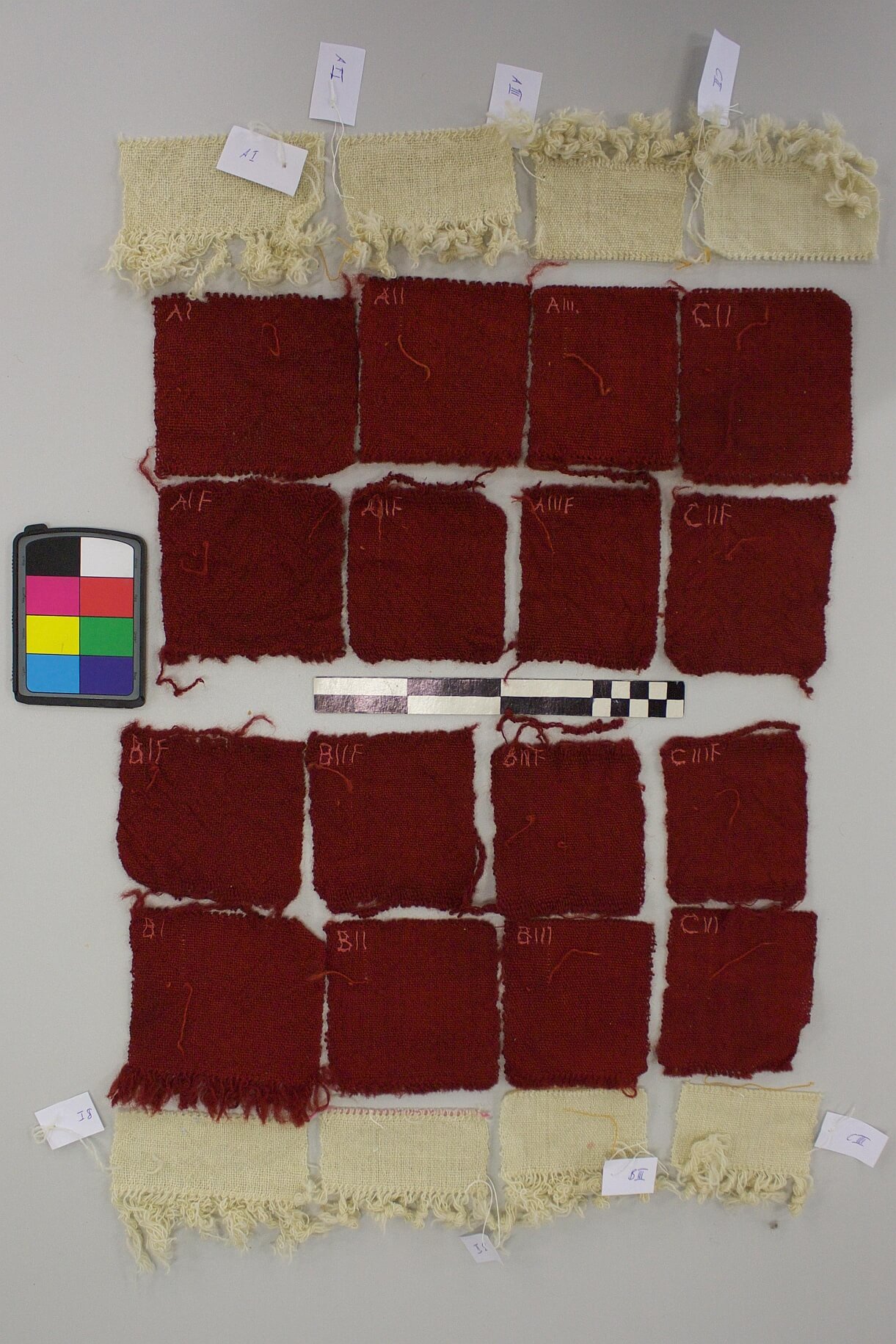
In the end, we had a load of samples to be catalogued and analysed:

IMG_1460
I'll have to take a careful look at the photos, microscope photos and measurements before giving a real conclusion - but I can tell you at this point already that none of the fabrics was completely dyed through, there were white spots between the threads in all of them.

We also found that the twist angle I was aiming for (with regular checks on my spinner's little helper) was not what the yarn ended up having, and that the angle fluctuated a lot over the length of the yarn. It will be interesting to see whether the angles read out differently in the yarn and in the fabric - one of the things on my list to test in the future.

It was definitely a really interesting experiment to do, and I got a good number of surprises (I'd have suspected at least the looser fabric with the soft-spun yarns to dye through, and my spinning to be a lot more regular than what it turned out to be). It is of course not the ultimate answer to the question whether things were dyed in the skein or in the piece - but it does hint that we might expect white spots when dyed in the piece, and that would be a good thing to know. (As all experiments, this has already generated more ideas, such as making tests with yarn skeins with different twists and thicknesses to see about how well it dyes through...)
0
NOV.
02
1

Three skeins.

My spinning for the experiment at the Textile Forum is done - and here's the result:

three_skeins
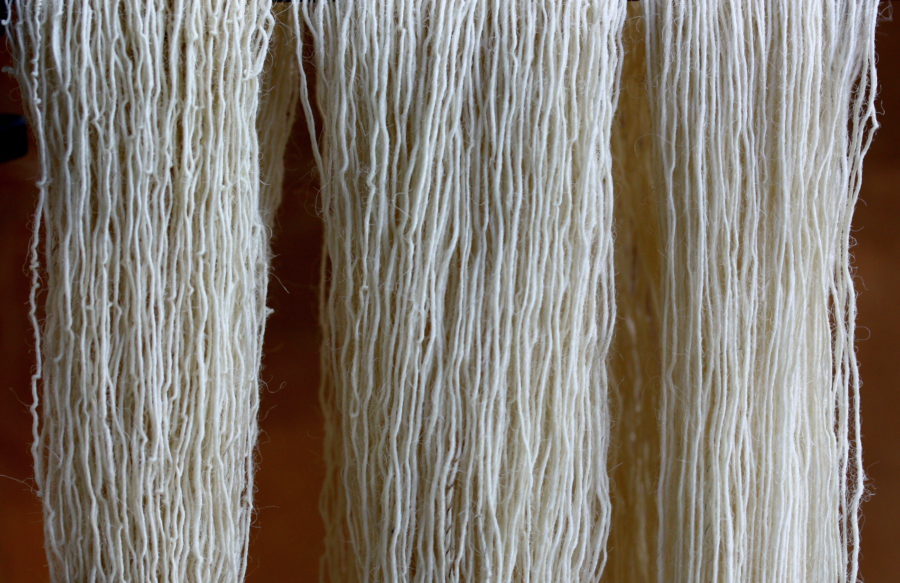
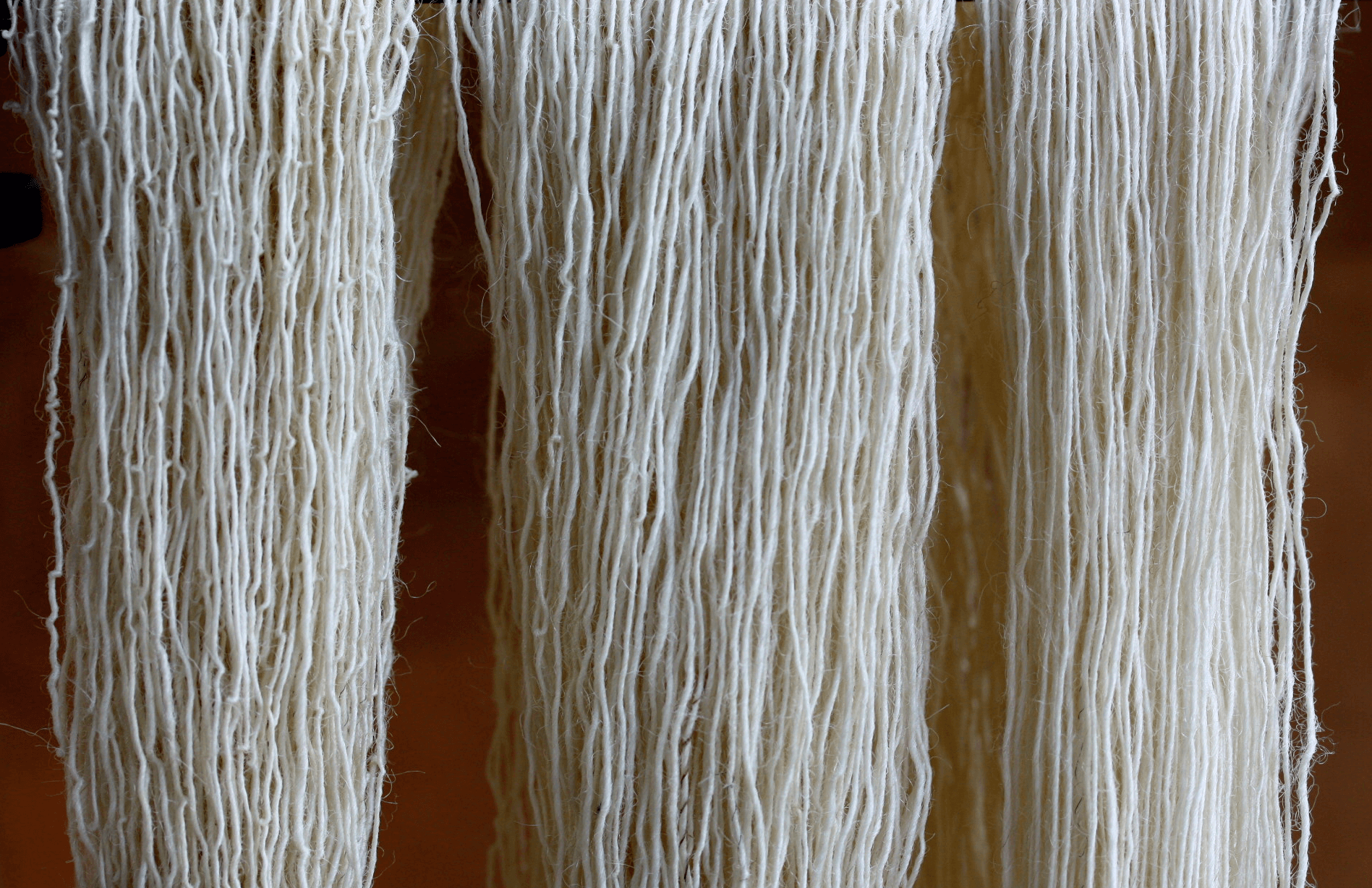
Three skeins, each with 230+ metres of yarn. Each from the same wool (Eider wool, I love that stuff, it really spins up beautifully), each in the same thickness of 0.5 mm, give or take a smidgen (even the evenest handspinning is not completely even!) and each finished in the same way (placed into a bowl, boiling hot water poured on top, left for 10 minutes to soak, then stretched out, then hung to dry with 1418 g of weight tied to the bottom end of the skein).

The only difference is the amount of twist between these three. The skein on the left has a spinning angle of about 45°, the one in the middle about 30°, and the one on the right about 20° - give or take a smidgen...

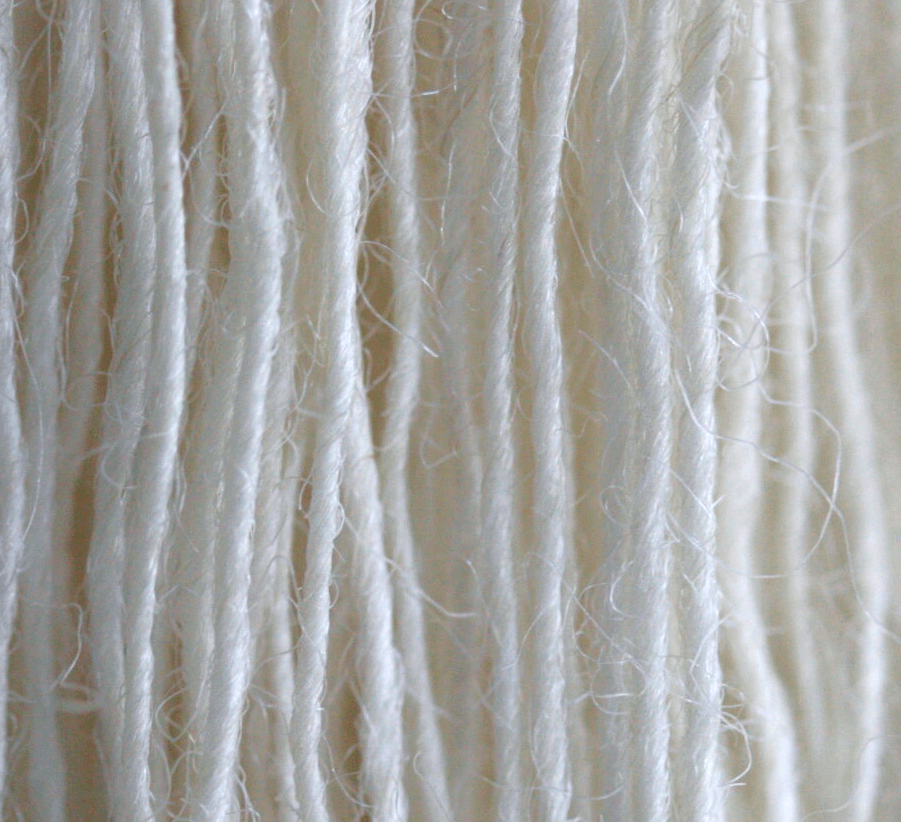
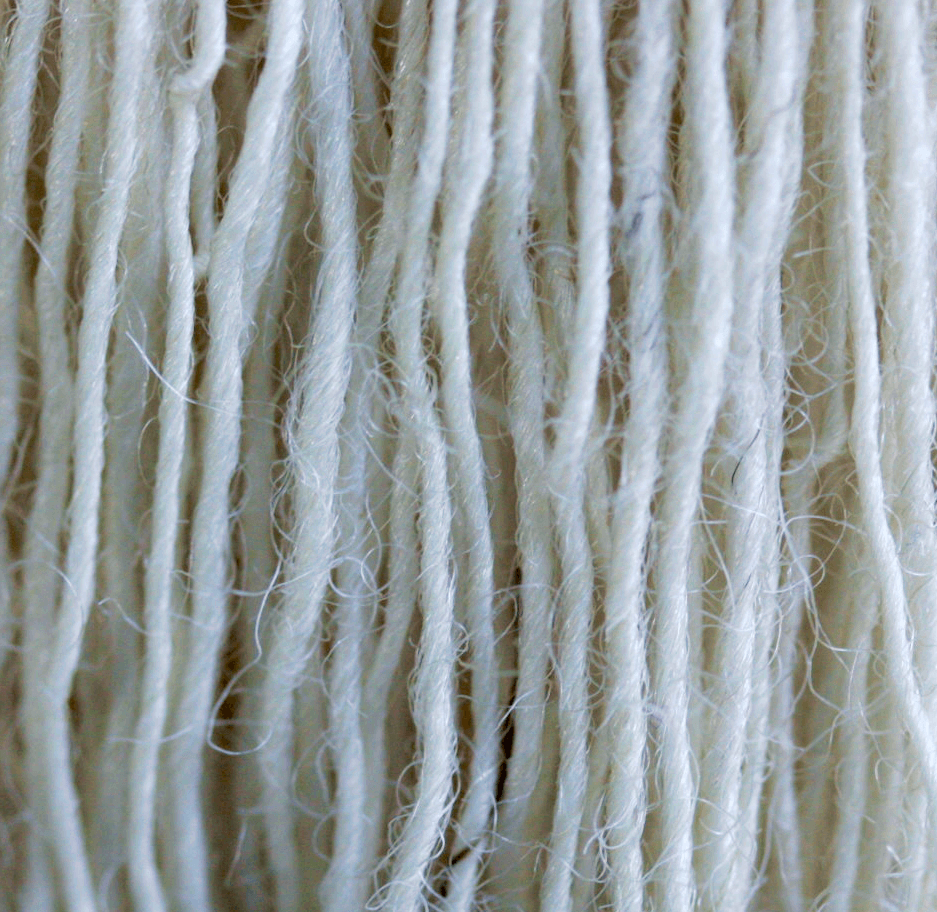
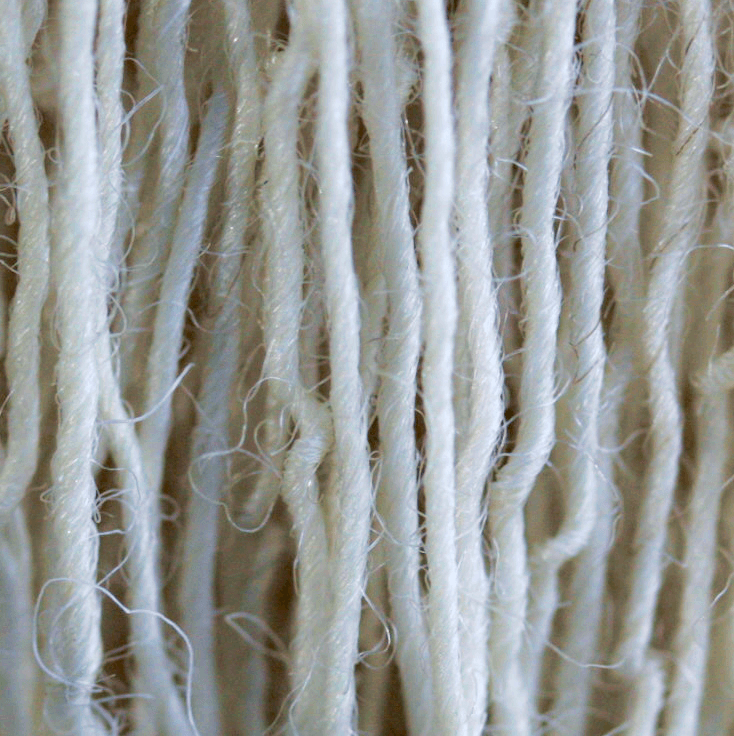
As you can see in the close-ups, the angle does make quite a difference. You can also see that it is not all the same everywhere in the threads, even though I always try to spin really, really evenly and really, really neatly.

[caption id="attachment_2718" align="aligncenter" width="196"]20angle 20° spinning angle


[caption id="attachment_2719" align="aligncenter" width="206"]30angle 30° spinning angle


[caption id="attachment_2720" align="aligncenter" width="204"]45angle 45° spinning angle


However, they should be regular enough for our purposes - and next week, during the Forum, they will turn into small bits of fabric, and that fabric will be dyed, and then we will see the differences between the three fabrics. Plus whether the dye penetrates them all equally well, or whether there are differences!
0
OKT.
26
0

Still preparing...

Things are going more or less as planned here - every morning, I make a list of the things I want to get done during the day. Every evening, I find that I have not been able to get all of them done; partly due to mis-estimating how much I can fit into a day, partly due to not being able to finish them off because of missing information, or waiting for something, and partly because other things got into the way, or I decided to split the work over two days for a reason.

Still, progress is being made. This year at the Forum, we'll have not one, not two, but three tests/experiments (plus some extra dyeing with a fermentation vat that does not count for these) and they all need preparation. So I have wound skeins with 5 g of yarn each, and I'm working on putting the plan and protocol together for the repeat of the Pompeii dyeing experiment plus its add-on (I blogged about that here). It's proving to be not so simple to get all three batches done in a sensible way, so there's a good bit of thinking and checking and double-checking involved in making that plan (which is not yet finished, and probably will not be completely finished today, since I will want to go over it once again with a fresh brain...).

For the second experiment I'm deeply involved in, I have been spinning yarn - one batch with really high twist (a spinning angle of 45-50°), which is already finished, and has its twist set, and is now waiting for its partner. Which is a second batch with less twist (spinning angle of about 30°), about half-finished; and that is another thing I did today, some spinning. With the fabulous Zwirnzwerg! I'm really happy that I have this e-spinner now, it does help immensely especially when going for high-twist yarns. I could never have spun the 50° yarn in that time with any of my spinning wheels.

Why the yarns? We will be testing dye penetration in different fabric densities and with different yarns to find out how reliable the white spots between yarns are to indicate whether something was dyed in the piece or in the yarn/fleece. Which means spinning, and weaving, and then dyeing, the latter two done during the Forum.

There also has been ordering of supplies and materials for the Forum, and there will be more lists of things - things to bring for the diverse activities, lists of when what part of which experiment will take place, lists of meals planned by the catering service, and so on. Good thing I like lists!
0
OKT.
21
0

Themes in Archaeology

Routledge Publishing is doing a "Themes in Archaeology" thing, and they have finished setting up their themes now. To celebrate, the articles under these groups are free to read until April 30, 2017 -you can find the theme collection here.

In unrelated news, I'm working on the outline of an experiment we will do at the Forum, about how well dye penetrates a finished fabric. This is all very, very exciting, as whether something was dyed in the piece, in the yarn or in the fleece is quite a big difference regarding workflow and craft procedures - and after our experiment, we might have a tiny bit more knowledge about whether white spots could be expected in a piece-dyed fabric or not.

My typing is a little slower today, though - because the little cat is again hanging out on my desk, and I don't have the heart to set her down... she's having a few tough days, as she hurt one of her legs. As a result, she is to take pills (which she hates), painkiller (which she loves, it seems to taste like heaven) and, worst of it all, she is not allowed to go outside, to keep her from overworking her leg. So here I am, with one sad, bored, unhappy cat who needs a lot of cuddling and attention. Sooooo bored. Poor kitty.
0
SEP.
26
0

Opus Anglicanum Exhibition coming up

Twitter can be really useful sometimes - I learned there that the V&A London will open its new exhibition "Opus Anglicanum, Masterpieces of English Medieval Embroidery"  on 1 October 2016, and the exhibition will run until 5 February 2017.

There's a programme of events related to the exhibition here, and the main page about the special exhibition is here. It looks like a  spectacular line-up of gold embroidery, so if you can manage to get to London during the exhibition, it is surely worth a visit!
0
SEP.
19
0

Archaeology Things (once more)

Here you go, actual archaeology-related content:

The next Experimental Archaeology Conference (the tenth!) will take place in Leiden, Netherlands, Thursday, 20 April, 2017 to Saturday, 22 April, 2017. The Call for Papers is currently up, so if you'd like to submit something or just want more information, you can go here.

This is not your cup of tea? Or your loaf of cheese? Well, maybe this is: A bronze age ceramic pot found in Denmark contains residue of animal fat that might be from an attempt to make cheese.

Still not interesting? Maybe I can get you with this, then - Means of Exchange: Dealing with Silver in the Viking Age is the current free e-book of the month from Aarhus University.
0

By accepting you will be accessing a service provided by a third-party external to https://pallia.net/

Kontakt