Latest Comments

Guest - Aislinn Dyestuff Citizen Science.
09. Oktober 2026
This is a great project. I look forward to the results. Thanks for letting us know.
Guest - Aislinn Time for...
09. Oktober 2026
Looks delicious!
Guest - Katrin Sprang Discussion
18. September 2026
Hi Rachel, I have looked for more photos of you, but that was not very successful. I found a link on...
Guest - Beatrix Sprang Discussion
15. September 2026
That lozenge pattern element is not a photograph, but a scan. So it should be to scale. But I pinned...
Guest - Katrin Sprang Discussion
15. September 2026
I was not referring to Rachel's reconstruction (is the reconstruction you refer to the one photograp...
SEP.
16
0

Testing... complete.

I've finished my test run with the e-spinner, and the result is 745 m of two-ply yarn.

The things I learned... they are many.

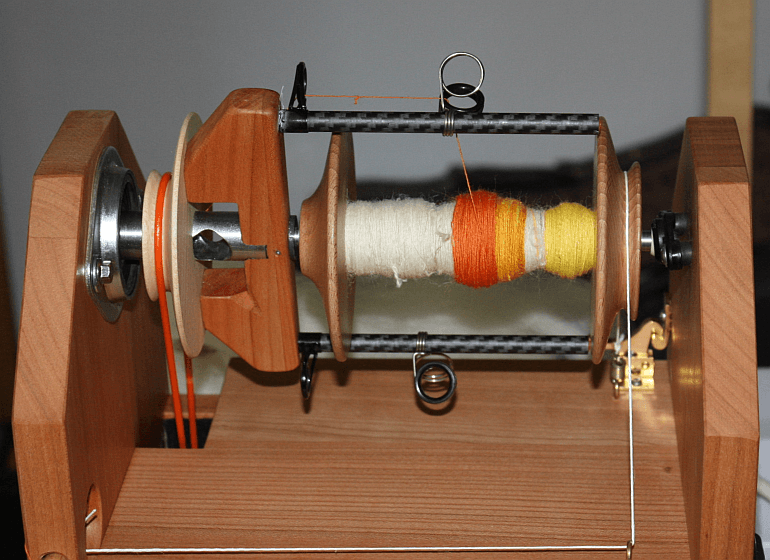
I am a sucker for slow colour gradients in yarns. Always have been - so I had a lot of fun spinning, and I was delighted with the result:

two_bobbins
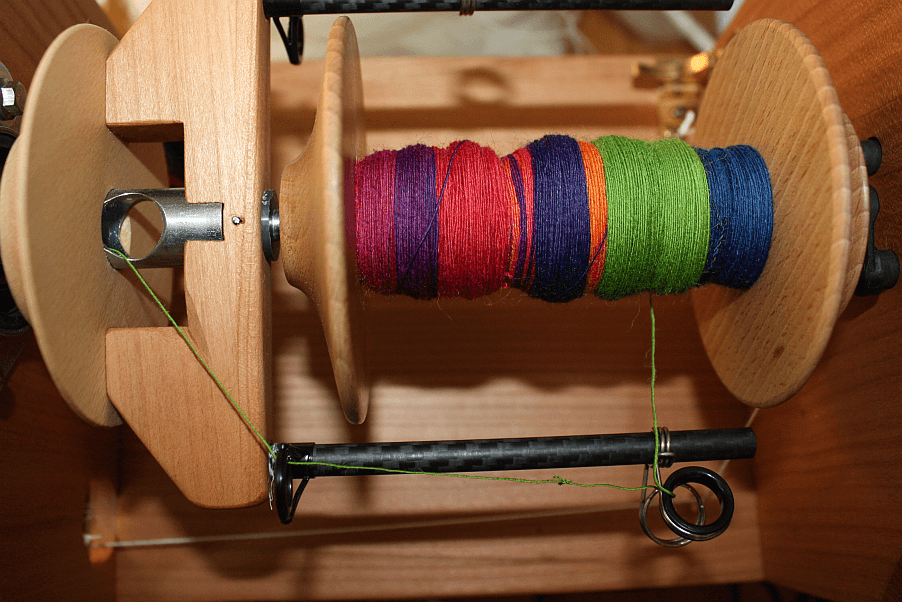
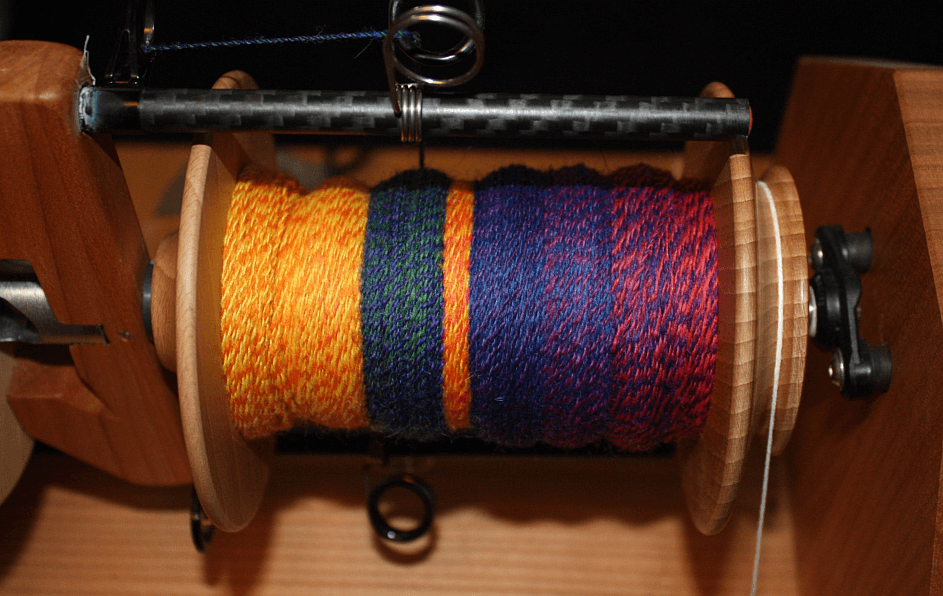
What I'm not as fond of, though, is when the slow colour gradient doesn't match up properly. Which was, unfortunately, the case from about the middle of the two batches. Where there should have been a lot of bright, clear yellow, there was a lot of overlap between yellow and orange instead, and the other colours followed suit.
twoply_in-progress
I'm especially not fond of the mix of very light and rather dark, like the mix of purple and salmon on the very right end of the bobbin. But there was nothing to do but persevere, and finish the plying.

I'm not the queen of plying, by the way. I can spin alright, but I'm not plying often enough to have a lot of practice, so there are more places than I like that are badly plied.

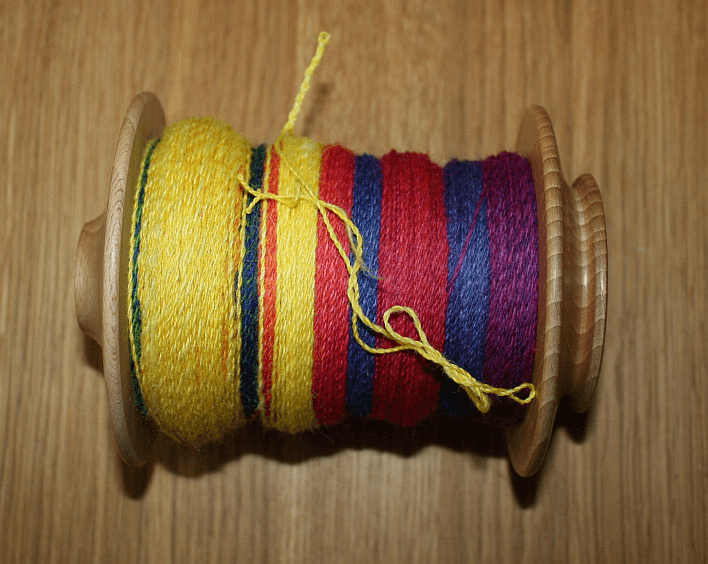
The bobbin was finished in spite of my unhappiness with the colour match:
twoply_done
and at least at the end, the colours did match up better again. I guess I'll find out how it looks when I figure out what to do with 745 m of fine two-ply yarn. Knitting, probably. (Suggestions for patterns are welcome.)

Next step was measuring out the length - that means skeining. Next thing I learned was a two-fer: The plying differences did not even out even though I had a long stretch of the yarn between bobbin and skeiner; and my skeiner is not up to the strain a large amount of wool places on its arms... so I definitely need a new one now, and have to repair the old one. Good thing my length measurement is done via a separate tool and not through counting turns on the skeiner!

Once the measuring was done, I soaked the skein in water, and now it hangs for drying. There are, as mentioned, ample spots where the plying work is not perfect. There are also quite a few places where I could have done a better job spinning. But since the aim of the whole project was to gain experience with the new tool and to get a speed benchmark, that I can live with... especially as I found out that I can spin rather quickly. So now I can calculate for spinning medieval-style yarns on the e-spinner for reconstruction projects. Plus I have some nice colourful yarn to play with. Hooray!
0
SEP.
13
2

What I've been up to.

Things I've been up to:

Working on the European Textile Forum programme. (Should be a step further soon, and I'm really looking forward to getting the updated programme online.)

Doing my homework from the last fair - which includes things like re-organising stuff in the transport boxes, correcting the numbers in my inventory list, and similar (usually not very exciting, but necessary) shenanigans.

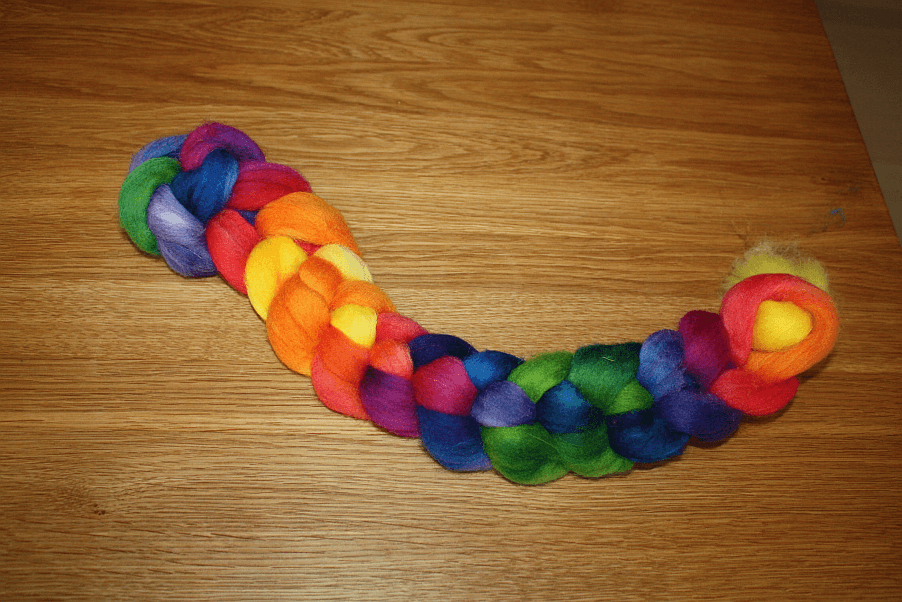
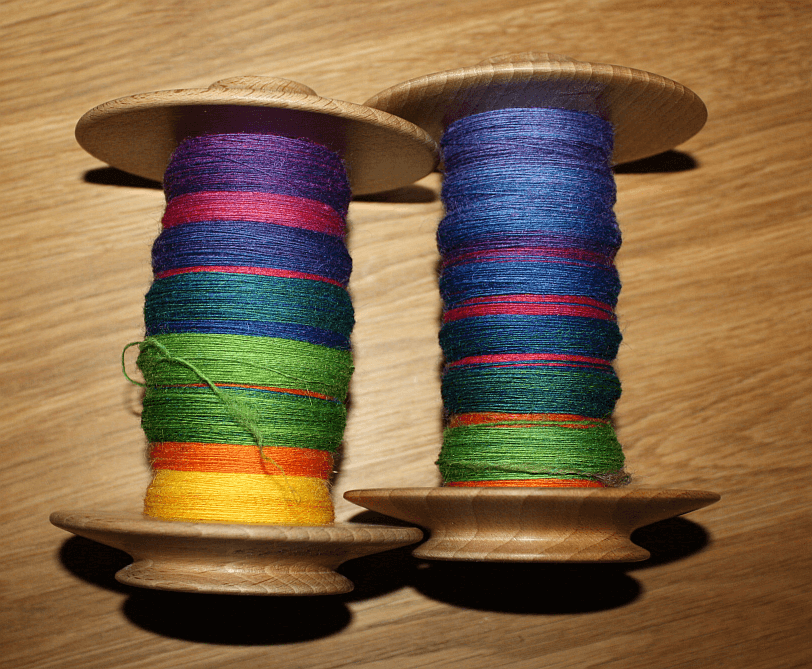
Wrestling with The Gnome. Well, wrestling is too hard a word - it's been going rather smoothly. I used the excuse that I need to get to know my new tool to finally start spinning rainbow-coloured wool I bought ages ago:

rainbowwool
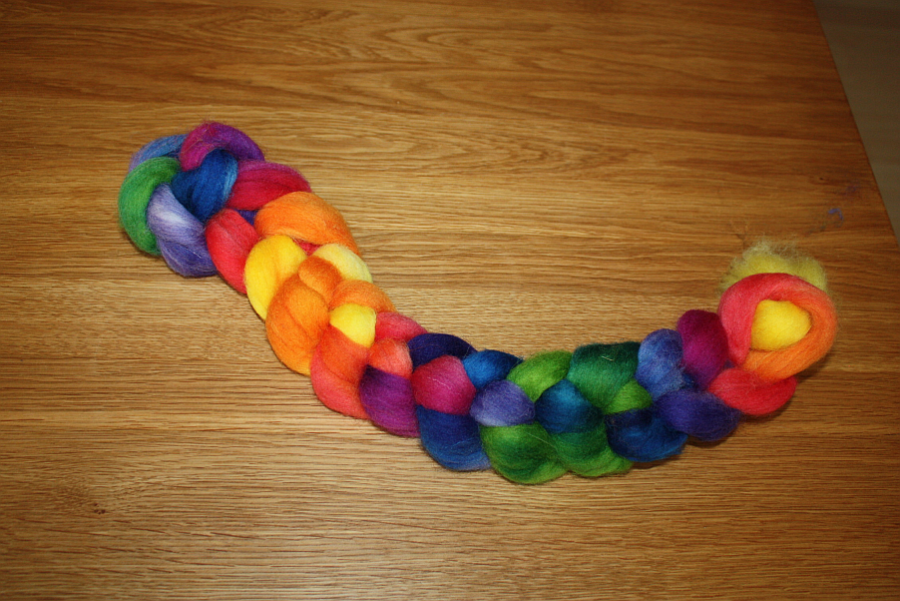
That is half the wool; the top was symmetrically dyed, so I unraveled it, split it in the middle, and now I'm spinning the two bits individually to hopefully get a wonderful rainbow-coloured two-ply in the end, with long colour runs. I have no idea yet what I will make with it, though. It will be about 150 g of yarn when all is done, so it should be enough for a good-sized shawl - but whether I really need another shawl is another question.

Anyway, it spins up nicely:

gnome1
and quickly:

gnome2
I can see a bit more spinning in my future, though - that is about one quarter of the first braid done. Lots more to go!
0
SEP.
12
1

New tool joy!

It is a truth universally acknowledged by every spinner, weaver, knitter or other textile craftsperson that any tools needed for the craft are herd animals.

As of today, I have a new addition to my personal herd of spinning tools. Never mind that over the years I have accumulated more spindle sticks than I can shake a stick at (quite a few of the sticks intended for sale made it into my personal tool stash). Never mind that I already have two wheels (four, if you count the two not-really-functional ones).

The two functional wheels I do own already are good ones... for their purpose. The reconstruction of the medieval Great Wheel is a wonderful wheel that is suitable for serious production of woolen yarns. It may be slightly wonky, due to the fact it needs to be completely taken apart for travel, but that doesn't make it less productive. It will only do for woolen yarn, though, and it takes up a lot of space, and the yarn (as I have not practiced enough) tends to be a bit uneven. The other one is a small one - my first wheel ever, and it is rather... slow. These days, it is mostly used to wind off portions of thread for selling them, so it still earns its keep, even though not through making yarn.

Once in a while, though, I get a request from a museum regarding yarns that will be as close as possible to the historical originals. For many textiles, especially high medieval or earlier ones, that means thin, very high-twist worsted yarns. Spinning these on a spindle is technically no problem, but even if I do spin quite quickly these days, wind-up time always means that spinning takes a long time. The wheels I own are also not suitable for making yarns of this type - it is technically possible, but takes about the same time as spindle spinning does. I tried to re-vamp one wheel (that is one of the not-really-functional ones), but there were serious problems with the friction necessary to drive the very small whorls. So I can offer historical threads, yes, but as it takes very long to spin them, they are very pricey indeed.

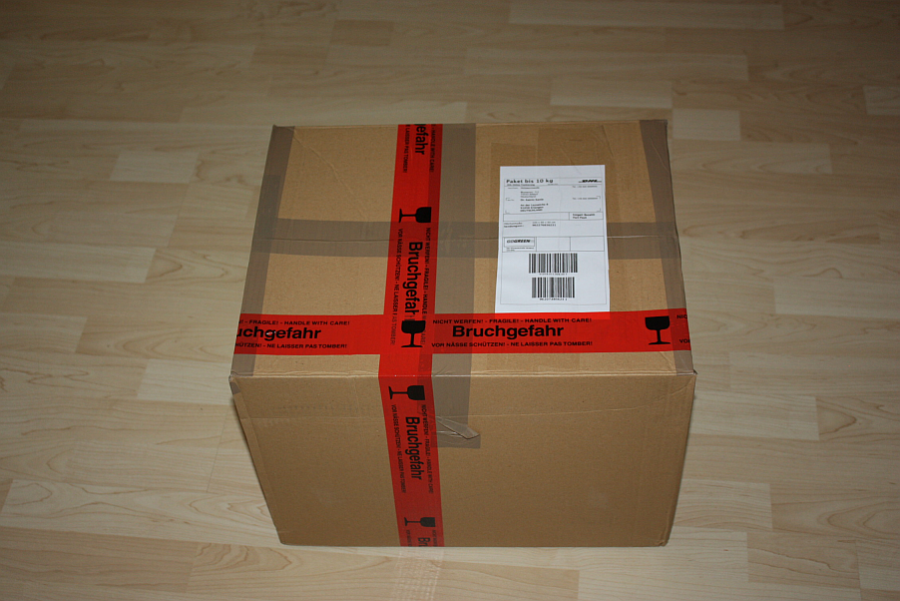
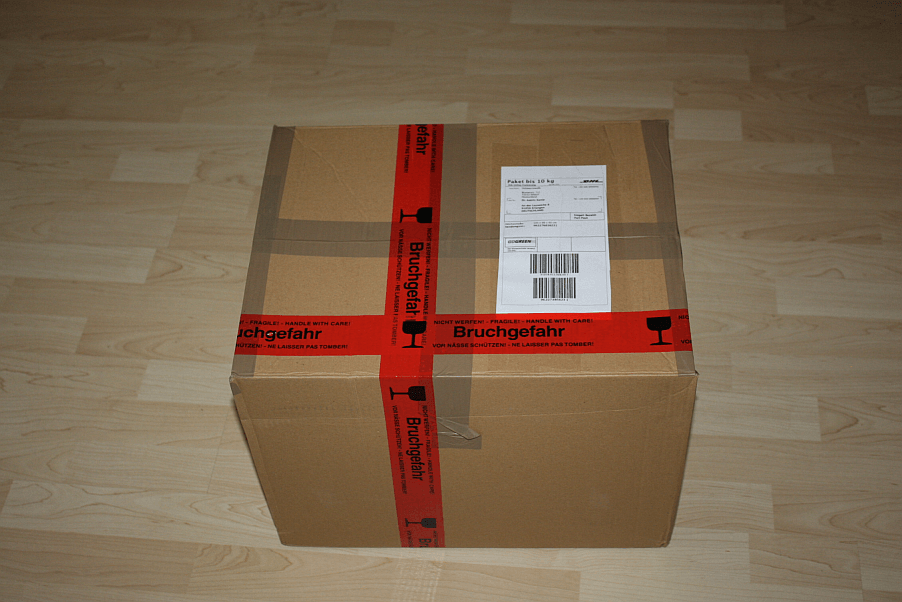
When I was at Wackershofen the weekend before last, though, I finally got the opportunity to try out an e-spinner and see if it could be persuaded to deliver the ratio of twist and yarn intake that I need. Long story short - it did, and today this package arrived here:

zwerg1
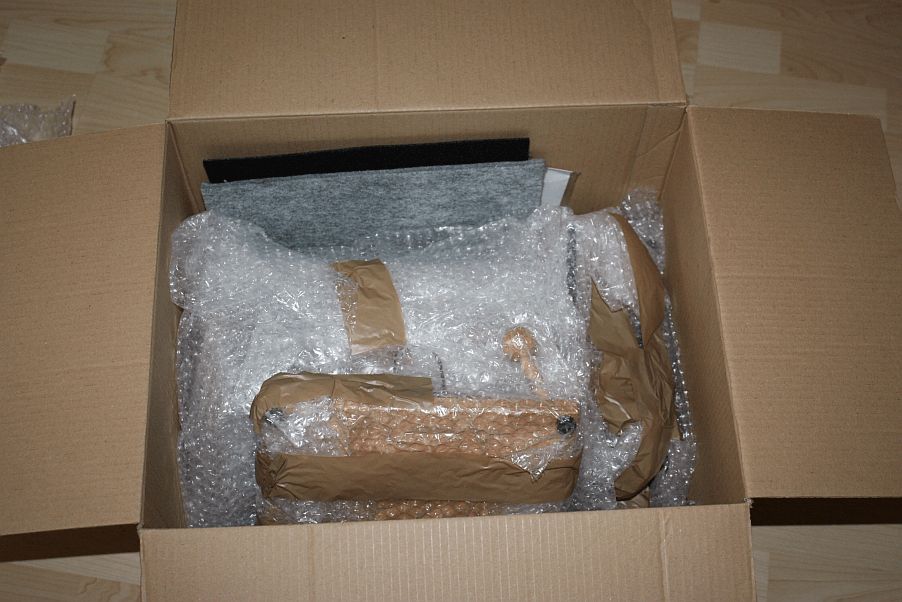
Inside, nested in copious amounts of bubble-wrap, is the Zwirnzwerg (literally: plying gnome):

zwerg2
It doesn't come on its own, though (herd animals, remember?) - it is accompanied by a Lazy Kate and two extra bobbins (for a total of three) and a foot pedal and some spare bits (the brake cord, for instance).

The Zwirnzwerg (and how could I not fall for something called a plying gnome...) is produced in Germany, and is relatively new to the market. With all the accessories, and the maker's willingness to cater to special wishes, it is sold for a very, very fair price. The manufacturer's page is German only, but there are some pics, and google translate does a decent enough job to turn it into semi-readable English. I did ask him when we met at the Ravelry fair, and yes, he does ship internationally.

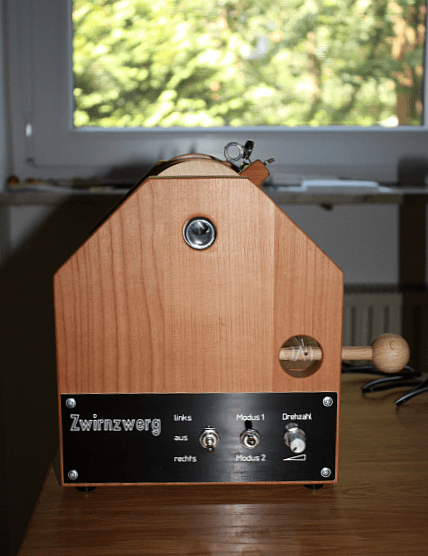
And here it is, my very own helpful gnome:

zwerg3
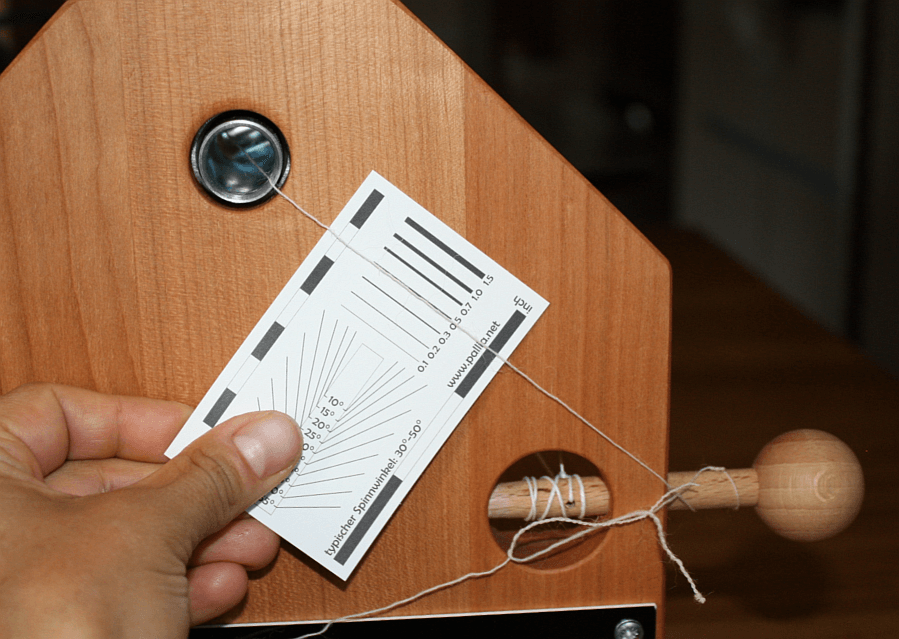
We will now have to get to know each other, and I will have to get a feel for spinning the yarns I want with it. Obviously, I had to give it a go straight away. The result?

zwerg4
About 0.5 mm in diameter, and with a twist angle of 35-45°.

Or, to stay with the Austen references: I am quite delighted!
0
AUG.
31
0

Textile Links.

I spent the day yesterday looking at the embroidered linen altar cloths from the Altenberger Monastery, and they were really, really breathtaking. It took me a good long while to puzzle out how some of the intricate braided stitches were made, and after that I spent another good long while to look at all the stitch patterns to find that there are not so very many - but they are cunningly worked and varied in a way to look like many more different stitches.

As usual for a special exhibition, it was not permitted to take photographs, so you can picture me standing in front of the displays, periodically putting my nose close to the glass, squinting at details, then straightening back up and sketching manically. These altar cloths are large, and they are just filled with embroidery - thousands and thousands of stitches, an incredible amount of work.

If you can go there and have a look, it is really worth it - the exhibition is running until September 25, so there's still time to pay a visit to Frankfurt.

Speaking of textiles, here are a few links:

Biblical motifs and symbolism in medieval textiles.

By now, you've probably heard of it already, but I will post the link to the world's oldest needle anyways.

And finally, Cathy has an interesting blog article about tutorials for making historical clothing.

 
0
AUG.
29
3

It's finished!

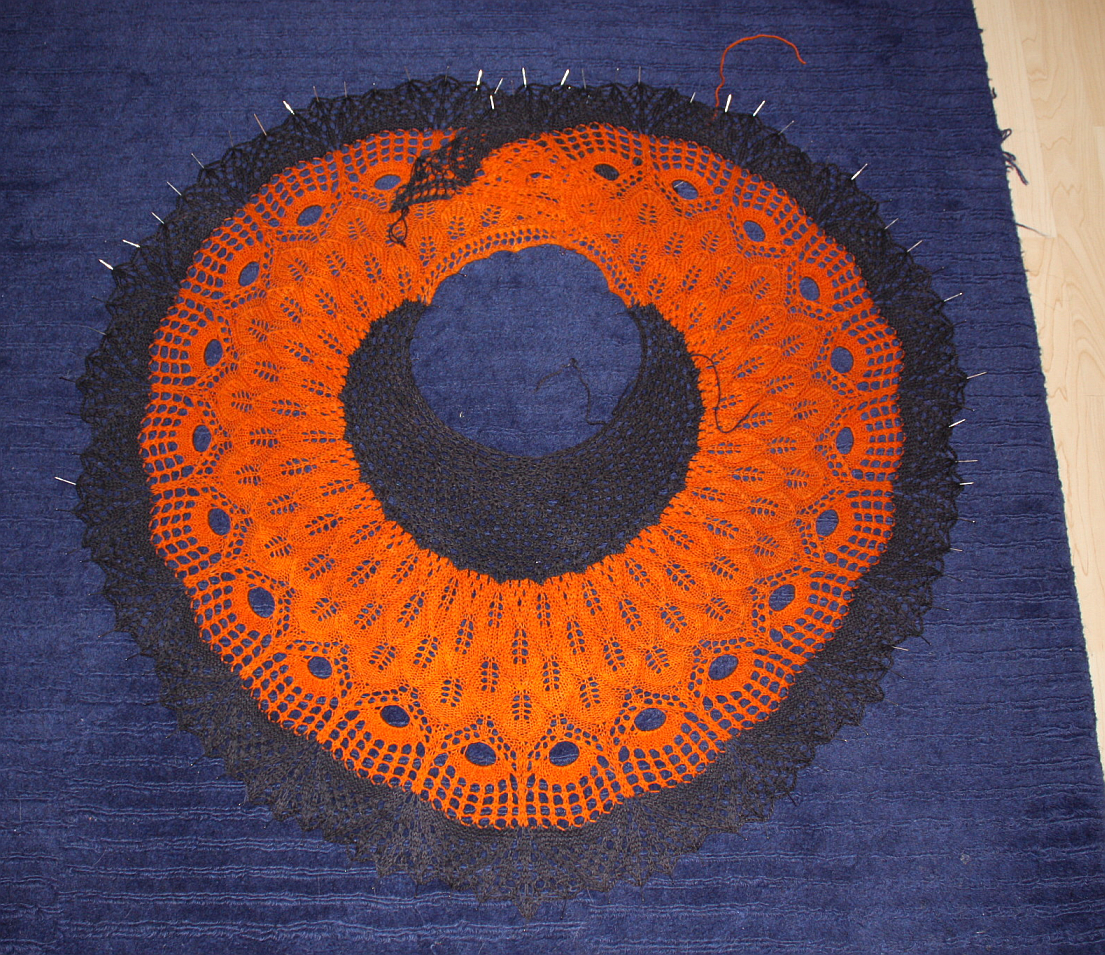
I have finally finished knitting the Renaissance Shawl, and it is now blocked on our livingroom carpet and slowly drying. (The cat is somewhere outside, where she spends the days in this summery weather, so there's very little danger of cat attacks until the evening.)

[caption id="attachment_2578" align="alignnone" width="640"]ren_vorvorletztereihe Last week saw the last two rows being knitted...


I finished it off yesterday evening. As is to be expected, it didn't look super-spectacular after being taken off the needles:

ren_finished
... but that improves dramatically with a bit of water, a bit of time and a lot of pins:

ren_blocked
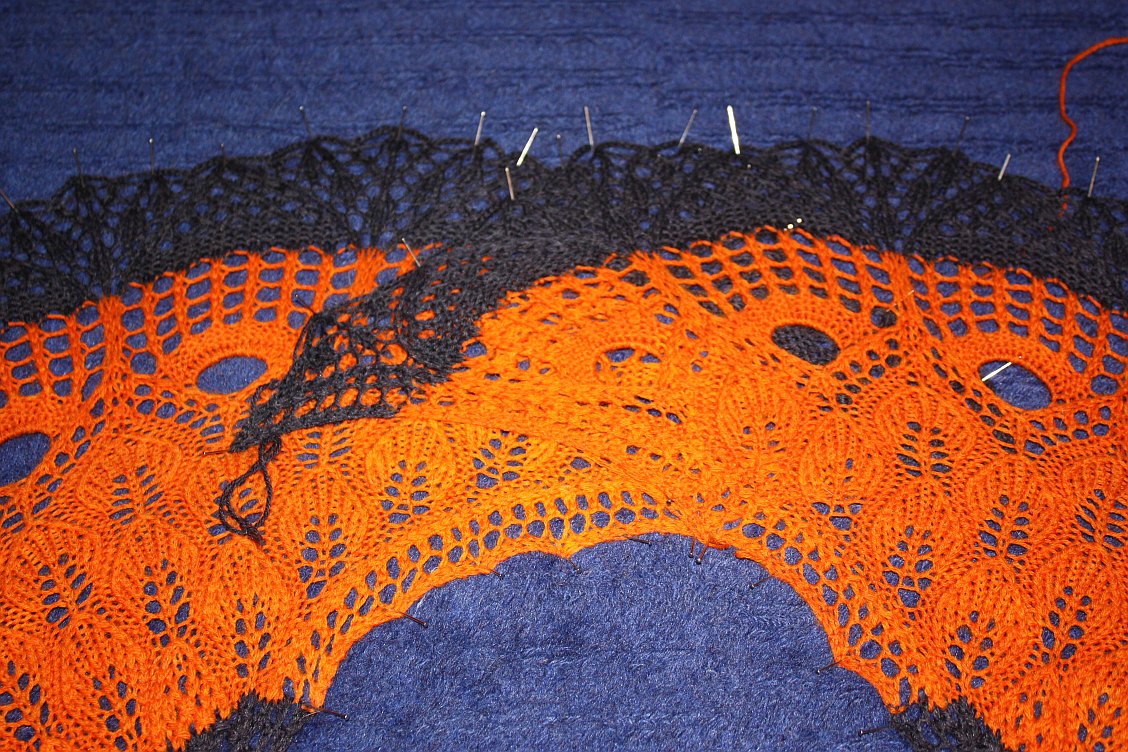
I remembered from last time that I knit this that blocking was the biggest challenge for me (followed closely by the bind-off, but that is due to my non-existent practice in crocheting). This time, I started in the middle and basically stretched out the "eyes" (the big holes) and the grid pattern below so they looked more or less round and balanced, and the rest sort of followed suit. I went from the bottom middle to the right and left, alternating, until I reached the last third or so.

Since I added an extra repeat of the leaf pattern in the middle section, the wings did not end up touching each other at the tips, but overlap for a good bit, so I pinned the first one out completely, then pinned the second one on top of it.

ren_blocked_detail
Pins for the inner rim were only necessary in the last third or so, where the wing ends are; the rest needed no pins for extra stretch.

And now I shall wait for it to dry - it shouldn't take too long with this warm weather. After that, it's wait and see when it will be cool enough for me to need this shawl... but autumn is coming, and what is more fitting to wear in autumn than a shawl knit from pumpkin-coloured wool?
0
AUG.
17
0

Moar knitting.

I did mention that I did some knitting on the evenings after the fair, right?

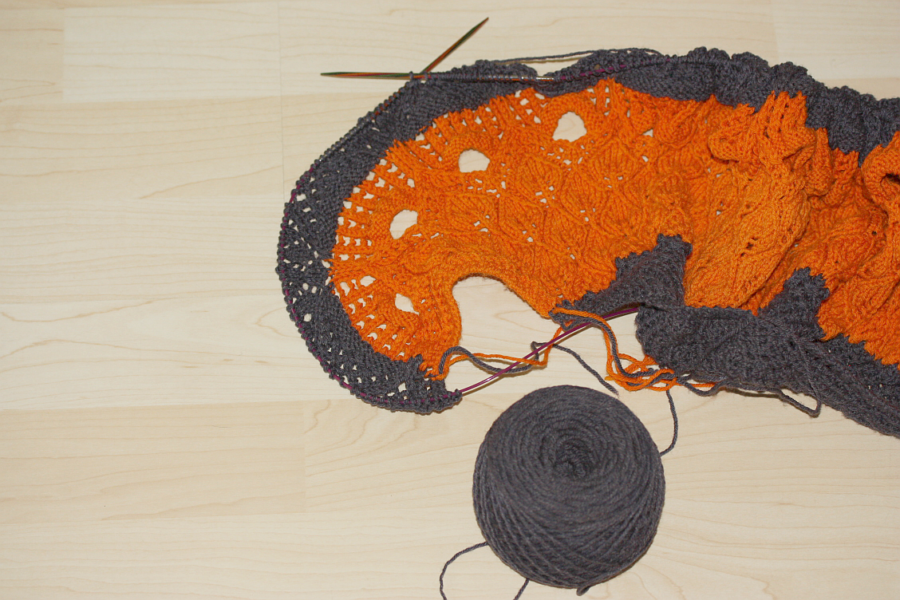
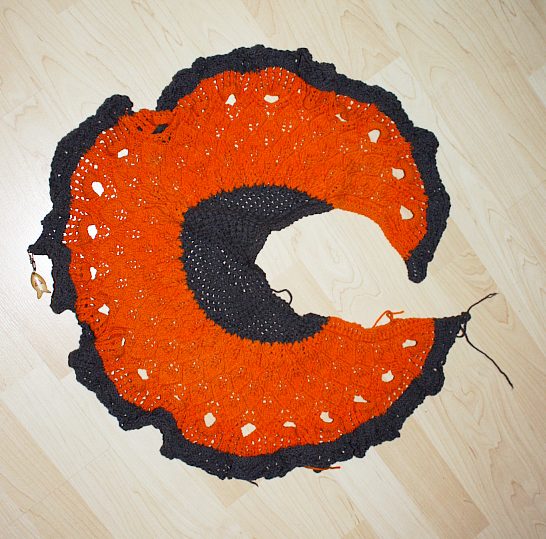
I have now progressed into the last of the charts, and everything is lining up nicely - I'm quite happy with how the two-colour version looks. There are similar stitch patterns with passed-over stitches and yarnover holes in the first part of the shawl and in this last part, so the colour change kind of reflects the change in pattern.

[caption id="attachment_2555" align="alignnone" width="640"]The last chart. Yaaay! If only the rows weren't so long... The last chart. Yaaay! If only the rows weren't so long...


As usual with lace, it all sits rather tightly on the needles, and as the rows have grown, it is now becoming hard to stretch it out, even partly, to admire the look it will have when blocked.

ren_lastchart_detail
A few more rows to go, and then the crochet bind-off. And then... I will have a new, lovely, orange shawl to wrap around me when the days get cooler.
0
AUG.
10
0

More knitting progress.

Well, not as much knitting progress as I would have liked - I had been hoping to take the finished piece with me the coming weekend, but unless I will stumble over miraculous amounts of extra time, I can't see that happening.

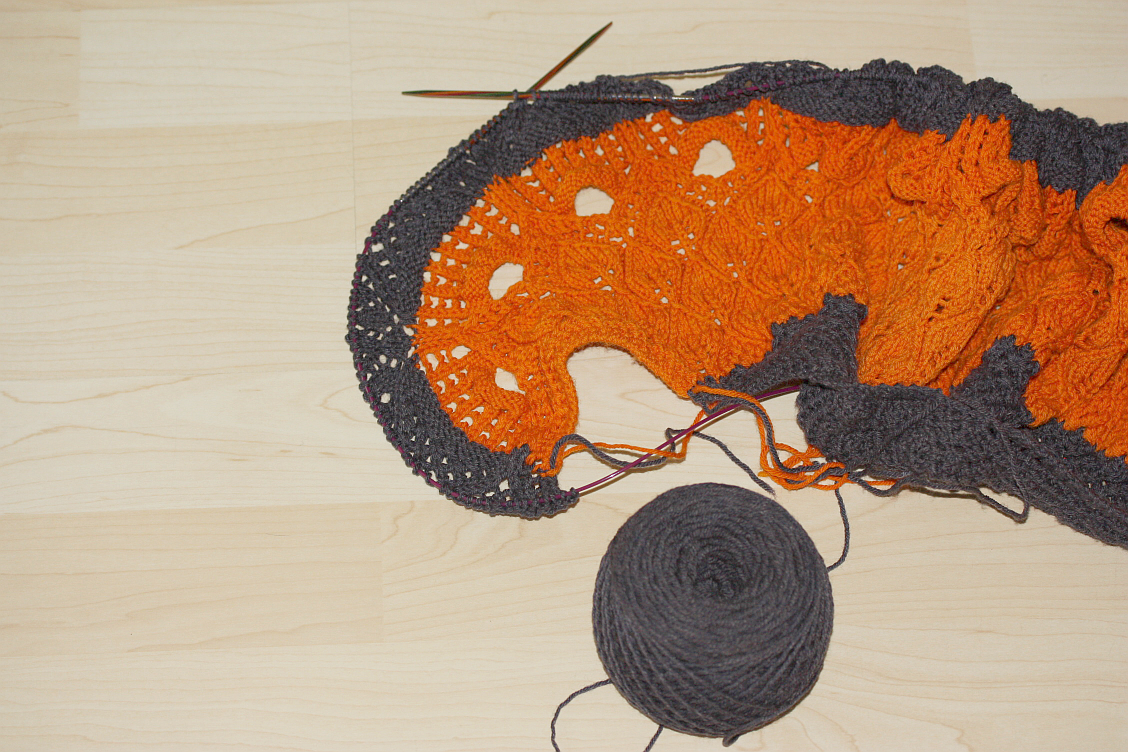
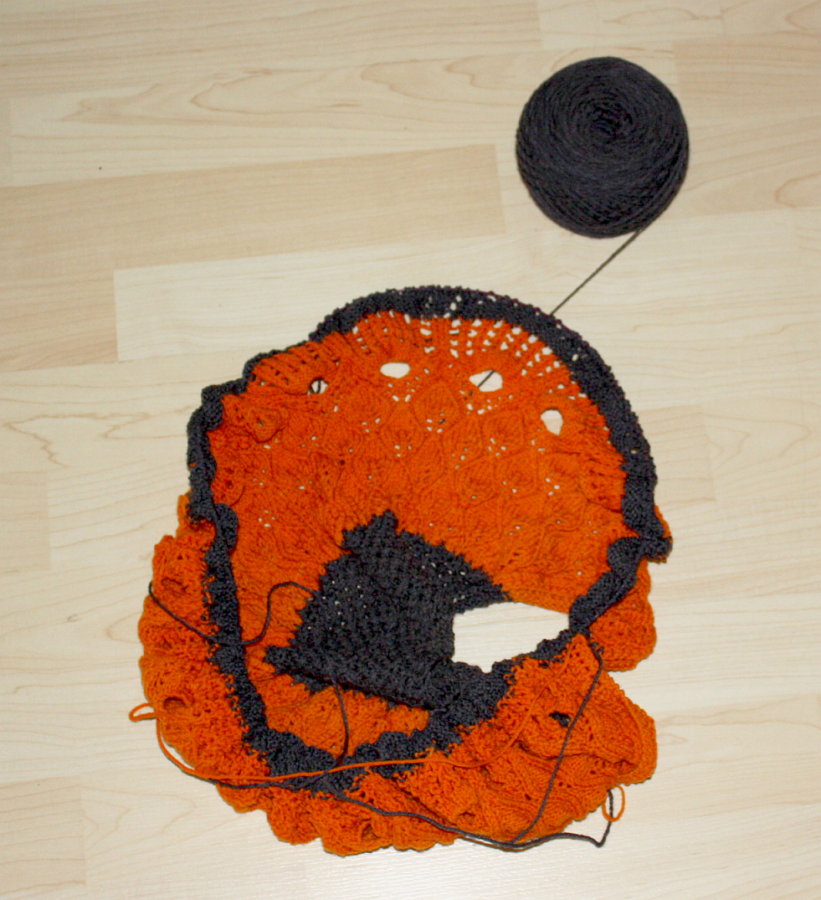
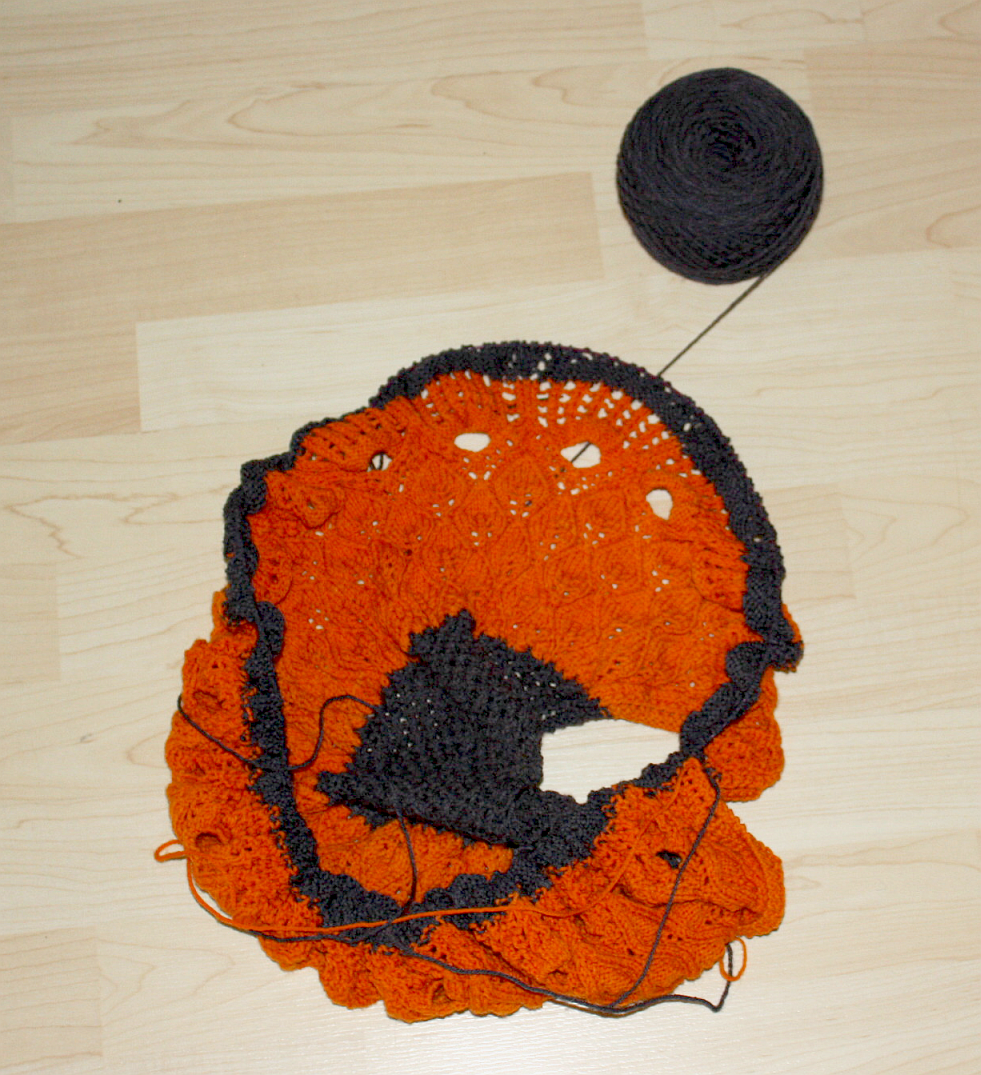
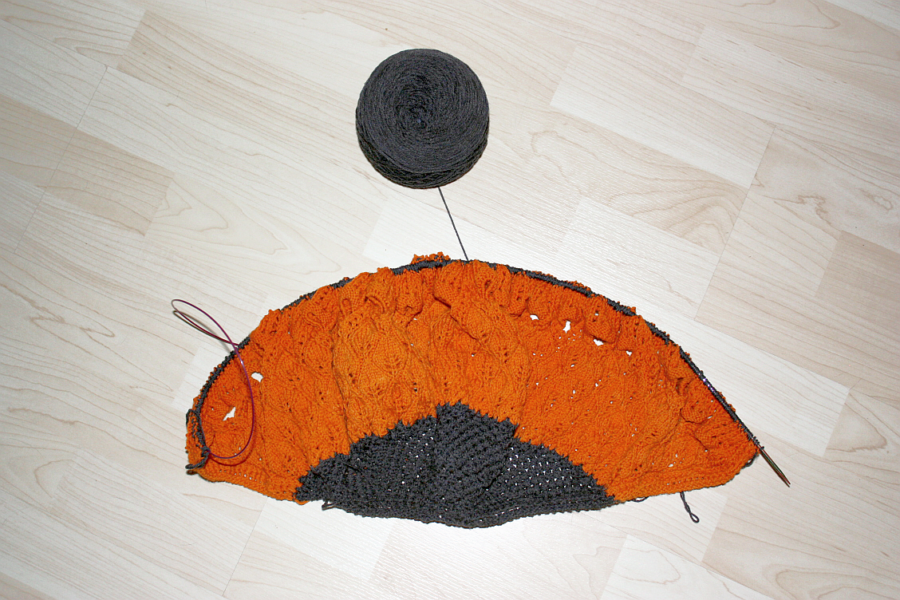
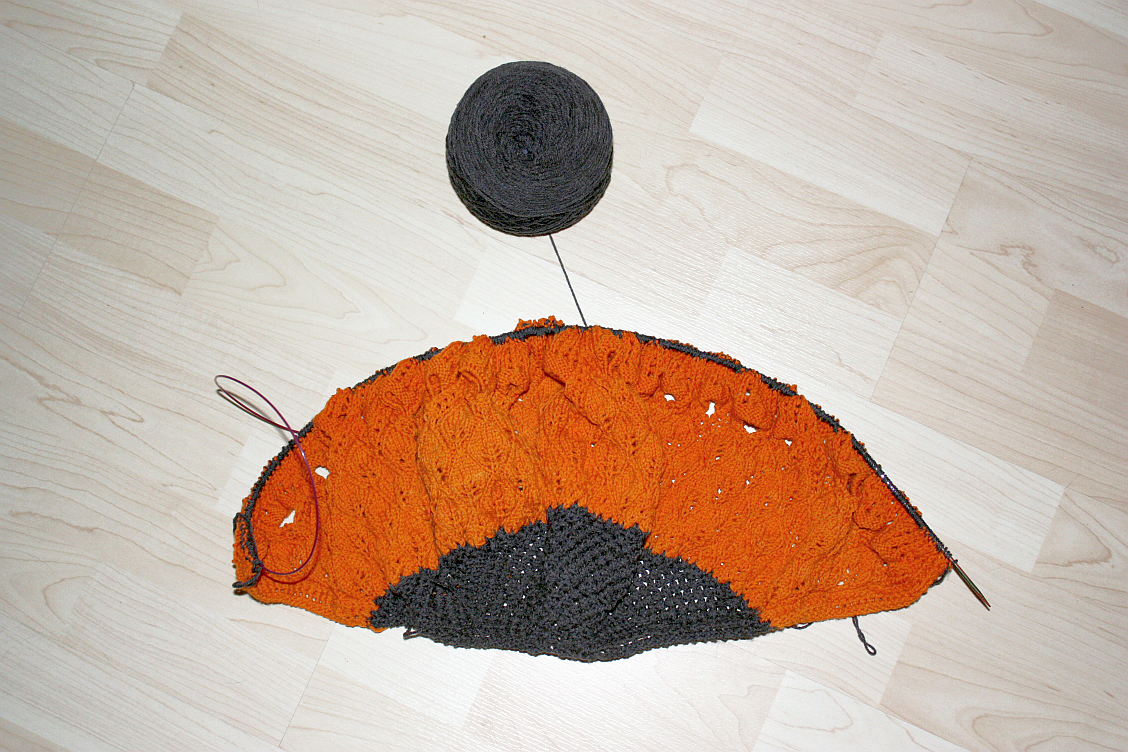
There is progress, though - the first row of nightblue yarn is in:

ren_bluerim
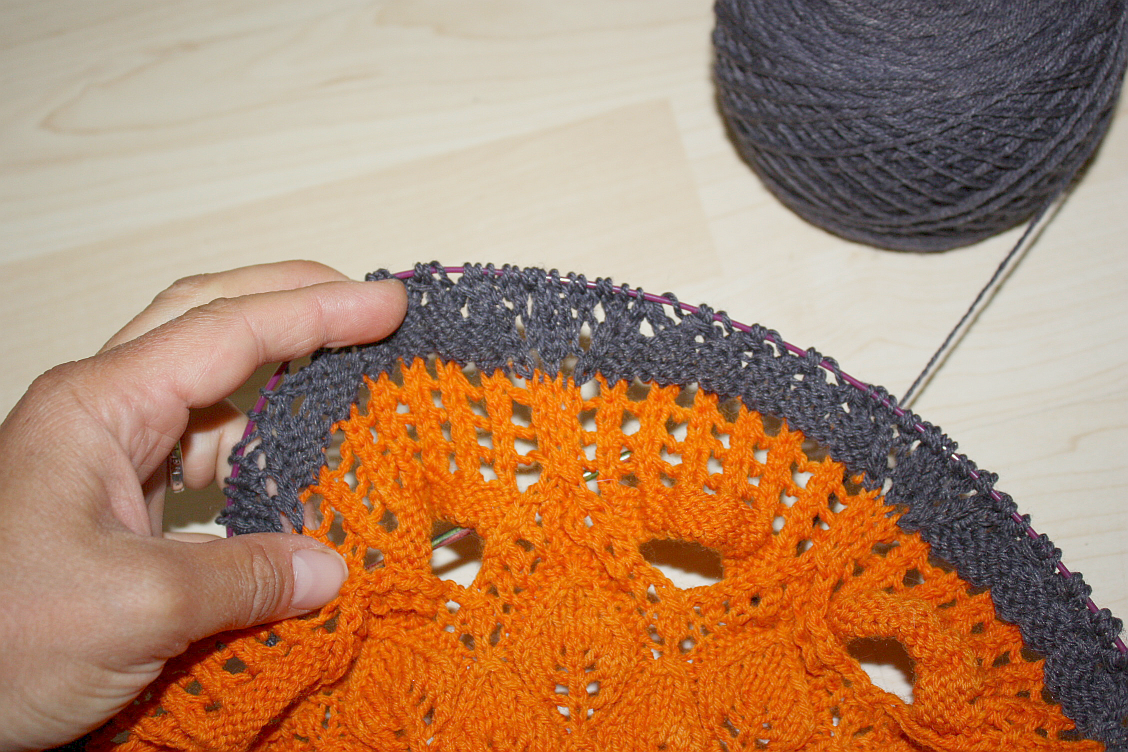
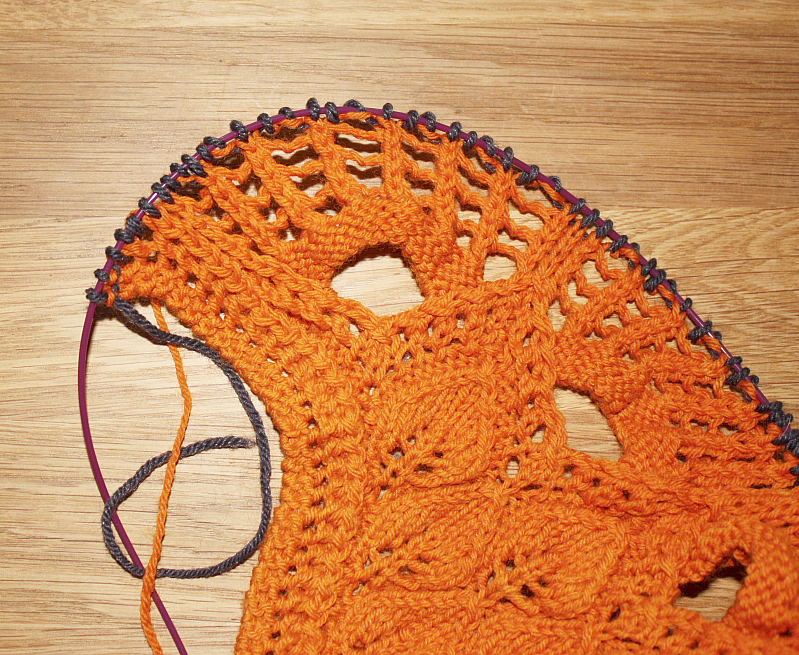
And here's a closeup of the edge with the nightblue yarn:

ren_bluerim_detail
I'm really looking forward to find out how it will look once the current chart is finished (three more rows only, counting the return rows) and the last one is done as well. The orange and dark blue make for a stunning contrast, but whether that will end up being a stunning piece overall with the colour changes... that will only be seen once it's done. Probably not before the end of next week, though...
0

By accepting you will be accessing a service provided by a third-party external to https://pallia.net/

Kontakt