Latest Comments

Guest - Aislinn Dyestuff Citizen Science.
09. Oktober 2026
This is a great project. I look forward to the results. Thanks for letting us know.
Guest - Aislinn Time for...
09. Oktober 2026
Looks delicious!
Guest - Katrin Sprang Discussion
18. September 2026
Hi Rachel, I have looked for more photos of you, but that was not very successful. I found a link on...
Guest - Beatrix Sprang Discussion
15. September 2026
That lozenge pattern element is not a photograph, but a scan. So it should be to scale. But I pinned...
Guest - Katrin Sprang Discussion
15. September 2026
I was not referring to Rachel's reconstruction (is the reconstruction you refer to the one photograp...
MAI
30
2

NESAT loot.

Here I am, slowly unpacking all the lovely stuff brought home from NESAT. Extra slowly, as most of my worktime yesterday and today is eaten up by doing the tax paperwork. Which is due at the end of this month - anyone hear that "whoosh" sound the approaching deadline makes? (I had wanted to do the tax stuff before NESAT, but with all the other things happening, that had not worked out, so I had planned on spending the start of this work week on it. Progress is according to plan, more or less, so all things are good.)

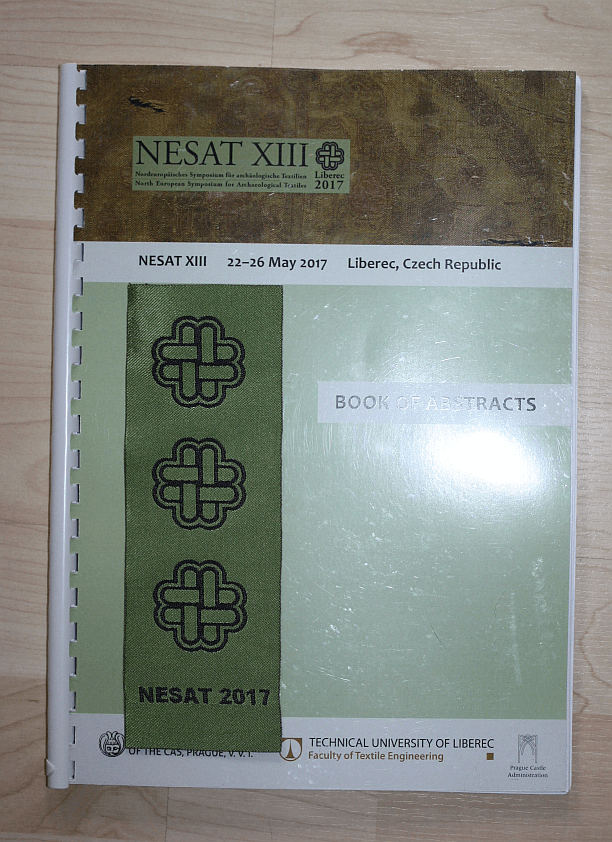
Anyway, let's return to unpacking, and I will give you a glimpse of the things I brought home from the conference. First of all, stuff from the conference bag - there was the book of abstracts, and the usual info material (a map and information about the city, and about Prague as preparation for our excursion), plus a nice little pen, a pocket programme (glorious idea!) and, woven in the university:

bookmark
a cloth bookmark with the NESAT emblem, hanging out on the abstract booklet here.

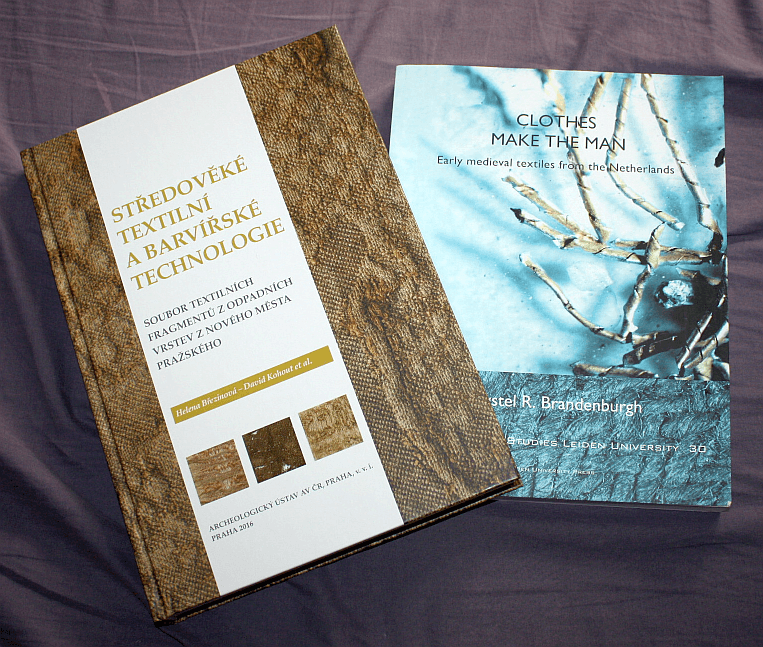
With a bookmark, it is obvious that at least one book has to be bought, right? I made it two:
books
The one on the left is in Czech, but with a good English summary, and it has lots and lots of photographs of the finds from Prague... which include garment details (buttonholes, for instance). The second one, Chrystel's PhD thesis, contains a lot of meticulous research about early medieval finds from the Netherlands, and those include several hats and headdresses, which makes me really happy, and I'm looking forward to having a nice cup of tea and a read of this thesis.

Now... buying books at a conference is rather normal. It's also not entirely unexpected to find something nice in the conference bag, in addition to the usual things. What came as an utter surprise to me and all the other speakers, though: We, as well as those chairing one of the sessions (which means you are the one introducing the speakers and making sure they finish on time, plus, if necessary, keeping the discussion from getting too short, too long, or too hot), all got a present.

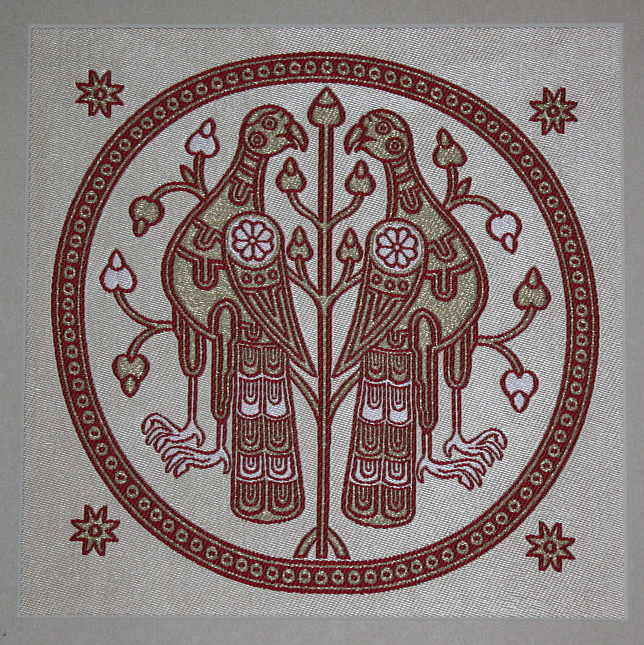
One woven in the university. After a find from the second half of the twelfth century... a piece of samite with gold thread pattern. (Made, in this case, from artificial gold thread and viscose, and not one hundred percent the size of the original, but very close.)

So I now have this:
samite
and I am endlessly delighted with it! It will get a nice spot on one of the walls here, looking utterly beautiful!
0
MäRZ
07
0

All kinds of interesting things!

Time for a post about interesting things, some of which you can participate in!

If you are in the Southampton area, there's a project about dexterity in flintknapping:With motion capture. How cool is that!

If you're more on the other side of the globe, there's the meeting of the Society for the History of Technology October 26-29, where there's a session about textiles and early industrialisation in planning. You can read more about the Society and their conference here.

There's also a conference about "Embellished Fabrics: Conserving Surface Manipulation & Decoration." It is the 11th North American Textile Conservation Conference, taking place in Mexico City, Mexico, November 6-11, 2017. The website is www.natcconference.com, and it will provide more information in case you're interested.

And another conference, this time in Poland, in June: Dynamics and Organisation of Textile Production in past societies in Europe and the Mediterranean. International Conference, Łódź, 21-22 June, 2017. The preliminary programme looks really nice and interesting!

For those of you who understand German (or for the adventurous of you who don't), there's a TV show where one guy participates in a club for one day, looking at the stuff people do in their spare time... and one of the clubs is a Living History group. You can watch the half-hour show here.

Some more interesting things - Jim Hines has done a survey about novelist's incomes. So if you've ever wondered whether writing a novel will make you rich, you might want to read his long, really interesting multi-part blogpost, starting with part 1 right here.

In 2011, a tunic was discovered in a Norwegian Glacier, and it has since been reconstructed. You can read a bit about the reconstruction and watch a video here. (I'm not totally happy with the spinning part of the video, as you might guess when watching it...)

And that's it for today. Hope you find something you enjoy among these!
0
OKT.
20
0

Threads, really close-up.

I'm into preparations for the Textile Forum up to my ears and beyond - there's spinning to be done, and planning for experiments, and things to be organised. So while I am squinting at my hand-spun yarns, making sure it has enough twist, you can look at these glorious microscope photos from the Getty, showing metal threads in an early modern tapestry named "The Triumph of Bacchus":

Art under the Microscope: Threads.
0
SEP.
23
1

Really Old Indigo Dyeing.

In Peru, cotton textiles have been found that are the earliest evidence for indigo dyeing to date - about six thousand years old. Both the LA Times and the Smithsonian Magazine have an article about these finds.

It really is an amazing find - firstly because these textiles have survived at all for six thousand years, in a condition good enough to still see the blue colour, even though it's faded, with the naked eye. Secondly, it's not just a few fragments, it's thousands of them. Thousands!

The fragments have been cleaned and partly analysed; you can read an article about the dye analysis here.
0
APR.
28
0

Hallstatt Bands in ATR!

I blame the weather for still feeling tired - it's mostly grey outside, and rather cold, though today there is a little more sunshine (which is nice).

There's better news than bad weather, though! A good while ago, I had the opportunity to take a closer look at two braided bands from the Hallstatt salt mines. Ah, it is always a wonderful thing to sit in the basement depot and see the original textiles, dating back to the Bronze Age, all sitting nicely in their little protective boxes and those in turn in a chest of drawers. (It's cold down there, though. I caught more than one cold during my visits... being so wrapped up in fascination that I did not realise I was cooling out too much.)

[caption id="attachment_2385" align="alignnone" width="421"]One of the two bands discussed in the article. One of the two bands discussed in the article. This is one of my working photos - the article has nicer images than this, of course.


From that close look and some trials in braiding, plus cooperation with Karina Grömer and Joy Boutrup, the two bands are now finally published in form of a proper, nice article, printed in the latest issue (n. 57) of the Archaeological Textiles Review.
If you have an academia.edu-account, you can find it here.
0
MäRZ
14
0

Happy Pi Day!

It's Pi Day! Hooray! And now you are getting a really crude transition in addition to a late and short blog post - I had a meeting today that ran a huge lot longer than anticipated, and it shot my schedule for the day to the ittiest bittiest bits imaginable.

It is Pi Day. Pi sounds just like pie. Pie has layers. Something else that had layers? This Mortlake tapestry, dating to the 1630s - a part of the tapestry was folded back and hidden...

Also fascinating: Conservation treatment of a Sudanese leather dress.

Finally, if you'd like some fresh fiction in audio - here's a list of the Hugo Award eligible stories that ran on the Escape Artists Network. Enjoy!
0
MäRZ
10
4

Another New Book Alert!

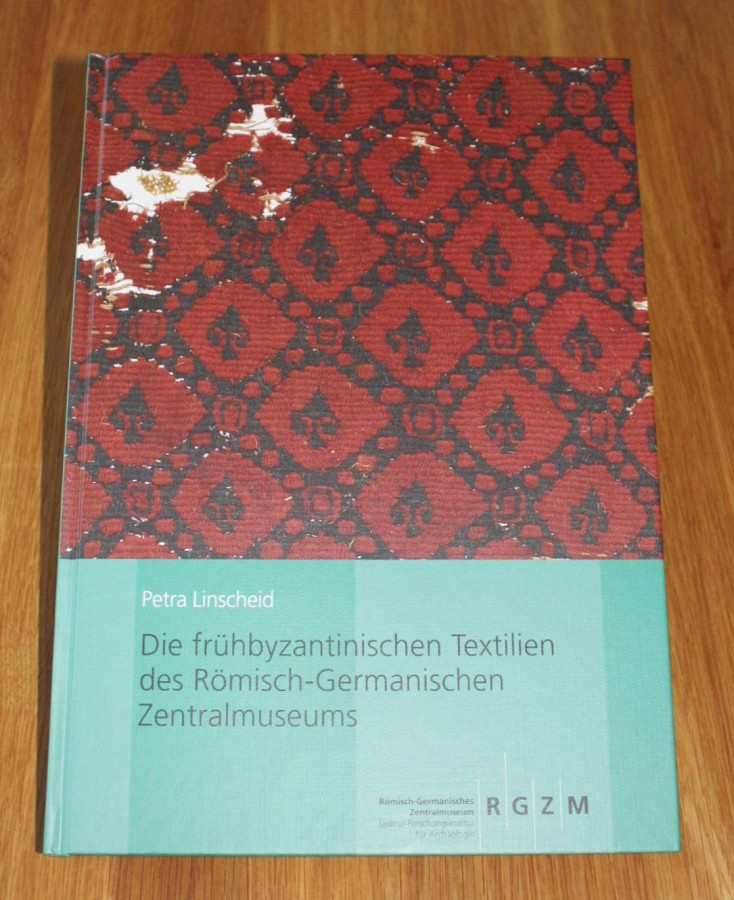
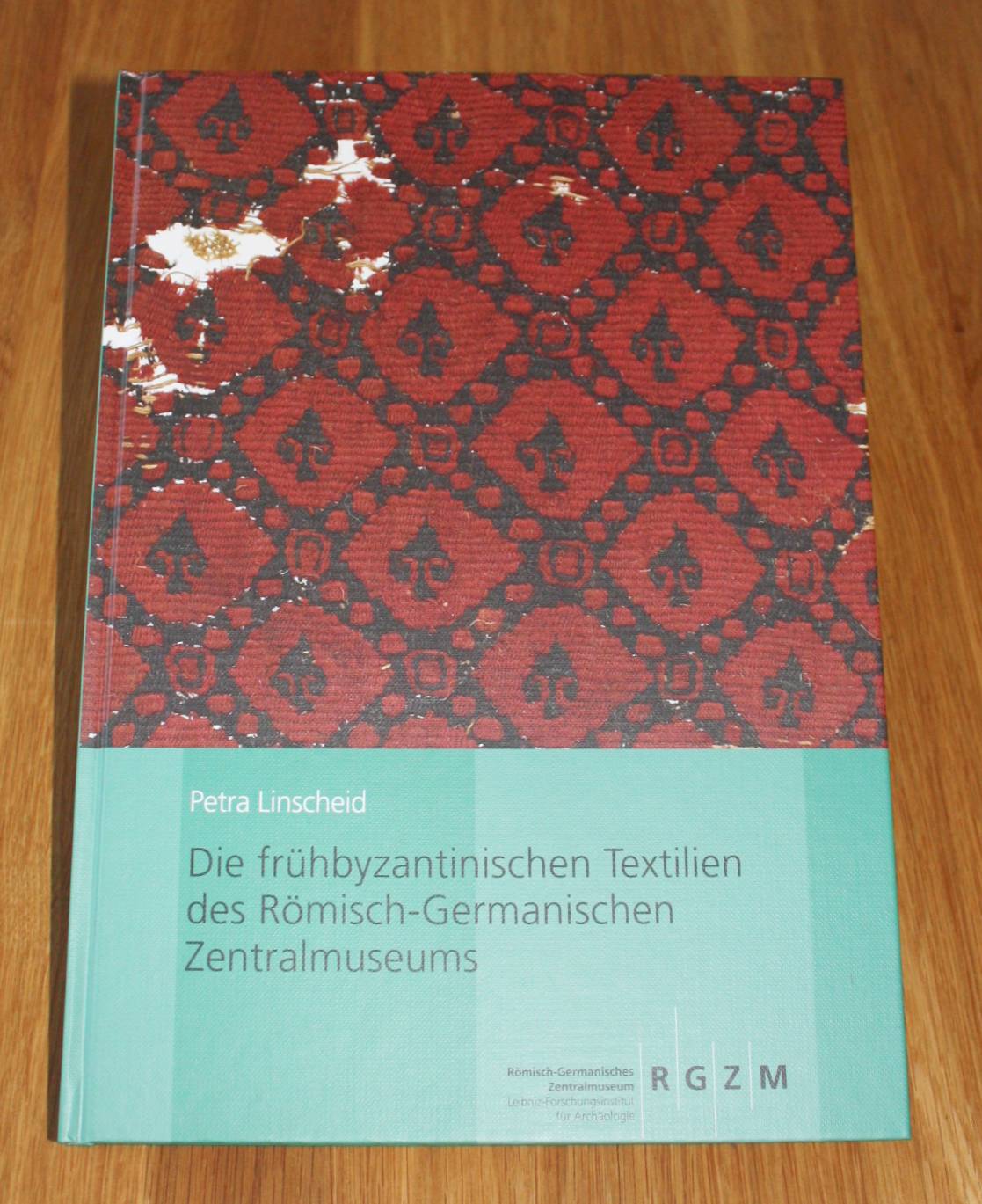
This time, though, it's a German book - but if you can read a little German, or if you are interested in early Byzantine fabrics and textiles, it is definitely worth a look:

[caption id="attachment_2283" align="alignnone" width="468"]petras_buch The book, sitting on my table, waiting to be read. Non-photographable bonus: it has that utterly heavenly new-book smell.


Petra Linscheid has analysed and catalogued all the many Early Byzantine textiles kept in the RGZM, and the results of her work are now published in a catalogue with lots of good photographs, drawings and detailed descriptions. There's an introduction part, covering the provenance and history of the pieces, dating, technical details (including colours) and functions. The main part of the book, however, is the catalogue, where each of the 210 pieces is listed with a detailed description, and the 112 pages of plates with images and detail images for the pieces.

If you are interested in Early Byzantine textiles, you might want to get the book just for the pictures, even if you do not read German at all. (Though technical descriptions in catalogue entries are not hard to translate, so with a dictionary, you should be able to get the basic information on each piece as well.)

You can order the book directly from the publisher, Schnell & Steiner, or of course buy it at the bookstore of your choice. Cost is 55€, and the publisher offers free shipping for the book inside of Germany.

 
0

By accepting you will be accessing a service provided by a third-party external to https://pallia.net/

Kontakt