Latest Comments

Guest - Max Mustermann The True Cost of Driving a Car.
06. November 2026
Great breakdown — the non-fuel costs are exactly the bit most people forget when they compare cars. ...
Guest - Harma Phew. Now it gets involved!
21. Oktober 2026
Have fun at these events.
Guest - Aislinn Dyestuff Citizen Science.
09. Oktober 2026
This is a great project. I look forward to the results. Thanks for letting us know.
Guest - Aislinn Time for...
09. Oktober 2026
Looks delicious!
Guest - Katrin Sprang Discussion
18. September 2026
Hi Rachel, I have looked for more photos of you, but that was not very successful. I found a link on...
JAN.
30
0

A picture from the TV thing!

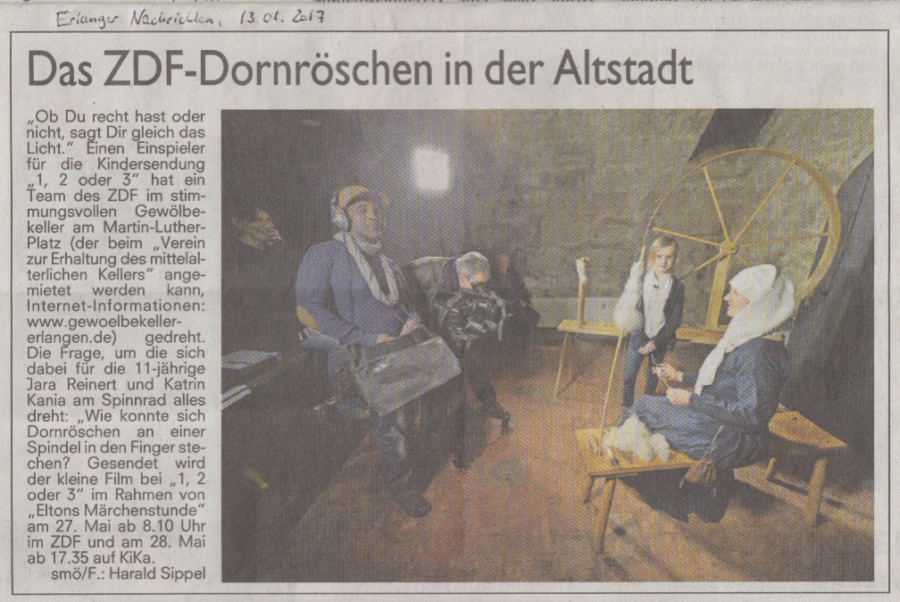
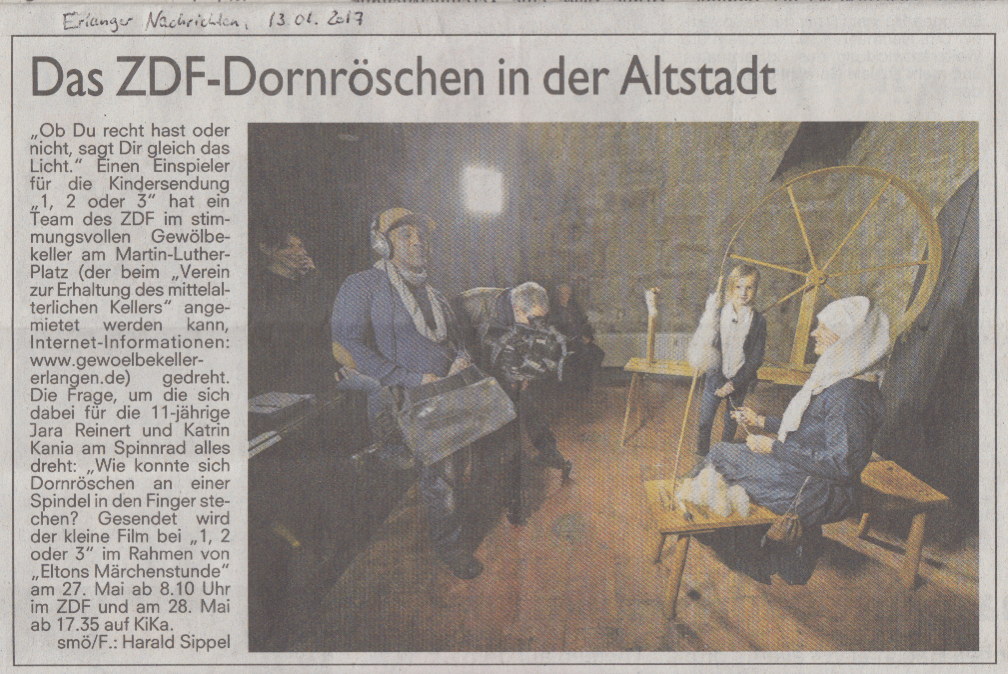
I just remembered that I can give you a picture from the TV shooting - there was a small article in the local newspaper. Here you go:

erlangernachrichten_kania
For me, it's more spinning now to make the most of the rest of today, after running a few errands in the earlier afternoon. Though not with the Great Wheel.

Fun side effect of all the spinning? I'm almost caught up with listening to EscapePod...
0
JAN.
27
0

Yay Friday!

It's finally Friday, the weekend is beckoning (and it's promising to be a nice one, with a local boardgaming event and possibly also a round of going bouldering with friends), my Windows update problems might finally be fixed, and the warp yarn for the next batch of cloth is almost finished, making the weaving of the sail cloth something bound to happen very soon.

In other news, Current Archaeology is holding a bake-off competition for archaeological baking (and even if you don't plan to participate, the thing is worth a look for the previously done stuff, which is really awesome).

More food stuff? Gillian has written about food in fiction.

If you didn't get as much nice sunny weather as we did in the last days and you are feeling melancholy about it now, Ask the Past has a cure for that. Or, well, at least suggestions. From 1303.

Brogues and Shoes has a picture series about making a leather bottle.

And finally, again on the topic of spinning and weaving, there's been a two-part column in Knitty about weaving with singles - part one and part two.

That's it for today (still too many tabs open, but it's a little better now.) Have a nice weekend, everybody!
0
JAN.
26
0

There is cloth.

The emballage has been woven, and has come back to me, and it is wonderful. A thick, heavy cloth from thick, heavy two-ply yarns, it does feel like something trustworthy enough to pack valuable goods and protect them on long journeys.

Here's a picture of the cloth, raw off the loom:

emballageprewash
The cloth is looking even better now after a nice wash to finish it, and it's currently hanging out to dry... and once it is dry, I can get the comparison photo for after the wash, and then set out to cut it into the required parts and secure the edges of the individual pieces.
0
JAN.
25
0

Setting the Twist.

If you're a spinner, you will probably know what "setting the twist" means. For those of you who don't know what that is about, let me explain.

When you spin yarn, you twist fibres together, pressing their surfaces onto each other. Friction between these surfaces gives the thread its stability - hence a thread with more twist is usually a stronger thread. Yarn thickness, fibre length and fibre surface all influence how much twist is needed for a certain amount of yarn strength.

Twisting these fibres together means inserting energy into a system - that is what you do when you flick the spindle or treadle the wheel. This energy (and may the proper natural scientists please forgive any odd wording) is stored in the fibres. Now when you let go of the piece of twisted yarn, the fibres want to return to their relaxed state (and there's probably something that could be said about the laws of thermodynamics here, or something equally smart). So... they will untwist as far as possible.

"Setting the twist" means  counteracting this, by getting the individual fibres settled into their new shape. This can be done by time (just letting the yarn sit will eventually deform the fibres) or be sped up by the application of heat and moisture. So dunking the skein in hot water, then hanging it up (possibly a little bit weighted, so the yarns remain stretched out) will help nicely. For those of us with less time, or less patience, or wanting to take before and after pictures, a steam cleaner will also deliver heat and moisture, conveniently at the push of a button.

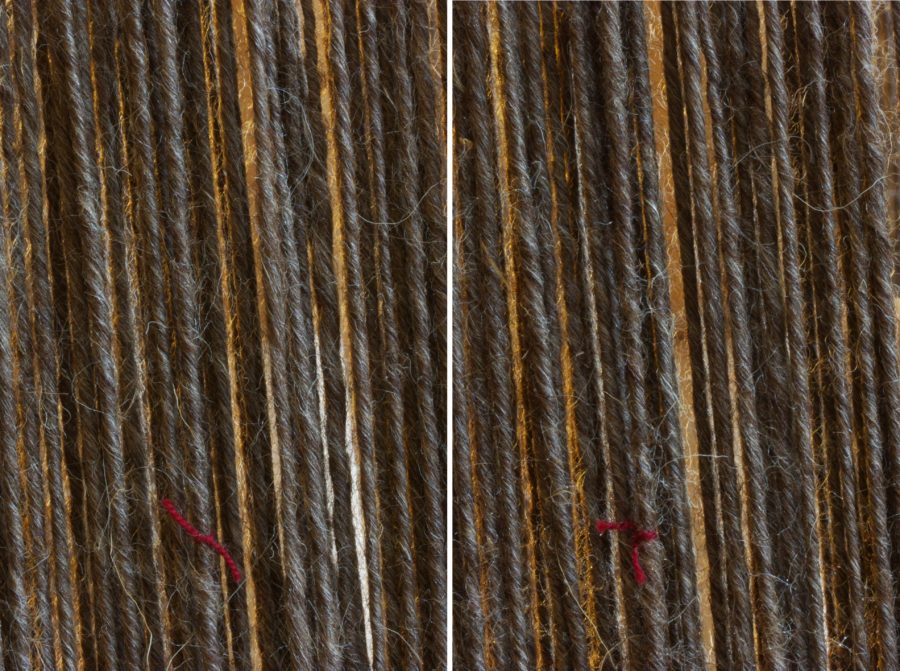
So. I always thought that setting the twist would do just that - set the twist in the yarn, sort of freeze it in its current state. However, there seems to be something more happening here:

[caption id="attachment_2867" align="alignnone" width="640"]Yarn before and after steam treatment - you can see how the knot of the marking yarn moves. There is definitely a difference in the yarn after steaming! Yarn before and after steam treatment - you can see how the knot of the marking yarn moves. There is definitely a difference in the yarn after steaming!


Here's a closeup of the part with the marked yarn:
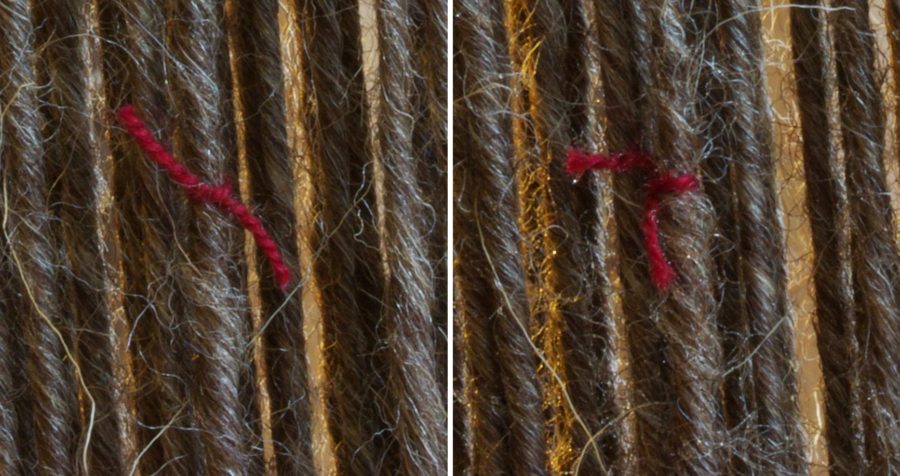
settingtwist2
I haven't measured yet if the twist angle changes noticeably, but the yarns definitely move and shift and something happens to them when they get treated. Some of that movement could be explained by the steam shifting the threads, but not all of it - I tried not to get too close with the nozzle and be gentle enough to avoid shifting the yarn with the steam stream, and still things happened.

Well. Who would have guessed that...
0
JAN.
24
2

Things going on here?

Guess what is happening here?

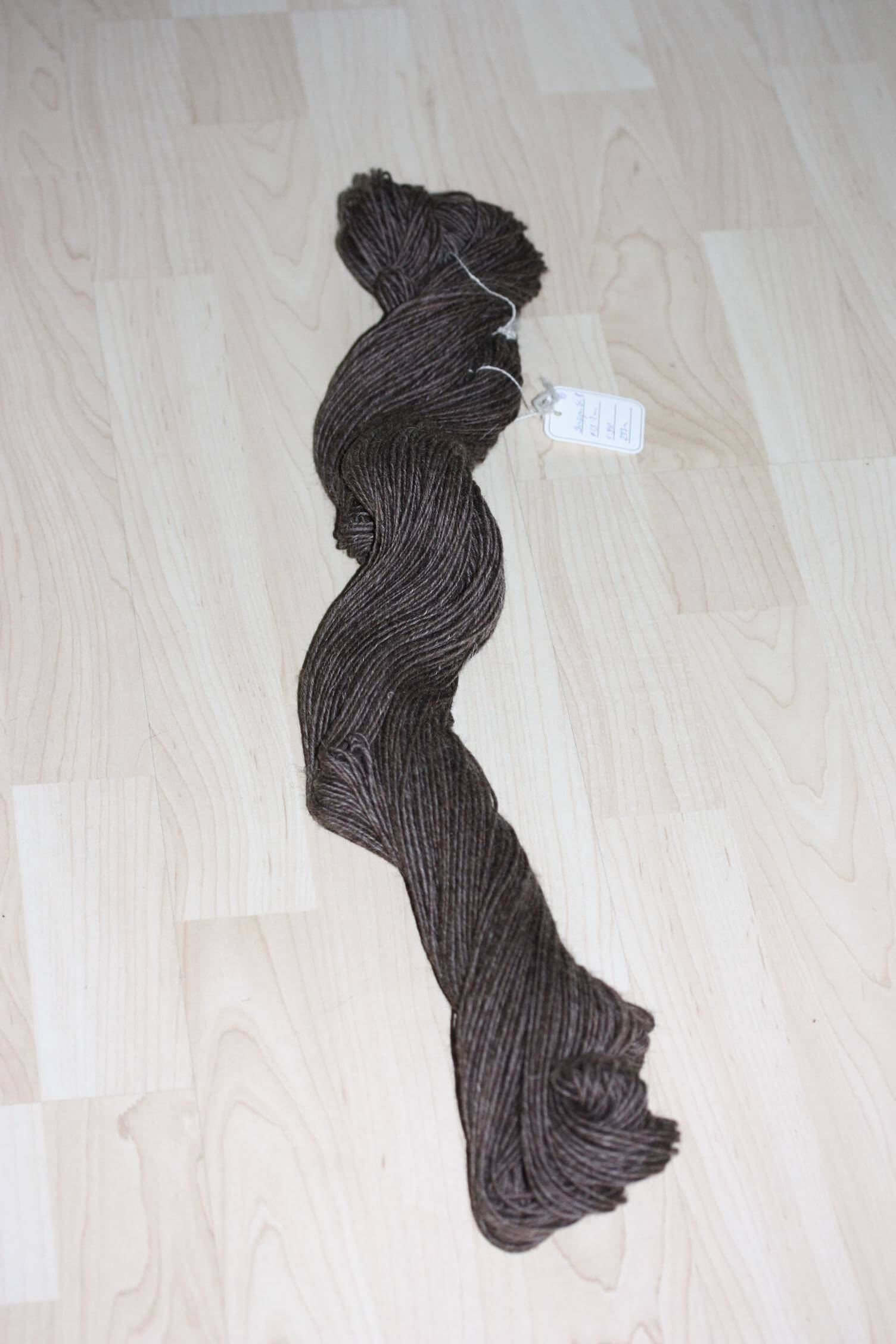
Right. More yarn:

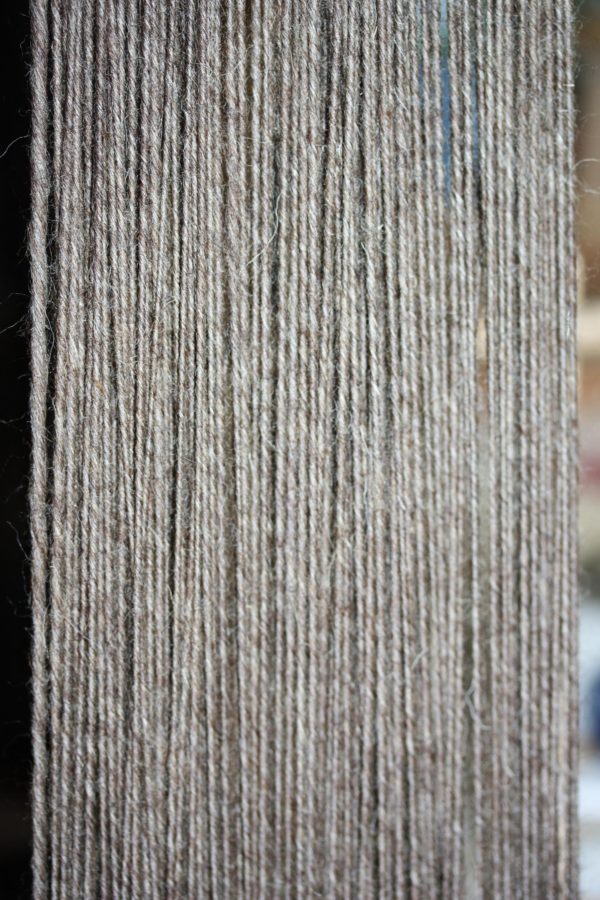
One batch still on the skeiner...

IMG_1839
and one batch already off it and waiting for its colleague.

IMG_1840
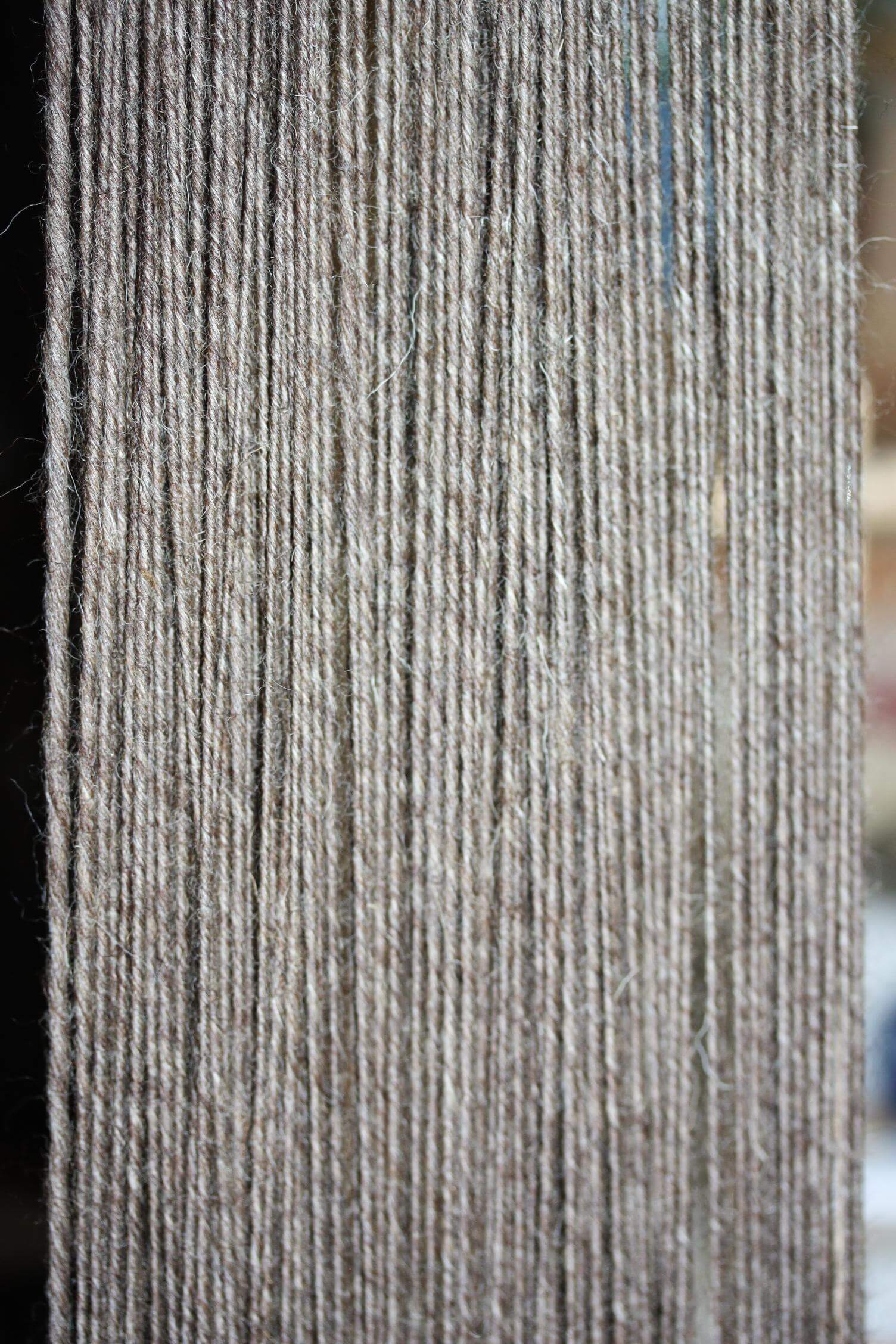
Both are waiting for a third one, and then I'll have done enough for the weft of the next batch. After that, it's straight on to the warp - which will have a little more twist than the weft, and will be spun in the other direction, and will be from a different kind of wool, and a little thinner. (This weft, by the way, is fairly thick with about 1.5-2 mm.)

With the last batch of this weft, I'm planning to do a little photo documentation of the setting effects - it does look like things happen to the yarn and the yarn twist angle between spinning, setting the twist and weaving, so the yarn in the woven fabric is a little different from the yarn right after spinning. It might be subtle, though, but I am definitely looking into that a bit. So: next skein - photo op before setting the twist (which I'm doing by steaming the yarn enthusiastically) and after.
0
JAN.
23
1

Out of print!

I've learned that my book "Kleidung im Mittelalter" is currently out of print... which is, in a way, good news (because that means it has sold all its copies, obviously) but, on the other hand, bad news (because it's out of print and thus not available at the moment).

I'm in contact with the publishing house, and it does look like there might be another print run. I'll keep you updated!
0
JAN.
20
0

Things for your amusement.

The sun is shining, it's cold outside, and here are things from around the Internet!

There's a project on indiegogo to get a Mini-Mill from Canada all the way to Iceland, to spin the wool from local sheep into nice yarn. You can support that project starting with a 4 USD donation, and there are multiple perks to get hand-picked wool or yarns. So if you are looking for some really special fibre or yarn... you might find it just there.

Hugo Nomination Season is upon us, and will run until March 17. While I am, as usually, abysmally behind in reading current stuff, I do intend to nominate at least a few things. EscapePod, for one thing - and since there's some more spinning hours in the weeks ahead, I think I might find one or two more stories from 2016. In the "Best Related Work" category, Gillian Polack's "History and Fiction" is actually eligible... and I hope to find some more exciting stuff before the deadline. Hints about books and short stories published in 2016 that blew you away are utterly welcome!

While we're on the topic of reading, Aarhus Press Free Ebook of the month is "Elephants are not picked from trees", a book with stories about the taxidermied animals in Gothenburg National History museum.

Not free, but available again in digital version after they went out of print: past issues of Experimentelle Archäologie in Deutschland/Europa. You can have a look at the volumes on the EXAR website and click through the "buy" link to land on the publisher's homepage, where you can buy pdf downloads of individual articles from out of print volumes.
0

By accepting you will be accessing a service provided by a third-party external to https://pallia.net/

Kontakt