Latest Comments

Guest - Max Mustermann The True Cost of Driving a Car.
06. November 2026
Great breakdown — the non-fuel costs are exactly the bit most people forget when they compare cars. ...
Guest - Harma Phew. Now it gets involved!
21. Oktober 2026
Have fun at these events.
Guest - Aislinn Dyestuff Citizen Science.
09. Oktober 2026
This is a great project. I look forward to the results. Thanks for letting us know.
Guest - Aislinn Time for...
09. Oktober 2026
Looks delicious!
Guest - Katrin Sprang Discussion
18. September 2026
Hi Rachel, I have looked for more photos of you, but that was not very successful. I found a link on...
JAN.
10
1

Excitements galore!

The year starts off excitingly... the first of the handspun fabrics has arrived here today and now waits to be fulled a bit for getting finished (exciting!). There's more spinning going on, and the first bobbin for the two-ply fabric now is full, with the second one started, so tomorrow might already see the first bit of plying taking place (also exciting!).

If not tomorrow, then Friday - because Thursday will be eaten up by... TV stuff. I'll be on television some time in the future! Only for a very short bit, but if it's like the last time I've done TV stuff, filming will be a heap of fun. Also, you guessed it, very exciting - especially since the Great Wheel will be part of the thing.

So. More hot motivational drinks for me right now, more spinning, and making lists plus planning and preparing for Thursday - there are some rolags that want to be rolled!
0
JAN.
09
0

Happy New Year!

Happy New Year to all of you - may it bring joy and wonderful adventures and many successful, happy projects!

I'm back home from a wonderful time off. There was time spent with family, and time spent with friends; there was roast goose and cookies and cake, gingerbread and chocolate; coffee and tea were consumed in no little quantity, and we had walks in the snow and the now-traditional mousse au chocolat to toast the new year at midnight on the 31st.

Now it's back to work - the usual gazillion of emails to sort out, and of course the spinning. The first batch of yarns for the first piece of fabric was done just before the holidays, and now I will spin up about 2 km of really thick yarn from Coburg Fox wool for the reproduction of a packaging fabric.

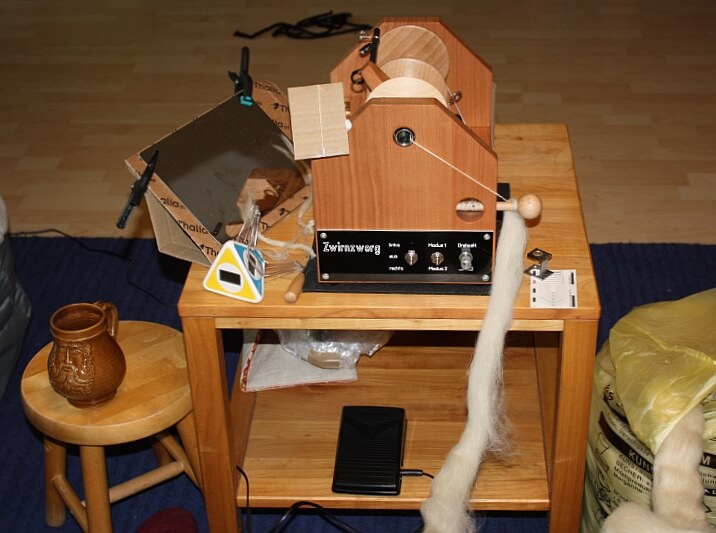
The workplace is already all set up, and I've started off:

emballage1
The thread for this fabric is a two-ply (it is one of the quite rare medieval fabrics where plied yarn was used for weaving), and it's about 3-5 mm thick - so I'm spinning singles that feel really, really chunky to me. This is quite a challenge, as I'm very used to spinning fine and very fine yarns, but not yarns this size (or, as I usually call them, ropes).

Because the thread is so thick, I have mounted an "aim for this"-sample card on the left side of the spinner. On the plus side for spinning bulky yarns: Checking the twist angle does not require a magnifying glass for this thread. Also, the spool fills up much, much faster with this kind of yarn!
0
DEZ.
20
2

Happy Holidays!

It's almost that time of the year... when most of us get a few days off work to hang out with friends and family. When the nights are longest, and the days shortest, and we know it will get lighter again, and warmer, in time.

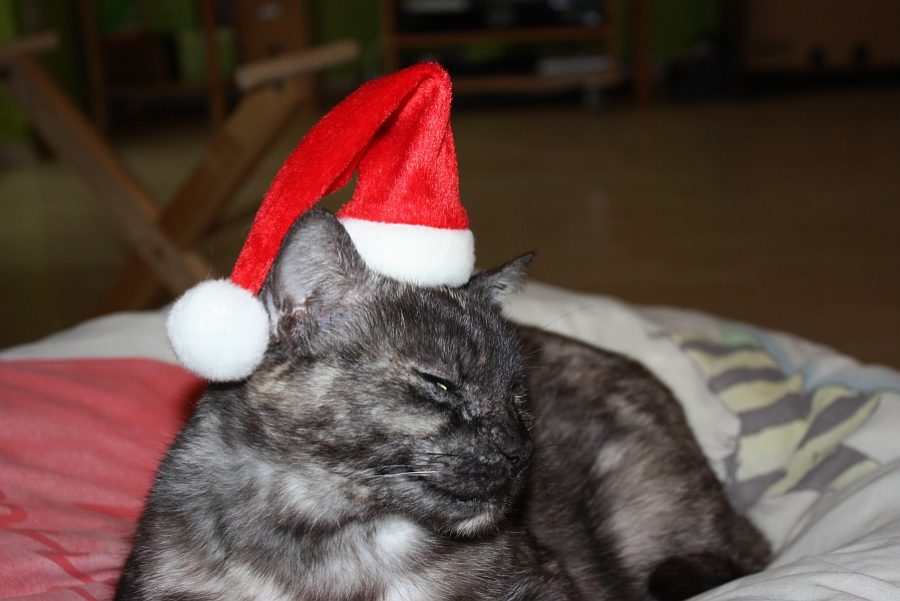
The time of the year when all kinds of delicious things flood our tables, to be shared with loved ones and enjoyed together. The time of year to bribe small, peacefully resting, unsuspecting cats into letting you put plush toy hats on their heads and take silly photos.

xmascat
Because that is obviously really necessary at this time of year, right?

Whether you are celebrating Christmas, Yule, the Winter Solstice, Hanukkah, something else or nothing at all, I hope you will have a few nice days, filled with whatever activities (or non-activities) that make you happy, and spent with people whose company you enjoy, or in glorious solitude if you need a breather and prefer to be on your own for a while.

I hope you had a good year 2016 - mine certainly was good, and full of exciting things, plus quite a bit of change. Let's see what the rest of this year will bring, and the next one.

I'll be back on the blog on January 9, sharing tales of my shenanigans again, and I hope you'll be back to read them. Until then - have a glorious time, thank you for stopping by and sharing my 2016, and I'll see you on the flipside!
0
DEZ.
19
2

Spinning Pictures.

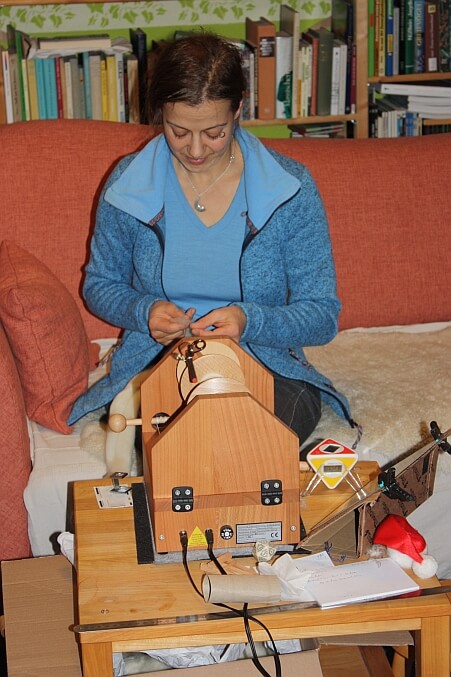
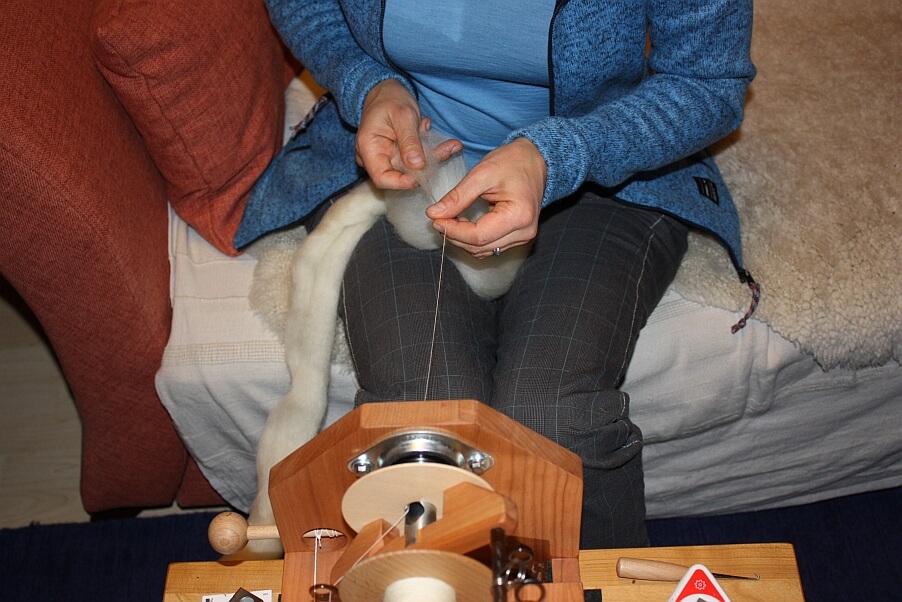
You've seen enough pictures of bobbins now - time to see more spinning pictures, but with actual spinning in them:

[caption id="attachment_2827" align="alignnone" width="451"]Spinning happily along - now working on the weft thread for one of the fabrics. Spinning happily along - now working on the weft thread for one of the fabrics.


It is coming along nicely, the spinning work. Not every day is like every other one, but today felt like a really good one - which is nice, as I want to have a good batch done and ready to go into the post by the end of this week.

[caption id="attachment_2824" align="alignnone" width="640"]Drafting from the Romney top... Drafting from the Romney top. You can see the difference between the fluffed-up loosened (pre-drafted) fibres beneath my hands and the original top hanging down beside my leg.


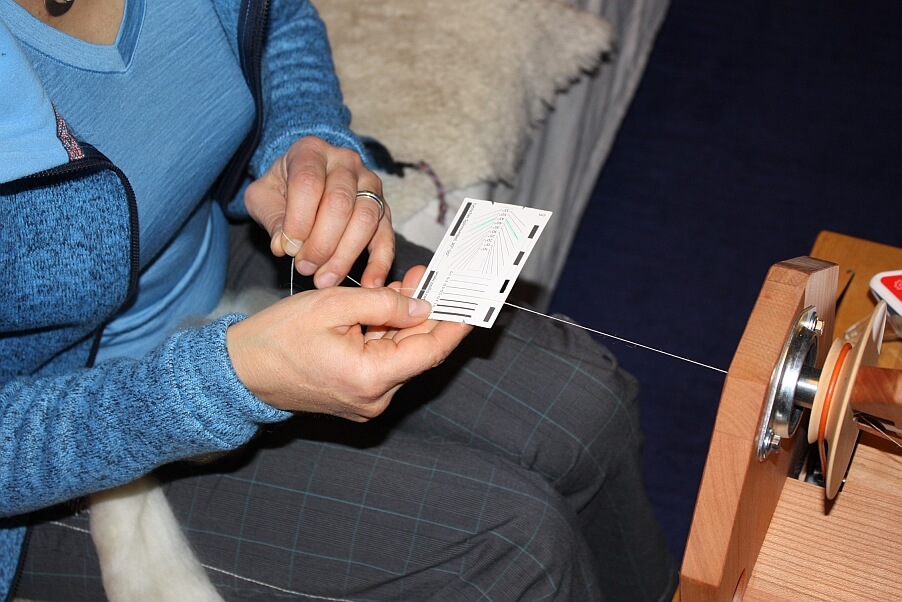
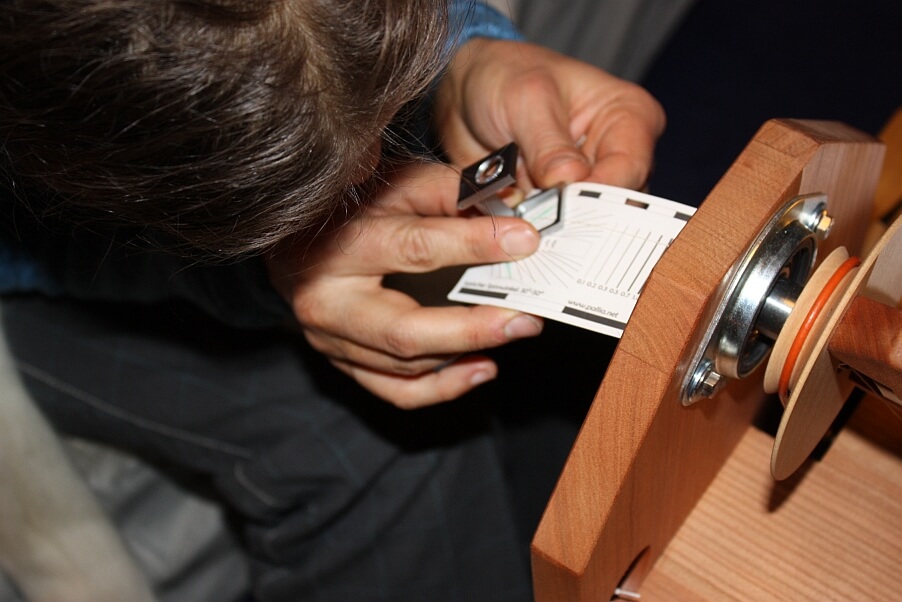
There is, of course, also the periodical checking of thread thickness and spinning angle:

[caption id="attachment_2826" align="alignnone" width="640"]First the thickness... which should be around 0.5 mm for this one... First the thickness... which should be around 0.5 mm for this one...


[caption id="attachment_2825" align="alignnone" width="640"]...and then the angle with help of my thread counter. ...and then the angle with help of my thread counter.


For today, though, I'm done spinning. More thread will be made tomorrow!
0
DEZ.
16
0

New things in the shop!

Just before the year runs out, there are a few new things in the shop - two new kinds of combed top and two versions of a really helpful little tool.

Have I made you curious?

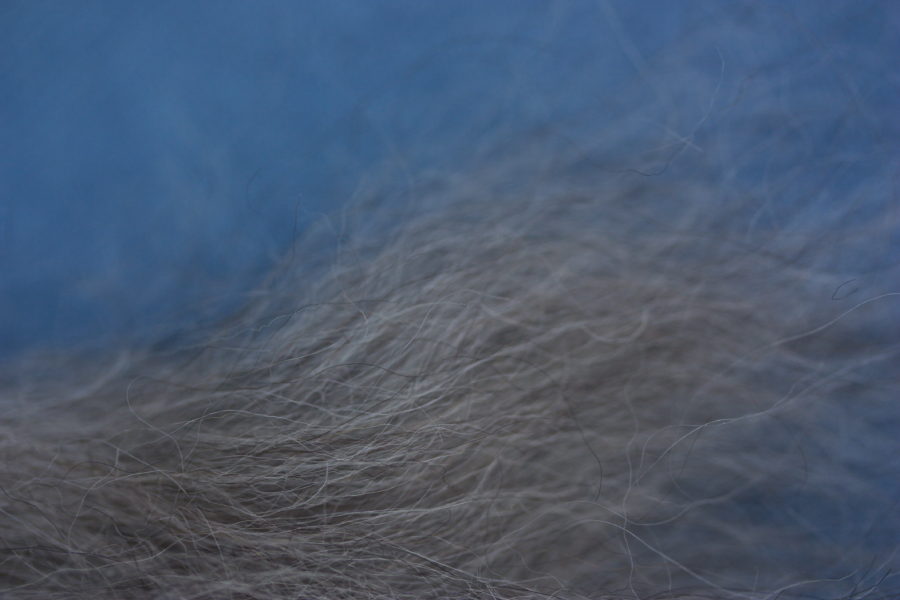
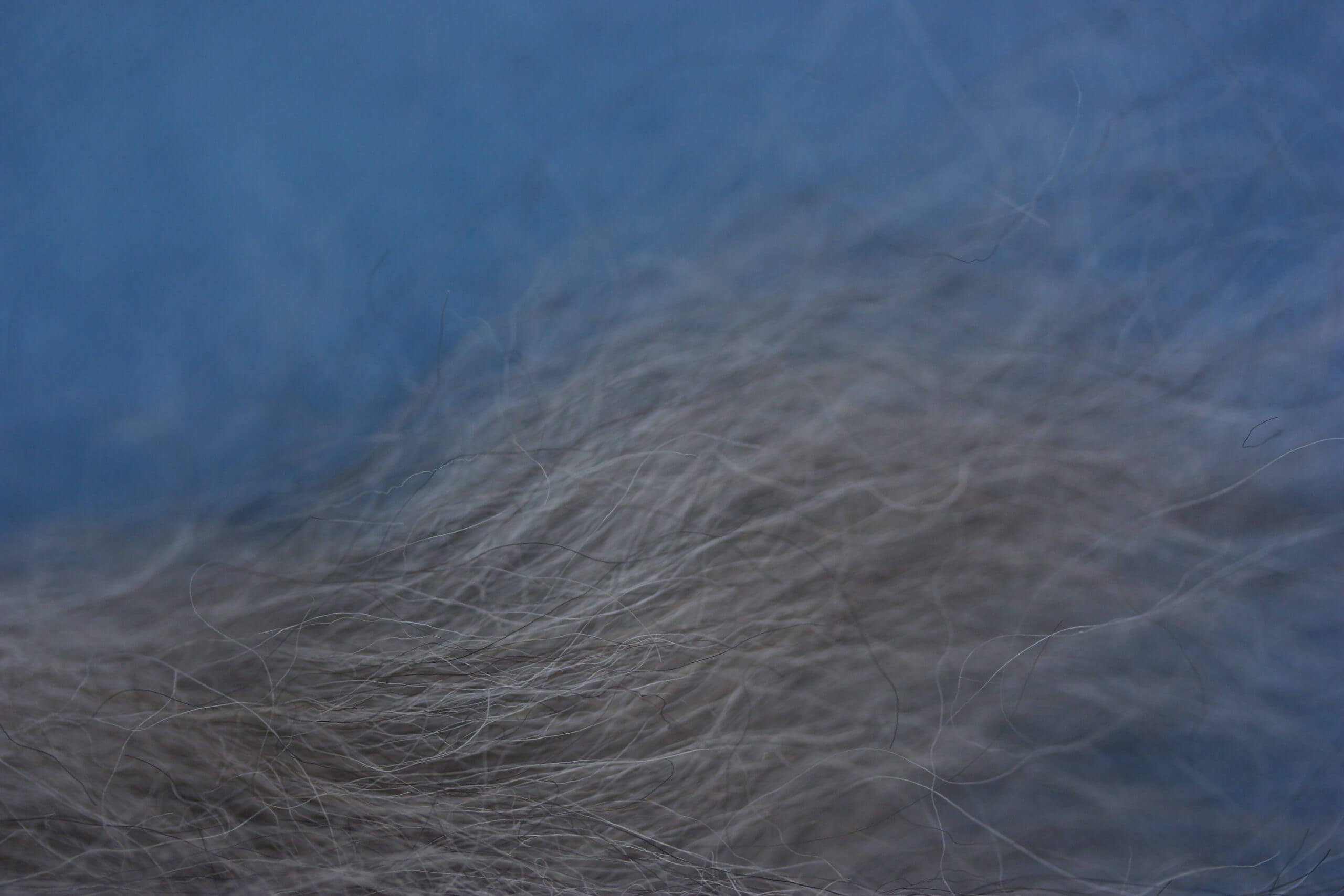
One of the new wools is Gotland wool, consisting of light and dark fibres of similar diameter, which results in a grey overall appearance - but the yarn will, on closer look, show the dark and light fibres. It makes for a fascinating spinning, and a similarly fascinating yarn!

[caption id="attachment_2821" align="alignnone" width="640"]Black and white... makes grey. A really beautiful one in this case. Black and white... makes grey. A really beautiful one in this case.


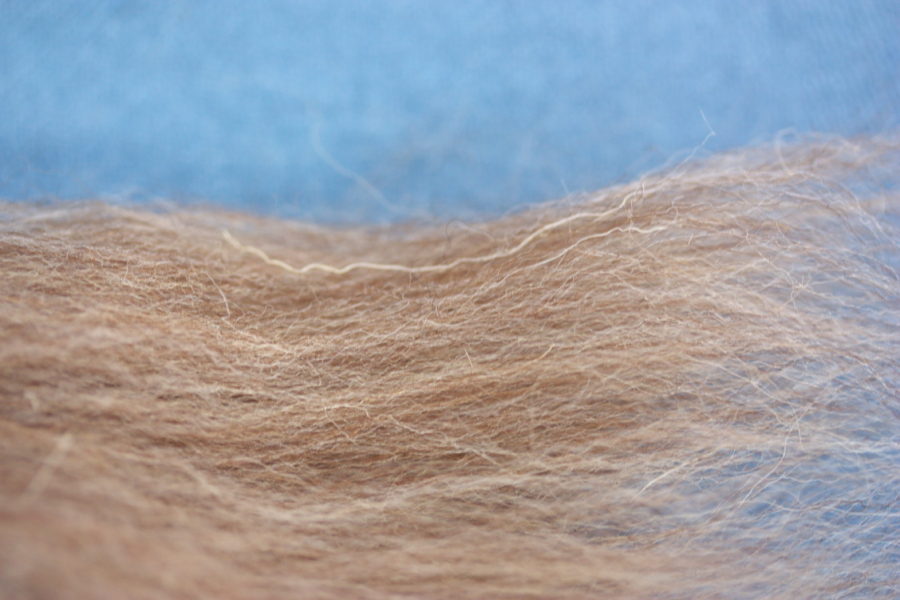
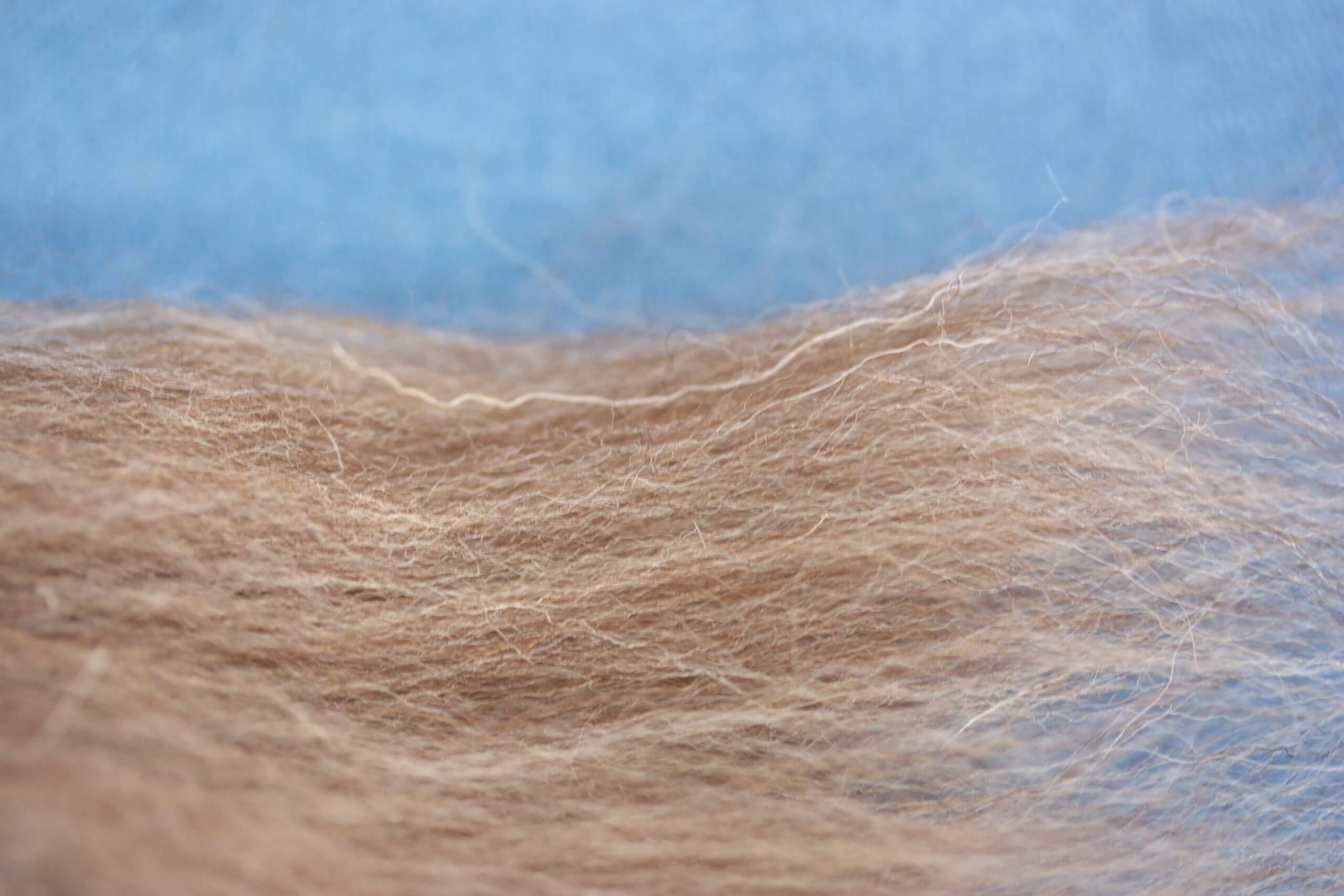
The other wool is similarly inhomogenous - but it also has different fibre diameters. It's light almost-white to dark brown in the individual fibres, resulting in a light to medium brown wool overall:

[caption id="attachment_2820" align="alignnone" width="640"]Have some variety. In your fibre diameter and in the colour! Have some variety. In your fibre diameter and in the colour!


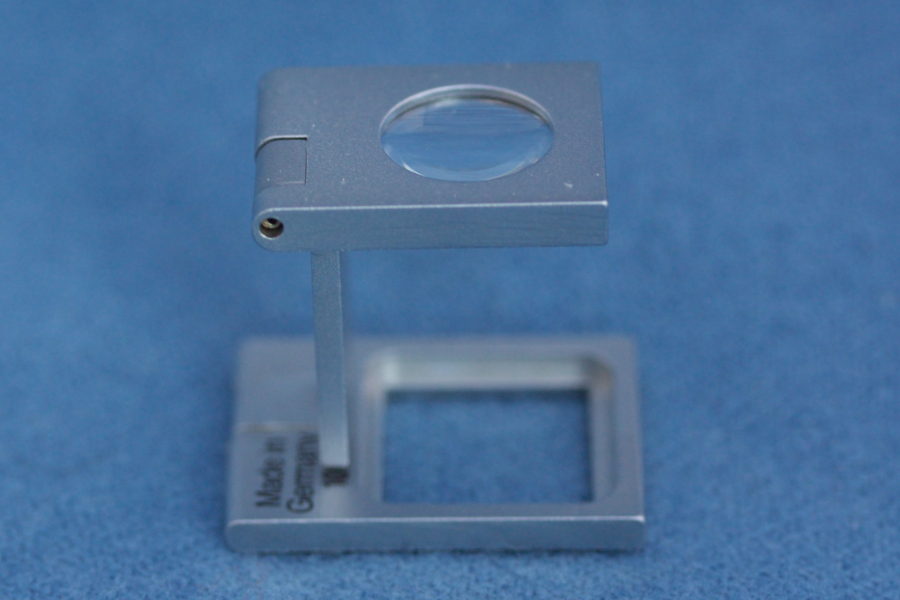
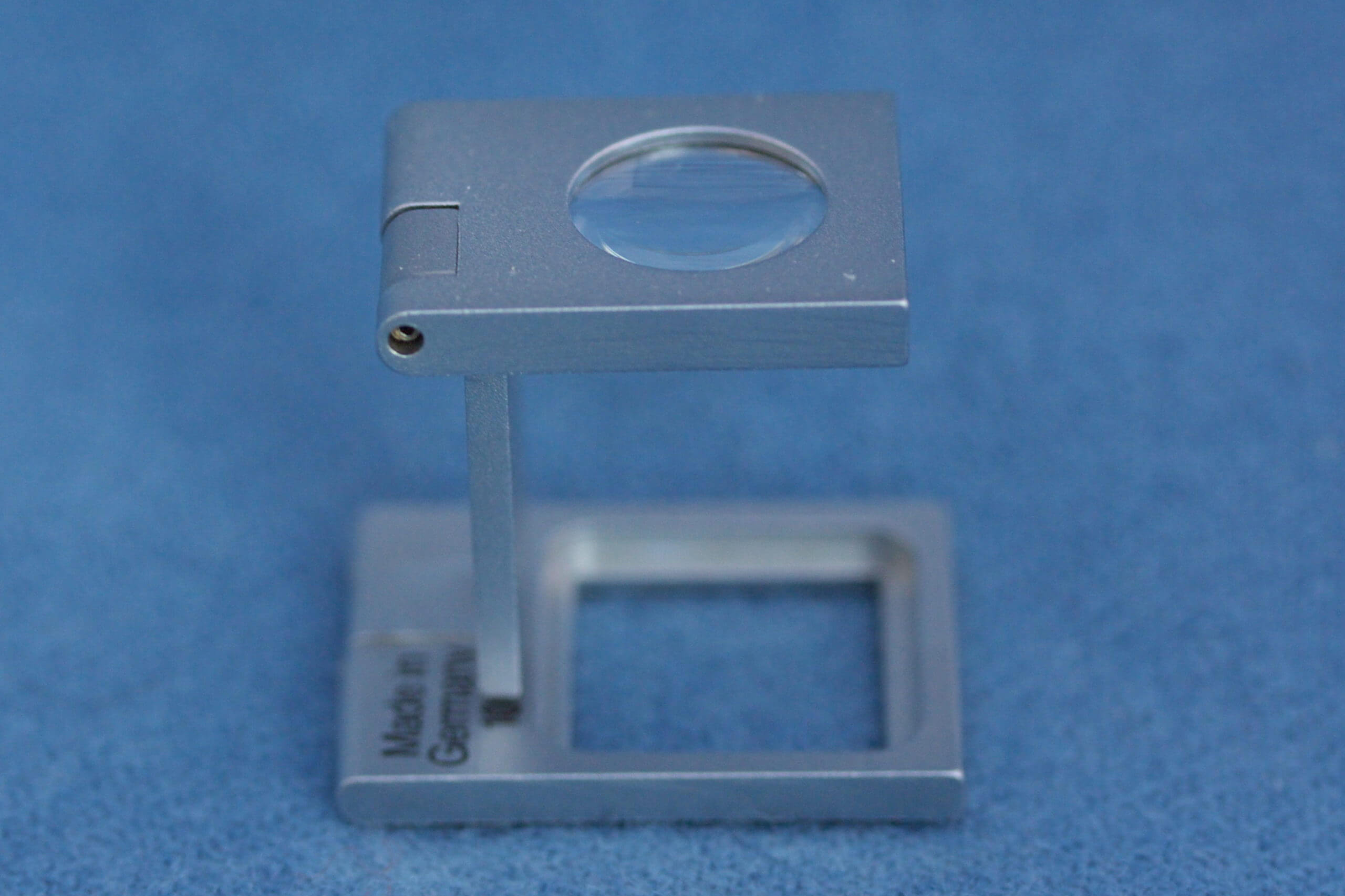
I'm even happier, though, about finally having a special kind of helpful tool in the shop: Thread Counters. One a little pricier, but with a higher-quality lens and made from sturdy metal:

[caption id="attachment_2819" align="alignnone" width="640"]Metal Thread Counter Metal Thread Counter


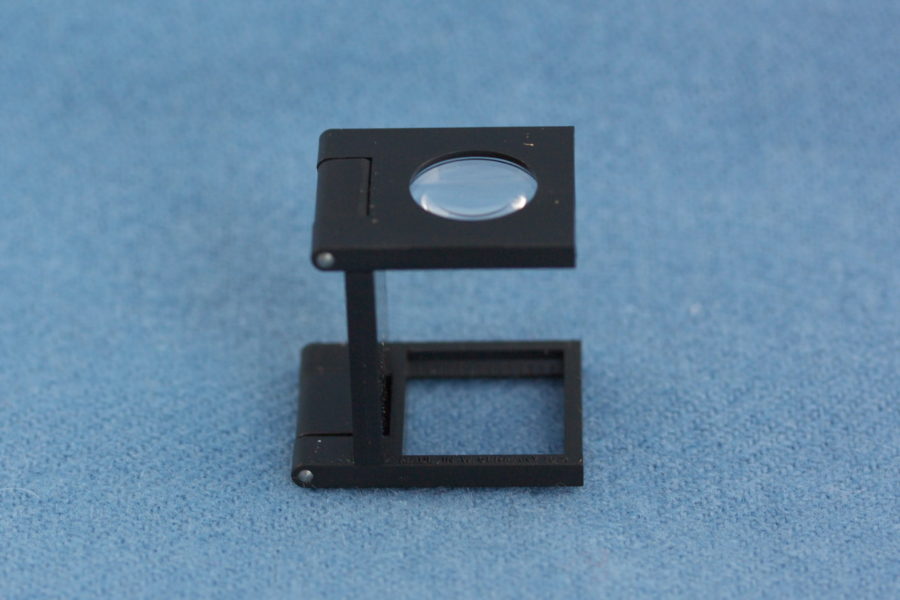
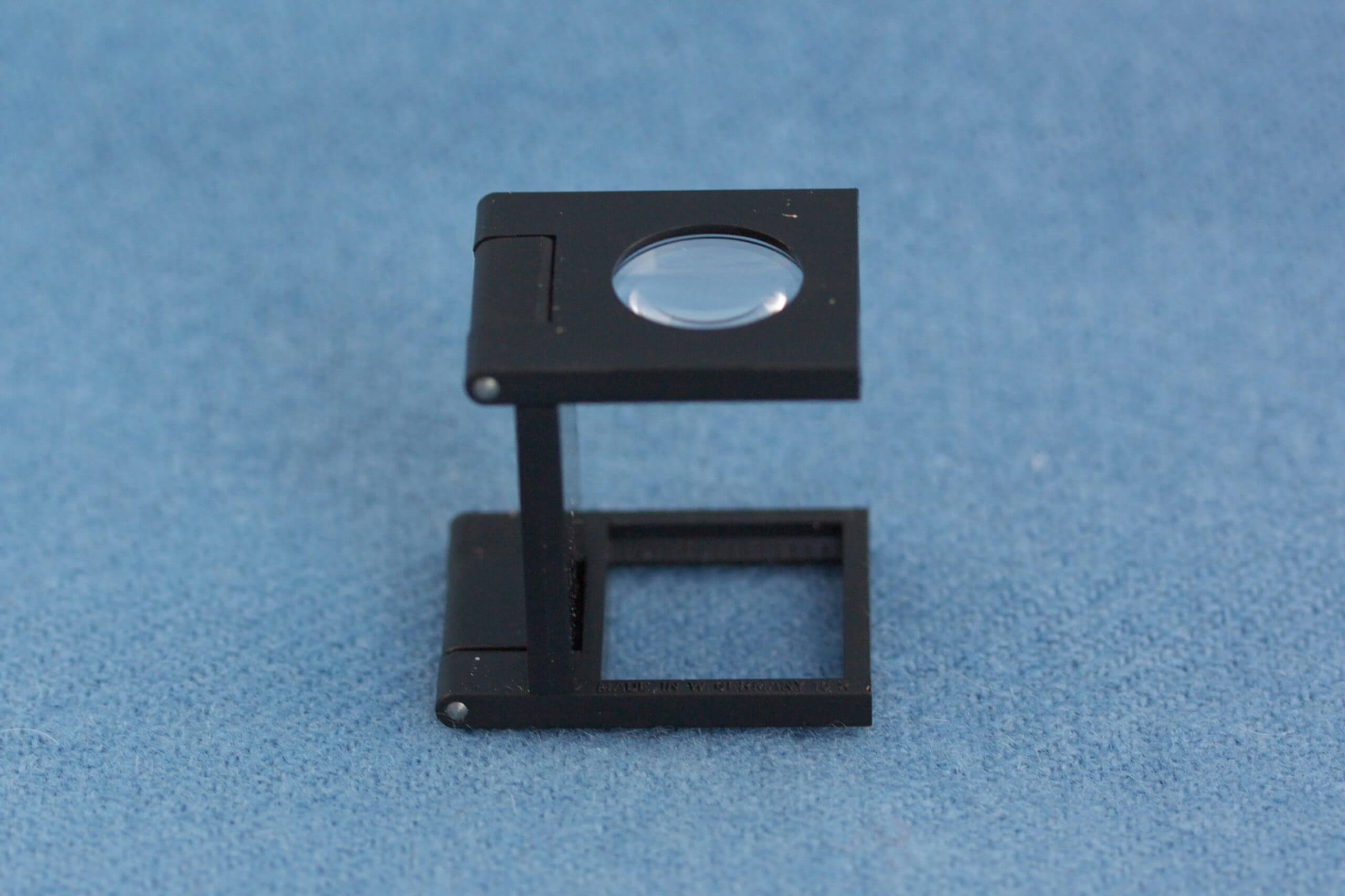
and the other, as the even more affordable option, made from high-quality plastic with a very good lightweight plastic lens:

[caption id="attachment_2818" align="alignnone" width="640"]Plastic Thread Counter Plastic Thread Counter


Both kinds are made by Eschenbach Optik (that have their company in the next large town over, which delights me no end, being a believer in regional trade and such) and they are made in Germany. Both have a tenfold magnification, which is the upper end of what thread counters usually do. I've used a thread counter for ages now (it's what I use for checking spinning angle, for instance), and having a good one really is incredibly helpful.

You can get more information about all these things in the shop - click the links in the text to get directly to the individual items, or this one here to get to the shop front, where they should all be waiting for you with their new friends...
0
DEZ.
15
0

Linkapalooza!

As you will have guessed, there's still spinning going on here... lots of spinning. The first large batch is nearing its end, and I'm enjoying audiobooks that have been sitting here for ages, waiting for their time.

While I am adding twist to poor unsuspecting fibres, here are some links for your delectation:

PHD Comics has a really funny graph about the number of authors in publications.

Knitting for Nerds offers a collection of 66 free Star Wars knitting patterns.

We've all heard of insects trapped in amber (hello, Jurassic Park!) but here's something even cooler: actual dinosaur feathers conserved in amber.

Finally, there's a malware targeting Android phones called "Gooligan", and it takes advantage of your google accounts and the information therein. Here's more info about the malware, and here is a checker where you can see whether you are affected or not.

And that's it for today. If you are looking for me, I'll be back at the spinning thing!

 
0
DEZ.
14
0

Tips for Production Spinning.

Production spinning - as in making lots and lots of yarn, as consistently as possible, for a specific project - is a nice thing, but it's also a time-consuming task. So before you dive into a spinning project for a handwoven cloth or a hand-knitted sweater (and I'm not talking about a bulky baby sweater here), it is well worth investing some time and effort to make sure that you are not going to sink with your project half-way. So here are some things about production spinning that I find helpful - and maybe you will, too.
  1. Have a solid idea of what you want.
    In case where you are spinning for a fabric reproduction, that is rather easy as it is predetermined by the original. When you are spinning for something else, though, you are free to decide what you want - lots of twist, and thus a resilient and hard yarn? or rather a softer yarn that might not be as durable? Single or plied? Thick or thin? You might want to do a few test runs to find out if the thing you are spinning really suits the thing you want to make with it later - you don't want to invest many, many spinning hours to sit on a lot of handspun that you can't use afterwards.
  2. Get or make yourself a reference thingie.
    Once you have figured out what you want, make sure you'll be able to spin exactly that kind of yarn. Yes, that sounds like a Thank You Captain Obvious, but chances are that you might drift away from the yarn you make at the start. Changes in fitness level, concentration level, the amount of attention you pay, how tense and excited you are at the start versus a bit in - all these can affect the yarn you are spinning. Danger of drifting off what you planned is higher if the yarn you are aiming for is further away from your "mindless spinning standard yarn" - so you will want something to compare your current spinning to, allowing you to recalibrate in case of drifting. This something can be a spinning angle and thickness card like the one I use, or a sample piece of your test yarn stuck onto a card. Whatever you use, it should allow you to compare both the thickness and the amount of twist of your current yarn with your goal yarn. Use it periodically, for instance when you need to stop spinning anyway because you need to have a sip of tea, or change the hook on the spinning wheel flyer. Making these checks a habit will not lose you a lot of time, but might just save you a bad disappointment later.
  3. Be consistent.
    Hand-spun yarns will always have irregularities; it's in the nature of the thing and cannot be avoided. Sometimes they are caused by the fibres, sometimes by a bit of inattention of the spinner, or a snag by the tool. They just do happen.
    However, you can try keeping them down as much as possible by having as much consistency as possible. Set up your workplace the same way, have the same good suitable lighting, the same position or seat, prep your fibre the same way - it will all help.
  4. Prepare your fibre.
    Speaking of fibre prep, this is helpful even if you are working with industrially prepared fibre (just like I do for those projects, usually). Your batt or top will have sat for a while before you take it into your hands for spinning, and it might be compressed; if it was dyed after combing or carding, it will definitely be slightly felty. Even if you don't see any compression, though, it is a good idea to loosen up the fibres by pre-drafting them.
    For the pre-drafting, take the top or the strip of batt, grab the end and gently pull on the fibres until they start to move apart. Change your grip to the place where they moved, and repeat the procedure, working your way along your top or batt. This loosens up the compressed fibres and makes your drafting for spinning much smoother and easier.
    For better consistency, I use a diz for that (though I am generous and call everything with a hole that I use for drafting a diz). The diz also clearly indicates when I am nearing the end of the pre-drafted part of my top (I don't tear off pieces if I can avoid it) and have to pre-draft some more.
  5. Watch yourself, and take breaks as necessary.
    This ties in with the drifting bit - spinning, especially if it is not your can-do-it-in-my-sleep yarn, takes concentration. After a while, this will result in less consistent drafting, more variation, slower speed or something else, or a combination of whatever you are prone to do when your attention gets worse. So keep an eye on your spinning efficiency, and take a break, or stop for the day when the symptoms get bad enough. (You get to decide yourself when that is. If you don't care about a bit more variation in the yarn and have to get it finished soon, you will obviously have a different break-off point than somebody trying to go for the perfect yarn and having lots of time to do that.)
  6. Calculate for enough time.
    Speaking of breaks, and stops - make sure you have calculated for enough time for your spinning project. Spinning is not a fast thing, and you might not be able to spend several hours per day on it either, depending on the project, your other work or obligations, and your level of practice.
    Also - when calculating approximate work time needed, don't forget that you also have to get the yarn off the bobbins and set the twist. Skeining off a few hundred or even a few thousand metres of yarn is not done in split seconds!
  7. Get (and make!) enough material.
    That should be obvious, but it is worth mentioning it - when you are buying your material, make sure you get enough. Especially if you are doing high-twist yarns, they will have more weight at the same thickness than low-twist, fluffy yarns... and running out of material just before the end is not only awkward, but also annoying.
    Speaking of which - when spinning specific amounts, go a little over as well to make sure you have a bit of spare in case there are more breaks that need to be fixed, or something else goes wrong. Yes, theoretically you could just spin up more when it is needed, but in practice... that is also really annoying. And if you are like me, you will want to be finished with that step at some point!
0

By accepting you will be accessing a service provided by a third-party external to https://pallia.net/

Kontakt