Latest Comments

Guest - Aislinn Dyestuff Citizen Science.
09. Oktober 2026
This is a great project. I look forward to the results. Thanks for letting us know.
Guest - Aislinn Time for...
09. Oktober 2026
Looks delicious!
Guest - Katrin Sprang Discussion
18. September 2026
Hi Rachel, I have looked for more photos of you, but that was not very successful. I found a link on...
Guest - Beatrix Sprang Discussion
15. September 2026
That lozenge pattern element is not a photograph, but a scan. So it should be to scale. But I pinned...
Guest - Katrin Sprang Discussion
15. September 2026
I was not referring to Rachel's reconstruction (is the reconstruction you refer to the one photograp...
JULI
04
3

Colours!

The V&A has a nice film with English subtitles on natural dyeing in Japan - which is well worth taking a look at just for the beautifully coloured silk fabrics moving in the wind right at the beginning of the video:

It's good to see that natural dyes are re-discovered at different spots in our world!
0
JUNI
20
0

Stuff to read.

Some interesting things I stumbled across:

There's a "Jumpers and Jazz" festival in Warwick that includes a men's knitting circle. How cool is that?

More cool knitting - there's a guy offering scarf knitting via a stationary cycle matched up with a knitting machine in a train station (German article with picture and video link). That seems to be somewhere in Belgium... but maybe there will be more Cyclo-Knitters in the future, who knows?

Not interested in knitting? Here is an article about factories - to be more precise, it's a book review, but it makes for an interesting read on its own.
0
JUNI
18
0

Plugging on.

I have finished making my way up again on the first side of the Cushing Isle front part, and now I'm about to fix the mistake selvedge on the armhole side. Thankfully, it's not as many rows to fix, and not as many decreases.

cushing_fronts

While it was theoretically absolutely clear to me what I had to do, it turned out to be more of a brainbendy thing to do than I had expected, and there are a few irregularities where the repeat at the edge is only half there due to the stitch count. Plus I sometimes had to go a few rows down with the decrease stitch, too, in order to make the proper cable crossing.

So the result is not perfect, but it's okay for me, and since this all takes place right at the button band edge (which is looming ever nearer in the future)I figure nobody will notice after blocking and finishing.

So. Next steps: Sleeve knitting, blocking of the fronts, and figuring out the button band details. I'm not sure yet if I'm not going to add an extra button, and whether the buttonholes as described are what I will actually use, so there's a bit of testing in my near future...
0
JUNI
08
0

Paper bags!

I have bags! Paper bags!

They are white. They are cheap. They are flimsy. They are not very large... and they come in large quantities only.

tuetenpack

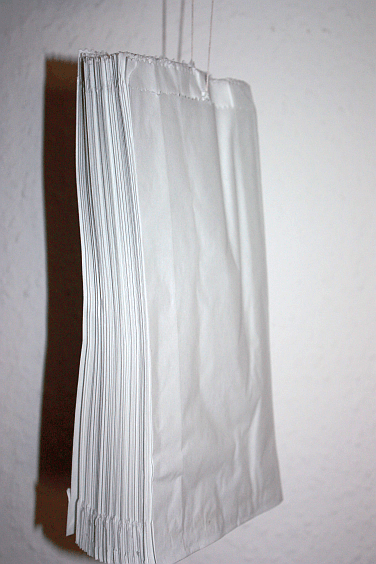
Those large quantities are subdivided into packs of 100 each, neatly threaded onto a bit of string...

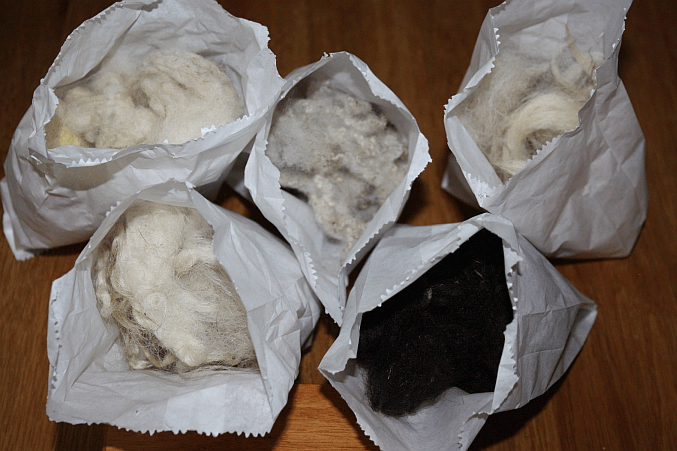
and they are just the right size for wool samples.

tueten_offen

Which is exactly what they are going to hold.

Because, you see, I have all those wonderful rare sheep breed fibres, and I have them in packages of 100 grams, which is a nice amount if you want to spin a little or felt a small item, and it's also a good base amount to order multiples of, if you have a slightly larger project. But maybe you don't want to have a full hundred grams but still are curious about the fibres, or you would like to have just a handful of locks for some small projects, or you are not sure which one to take and would like to try a little bit of them all first, or you would love to have a sample of different ones to see (or show others) how very different the wool from various breeds can be.

tueten_zu

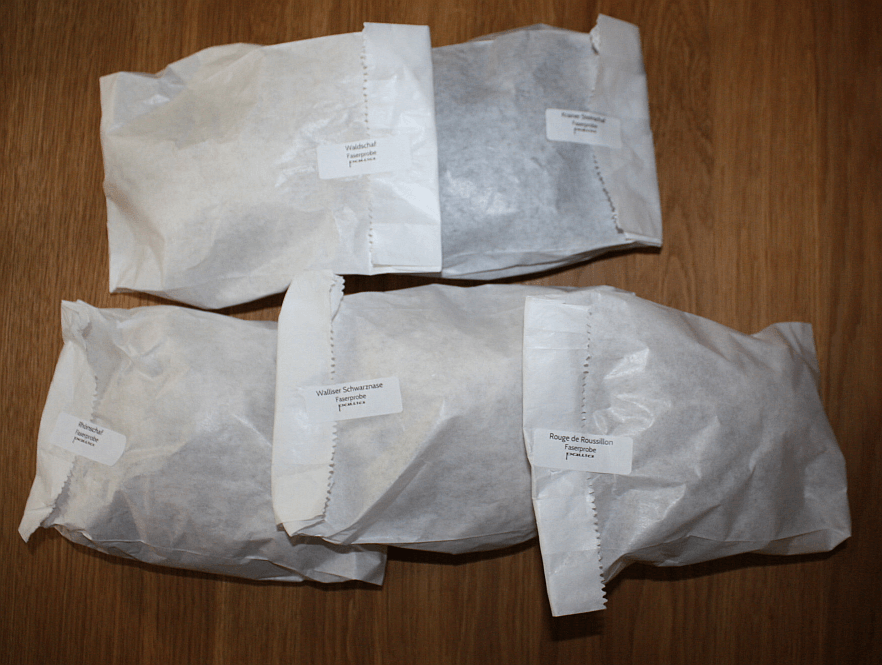
And now I have the solution for that - sample packs of the fibres I have in the shop, a handful of each, which is enough to get you a taste (or rather a feel) of how the fibre will work and behave.

The actual sample set will have one more bag, but the Walliser Landschaf fleece (another dark one) is not dry yet, so no stuffing in bags of samples of that one at the moment. If the weather holds, though, next week should see these sample packs in the shop - and I plan to do a second set of sample packs with carded fibres, too.

So yay for these white paper bags!
0
JUNI
05
1

Knitting Stupidity.

Stupidity has made a little bird nest in my brain, and I have managed to utterly and blissfully misunderstand knitting instructions. Consequently, now, Weird Things are being done here to fix this.

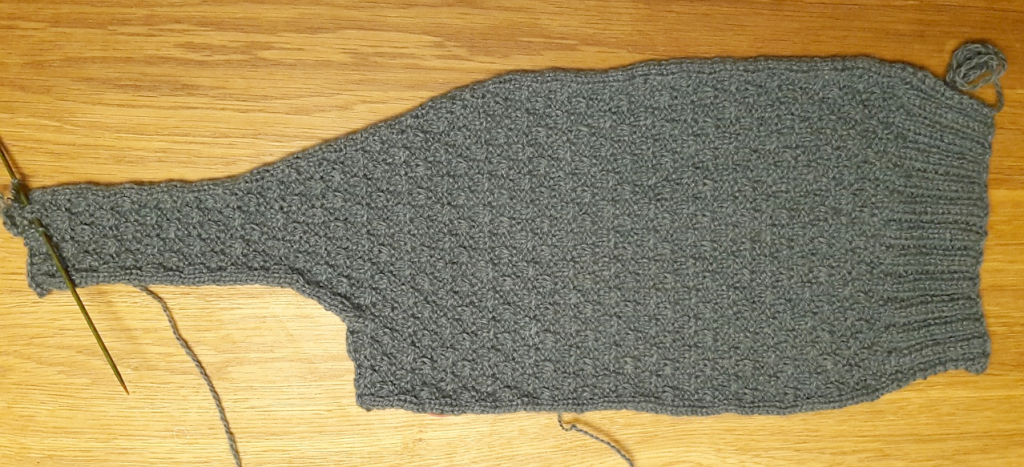
I've misread the instructions for an overall stitch pattern for the front parts of the Cushing Isle cardigan. The instructions are for the overall pattern, and there's a knit stitch added before and after the pattern stitches in their *repeat everything between this* star brackets. A little below the eight lines of written-out instructions, it says "charted version at the end of the pattern, add selvedge stitches at start and end of row" and the subtitle for the section explains that this is the cabled check stitch pattern, multiple of four stitches plus two selvedge stitches.

And what did my brain make of it? I knit the pattern as written out (which included the two selvedge stitches, which means one at each end of the row) and added two selvedge stitches. At each end. So when I had finished with the right front, I had a total of six selvedge stitches... three at each side.
irksome_selvedge

Which, very obvious to any sane knitting person who looked at the picture of the finished cardi at the front of the pattern pdf, is way too many.

I had wondered, inbetween, why so many plain stitches at the button band edge were asked for. I had also wondered why none of the plain stockinette edges were visible on the picture of the cardi. And only when the right front had been all finished and bound off and I started the second front part and re-read the pattern instructions, just to make sure I remembered correctly... it dawned on me. Like a ton of bricks. On speed.

So. Obviously, I was not happy with the result (I had sort of already bemoaned the stockinette strip while knitting, as it was apparent that this would change the appearance of the front). Obviously, as I'm also a lazy person, frogging the whole piece is not what I totally want to do (though I actually considered it, as the start of the neckline decreases also is a little early, but that's a totally different story, and it shows how much this misinterpretation irked me). However... I have a plain stockinette back for the sweater, so the side seam extra-wide stockinette selvedge does not touch me as much. As for the midline part, the overall pattern has a repeat of four stitches. I have two that are wrong... exactly half a repeat. You know what's coming, right?

Right?

Yes.
letdown

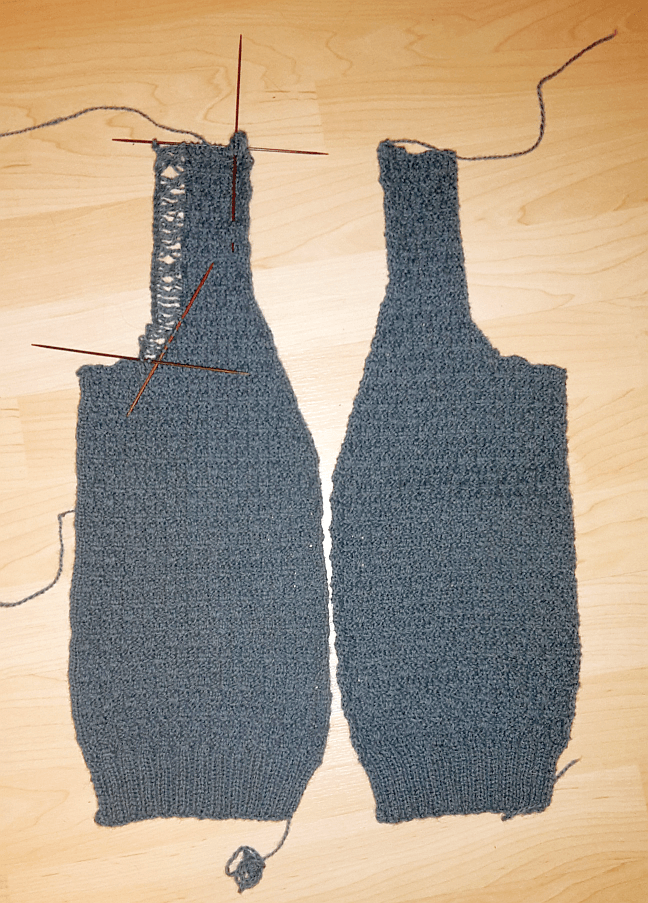
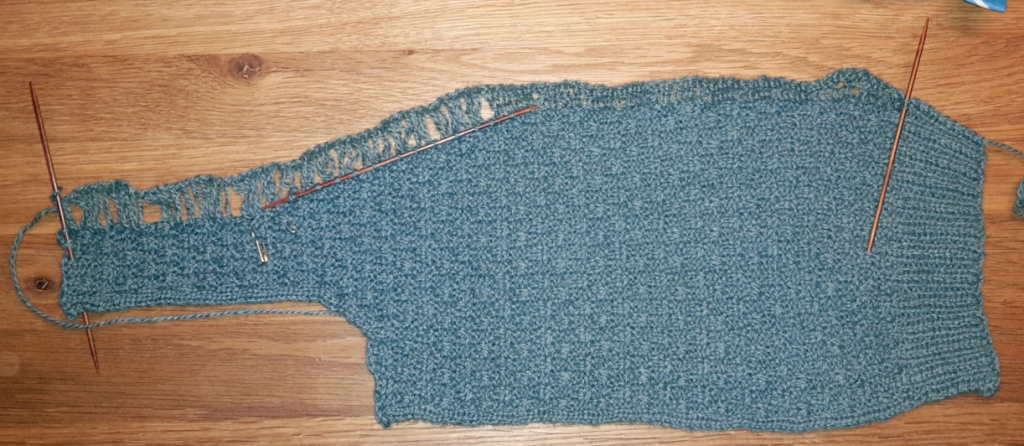
The needle stuck in diagonally holds the extra stitches freed up by the decrease maneuvers for the neckline, fourteen altogether (two are held with safety pins). The needle at the top holds the correct selvedge stitch, keeping it all together, and the freed live stitch from the bindoff. The needle at the bottom holds the two live stitches in the last row of the hem ribbing.

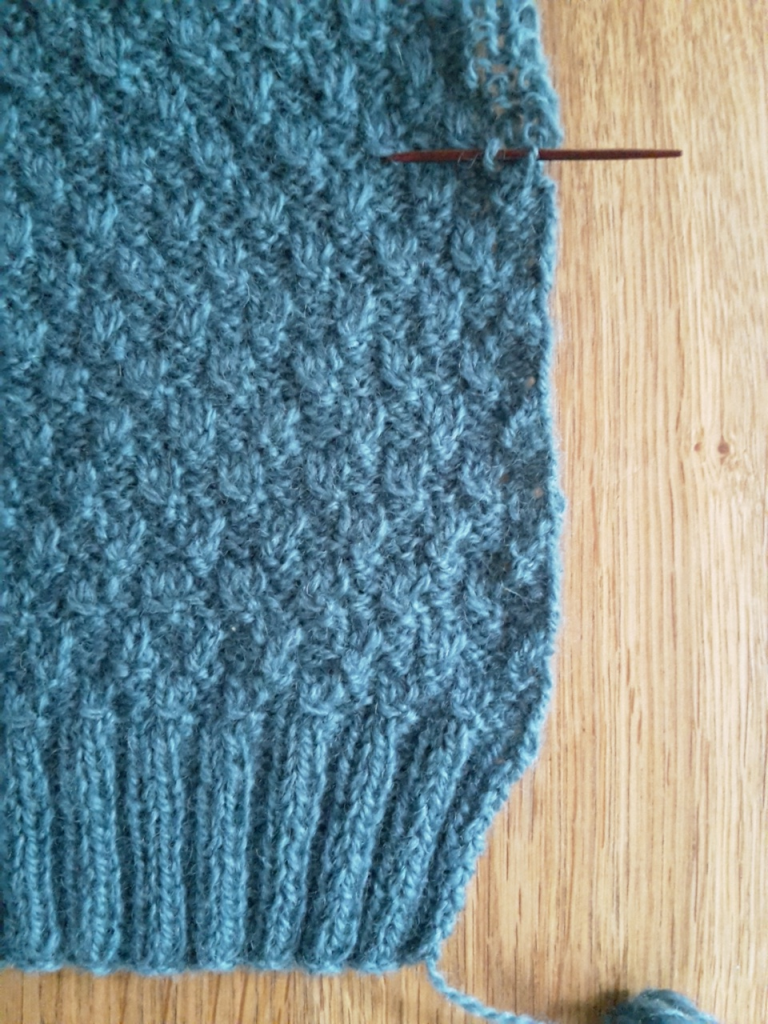
And now I'm slowly making my way back up.
going_back_up

Once I'm there, I will un-bind-off the rest of the shoulder seam and let down the two wrong stitches along the armhole edge, re-do those in pattern, and then I am all set. I don't mind having the side seam optics shifted by that scant centimetre as long as all the rest looks okay.

I'm still a little malcontent with myself for making such a blatantly stupid misreading error... but oh, well, it happens, and at least it's relatively easy to fix. In the future, I'll look (and think!) twice, though, when it is not totally and utterly clear whether the selvedge stitch count refers to each selvedge, or both selvedges added together, and whether these stitches are already in the description or not...
0
JUNI
01
0

My Knitting Library.

You might have noticed that I am actually ding more of the making fabric with sticks and string thing recently - and I thought that maybe you are interested in the knitting library I have. Which is... how shall I put it... rather minimalistic.

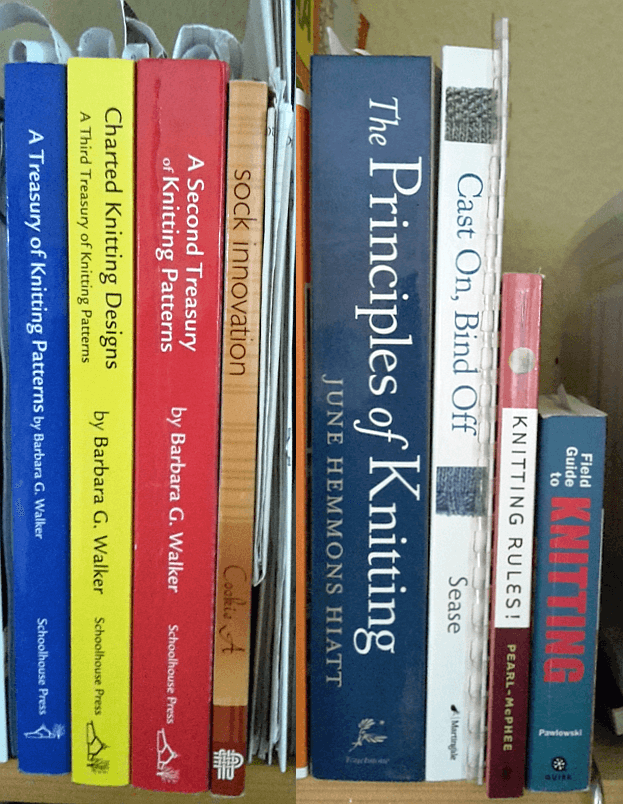
[caption id="attachment_3846" align="alignnone" width="461"]library That's it. That is my full knitting book library.


I like to look at knitting patterns, but I'm not a collector - so I'm not someone to buy a magazine just for the patterns. In fact, I leaf through them and usually think something along the lines of "oh, a basic sweater with lace pattern XYZ, aha, nice" or "ah, cabled socks, nice, cable soandso looks pretty in this yarn" - but then I sort of not want to knit it. Or I think that I'd probably fare better by taking a standard vanilla patterns for a sweater or socks (of which I know it will fit me) and modify that with lace pattern XYZ or cable pattern soandso. (I'm looking at food and recipe magazines the same way - I look at something and think "ah, variation on basic stew A" or "hm, standard cake batter with some extra spices thrown in" and that's it.)

So when I set out to assembly my knitting library, I knew what I wanted - also thanks to the first book in the assembly: Knitting Rules by Stephanie Pearl-McPhee. This is a wonderful book - it is fun to read and it's chock full of good, sane, sensible advice, tips and tricks. It has a very sane view on gauge swatches, for instance.  It's a lovely book, and I would recommend it to anyone who starts out to knit in a heartbeat.  It also advises to have a stitch dictionary and a basic knitting technique book in the knitting library.

Advice I took to heart - and got a small stitch dictionary, with pretty colourful pictures - the one you see to the right of Knitting Rules. It's called "Field Guide to Knitting". It is nice... but I very soon found out that there are so, so many more stitch patterns than in that book, and that I'd prefer having more patterns instead of colourful photos. And then I found out about Barbara G. Walker's "Treasury of Knitting Patterns" series, and got the first three books. (There is a fourth one, but that was not as interesting to me as the first three, so I left it at that.) I wouldn't buy the Field Guide anymore, but I totally recommend the Treasury books; they are indeed a treasure trove, and utterly wonderful to leaf through.

The "sock innovation" book, written by Cookie A, was a souvenir from one of our England travels, and while it is quite nice and I did make a pair of socks out of it, I was sort of disappointed by the book. It promises to tell you how to design and adapt sock patterns, but the patterns in the book are only given in one single size, and I'd have appreciated to actually have examples of adaptation instead of just a hint on which technique to use. Also I prefer to knit my socks toe-up, and these are all cuff-down. The socks are beautiful, and I did enjoy looking through the book and marveling at the intricate patterns, but I'm pretty sure I would not buy that one again.

The remaining two books are June Hiatt's "Principles of Knitting" and Cap Sease's "Cast on, Bind Off", and both were very good buys. They are both solid books, full of information on how to do things - especially the "Principles" will probably tell you about everything you need to know about everything.

So... in the nine years since I started knitting, I managed to buy only two knitting books that I'm not still in love with, and that I would probably not get again. I also managed to buy only eight books altogether, including those two. With the six others, I have yet to find another book that I feel would add more knowledge not covered already to this bit of the bookshelf - so I am really happy with these choices!
0
MAI
25
0

More Knitting.

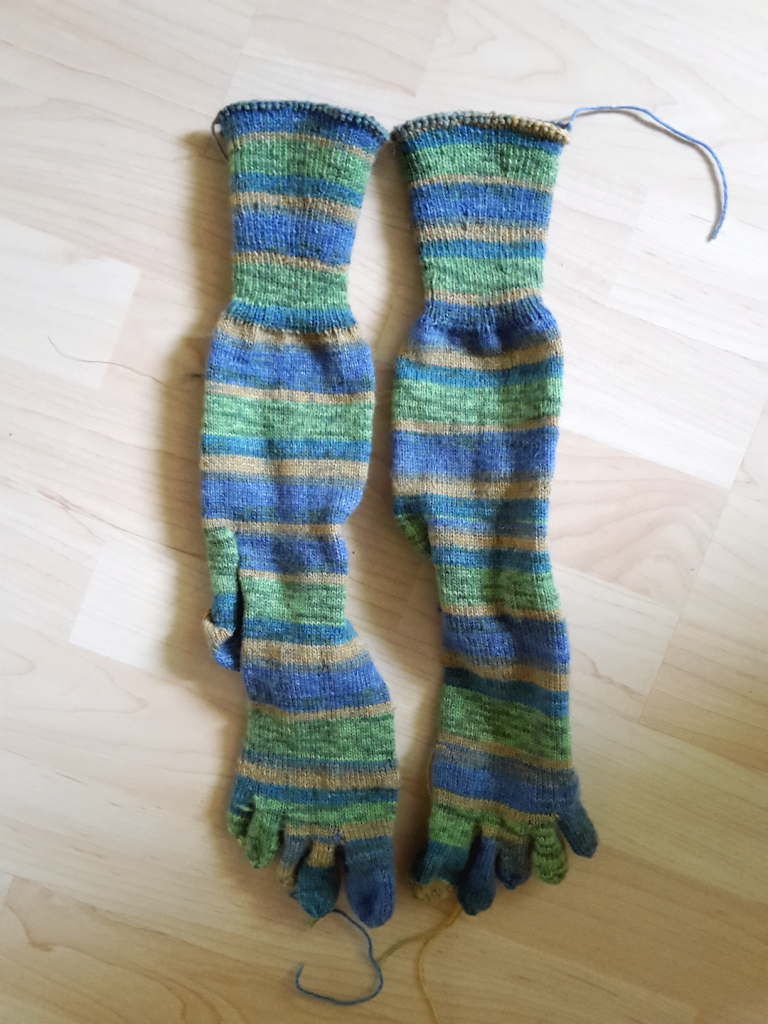
I've finally finished the five-toe socks! They still need to have the last ends darned in, but since it is currently too warm to wear them anyway, I'm not exactly in a hurry.

toesocks_done

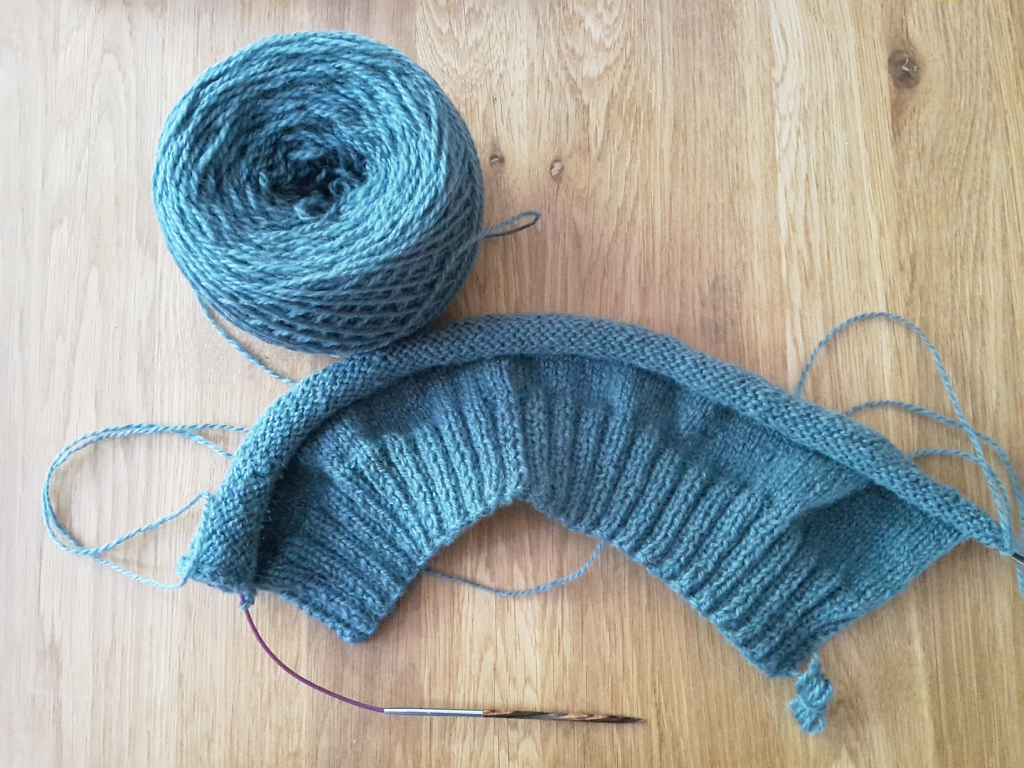
And of course I cast on for something else right away - Cushing Isle, with yarn that I bought some years ago, in a wonderful blue-greyish colour.

cushingisle_start

It knits up nicely, to a soft, and - for my standards - relatively loose fabric. I'm already done with the waist decreases for the back part of the cardi, and looking forward to the next part of the shaping... increases. Soon.
0

By accepting you will be accessing a service provided by a third-party external to https://pallia.net/

Kontakt