Latest Comments

Guest - Aislinn Dyestuff Citizen Science.
09. Oktober 2026
This is a great project. I look forward to the results. Thanks for letting us know.
Guest - Aislinn Time for...
09. Oktober 2026
Looks delicious!
Guest - Katrin Sprang Discussion
18. September 2026
Hi Rachel, I have looked for more photos of you, but that was not very successful. I found a link on...
Guest - Beatrix Sprang Discussion
15. September 2026
That lozenge pattern element is not a photograph, but a scan. So it should be to scale. But I pinned...
Guest - Katrin Sprang Discussion
15. September 2026
I was not referring to Rachel's reconstruction (is the reconstruction you refer to the one photograp...
MAI
24
0

A Home for Stitch Markers.

I like to drag my knitting along with me (who doesn't?), and my knitting bag contains, apart from the current yarn, needles, and stitches on the needles, a few extra things. These are, mainly, a crochet hook (just in case something needs catching), a little bit of emergency chocolate (because you never know), a needle gauge (because I never know), a row counter ring and, of course, stitch markers and darning needles. The latter just in case I finish a project unexpectedly quickly...

I used to keep the latter two in a tiny ziplock bag, until very recently, when the little bag refused to keep them in any longer, due to a split side seam. So it was clear I need something to replace it. Something sturdier. Something slightly larger (one of the darning needles was almost too large for the bag). And, preferably, something prettier.

So I had a little rootle and found things. Such as a zipper leftover from buying notions for another project (I decided on using a different one). A leftover bit of linen with 26 threads per centimetre, which makes it dense enough to securely hold small things. And to top it all off, a wonderful piece of patterned silk fabric that Gillian sent me in a little package a while ago... which, colour-wise, went nicely with the green zipper.

So what remained but putting them all together?

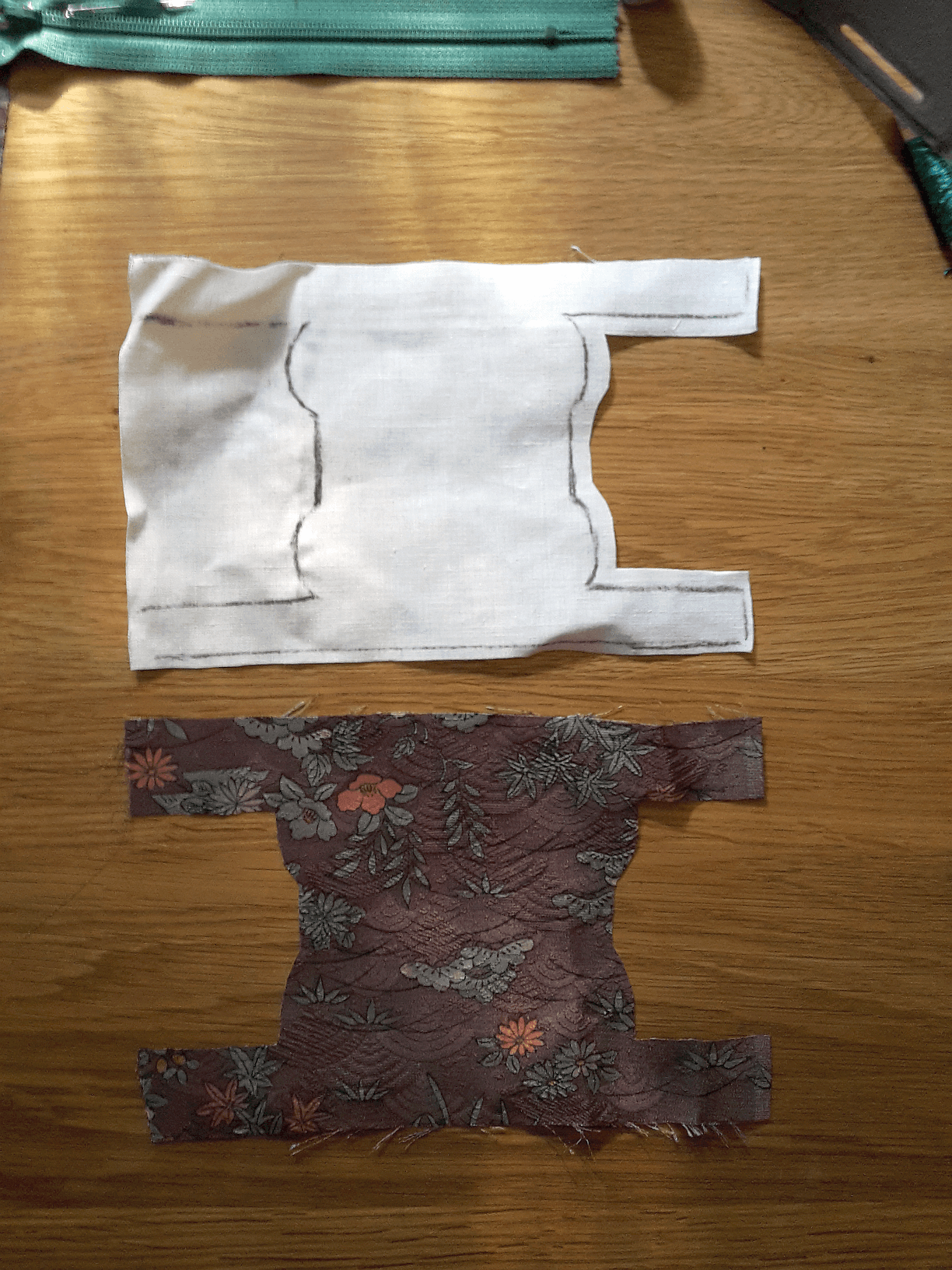
I started off with drawing out a pattern, and cutting it from both the linen and the silk.

notionbag_start

The silk was just large enough for what I had in mind - lucky coincidence!

I tried to sew both layers together at first, but quickly found that this would not work - so it was the linen layer as the first step, and then the silk cover to go over that base.
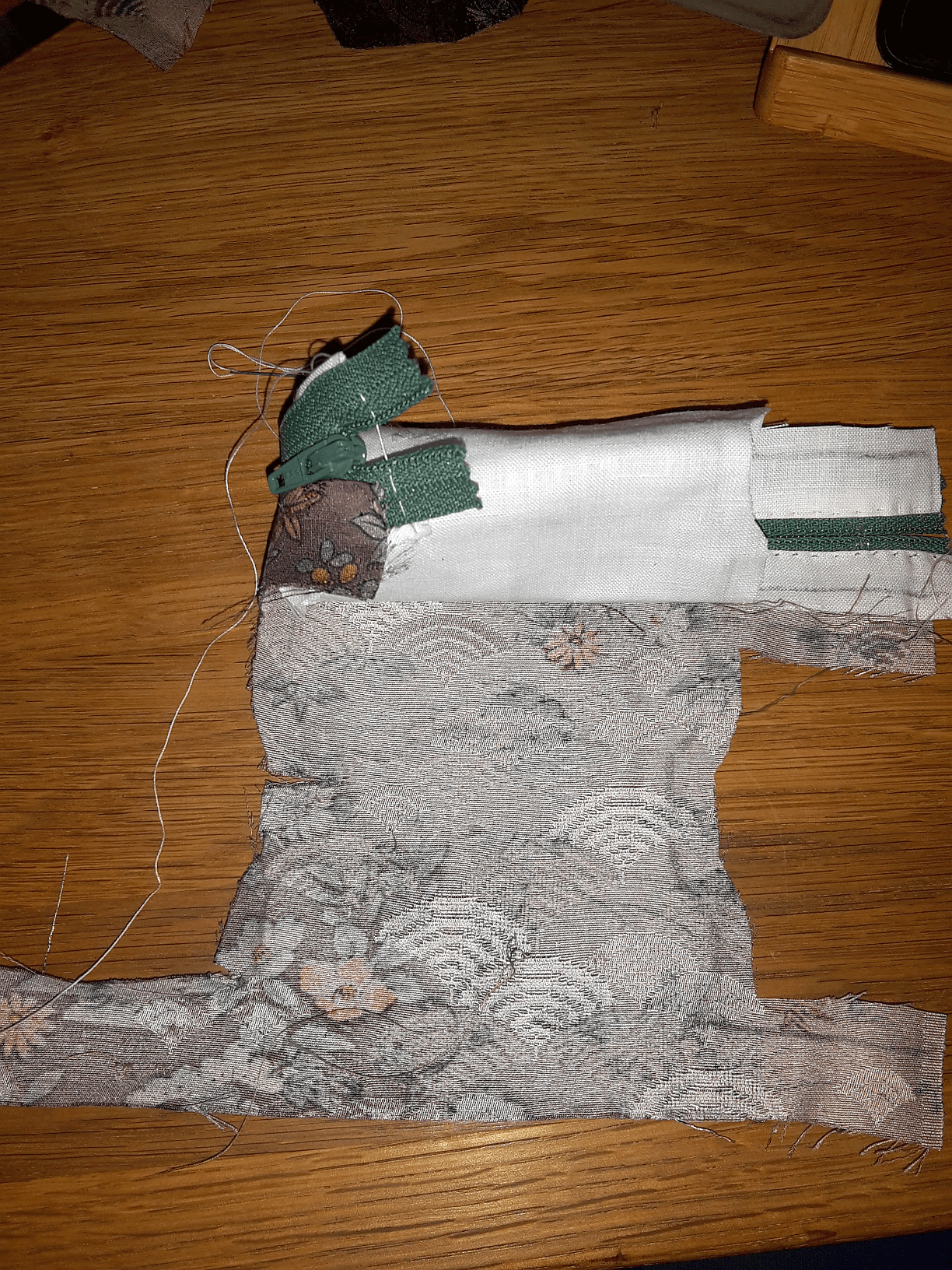
notionbag_1

I fixed the zipper to the straight edge of the linen first, then bent it around and sewed the curved top together. Nipping the linen made it much easier to get this done.
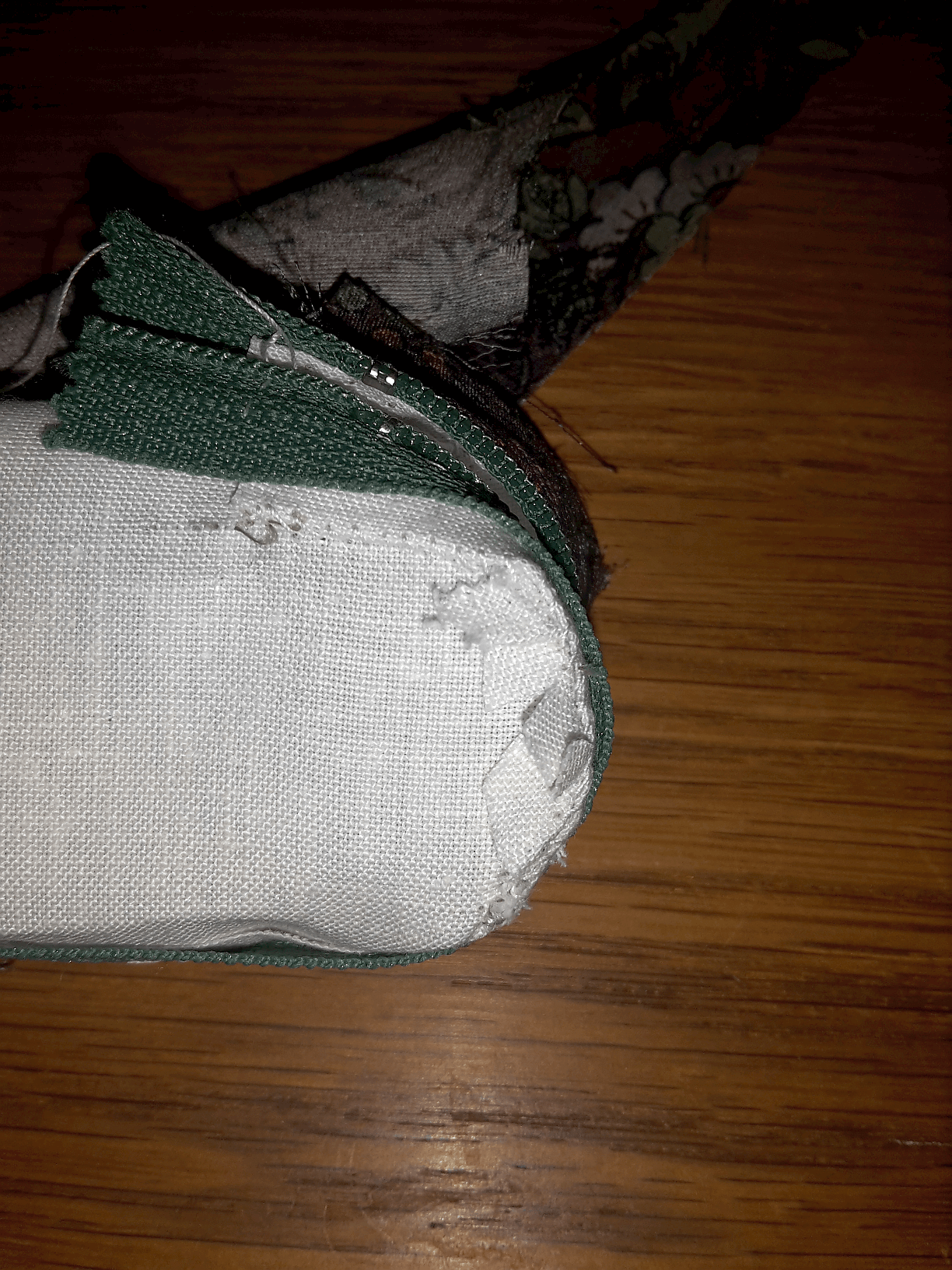
notionbag_2

It still remained a very fiddly process!

After the linen inner part was done, I only had to cover it with the silk. Again, I did the straight line along the zipper first, then the rest.
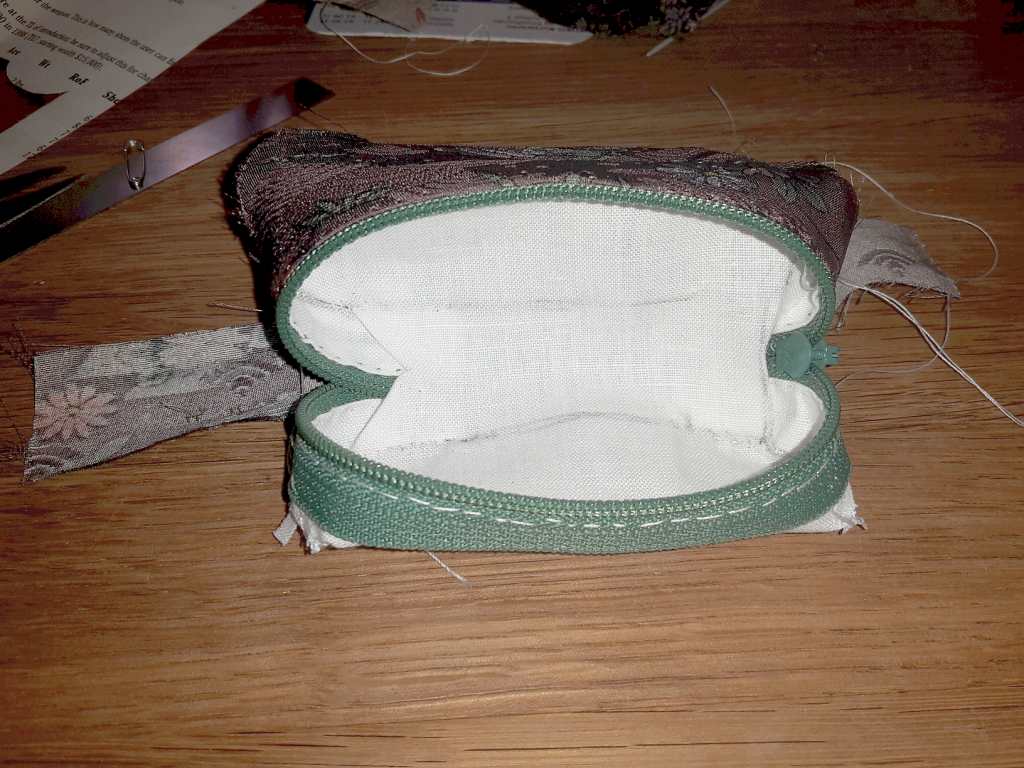
notionbag_3

And then... it was done, and ready to be filled.
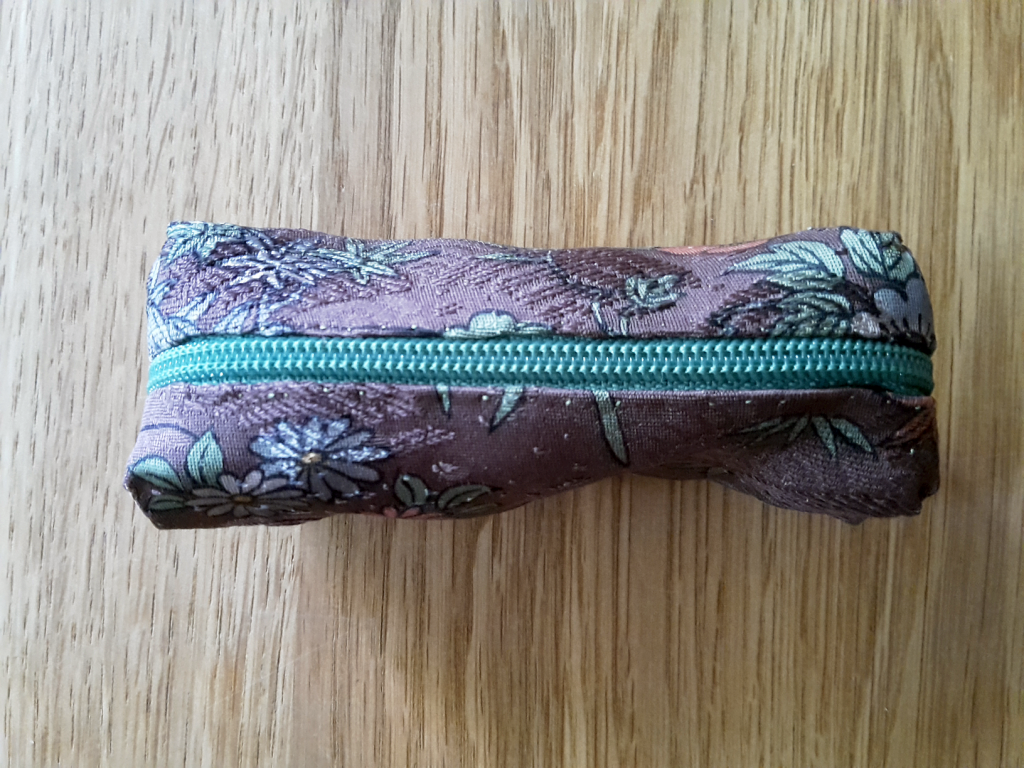
notionbag_done

It's small, yet roomy enough for all my stitch markers and darning needles, with space to spare for more. I'll probably add two tiny loops of silk fabric to the ends of the zipper for easier opening and closing, but altogether, I'm already very pleased with it!
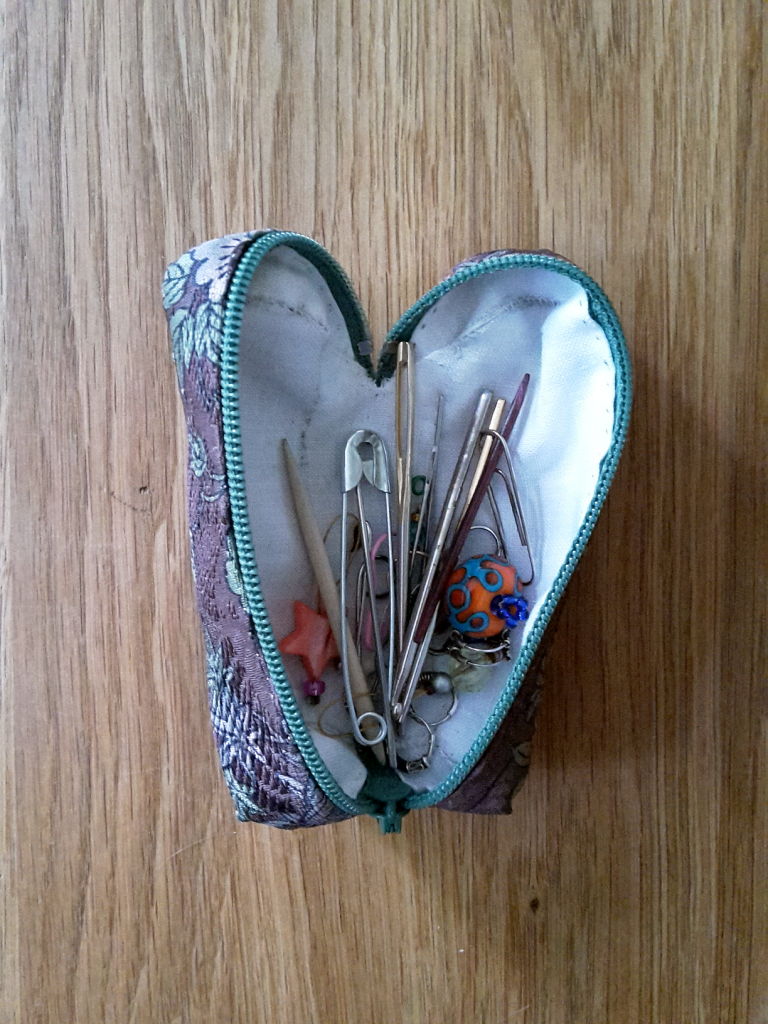
notionbag_open
0
MAI
23
3

More Wool!

Now that it's warm outside again, and there has been some rain, it's time again to clean some wool... and I'm beyond excited that I managed to get my hands on another rare breed's fleeces: I now have Waldschaf wool!

The Waldschaf, named for its origins in the Bavarian and Bohemian Forest as well as in the forested regions of Austria, is an old breed that goes back to the medieval Zaupelschaf. It has a three-part coat, with long, coarse hair, medium-length and fine underwool and short, bristly kemp. It's an absolutely fascinating fibre, promising to result in very interesting (and sturdy!) yarns, and the first batch of the few fleeces I could get is currently soaking. Once I have the first batch clean and dry, it will go into the shop and add to the rare breeds assortment of fibres that I have. (One of these days I will cave and do sample packs of the rare breeds fibres...)

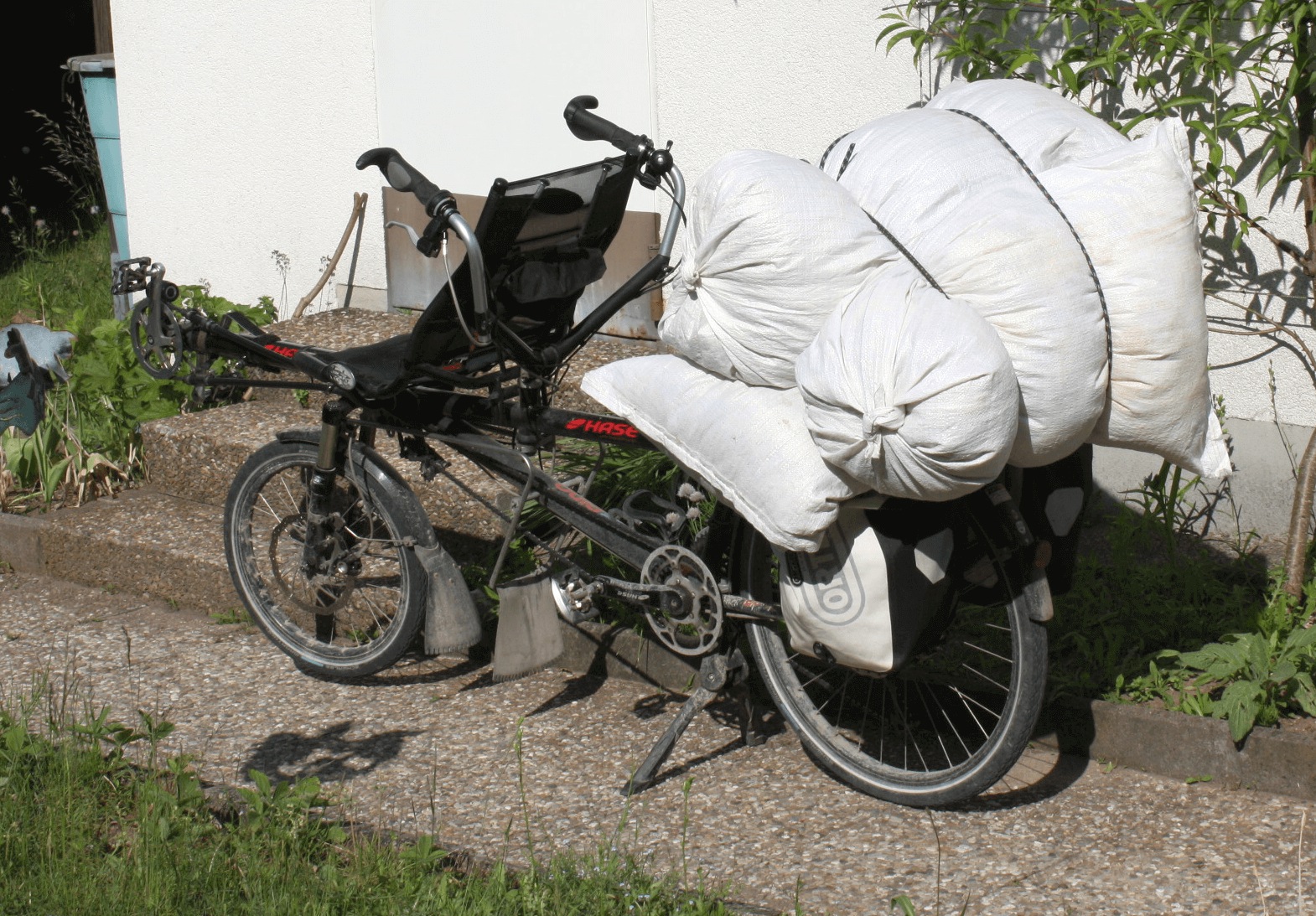
This, by the way, is regionally sourced wool from a society for the preservation of rare breeds - and this is how the wool got from their place to my workspace:

wolltransport

That was a fun bike ride!
0
MAI
17
2

Tablet Weaving Stuff.

It's been way too long since I've had a proper session of tablet weaving, trying some more to figure out a good method of weaving twilled pattens without a written pattern... but somehow, there's always too little time. (Saying "yes" to too many requests, trying to organise some more workshops, going to fairs plus having to keep up and to cope with all the current bureaucratic bullshit the EU tends to throw at people does not help either.)
There's some links for you at least, though, related to tablet weaving:

Lise Raeder Knudsen has a pdf book about Gotlandish Tablet Weaves on her website, free to download. It's in Swedish, with a very short English summary, but might still be interesting to you for the (slightly grainy, black-and-white) pictures of the originals. You might also want to check out her other publications in the list, which are partly available to download.

Tablet weaving, being slightly different from "normal" weaving, is a fascinating thing all around, and I always find it interesting how differently people approach the topic, and from how many different aspects it proves to be... complicated. Case in point: the attempt to write a tabletweaving simulation, published on the Penelope blog. If you are intrigued by how tablet weaving works, check out Sarah Goslee's explanation on the String Pages, she does a wonderful job at explaining the nitty gritty inner workings. (She also has an article about this, with pictures, in Ancient Textiles, Modern Science.)
0
MAI
14
0

The end is near.

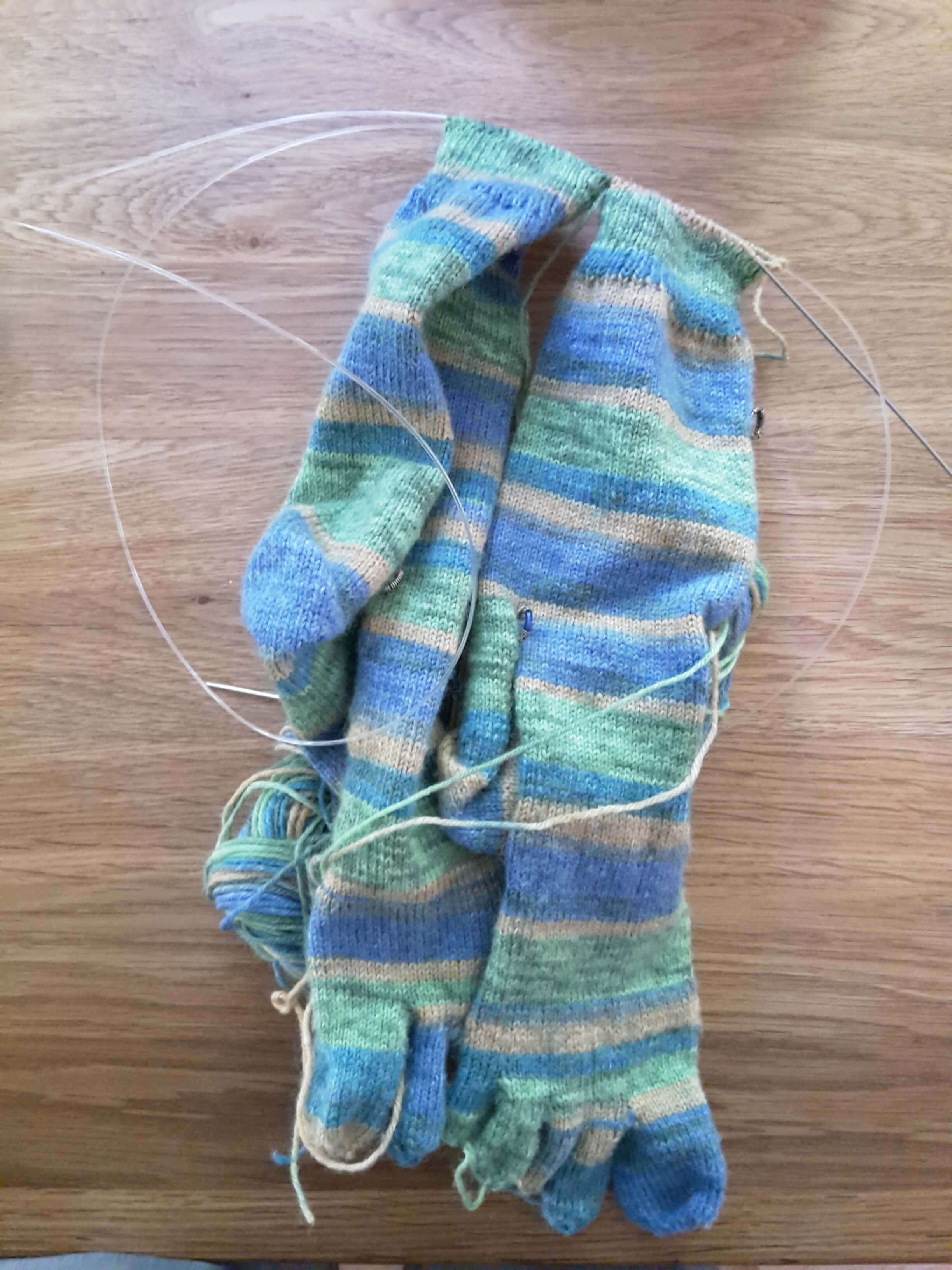
There's finally, finally an end in sight. I'm not the world's fastest knitter, and things are made worse by the fact that I tend to knit in spurts and then let the knitting mellow in some corner for a while when things get hectic, or other stuff takes priority, or I plainly don't feel like knitting at the moment.

There's just a few more rounds to go on the five-toe socks, though, and then it will be time to bind off.

20180509_090159

The next project is already lined up, the swatch is knit, well, actually there's four possible projects competing, and two swatches completed, but I'm quite sure which of them will win the race for now.

Did I mention I need to knit faster?
0
APR.
27
2

Spindles, now with optional notches.

One of the recurring questions about my spindle sticks, especially from modern spinners, is "Why don't they have a hook?" followed by "why don't they have a notch?" and "how do you fix the yarn without hook or notch?"

Finds of medieval spindle sticks are not too common (wood has that tendency to rot, and can be burned, and a spindle stick is not very spectacular so you'd want to carefully preserve it somewhere like you would a wooden altar, for instance) and they are published here and there, so putting together a good collection takes some rootling around. Even with surviving sticks, they are not always complete (the tips are often broken off), and then they may not be published in detail, with a drawing of the tips.

However... it does seem that the plain, un-notched and un-hooked spindle was very, very common, and I personally usually spin with the plain tips and am very comfortable with them.

There are instances of notched spindles in the medieval finds, though, and since I've been asked time and again about notches, I have finally looked through my sources, sharpened my little knife, practised some more... and am now offering optional notch cuts with my spindle sticks.

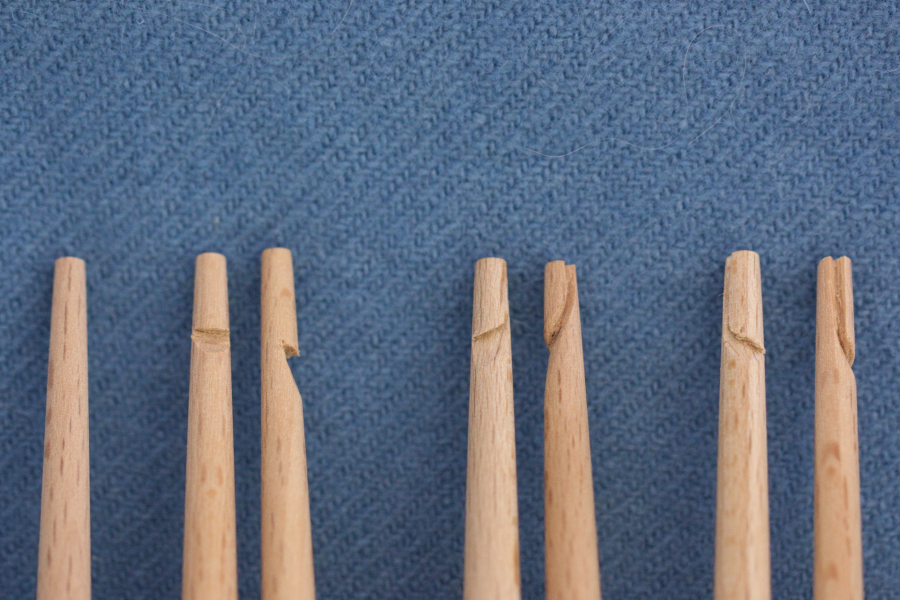
[caption id="" align="alignnone" width="900"] Notches! From left to right: plain un-notched tip, horizontal notch, diagonal notch for z-spun yarn, diagonal notch for s-spun yarn.


They are available both in horizontal, where they will very securely keep a half-hitch for either spinning direction, and in diagonal, where they will either keep a half-hitch, or, if the thread is thin enough and you wind it around the spindle in the right way, hold the thread all by themselves. I've tested the diagonal notches, and they usually need a bit of getting used to, but then they work fine. They accommodate a thin thread, and the notch sort of latches onto the thread to hold it securely enough for spinning. It's not as secure as the hitch, though, so the probability of the spindle slipping out and falling down is a bit higher throughout.

When it works, though... it's really, really fun!
0
APR.
26
0

Schafpate!

The wool I use for the socks you saw yesterday is a sock wool from Opal - with 420 m on 100 g slightly thinner than normal sock wool (which is why I'm using 1.5 mm needles instead of the usual 2 mm ones for normal sock wool). It's also made from German sheep wool, all production steps done in this country, and thus supports regional shepherds.

But there's even more... it's possible to support the shepherds and their herds through a Schafpatenschaft (sheep sponsorship, so to say). For 60 €, you buy one year of sponsoring; you'll get a special something worth about 20 €, a little goes into the overhead costs and tax, and about 25 € go into a fund for helping the animals and their herders with things such as buying new rams for breeding. They also get more money for wool out of that fund.

The site seems very transparent about where how much of the money goes, and there's also a list of projects supported with the sponsoring money - plus some very nice sheep pictures. I think it's a lovely idea!

Some info about the Schafpatenschaft was on the ball band around the wool I'm knitting with, and after reading it for the approximately umpteenth time, I've decided that this is definitely something I need... so now there will be a sheep called Herlind, somewhere. And I'm very, very curious to find out what the special treat for the sponsors will be!
0
APR.
24
0

Knitting, anyone?

(This post was intended to go live yesterday, but obviously I'm not good with numbers, including calendar numbers. Dates. So sorry for yesterday's blog silence - and I hope you enjoy knitting news a day later, too!)

Current knitting news:

toesocks

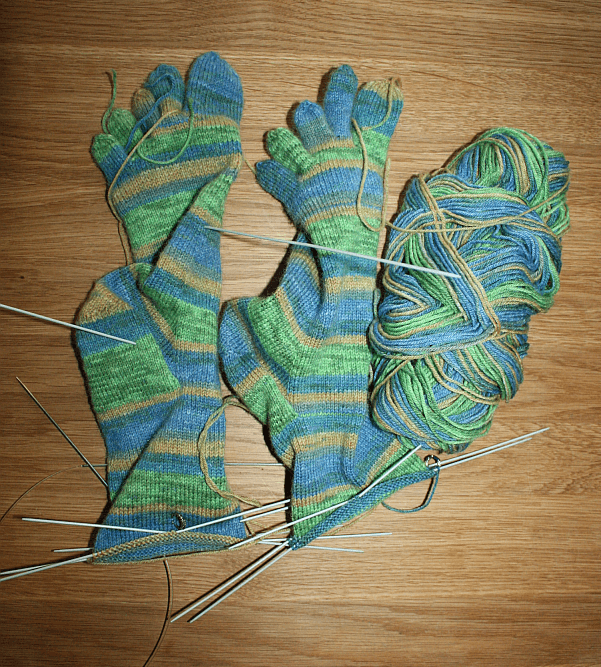
There is, as you can see, some sock progress. A little more on each sock, and I will call them finished (and then there's only a few last ends to weave in).

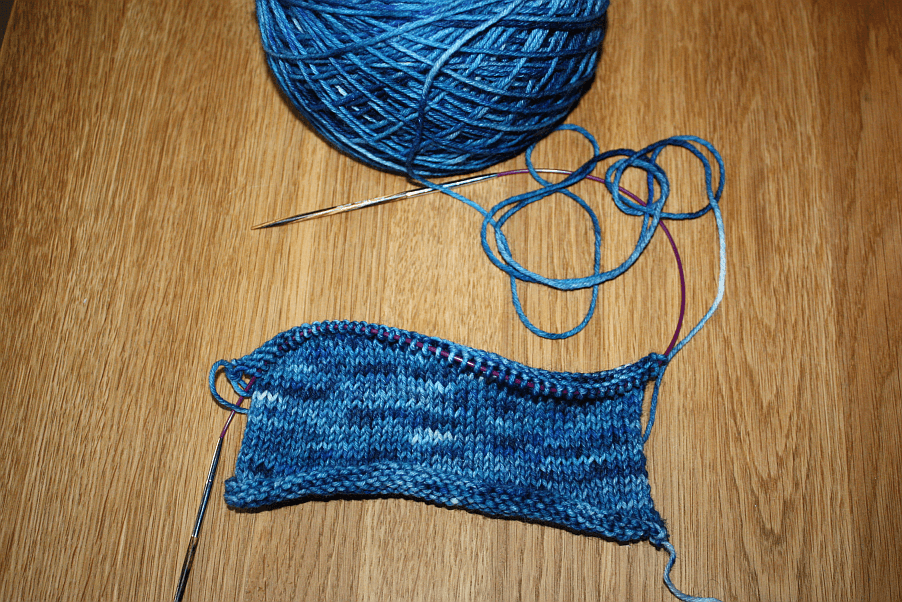
Other knitting progress is going on as well, as in "a swatch is happening":

blautopf_swatch

It is very blue, and very beautiful, and I have about 780 m of this yarn... which might be just enough for something vaguely sweater-like. We shall see once the swatch has been finished.

Speaking of finishing - there's a long article about grafting on the Interweave site that might be of interest for you.

Or if you're more into crocheting and/or into fancy stuff and/or into really, really old stuff, you might want to crochet your own copy of the famous Venus von Willendorf statue. Yes, really, there's a pattern for it, it's free, and the result really looks a lot like the original - it's amazing!
0

By accepting you will be accessing a service provided by a third-party external to https://pallia.net/

Kontakt