

Latest Comments

Guest - Katrin Sprang Discussion
18 September 2026
Hi Rachel, I have looked for more photos of you, but that was not very successful. I found a link on...
Guest - Beatrix Sprang Discussion
15 September 2026
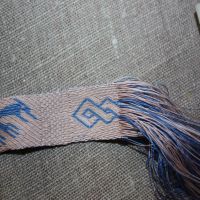
That lozenge pattern element is not a photograph, but a scan. So it should be to scale. But I pinned...
Guest - Katrin Sprang Discussion
15 September 2026
I was not referring to Rachel's reconstruction (is the reconstruction you refer to the one photograp...
Guest - Beatrix Sprang Discussion
14 September 2026
There is something Rachel did not mention. She told me: "Well, I worked with the measurements we too...
Guest - Katrin Sprang Discussion
14 September 2026
Well, this is certainly developing into an interesting discussion. Firstly, going from that lovely l...
DEC
10
1

Writing, and Academia, and Yog's Law.

I got an email comment regarding my post about publishing and money flow from last week - and it's probably worth it to go into a little more detail here.

There's three kinds of getting published - the kind where you get paid for (my favourite!), the kind where you don't see money, and the kind that you pay for yourself.

I've already written about what I think of paying for getting published. Now, for the record - I know that especially in academia, there are circumstances (like you have to get your thesis published, and it's such a fringe topic nobody will ever buy the book, probably) where you will end up paying for getting the book out. Personally, I think that is not good, and even unfair, and I would recommend that if you do need to get the book published with an ISBN number and stuff, try to find a publisher that will offer you decent conditions, or look into PoD and BoD services. (If you feel that you really want to cough up a lot of money just so some big-name academia publishing house's name and logo graces the spine of your book which will technically be on the market but cost a shitload of money so only libraries, if they, will buy it, feel free to do so. Myself, I have a strong opinion on things like that, which you can probably guess from what I have written so far.)

This leaves the two other options for consideration: publishing for free, and getting money for it. I will start with my favourite option. You write a book, you invest a lot of time and money, and nerves, and probably shed some tears or at least metaphorical tears, and wiggle so much on your seat you have pants-wear-and-tear to pay for, and all the black pixels in your computer get all worn out, and so on. You hand the book on to a publishing house, and they wear out some more pixels and chase around electrons and do stuff with ink and paper and advertisement designers and stuff. And then they do maths, and calculations, and then they send out a book, a real honest physical book that smells like newly printed paper, to bookshops and sellers and other people. The publisher deserves money for their work, and the booksellers need to buy their food and pay their rent, and the printing costs money and the warehousing too, so there's not so much money left once that's all paid for and done - but the author has also invested time and effort, a not inconsiderable amount of that, and that should also be rewarded with money. Not just with the good feeling of having a book out (because that won't pay the rent for the author either). I am not expecting the book revenue to add up to a honest freelancing hourly wage, and about every author out there will probably tell you that you have to write really well and really much and really fast to make a half-decent living off writing, and that is for novels and not for science books too - but I would very much like to have something coming in onto my bank account telling me that what I did is appreciated, and rewarded, and I will be able to go have some moderately priced sushi once a year, at the very least.

Now, if you are writing a PhD thesis or something similar, maybe in an esoteric out-there field that you love and few other people even know that it exists... you will have a hard time finding a publishing house that offers you money for it. When I was starting out to write my PhD, I knew from the very beginning that I wanted to publish it in a "normal", not a purely academic, publishing house. So from the very start, I tailored my writing towards that goal - and I was lucky on many counts with that: having a topic that does lend itself to being published regularly (since there is enough interest in that topic in the public), having supervisors who appreciated the style and voice in the writing and did not insist on "academese", finding a wonderfully supportive editor and a good, solid publishing house, and last but not least getting additional funding from VG Wort which made publishing the book at that price possible.

However, I have also written and published for free, plenty of times. All the articles that I have written? There was not a penny passed towards me. That is the third case, and it's the common method in academia - you publish, but you don't get paid.

Here's a snippet of the mail I received:

It does overlap your other articles on a fair price for craft though. By doing it for free am I lowering the costs for everyone? But by not doing it for free it wouldn't get done! The 'payment' I'm getting is things that money can't buy: I enjoy it, can see the longterm benefits from it (my work/ideas/research findings are published, I've gained experience, a reputation, it leaves the door of academia open and improves my ability to get in there later).
Ah, yes. I have firm principles in some areas of my life, and I have wishes that I know will not become true in others - and publishing (academic) articles and getting paid for them is definitely in the "I wish" category.
As in many things in Real Life (TM), there are shades of grey and not just black and white to things; and for some of the folks writing and publishing without getting pay for the article, it's not really an investment of time with nothing in return. If I am doing research and am getting paid for it, I have already been paid for my work - publishing for free is not working for free, in that case. If I am publishing without getting paid in money, I am (as mentioned above) getting non-monetary things back too: an article more to my name, my ideas get spread, maybe I can inspire some nice fruitful dialogue, some research gets furthered. For a freelancer, getting your name known better may be the difference between getting hired for things or not - so I could see it as an investment in a (very special) kind of advertisment for myself.
In my personal case, it might also enable me to get some copies of the book for re-selling, so I still have the chance of making a bit of money after all. What really bugs me a bit, though, is having published an article for free and then seeing said article as the online version with a really hefty price tag on it. Yes, there are costs to the publishing house - but sometimes these prices just seem unrealistically high to me.

But if you don't submit to this? We are, as academics, living in a culture where as a rule you publish your research and articles without getting money from the publishing house. You may get offprints or reduced prices for the printed article, but there is no money flow toward the author; in some cases, there is even Unlawful Flow according to Yog. Publishing for no money is not a too big deal for those who get paid for their research work, as much or all of that writing time is already paid for; it is, however, a serious investment of time with no direct revenue for an independent researcher. So the question is, in some way: can you afford to publish? On the other hand you cannot afford not to publish - to keep in the loop, to keep your doors open should you wish to stay or return to classic academia, to build up your reputation. And to get your research findings out - because unpublished research is a kind of a waste, too.
Best for publication is thus something that will get widely known, not just an obscure little place in the Internet, or a small regional journal that will be very hard to get in a few years' time, if you actually manage to learn that something of interest was published in there.
And the big names of journals? The ones that get read widely, and have a high impact? Those are often the real pricey ones, where you have a hefty price tag on each single article - even the nonprinted e-version.

So if I get the opportunity to publish an article about the Spinning Experiment in a big, widely-read journal - I take a deep breath, and the opportunity.

Have you published your research for free? How do you feel about that situation, and the question of money flow? Please let me (and your fellow readers) know in the comments - I'd love to hear your opinion!
0
JAN
16
1

Back home from Cardiff.


It feels enormously, deliciously nice to be back home again after several weeks of being only there for a very short breather and then off again to something somewhere. Even though I enjoyed all the away-time a lot – Christmas with the family, New Year with friends, the EAC with colleagues – I am now really content with being home for some time, getting stuff into order and taking care of all the interesting things that were on the back-burner all this while. And catching up on cuddling the cat!

But you probably want to know about the conference much more than about how happy I am to be home again, so…

 The EAC took place in two locations - one of the university buildings (which was ample room for the ~100 participants of the conference) and at St Fagan's, a little ways outside Cardiff. It started with a very nice meet-up in the Pen and Wig on Thursday evening and then went into a tightly-packed programme of papers all Friday long. The topics were varied and interesting, and I enjoyed most of the papers very much. (With a few, I had some trouble understanding everything, since the speakers sometimes mumbled a little, but that's to be expected.) 
I especially enjoyed the paper about the ovens used for cooking on the Mary Rose, which was a totally astounding contraption that I'd love to cook in. Well, maybe not really, seeing as it's for feeding about 500 people.

After the papers, there was wine, snacks and a poster session before almost all of us walked off to a conference dinner.

Saturday we were taken to St Fagan's in a bus that seated 70 persons (though the persons it was intended for were much younger than archaeologists usually are), which was a little cramped but must have looked very amusing to anyone watching the bus spit out almost 70 adults instead of the schoolchildren that its bright yellow colour would lead one to expect.

The papers at St Fagan's were as nice as those the day before, but unfortunately the weather was not. Any open air museum will look much nicer in sunshine and good weather than in fog, grey clouds and drizzling rain - but I still enjoyed having a little walk around the premises and peeping into a few of the houses.

As all conferences, this one was too short, and unfortunately I was quite tired and not up to my best networking abilities. There's always the trade-off at conferences between a programme packed full of papers*, getting much into a short time, or leaving lots of room for questions and socialising at the cost of having fewer presentations. Cardiff EAC clearly opted for a full programme which left me more exhausted than I would have wished. So somehow I have the feeling that I could have gotten more out of it - but then one never knows what will follow later. At least I did manage to deliver my talk, do a spinning presentation and meet a good number of new people, as well as catch up with old aquaintances. And hear about a number of very interesting topics!


* It should be mentioned here that all the speakers kept to their allotted time and did not overrun - which was amazing!
0
OCT
05
1

There, something happened.

As usual, there was the discussion in Tannenberg. You know the one. The one about pricing of goods and services in the historical crafts sector.

I've had this discussion so often now that sometimes I fail to fire up, but most of the times I still get going and tell people what I think. (You can read what I think - I have posted a series about fair prices in crafts a while ago, the link is in the sidebar.)

Sabine of the Wollschmiede and I have been preaching this for a few years now, and at some unknown point during this time started to half-jokingly refer to us as frontpersons of the "Liga gegen Selbstausbeutung im historischen Handwerk" (League against economic self exploitation in historical crafts). Well, we actually started out referring to the textile crafts, but it soon became clear it's not limited to this (even though there's more to that specific minefield).
In Tannenberg, I made the joke again, within hearing of a few more friends and colleagues - and they loved the concept. I was promptly told that yes, they'd join the League, and a logo was needed.

So from all this, a facebook page has come into being, and there's a logo free for everyone declaring him- or herself a member or supporter, to copy (using any materials and tools and technique) and display at the sales table, the stall or wherever else.

We hope to help with the discussion of fair wages for historical crafts with this, and I hope it will enable more crafters to actually charge a proper, living wage for their professional work - and keep some hobbyists from breaking prices because they are "just doing it for fun". After all, it's even more fun if you get respect for the work, and paying a fair price is one form of showing respect.
0
MAY
05
0

Crafting and Fair Prices (again), part VI

 After the break for Freienfels and the CfP yesterday, here's finally the next post in the Crafting and Prices series - and probably the last one for a while.

Things are fairly easy from the buyer's side, as described in the last post - you either are willing (and able) to afford something, or you aren't. If there is no cheaper choice and you need (or really want) something, you have to pay whatever the asking price is.

If you are the crafter or the seller, you will have to figure out how much you need to charge per hour or per item to make a living. Pricing is a fickle game, because the market might be small, and there's competitors, and there's traps and pitfalls everywhere. If you charge too little, you ruin your own business and that of your competitors as well. If you charge too much, you might not sell, or might not sell much. And it's hard to tell whether you just need to find customers yet, or if your quality is too low for the price, or if there are other reasons why people do not buy. If you do not hold out long enough, or run into a streak of luck now and then, things can look pretty grim.

And the main problem in pricing, or at least one of the main problems for craftspersons, is the de-valueing by society. The system of demand and supply in itself has been tested over hundreds of years, and it does work. Things that are scarce are of higher value; things that take a long time, a master craftsperson, or lots of resources to make are scarce, and thus of high value. Items with a high value go for a high price, regardless of the reimbursement system.

Today, we have a trading system that can take into account the time and resources spent on developing and training, and that can make value easily understandable and translatable. It's money. A universal trading concept that envelops our whole world, that enables us to trade with somebody from the Philippines and somebody from Norway and somebody from Japan and US and Germany. Basically, there's nothing wrong with the system of supply and demand and currency as a general barter item.

The problem is one that has been there also for ages, and maybe only grown stronger with our globalised society: It does not take much to break the value of something. You only need to flood the market with something sold way under price, and people will flock and buy the cheap alternative. This will mean that you lose money at first. But if you are a large-scale entrepreneur and can afford to invest a few millions, or billions, or whateverillions, this is just a starting investment - because if everybody buys the item from you, the other people that offer the same goods, but for a fair price, will suffer. And eventually, they will have to give up. And once the competition is gone... you can up your prices however you like. Fat profits.

If you look around, that has been done again and again, on large or small scale. Buying good value for little money is a very tempting thing, and it's just human to do so. But there's a difference between getting a good (and still fair) price and buying something for much less than the asking price should be. Because the latter... it breaks the system. And we are all part of the system.

Buying for way under price, in time, will come back and kick us in the butt. Please consider this the next time you are tempted to buy cheap - especially textiles, but also other crafted things. Paying fair prices can help us all, while paying too little makes the system suffer. Buying fewer things, but for a fair price and in high quality does lend a different quality to life. It's not always possible, that is true - but do give it a try for yourself, and you will see that one-of-a-kind things, where you know the living breathing craftsperson who made it for you will change the way you look at things, and the way you value things.

We can break the system easily. But we can also be part of a revaluation of crafts, and handmade things, and high-quality things. In a world of mass-production, we can make crafted, bespoke items a status symbol and prestigious thing again, and craftspersonship a thing of value.

Think before you buy. Help making our world a better place to be.
0
APR
29
0

Crafting and Fair Prices (again), part V

read the start of the series

I left off yesterday with the question of an hour spent doing something that is part of general education and an hour spent doing something that you invested a lot of time for learning is really the same value.

If everybody knew that they will never get reimbursed for the time spent on learning a trade, on developing something, but only on the hours and materials used for actually producing the developed thing - what would happen? Would you like to spend a year living off your savings, knowing that you will never ever get back what you spent? Can anybody afford that?

If learning and researching and developing new solutions do not hold the promise of reaping the benefits of hard work and lean living later on, they lose a lot of their charm. If you could work one hundred hours on improving a loom to work half as fast again on the new loom, would you do that to churn out half as much cloth again - but lose the hundred hours and not get more value for your work, because you are paid in time-swap values, and not by metres of cloth? You lose one hundred hours' worth of value. Or you could use your old loom and get time-swap value for these hundred hours. It's an easy choice, I think.

Learning, reasearching, improving things and trying out new solutions is a cornerstone of our western culture. Learning of - apprenticing for - a specialised skill is the very foundation of our society. Division of labour means that I do not have to do my own dyeing, my own planting of food and harvesting, my own blacksmith work and tanning work - I find a trade that matches my interests and talents, and then I can trade with others. Everybody wins, because everybody gets better quality items: Fabric that is spun and woven properly and holds up to wear; crops that are healthy and nutritious because they were grown by an expert; knives that will cut through material, holding a good edge for a good while. Humans are not totally stupid all of the time, and I am convinced division of labour set in at a very, very early stage. It's just natural to ask your neighbour if he or she would be willing to tan this piece of hide for you, when in exchange you can retouche their household's flint scrapers into that new, more efficient form.


Learning, researching and developing have always been a valuable investment in our culture - because they hold the promise of more benefits later on. Of reimbursement. Because we are not calculating hours spent on producing something - we are calculating value of products. And that value of products is more than just the sum of time spent on the piece and materials used for making it - it's also the creativity of the maker, the years of research and experience, the special talent. And, of course, something can rise in value because it is coveted by a society and sink in value because it is not.

The value of an item is never objective. It is always a very subjective thing, and it can be vastly influenced by a person's current situation. If you are stranded in a desert and you really, really need water, you will probably be willing to pay a much higher price for it.

There's a scene in Out of Gas from Firefly that does say this beautifully: "Catalyzer's a nothing part, Captain." "It's nothing 'til you don't got one. Then it appears to be everything."

And this is the basic problem, and the ultimate opportunity as well. If we are trading value of products, I have to decide upon a thing's value for me and my situation, and that will tell me if the price asked - no matter in what form that price is to be paid - is acceptable for me. To evaluate the price of an item, I have to know a bit about it and its quality - whether the material and the production quality are good, and whether it will be as practical or decorative or whatever as it should be.

For this, I need to know things about the item. That will be no problem if it is something that I commonly work with - like textile or a textile tool; I know what I am looking for and I know what to look out for. But with something that I am no expert in? That's where I have to rely on the craftsperson selling to me. Or the sales agent. Or whoever does the selling - to give me good advice about the thing I need and to help me find the best match for my needs, for a price fair to everybody concerned. And then it's up to me to decide whether I want to pay this price or not.

continue with part VI of this series

0
APR
28
2

Crafting and Fair Prices (again), part IV

read the start of this series 

Now... if things only were simple.

I have written about fair pricing for crafts, and I have written about values attributed to crafting work today, and organic cotton (and I can't believe that I never wrote about that before!) and things have sparked lively discussions both here and on Facebook (you will need to log in to Facebook to see these).

One thing that has come up in the FB discussions is the possibility to just swap time worked - ten hours of work for ten hours of work - plus reimbursement for the materials used by the other person for your piece.

That can be a valid option, and I know that "timeswaps" like that are successfully done both in Living History groups and associations and in private organisations, like Local Exchange Trading Systems. Those swappings of time value work on the basis of an hour spent being an hour spent, regardless of whether you are cooking and baking, working in the garden, butchering a pig, making a Fabergé egg, repairing a car, re-wiring the installation in a building, or writing a short story.

Because the work time invested is the same. Easy concept. No debates, no haggling, no unfair de-valueing of the housewife's baking a cake.

But is it really the same value? Or are we getting into the next bit of trouble and unfairness here?

I learned how to cook - well, the basics at least - by helping my mum and grandma at home, when I was young. I also learned how to bake cakes. My dad taught me how to gut a fish. I learned how to pull weeds in the garden and how to use a power tool for drilling and sawing. I learned how to thread a needle, sew on a button and mend a rip in a garment. I also know how to fold a napkin into a pleasing shape.
Those are basic skills that I gleaned either because it was part of my general education and the process of my growing up. Learning these things were a part of daily life, no big chunk of extra time set aside for them - just an hour here or there maybe, or a cooking procedure that took a minute longer.

Then I went to university to study medieval archaeology. I studied for years, learning things every day, honing my academic skills, writing a master's thesis and, later, writing a phd thesis. I went on conferences and I toured Scandinavia to get in contact with colleagues and to see medieval garments in museum depots. I worked on how to reconstruct medieval tailoring for years, doing test run after test run, buying fabrics and threads for this work. I wrote on my phd thesis for four years, after all the years of study before that. I did not get a funding, or a stipend, or any other money from the community or state or economy - my family supported me during that time, and I know I am insanely lucky to have such a wonderful family.

But does this mean that one hour that I spend baking a rhubarb pie after looking up the recipe in the internet really the same worth as one hour I spend teaching the medieval tailoring techniques that I reconstructed? Where is the worth of all those years? Should ten years of work to develop something not also be honoured in some way? Ten years of daily costs for food, lodgings, work utensils and supplies for research? Who pays for these? If I can work for thirty years now, shouldn't I be able to get back the expenses for the ten years spent preparing beforehand? Wouldn't that mean that I have to charge one-and-a-third hour time value for each hour I spend now doing the things that I learned and prepared for in these ten years?

continue with part V of this series

0
APR
27
1

Crafting and Fair Prices (again), part III

read the start of this series

I'm now going to wander a bit - but I'm still staying the same problem range. Because the question that will come up eventually when talking about crafts and pricing - especially textile crafts - is... why? Why is it so hard to ask realistic prices? Why does textile have to be so cheap?


The problem we have now is that what most potential customers deem a "fair price" is a price not too far from the cheap, store-bought, drenched-with-child-worker-sweat-and-blood stuff.
I recently saw a shop offering t-shirts for adults for 2.50 Euros apiece.
How can a t-shirt be sold for 2.50 Euros? How can that bring profit all along the chain - the shop, the transport, the spinning and knitting or weaving process, the dyeing, the planting and harvesting of the fibres? For 2.50 Euros end-user price, somebody has to lose somewhere out there. If not more somebodies.

And the end-user prices that are so low also affect the view of hand-crafted textiles. If next to no money is charged for something store-bought that is fashionable, new and about perfect, people ask themselves why they should fork out more money for a rustic handmade garment or textile? After all, Granny used to knit, and she just gave her stuff away like that. And you can buy an item like that in store Y for so much less money!

The thing that gets forgotten in this chain of thought? If you can buy a textile item or garment really cheap, somebody always loses. In one case, it's the crafter who loses money, time and self-esteem. In the other case, it's the farmers and workers in third-world countries. Farming cotton, the number one vegetable fibre today, is still mostly done with manual labor - and with a waste of resources that is nauseating. Oh, and let's throw in some bondage and slavery while we're at it, plus a lot of pesticides because cotton is really quite a finicky plant.


White Gold - the true cost of cotton from Environmental Justice Foundation on Vimeo.


If you are a textile crafter and buy ultra-cheap clothing, you help making those farmers lose. And you lose as well - because every single garment sold because it's so cheap will make the great chain stores want to sell more garments at that cheap price (or even cheaper). And this reinforces the communal impression that textiles are not worth much - or anything.

If you are a textile crafter and buy textile things at a price under value, you undervalue your own line of work. Your own set of skills. Your own use of time.

It's your own choice whether to do that or not.

continue with part IV of this series

0

By accepting you will be accessing a service provided by a third-party external to https://pallia.net/

Contact