Latest Comments

Guest - Katrin Sprang Discussion
18 September 2026
Hi Rachel, I have looked for more photos of you, but that was not very successful. I found a link on...
Guest - Beatrix Sprang Discussion
15 September 2026
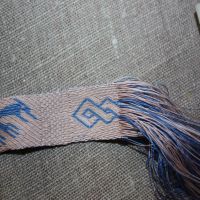
That lozenge pattern element is not a photograph, but a scan. So it should be to scale. But I pinned...
Guest - Katrin Sprang Discussion
15 September 2026
I was not referring to Rachel's reconstruction (is the reconstruction you refer to the one photograp...
Guest - Beatrix Sprang Discussion
14 September 2026
There is something Rachel did not mention. She told me: "Well, I worked with the measurements we too...
Guest - Katrin Sprang Discussion
14 September 2026
Well, this is certainly developing into an interesting discussion. Firstly, going from that lovely l...
MAR
18
0

Close-Up Altar.

I've been doing some more sniffing around on the 'Net for a work project, and I've come across this very nice project: The Rode Project, featuring two altars by the late-medieval artist Hermen Rode. One of them is in Lübeck, the other in Tallinn, and both are absolutely spectacular - and you can have a really close look at them in the Rode Project.

Both are from the late 15th century, and you can virtually open them to enjoy the altars in all their aspects - plus see the paintings in infra-red or in normal light. And, of course, marvel at the wonderful things that all the people are wearing!
0
MAR
17
0

Free Books!

I've done a little research work these past days, and I've stumbled across, the title might be a hint, free books!

The University Publisher of Kassel University offers books (dissertations, but other types as well) both as printed volumes and as pdf downloads, the latter being entirely free. You can see the whole programme of the publisher here.

Two books that I came across that may be interesting for you, too, are Presche, Christian: Kassel im Mittelalter and Wolkewitz, Ursula: Die gravierten Messinggrabplatten des 13. und 14.Jahrhunderts im Bereich der norddeutschen Hanse - ihre Herkunft und ihre Bedeutung.

There might be more, but unfortunately there is no good search function for the catalogue, and I have not had the time (nor the inclination or patience) to click my way through the long list. In case you find something interesting, too, please let the rest of us know in the comments!
0
JAN
15
0

Friday Links.

It's Friday, the cat is sleeping, and everything is "back to normal" as in "I thought I'd get much, much more done this week".

At least we have proper winter weather here at the moment, with temperatures below zero and a nice snow cover on the ground. That makes cycling a bit slower, and somewhat both more exciting and more exhausting, but it is feeling really good to have season-adequate weather for a change. (It's also really, really good for the bees, who need colder weather so that the varroa mite situation can be kept under control in the hives.)

So while I'm trying to catch up a bit, here's some links for your delectation and procrastination possibilities!

British History Online is offering all their research free online until April, to make things a little easier for everyone during the lockdown. The online content includes the Calendar of Close Rolls, covering the reigns of Henry III to Henry VII (1244 to 1509).

If that's not colourful enough for you, here's a textiles, garments, and dye glossary. It's an ongoing project for terms from the 17th century.

There's a seminar series called "The Silk Road seminar series", run via Zoom, on several Mondays and some Fridays. It's hosted by the UCL Institute of Archaeology; find out more about it here.
Finally, here's the archive of the Zeitschrift für Lübeckische Geschichte.

Have fun, and a nice weekend!
0
DEC
14
0

Janet Arnold Awards - Application Deadline Jan 15

I've stumbled across a mention of an upcoming deadline for the Janet Arnold Awards - that is a grant given out by the Society of Antiquaries of London. The current awards will focus on dress in colonialism and its legacy; deadline for award applications are in January 2021.

If you think that might be interesting for you, or if you know someone with a project that might be given a grant by the foundation, check out their info page about the awards. And in case you apply: Best of luck!
0
DEC
08
6

Blogiversary!

It's hard to believe that it's blogiversary day again, and that this blog is now another year older. I'd never have imagined that it would stay an almost (work-)daily part of my life for so long when I started it back in... let me check... 2008.

So - happy 12th birthday, Blog! There might be some bit of celebratory cake this afternoon here, because any excuse is good for having cake. This certainly counts as one. And you, as a reader of this, are obviously also provided a reason to have cake, too. Having to celebrate this blogiversary, and so on.

So... thank you for reading, and for commenting here! It is always delightful to get comments, to know that the things here are being read and that some of them are proving useful.

By the way - do you have any favourite birthday cake recommendations?

 
0
DEC
07
2

Have a Heraldic Rabbit Hole.

We have three doors in our home that have a glass inset, and they are each decorated with a coat of arms. When we moved in, we were told that these had some meaning for the family who built the house and lived here in the first place, but we never looked into it more.

This weekend, after being told that one is the coat of arms of Cologne City, we had a little rootle to try and find out more about the others. It was interesting, even though we remained unsuccessful - it's not so easy to look for specific arms when you don't know how to describe them, and even then it can get complicated.

I've always been half-amused and half-fascinated about the special language of description used when talking about coats of arms. Colours are not red and blue, but gules and azure; there's rules about using metal (white or yellow) and colours on each other; there's bits that are to be included in the description, as they are relevant for telling one variation from another, and bits that are down to artistic license. So I know enough about heraldry to know I don't know much at all - and not sufficient to use portals and search engines to track what we have on these doors.

If you'd like to have a look at some coats, you can do so in the wappenwiki.org, which lists coats of arms from Europe and beyond, starting from those dating back to 1100. It does not have the blazons, unfortunately.

An introduction in the different colours, arrangements, and motifs can be found here. More about the art of describing, also called blazoning, is offered on the website of the Heraldry Society.

There's a bunch more pages, and registers, and databases on the 'net. Enjoy the rabbit hole!
0
NOV
30
0

Linkapalooza!

It's time for a link onslaught again - there's way too many tabs open here with things that are hopefully interesting for you, too!

If you understand German, here's a hilarious video about the (not-so-hilarious) ongoing debate in the EU parliament about the budget. It will be... interesting to see how this will end. I do hope that the 25 states who have not vetoed will not give in; that would not only be a bad thing but also the wrong signal for all bullies.

If you live in Germany and share my feeling that there's not enough happening to slow down the climate change, you can sign a petition for the Bayerischer Landtag asking for a greener distribution of funds. Here's the text of the petition, and here's where you can sign.

In case French in Medieval England (and learning it) sounds intriguing to you, take a look at this site, which is about the "Tretiz". There's also a Twitter account to go with it.

More old manuscripts, all digitised, can be found in the Virtual Library of Lauresham. The monastery in Lorsch once, in the Middle Ages, had a large number of books and was quite famous. It's not possible to bring the books back to Lorsch in reality, due to a number of reasons, but digitisation of manuscripts allows a virtual reconstruction of the medieval library - which is free to access.

And now on to some other, more textile-y stuff: There's a Research Center for Medieval Nubia, and it has an online textiles database. There's also an interesting article about textile analysis on the page, in case you're not familiar with this and would like to read an introduction.

More textile stuff: Eventbrite has tickets for several events by the Gawthorpe Textile Collection, taking place as online presentations. You can get insights into the collection for a very affordable 5 GBP per ticket, and the money goes right back to the collections, helping to keep them alive.

Are you a medievalist, and on your own? You might want to check out The Lone Medievalist, which is committed to support those of us not within a local academic network of medievalists, and help form a network.

And finally, if you're using graphs in any form or way, or colour-code things - here's an article about how to choose colours that will let your work be readable to colour-blind people as well. There's not only an explanation about what colourblindness is, and how it happens, but there's also graphics showing what the effects are (as in this is how the colour scale looks with condition X or Y).

That's it for now - hope there's something for you in the list!
0

By accepting you will be accessing a service provided by a third-party external to https://pallia.net/

Contact