Latest Comments

Guest - Max Mustermann The True Cost of Driving a Car.
06 November 2026
Great breakdown — the non-fuel costs are exactly the bit most people forget when they compare cars. ...
Guest - Harma Phew. Now it gets involved!
21 October 2026
Have fun at these events.
Guest - Aislinn Dyestuff Citizen Science.
09 October 2026
This is a great project. I look forward to the results. Thanks for letting us know.
Guest - Aislinn Time for...
09 October 2026
Looks delicious!
Guest - Katrin Sprang Discussion
18 September 2026
Hi Rachel, I have looked for more photos of you, but that was not very successful. I found a link on...
DEC
04
0

Monday! Again!

I can't believe it's already December! I can easily believe it's already Monday again, though. These pesky starts-of-the-week keep coming with irritating regularity, somehow...

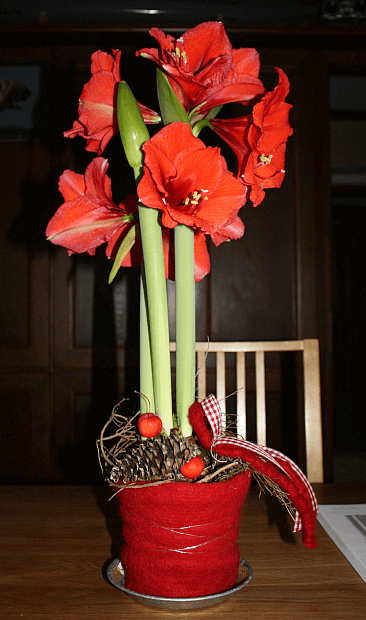
So in case you, too, are suffering from oh-no-it's-Monday-can't-it-be-Saturday-still-itis, here's a consolatory flower picture for you:

amaryllis

...and I hope you have a successful Monday!
0
NOV
30
0

Winter has come!

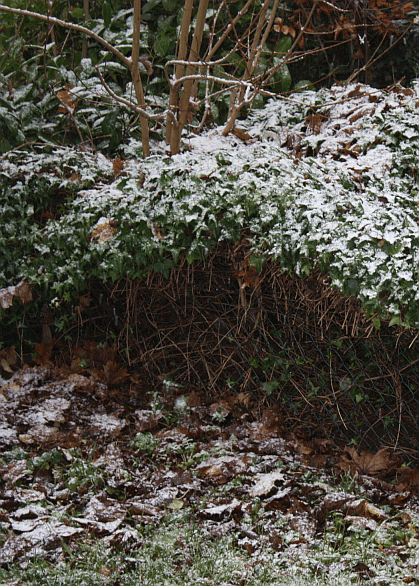
Winter now has actually and finally come - it's snowing outside! Just after I sort of complained yesterday that there is no snow yet.

It's not much, and not looking spectacular yet, but it is proper, honest-to-goodness white stuff falling from the sky.

schnee

... so I guess the time to change the tyres on the bicycle is also drawing near...

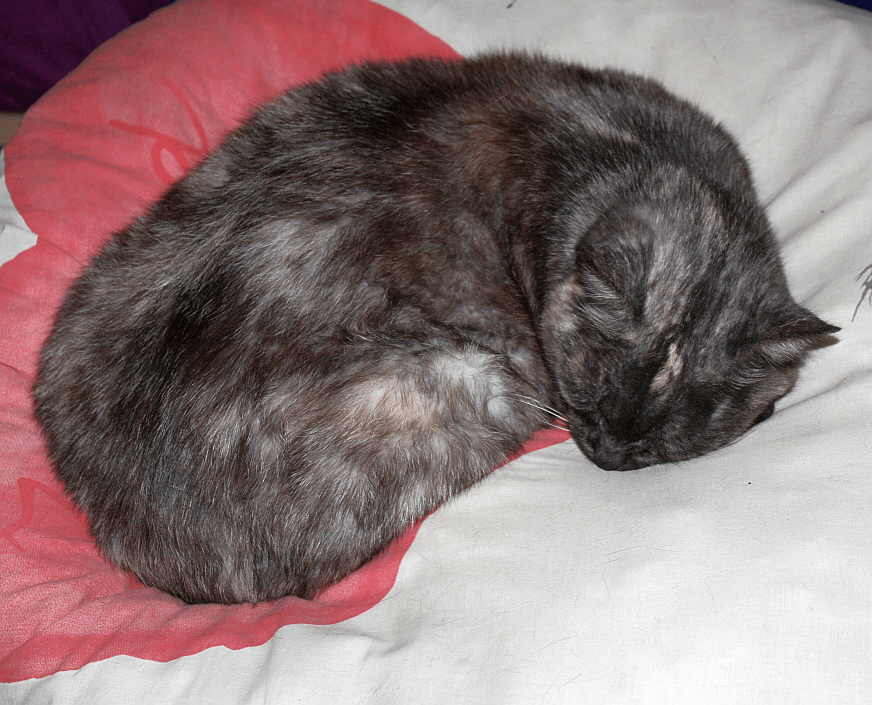
Meanwhile, with such weather outside, guess what the little cat is doing?

Yes. Right.

sleepingcat
0
NOV
20
4

More celebrations.

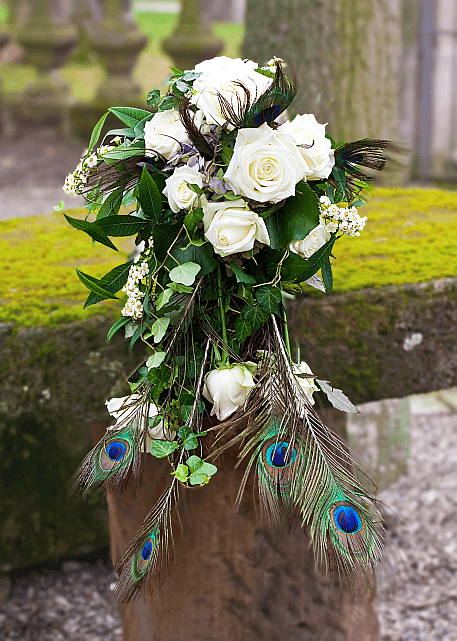
Seven years ago today, the Most Patient Husband of Them All and I had a party. To celebrate.

brautstrauss

As you do when you are getting married.

So guess who's not doing any work today? And celebrates, again, instead?

Because finding someone you can talk to, and laugh with, and share all your ups and downs with; someone who copes with your small and large faults and peculiarities; someone who is happy when you are and would like to lift you up when you are down - finding someone like this is the greatest thing on this planet, and it should be appreciated and cherished day by day.

Obviously you can't have a party every day because of it. But you definitely can once in a while. Also a great reason for having some cake! (If you need a reason for cake, that is...)
0
OCT
24
0

Back home, and it's time for a breather.

I'm back from a really wonderful weekend, teaching tablet-weaving and hand sewing and fingerloop braiding and spinning, and having nice chats and lots of interesting questions and discussions, in splendid company and with a lot of coffee.

I've also gotten a little brain fart for a motif I could try on my brain bender tablet weave... the Franconian coat of arms.

And now I'm in the home run stretches for organising the European Textile Forum, and getting my presentation ready, plus handling the usual in-the-background work stuff - and realising that there's a lot for me to do, in not so much time.

So I'll be taking a little break from blogging, and I'll be back telling you about things again in a week, when I'll hopefully have dealt with all the urgent stuff!
0
OCT
18
1

Crafter's Bias.

I mentioned the hard and firm rules in the post about tablet weaving a few days ago, and that is just the thing to segue off into some ponderings about what I call "Crafter's Bias".

When you are doing craft stuff for a living, you want to have a suitable, efficient way of working. Usually, you get taught this way when you are learning the craft, and you get to know other ways to do it, other tweaks, maybe other tools when you are meeting other colleagues, or (what used to be a thing much more common than today) when you are travelling as a journeyman.

So while you might have a bit of time to experiment once in a while, and might shift things slightly, work doesn't usually leave you with lots of extra resources to fool around and try different things and methods. You might also not be aware of there being other methods - or at least not think actively about it. This, together with sort of getting set in your ways that you know will work for you and that can be calculated properly, can lead to the feeling that there is one way to do it - your way. Because, obviously, that's how it's done, right?

When you are, say, an archaeologist specialising in crafts, you might also try to reconstruct how things were done back when. This means you look at different tools, different ways to handle one process (including ways from other parts of the globe), probably try out stuff yourself, and generally keep an open mind regarding procedures, tools and methods. Basically, it's the exact opposite mindset to Crafter's Bias.

Fun facts: I have situations where I have Crafter's Bias, and I suddenly find myself go "That is how it's done! No discussion! ... Oh. Wait. Erm... that is one way to do it. There might be several other ones, we can't tell, but that is how I do it, it works for me, and it has so far worked for a lot of other people I have taught it as well." It's even funnier when I see a different method and my first thought is "But but but that is wrong! With a capital W!" until the archaeologist kicks in and tells the crafter to cool down and breathe, there's more than one way.

While it might sound weird and restrictive at first, Crafter's Bias is actually not a bad thing. I see it as a sort of evolutionary development; these also sometimes look weird from a rational perspective, but from the perspective of the species' survival, it all makes sense. Crafter's Bias keeps you from going off on a tangent too much, losing time, money and energy on trying out things that might work or might ruin your current project, so it's actually a sane thing to have if you work crafts for a living. It won't prevent you from accidentally stumbling across a better method, and also not from picking up tips and tricks from colleagues, or from developing your own little tweaks and tricks - but it gives you a solid, firm base that you work from.

Having the One True Method (TM) also makes teaching a lot easier. Students have to get a feeling for tools and materials as they start out, and having One Way shown to them will be easier to handle for most than getting a bouquet of methods from which to choose. It also means that you can teach a craft by rote - without having actually understood how things work, and why, in depth and detail.

Take knitting, for instance. There's a multitude of ways to arrive at a plain stockinette stitch; there's a huge number of increase and decrease possibilities. If you have a thing for motions and methods and structures, that is utterly fascinating and fun to explore. If your main goal is to make somebody a functional knitter, though, you only have to teach them knits, purls, one increase and one decrease. There, you're done, you can knit anything around. If you now standardise the way the stitches are formed by declaring one method the One True Method, it is easy to teach - you only need to show the motion. No need for understanding what happens, and how, and why. That means craft knowledge can be passed on reliably.

Again - this won't prevent people interested into structures, and people with inquisitive minds, to understand how it all works. These might go on to develop other ways, or different increases and decreases, though - depending on how much of a tradition and spread the One True Method has - that might lead to suspicious looks from the others.

 
0
OCT
18
2

Walking in the Middle Ages.

There's been this video going more or less viral, about how people walked differently in medieval times. It's spread a lot, and it finally arrived at the rock that I live under, and I watched it.

And went Aaaaaaaaaaarrggh.

In case you haven't seen it, it has been posted over at Boingboing. In case you don't really want to watch it, there's a guy dressed in late medieval stuff telling you that medieval folks walked on the balls of their feet, and because we are stupid lazy modern shoe-wearing people, we are not doing that anymore, even though it is much healthier and cooler and whatnot.

Okay. Here's the thing. In list format. With numbers, to hide the fact that it's not very structured rambling...
  1. "People in the Middle Ages walked differently than we do today" - yes, probably. Just like modern people who walk barefoot mostly or all of the time walk slightly differently than shoe-wearers. There are studies about that, like for instance this one: The effects of habitual footwear use: foot shape and function in native barefoot walkers (K. D’Août et al, Footwear Science Vol. 1, No. 2, June 2009, 81–94). The very short version: Habitually barefoot people have the same high-pressure spots on the sole when walking, but pressure peaks are a bit lower, and it's not completely clear how that is achieved. There's another paper looking at sandals, flip-flops, barefoot and shoes here. It's fascinating stuff!
  2. The fact that there are differences between habitual barefoot walkers and shod people, however, does not mean that the completely exaggerated way the guy in the video shows is "natural". There are situations when you put the ball of the foot first, yes - like when you are tip-toeing to be silent, or don't want to touch much of the ground, or if you are running at high speeds. Now if there were a typical very strong difference between placement of the foot ball-first or heel-first in barefoot people and shoe-wearers... don't you think some of the studies about differences in gait would mention this?
  3. Also, "walking heel-first is actually detrimental to your health"? Erm. Humans are plantigrades, just like their colleagues over in the ape section, and a lot of other mammals. We change from the sole to the ball of the foot when running, or dancing, or fighting, yes - but usually, the heel comes first. And guess what? It is actually constructed for this, with a strong heel bone under which there's cushioning stuff.
  4. "When we can be lazy, we are." Well. Yes. Maybe. But why on freaking earth would the medieval people then not have been lazy? Anyone? Grrr. Either lazyness is a basic human trait, then there's no reason at all why medieval people would have been less lazy, or it's not, then there's no reason why people would not still walk that other way today.
  5. Shoes with framed construction and lightweight shoes both influence how you walk; there might be a difference in how much they do this, but the medieval shoe does not count as no footwear. See, for instance, this paper about how even minimalist footwear influences running.
  6. If you've ever tried walking this way, you will quickly realise that it does not feel natural and it also does not feel efficient. Also, I can ball-silly-walk even with a really bad posture no problem. So can the most patient husband of them all.
  7. Medieval artwork that shows people on the balls of the feet shows them in specific situations. Fencers are still on the ball of their foot today, just like dancers. Other people depicted with a nice sexy foot sticking out of their garments? I'd say it is important for this to keep in mind that what the sixpack-belly is for today's sexiness scale, the leg used to be in medieval times. Sexy legs were... sexy. Nobody cared for your belly definition. (Well, nice extra, probably. But legs were the thing.) Which might explain a few of the displayed non-dancing, non-fencing legs in artwork.
As stated before: Aaargh.
0
SEP
22
2

Internet Translation!

If you are trying to read things that are not in your language on the Internet, there's a few more or less helpful tools to use that offer machine translation. I'm sure you have all been victim of those already - as sometimes, things get quietly murdered translated and appear, for instance, in a facebook feed or on a shop webpage and you wonder about the curiously bad grammar and the utterly weird choice of words, or find it completely incomprehensible.

There's a new kid on the block, though, and it's called DeepL. I've tested it a tiny little bit, and so far, it has been really, really good - and perfectly comprehensible up until now, even if the English I've translated the German to is not always perfect.

So in case you need something translated from or into the languages German, English, French, Spanish, Italian, Dutch and Polish, give it a try. It's definitely a large step up from what you'd get on Babelfish and other machine translators.
0

By accepting you will be accessing a service provided by a third-party external to https://pallia.net/

Contact