Latest Comments

Guest - Max Mustermann The True Cost of Driving a Car.
06 November 2026
Great breakdown — the non-fuel costs are exactly the bit most people forget when they compare cars. ...
Guest - Harma Phew. Now it gets involved!
21 October 2026
Have fun at these events.
Guest - Aislinn Dyestuff Citizen Science.
09 October 2026
This is a great project. I look forward to the results. Thanks for letting us know.
Guest - Aislinn Time for...
09 October 2026
Looks delicious!
Guest - Katrin Sprang Discussion
18 September 2026
Hi Rachel, I have looked for more photos of you, but that was not very successful. I found a link on...
FEB
09
0

Summer Workshop Medieval Manuscripts

Sometimes, I get info for something that sounds like an absolute blast and really useful at the same time, but, alas, I am about a decade too late for it, sometimes more.

The most recent example is an info pdf about a medieval manuscript summer school, held in Leipzig. In case you are interested, or know somebody who might be, the website is at https://www.ub.uni-leipzig.de/forschungsbibliothek/sommerkurs-handschriftenkultur, and this is the pdf flyer in question:

0
FEB
06
0

Friday! Hooray!

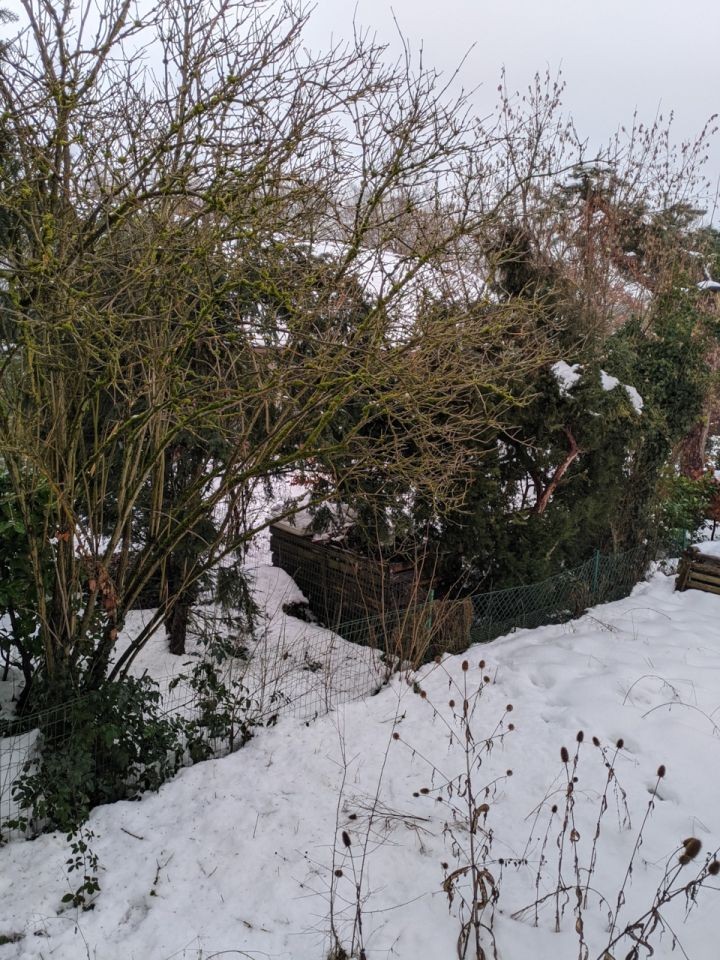
I have, for a change, actually managed to clear some papers off the stack on my desk. The little cat approves, as she now has a bit more space to place her furry hindquarters (though mostly she places herself all in front of me, between the laptop and the edge of the table). Outside it's still fairly cold and grey, some snow is left on the streets (especially here right in front of our house) and some on the grassy areas, but there's much less now than a week ago. And I've already received the first emails telling me that I should think of buying seeds for the next season.

Also, it looks like there will be some stuff going to be made for an exhibition next year, which really delights me. Not just because that will mean nice photos of the process, once it's running! 

With the discussions about the exhibition, in regard to what is possible and what is not, I have realised that it would be really, really nice and cool (and also helpful) to have a sort of a nationwide register (even better would be a register and warehouse) for all those things made for temporary exhibitions and then without proper use afterwards. There's so many amazing things getting researched and made, and many of those will later on just disappear into some storage room. Or worse.

So... if anyone has an idea on how to make this a project, preferably with some funding for its long-term establishment... please let me know. I'd love to see this.

0
FEB
05
2

So... what would you call it?

First of all, the breeches are finished, have been tried on and tested, and they fit well (much improved, actually, by the set-in gores between leg and middle part) but were hard-ish to put on because the belt is too short to keep it together while pulling them up. That resulted in some fishing for the belt ends afterwards.

No pictures yet, as I want to do their first showing at the conference in the presentation, but I am very happy with the piece, and they do look quite similar to what can be seen on images.

Other stuff that is going on: Paying bills (sigh), doing some bureaucracy stuff (which will ensure some payment later, so yay) and, of course, the neverending ongoing work on... the translation of the thesis. There's been progress translation-wise, and I have now gotten to the start of the catalogue, and there I stumbled across a specific German term that I don't really know how to translate.

In German, there's the term "erheben" (like in uplifting, or in getting up if you do it yourself, but that is not the case here) used in the context of making a saint. Erhebung is when the body is exhumed with the intention of venerating it and placing the bones in some reliquiary, or in some other position where they can be venerated. (It includes the good old time-honoured Catholic practise of splitting off some tiny fragments and selling them off to other places so they can use it for stuff including naming a church and dedicating the main altar to the original owner of the splinter.) So if you are writing about some saintly guy or gal and the text says that their Erhebung was at this or that point in time, it's very clear what is meant.

This, it turns out, is one of the things that are hard to google. Erheben, after all, means a range of other things as well. German Wikipedia has an article on just this (yay!) but there is no version in any other language, especially not in English (grrr, plan thwarted). A quick use of the search engines revealed that the Duck (I say I would google it, but I use duckduckgo) is very willing to tell me everything about the cardiac thingy called ST elevation, which it will helpfully convert my "saint elevatio english" into, but not about English church-y terminology. So.

Does anyone here happen to know how that would translate, precisely, into English?

0
FEB
04
0

All sewn up!

There was some more stitching, and now the breeches are all finished, and waiting to be tried on and tested. I am looking forward to that! It was already very interesting to see their transformation from a weird, very large piece of fabric to something definitely trouser-like once the belt was added to the picture.

I'm also still very much delighted by the stitches used - with some more pondering (which there is time for, with the stitching, as you might know) I finally realised that the variation of the seam means that everything on the piece can be done with a variation of whip-stitching. Which is... nice. Especially if you love this kind of seam. 

(In case you wondered: I'm fine with it, but am not totally and utterly enamoured with it. There you go.)

0
JAN
29
0

Winter Wonderland.

It's snowing here, again - after a day of things melting and dripping yesterday, the (rather large) amount of snow that was left has gotten a new dusting with white flakes. Now it's somehow indecided whether it wants to snow, or wants to rain, or... well.

It's been the first "real snow" for ages here now, and it has been enough for some chaos on the streets, and the buses not going for a while when it was especially bad. We got around having to drive the car when there was the peak of snow, and I'm quite happy about that (though I learned how to drive in wintery conditions when I was training for my driving license, that was a long time ago, with not too much practice inbetween). 

I wouldn't be surprised if the storms and the winter blasting in not just in Germany, but over large parts of Europe is a first taste of what winters after the climate change will bring us, if the gulf stream gets weaker (which is one of the issues we are facing). Snow is beautiful, and pretty, but it's also very heavy, and cold, and very wet, and can get slippery easily, and if you have to shovel lots of it you'd better be fit enough for that (and have good technique). 

Back when I was younger and the winters were colder and I was visiting my parents in the Fichtelgebirge during the winter, they'd go outside before I was due to arrive to shovel snow in order to make me a parking space... because the snowplough leaves a nice dam of snow on the left and right side of the street, just where you'd park. Heavy snowfall in that region was quite common, so we all knew how to deal with the issues, and were used to it.  I'm now living in a place that is a good bit more mild, regarding the winter weather, and correspondingly it's more of a surprise here to have lots of snow. Well... we will see what happens in the future, and if we'll all have to get used to handling it here, too! 

0
JAN
22
0

New technology, or at least new uses...

One of the things that never cease to fascinate me in regards to archaeology is this wild, delightfully weird mix of the old and the new. You dig up something (or it is preserved some other way), and there you are, analysing the craft skills of some person long dead and probably forgotten. (Most people are, after all, a few hundred years into the future.) Here, it helps if you know a bit about natural materials, traditional tools and traditional, old-fashioned crafts methods. And then the new stuff comes in, where the archaeologists use the new technologies in order to learn more about the old ones. DNA analyses, protein analyses, strontium isotope analyses. The good old radiocarbon-dating, let's not forget that, but with refined methods these days and using calibration curves made in collaboration with dendrochronology. Electron microscopy, in a number of different flavours. When it comes to finding out what was once there instead of the ubiquitous archaeological brown in textiles, HPLC (the high-pressure liquid chromatography) is not the only thing these days to try and find out more about dyes applied long, long ago.

It's a delight, really. Even though there's still limits, obviously - you have to have to know about the possibilities, have to have the opportunity for the research, and need the possibility and the permission of the caretakers to take samples of your piece, or, with the non-destructive methods, it needs to be either brought to the lab for analysis or the tool has to be brought to the object. In all cases, a combination of time, knowledge, money, effort, and support is necessary, coming from different people involved. Realistically, that means there is much less cutting-edge, new-fangled stuff and most recent methods research done than there could be, in an ideal world.

It's still great. Every little bit of new tech for old stuff never stops to delight me. It's even better when there's names involved that I know (and thus people that I know). Like in this (already a few years old) article about looking at textile residue on a metal brooch. It was published in a physics journal, and it's open access, so you can join me in my delight.

0
JAN
15
0

Speed Reading Shenanigans.

I stumbled across this yesterday or so, and found it somewhat amusing and interesting. It's a (modified) speed reading check that places all the words at one point, so you don't have to move your eyes when skimming a page. 

So now I have found out that I can read fairly quickly (which is no real surprise, I knew that already).

While I can skim stuff very quickly, and read fast, I have more enjoyment in reading when I am not going for high speed. And if the text is very complicated, or in another language that I don't know very well, obviously I need to go even slower than the normal cruising speed. This shenanigan of putting all words in one spot, though, doesn't seem like really practical to me. Usually when I skim, it's to check if a text is relevant for me, or to find the bits that are. For that, I need to go over the page, turn the page, do the next one, rinse and repeat. Or, if it's on the computer, scroll and skim. In both scenarios, training the eye movement to do the skimming is essential, and that is exactly what this in-place speed reading leaves out fully. And even if I have a full text that I want to read quickly, it would mean having an app or something that converts the text into this format, then reading it. What happens if there's something I have to process, though? Or if I have a short lapse of concentration? Then how can I go back to the proper bit and re-find my place?

Which means... interesting, yes. Useful, well, probably limited, at least for me.

0

By accepting you will be accessing a service provided by a third-party external to https://pallia.net/

Contact