





There I am, mid-September, and a certain November event is looming ahead. We'll do tablet weaving at the European Textile Forum this year, so I am currently trying to find out how much yarn of what type we will need, and how many tablets.
And that is the point where you suddenly, unambiguously, get shown again that tablet weaving is indeed, well, weaving.
As I like to tell people when I talk about spinning now and back then, one of the big differences is how much you'd need to produce. Many modern hobby spinners spin for their knitting... back in history, it was done for weaving. Big difference between knitters and weavers? Knitters talk about metres and grams, weavers talk about kilometres and kilograms.
Similarly to "real" weaving, tablet weaving yarn requirements do add up quickly. Four bits of string per tablet, then at least 1.5 m of warp length (because you want some space, and the relation between loom waste or, in this case, tablet warp waste and weaving is always worse if you go shorter), and then some tablets, there you are.
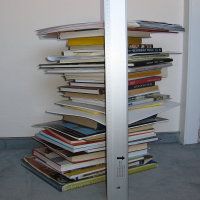
With the added extra cherry on top that while there are quite a few bands that only use 20 or 30 tablets, we also get the big whoopers. With about 90, or 140, or even more tablets. And while, rather obviously I think, we will not equip everyone at the Forum with a 150 tablet band... having at least one to see how this moderately insane stack of tablets can be handled is definitely something.
I would also really like to go a little further into the rabbit hole of the twist-patterned bands, made from untwisted silk.

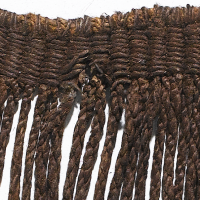
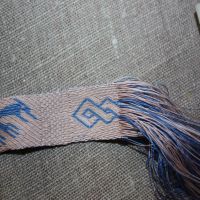
The image shows a microscope picture taken from a broken part from Band D571 kept in Speyer in the Dom- und Diözesanmuseum im Historischen Museum der Pfalz. It's silk, it is untwisted (before the tablets twist it), and I think it would be really nice to do a little test during the Forum with similar silk. So that's my little pet side project at the moment: Find out if I can get thread just like that.
(Any hints are welcome. My suspicion is that it's not or not fully de-gummed, but reeled off in thin enough strands to retain shine, and then doubled up until desired thickness was achieved.)

