


Search the Blog
Latest Comments
More Stitching.
Well, well, well. There has been some more stitching, and as soon as I have typed this blog entry and pulled my arm out from underneath Madame the Cat, I will stitch on some more... but here's a bit of interesting stuff for you.
There's the One Big Linen Garment find from archaeology - the Viborg shirt. That piece has been analysed and reconstructed very nicely, with a result of finding a lot of different whipstitch seam variations, all cunningly and neatly adapted to a) what was available in terms of how many pieces of fabric to join, b) whether these were cut edges or selvedges, and c) how the seam was supposed to look (hint: most times, the answer to that was "flat").
Imagine my delight when I found out that the braies I'm looking at currently seem to employ similarly creative and very smart uses of whipstitch seams. Also my puzzlement when I realised that the seams I'd taken for the normal, common, household variety of a felled seam was something else.
I'm not a hundred percent sure yet whether my attempt has cracked it, but at least you can enjoy these images of crazy seams in comparison. First of all, the "normal" felled seam variety:
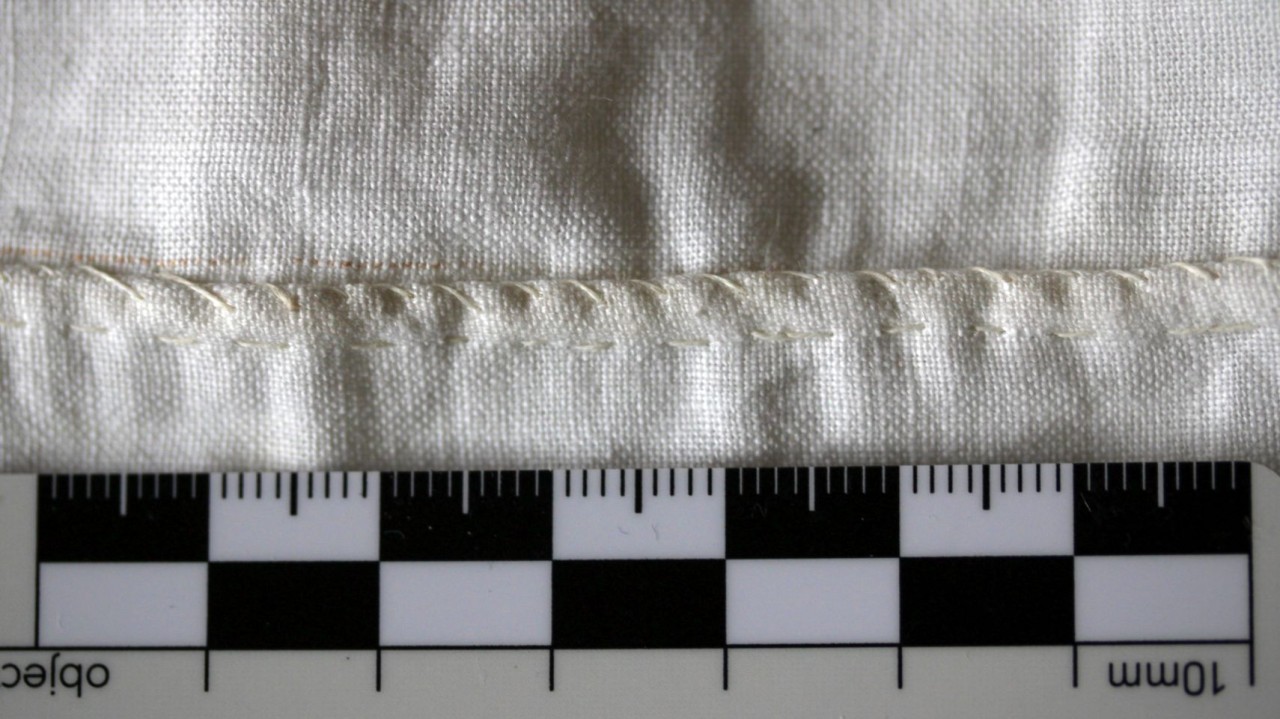
You can see that there's a clearly visible stitch line from the first seam, then the whip stitches from the felled seam allowances. Now here's the variation:
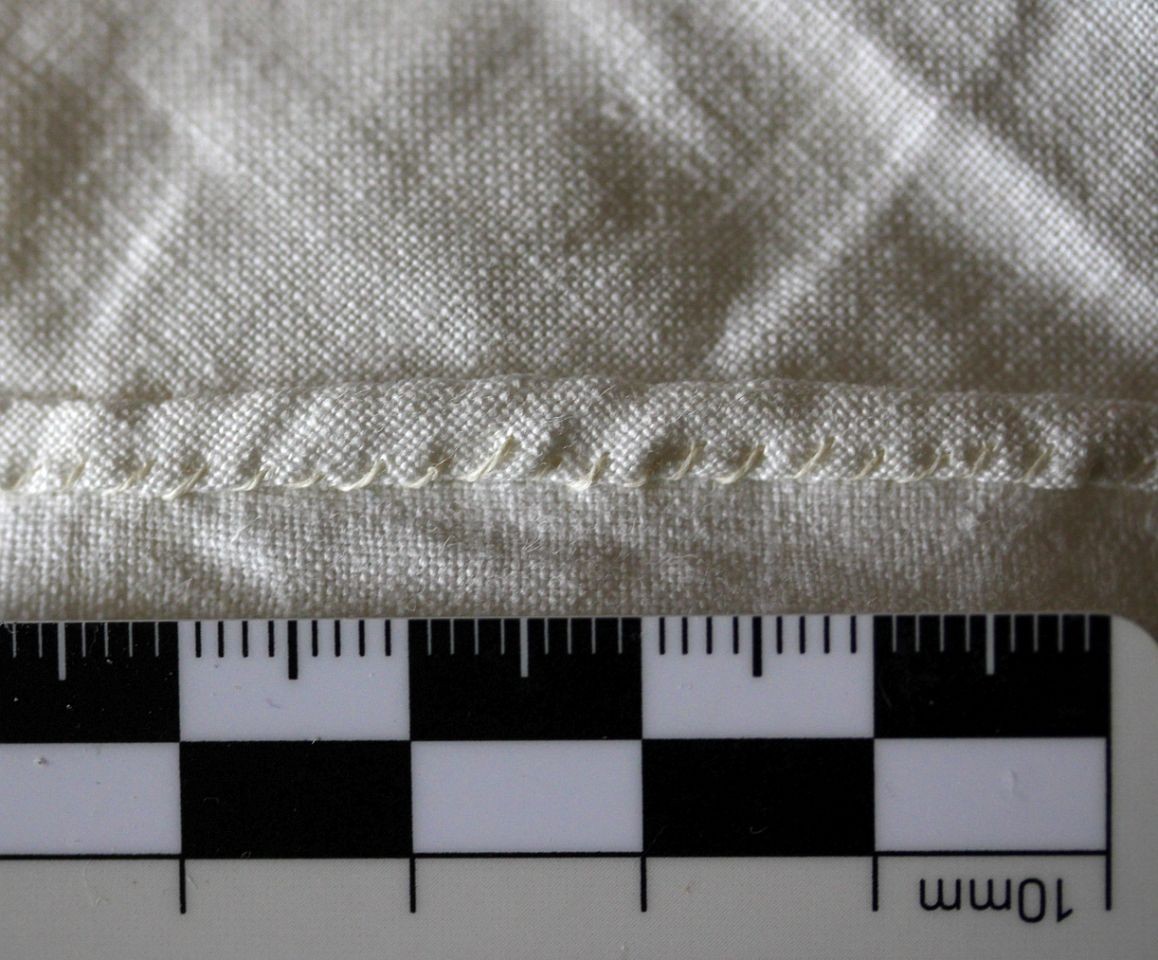
I hope you can also see (and appreciate) how crazy tiny these are. It's about 3 mm seam width on the original, and I tried hard to match this, with more or less success, depending. At some point I'll need to see the back of these seams to find out whether my solution matches the original, but whether it does or not, it's a fun variation that makes use of the selvedge - it's not a normal seam through the two layers, with the edges staggered apart by one final seamwidth, but a fold of the fabric with the cut edge (two seamwidth wide) whipped to the selvedge of the other fabric, and then the allowance folded and whipped down. It's much nicer to work than the fiddly very narrow normal version, and makes smart use of the selvedge, in a way that (at least to my way of thinking) fits in very well with the general tendency to make use of the very useful selvedge when making clothes.
So. What do you think? Or have you even seen something like that before?
Comments
By accepting you will be accessing a service provided by a third-party external to https://pallia.net/