Latest Comments

Guest - Harma Too Many Images Error.
27 November 2026
There have been weeks in November in which I would talke about 800 pictures. Proof of very interesti...
Guest - Max Mustermann The True Cost of Driving a Car.
06 November 2026
Great breakdown — the non-fuel costs are exactly the bit most people forget when they compare cars. ...
Guest - Harma Phew. Now it gets involved!
21 October 2026
Have fun at these events.
Guest - Aislinn Dyestuff Citizen Science.
09 October 2026
This is a great project. I look forward to the results. Thanks for letting us know.
Guest - Aislinn Time for...
09 October 2026
Looks delicious!
APR
05
0

New things.

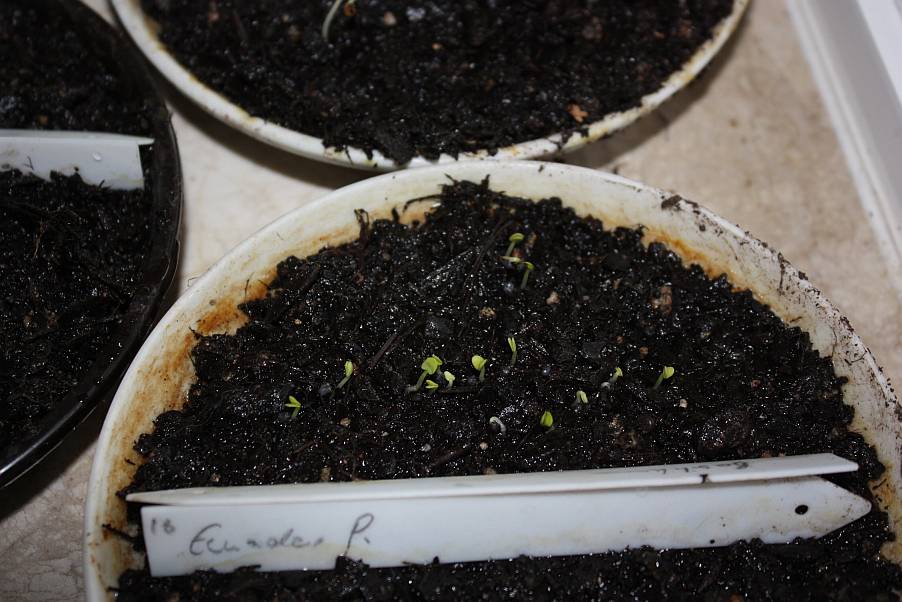
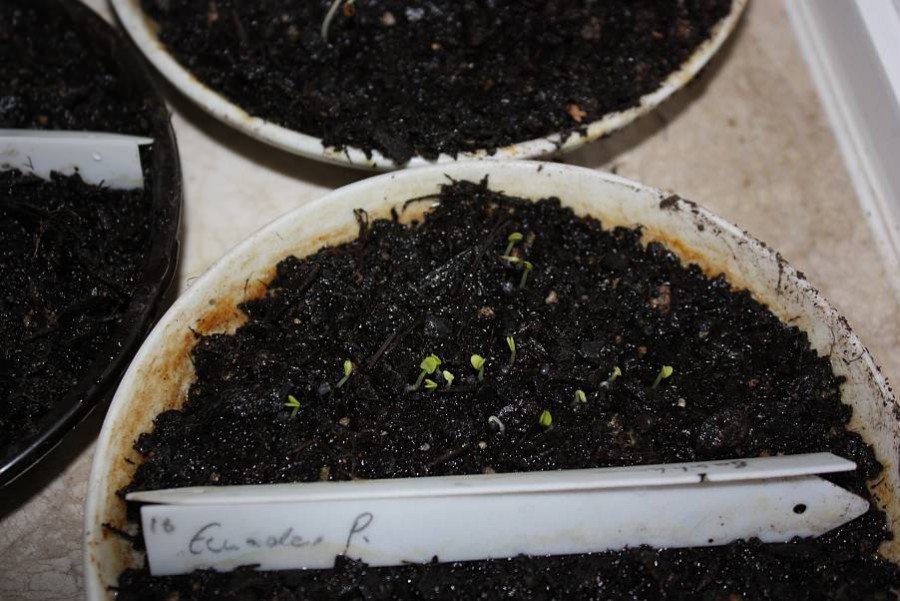
Spring is the time of year when new things spring up - and it is fun to be part of this. Case in point number one:

[caption id="attachment_2333" align="alignnone" width="640"]Basil seeds, sprouting. Yay basil! Basil seeds, sprouting. Yay basil! (The basil is not called Ecuador Purple, by the way. That's the chili plant seeds in the other half of the saucer.


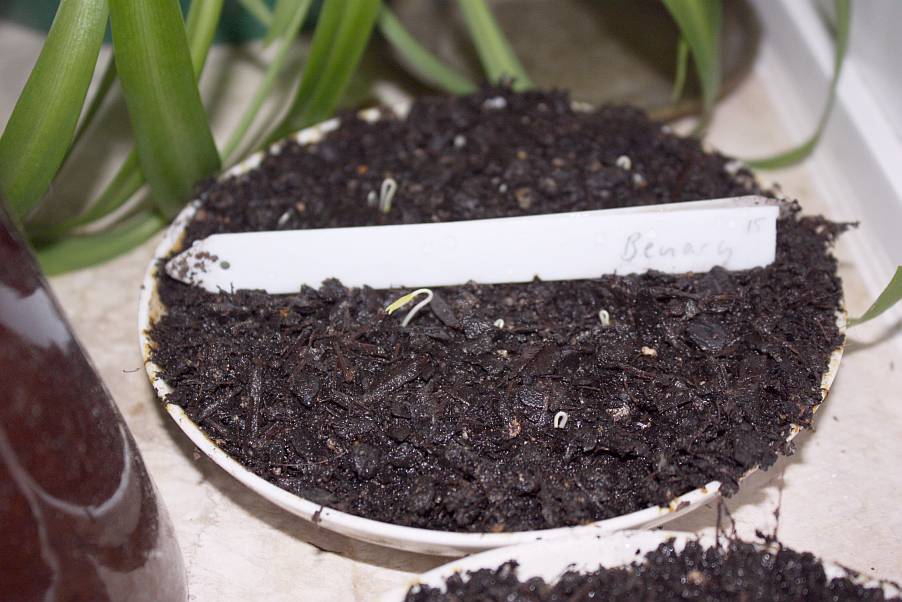
And what would basil be without tomatoes? Boring, right? So, case in point number two:

[caption id="attachment_2332" align="alignnone" width="640"]Tomato seedlings, fresh out of the soil. Tomato seedlings, fresh out of the soil. Two different varieties in the two saucer halves - Benarys Gartenfreude is the German name of Gardener's Delight, which are small, sweet cherry tomatoes.


Last year was not a very good one for tomatoes here, and I'm really hoping this year will be better. Now while the seedlings grow there's a few weeks of time left to get the garden beds outside into a semblance of order, and (which is the most important thing this year) apply some fertiliser, as they are all pretty much emptied out of plant nutrients, judging from how things grew (or did not grow) last year.

For the tomato seedlings, though, there are interesting times ahead... a few years ago, when the seedlings had just sprouted their first pair of real leaves, I accidentally forgot to water them before leaving for the whole day. The seedlings stood in the wintergarden, and the day was sunny, so of course it became really, really hot in there. The result? I came home to all of the seedlings lying flat on the dry soil, looking very sad and dehydrated. I did the obvious then and flooded them with water, hoping for the best - and the best certainly happened: almost all of the plants recovered. The drought did have an ongoing effect, though, as they all developed very thick, solid stems and a good root system, possibly in an effort to get and store more water for the future.

So from that time onward, I give the little plants an intentional drought when they are in the first-real-leaves stage, resulting in strong plants with strong, sturdy stems. At least that's what I get. I have no idea whether they'd turn out the same without the dry streak, but since I've been happy with the results with it, I'll just stick with the system. If you do something similar, or if you try this at home, I'd love to hear about your results!
0
APR
04
0

Routledge Free Access Fortnight

Routledge is granting free access to their archaeology journals (everything after 1997) from today until April 17. The list of free journals (43 altogether) includes Medieval Archaeology, Journal of European Archaeology, and the Journal of the British Archaeological Association, so if you are interested in archaeology, it's definitely worth a look.

Access is possible via this page on Routledge - enjoy!
0
APR
01
0

Friday Flowers!

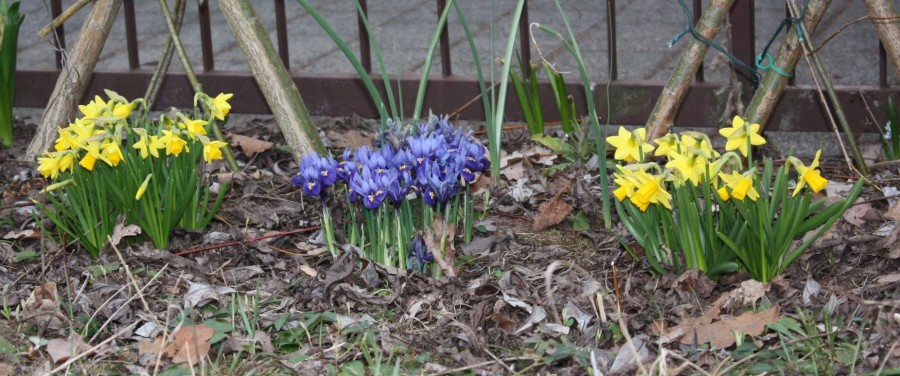
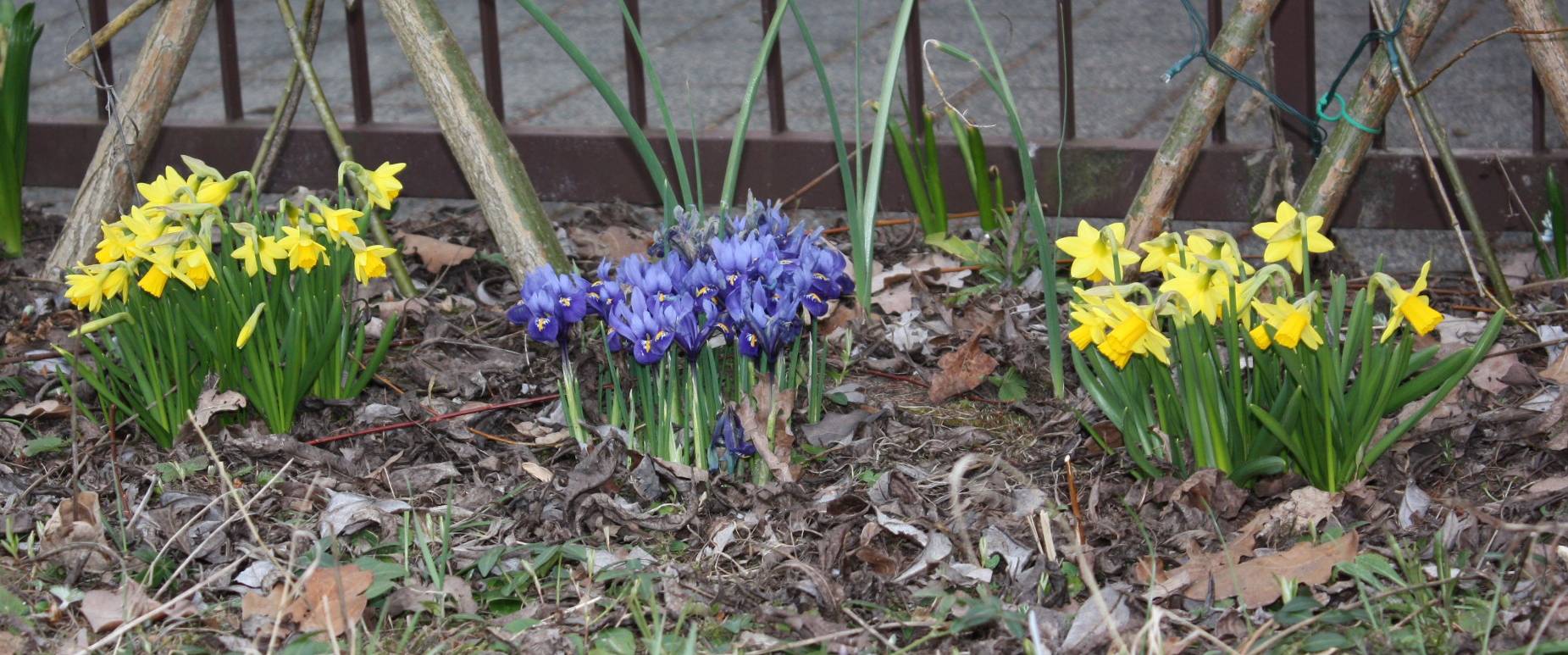
Spring is really coming now, and the garden looks like it. Here's picture proof:

blausternchen
These little wood squills (Blaustern in German) are out about everywhere, and in full bloom by now.

Their larger cousins are also showing off their colours:

 
hyazinthen
... and so are the grape hyacinths. These are also abundantly blooming here and there in the garden, making lovely blue spots.

bauernbueble
And of course, if somebody is outside taking photographs, a certain furry creature has to watch that everything is being done correctly:

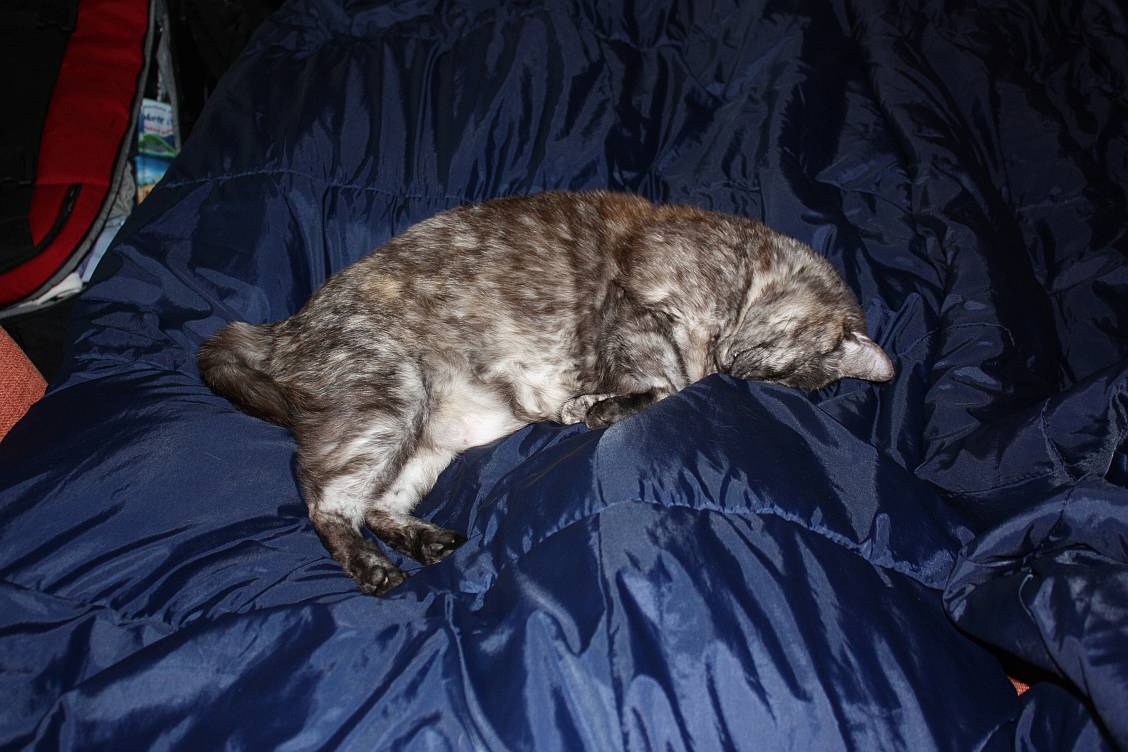
blumenkatze
Well. Thank you so much, helpful little cat.
0
MAR
31
0

You Should Not Work For Free.

If you've been reading this blog for a while, you will know that I have strong opinions about fair payment for work (see the Fair Prices for Crafting posts). If you are working a full-time job, no matter what the job is, you should be able to live off your job. That means if you are a professional knitter, your knitting should pay for your life needs. It does not matter whether you are a writer, or an artist, or a cashier, or a carpenter, or a nurse - your job should support you.

I can totally understand if somebody asks me about pricing for, say, a dress; I tell them what to expect, and the answer to this is "well, thanks but no thanks". I do know that having a dress or some other garment made to measure, sewn by hand, possibly using special materials will be beyond what a lot of people (and incidentally also quite a few institutions such as museums) are willing or able to spend. I am fine with that. I'm also fine with getting together with the prospective client to explore possibilities and alternatives that will result in finding a different plan of action, and both of us being happy with the price point for that. If that is not an option, I don't care whether the "no thanks" is due to not being willing, or not being able. There's a reason that I have arrived at the pricing I've given, and doing the same work for less will not work out in my favour.

The calculations I make for my offers, whether it's a service (such as making a garment), teaching, or the goods I offer in the online shop and at my stall at markets, are solid. The prices I charge do allow me to support myself. I'm not calculating overly generously for my benefit, though - if there's a slow period with few sales and few or no projects, I can definitely feel it, and my one-woman company still falls into the "small microbusiness" category.There are occasions when it is necessary to put in some work to make a proper offer for something, so I'll do research and planning and calculations, and I don't get money for this unless the offer is accepted - but that is normal, and that is acceptable, and something that is calculated for. But something I will not do at all? Definitely not? Work for free. Or for "exposure", which basically means "go work for free for us, and we will tell a lot of people so you might have trouble explaining later why you won't go on working for free for others, too".
I also get cranky if I get asked, by some institution or company that does turn a profit, to work under my price point. This does happen rarely these days, by the way - but it does still happen occasionally. Professional work should be paid.If you're wondering what brought on this ramble, it's the "offer" of the World Fantasy Convention to submit a new award design. Key phrase here is "there will be no monetary remuneration." Yes. For an award design that will be used for nobody knows how long. That they want to have all copyright for.Much to my happiness, this "offer" has already led to several people stating very, very clearly that it is a bad offer, and a bad idea to submit artwork for it. Jim Hines writes about working for exposure only (though not directly linking to the Award Kerfuffle). Mary Robinette Kowal has strong feelings about the award specs and whole thing. John Picacio already posted about the issue in November 2015. I'm really curious to see how all this will turn out - and whether the critical voices will lead to a change in the submission guidelines or not.

0
MAR
30
0

Back to All The Stuff.

It's amazing how a few days can lead to a huge heap of emails in the inbox, and some increase of length of the to-do-list - but it was wonderful to have these few days off over Easter and spend time with friends as well as outside for some hiking.

Not only emails have piled up, though - there are also a few interesting links that came in during the last few days!

First of all, and very exciting - you might know that the Incans used textiles to keep records: khipus, which are strings marked with knots. The exact method of how these strings were knotted, and how to decipher them, are yet unknown. There's a little hope that this might change, though. In an excavation about 100 km south of Lima, archaeologists have found several khipus in a storage house, in some cases buried under the produce they were possibly documenting. Research on these khipus and how to decipher them is now going on, and the storage khipus might be helpful in deciphering the non-mathematical content of this very special type of textile records.

Also textile-related, but modern: There's a crowdfunding project for a business going on to bring a twisting machine to the Hebrides, helping knitters turn wool singles (spun for tweed weaving) into plied knitting yarns. If you decide to support this and get a reward, you might consider upping your pledge to account for shipping, as my suspicion is that shipping costs and reward materials will cut considerably in what is left after the campaign.

Now it's nose back to the grindstone, the cat is back on the desk "helping" (take your paw off the touchpad, please, little cat), and purring contentedly. Hm. Maybe she'll do some of the email sorting for me?

 
0
MAR
24
1

Easter is coming!

0
MAR
23
0

Have some Wednesday Links.

It's the middle of a week! And a shorter one at that - time for some links!

Jane Austen's novel "Emma" has its 200 year anniversary this year, and there's an exhibition about it at Chawton House Library, Hampshire, UK. The exhibition will run until September 25, 2016, so if you want to see it, there's still plenty of time left to plan a trip. If you like textiles (which you probably do, since you are reading this blog), it gets even better: part of the exhibition features contemporary embroideries, inspired by patterns from Austen's time. This part is called Stitch-Off, and you can read more about it here. If you're curious about the patterns used, you can find them here, and if your fingers are itching, it's still possible to join in on the project.

Totally unrelated, but rather funny: the UK is building a new polar research ship and they have invited the public to suggest names for their vessel - with interesting results. The leading suggestion is Boaty McBoatface. (The Council responsible was smart, though, as they are only inviting suggestions - they'll be free to pick whatever name they like best in the end.)

 
0

By accepting you will be accessing a service provided by a third-party external to https://pallia.net/

Contact