Latest Comments

Guest - Harma Too Many Images Error.
27 November 2026
There have been weeks in November in which I would talke about 800 pictures. Proof of very interesti...
Guest - Max Mustermann The True Cost of Driving a Car.
06 November 2026
Great breakdown — the non-fuel costs are exactly the bit most people forget when they compare cars. ...
Guest - Harma Phew. Now it gets involved!
21 October 2026
Have fun at these events.
Guest - Aislinn Dyestuff Citizen Science.
09 October 2026
This is a great project. I look forward to the results. Thanks for letting us know.
Guest - Aislinn Time for...
09 October 2026
Looks delicious!
JAN
27
0

*Insert Smart Title Here*

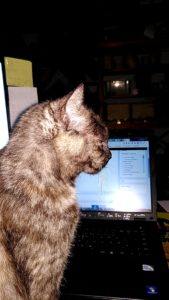
Madam the Cat is, again, hanging out on my desk and lying on my arm, as she's done for quite some time today. When I was not up and about sorting things, that is - I have pulled out all my loopbraided samples and have found them to be a) lots and b) woefully unsorted in parts. I will have to try and come up with an idea on how to best label and sort them, so they can be really useful!

(The reason for this? I got sent a few pictures by a colleague, and there's some fiddling going on as we try to figure out how the braids have been made. There's also an enigmatic two-loop braid that still needs to be solved...)

Meanwhile, in the knitting universe, the winter issue of Knitty has come out, featuring, among other things, a sweater knit in one cape-like piece and then steeked, and very interesting bias-knit gloves. The latter will totally go on my queue! (There's some other things I'd like to knit first, though. And before all of that, I will have to finish my Neverending Ink Cardigan...)
0
JAN
26
4

Catching Up. And Blue Potato Salad.

I'm currently catching up on paperwork and - lo and behold! - doing some research reading as well. That feels good, both of it! I often feel like I'm not getting enough research time in, but there's always so much mundane stuff to do... like filing taxes (which is a large part of the current paperwork stuff). Or getting the car fixed up so it can pass its prescribed biannual check... sigh.

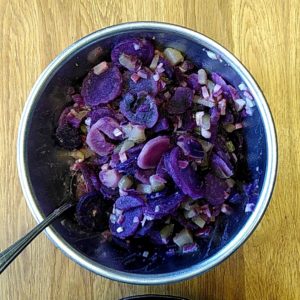
On the sort-of-plus side, at least the weather is properly wintery, with snow falling and snow lying on the ground outside. And because that makes everything outside white, which is nice, but not very colourful, which would be a good thing in this rather grey and cold time of the year... we had blue potato salad today.


That's the Bavarian/Franconian version of potato salad, seasoned with oil and vinegar, no mayonnaise added. Germany actually has a cultural divide between the mayonnaise potato salad areas and the oil-and-vinegar potato salad areas, and a lot of people have a very firm opinion about which kind (their kind, obviously!) is the One and Only kind, and the other just weird or even awful.

Now... I grew up in Franconia, but my gran comes from mayonnaise country, so the potato salad of my childhood was not the typical local one. Consequently, I like them both, with a pronounced preference for the kind that my gran makes, because, duh. That said, I have had wonderful potato salad specimens of both kinds, and have tasted examples of both kinds gone wrong (as in edible, but definitely not tasty).

The blue one in the picture is not my gran's version, because that involves making mayonnaise (or buying it, but it needs so little that I prefer making just a small amount), boiling eggs, and having both the eggs and all the potatoes cool down completely before final assembly. For weekday lunches, this takes too much time (and/or too much planning ahead). This oil-and-vinegar version can be prepared hot and served warm to lukewarm, and thus is easier to fit within my usual one-hour-for-cooking time-slot.

It consists of diced onion, on which you pour a bit of hot broth (or hot water and then add some broth powder) so they mellow out a little; a bit of smoked bacon (the German kind can be eaten uncooked; if you can't get that, you can always fry your bacon cubes and add them afterwards); a dash of the liquid that your pickled cucumbers swim in; some of said pickled cucumbers. Add the hot boiled, peeled, sliced potatoes, which will soak up the liquids; then add salt, pepper, fresh parsley (if you have), more vinegar or pickle liquid, and oil to taste.

Proportions are entirely up to you - I like quite a bit of onion and cucumber in the salad, so I will use about a medium-sized onion and at least two large pickled cucumbers for the two-person salad (which is about 500 g of potatoes, and usually is not consumed completely in one go).
0
JAN
25
0

Fashioning the Viking Age web exhibition

In case you need something old to start off the new week, the Museum of Cultural History in Oslo has a web exhibition called "Fashioning the Viking Age". The web page includes some very nice pictures of both the originals and of reconstructions, and thus is definitely worth a look.

If you read German, you might also want to check out "Objekte im Netz", which is about the digitalisation of collections - here's the page about the project in the GNM, which includes links to more, such as the project publication (available free as pdf).


0
JAN
22
0

Experimental Archaeology Exhibition...

The MAMUZ, the museum in Asparn/Zaya in Austria, is preparing an exhibition about experimental archaeology (more about it here, in German). The exhibition will then move on as a wandering exhibition, showing objects from archaeological experiments and explaining the objects, and the experiments, in video clips.

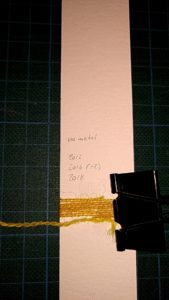
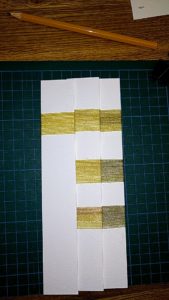
So I've been busy doing video stuff, including the cutting and editing, and doing all the other bits and things necessary to prepare. What ate a lot of time - much more than I had expected - was making a colour sample card as the object to go in there to represent the Pompeii Dyeing Experiment.  This started in 2012 with a first run, and there was an add-on made in 2013, followed by two more runs of the experiment in 2016 and 2018. The aim was to find out how a metal kettle would influence the results of the dyeing process, both due to the presence of metal in the mordanting bath, in the dyeing bath, and in both.


For the exhibition, I wound the samples onto strips of cardboard, grouped by kind (mordant, dye, both) and by metal. Nine turns of the thinner wool, used in 12/13 and 2018, and six turns of the thicker wool used in 2016. All neatly in the same position on each strip...


...and it's amazing how much of brain such a simple task can eat.

My personal main takeaway from this experiment, by the way, is the importance of repetition - plus a much higher appreciation of just how much variation natural materials can introduce, and how much of a role sheer luck plays in even the best controlled experiment.

In the 2012 run, we ended up with a reddish colour on the yarn dyed in the copper and the clean lead kettle - which made a kettle made from lead with an oxide layer on the surface the neutral kettle, very close to the actual control dyed in a glass jar with no metal plate added at all. In the following runs, we were never able to reproduce that reddish colour - apart from the iron, our samples all turned out pretty yellow, and much the same across all kettles. If not for that chance aberration in the first run, we would have thought that there is no real difference between the kettle materials, at least not when using madder or birch leaf as a dye.

I'm actually tempted to run the experiment again next time that the Forum will happen (2021, I'm looking at your autumn with a critical eye!), with weld as a dyestuff instead of birch leaf, and see if results are giving us a clear difference there.

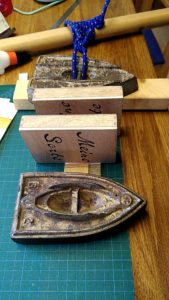
Anyway - the card has been finished, which involved lots of glueing, and the use of some of my bookbinding equipment, and now it will go on its way to Asparn!

[caption id="attachment_5775" align="alignnone" width="169"] Pressing with weights until the glue has set...
0
JAN
21
0

EXARC Textile Chat coming up!

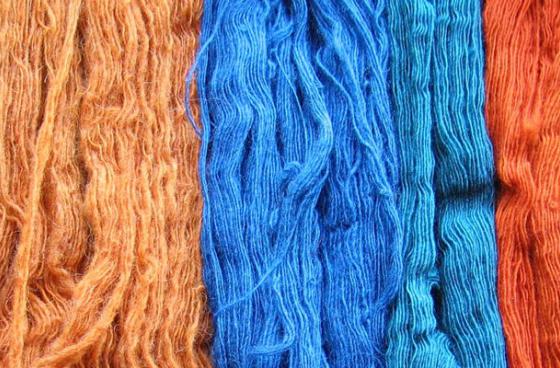
There's another EXARC Textile Chat taking place this Saturday at 15:00 Amsterdam time. This month, the topic is "colour" - to brighten up all our days, something very welcome in this rather colourless time of year.

[caption id="" align="alignnone" width="393"] The image that goes with the Textile Chat session... clicking it should bring you to the event info page.


If you're not familiar with this event yet: It's an informal text chat on the EXARC discord channel, where anyone interested in historical textiles is welcome to join in (or just lurk, if you prefer). You can read more about how to join in on the EXARC website for the event.
0
JAN
20
2

The Deliciousness of Lactic Acid.

Something that has been tickling my "oooh, I'd like to try that"-fancy for years now is making my own Sauerkraut. Not that it's not possible to buy that stuff here, in good quality too (and in all kinds of packaging: plastic bags from the regional farm stores, plastic sachets, cans, and glass jars in the supermarket, and in different sizes as well), but there's a temptation towards making your own somehow. At least for me. Added benefit: Even though Sauerkraut can be bought in different amounts, it's usually either too little or too much for the two of us.

Also. Fermenting. The wonder of bacteria doing their thing, and of good stuff going different and somehow even better than before. Fermenting food is a very old method of making things keep, and some kind of fermenting procedure, for a variety of foodstuff, can be found in most cultures. Germany is probably most famous for its Sauerkraut - cabbage, usually white cabbage, fermented and thus soured.

All you need for making Sauerkraut is cabbage and salt - that's it. And maybe a little bit of water. Key for success here is that the fermenting stuff is always and completely submerged under its juice, which has salt added to it (0.5-3 % of prepared cabbage weight is the spectrum that I found); otherwise there can be mould growth.

I tried fermenting green beans in a glass jar a few years ago (which went middling well) and also tried to make salt lemons (essentially the same thing - put lemons and salt in a jar and wait for fermentation), which went horribly wrong. For Sauerkraut, though, I felt like it would be smart to use a special fermentation crock - because, well, making just a tiny glass jar of the stuff didn't really feel like the thing to do, and from my previous two tries at fermenting things, I was pretty sure it would be easier with a larger amount in a proper vessel.

A short time before Christmas, I finally managed to get my hands on a proper pot... through our town's special small ads board. Said board, called "Verschenkbörse" (give-away-market, more or less) is mostly used to list things that you don't need anymore, but that are too good to throw away. You list them and either say you give them away for free, or ask for something else in exchange - the one rule is strictly goods only, no vouchers and no money as exchange goods. It's also possible to do a "in search of" ad, which is what I did - and ended up with a 20 l fermentation pot (which is quite large, yes, and a 10 l one would have been fine too, but it's no problem leaving space in a large one).

Little more than a week ago, we raided the market for a few kilograms of cabbage, and an evening was spent shredding, kneading, and pressing everything into the container. So far, it's going well - a first taste test has already proven the contents to be quite delicious, and in a few more weeks, it will be all ready.

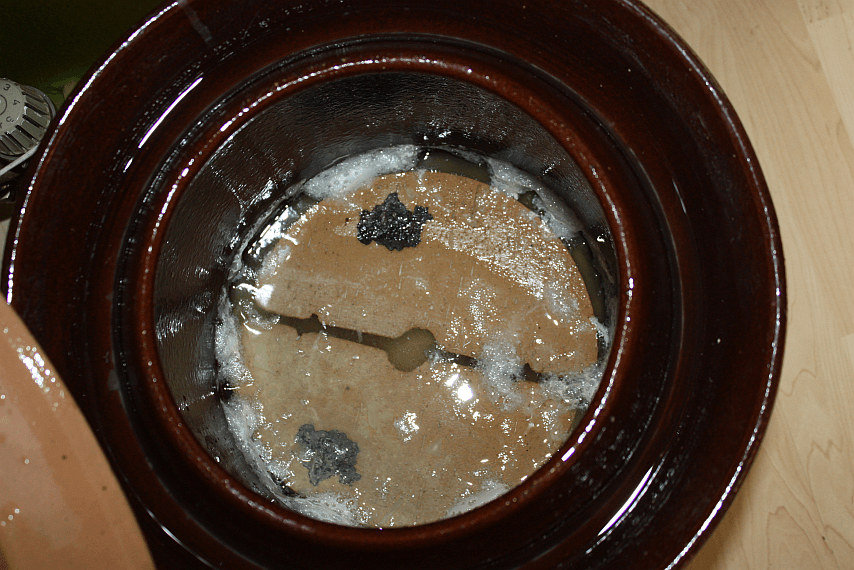
[caption id="attachment_5761" align="alignnone" width="854"] A glimpse into the pot - two weights come with these kinds of fermentation vats, to keep all things nicely pressed down under the surface of the liquid. You can see some foam (that is normal); the black spots are discolorations of the weights. Unfortunately it's not possible to photograph the pleasantly acidic scent!

I'm already looking forward to wonderful Sauerkraut...
0
JAN
19
2

This day has been eaten.

This day has been eaten, utterly, by two things taking way longer than they were supposed to take: Finishing the dye experiment colour cards for a travelling exhibition (more about that soon), and donating blood.

Not that the donating itself would have taken longer - they toss you off the couch after 15 minutes whether you've managed to get your half litre drained or not - but somehow, the long line of people was processed only rather slowly. We haven't figured out where the bottleneck was, but it's not relevant anyways, apart from the fact that we stayed much longer in the location than expected.

Now there's the cat expecting to be cuddled and fed, there's the urgent wish for some coffee for my own part, and some more finishing up of things to be done.

[caption id="attachment_5757" align="alignnone" width="260"] Picture proof of just how much Madame the Cat was expecting to be cuddled - she hopped onto the desk just a short while after I sat down to write this post.


Meanwhile, you might want to skip over to Alex Makin's blog and read her interview with Celia Elliott-Minty about tablet weaving!
0

By accepting you will be accessing a service provided by a third-party external to https://pallia.net/

Contact