
Latest Comments

Guest - Katrin Sprang Discussion
18 September 2026
Hi Rachel, I have looked for more photos of you, but that was not very successful. I found a link on...
Guest - Beatrix Sprang Discussion
15 September 2026
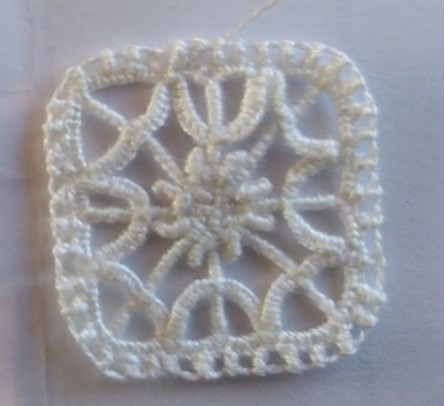
That lozenge pattern element is not a photograph, but a scan. So it should be to scale. But I pinned...
Guest - Katrin Sprang Discussion
15 September 2026
I was not referring to Rachel's reconstruction (is the reconstruction you refer to the one photograp...
Guest - Beatrix Sprang Discussion
14 September 2026
There is something Rachel did not mention. She told me: "Well, I worked with the measurements we too...
Guest - Katrin Sprang Discussion
14 September 2026
Well, this is certainly developing into an interesting discussion. Firstly, going from that lovely l...
MAY
10
0

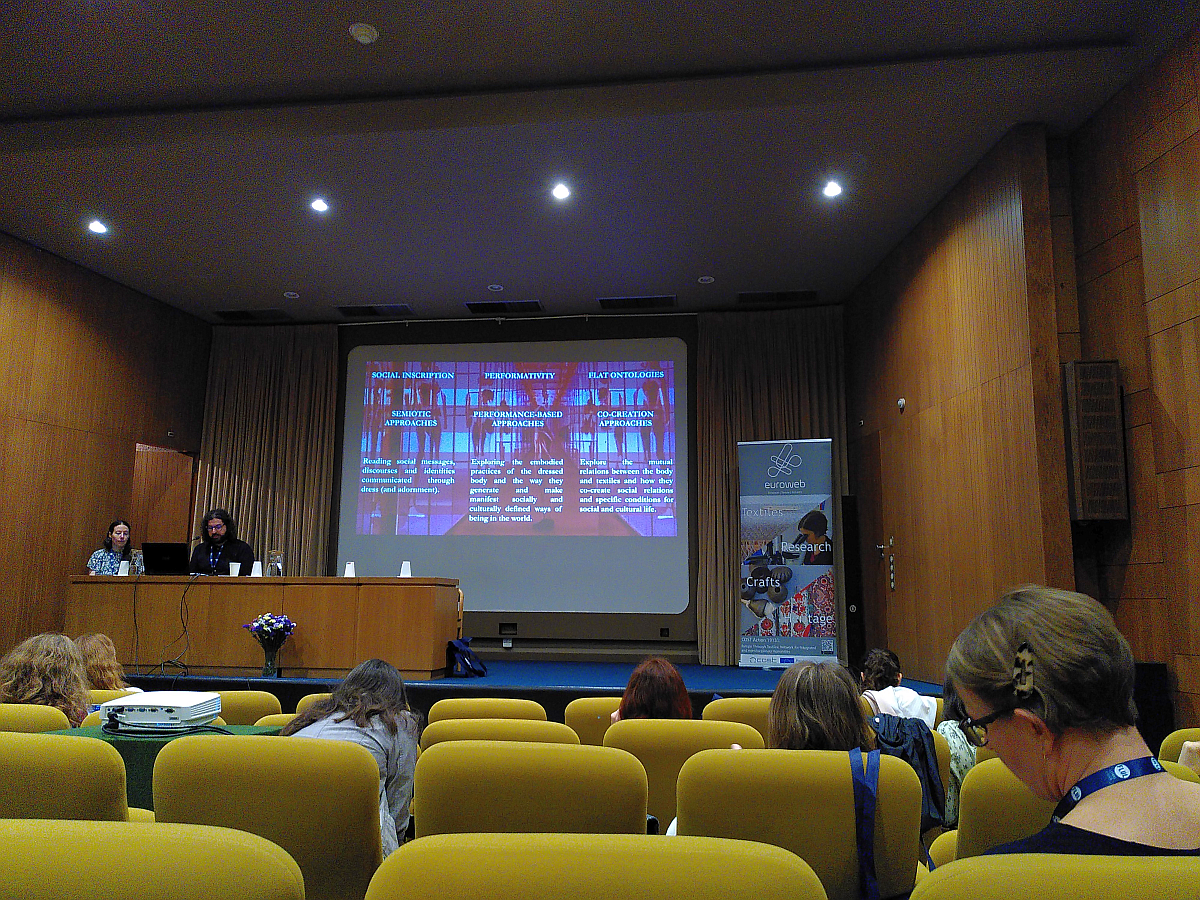
"Making, Wearing, Displaying: Textiles and the Body"

I'm back home from a wonderful workshop - and the title "Making, Wearing, Displaying: Textiles and the Body" really fit all the contents of the workshop.

We had a lovely mixture of papers and practical sessions, one of them involving modeling of various reconstructions of old garments. There was Iron Age and Bronze Age things, there were a few galloroman garments, and pieces from Xianjing - of which I got to model one. It was the earliest piece, put together from a lot of fabric that was mostly uncut, and a very interesting experience to wear. The two other garments from the same project were much more tailored and looked elegant from the get-go, while my gown felt more like hanging out on the couch and have chocolate and watch Netflix. (Or read a book, maybe.) While I've worn a good number of historical garments and garment reconstruction over the years, and most of them not just for half an hour or an hour, but for actual working and living in them, it was the first time I had something as loose-fitting and flowy, with no body shaping whatsoever. Very curious feeling for me.

There was also a workshop on Greek dancing (ancient Greek, of course), in the wonderfully warm sun, so it felt quite fitting. And then, of course, lots of papers about a huge number of aspects regarding textile and the body - from dental abrasions probably caused by textile work to a project looking at brain activity when doing textile work. The programme was really long and packed, but the organisers did an absolutely splendid job in how they arranged papers, breaks, and practical sessions to make it still easy to follow along and take in all the information.

We also got treated to a tour of the Ethnographical Museum in Lisboa, who graciously hosted us for the first two days, and to copious amounts of typical food and sweets (coffee breaks!) plus, of course, coffee.

Portuguese coffee is lovely, and I probably had too much of it - but did I mention it was delicious? 

After the conference, I had a bit of time left to explore the city. I spent most of the two days I had walking up and down the streets, looking at things at a flea market, seeing the loom weights (and the museum mascot cat) in the Museo Archqueologico do Carmo, plus the Natural Science Museum and the Botanical Gardens as well as many, many streets in different quarters. There would have been much more to explore, but there's only so much you can do in two days, especially if you also have to take breaks to sample the local delicacies. There had to be an adequate sample size for determining coffee quality, for instance, and since there is not only the signature "pastel de nata", but a plethora of sweet baked goods in Portugal, these had to be sampled too. 

Finally there were visits to a few supermarkets, because I always find it very interesting to see how goods differ from country to country, and on Sunday I spent some time doing what a lot of the locals did: Hang out in one of the parks, sitting on the grass and enjoying the day (in my case, with a bit of knitting). 

And then it was already time to go home... with a few delays along the way, which meant I arrived a bit later than planned, but not castastrophically late. Now it's time to get back to work - with new insights about displaying dress and the body. 
0
APR
27
0

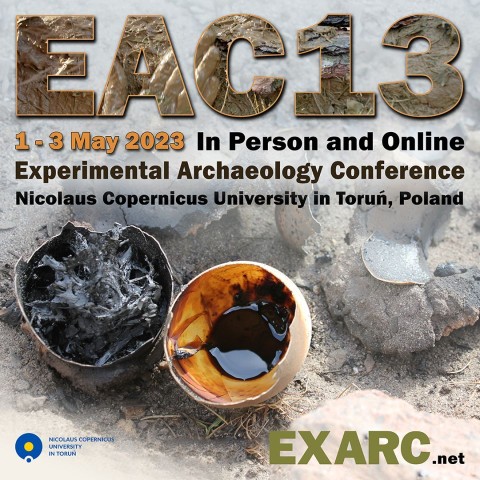
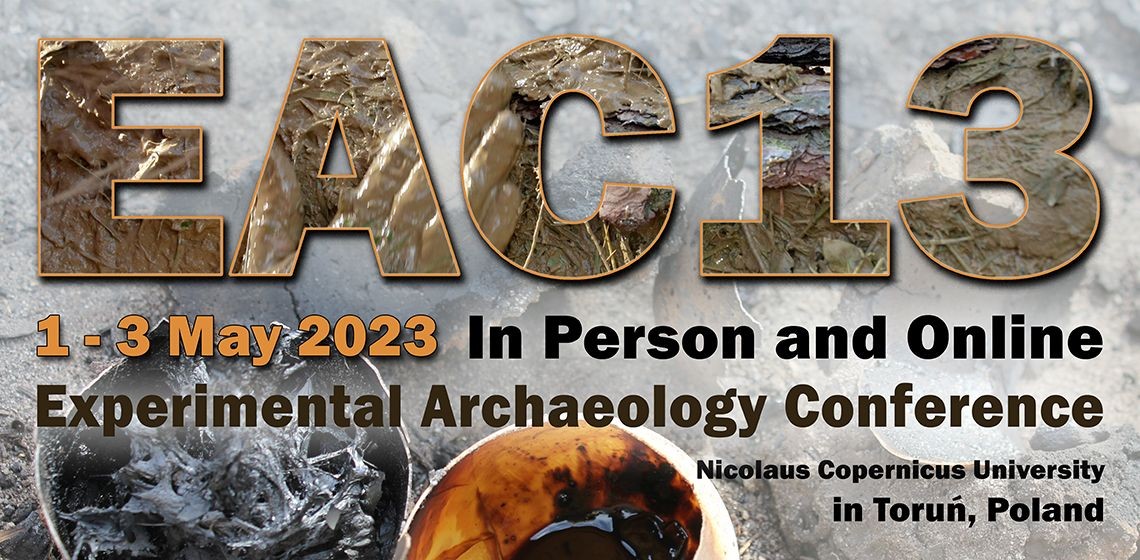
Experimental Archeology Conference coming up!

My blog thingie is, it seems, trying to make me look like a bit of a fool - I used one of the post drafts that had not gotten through, but the progamme then obligingly posted it under a different date. Very nice of you, blog thingie, thank you so much. Not.

On to nicer things than wayward software, though! There is a large Experimental Archaeology Conference coming up, running May 1-3. It's in Torun in Poland, but will be a hybrid event, so if you'd like to join in on short notice, you can.

13The full programme is here: https://exarc.net/meetings/eac13 and there is a session with focus on textiles on Monday, May 1, starting at 14:30 (Session 3.B).

You can follow the presentations online via https://www.youtube.com/@exarc. Links will also be included in the website. For extra chats and discussion there's a Discord server you can join. For more information on the conference, go here: https://exarc.net/meetings/eac13/how-attend.

So I hope there's something interesting on the programme for you, and that you will have fun participating!

0
APR
12
0

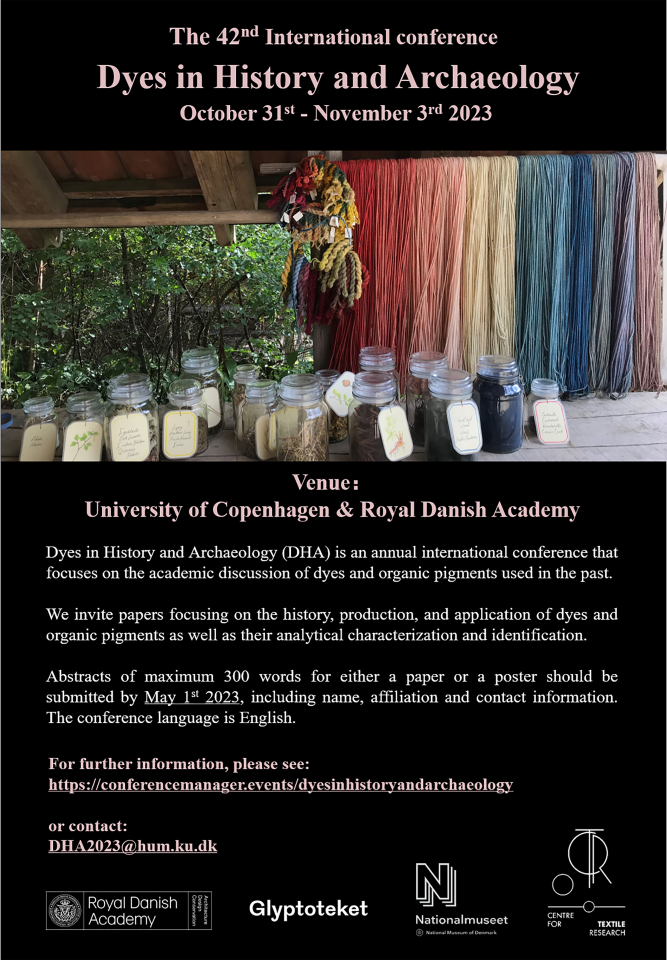
CfP - Dyes in History and Archaeology

If you like colours, especially those of the past, well, here's a Call for Papers for you: 

The CTR, The Ny Carlsberg Glyptotek, The National Museum of Denmark, and The Danish School of Conservation are jointly hosting this year's conference on Dyes in History and Archaeology (DHA 42) in Copenhagen from October 31st to November 3rd.The call for abstracts is open with the deadline being the 1st of May of 2023, so please consider sending your proposal! 

Here is the link for the conference website with all the necessary information: Dyes in History and Archaeology 2023 DHA42

I'm very, very tempted every year to go to this conference... even though I'm no dye specialist. But, well, the colours! The chemistry! The magic! I won't manage to go there this year either, as it's way too close to the European Textile Forum week and I will be doing the necessary prep work at that time, but some day I will surely make it.  

0
MAR
07
0

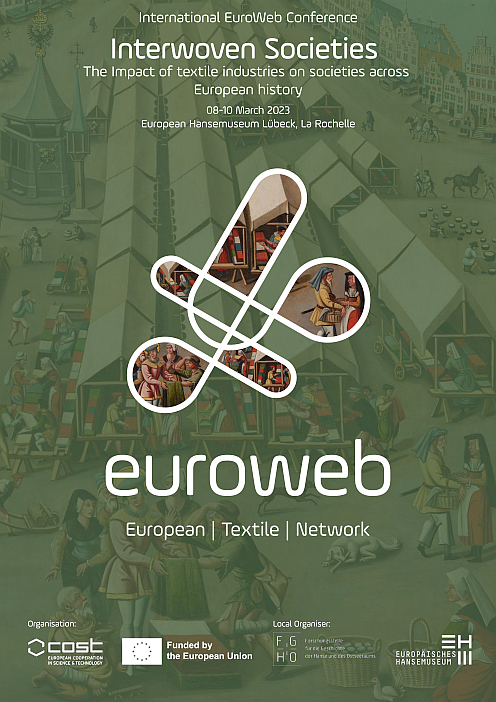
EuroWeb Conference in Lübeck Tomorrow!

The Hansemuseum Lübeck is up to great things - the first one in line: A conference about "Interwoven Societies", starting tomorrow.

For those of you interested in the conference, but unable to get to Lübeck for it, there's fantastic news: It will be streamed live on the EuroWeb YouTube channel! The conference programme is available here, it looks very interesting, and I'm looking forward to tuning in there tomorrow.


And then there's even more! 

The FGHO is celebrating their 30 year anniversary, and for that there's guided tours on Saturday - one of them including me. You can book your spot here on the museum website.

Finally, on Sunday I'll be giving a loopbraiding workshop. There's also still a few spaces left - you can join in!

0
FEB
28
0

EAC13 Experimental Archaeology Conference

Just this weekend, I found myself in the middle of a discussion about changes the pandemic has made to our working life, and the pros and cons of home office and company office. The verdict (at least for me) was - a lot of things very, very much depend on individual circumstances. There's people who find it much easier to stick their head in a colleague's office and ask a question, or ask around at the coffee machine and water cooler, and others find it easier to quickly type a question into a group chat or send an email around.

There's people who can work comfortably from home, having enough space and enough of an internet connection, and there's others who can't. There's those who are on the phone with faraway colleagues most of the time anyways and those who need to handle things that can only be handled in person on site. So - it very much depends.

One thing that the pandemic has changed, though, is the openness towards online-only and hybrid events - and I, for one, am still utterly delighted that a lot of conferences now offer online participation or online streaming. I'm especially delighted if said online participation is free (or has a very low fee) because it's often been the case that a conference had two or three presentations that sounded very interesting to me, but for those it would not have been sensible, or affordable, to travel to a medium to very distant place and do the whole conference. With the hybrid events, I can now tune in to what I would like to see in those cases - and that's just utterly, gloriously wonderful.

And all that is a very wordy lead-in to tell you that the Experimental Archaeology Conference in Torún, Poland, will also be a hybrid event. Online participation is free; the list of sessions and presentations is now online, and you can register for it to keep updated and get info material:

The conference website is https://exarc.net/meetings/eac13 and session 3.B is a textile session - plus there's a lot of other interesting papers about all kinds of experimental archaeology topics. 

0
SEP
12
0

Events (Online and Not)

There's an online symposium about "Thy Father's Instruction: Reading the Nuremberg Miscellany as Jewish Cultural History by Dr. Naomi Feuchtwanger-Sarig", hosted by the Goldstein Centre, on September 14. It's to celebrate a book launch and starts at 18:00 Israel time, so you might want to check your timezone if you'd like to attend; it's free but you will have to register. Read more about this on the Centre's website, where you can also register. 

Not online, and not free, but well worth it if you're in German Living History and interested in the topics covered: the Nobilitas-Akademie. Nobilitas is a group to preserve old crafts - which means they also organise crafter's markets, or events at museums that involve historical crafts. They also try to spread knowledge, and help people exchange knowledge and network, and one of the possibilities to do that is their Akademie. 

It takes place in a castle-turned-youth-hostel, and this year's academy is on November 11 to 13. There's talks about medieval cooking, fighting, Cisterciensians, technical knowledge of the Middle Ages, and more. Apart from the presentations, there's time to talk and network with the other participants, and the last time I've attended, there was also some medieval gaming. Check out their programme on the Nobilitas website, where you'll also find their registration form.

0
MAY
30
0

I'm back, and it was wonderful.

I'm back from my gallivanting across the countryside, all the way down to the boot heel of Italy, and it was glorious.

I hadn't realised how much I had missed meeting up with colleagues for a conference and working together until I went to Vienna for a EuroWeb workshop and now to Italy. It was a three-day workshop about embroidery, and two days of travelling there and back each, and almost every minute of it was pure bliss.

Travelling took a while since I was not going to fly if avoidable at all, and it was avoidable by using a night train. As the direct flight connections to Brindisi or Bari were not convincing for her as well, I joined up with a friend in Munich and we travelled together, which just added to the fun. We had a night train from Munich to Rome, and then it's several hours again to get to Lecce and then Muro Leccese, where our workshop took place.

We had wonderful warm and sunny weather, delightfully delicious food, lots of Italian coffee, and incredibly nice people. There was a workshop on filet netting and embroidery, an exploration of Bronze Age embroidery stitches, an introduction to Punto Maglie (which is a kind of needle lace, which is something I'd wanted to do for ages and had never gotten around to), a number of presentations about embroidery-related research projects, many chats and discussions with colleagues, and oh, did I mention the food? I was in food heaven. 

I also worked on my appreciation of coffee without milk, or with very small amounts of milk - as I didn't want to be one of the touristy Germans who order cappuccino after breakfast. (When, on the last day, I discovered there was hot milk with the coffee break supplies, though, I did have a cup of coffee with lots of milk. And then a second one straight away. Due to remaining little bits of sense left in my brain, I didn't have a third one, though...)

Punto Maglie, taught to us by two lovely Italian ladies. In Italian, which added to both the fun and the learning experience. (I found out that I don't speak Italian, but can mostly understand Stitch Italian...)

I also learned a great deal and finally got to meet, in person, a few of the people I had met over Zoom beforehand, plus some new people. 

All things taken together, and the great hospitality of the local conference team (which even organised a little evening sightseeing trip to Otranto for us) added up to utter bliss for several days in a row. Utter, extreme, perfect bliss.

That was, by the way, the first time I've been to Italy. (I've been to South Tyrol before, but as both Italians and people from South Tyrol will tell you, that does not count as Italy. It's basically an extension of Austria where you can speak Italian, if you so wish, but German is spoken and understood about everywhere too.) I couldn't have wished for a better place to fall in love with the country.

My only problem now? My new favourite café is very, very far away from home...

0

By accepting you will be accessing a service provided by a third-party external to https://pallia.net/

Contact