Latest Comments

Guest - Katrin Sprang Discussion
18 September 2026
Hi Rachel, I have looked for more photos of you, but that was not very successful. I found a link on...
Guest - Beatrix Sprang Discussion
15 September 2026
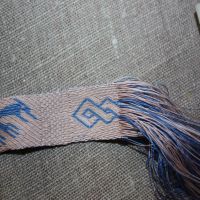
That lozenge pattern element is not a photograph, but a scan. So it should be to scale. But I pinned...
Guest - Katrin Sprang Discussion
15 September 2026
I was not referring to Rachel's reconstruction (is the reconstruction you refer to the one photograp...
Guest - Beatrix Sprang Discussion
14 September 2026
There is something Rachel did not mention. She told me: "Well, I worked with the measurements we too...
Guest - Katrin Sprang Discussion
14 September 2026
Well, this is certainly developing into an interesting discussion. Firstly, going from that lovely l...
MAR
03
0

More Stuff to Look At. (Or Listen To.)

Just before the presentation in Syke, there was an interview for the NDR (that is the Northern German Radio/TV), which is also online now. You can find it here - again all in German, of course. 

If you happen to be in London in the next months, you might consider going to see an exhibition about Kumihimo in the Japan House London. It will run until June, so there's still some time left. For those who want to get in the mood, or cannot make it but would still like to hear more about kumihimo, there is a recorded talk about the exhibition on the website as well. 

And just in case you'd prefer going for a nap, but have a hard time falling asleep: There's a Boring Books for Bed podcast. Though I'm not absolutely sure I agree with the title "boring" for something about embroidery. You can also listen to things about Egyptian Archaeology. Or Darwin's Origin of Species...

0
MAR
01
0

The Syke Presentation is Online.

If you'd like to watch the presentation I gave in Syke - here you go! It's all in German (sorry English-only speaking readers).

It wasn't possible to do a livestream, but I'm delighted that there was the possibility to make a recording, and put that online. I hope you'll enjoy it - I certainly did!

0
FEB
28
0

EAC13 Experimental Archaeology Conference

Just this weekend, I found myself in the middle of a discussion about changes the pandemic has made to our working life, and the pros and cons of home office and company office. The verdict (at least for me) was - a lot of things very, very much depend on individual circumstances. There's people who find it much easier to stick their head in a colleague's office and ask a question, or ask around at the coffee machine and water cooler, and others find it easier to quickly type a question into a group chat or send an email around.

There's people who can work comfortably from home, having enough space and enough of an internet connection, and there's others who can't. There's those who are on the phone with faraway colleagues most of the time anyways and those who need to handle things that can only be handled in person on site. So - it very much depends.

One thing that the pandemic has changed, though, is the openness towards online-only and hybrid events - and I, for one, am still utterly delighted that a lot of conferences now offer online participation or online streaming. I'm especially delighted if said online participation is free (or has a very low fee) because it's often been the case that a conference had two or three presentations that sounded very interesting to me, but for those it would not have been sensible, or affordable, to travel to a medium to very distant place and do the whole conference. With the hybrid events, I can now tune in to what I would like to see in those cases - and that's just utterly, gloriously wonderful.

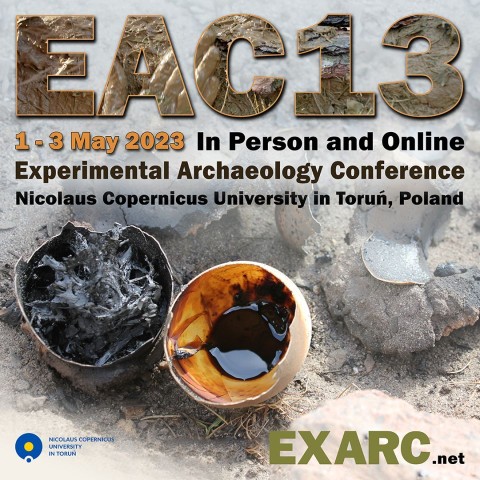
And all that is a very wordy lead-in to tell you that the Experimental Archaeology Conference in Torún, Poland, will also be a hybrid event. Online participation is free; the list of sessions and presentations is now online, and you can register for it to keep updated and get info material:

The conference website is https://exarc.net/meetings/eac13 and session 3.B is a textile session - plus there's a lot of other interesting papers about all kinds of experimental archaeology topics. 

0
DEC
20
0

Workshops Next Year!

I'm utterly delighted that there will be workshops next year - one set at the Nähtreffen Rothenfels, which is running for the 5th time now, and the tablet weaving workshop in Tüchersfeld.

Rothenfels will take place in February, from Friday 3 to Sunday 5. I have a number of workshops on the list, including the sewing introduction and sprang braiding - and there's other workshops as well, plus there will be music, and good company, and lots of fun hanging out with nice people. I'm very much looking forward to it already.

If everything works as it should, you can read more about it in the pdf on the right, which also contains information on how to register for the event.

The tablet weaving workshop is in March in the Fränkische Schweiz-Museum Tüchersfeld, on Friday 3 to Sunday 5. We'll cover tablet weaving from the basics to free pattern weaving with diagonals - and in some cases, participants in this course even proceeded on to the basics of 3:1 broken twill weaving, also without a pattern.  

The workshop can be booked via the museum website; the price includes materials and lunch on Saturday and Sunday.

0
NOV
29
0

Tales from Forum, Part II

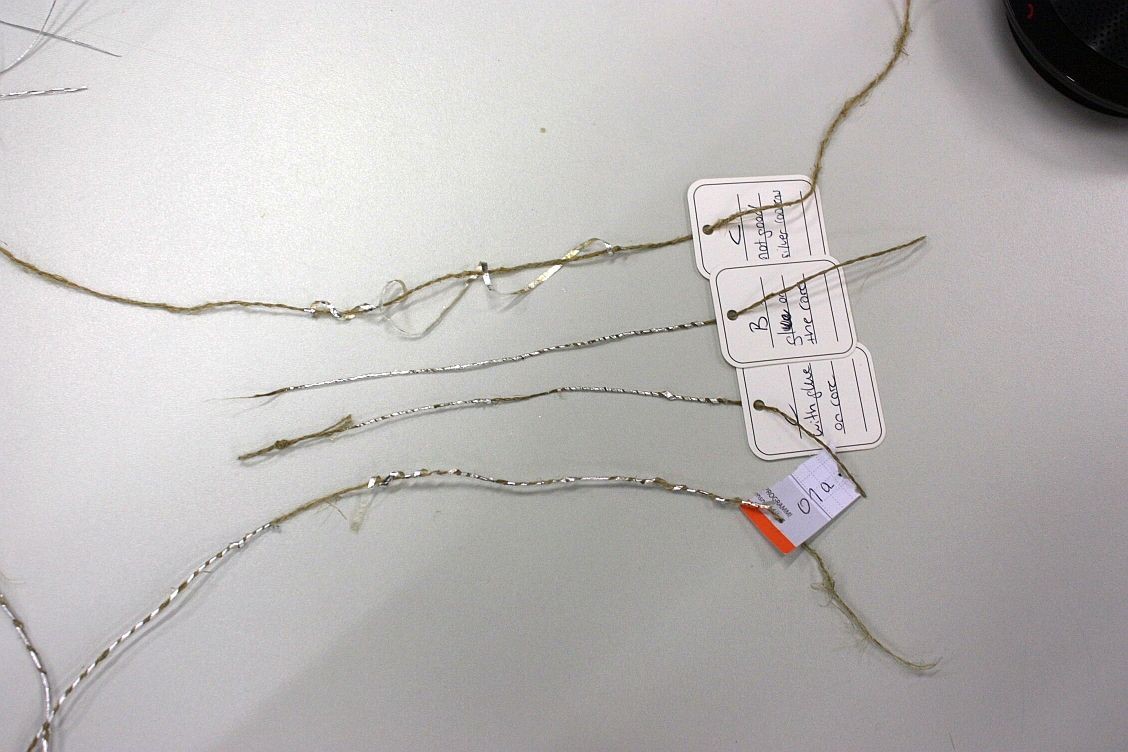
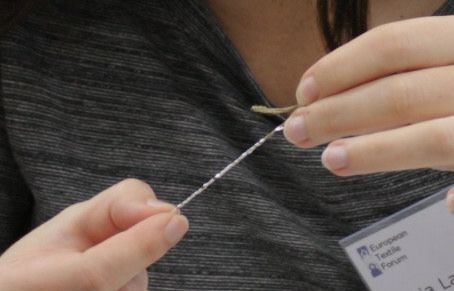
Not all that glitters is gold - sometimes it's just gilt silver, hammered into leaf metal, attached to a thin animal membrane and then wrapped around a thread core.

You might know about medieval gold thread, which was usually a strip of metal (often gilt silver, very rarely pure gold) wrapped around a silk core. Well, that's the "good" version, high-quality and rather pricey. And as always, if there's something posh and fancy and expensive, someone tries to get the same effect but for cheaper.

Enter the membrane threads. These are usually not around a silk core, but around a thread made from vegetable fibres, and the metal strip is replaced by animal membranes or, in other places, by a thin leather strip or by a paper strip. These are metallised with leaf metal, and here again, you can make it cheaper by reducing the amount of gold. How? By using "Zwischgold" - silver hammered out, then covered with a thin layer of gold, and this then hammered into leaf metal. 

Gold leaf is really, really thin, so thin that you cannot touch it with your hands. It will instantly cling to your skin and then dissolve. Medieval gold leaf was thicker than modern gold leaf, but it would still not be handle-able without gilding tools. Gold was expensive - so having the cheaper silver as the main metal and just adding a bit of gold would reduce costs considerably. New research about Zwischgold shows how it looked, and the thicknesses given are about 30 nm of gold in the Zwischgold as opposed to c 140 nm thickness of the regular gold leaf. 

This superthin stuff needs something to cling to, so it is stable enough for further processing. In the cheap gold threads that we were aiming to reproduce, animal membranes were used - to be more precise, a layer of membrane from bovine guts. 

So we had a go at silvering them - using not proper Zwischgold, but leaf silver, since that was a lot cheaper to get and is closer to the medieval original material. Then the membrane has to be cut into strips, and the strips then wound around a core, all of which proved to be do-able, but with a lot of room for improvement.

Both the gilding and the wrapping did require a lot of concentration! It also took us a while to puzzle out a method with which a longer piece of thread could be wrapped without getting too much of a twist buildup. 

A final very important part of making these threads, as we also found out: Time. Once the metal is on the membrane, it needs sufficient time to dry out properly, or it will come right off the membrane and right onto everything else - fingers, faces, tables, you name it! With enough drying time, it is much more stable.

Just like with the purple dye imitation, a good bit of work remains to be done on this, but we're very, very pleased with our preliminary results.

0
NOV
28
0

Tales from Forum, Part 1

I am back, and I had a wonderful time at the Forum - with all the typical hustle and bustle and utter, complete and wonderful madness that this week brings.

We had threads and thread-making as the focus topic, which meant that there were lots and lots of things for me to load into the car and ferry to Mayen - from tools to heckle flax or hemp to all kinds of spindles and spinning tools, plus some other tools in case something needed cutting, sawing, drilling or sanding. (There was some drilling done, so these did come in handy.) There were nettles, and there was wool of all kinds, and some cotton, and as always, it was not enough time during the week to do all the things that I had hoped to do.

That does not mean, though, that there was only little done - on the contrary. We managed to really do a lot of things, with work going on from right after breakfast to long after dinner... spinning, splicing, and some other things as well.

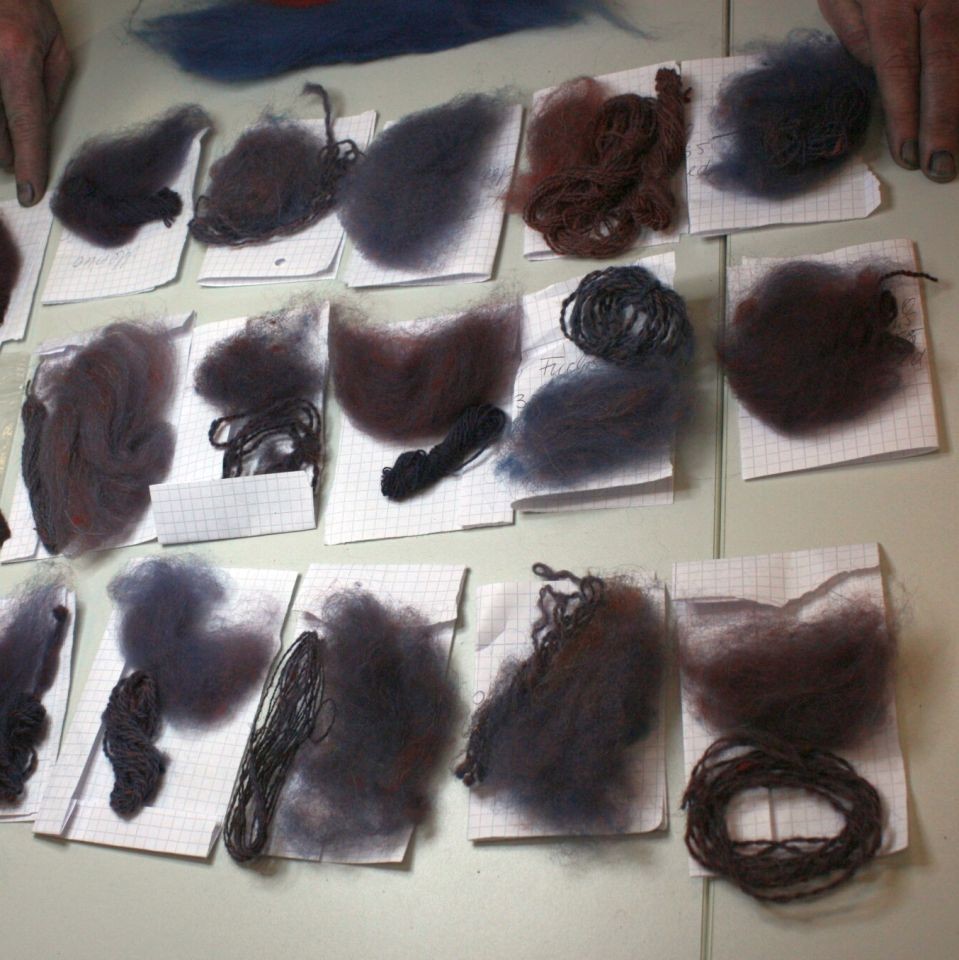
Micky Schoelzke spent a lot of her time in the laboratory room, working on a large series of dye variations to explore fake purple - the imitation of true snail purple dye through the combination of blue (from woad) and red (from madder). Some of the tests were overdyeing, and some of the tests were dyeing fibre to later blend together in different combinations of shades and different ratios.

The blending was a lot of fun, with lots of people working together to weigh the fibres, then blend them, and then spin little samples for comparison. It also looks like blending fibres is much easier to do for achieving a purple-ish colour than the overdying method. The blend will result in a slightly speckled look of the finished product (as can also be seen on a few extant samples where this method was used), while the overdyeing gets a more even result that can come closer to the Real Thing. However, hitting the right colour when overdyeing is much harder than blending fibres together, especially since you can do a little sample with the blending and then adjust ratios rather easily, while overdyeing is much more fickle. Yes, you can do a test dye, but the time, effort, and resources required for that are much higher than to do a test blend or two.

There's still a lot to explore on this topic, and I'm looking forward to more on it. The comparative ease of the fibre blending opposed to the overdyeing is, however, an argument for dyeing something in the wool that I can readily accept - because I'd usually vote that dyeing something in the yarn, or in the fabric, makes more sense. Less felting (which will occur even if you are very careful with your fibre), less loss of dyed fibre, and the yarn needs to be wet-finished anyways so dyeing will take care of that as well... plus yarns are easier to handle than fibre is. But if you want to spin blends of colour, well, you have no choice but to dye in the fibre.

The other big experimental action of this year's Forum was making gilt membrane threads... and I will tell you a bit more about that tomorrow.

0
OCT
24
0

I'm Back! For a While.

Here I am back again, for a few days, before the Week of Crazy will throw its shadow over my life. The Week of Crazy, also known as the European Textile Forum... 

For now, though, let me tell you that I had a wonderful time in Lübeck. It's really lovely to travel again, and to have actual physical presences when giving a presentation instead of just a camera. Though there was a camera, too, an in case you've missed it but would like to see what I did there, here's the presentation on Youtube:


The sound quality and the video quality are, unfortunately, not the very best - but at least it's there, and available, and I hope you will be able to hear all my (more or less bad) jokes.

I can also fully recommend the exhibition, which has some really spectacular items, among them a belt made from sea silk... 

0

By accepting you will be accessing a service provided by a third-party external to https://pallia.net/

Contact