Latest Comments

Guest - Katrin Sprang Discussion
18 September 2026
Hi Rachel, I have looked for more photos of you, but that was not very successful. I found a link on...
Guest - Beatrix Sprang Discussion
15 September 2026
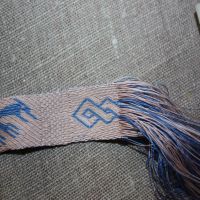
That lozenge pattern element is not a photograph, but a scan. So it should be to scale. But I pinned...
Guest - Katrin Sprang Discussion
15 September 2026
I was not referring to Rachel's reconstruction (is the reconstruction you refer to the one photograp...
Guest - Beatrix Sprang Discussion
14 September 2026
There is something Rachel did not mention. She told me: "Well, I worked with the measurements we too...
Guest - Katrin Sprang Discussion
14 September 2026
Well, this is certainly developing into an interesting discussion. Firstly, going from that lovely l...
AUG
09
0

Conference Preparation.

A good part of today has been conference preparation -  both for the Textile Forum (planning things, mostly including madder - red seems to be the dye that stimulates a lot of research) and for the EAA in Belfast.

Conference prep in that regard included going through the session list and trying to figure out what I will be able to attend, and downloading the abstract book. Like in all huge conferences, there's a lot of things on offer. Or maybe I should say A LOT. Or, to be even more precise:

A LOT.

There's three days of conference sessions (August 31 to September 2), and there's so many of these that of course most of them are running in parallel. The abstract book and programme book are online now, and the abstract book has a whooping 1192 pages. I kid you not. Almost two thousand pages!

As you can well imagine, I will not be able to catch half of the things that sound really interesting to me. At least there's one time slot where I don't have any trouble at deciding what session to attend, and that's on September 2, where I'll be giving my own presentation in session 468...

0
JUN
15
0

Fascinating Fabrics.

I've been delving into fabrics (well, images and descriptions of them) for a current project - and I am once more amazed at the colours, patterns, and complicated weaves of the Middle Ages. So many different possibilities offered by silks and human ingenuity, it really is mind-boggling.

Tomorrow will hopefully see one more step of this research and request part of the project done and dusted - and after sending that off, I will be packing for the event in Düppel on Sunday

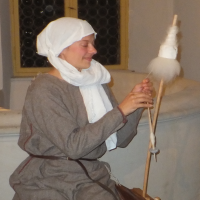
I'll be in the "Museumsdorf" with my spinning equipment, and if you are close to Berlin, stop by, say hello, and have a go at spinning with spindle and distaff if you feel so inclined! 

Because I'll be working on the weekend, and will be travelling back on Monday, the next blog post will be on Tuesday. Have a nice weekend everybody!

0
JUN
14
0

CfP European Textile Forum 2023

And we go on with the series of CfPs - this time, it's sort of on my own behalf:

I am very happy to announce that the Call for Papers for the European Textile Forum 2023 is now open!

We will look into "Dimensions of Dyeing: Colours, Mordants, Processes."
The European Textile Forum in 2023 will take place in Mayen, Germany, in the Laboratory for Experimental Archaeology (part of the Leibniz Research Institute for Archaeology), November 6 to November 12. It is a small conference which aims to explore archaeological and historical textiles in both theory and practice. For this, we combine paper presentations and workshops or practical sessions on the paper's topic. These practical parts are either led by the presenter, for instance to teach a reconstructed method or technique and have the rest of the participants try it, or they can take more of a "community brainstorming" form, if the method is not yet known. With this combination, we also want to connect practical specialists and theoretical specialists.

This year it is time to look at colours and dyeing. Colours played an important part in historical textiles. Bright colours did not only show off wealth, they could also have symbolic meanings. Dyeing processes can range from very simple, with little knowledge and effort needed, to very complex, just as the dyestuff can be very cheap - such as leaves or walnut husks - to extremely expensive, such as Murex snails for true purple. At the Forum in 2023, we want to look at the many dimensions of dyes, dyeing processes, and the use of colour in textiles - including special cases such as the re-use of coloured textiles to make painting pigments, or the use of paints to colour textiles. Mordants and their role in dyeing should, of course, not be forgotten.

We'd like to invite you to do a presentation or workshop, or both, to explore the different procedures, tools, and materials related to mordanting and dyeing or otherwise colouring textiles. Work space outside and inside is available, so it will be possible to dye on open fire, or indoor using heating plates or similar equipment. Presentations can be between 15 and 45 minutes, with workshop time or time for practical exploration afterwards as necessary.
For more information, take a look at the full Call for Papers on our website. Registration for the conference is also open now, and you can find the registration form here.


Please do also pass this Call for Papers on to others who might be interested - thank you!

0
JUN
07
0

NESAT 15 - CfP is out!

If you're a textile archaeologist, there's one highlight, conference-wise, that comes up every three years: the NESAT. Short for Northern European Symposium for Archaeological Textiles, this started as a very small thing to make a few lone textile researchers a little less lonesome - and now it has grewn into something relatively large, and absolutely awesome. My first NESAT was the one in Copenhagen, Number ten (and I still have the t-shirt, literally). 

Now the Call for Papers for NESAT 15 is out. It will take place in 2024 in Warsaw, Poland; the CfP is open until the end of October this year. Find out more, if you're interested, on the official conference page here.

0
MAY
30
0

Experimental Archaeology Conference 2023 - CfP

EXAR has its annual conference on October 5 - October 8 this year, and it takes place in Lauresham/Lorsch. The central topic of the conference is: "Experimental archaeology in science and education 2023". 

Registration and CfP for the conference are now open, and you can register via their website. (I haven't been able to attend for a number of years now due to timing conflicts, but the conference used to have a lot of German contributions, and last year's conference programme lists exclusively German titles for the contributions. So the conference probably makes you happier if you have good enough German language skills.)


0
MAY
10
0

"Making, Wearing, Displaying: Textiles and the Body"

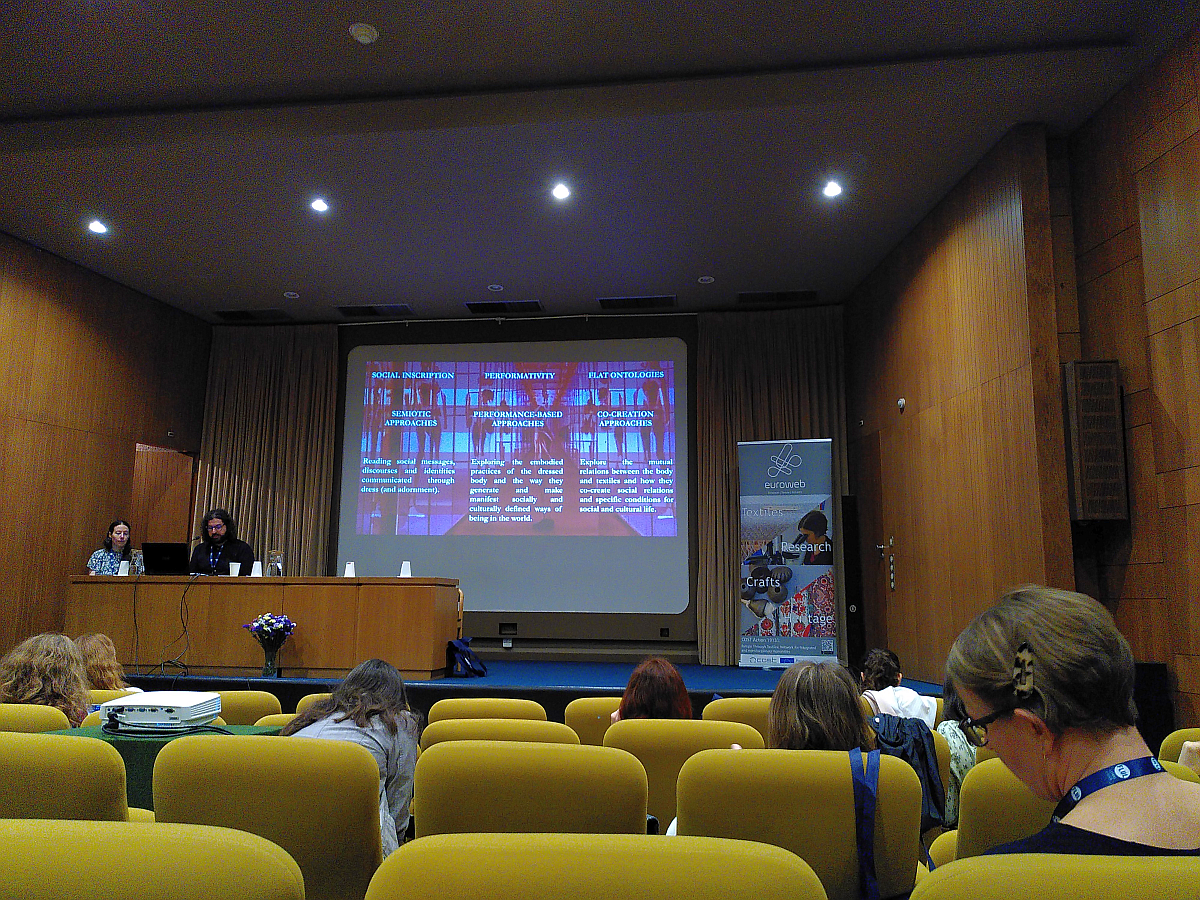
I'm back home from a wonderful workshop - and the title "Making, Wearing, Displaying: Textiles and the Body" really fit all the contents of the workshop.

We had a lovely mixture of papers and practical sessions, one of them involving modeling of various reconstructions of old garments. There was Iron Age and Bronze Age things, there were a few galloroman garments, and pieces from Xianjing - of which I got to model one. It was the earliest piece, put together from a lot of fabric that was mostly uncut, and a very interesting experience to wear. The two other garments from the same project were much more tailored and looked elegant from the get-go, while my gown felt more like hanging out on the couch and have chocolate and watch Netflix. (Or read a book, maybe.) While I've worn a good number of historical garments and garment reconstruction over the years, and most of them not just for half an hour or an hour, but for actual working and living in them, it was the first time I had something as loose-fitting and flowy, with no body shaping whatsoever. Very curious feeling for me.

There was also a workshop on Greek dancing (ancient Greek, of course), in the wonderfully warm sun, so it felt quite fitting. And then, of course, lots of papers about a huge number of aspects regarding textile and the body - from dental abrasions probably caused by textile work to a project looking at brain activity when doing textile work. The programme was really long and packed, but the organisers did an absolutely splendid job in how they arranged papers, breaks, and practical sessions to make it still easy to follow along and take in all the information.

We also got treated to a tour of the Ethnographical Museum in Lisboa, who graciously hosted us for the first two days, and to copious amounts of typical food and sweets (coffee breaks!) plus, of course, coffee.

Portuguese coffee is lovely, and I probably had too much of it - but did I mention it was delicious? 

After the conference, I had a bit of time left to explore the city. I spent most of the two days I had walking up and down the streets, looking at things at a flea market, seeing the loom weights (and the museum mascot cat) in the Museo Archqueologico do Carmo, plus the Natural Science Museum and the Botanical Gardens as well as many, many streets in different quarters. There would have been much more to explore, but there's only so much you can do in two days, especially if you also have to take breaks to sample the local delicacies. There had to be an adequate sample size for determining coffee quality, for instance, and since there is not only the signature "pastel de nata", but a plethora of sweet baked goods in Portugal, these had to be sampled too. 

Finally there were visits to a few supermarkets, because I always find it very interesting to see how goods differ from country to country, and on Sunday I spent some time doing what a lot of the locals did: Hang out in one of the parks, sitting on the grass and enjoying the day (in my case, with a bit of knitting). 

And then it was already time to go home... with a few delays along the way, which meant I arrived a bit later than planned, but not castastrophically late. Now it's time to get back to work - with new insights about displaying dress and the body. 

0
APR
27
0

Experimental Archeology Conference coming up!

My blog thingie is, it seems, trying to make me look like a bit of a fool - I used one of the post drafts that had not gotten through, but the progamme then obligingly posted it under a different date. Very nice of you, blog thingie, thank you so much. Not.

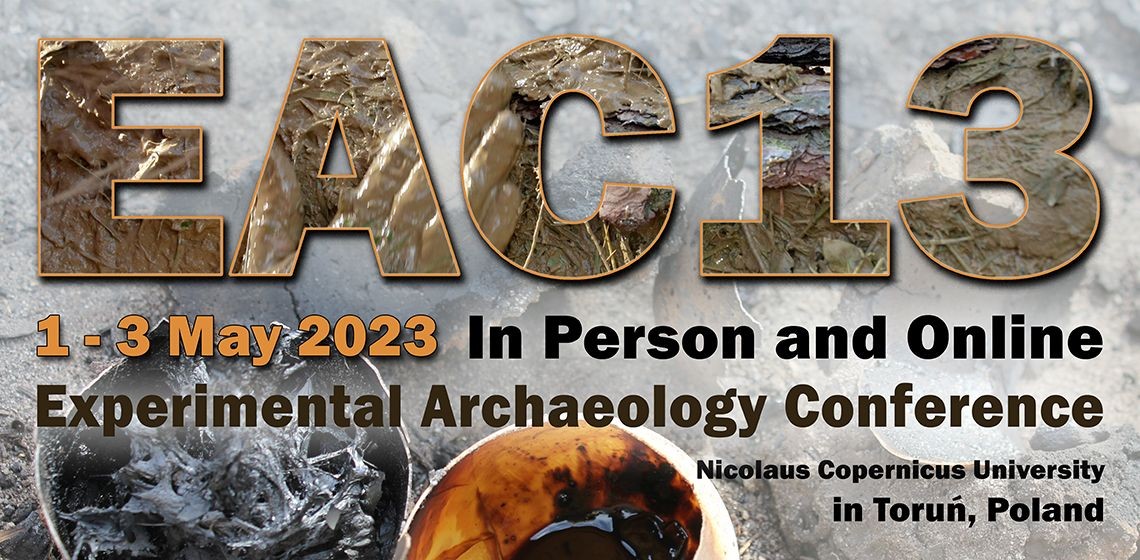
On to nicer things than wayward software, though! There is a large Experimental Archaeology Conference coming up, running May 1-3. It's in Torun in Poland, but will be a hybrid event, so if you'd like to join in on short notice, you can.

13The full programme is here: https://exarc.net/meetings/eac13 and there is a session with focus on textiles on Monday, May 1, starting at 14:30 (Session 3.B).

You can follow the presentations online via https://www.youtube.com/@exarc. Links will also be included in the website. For extra chats and discussion there's a Discord server you can join. For more information on the conference, go here: https://exarc.net/meetings/eac13/how-attend.

So I hope there's something interesting on the programme for you, and that you will have fun participating!

0

By accepting you will be accessing a service provided by a third-party external to https://pallia.net/

Contact