Latest Comments

Guest - Katrin Sprang Discussion
18 September 2026
Hi Rachel, I have looked for more photos of you, but that was not very successful. I found a link on...
Guest - Beatrix Sprang Discussion
15 September 2026
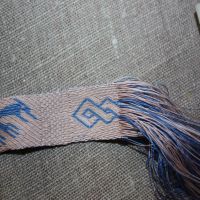
That lozenge pattern element is not a photograph, but a scan. So it should be to scale. But I pinned...
Guest - Katrin Sprang Discussion
15 September 2026
I was not referring to Rachel's reconstruction (is the reconstruction you refer to the one photograp...
Guest - Beatrix Sprang Discussion
14 September 2026
There is something Rachel did not mention. She told me: "Well, I worked with the measurements we too...
Guest - Katrin Sprang Discussion
14 September 2026
Well, this is certainly developing into an interesting discussion. Firstly, going from that lovely l...
OCT
19
0

Cords, Next Step.

Those fancy cords with the wool-wrapped rings at the bottom are not only finishing the bottom of the corded skirt from Egtved, they are the fancy finishing touch for belts as well - for several different belt finds, in fact.

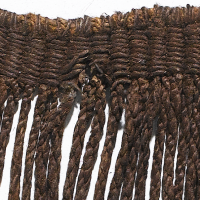
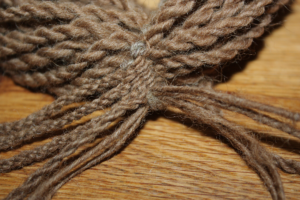
Which means they also adorn the ends of the belt found in the Egtved grave... and I've finished weaving the reproduction of that, and now I'm at the cord-making stage:


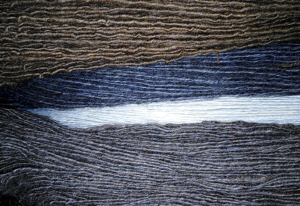
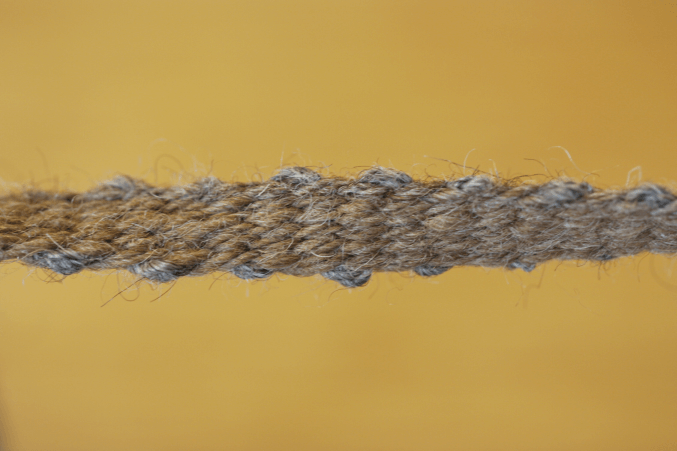
The lighter grey thread is the weft thread, visible at the edge of the band; then there's single threads (that is the rest of the warp) and the thicker plies on the upper edge are the extra threads inserted to make the fringe full enough - because the paltry 20 warp threads are not enough by far for a proper, nice, bell-shaped fringe or tassel or however you might call it.

Making these was an enormous amount of fun. It was, however, also a series of movements I'm not quite so accustomed to, so in spite of it being a lot of fun, I had to stop before the thing was all done, because my wrists and fingers started to protest the repetitive twisting movements. Tomorrow, though, will see the thing done and completed!

This smaller amount of shorter cords has also confirmed my suspicions about how the yarn for the corded skirt should be spun and dimensioned in order to make cording as easy as possible, and that is quite, quite hard spun!
0
OCT
15
0

Spinning, Weaving, Testing.

Sorry for the blog silence yesterday - I got so caught up in textile work that about everything else on my "to do daily" list slipped past me, including (obviously) doing a blog post. It was a very successful day otherwise, though. I have progressed from the "pure testing" stage into the stage where testing segues into actual work; so yesterday, I made two warps.

The current museum project is the reproduction of Bronze Age garments for a museum, to be used in hands-on sessions for visitors. I've posted about the wool problem before (there's no sheep left with the appropriate mix of fibres), so I'm using compromise wools. The rest of the project, though, I'm of course aiming to get as close to the originals as possible, so the people handling the items will get the best experience, and impression, possible.

This means spinning to the same thickness and twist angle as the originals - which is not quite as easy as it sounds, because, well, there's aiming to do something just so and managing to do it just so, and those two don't necessarily coincide. Also, if a yarn looks right when your are spinning it does not always mean it will look right once it's been soaked and stretched and dried again, or when it has been made into a warp. Things can happen on the way... and then you will have to adjust.

Trying to get as close as possible also means weaving, or plying, or twisting tests. There's been one test warp for the Egtved belt a while ago, where I found out that my yarns were a bit too thin; now there's a second warp strung up in the living room, and this time, it looks much better.
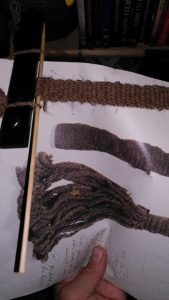


I'm working with 1:1 scale printouts of the finds to check if what I'm doing is the right size, and shape, and density. The feeling when you hold your piece next to the print, and it matches? That's so, so satisfactory.

This is the first of the warps I set up, the one of the belt; the other one is for the corded skirt, and that setup was, so far, also successful. The skirt band consists of several sections, the first of them without the extra selvedge cord for the corded part, and with a plied weft, just plain woven - and I have already finished that part. It looks very unspectacular:
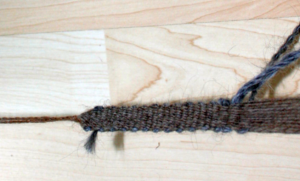


You can already see the thick selvedge cord anchored in the weave, and coming out on the right side. Next section will be the part with the cords!

 
0
OCT
13
2

Density Differences.

Let's get back to some more textile-related things, shall we?

Test spinning has finished, and now... more testing is about to happen: I'll set up the warp for an Egtved corded skirt, and I'm all excited about that!

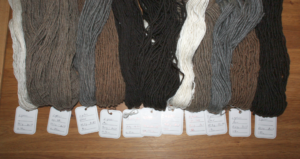
Before I get to warping, though, you're getting a shot of the test yarns, all nicely set up in a row:


I did some labeling, and weighing, and measuring, of course. Just like I expected, even though I tried to spin all of them about the same thickness and the same amount of twist, there are considerable differences between the individual fibres. The Nm, for instance, varies between 0.8 and 1.9.

If you're not familiar with Nm, that is a gauge measurement for yarn thicknesses, and it tells you how many metres per gram a yarn has. So Nm 1 would be a single yarn with one metre per gram; Nm 5 would be a single with 5 metres per gram. If you have two numbers, like in Nm 10/2, the second one gives the amount of yarns in the ply, and the first the overall count - so the Nm 10/2 would be a two-ply yarn with ten metres per gram, made up from two singles. (In most yarns, you can assume that the single yarns in the plied yarn will be similar, so that would mean they both are an Nm 10, and the plied yarn thus ends up being Nm 5.)

In my test spins, the Gotland yarn has the lowest Nm, with 0.8; it's also the fibre that is densest when I portion tops for sale, and thus makes the smallest 100-g ball. The others were more or less similar, ranging from Nm 1,3 to 1,9 - with the irregularities of hand-spinning, and the squish factor when skeining (the tension, and half a round more or less), and the relatively small sample size, that, to me, does not look like such a significant difference than between Gotland and the others. More spinning will come, though, and maybe then something more reliable will show up.

First, though... off to warp!

(edit to fix typo!)
0
OCT
07
0

Testing.

Today was mostly spent spinning - I'm doing test yarns for a fabric reproduction project. One that has me very, very excited - it's Bronze Age fabrics, and making the yarns for this is one of the tasks coming up for me now.

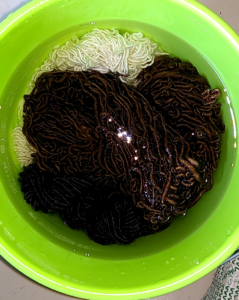
So I'm doing test spins currently, trying to get a feel for the different fibres that come in question (all of them compromises, because of the lack of real Bronze Age type sheep with their very special type of fibres) and getting a feel for the thicknesses and twist levels that should be suitable. Once the test skeins are done, they get a bath:


and then they are hung up to dry.

Afterwards, I weigh them, label them, calculate the Nm value (that is purely out of curiosity, though), document how long it took me to do that amount of yarn, and once the last batch will have gone through this, weaving tests can start.


It's always fascinating to see how different types of wool spin out differently, and have different properties afterwards (like the Nm count) - even if the yarns have about the same thickness and the same amount of twist.
0
SEP
22
0

I'm Back, and Things Will Happen!

I'm back! And, can you believe it, it feels like I'm almost back on track? I'm sort of half-expecting and half-fearing, though, that I will find out any minute now that I am way more behind than I thought I am...

This year has been sort of crazy in regard to our summer holiday, and the summer break, with a lot of things lining up more or less seamlessly. That meant very little breathing space inbetween... so we ended up going off on holidays directly on our first free day, instead of taking one or two days off at home for preparing the trip and doing all the home things that should be done before.

And just like the holidays began - as in "very suddenly" - I'm back and there's things on the agenda for the next days already, starting with a talk (in German) about two experiments that took place during past European Textile Forums. At 19:00 CET tomorrow, I will be chatting with Franz Pieler, director of the MAMUZ in Austria, about the spinning experiment and the Pompeii dyeing experiment.

Here's the link to the MAMUZ site, where you'll be able to follow the livestream (which will also be available later).

Next thing to come up in line is the next German Online Spinning course, Tuesday next week - so on the 28th of September, starting at 18:00. There's still some spaces left, so if you book your spot now, you can join in with the fun.

For English speakers, the next online spinning course is on November 5, 10:30 CET (it's the Down Under Edition, hence the morning start). Again, there's spaces still free, and you can learn more about it here (and book as well).

And now I'll get back to catching up some more...
0
JUL
23
0

At least this happened.

There's been some more behind-the-scenes website wrangling, though that was not quite successful. (If you've run across broken image links in the blog - I'm working on it, they will be fixed soon. This is a side effect of me getting rid of the many, many extra images that Wordpress generates when media is uploaded... which cluttered up my webspace.)

I hope the other issue, which regards the new site and especially its template (sigh...) will get better with some support... and now I'm really looking forward to the weekend.

Which promises to be quite sunny, and nice, and warm.

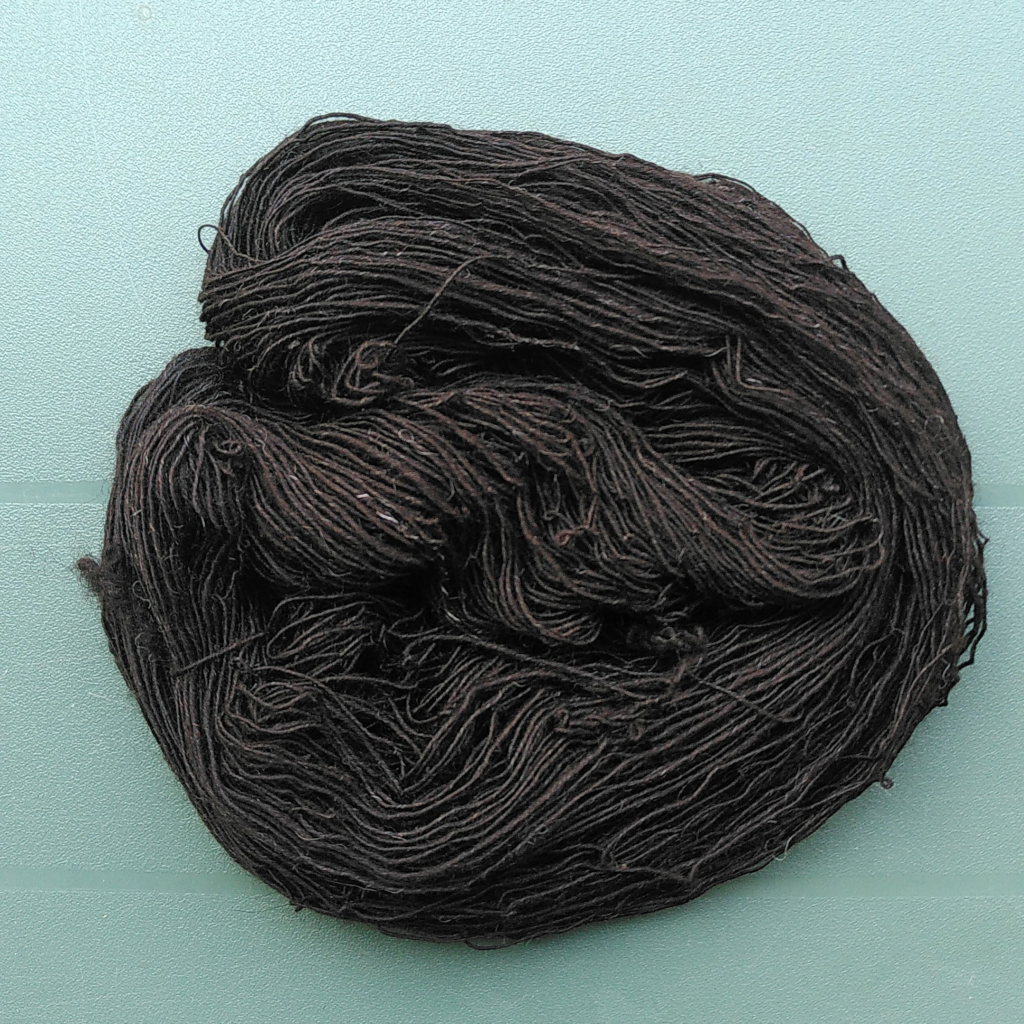
There also was some spinning! Here's the results:


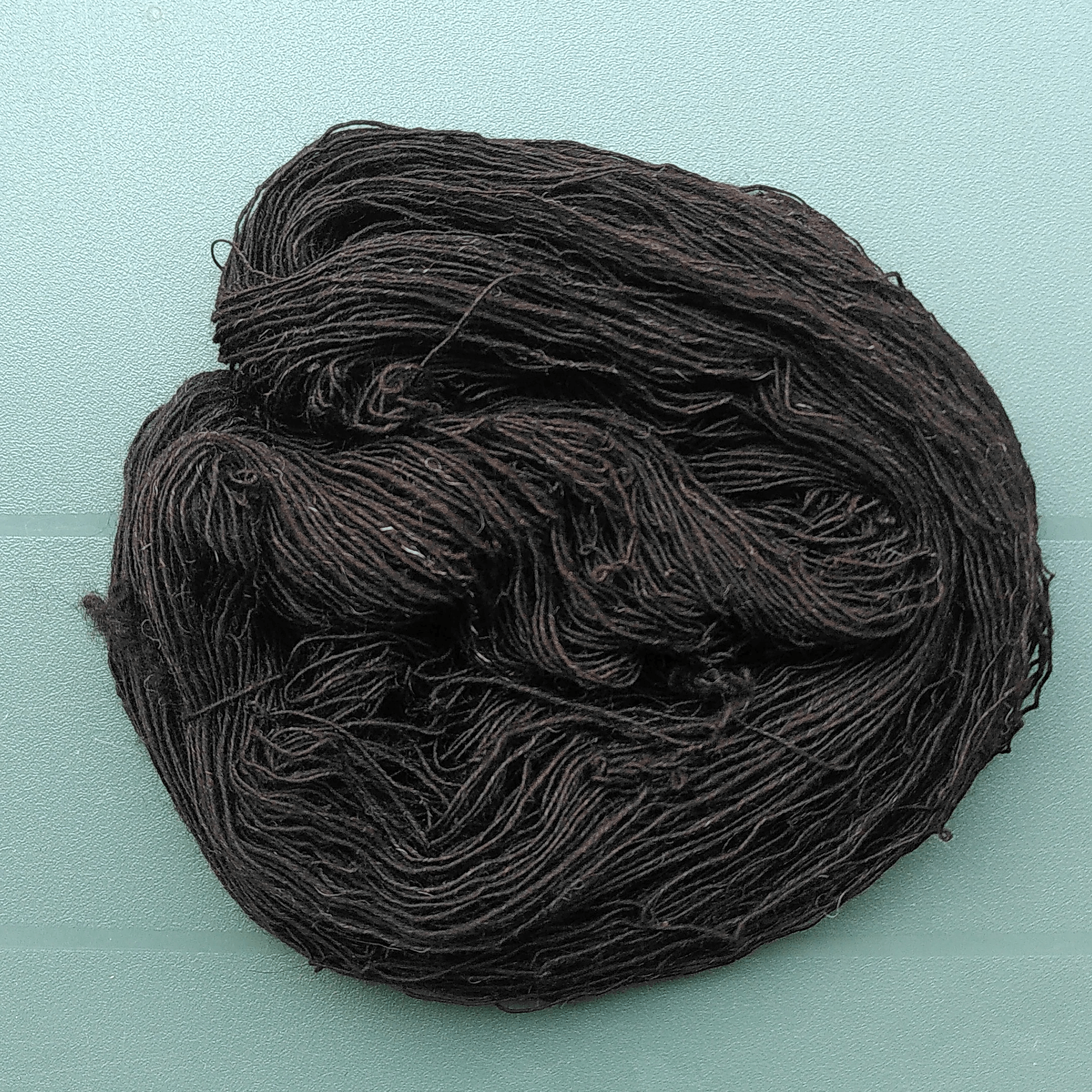
One very nice skein of dark, rather shiny yarn, which was a joy to spin up. As opposed to the "fun" spinning I'm currently doing with some mystery fibre (well, I know it's wool, but I forgot exactly which kind) which has a lot of crimp, and somehow does not please me at all to work with. I'll stick with it some more, though, so that we can have some yarn for the Textile Forum to play with.
0
JUL
08
0

Handspun Stuff in Action.

I'm getting asked time and again about what I do with my handspun. Well... that depends.

Sometimes I spin for a museum reconstruction project, so it's spinning for a certain end result, and the threads then get passed on to the weaver, or I do something with them.

Most of the other spinning I do is for no specific purpose, and a lot of it is yarns I do for demonstration. Thus they can be a little inconsistent... because of explanations like "see, this is how you make thicker yarn, and this is how you make thinner yarn, and this has more twist and this less..."

With that kind of yarn, not much is happening. It mostly sits around on spindles somewhere until I take it off, or until I need some bit of string, or have to demonstrate plying (yarn with little twist also plies up shittily, but ah, one copes).

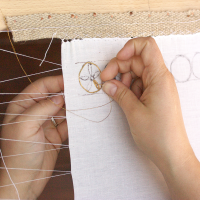
Sometimes, though, I also haul it out (the better, not so inconsistent yarns) to do some experimentation, or fooling around. Like now, when I've set up a warp to test our Blindis band technique reconstruction once more, and (most importantly) take some decent photos of the process.


So... that's a bit of the brown handspun used...
0

By accepting you will be accessing a service provided by a third-party external to https://pallia.net/

Contact