Latest Comments

Guest - Harma Too Many Images Error.
27 November 2026
There have been weeks in November in which I would talke about 800 pictures. Proof of very interesti...
Guest - Max Mustermann The True Cost of Driving a Car.
06 November 2026
Great breakdown — the non-fuel costs are exactly the bit most people forget when they compare cars. ...
Guest - Harma Phew. Now it gets involved!
21 October 2026
Have fun at these events.
Guest - Aislinn Dyestuff Citizen Science.
09 October 2026
This is a great project. I look forward to the results. Thanks for letting us know.
Guest - Aislinn Time for...
09 October 2026
Looks delicious!
JUL
17
0

CfP: Leeds 2020.

Leeds. If you're a medievalist, you automatically think of the International Medieval Congress (which is the European equivalent to Kalamazoo). It's a fantastic congress - I'm tempted to write "event" instead. I've only been there once, but eventually, I'll make it back again. There's always a huge programme, split into sessions with specific topics, and the sessions are organised by conference participants, who then look for papers fitting the topic.

One of my colleagues from the textile fraction is co-organising a session in Leeds next year, which will run on July 6-9. It's called

The Art of Borders: Examining the meaning and function of borders, edges and thresholds in early medieval art.

This session explores how medieval art incorporated, established or broke down borders in both real and metaphorical forms as understood through material objects. Drawing on physical, visual and conceptual engagement with borders and edges, the material forms of painting, manuscript illumination, stained glass, metalwork, sculpture, textiles and embroidery are all understood to use physical and imaginary borders to provide meaning and impart messages for those who came into contact with them. These encounters ranged from the moment of their creation, through their continued use and reuse, to their deposition or preservation and use today in the settings of contemporary scholarship and public display. We are seeking papers which explore the use of visual, metaphorical and conceptual borders in medieval art, exploring how these were understood and used both by early medieval society, and from a current scholarly perspective. Paper proposals are encouraged that focus on practical and sensory engagement with art, as well as those speaking from theoretical standpoints.

Paper topics might include but are not limited to:
  • How physical borders and edges create and craft meaning.
  • How the development of Visual Physiology has been used to help us explore the use and meaning of art in earlier societies.
  • What it means to draw attention to the edges of things in early medieval art.
  • The transformative and/or transgressional nature of borders and edges
  • The symbolic or material significance of borders on visual objects
Original proposals are sought for twenty-minute papers. Please submit a working title and a 250-word abstract by 1st September 2019 to Dr Alexandra Makin at This email address is being protected from spambots. You need JavaScript enabled to view it. and Dr Meg Boulton at This email address is being protected from spambots. You need JavaScript enabled to view it.
For information relating to the Congress, including information about fees and bursaries, please see https://www.imc.leeds.ac.uk/imc2020/.
0
JUL
16
0

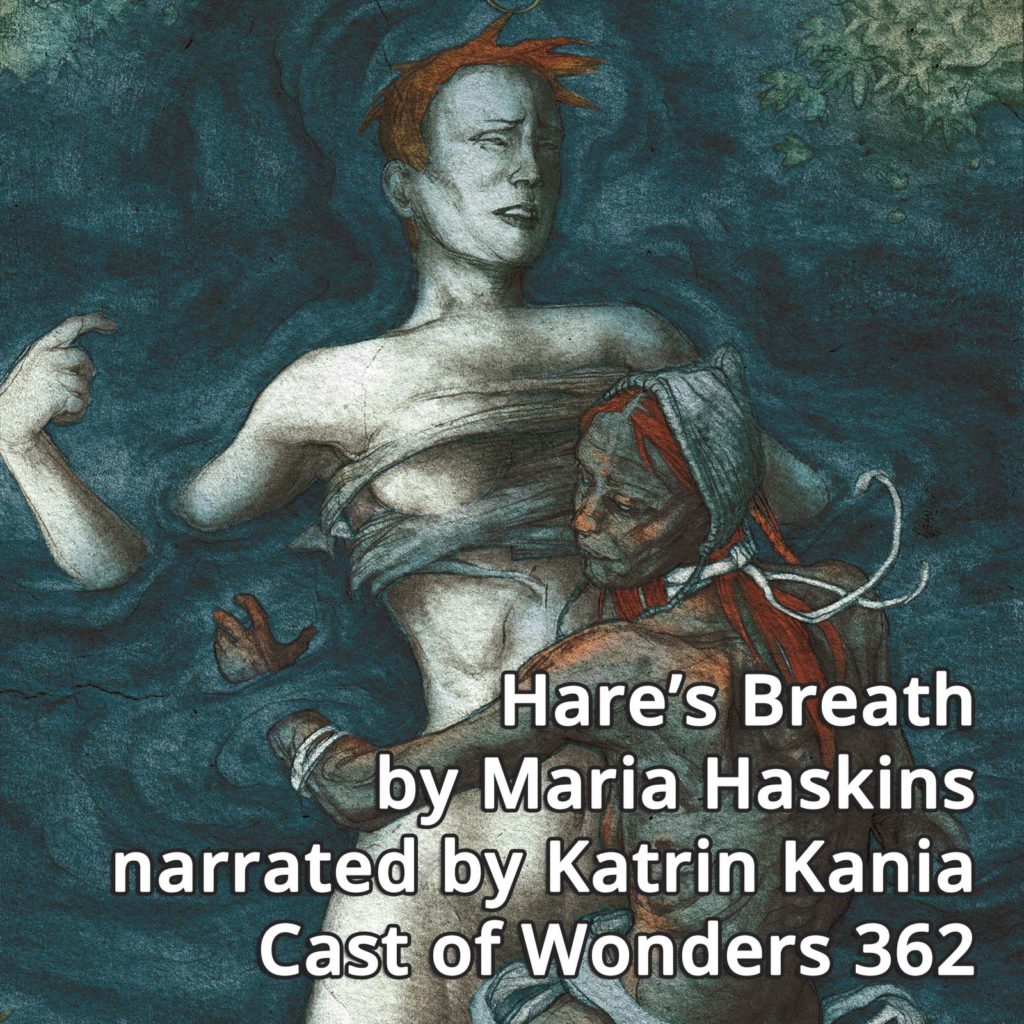
Cast of Wonders - Episode 362.

I've done it again. A while ago, I sat down with some recording equipment and some sheets of paper and a glass of water, and I got to read a haunting story for Cast of Wonders.


That is my third narration for the Escape Artists, and the third for Cast of Wonders. Fun fact: I actually applied to narrate for EA because I love EscapePod so much, and at that point, I hadn't listened much to CoW. One day, there will be a SFF story that fits my voice. Or at least I hope so... and until then, I'll happily go on reading stories for Cast of Wonders.

This time, it's episode 362, "Hare's Breath" by Maria Haskins. I hope you enjoy the story!

 
0
JUL
15
0

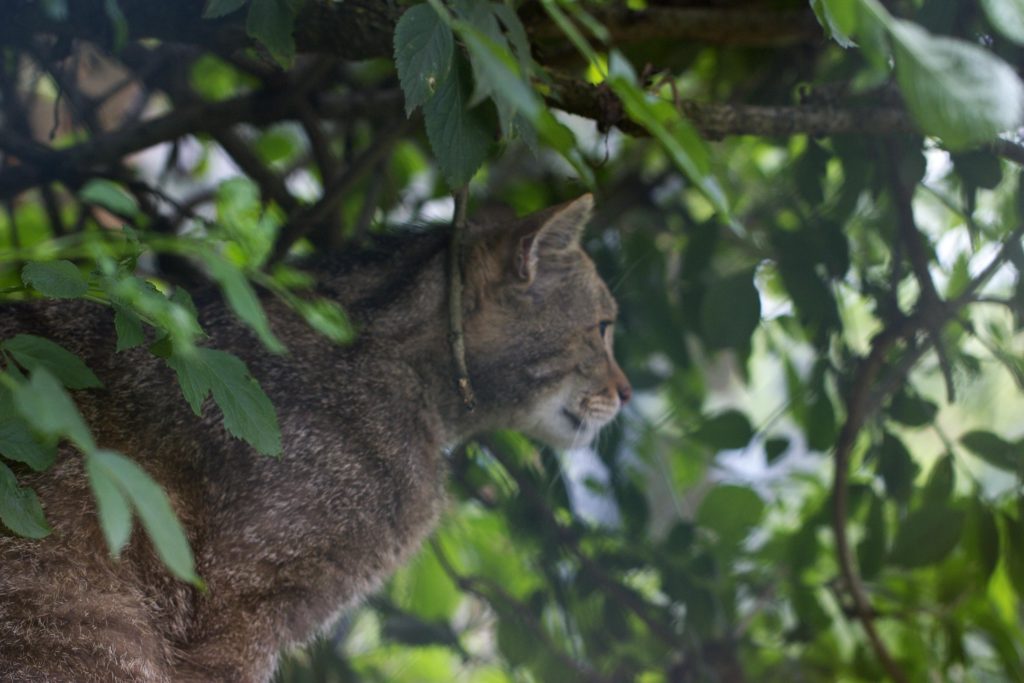
Wild cats in Hütscheroda.

The last part of the excursion was a visit to Hütscheroda - that's a small place in Thuringia which calls itself "the wild cat village".

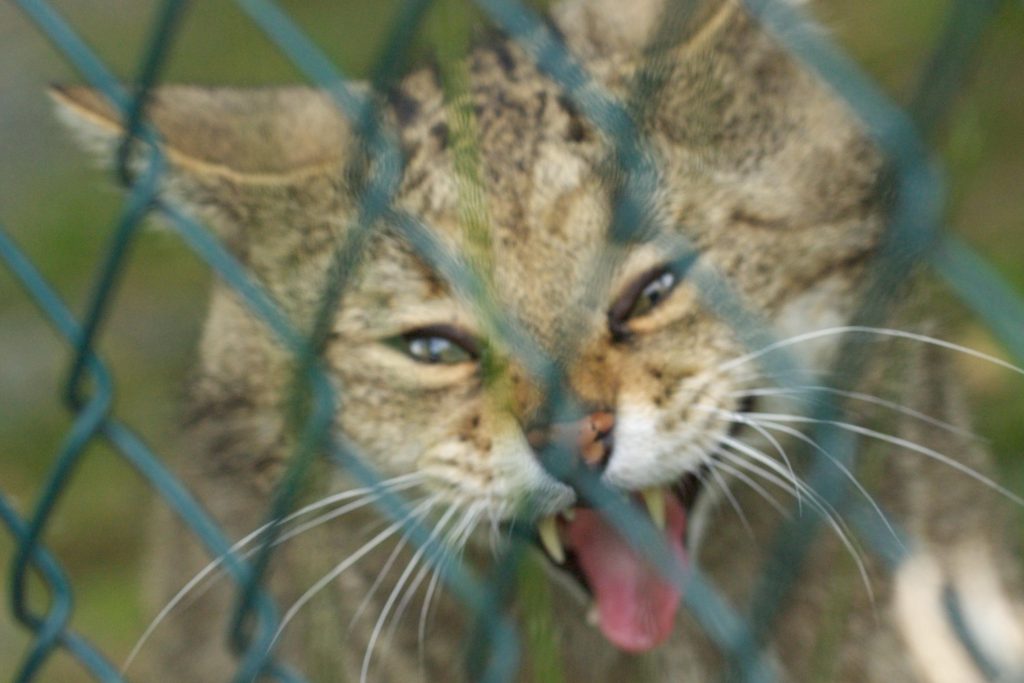
Wild cats live in the forest next to the village - but these critters are so shy, and so well-disguised, and so quiet that to see one in the wild is an extremely rare thing. So in addition to a small path through the forest, and a longer route if you want to see more of the beautiful landscape, there are a few enclosures with male wild cats (who come from breeding programmes, they are not taken out of the wild). Chances to see one of the cats there are higher - and you are guaranteed to see them three times daily, when it's feeding time.

You also get some info about the cats during this feeding time... and if you are lucky, a photo or two with more or less of the fence visible.

[caption id="attachment_4746" align="alignnone" width="640"] One of my lucky shots - that is Carlo.


If you are interested in wild cats, this place is definitely worth a visit! In addition, they are now having a lynx pair, in hopes of breeding some more lynxes. We didn't get to see these, as they are freshly arrived, but they will soon go into their enclosure.

[caption id="attachment_4745" align="alignnone" width="640"] Wild cats make funny faces, too.
0
JUL
12
0

Weekend Wonderfulness.

A while ago, we got surprised by an offer to participate in an excursion organised by the BUND (which is a nature protection organisation) - to go see some very special, protected forests such as the Hohe Schrecke (page all German) and the Hainichenforst, and some wild cats in Hütscheroda (English/German page, and pics).

We decided to go - and we had an amazingly wonderful weekend, with lots of really uplifting information. There was a bunch of success stories about smaller and larger things that are good for the region around the protected areas, and of course the protected areas themselves. There was also a bonus fruit juice tasting from a local fruit juicery, bonus info on how to prune cherry trees (which was very timely, and very helpful, for the sour cherry bush tree in our garden), and lots of wonderful forests and meadows and birds and bugs.

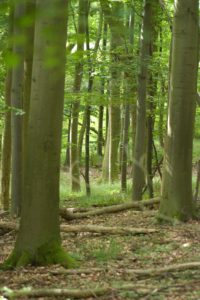
Here's some forest for you:


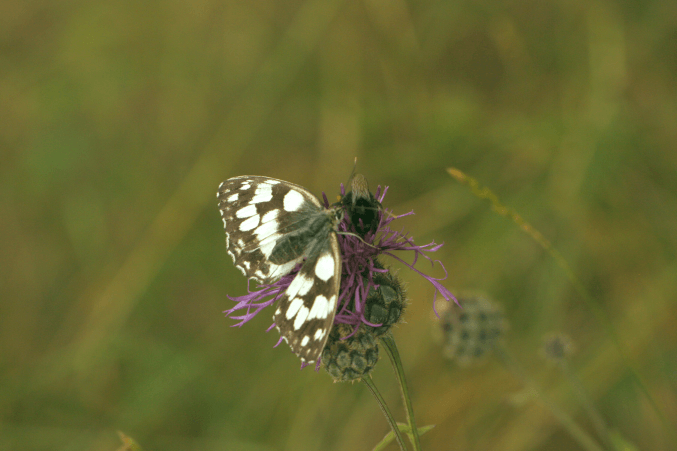
There were also beautiful meadows in the open land between fields and the forested areas, and I was utterly delighted to see several of these butterflies - it has been years since I last saw any of them:


Their German name is, literally, "chess board butterfly".

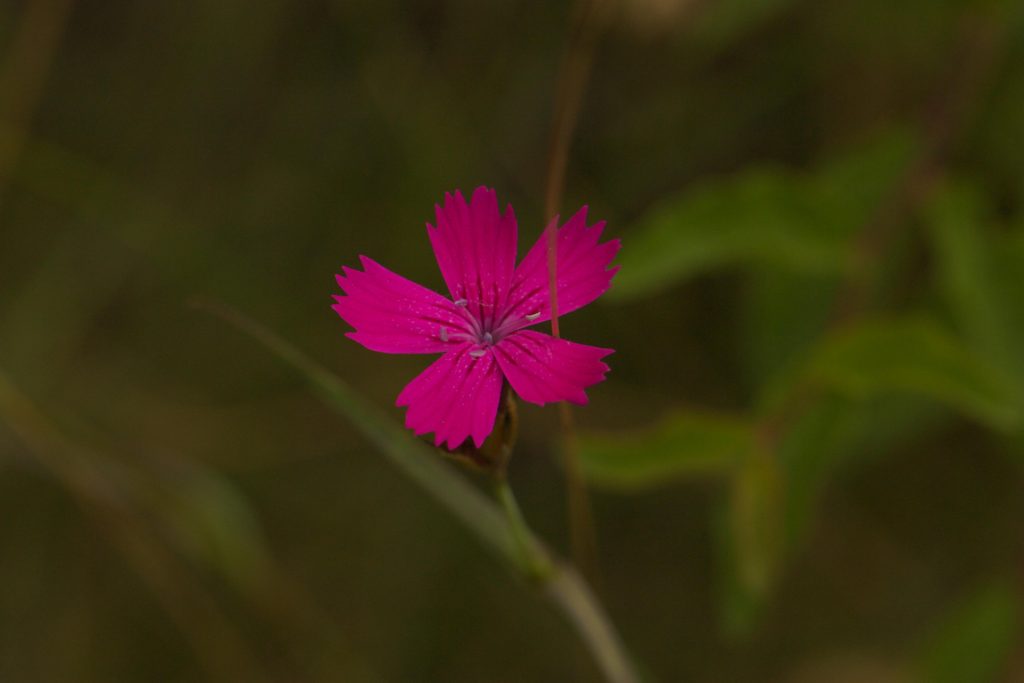
I also loved this small but bright little flower:

[caption id="attachment_4744" align="alignnone" width="640"] Kardinalsnelke


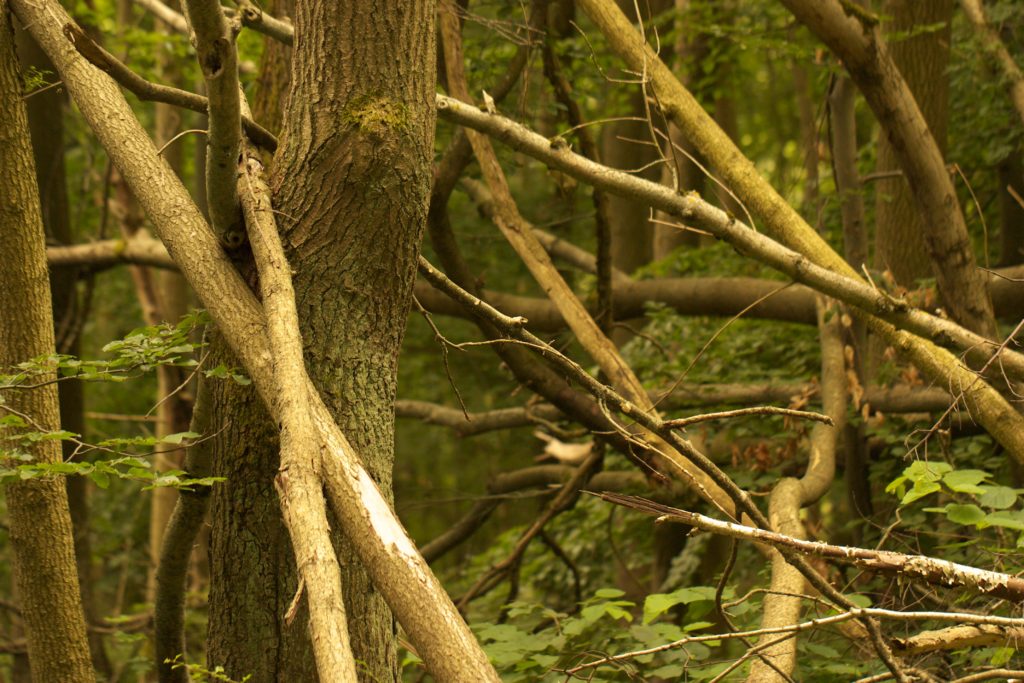
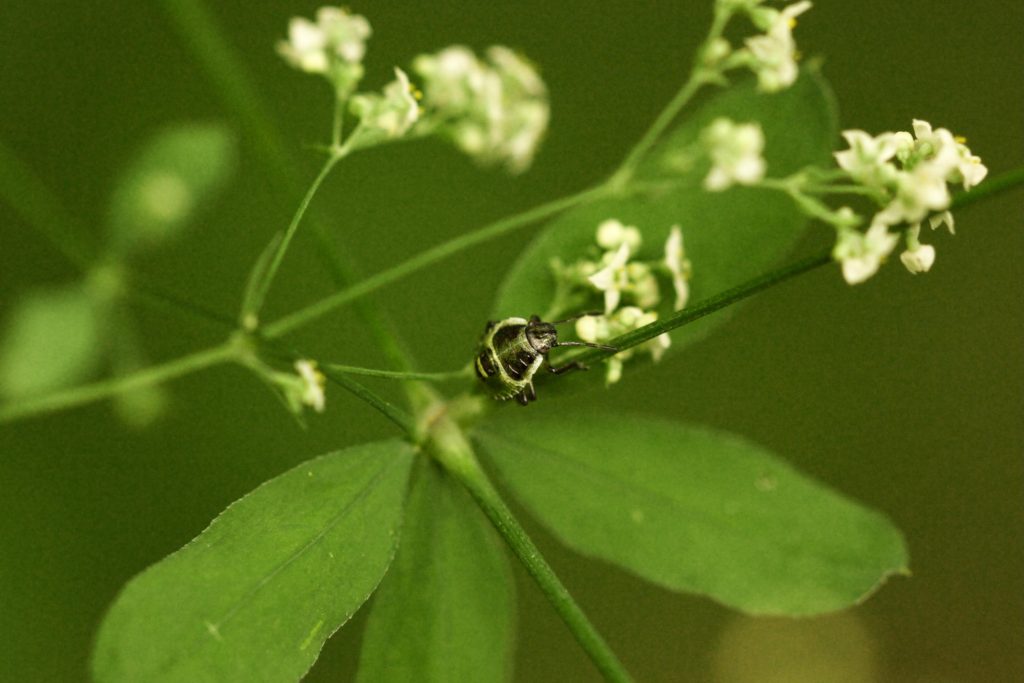
And here's one of the many insects that live in the forest:


I have no clue what this is, but I think it's pretty.
0
JUL
11
0

Design Fiddling.

After figuring out the letters, and how much space to leave between words, and how far the lines should be apart, one more thing remained to do: the layout.

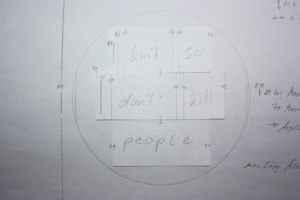
Measuring the ratio between height and width of the knitting, and counting the individual letter width, and cutting strips of paper with the appropriate measurements, and some more fiddling later, I finally had this:


which was my super-sophisticated knitting plan for actually making this. Including a plan on how much to cast on.

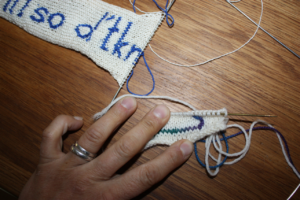
And then came some swatching:


Which only left one thing to do - the actual um knitting. That took some time, especially as I managed to botch in a few instances. That's proof that one should not knit things that require brains while tired!

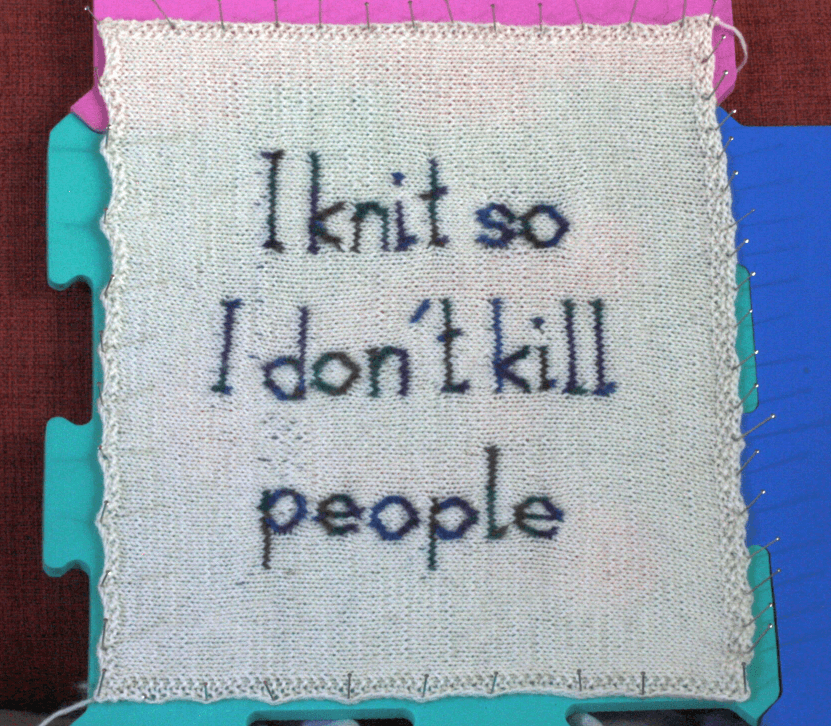
I finally finished this knit, though. There was a stint of late-night-blocking, and it came out like this:


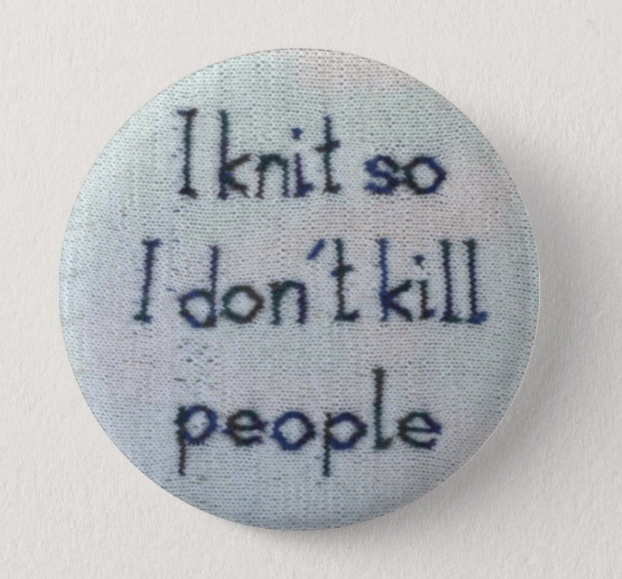
Now I only need to turn it into a button - and hope it will amuse other people just as much as me. That's how it will look, approximately:


The buttons have a diameter of 55 mm, which means that it will be possible to see a bit of the knit texture in the background, or so I hope. It's not blatantly clear that this is knitted text, I think - but it wil have to be good enough, as there's no way to knit letters across fewer stitches.

So. What do you think? Should I go for it?
0
JUL
10
0

Even More Button Shenanigans.

While at the topic of buttons related to knitting, well, there's one utterly classical phrase that lots of people find funny, or appreciate, or want to use as a heads-up for their environment.

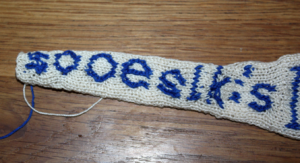
Which, of course, needs more letters than k, n, i, and t. So I sat down and started to figure out the tricky complex letters - s, e, o. And then other stuff. The first tries were, um, rather wonky:


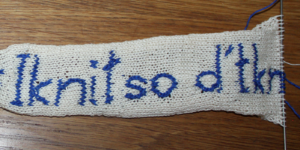
But eventually, there was progress. And something more like actual text:


Have you guessed the text of the classical slogan yet?
0
JUL
09
2

Buttons Under Construction!

Let me tell you about buttons. Not the kind to close your garments, but the kind with a pin on the back that you pin to your clothing, or backpack, or whatever, to make a statement.

Though I rarely wear these, I very much like them. I like the way you can easily add them to whatever fabric you want to, telling people something about you, or your mood, or to amuse them with a funny quip or picture.

As with so many things that I like, and where I think the world needs more of, after a while, I'm getting an itch to have it made, and offer it in the shop. (Yes, I know, it's not medieval at all. That's why I have the "miscellaneous" section, and I'm actually pondering making a "This Is Not Medieval but Fun" section in the shop. Though I might call it "Modern Shenanigans" instead - much shorter.)

There was one teeny tiny problem, though. To have a nice button, you need a nice design - and I wanted something more than just a random selected font centred on a round button to write stuff. That's just... hm. Well.

It is, of course, technically possible to make a button design like this with hand-lettering. This could even be enhanced with a bit of a drawing, where it suits, here and there. Which would be a spectacularly wonderful thing, but unfortunately, both my drawing skills and my hand-lettering skills are, at best, mediocre.

And then it somehow struck me. I could knit the button design. Because... well... that's how my brain works, sometimes, when I wake up early on a Saturday morning.

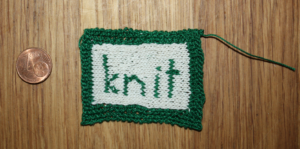
So I sat down, and I cast on some stitches, and I made this:


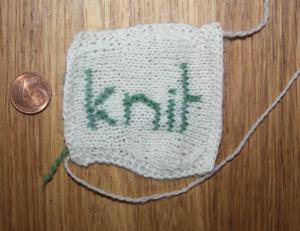
and showed it to the Most Patient Husband, and he said "maybe do it with smoother yarn", and he suggested some cotton yarn that I had lying around, so I finally got to use my very small needles as well, and I made this:


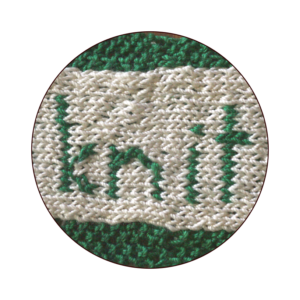
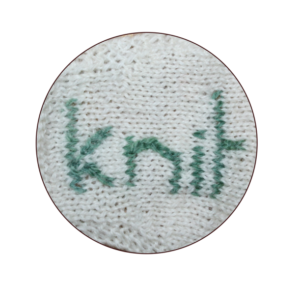
and this could actually already be turned into a button design, and it would look like this:


or, with the first version, like this:


and I must admit it amuses me no end. It's knit and says knit. Knit knit. Ah. (Yes, I'm easy to amuse.)

So. Should I do this? Get these printed as buttons? And if so, which version?
0

By accepting you will be accessing a service provided by a third-party external to https://pallia.net/

Contact