
Latest Comments

Guest - Katrin Sprang Discussion
18 September 2026
Hi Rachel, I have looked for more photos of you, but that was not very successful. I found a link on...
Guest - Beatrix Sprang Discussion
15 September 2026
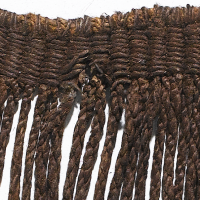
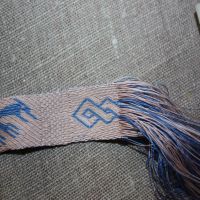
That lozenge pattern element is not a photograph, but a scan. So it should be to scale. But I pinned...
Guest - Katrin Sprang Discussion
15 September 2026
I was not referring to Rachel's reconstruction (is the reconstruction you refer to the one photograp...
Guest - Beatrix Sprang Discussion
14 September 2026
There is something Rachel did not mention. She told me: "Well, I worked with the measurements we too...
Guest - Katrin Sprang Discussion
14 September 2026
Well, this is certainly developing into an interesting discussion. Firstly, going from that lovely l...
NOV
22
0

Random Link Friday.

It's time for some random links for you again (in hopes of getting my huge number of browser tabs diminished into something remotely sensible looking) - so here you go:

A new method for baking bread in minutes - researchers in Vienna are baking bread by sending electricity directly through the dough, which is looking especially good for things like gluten-free breads. You can read more about it here (in German).

If you put things on the Internet, chances are that someone else will see them and maybe feel inspired by them. Or... "inspired". There's also a chance that the idea might be taken and something entirely different made from it. Like in this case:
Bernadette Banner has made a dress reconstruction for herself, and the image of this has been used as the basis for a knockoff, sold very cheaply. So she bought a knockoff of her own dress, and made a long video about this:


If you prefer to read things to watching videos, you might want to go and browse the OpenAccess books at the OApen Library - for example the archaeology section.

There's also a bit of information online about Viking Age brocaded tablet-woven bands, as the teaser to a paper being presented at NESAT 2020.

Finally, here's something about giving media interviews as a scientist. I've been interviewed a couple of times now, and it's always exciting, and a little bit scary as well - but being well-prepared, as the article also states, definitely helps a lot.
0
OCT
17
0

Museum Catalogue Online!

The Danish museum group has published a catalogue of their finds, which means 100,000 pictures. It's freely available, open access, and it includes archaeological glass beads from Ribe, among many, many more things.

Not all finds have pictures yet, and you will have to search in Danish, but it definitely is worth a look. ("Tekstil" is the correct spelling for textiles.) So... go check out the catalogue of the Sydvestjyske Museer!
0
MAY
21
0

Stuff to Read.


If you're interested in horses, horse breeding, or ancient DNA studies, here's a paper posted on academia.edu about ancient horse DNA - discovering two now-extinct horse lineages, as well as proof that mules were already bred and used more than 2000 years ago. (Reading things on academia.edu is free, but you need to have a login.)


Medieval Clothing and Textiles, the annual journal, is out with vol. 15 and available directly via the publisher, Boydell & Brewer, or via the bookstore of your choice, priced at around 40 GBP.


Another interesting-sounding book, but, alas, for the typical prohibitive Brill price, is "Reassessing the Roles of Women as 'Makers' of Medieval Art and Architecture", edited by Therese Martin. There are snippets of the chapters available on the Brill page as previews, but even though the book is more than a thousand pages - for 254 €, I will certainly buy neither the ebook nor the hardcover.


Also behind a paywall, but also sounding interesting - especially if you are researching medieval food and cooking: Giles E.M. Gasper, Faith Wallis, Salsamenta pictavensium: Gastronomy and Medicine in Twelfth-Century EnglandThe English Historical Review, Volume 131, Issue 553, 1 December 2016, Pages 1353–1385. This article is available via Oxford Academic (24-hr access costs 36 €), or you could try getting it via your library.


Finally, and for free for a change: A Faksimile and Transcript of "Nature Unbowelled", a 17th century book with recipes for loopbraided laces.

0
APR
09
0

Here's Your Digital Security Stuff Reminder.


Here's your gratuitous service announcement, since it is spring - no, really, for no other reason than that I've recently stumbled across these issues again, and found it smart to check - and change - some of my passwords… which, admittedly, I am doing way too rarely.


So… amidst all the spring cleaning, and the gardening, and spending time outside where it's finally nice and sunny again, maybe you can make time for some spring security stuff regarding your computer?


Thing One: Make a backup. I've written about that before, but it never hurts to repeat this from time to time. Hard disk drives are, yes, prone to die at some point, and preferrably at the worst possible point for you. So get yourself an external disk, or - if you are data paranoid - a simple RAID 1, and backup your data. There is plenty of free software around; I use SyncBack (not because it's the best ever, but because I got it at some point, it's all set up, and I have not seen a need to change it yet).
While you're at it, make sure that you will be reminded to actually use your backup software and equipment. Put a reminder into your calendar, set a recurring to-do on your to-do-list, or do whatever else works for you to do periodical backups of your important data.


Thing Two: Make sure your software is up to date. (Most software updates itself readily on its own if you allow it to do so; there's usually a "check for updates" menu item somewhere in the Help or Options menu.) Outdated software can pose a security issue - and sometimes the new version comes with nifty new features that make life a lot easier. (Sometimes they come with annoying new features, admittedly... but well. Life.)


Thing Three: Change some passwords. There is a rather good chance that at some point in time, you too were affected by a data security breach - that is someone stealing personal information from some portal or website that you have an account at. These stolen data then turn up in form of lists somewhere on the Internet, for other shady individuals to use for dark deeds. Such as sending you spam emails, or using your address to send spam from.


Fortunately there are sites that let you check if your email was leaked, and if other personal data got out as well. The Hasso-Plattner-Institute offers a free Identity Leak Checker, where you can check if your personal data was leaked.


A second site worth checking out is "have i been pwned". This not only lets you check for your email address - it also has a search function where you can input a password and see if that has been leaked and is on a list available in the Internet.
If you get hits, you should change the password on the sites that you use that specific email address for. Which is annoying and might be a lot of work, but might save you a good amount of heartache and hassle in the long run. And spam. It might save you from getting as much (or, worse, having it posted from your account).


If you set any new passwords, there's a few good guideline things to remember. Most important of them all: Don't use the same password for several sites, especially not important ones with sensitive data, such as your bank data. Managing that ever-increasing number of passwords is a hassle, which is why password managers such as KeePass are a very good thing - you only need to remember one master password to access the database, where you store all your other passwords. These managers can also remind you to change your passwords regularly, which is a feature that I have now (finally) enabled... because I'm just as lazy, or as prone to forget about the age of a password, as the next person is.


For the master password, or any other important password that you need to type in on your own, you should choose a strong one that you can remember easily. There's a brilliant XKCD comic about strong passwords that fit the bill - which is the type of password I use for the ones that I actually want to remember. For those used only rarely, and only from my home machine, I tend to let the password generator in my manager do the work; it spits out a long random string of numbers and characters which is pretty secure.


So. Ready for some cyber housekeeping?

0
MAR
25
0

Linkapalooza!

It's time for a stack of links again!

There's a "rare sheep breed wool challenge" going on in the US, started by The Livestock Conservancy. It runs under the delightful name of "Shave 'Em to Save 'Em", and you can read more about it here and here.

The Council of British Archaeology has a number of research reports online for free download, on a variety of topics. You find the list (including the Archaeology of York volumes) here.

Speaking of publications, here is an article about the completely fucked-up system that is academic publishing, where you pay to get access to publications on research... which had been paid for by the state (usually), and where the authors and peer reviewers do not see a penny for their work. Yes, really. It's a complete gnah situation.

And finally, an art project with knitted sweaters that let their wearers blend into the background.
0
FEB
22
0

Hunting for Black.

I've run out of iron gall ink now, so it's time to get some more... or, to put it better, to make some more. Last time, I had a colleague make my batch, but as she's not working anymore, I have decided to do it myself this time. And obviously, the goal is to use an original medieval recipe...

...which poses a slight problem. Not because there are no recipes, no - quite the opposite. There are quite a lot, and though they are similar in regard to the ingredients, the details - and the amounts of the main ingredients that are given - can vary quite a lot. Some of them mention that one should be able to tell, from experience, how much exactly of one of the ingredients should go in.

Yeah. Only problem is that if you have no experience... well, you get the picture.

My search for recipes (which I have collected, and I will soon just pick one and go with it), though, has also brought me across an interesting database project: Colour Context, a database on colour practice and knowledge. It features transcribed recipes from a number of (mainly late-medieval) sources - so if you are interested in medieval colour, or artwork, this may be of interest for you.
0
NOV
23
0

Online Digital Archive.

Just in case you are looking for something to read on these darkish winter afternoons and evenings, there's an On-Line Digital Archive of Documents on Weaving and Related Topics - which includes articles, books and illustration not only about weaving, but about a large number of topics, down to spinning (though mostly modern spinning on machines), lace, nets, and needlework.

The site had its last update back in 2016, but the articles are still available, so if you are looking for a pdf or five to read - that might be your thing.
0

By accepting you will be accessing a service provided by a third-party external to https://pallia.net/

Contact