
Latest Comments

Guest - Katrin Sprang Discussion
18 September 2026
Hi Rachel, I have looked for more photos of you, but that was not very successful. I found a link on...
Guest - Beatrix Sprang Discussion
15 September 2026
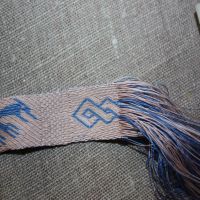
That lozenge pattern element is not a photograph, but a scan. So it should be to scale. But I pinned...
Guest - Katrin Sprang Discussion
15 September 2026
I was not referring to Rachel's reconstruction (is the reconstruction you refer to the one photograp...
Guest - Beatrix Sprang Discussion
14 September 2026
There is something Rachel did not mention. She told me: "Well, I worked with the measurements we too...
Guest - Katrin Sprang Discussion
14 September 2026
Well, this is certainly developing into an interesting discussion. Firstly, going from that lovely l...
NOV
25
0

Very Old Knitting, Part 2.

So... as seen yesterday, working compound knitting (or double-depth knitting) on a dolly or similar thing is very easy. Let's add some challenge - off to the needles with this!

Ruth Gilbert (who is one of the reasons I started knitting a few years back) brought instructions with her to the Textile Forum, taken from Marianne Erikson's book Textiles in Egypt 200-1500 A.D. in Swedish Museum Collections, Gothenburg: Rohsska Museet. You can find them on p. 235, fig. 23. Or look at the following knitting pictures, where I'm following her instructions.

You're always working with a pair of stitches (so cast on double the amount you want to work).

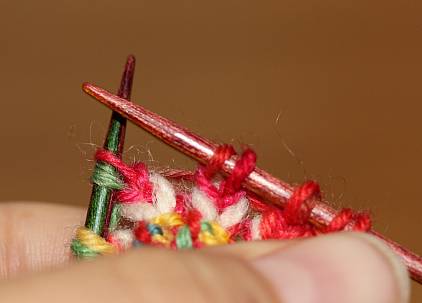
Transfer both stitches to the right needle.

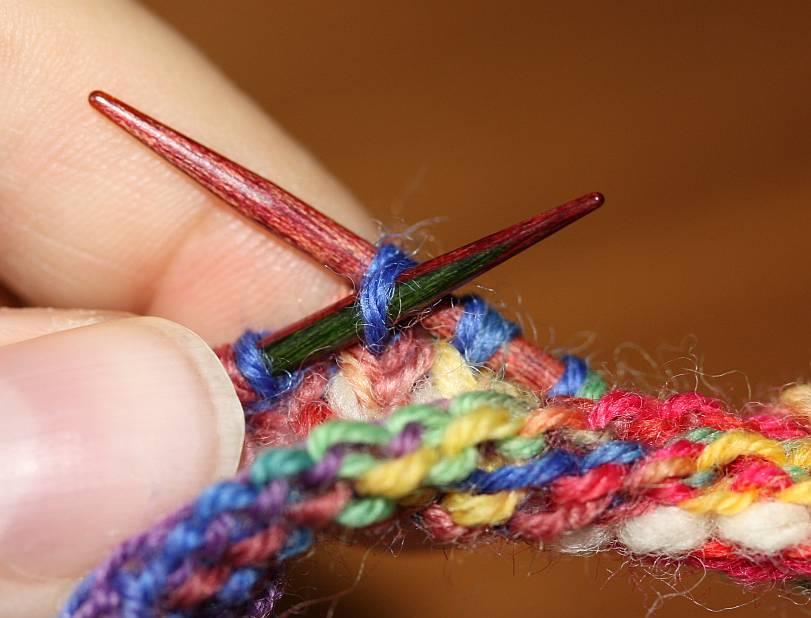
[caption id="attachment_1929" align="alignnone" width="422"]Unworked stitches on the right needle... Unworked stitches on the right needle...


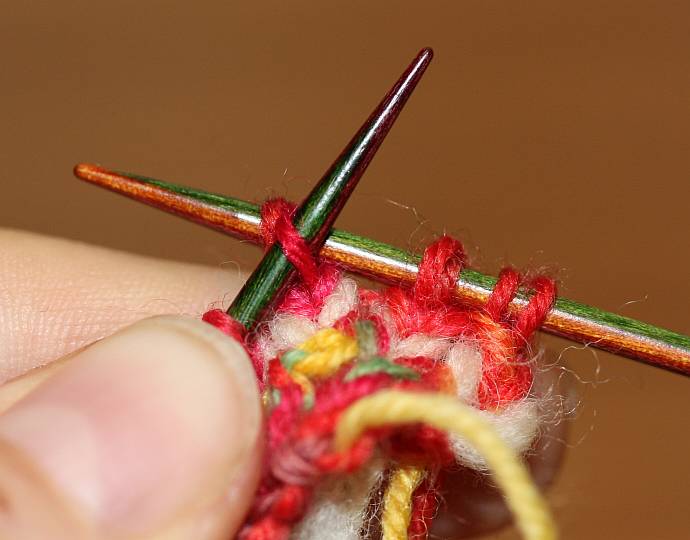
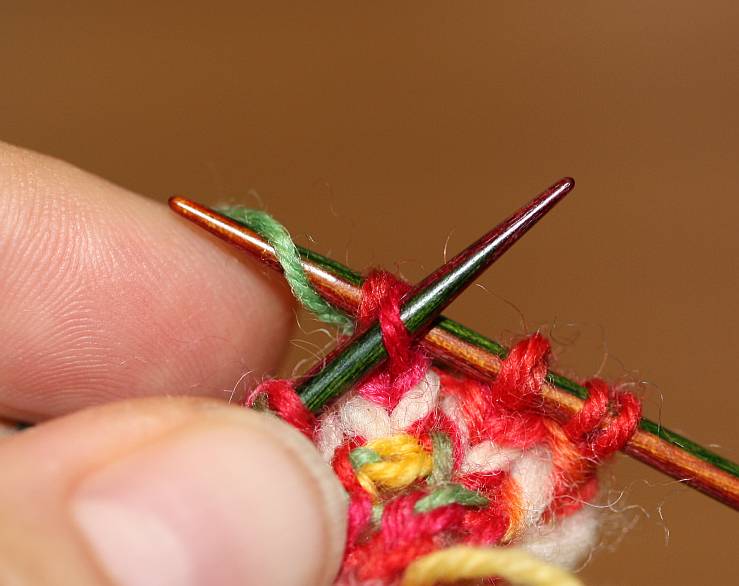
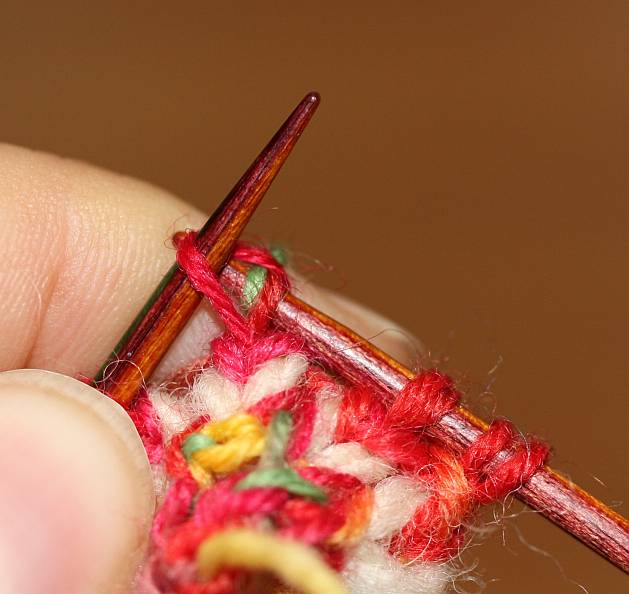
Insert left needle into the right stitch, loop yarn around right needle, and pull yarn and stitch through.

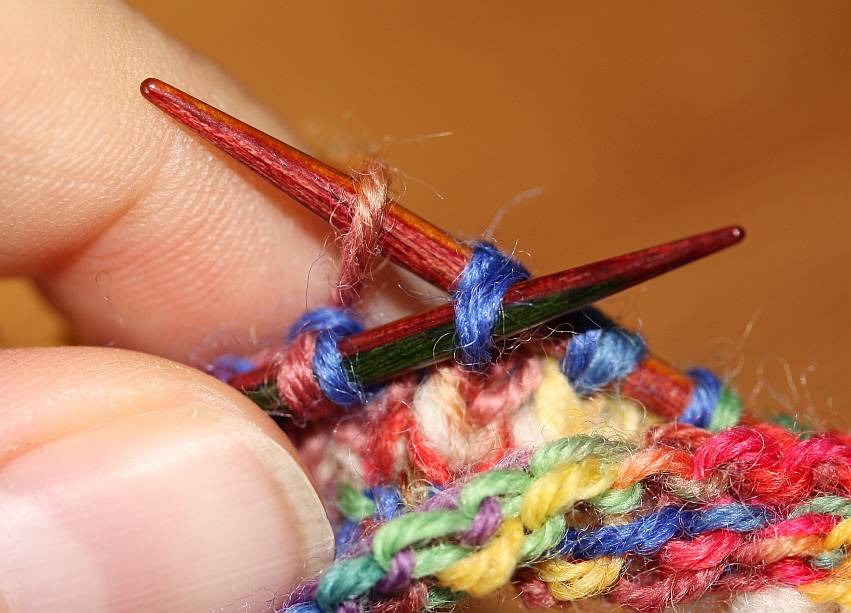
[caption id="attachment_1928" align="alignnone" width="420"]Needle inserted... Insert left needle into the right stitch...


[caption id="attachment_1936" align="alignnone" width="420"]IMG_8086 ...loop yarn around...


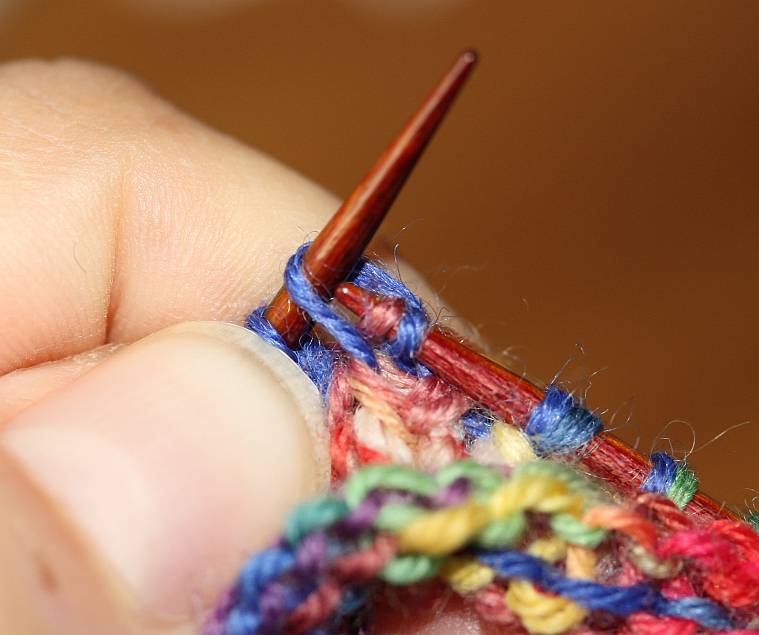
[caption id="attachment_1935" align="alignnone" width="422"]... and pull through. ... and pull through.


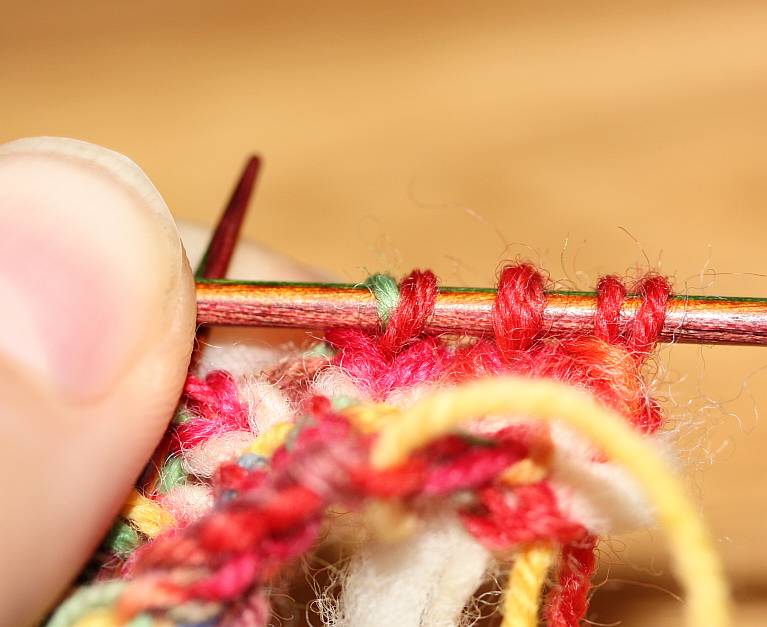
Note the alignment of the stitches: The older stitch lies to the right, its right leg behind the needle; the new stitch lies to the left, its right leg in front of the needle (as is the customary orientation in Western European knitting).

[caption id="attachment_1934" align="alignnone" width="300"]Stitch alignment. Stitch alignment.


For the return row (if you are knitting flat), you insert the left needle into the second stitch on the right needle,

[caption id="attachment_1933" align="alignnone" width="300"]Insert left needle into right stitch on right needle... Insert left needle into right stitch on right needle...


loop the yarn around the right needle, and draw yarn and the stitch on the right needle through.

[caption id="attachment_1932" align="alignnone" width="300"]... loop yarn around... ... loop yarn around...


[caption id="attachment_1931" align="alignnone" width="300"]...and draw through. ...and draw through.


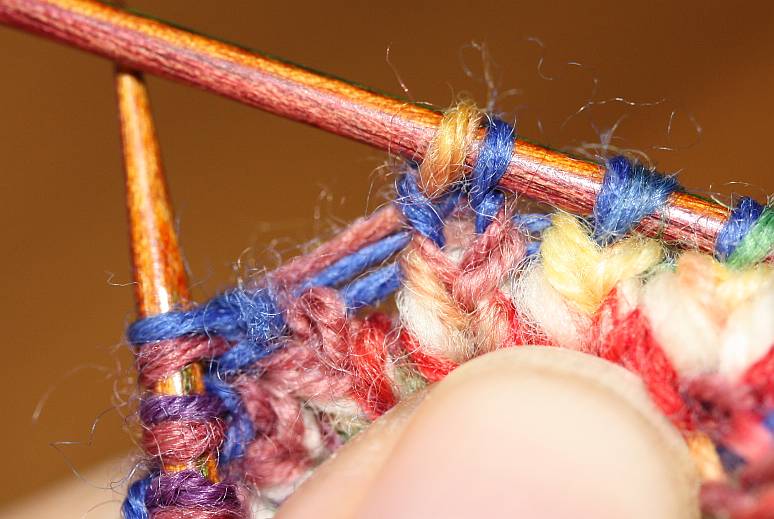
The older stitch now lies again to the right of the pair, with its right leg in the back; the old stitch on the right has its right leg in the front.

[caption id="attachment_1930" align="alignnone" width="300"]Stitch alignment. New stitch to the left, old to the right. Stitch alignment. New stitch to the left, old to the right.


Now transfer both stitches to the left needle and continue.

These instructions totally work - and they are a lot of slipping stitches. It gets less slippery if you work in the round (where you only use the instructions for the first row, working from left to right), but it still feels... awkward.

Is there a better way to do it? One more efficient, and involving less slipping? We'll see. Later this week.
0
NOV
24
1

Very Old Knitting, Part 1.

After all the computery shenanigans, it's high time for a proper textile post again. And fortunately, I have just the topic!

When I was at the Textile Forum, one of the presentations was about old knitting, more specifically what can be called "compound knitting". These really early knitting finds (from Egypt, dated to about the 5th to 7th century, to give you a rough timeframe) are not showing the same knit structure as we are used to. Modern knitting goes through the stitches in the last row to add the next row to the top. These finds done in compound knitting go through the last two stitches to add the next row. Are you confused yet?

The pieces presented at the Forum are all tubular, usually rather narrow, and sometimes striped across or worked in colour sections. They might have been worked on a knitting dolly, or worked on needles - it is hard to tell. We can look a bit at the different methods, though.

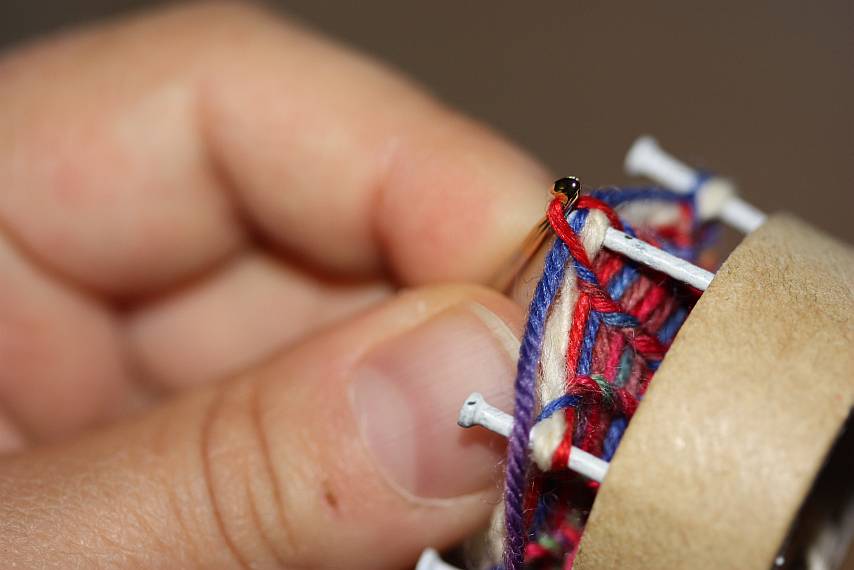
Compound knitting is very, very easy to do on a knitting dolly (or however you call these gadgets with pins to loop your yarn over) - you set up as usual, with base loops, and then you wrap the working yarn around the dolly twice instead of just once. Now when you are working your first round, lift the bottom loop over both the strands above it.

Here's how it looks when you are a few rounds in:

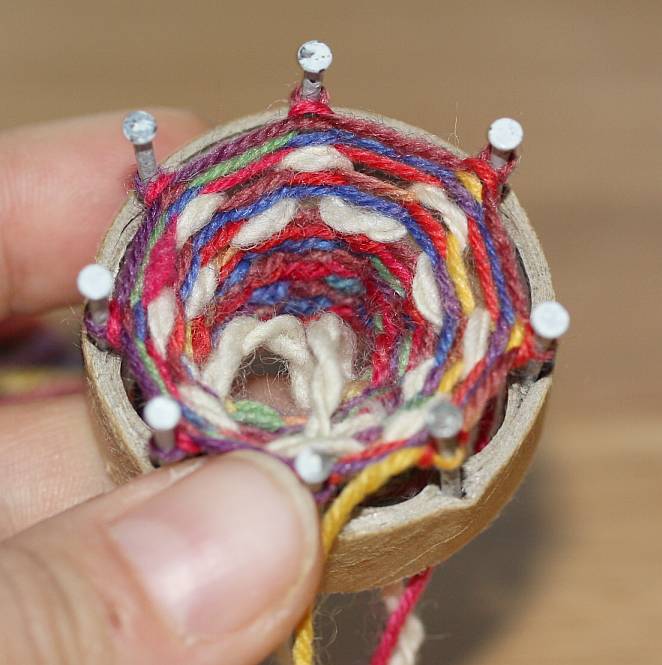
[caption id="attachment_1920" align="aligncenter" width="428"]Lifting the lowest of the loops on the dolly over the one on top of it and the working thread. Lifting the lowest of the loops on the dolly over the one on top of it and the working thread.


The white thread is there for better orientation. You can see the red (lowest) thread being lifted up over the white thread (which has been on the dolly for one round now) and the blue working thread. (The dolly, by the way, is a very crude homemade version that sports some nails left over from my active digging days.)

As a result, you get the compound stockinette fabric.

[caption id="attachment_1917" align="aligncenter" width="437"]Compound knitting on the dolly, knit side. Compound knitting on the dolly, knit side.


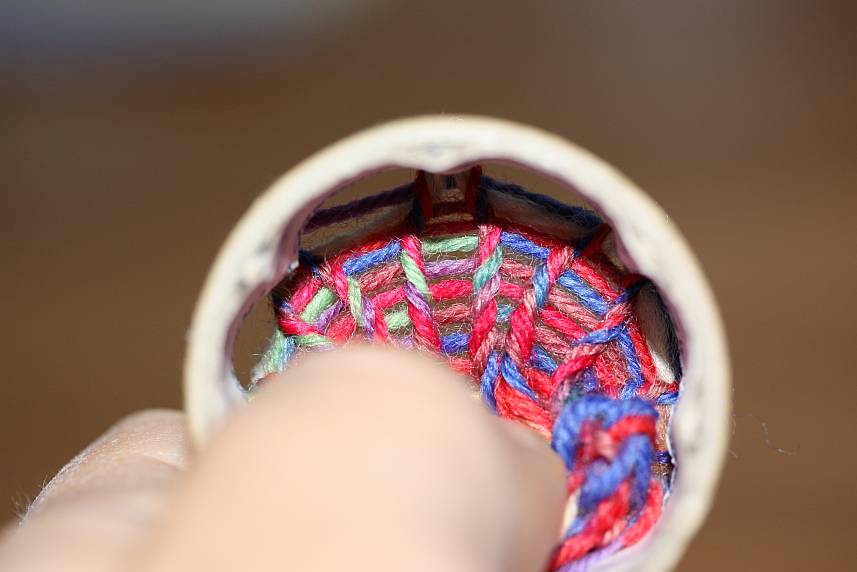
It doesn't look much different from regular modern knitting, but you can see that the stitches go through two of the previous rows - look at the green stitch in the top middle, for instance. This is even easier to see when you use a contrasting thread and look at that:

[caption id="attachment_1919" align="aligncenter" width="386"]Compound knitting on the dolly, seen from the inside. Compound knitting on the dolly, seen from the inside.


When you knit in a single row in a different colour in regular modern knitting, you have the little "dashes" on the purl side in one row, followed by a row of your regular colour, followed by the contrast colour row again. In compound knitting, the dashes are one extra row apart, as you can see in the picture.

Working this on a dolly takes no extra effort to do (it might be a tiny bit more fiddly to pick the loop to pull over, but it doesn't make much of a difference). The resulting fabric, though, is a different creature from regular modern knitting: it is much thicker while still very stretchy.

It gets really interesting when we try to take this to the needles, though... which is something for the next post.
0
APR
13
0

Back home from Backnang.

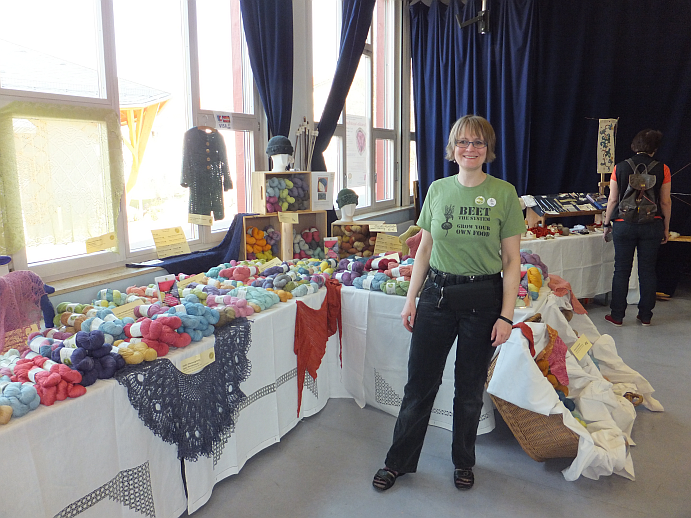
I'm back home from Backnang - it was a wonderful weekend, and I'm only sad that there was not more time for me to stroll around outside and enjoy the beautiful weather, or take a more leisurely look at all the stalls with fibres, tools, and (of course!) yarns.

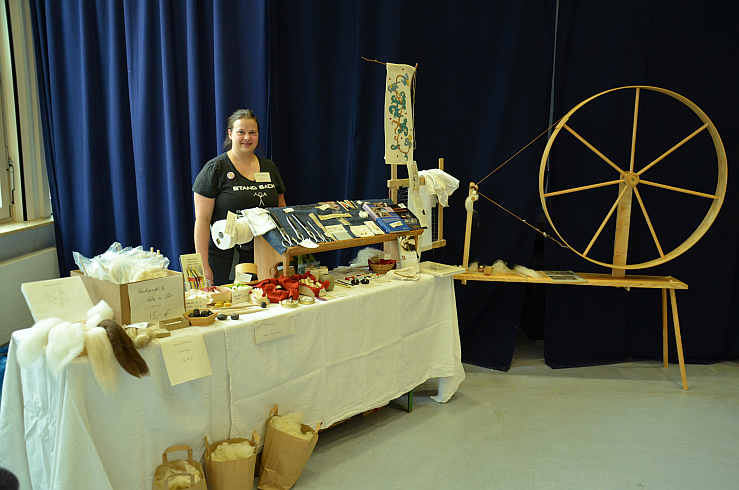
This is where I spent most of my time in Backnang:


- right beside the table of Margit from Alte Künste:


I also had the pleasure of teaching medieval spinning to a group of enthusiastic and interested spinners on Friday and Saturday, and on Friday there were even two participants who had their very first experience in spindle-spinning. Both courses were sold out in the blink of an eye, a joy to teach, very well received and I'd be happy to offer them again in Backnang in 2017.

Today, though, my mind will have to get out of the wool-mode - I have to finish reading the typeset proof of our new book this week, and I hope to make very good headway today. There is tea, there is chocolate, there is a red pen - and it's nice weather, perfect to sit in the spring sunshine and reading.
0
DEC
15
0

Links for you.

It's time for links again!

Here's one to an ongoing comparison of fingerloop braids, together with instructions for each band, from Silkewerk.

Variations on yarn-overs, from Ysolda's blog. Just in case you want to tweak the size of your yarn-overs to make them exactly the same size.

If you read German and like things that make noise and stink (also known as ancient fireweapons), the page of the Bummsbrigade Hamborch should be just the thing for you. (If you don't read German, they are working on an English version of the page, according to said page, and you could look at the pictures of their stuff, "Zeug", meanwhile.)
0
DEC
03
0

Winter!

It's very grey and wintery outside these days, but we still have no snow - as opposed to where my parents live, they've already had some of the white stuff.

It is nice to slowly migrate towards the calmer time of the year, though. While there are still plenty of things left to do hereabouts, there is no more fair or show or market for now, which greatly reduces the urgency of certain things. And that is a very good thing, as I still feel like I could use some more days off to relax and regenerate.

For now, though, having some nice quiet time in the evenings and looking forward to the weekend will have to do. Oh, and motivational hot beverages help as well. Plus chocolate. And the fact that it is pleasant work, overall - even if it is still work.

Just in case you would rather like to learn something new (or old) instead of reading me rambling on about the weather and wanting some holidays, here's a website helping you learn Middle English. Chaucer, anyone?

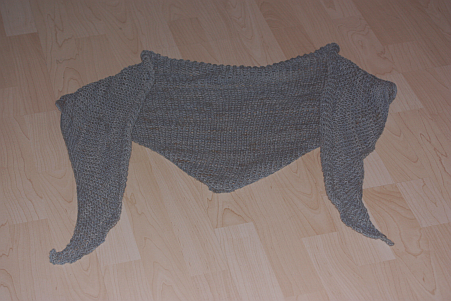
Or maybe a gratuitous knitting pic? I've succumbed to the lure of all that yarn while at the Kreativ, plus it was cool in the hall - so I just had to cast on for a snuggly triangular scarf/shawl. It's made from one skein of sock wool in the "Jeans" colourway, dyed by Margit from Alte Künste. (Here's the shop link.) I finished it a few days ago, and I've been enjoying its snugglyness ever since.


0
SEP
10
1

Pirate Hat offer ends today!


After all these linky posts, it's time to do a "what is happening here" post again.

Yesterday, I finished the current state of a project - sewing basic garments for a new open-air museum, the Freilichtlabor Lauresham - and sent the things on their merry way to their new home. The project is not completely finished yet, but the next part will have to wait until the cloth for tunic and hose have been woven and dyed, which will take at least a few more weeks. I'd have loved for them to have all the clothes in time for the opening on this Sunday, but unfortunately, we were not able to get the cloth issue sorted out in time for that. (This proves again: textile stuff just gobbles up time.)

With this off my back and off my agenda, it is time to turn to the next exciting bits on the to-do list. So today, I'll do my level best to get some more work done on the Textile Forum. Check our website at www.textileforum.org tonight or tomorrow for the preliminary programme. And if you want to join, you can still register for the conference!

Another conference I have to prepare for is Crafting Textiles from the Bronze Age to AD 1600, taking place on October 10 and 11 in London. (This year is the year of travelling to England for me!) I will be giving a presentation about spinning as a historical craft, and I'm looking forward to that conference very, very much already. The programme is full of interesting papers!

Today's the last day of the Free Shipping offer on the Dread Pirate Roberts knitting pattern. If you were planning to get one, today is the day to do it!
0
AUG
26
0

LonCon, and Dread Pirate Robert's Favourite Winter Hat

As I already hinted: it was wonderful at LonCon. That was not only my first WorldCon, but also my first convention ever, and I started full speed ahead - with a dealer's table and a one-hour presentation about medieval textile crafts (with examples from London).

I met a lot of wonderful people, and I had the joyful experience of having an hour and a half on the very first evening, giving my presentation. Thanks again to the wonderful organiser of the academic track, Emma England, who made this possible! From the feedback that I got afterwards, it was an enjoyable experience for my audience, and I had a lot of fun too. There was a bit of an "aaargh!" moment at the very beginning, when I found out that all of the six (six!) microphones on the table were live, and fretted over toppling them over with my textile tools. There were a few further "oops" moments during the presentation, when I did my tools and process demonstrations before having clicked on to the cue cards in the presentation slideshow... but all of these were very minor and more something to grin sheepishly about than to really be troubled.

Apart from that first evening of (enjoyable) work, I spent the time after 18:00 hanging out with friends in filk concerts and in the "Fan Village", or at one of the several dances. During the day, I was mostly at our table in the Dealer's Hall, and that was not any less enjoyable, thanks to lovely customers, colleagues and neighbours. Susanne, our trusty and immensely helpful sidekick, hung out with us most of the time, helping to sell and chat - it wouldn't have been possible to enjoy the Con half as much without her. In fact, we had so much fun we decided it would be nice to do this again - surely not at the next WorldCon, because that is in the US, but there are more conventions apart from that one...

I also learned (quickly, hah!) about the Thing with the ribbons. You see, for your con attendance, you get a plastic badge that you hang around your neck. And if you like, you can stick ribbons to the bottom of it, stacking them. If you are really keen on ribbons, you do that until you have a long, scarf-like tail of cloth hanging from your badge. (I just wanted a few. I ended up with eleven.) There were some official ones (such as the bright orange "Dealers" ribbon, or the light blue "Programme Participant" ribbon, or the multi-coloured "First Worldcon" ribbon) marked with the LonCon symbol. Most of them, though, were unofficial and made by fans, and with all kinds of statements on them - such as "I <3 -="" a="" advertising="" and="" back="" because="" bid="" book="" br="" bryan="" citations="" city="" convention.="" coveted="" dead="" did="" doctor="" dog="" during="" evening="" fetch="" few="" film="" for="" four="" future="" get="" go="" his="" host="" hotel="" i="" instantly="" kind="" last="" making="" manage="" me="" my="" of="" on="" one="" or="" out="" party="" really="" ribbons="" room="" s="" saw="" showing="" so="" support="" that="" the="" there="" thing="" three="" to="" totally="" very="" wanted="" was="" were="" worldcons.="">

The Con also saw the debut of the pattern for Dread Pirate Roberts' Favourite Winter Hat (ravelry pattern page link here), and it was very well received indeed!

The pattern is printed in colour, contains clear illustrated instructions for the special moves that are necessary for the lace part, and is now available via my webshop. Since I wanted to be able to sell it as a printed version, and prints do cost money, I am not planning to offer it as a download for at least a while (read: until the printing costs are, at least to a good part, regained). I know that it's nice to pay, download, and start right away if you buy an electronic pattern, but I did want very much to have the real ink-on-paper version for this one.

And as the introductory offer, you will pay no shipping costs if you order it now! The offer is valid until September 10, 2014.


0

By accepting you will be accessing a service provided by a third-party external to https://pallia.net/

Contact