Latest Comments

Guest - Katrin Sprang Discussion
18 September 2026
Hi Rachel, I have looked for more photos of you, but that was not very successful. I found a link on...
Guest - Beatrix Sprang Discussion
15 September 2026
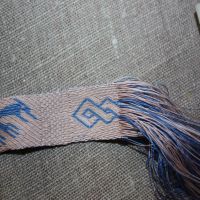
That lozenge pattern element is not a photograph, but a scan. So it should be to scale. But I pinned...
Guest - Katrin Sprang Discussion
15 September 2026
I was not referring to Rachel's reconstruction (is the reconstruction you refer to the one photograp...
Guest - Beatrix Sprang Discussion
14 September 2026
There is something Rachel did not mention. She told me: "Well, I worked with the measurements we too...
Guest - Katrin Sprang Discussion
14 September 2026
Well, this is certainly developing into an interesting discussion. Firstly, going from that lovely l...
FEB
28
0

Test Spinning 2 - Done.

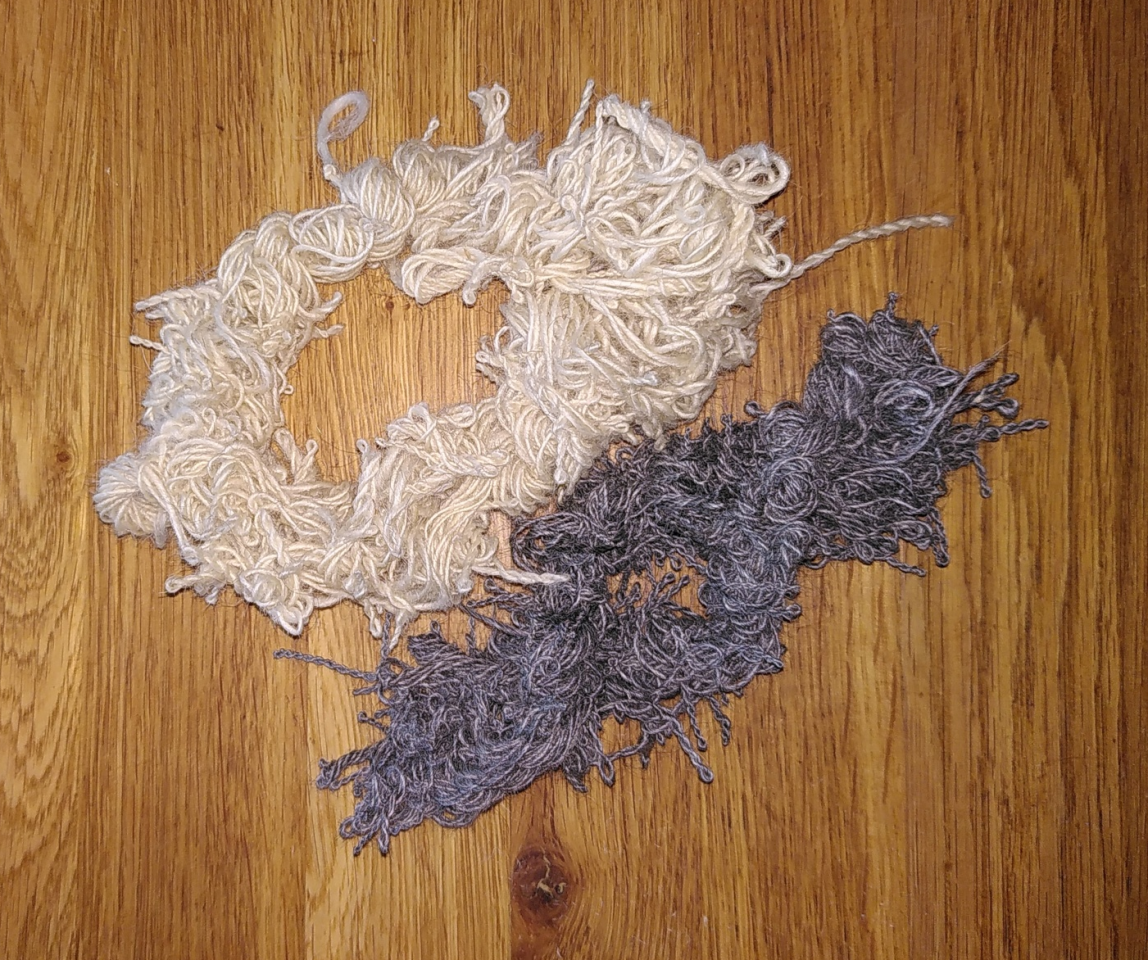
A second round of test spinning has happened, and now it's done and the yarns have had their hot bath and are drying, with a bit of weight to keep them stretched. Next step in the adventure will be to activate all my weaving skills and do a little bit of test weaving with the stronger-spun warp yarns, and see how the fibre combination we're planning to use will work. 

You can see the difference in the amount of twist in the two skeins - the grey one is obviously contracting much more than the white one. Fascinating, isn't it? 

0
FEB
26
0

Evaluating.

Here's the next step in our adventure of fabric reconstructions: Evaluating the tests. 

I've spun the yarns, my partner-in-crime Silvia has done test weaving, and now the samples have been washed (hot! because some like it hot, you know) and it's time to take a close look at them.

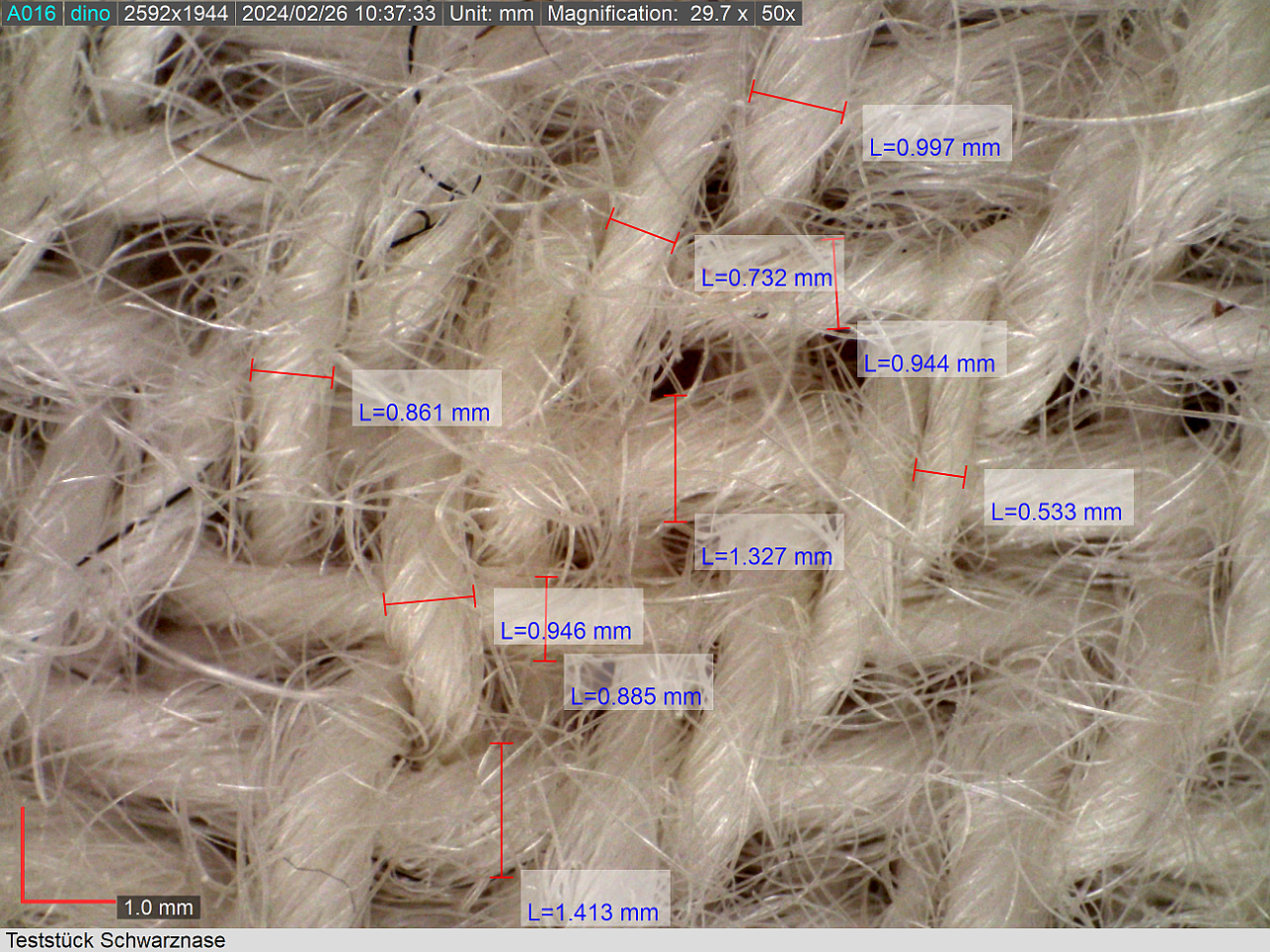
First step is to see if the thread count matches - which it does, satisfactorily, in the warp, but it's a bit too low in the weft. Next step is the close-up, and checking to see if thread twist and thread thicknesses, and the overall look of the fabric, matches our goal. 

Which.. well. Let's say there's room for improvement. In this case, the warp yarns can actually have a good bit more twist to match our original fabric; the weft yarns, to me, seem to be okay. Thread thicknesses are within range, too, I'd say.

Now we'll have to decide if we want to do a second sample piece with changed yarn parameters, or if we can gauge the necessary changes well enough to go for the piece proper straight away...

0
FEB
16
0

Reconstruction Documentation.

I've been talking about textile reconstructions and some of the things involved in making them, but I think I haven't covered the topic of documentation for them yet... so here's a bit about that.

When I'm working on a reconstruction, I keep track of my work times. That's usually done with a time tracker for the research/planning tasks, such as reading up on textile finds, gathering information, and making plans and preliminary calculations. For the actual work away from the computer, I use a stopwatch, as that is handy and easy to use. A stopwatch is easily stopped for taking a break and started again, and that will guarantee that I have the exact times for how long things take.

Or... the almost-exact times. There's two reasons that I want to keep accurate track of times: For calculating the payment due for my work (obviously), and for gathering information about how long it takes to do things. The latter is half for being able to do better, more accurate pre-calculations and estimates, and half for research purposes. How well the times taken are suited for research depends, of course, on the tools used and the processes in detail, so I won't use my spinning times on the e-spinner for estimating spinning times in the Middle Ages, but there's plenty of tasks that are similar to what would have been done in the original creation to be of some value.

Now, of course, it would be helpful to separate different tasks and write down what each of them was. It makes a difference whether I'm sewing a straight line, or whether I'm hemming seam allowances. It is handy to know how long it takes to spin as opposed to weaving, and then there's the yarn skeining time, and time needed to set the twist. All of these could be just taken together as work time on item X, but it's of more help for my future work to have the extra detail.

Which, of course, adds some overhead work time for documentation.

It's also a smart idea to take at least some rough notes about how things are done, if it's not so simple that there's no other way. (Spinning would be an example for that. But it could already be interesting to note whether a pair of hose was sewn from the bottom up, or from the top down.) A few photos taken of the process also don't hurt... 

In some cases, when a reconstruction is ordered, the museum asks for a bit of "making of"-documentation, which could be pictures or videos, or both. That makes it easier to remember to do the visual documentation - for all the other things, having something to blog about also means I usually take a few photos of things going on.

Otherwise, regarding spinning, I record the following things in an Excel sheet: 

Bobbin number (so I can keep track of the yarn batches) and how long the spinning time for that bobbin was; how many turns on the skein winder (I have a counter for that, so this is a quick and easy way to measure yarn length); weight of the skein. Then my sheet does the calculation on yarn length (number of turns multiplied by 1.69, as that's my skein circumference), spinning speed in metres per hour, and nM as the yarn grist. I'm also getting a running calculation on how much yarn I have (adding the bobbins/skeins already done), and how much is left to do for the project according to my and the weaver's estimates.

So far, I have found that spinning time does vary according to the type of yarn, the amount of twist, and the fibre - but it's usually in a similar range. It does look like I have a normal drafting speed that I will fall into, and that limits the overall working speed. Not very surprising, but there you are.

Do you document your spinning? Or are you tempted now to do so?

0
FEB
15
0

Yarn!

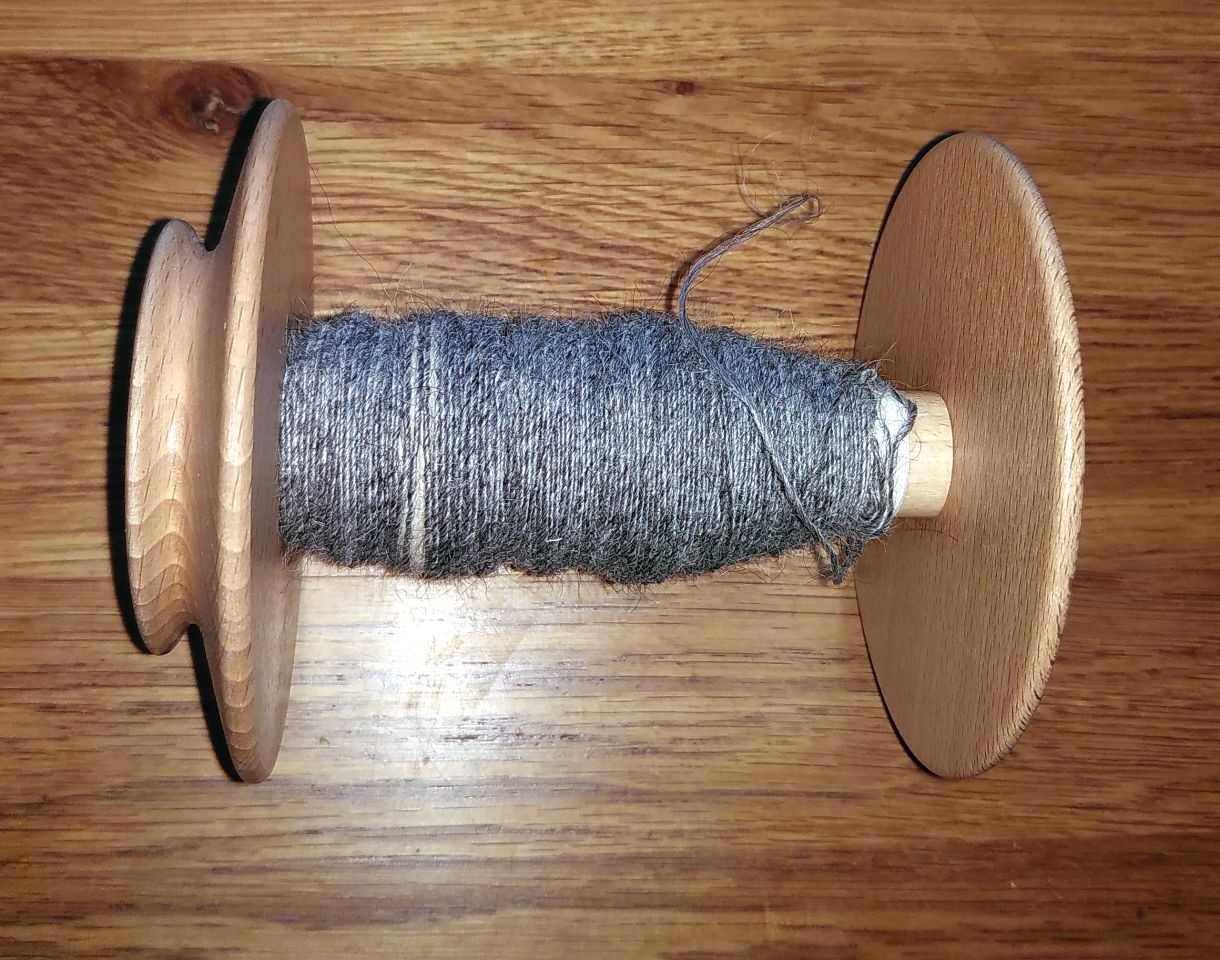
Since I was asked about progress on the reconstruction process... well. Here's a first glimpse of the yarn from the test-spin, still on the bobbin: 

I've done a bit of spinning with both Valais Blacknose and Gotland wool, and though I'd have preferred to like the Valais better... I'm inclined towards the Gotland right now, at least for the warp. It's a bit easier to spin, and it comes closer to my impression of the original warp. The weft, though... it might well be that the Valais is better suited for that. 

The new empty bobbin is already sitting on the spinner, ready for the s-spun weft test yarn. Now if I hadn't gotten sidetracked with a lot of other things to do today... 

Mind you, I'm not complaining. But sometimes juggling all the things that have deadlines, or do not have deadlines but still need attention... well. You probably know what I mean! 

0
FEB
13
0

Bayeux Embroidery.

In case you're looking for a bit of embroidery input, my fabulous colleague Alexandra Makin is working on a Bayeux-related project, and her newest update is available on YouTube. She's talking about how to transfer the design in that installation: 

This is right on top of my list of things to watch now - I'm very much looking forward to finding out more about how she will handle this! 

For my own projects, I've usually traced the design, using a window or a table (depending on how strong the lines on the design original were, and how thick the fabric was) and went at it with my iron gall ink. More rarely I did use the pounce method with charcoal dust and then tracing with ink, and even more rarely I've done freestyle drawing with charcoal, followed by tracing what I was happy with in ink. (Or, extremely rarely because of the small project size, just using the charcoal lines.)

I always find it fascinating to find out more about the original tracings on fabric, and especially to see how much, in many cases, the embroiderers just did as freestyle shading. That, however, is often hard to see, as you usually have either the drawing (when the threads fell out and are lost) or the embroidery (hiding all lines drawn on the fabric)...

0
JAN
17
1

Aargh.

You know that effect when you do something textile-y, and you totally expect a certain outcome, or behaviour of the stuff, and then it just - thwarts you by doing something entirely different? 

Aargh. Yes. And yes, that happened... the knitted test pieces that I made did not exactly what they were supposed to do. So at least it proves the old adage that whatever number of questions you go into an experiment with, you will go out with even more! 

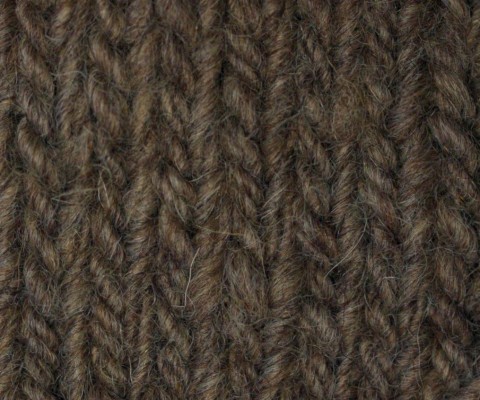
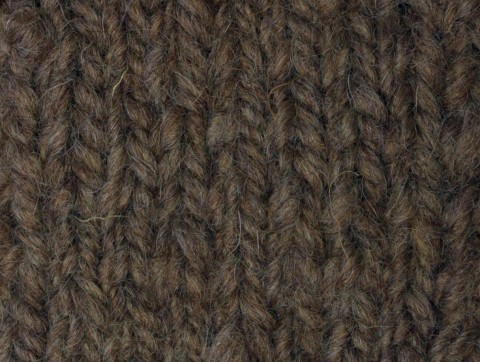
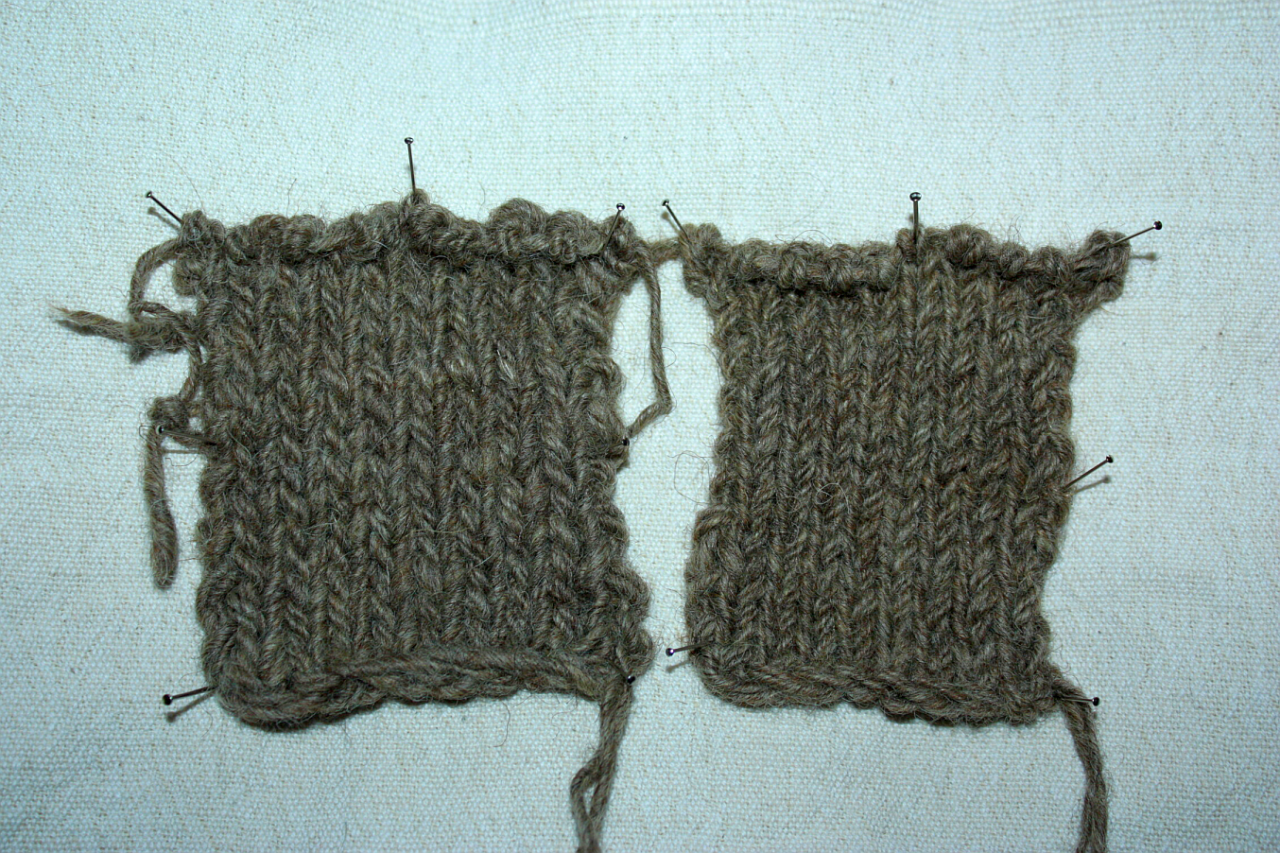
These are two close-ups of knitting, done with plied threads and done with threads held together. Can you tell which is which? And why? 

After washing, they were supposed to look a bit more different... but if there are differences to be seen, well, they are more subtle than what I'd have wished for. So I feel a bit thwarted by my own work, and I'm also wondering why. Was there not enough twist? (There was plenty, I'd have said.) Does it depend on yarn thickness? The last test I did was with thinner yarns, and I had more of an effect there. Or maybe I was knitting too tighly?

Questions, questions, more questions. Well, at least life never gets boring that way!

0
JAN
11
2

Happy New Year!

Happy New Year, dear readers of this blog - I hope you had a good end of the last one and a glorious start into this year! Mine was partly spent with a rather obnoxious cold, so there was a bit more sneezing and a lot more sleeping than I had planned for.

Of couse I'm well again in time to get back to work... timing, right? But it's nice and interesting work that I'm getting back to, so that is definitely on the pro side. (Well, mostly nice and interesting - I just remembered there's tax paperwork to file in the next few weeks, too...)

There's also planning for some conferences and events in the current year. I will be at the Nadelwelt again in May, and then there's the NESAT conference in May as well. The museum in Syke plans a Bronze Age weekend event in August, where I will show things... but the next thing coming up is the Knitting History Forum conference on February 3

I will talk about spinning, twist, and its influence on knitting at that event, and some bits for that paper are still in the works. So here's a sneak peek for you:

These are knit from the same wool, spun once in z and once in s, with two threads held together (not plied). I've done this before, the not-plied-thing, with rather... interesting results once it got washed. This time, I'm also going to see about the differences in spin direction, including the visual ones. Next up will be the same knitting, but with plied yarns instead of yarns held parallel.

(I was hoping for the two bits to turn out the same size, but alas, the threads of one were a bit thinner than the others, or else I messed up the tension. Ah well.)

If you're interested in the outcome, consider joining the conference! It's online only, so you can attend from wherever you are. More about it, including the programme and the link to get tickets, can be found on the conference website

0

By accepting you will be accessing a service provided by a third-party external to https://pallia.net/

Contact