
Latest Comments

Guest - Katrin Sprang Discussion
18 September 2026
Hi Rachel, I have looked for more photos of you, but that was not very successful. I found a link on...
Guest - Beatrix Sprang Discussion
15 September 2026
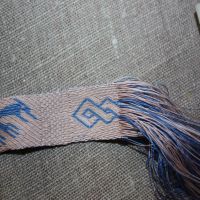
That lozenge pattern element is not a photograph, but a scan. So it should be to scale. But I pinned...
Guest - Katrin Sprang Discussion
15 September 2026
I was not referring to Rachel's reconstruction (is the reconstruction you refer to the one photograp...
Guest - Beatrix Sprang Discussion
14 September 2026
There is something Rachel did not mention. She told me: "Well, I worked with the measurements we too...
Guest - Katrin Sprang Discussion
14 September 2026
Well, this is certainly developing into an interesting discussion. Firstly, going from that lovely l...
NOV
20
0

Databases (again).

Update 2021: Unfortunately, Fototime has ceased operation, as the company has gone under during a huge server failure. So they are not online anymore, and if you have a pro edition, that includes their license server. I'm very sad about this, and if someone has suggestions for alternative software that is similar, I'd love to hear about it!
As the long-term readers among you might know, I am using Endnote for my references and bibliography, and a programme called Fototime FotoAlbum. Both have been on my system for years now, so I have gained a bit of experience with them.

FotoAlbum is making a good job of sorting and handling my image database, and their online support is one of the best I know. There was no instance where I didn't get a speedy reply, and things were taken care of whenever possible (I realise that not all my requests would fall in line with the needs of the normal customers, so it's understandable they are not adapting the programme just for me).
The programme allows notes and comments, ratings, copyright notes, keywords and captions; it has filters and an "album" system that makes it possible to store pictures in a given folder structure, yet have them as part of several albums. There's also the possibility to define smart albums, automatically putting pictures in there if they have the right keywords, date, or other defined thing.

Speaking of dates - I use the programme to sort my picture database which, logically if you are working about medieval stuff, consists mostly of old things. The photo timeline is quite generous, since it allows to go back until 1700 (there were no photos before that time, right? Right? Yes.). For stuff from the 9th or 12th century... that's a bit late, though. So I developed my own system that has been successful for years now: I use the 1700 as code for my centuries, as in 1708 - eighth century, 1715 - fifteenth century. And I even have a months key, for example January 1713 means from 1200 to the 1220s. The months key is not perfect (due to my less than perfect definition, that is) but it works fine and it allows me to sort all my pictures by date. And I have a lot of pictures.

So if you are in search of a picture database, I can fully recommend the programme. I use the paid-for edition, due to a few reasons of my own, but FotoAlbum is also available in a free edition that will already serve for most database-related needs, including handing out your pictures or a selection of them, with all the data attached and viewable, to someone else.

As for Endnote... that's something to write about tomorrow.
0
NOV
09
2

Libraries are so good. And databases, too.

I had a really nice and very intense day of sitting in the library and reading and taking notes yesterday - which felt absolutely fine.

I have started to take notes for each book that I store in my bibliography database so I can have an excerpt and check again if necessary where something came from, and I now somehow sort of regret that I haven't started this years and years ago. I'm still working with EndNote and will continue to do so, I have never gotten onto good terms with Zotero, though it seems to be a good (and free) choice. (In the interest of full disclosure, I have also never really tried hard to get onto good terms with Zotero.)

And let me state again that I am a huge fan of databases, both for bibliography and for pictures - because having a searchable, tagged or keyworded heap of information is much better than having an unorganised, non-searchable heap of information.

So if you have pictures, or collect pictures for research reasons, and read books for research purposes, I thoroughly recommend you to get a database thingie - there are heaps of free ones on the Internet - and at least note down the following: who took the picture (if it wasn't you) or the book it came from (including the page) if it's a scan, and for books you read the author/editor, book title, year, and a short note of how you liked it. You can put in much more - excerpts, keywords (both for book and picture), picture captions, a note of how you liked the book, further citation traces to follow, where the book is located, when you looked at it, or whatever would be good but is not on my radar at the moment. But having at least a note of the minimum things will mean you being able to remember whether you had that book in your hands already... or not.

Having said that, I should probably spend a little time on the care and feeding of my databases today.
0
JUN
27
0

More offerings of the Internet!

Yesterday, I received a mail informing me that a colleague had stumbled across a .pdf version of a Festschrift for Frans Verhaeghe, online and downloadable free of charge. Since I am a curious person, I took a look at the link she had posted. And since I'm a very curious person, I then took a look at the site that hosted the file.

It's called the OAR, het Open Archief van OE-publicaties and it hosts not only that monograph, but many others and lots of archaeological magasines. You can search the database (though in a limited way) and get a short abstract for each item on the list, sometimes in English, mostly in Dutch. The Festschrift seems to be one of a few items mostly or completely in English, but if you are interested in archaeological results from Flanders, this is your database.

And I find it utterly amazing that things like it exist, just like that, free for everyone, on the Internet!
0
MAR
15
0

Augenmaß und Handgewicht...

Doc, over at Medieval Cookery, posted a nice entry titled "The Measure of a Cook".
The TL;DR: Measuring helps, and even if an experienced cook does not measure using an item, there's still some hand-eye-measuring going on. Pure "cooking from the heart", when done by a novice, can go spectacularly wrong due to lack of this built-in measuring and lack of experience of how something should look, feel or behave. And when we are talking about historical recipes, most of us, even experienced cooks, will count as novices since we just don't know how the concoction described in the text was supposed to behave and taste.

I find Doc's observations very true - measuring really does help, and it is more important if you lack experience with the kind of food you are trying to prepare. On the other hand, I have made the experience that some (novice) cooks will stick to a given recipe down to the last letter, including perfectly substitutable or omissable ingredients even if they do not like their taste at all. And that is... not so good either.

I am one of those lucky folks who got a good grounding in how cooking works back at home, when I was quite young. The first thing I learned how to cook was noodle soup - because it is so easy. You put in some stock, get it to boiling, just add noodles and wait a few minutes. I also remember, vividly, that I made some on my working mini child's play stove one day, and then forgot about it until it had cooked to noodles, no soup. (It was still edible, though.) I was sad about that - and then got told that yes, things like that just happen once in a while when you cook, and it's no big deal.

I learned that it's good to have a recipe with measurements as a guideline, but that they are not set in concrete, and it is perfectly okay to experiment a little, or to substitute ingredients if you do not have or do not like something. And that once in a while, things will not turn out quite as they should - but that those failures are just a part of life, and most times the food will still be edible if not very yummy, and in our age it's not too big a deal. (It was back in post-war times. My gran tells this story where someone found a pot of grease left by US soldiers and used it to fry a portion of potatoes in it. Unfortunately, it was non-edible grease for leather, and thus the fried potatoes were non-edible as well. That was a really, really big deal.)

When I started to cook stuff for groups while not in the safety of my home kitchen - especially out on living history ventures - I started seeing measurements even more as guidelines. I remember making dough for waffles without any measuring tools apart from counting out four eggs and adding other stuff until the consistency was about right, and the waffles turned out really well. But yes, that is only possible when you know how a given sort of dough should look, or what the right consistency for this or that is. And then you do measure with your eyes and hands and experience.

A friend who was a professional cook once told me "Augenmaß und Handgewicht verläßt die deutsche Küche nicht" (measuring by eye and weighing in the hand will not leave the German kitchen), and I say this to myself whenever I'm not going to measure - because I do not have the implements, or because I am feeling frisky. And I have some recipes that just state what the ingredients should be and how they should be treated and combined, but no amounts - because when I make that Irish Stew or that "Szegediner Gulasch", I will buy and cook an amount of potatoes, peas and carrots to fill the bellies and an amount of meat that will add flavour and interest but will not empty my pocket too much.

And today I'm feeling really lucky that I have learned this approach to cooking. Thanks, Mom. And Dad. And Gran.
0
FEB
20
0

Some modern things are so cool.

It's not the first time that I write on this blog about how I dig modern technology. Or the InterBloggoTubes. But it's time to mention one incredibly cool (and meanwhile also incredibly successful) idea: Crowdfunding. Or, to be more specific: Kickstarter.

I first found out about this platform and the idea it carries - get normal people to fund an expensive project with their money, getting a little (or sometimes not-so-little) input from many persons - when Neil Gaiman blogged about a short animated film project on Kickstarter. And since then, I have looked there now and then, browsed the projects... and sometimes even fell in love with one of them and backed it.

In case you do not know about crowdfunding yet, here's the Cliff's Notes: Someone has a project that needs more money for getting it going - like printing a book, making a CD, or filming something, or making a gadget of some sort. Sometimes, there is a market for the item in question, but it is commonly only reached via middlemen (publishers or similar), or there's even more investment needed to distribute the item so it gets to the market. Lots of projects die in this stage. Enter crowdfunding: now the someone in question describes the project, maybe even with a little video, and asks for help in making this. Not just help though - anyone who backs a project usually gets something back: a copy of the item in question, a personalised item, a limited edition thingie, and so on. So basically you future-buy something that would not come into existence without your future-buying it.

Kickstarter also has a very good system of handling the logistics: you can change your pledge at any time until the end of the drive, and you will be charged only once - after it closes - and only if the project reached its funding goal.

And in case you now wonder whether this can function... it can. There's a lot of purchasing power in the hands of geeks, and those folks are prone to find out about something like Kickstarter. And if you need more proof about that, check out these two still-running projects that both have more than a million dollar in pledges now - a drive for funding a comic book reprint and a drive for making a point-and-click adventure game (close to two million now). And if you would like to see a truly amazing marketing strategy in action, make totally sure you check out the updates of the Order of the Stick drive. This is how it's done, and I'm in total awe about how Rich handled this.
0
DEC
19
2

Only one more week!

To be exact, less than one more week, since it's December 19 today already. Good thing my ImageJ macro now is working soundly, since there are only four days left to go before Christmas!

For those of you who don't know (or are wondering about my counting skills), I did not count today, and German Xmas starts on December 24. The evening of this day is when celebrations begin, and it's also the time when presents are given (and unwrapped). No waiting until Christmas Day in Germany.

And now a little bleg: I have been wondering yesterday about how widespread the tradition of baking Christmas cookies really is. I know there's some baking in America, and I know it's a firm tradition in Germany, but I really have no clue about the rest of the world. Will you let me know in the comments if seasonal baking is done in your place of the world? In exchange, I will let you know how to get really sticky fingers and a really sticky knife.

Buy a packet of marzipan paste, a packet of dark chocolate (or two) and a packet of dates (or two). I like to buy the "raw marzipan paste" with less sugar in it, and the black very sweet and soft fresh dates (not the drier Deglet Nour, which are the most common dates hereabout).
Cut the dates open and replace the pit with a date-pit-sized piece of marzipan. Press date closed again (the sticky fresh dates are malleable, making this easy) and dip the date into molten dark chocolate, covering it completely. Set aside to set. Enjoy.
0
DEC
12
0

More. Moooore!

It's getting more and more dangerously close to the festive days, and I'm doing what I have traditionally been doing these last few years: I'm baking cookies - with help from the most patient husband of them all (who tries to turn a blind eye towards the mess I make of the kitchen) and with some additional help from friends. It's the traditional family baking (at least the bulk of it) that I took over from one of my Grandmothers, main cookie producer before me. And since the goodies are supposed to last for at least three nice afternoon coffees with family and maybe some additional friends, I make a good-sized batch.
The nice thing about typical German-style cookies for this season is that they can be made quite a while before they are supposed to be eaten, since they keep very well and usually get better with some time in a tin. So it's not a baking frenzy (at least  not necessarily) but can be distributed over a few weeks.

Plus there's Christmas markets everywhere now and rich food and hot tea or mulled wine, and much meeting with friends. Only the snow is still lacking around here!
0

By accepting you will be accessing a service provided by a third-party external to https://pallia.net/

Contact