
Latest Comments

Guest - Katrin Sprang Discussion
18 September 2026
Hi Rachel, I have looked for more photos of you, but that was not very successful. I found a link on...
Guest - Beatrix Sprang Discussion
15 September 2026
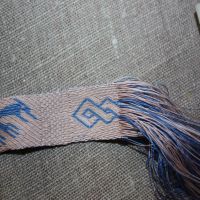
That lozenge pattern element is not a photograph, but a scan. So it should be to scale. But I pinned...
Guest - Katrin Sprang Discussion
15 September 2026
I was not referring to Rachel's reconstruction (is the reconstruction you refer to the one photograp...
Guest - Beatrix Sprang Discussion
14 September 2026
There is something Rachel did not mention. She told me: "Well, I worked with the measurements we too...
Guest - Katrin Sprang Discussion
14 September 2026
Well, this is certainly developing into an interesting discussion. Firstly, going from that lovely l...
JUN
16
2

The Return of the Evebø Dog.

The Evebø band... oh, source of joy and questions. For me, at least.

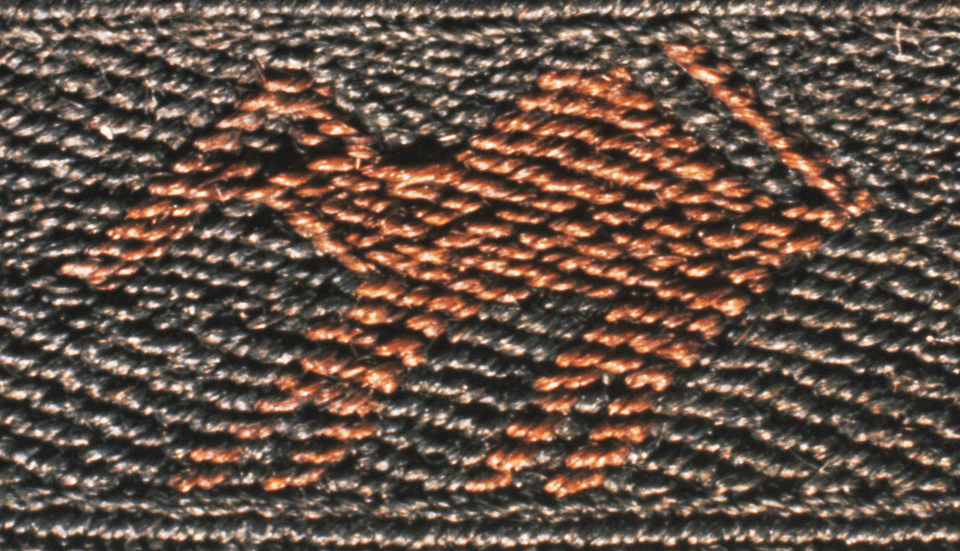
The Evebø band is a find from Norway and dated to the 6th century; it's a tablet-woven band with twill technique patterning, and very good, very detailed pictures of the band can be found at the Fotoportalen Unimus. Including, to my great joy and delight, photos of the back of the band... because, as simple as the band might look at first glance, there are some strange things happening with the animal that might be a dog (though the Most Patient Husband of Them All says it looks more like an ant-eater to him, and I sort of agree).

[caption id="attachment_5364" align="alignnone" width="368"] Photo from UNIMUS.no


The original band happens to have a 20 tablet pattern zone, which coincidentally is the width of one of my playbands... so of course, at some point, I had to weave the Evebø ant-eater doggie. And as we all know, dogs are pack animals.

So. Let me introduce you to my Evebø dog collection:
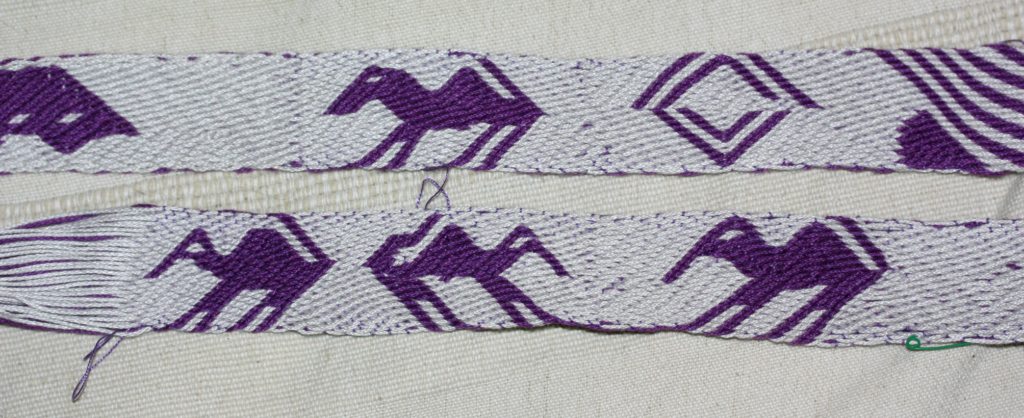


The first one, in the upper band part on the image, was woven starting from the nose, after just a sketch of the original animal. Though I was sort of aiming to reproduce it, I wasn't going for the "have to match it exactly" approach, but more for the general direction. As you can see, it has a wider nose than the original, a much thicker neck, and a baboon butt.

The rest followed a considerable amount of time later - they grow younger from right to left. First (rightmost) was woven from the tail onwards; then, because the first one had been so long ago and that made it hard to compare what the differences were, I did another one starting from the nose (you can easily tell that by the baboon butt). Finally, I did a third one, trying to a) weave less mistakes than in the first ass-starter, and b) matching it as closely as possible to the original. Which was... well... not completely successful in both cases. As you can see mostly in the chin and nose area. Sigh.

If you compare my versions with the original, you can find quite a few differences (even disregarding the baboon butt versions, and just looking at the ass-first doggies). A small thing is the forelegs not having the split further down than the hind legs in one case - though that is just a question of me not paying enough attention to where the split was supposed to come, and not a technical issue.

The really interesting differences, though, are in the neck, eye, and nose area... can you spot them?
0
JUN
04
2

Mariengürtel - a few pictures.

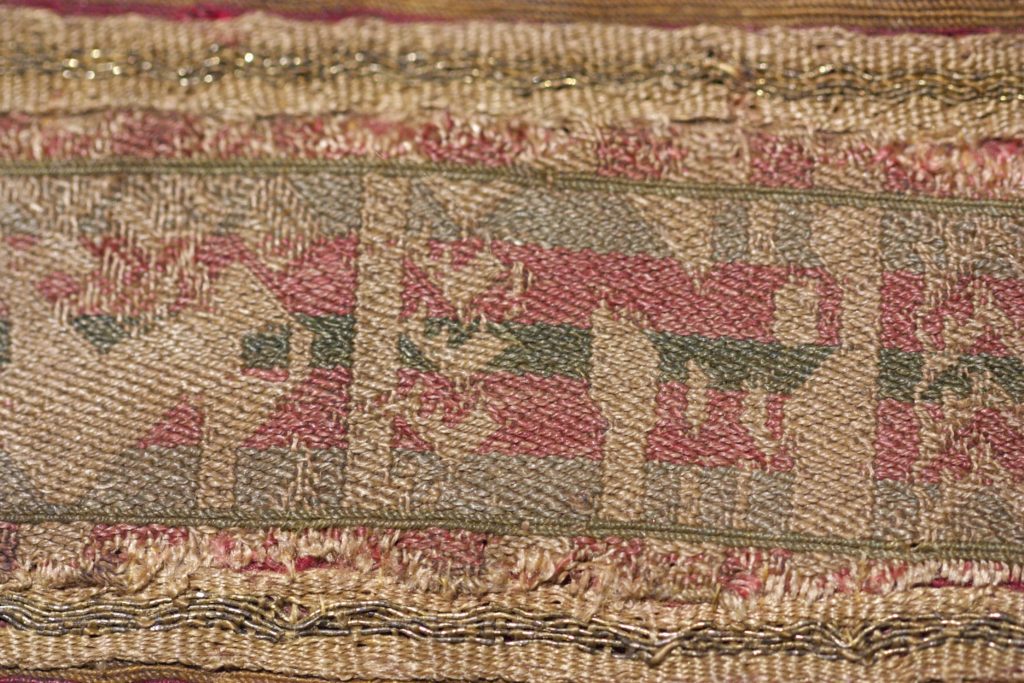
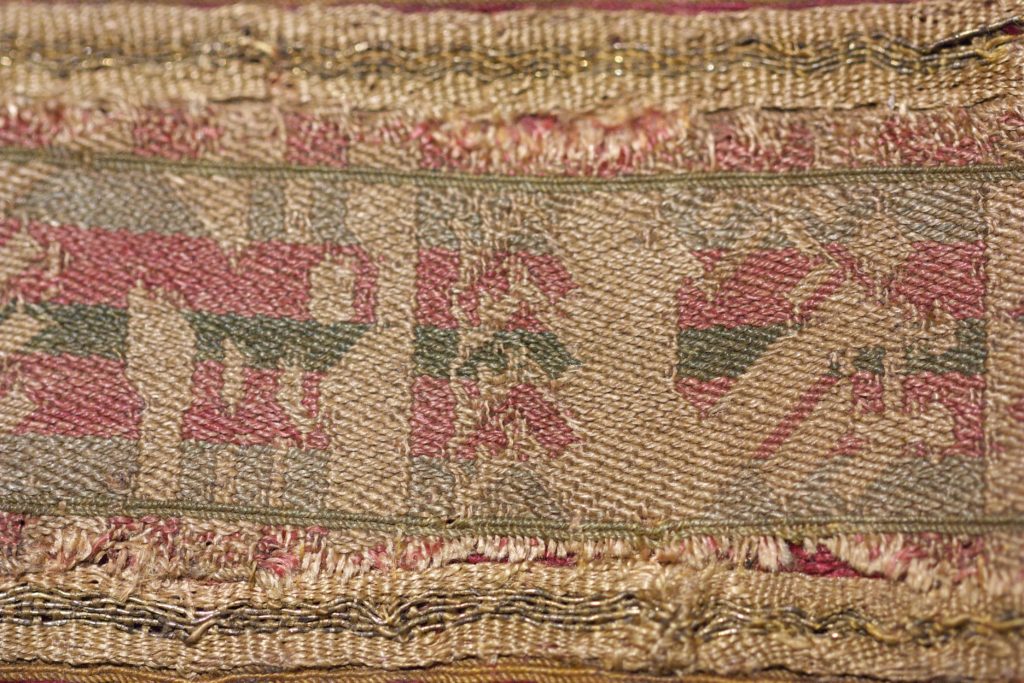
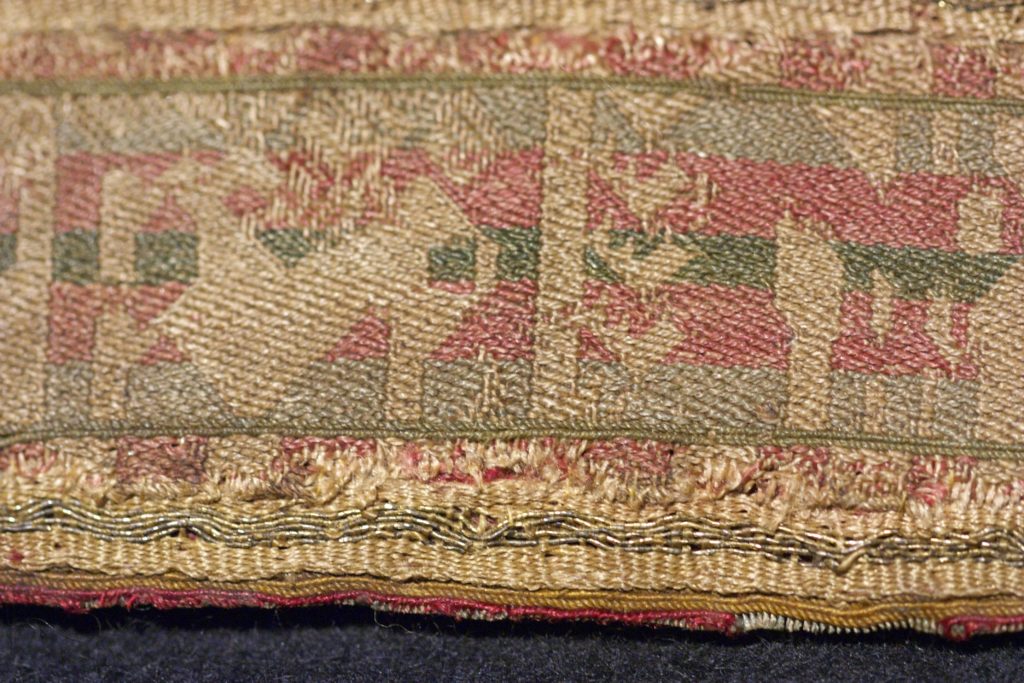
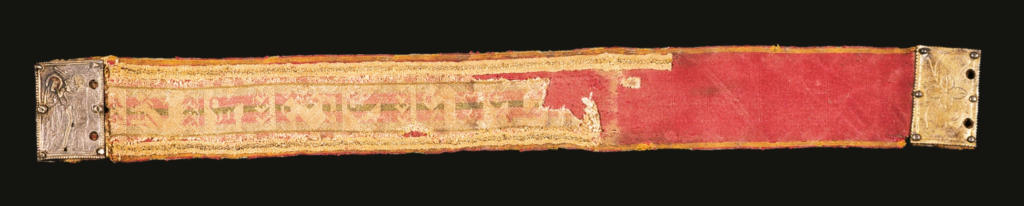
I wrote a while ago about the Albecunde belt, which is one of the tablet-woven bands in the museum St. Afra in Augsburg. It has survived in two parts, a longer and a shorter one. Onto the smaller part of the Albecunde belt, another smaller piece of tablet-woven band is sewn. Its date is not clear, but it has been revered as the belt of St. Mary for a long while - and thus is called Mariengürtel.

It's a twill weave, with animal patterns in colour on an off-white background or in off-white on coloured background; and said background is green, red, and light bluegreen.

This is the overview picture from the museum:


...and here are some detailed pictures that I took, with kind permission from the museum.


It's a beautiful piece, and I am definitely itching to try and weave some of these little animals. According to my count, it's 2+41+2 tablets, so I can try them on my 42 tablet playground band. Once I have the current things done and finished, that is...

 
0
MAY
08
2

The Fabric Question.

Hannah asked in the Ask me Anything:

I have this question which kind of follows me around since I got involved in all this medieval stuff. It is a quite common topic and I have of course discussed it with fellow fans of the Middle Ages but still I am very unsatisfied with the answers. So, here it comes: which fabrics were used for which type of garments (e.g. is it true that linen was only used for undergarments?). Or do we just not know enough about this yet?


The answer to this is... it's complicated. Which, by the way, is the answer to a lot of general questions regarding things in the Middle Ages. The reason for this is a) our source material, which often does not cover things in detail; b) the fact that many things were probably just as varied and different from household to household and region to region as cooking recipes are; c) the Middle Ages are a long time, and things also changed over that time.

The sources we have for use of fabric (types) in garments are mostly the garments themselves and in second rank descriptions of clothing, both in form of literature and of lists or inventories. Both of them have their pitfalls. Extant garments are few and far in between, and if they are archaeological textile finds, there's almost no chance for linen or other plant fibres to survive. From extant clothing, we do have evidence for wool and silk upper garments, plant fibre fabric linings for these upper garments, and plant fibre fabric used for undergarments. As far as I know, there's no evidence for plant fibre fabrics as upper garments.

The High Medieval German texts mention plant fibre fabrics for undergarments and silk or wool for upper garments. Silk can also be used for undergarments, in some cases, according to these texts.

So - we have good evidence for the use of silk and wool for upper garments, and for the use of plant fibre fabrics (which could be linen, nettle, hemp, or cotton) for linings and undergarments. This, by the way, includes padded and quilted undergarments. There's no good evidence for the widespread use of wool as undergarment fabric to my knowledge, and there's no good evidence for the use of plant fibre fabrics as upper garments. Both cannot be excluded completely, of course.

When you go into detail more, it gets even more complicated, as the preferred weave types for wool and silk fabrics also change over time, according to the amounts of (mostly wool) fabric scraps found in archaeological context. Plainweave, though, can be found through all ages in quite large quantities - so if in doubt when looking for fabrics, this is your friend. For the decision on which fabric to use for clothing regarding a specific time and area, I'd recommend to try and find out about textile finds from there, and then try and find a fabric that is approximating the finds - which can, unfortunately, be quite a challenge, as many of the "typical" medieval fabrics are not available today anymore.

0
MAR
25
0

Luck with Tiny Things.

Sometimes, sometimes you're lucky, and you manage to get your hands on something that almost does not exist anymore. Case in point: Tiny seed pearls.

There are a few surviving medieval embroideries that include seed pearls (which is the common term for small pearls). If you're trying to buy pearls today, the rule seems to be "the bigger the better", so most offers are for large pearls.

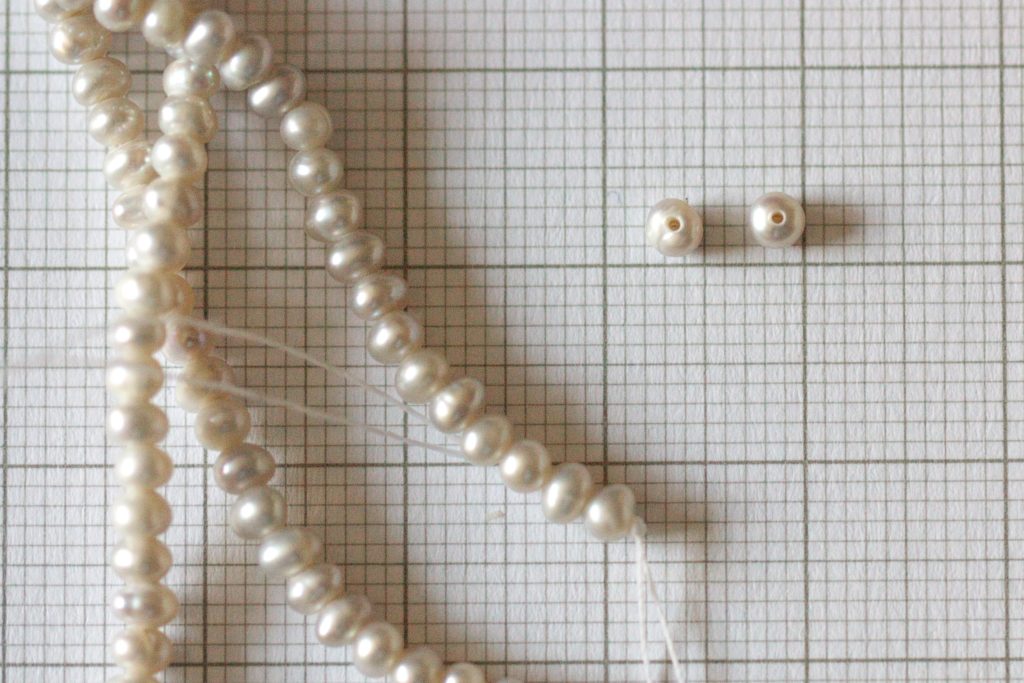
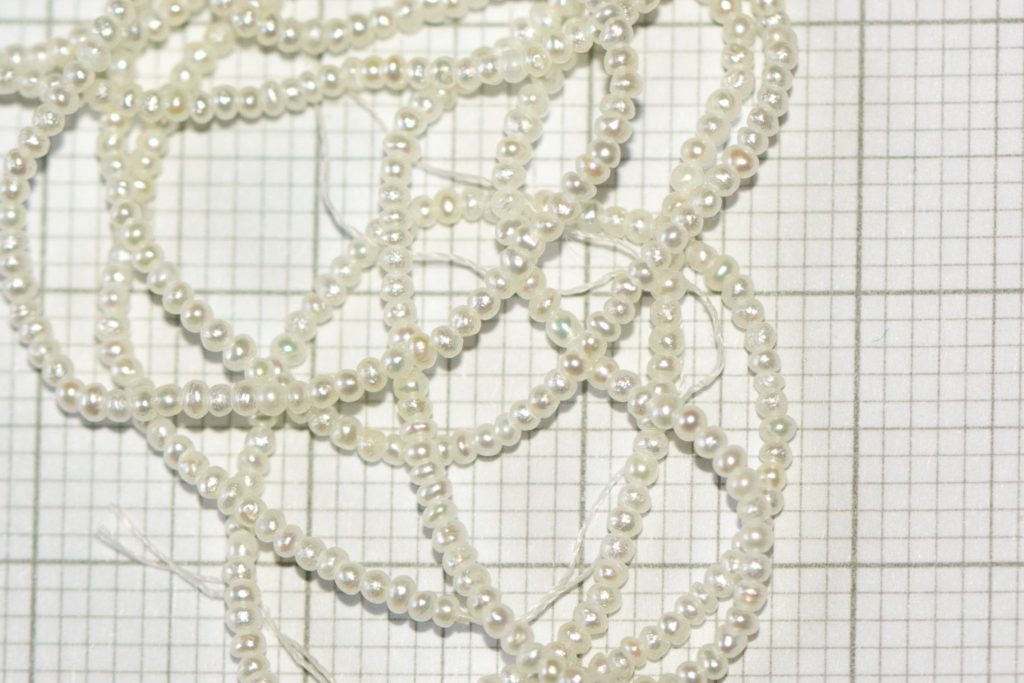
Seed pearls are still relatively large; the smallest you can usually find (especially if they're supposed to be drilled through) is c 2 mm in diameter... which looks, approximately, like this:

[caption id="attachment_5142" align="alignnone" width="501"] Seed pearls. The backdrop is paper with 1 mm squares.


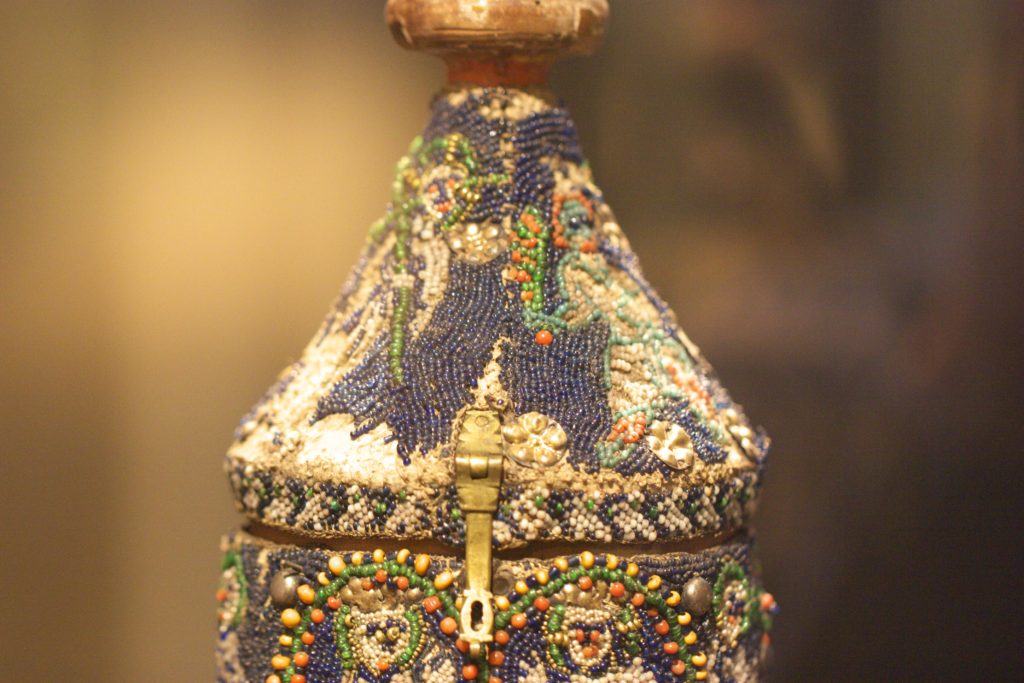
This is a string of seed pearls I bought years ago; the smallest pearls I could find. They are still way, way too big to properly simulate medieval embroideries, though. Here's a picture from a pyxis in the Schnütgen Museum Köln, with corals, pearls, and glass beads of about 1-1.5 mm in diameter:

[caption id="attachment_5145" align="alignnone" width="640"] Embroidered container for the Host. Hildesheim, second half 13th century. Wooden core, covered in embroidery with glass, sweetwater seed pearls, corals and metal appliqué on parchment. Schnütgen-Museum Köln, N 42
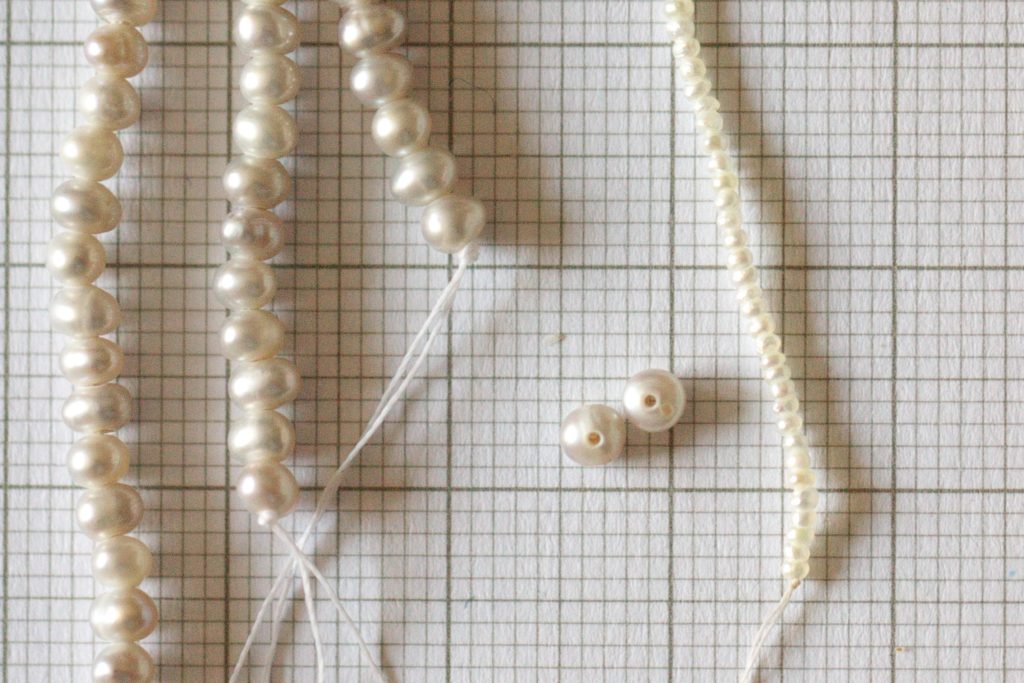
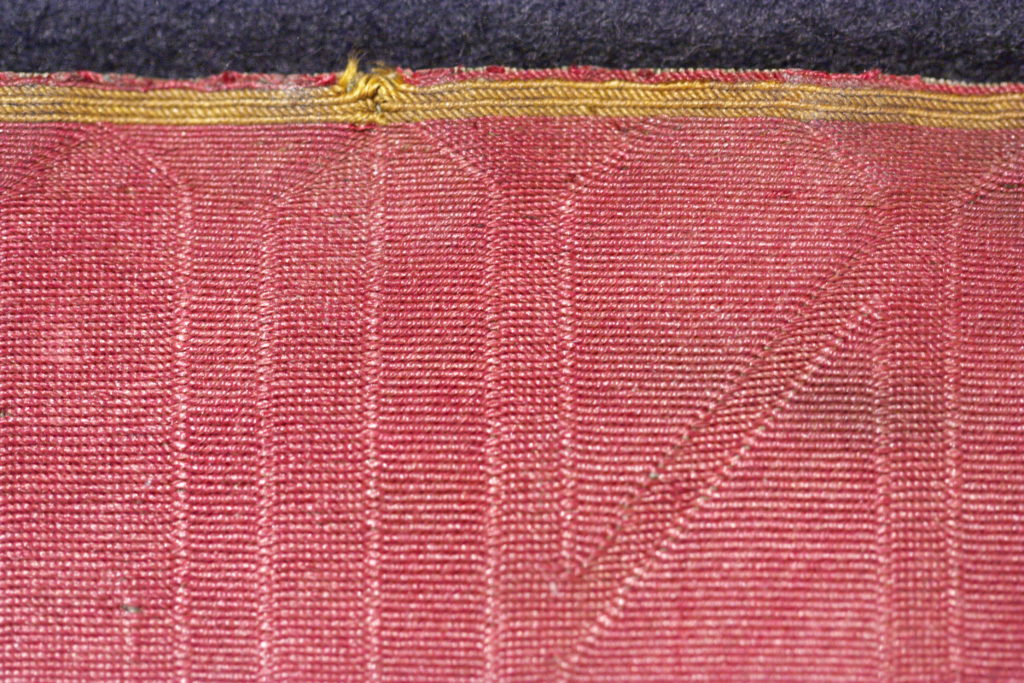
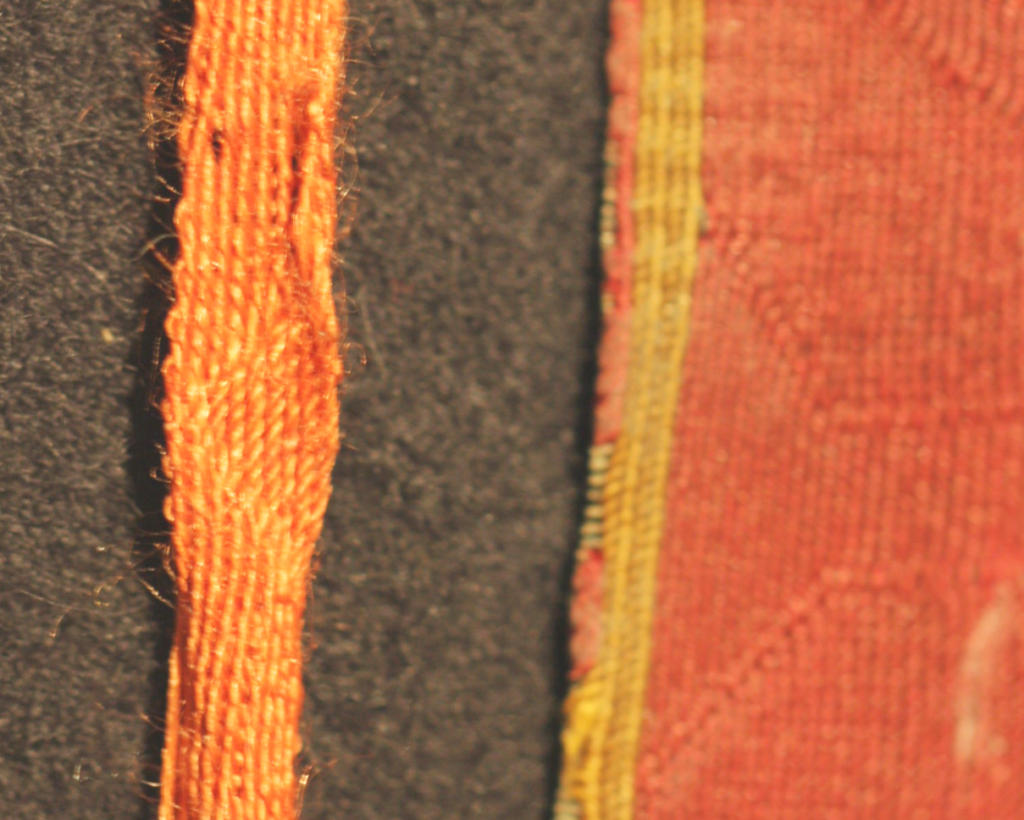
That is the pearl size that we're looking for. That, sadly, is the pearl size not available today, usually. So imagine my delight when, after the last conversation about this, I did another internet trawl, just to see if, maybe, maybe... and was successful.


Unfortunately, this string of pearls is not a new one, but an antique one (age unknown) which I got from an auction house. It does mean, however, that I now have a string of pearls in the proper size for demonstrations, or explanations...

Here's the two sizes side by side, so you can appreciate the difference even more:


...and I will take this as a sign that if you do not give up, things eventually might come. Even if they seemed impossible at some point.

I really do wonder, by the way, how the medieval pearl-drillers managed to drill such tiny, tiny holes into such miniscule pearls. You can hardly see these things, let alone hold them. Drilling a hole? I can't imagine how that's done. But there were lots of feats of similar size (or minisculity, rather): Gold threads. Miniscule miniatures. Tiny things in goldsmithing...
0
MAR
09
0

Albecunde!

To my great delight, I have the permission to share some of my pictures from the Albecunde tablet weave with you... so here you go:


This is a close-up of a detail from the Albecunde weave. You can see that the weft threads are pressed in very, very closely. You can also admire the beautiful colour (after so many hundreds of years!)

At about the middle of the image, there's a general reversal of turn direction of all the tablets, including the 6 selvedge tablets (there's some damage at the selvedge in that spot as well).

And here it is in blurry comparison to one of my bands, woven from the embroidery silk:


The individual tablet cords really are tiny... my band is about 4 mm wide with 9 tablets, and the original about 38 mm with 92 tablets.

You can visit the original in the Museum St. Afra in Augsburg, it is well worth a visit!
0
FEB
26
0

What I did on Monday.

As you know from yesterday's post, I spent Monday on a museum visit. Monday.

In case you're not familiar with German museums: They usually are all closed on Mondays, and there are very, very few exceptions to that rule. That means when you're in there on that day, it is either a special occasion (such as a public holiday, or a special event in the museum) or you have an appointment for something that happens best when there is no public around.

In my case, I had the wonderful opportunity to meet with two fellow textile people and see a few early medieval tablet weaves that are in the exhibition of the Diözesanmuseum St. Afra: The Witgarius-Belt and the Albecunde-Belt. The latter also has a piece of the so-called Mary's Belt attached to it. (Unfortunately, there are almost no pictures of these belts on the internet - you can see a tiny one of Witgarius here, and a tiny one of Albecunde's belt (usually called Ailbecunde's belt) here.

All three are tablet-woven, and all of them are done in different variations of the technique: The Albecunde-Belt is woven all in one colour, with letters made by turn direction changes to form a subtle pattern that will be visible in certain angles and almost invisible in others. The threads are very, very fine, and the weave is incredibly dense. The start of the inscription, which also gives the belt its name, is "N NOMINE DOMINI ALBECUND" ... and while the first missing letter clearly has to be an I, I'm not quite sure about how it all goes on - it looks like a letter Q to me after the D, followed by an E, which is sort of weird. Anyways, the sure weirdness is that there is definitely no I in the name Albecund... - but there is a swap of the tablet turn direction between the A and the L, which might have led to the interpretation of a letter I. That was a first very interesting thing; the other, for me, was the density of the weave, which results in very pleasant angles of the letter serifs. You might know the syndrome of stretched-out, elongated patterns in tablet weaving? Well, this has clearly not happened here. It has not happened in a way that has deeply, thoroughly impressed me, and I now am convinced that I have to work on my weft-pressing technique, as there's obviously room for improvement.

The Witgarius-Belt has a similar ground weave - wine-red silk, with edge tablets in yellowish silk and red silk - and a similar density, but is brocaded. The gold thread brocading does, again, form letters; they show up in red on gold background on one side and in gold on red background on the other side.

The third of the pieces is only preserved as two small fragments, and one of them is on the back of the Albecunde-Belt, and thus not really visible. The larger fragment, though, can be seen on the belt front; it shows animals woven in 3/1 broken twill technique, alternatingly white on a background of coloured stripes and coloured on a white background. That was, of course, very interesting for me as well, and I hope to weave one or two of the animals in the near-ish future. My count comes to 41 tablets for the pattern zone, which fits in nicely for my play-band with the 42 tablets... and one of the motifs is a rather nice-looking duck-like animal. I haven't done a duck yet, so...

It was amazing to see these things close up (the case was opened for us, so we could take a closer look). Especially the Albecunde-Belt was a delight to look at. The technique itself, in which this is woven, is really simple - but the fineness of the threads, the evenness of the weave, and especially how densely the wefts are packed in reveals the true mastery of the weaver. It seems like the ultimate impressive understatement status symbol, something simple brought to utter perfection.

As you can see, my brain is still rather full of the impressions. Also, I have a good number of photographs, and quite a few things to try out once I get to string up my tablet weaves again, and altogether I'm very, very happy.

Museum Mondays? They are wonderful. Won.der.ful.
0
JAN
28
0

Netherlands Archaeology

While doing my prep for the weekend (so many fascinating things trying to side-track me! So many things I'd like to do more research about! So many questions remaining!), I stumbled across an open access online journal about Archaeology of the Low Countries. Sadly, this lovely little journal only had a few issues before coming to a stall, but the Journal for Archaeology in the Low Countries website might still be worth a visit for you - especially since vol. 2, published in 2010, includes an article by Chrystel Brandenburgh about early medieval textile remains.

 
0

By accepting you will be accessing a service provided by a third-party external to https://pallia.net/

Contact