Latest Comments

Guest - Katrin Sprang Discussion
18 September 2026
Hi Rachel, I have looked for more photos of you, but that was not very successful. I found a link on...
Guest - Beatrix Sprang Discussion
15 September 2026
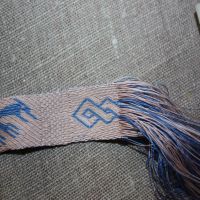
That lozenge pattern element is not a photograph, but a scan. So it should be to scale. But I pinned...
Guest - Katrin Sprang Discussion
15 September 2026
I was not referring to Rachel's reconstruction (is the reconstruction you refer to the one photograp...
Guest - Beatrix Sprang Discussion
14 September 2026
There is something Rachel did not mention. She told me: "Well, I worked with the measurements we too...
Guest - Katrin Sprang Discussion
14 September 2026
Well, this is certainly developing into an interesting discussion. Firstly, going from that lovely l...
JUN
29
0

Experimental Archaeology Survey

A colleague of mine is doing PhD research about best practices in experimental archaeology and is looking for people belonging to a research or academic institution or carrying out independent activities.

So if you are a demonstrator, crafter, re-enactor, or professional who works with or in museums or other spaces, you could do my colleague a favour ahd help with her research by filling out the questionnaire here.

I'm curious to see what she will find out - we've had a long and spirited discussion a few years ago about the problems of experimental archaeology in open air museums, and the possibility or impossibility to run experiments involving the public. (I'm still convinced that an archaeological experiment, in about 99% of the cases, is not something that you can open up to the public and still run successfully.)
0
JAN
10
1

Exciting things!

Did I say back to the usual stuff yesterday? Well, this year is starting off with exciting things only; for one thing, getting the Bernuthsfeld stuff to a close. (There's just a few more patches to decide upon and to sew in, and the shirt to make. I've already cut most of it, and the rest will be done once I get confirmation on the measurements so it will actually fit the figurine. Nothing worse than sewing something and then finding out it won't go onto the body it is supposed to dress!)

But wait, there's more!

When I was at NESAT last year, Eva Andersson Strand gave a presentation about one of the current projects at the CTR, called "Capturing our intangible past". You can read a bit of an introduction on the CTR website.

One of the aims is to get a better idea of craft knowledge and how to capture it. If you've ever tried to learn a craft skill from a description in a book, you will know that this can be rather difficult - and the motion capture might be helpful in isolating relevant motions without having too much data. If this works, it might also be a good method to record practical knowledge. There's still more, though - plans are to combine the motion capture with an EEG to get an idea of brain activity while doing the craft.

The research group is currently focusing on spinning as a craft, and you can imagine my delight on being asked if I'd like to participate in their study. So I'll be travelling to Lund later this month, to get lots of recording bitsies stuck onto me and to do some spinning. I'm beyond excited, and still can't believe something this cool is coming my way!

 
0
MAY
31
0

Things to read and watch. Or do.

Here's a stack of things you might enjoy... first of all, the children's quiz show that I was filmed for in January is online for four more days, and you can watch the episode here. (It's the second question in.)

Here's an article about the hatpin in the early 20th century and its use for self-defense.

Looking for something less martial? Here's a 14th century recipe for doughnuts, courtesy of the British Library.

If you are interested in studying Experimental Archaeology, the UCD is offering a new course for a MSc in Experimental Archaeology and Material Culture. Application deadline is on June 2, so if that sounds interesting to you, you will need to be quick.

Speaking of programmes, the Nobilitas Akademie this year will be 10-12 November on Burg Hessenstein. As usual, there's a variety of different topics, all sounding quite interesting! Their programme is online, and you can register for it; if you do it soon, you'll get a bit of an early bird discount, too.

Finally, here is a blog article about a spinning technique with hand spindles that I have on my list of "things to try and figure out how to do" - rotating the spindle in the hand, but not with the hand and finger position similar to short suspended spinning, but more or less horizontally. I've seen this a good while ago for the first time and have since dabbled some with the motion (which is totally intriguing), but as I said, it's still on the list.

Hope you enjoy one or more of those!
0
MAR
07
0

All kinds of interesting things!

Time for a post about interesting things, some of which you can participate in!

If you are in the Southampton area, there's a project about dexterity in flintknapping:With motion capture. How cool is that!

If you're more on the other side of the globe, there's the meeting of the Society for the History of Technology October 26-29, where there's a session about textiles and early industrialisation in planning. You can read more about the Society and their conference here.

There's also a conference about "Embellished Fabrics: Conserving Surface Manipulation & Decoration." It is the 11th North American Textile Conservation Conference, taking place in Mexico City, Mexico, November 6-11, 2017. The website is www.natcconference.com, and it will provide more information in case you're interested.

And another conference, this time in Poland, in June: Dynamics and Organisation of Textile Production in past societies in Europe and the Mediterranean. International Conference, Łódź, 21-22 June, 2017. The preliminary programme looks really nice and interesting!

For those of you who understand German (or for the adventurous of you who don't), there's a TV show where one guy participates in a club for one day, looking at the stuff people do in their spare time... and one of the clubs is a Living History group. You can watch the half-hour show here.

Some more interesting things - Jim Hines has done a survey about novelist's incomes. So if you've ever wondered whether writing a novel will make you rich, you might want to read his long, really interesting multi-part blogpost, starting with part 1 right here.

In 2011, a tunic was discovered in a Norwegian Glacier, and it has since been reconstructed. You can read a bit about the reconstruction and watch a video here. (I'm not totally happy with the spinning part of the video, as you might guess when watching it...)

And that's it for today. Hope you find something you enjoy among these!
0
FEB
28
0

You Like Knitting Old Stuff?

If you like to knit and would like to do so in the name of science (yay!), or like to spin in the same name, there's a recent project about Knitting in Early Modern Europe looking for volunteers to do just these things. The main task at the moment is spinning yarn to specifications taken from the original items, then knitting small round swatches and fulling them. This is done to test theories on cap construction without having to knit a full cap (which is rather a lot of work compared to knitting a few smaller swatches).

To join the KEME volunteer team, you will be required to fill out an online form, and you can get instructions for spinning and knitting from team member Rosalind. Read more about the project in their first newsletter, and their second one. (These also contain contact data for Rosalind - I'd rather not get her extra amounts of spam by posting her mail address right here...)

Feel free to tell a friend or three if you think they'd be interested, too!

 
0
NOV
18
1

Textile Forum 2016 - Pompeii Dyeing Experiment.

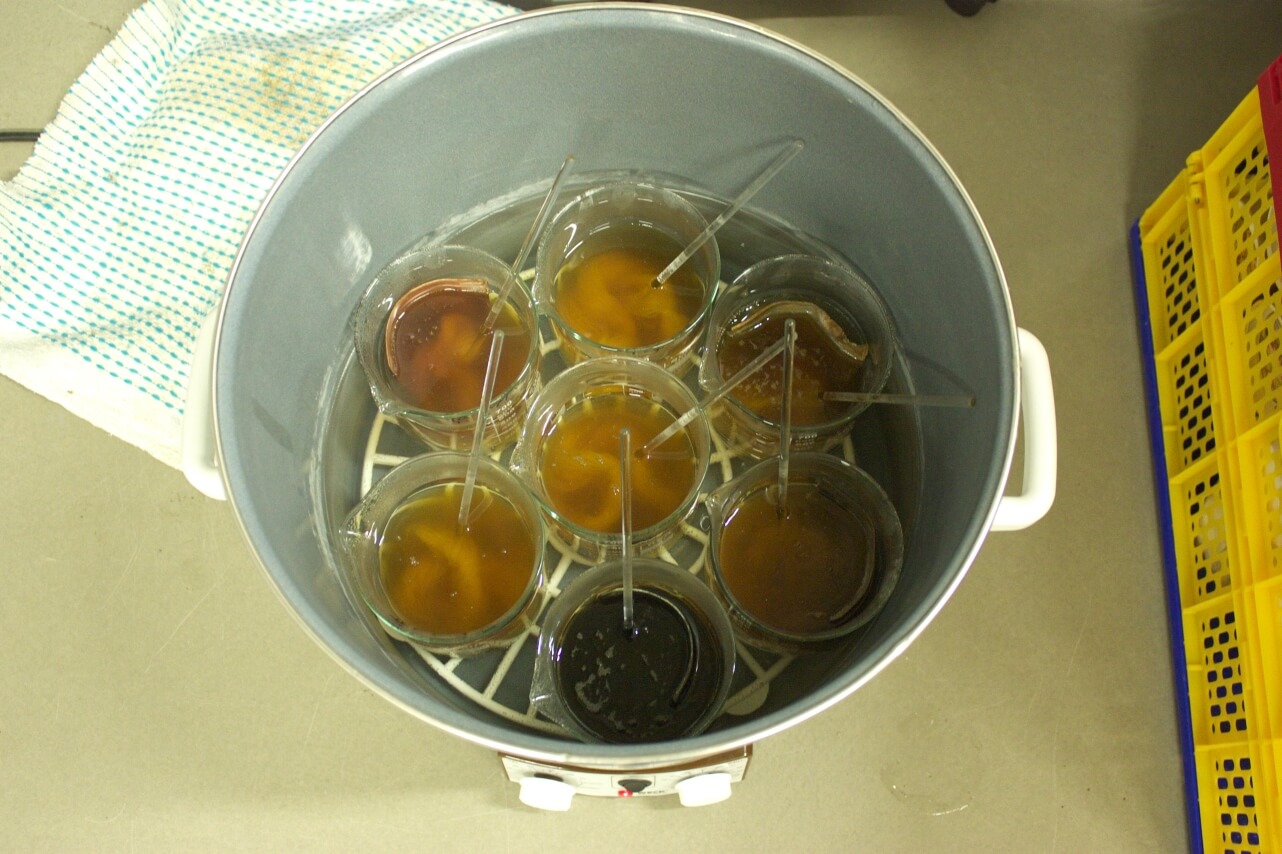
Back in 2012, we already did a dyeing experiment at the Forum, investigating the influence of kettle materials on the colour outcome. Our outcome showed a significant difference between the kettle materials that we tested - which were lead, copper, and iron. The results of this experiment were published in EXARC journal (you can read the article here).

In 2013, I was able to do an add-on to this original experiment, investigating whether the influence was larger in the mordanting or in the dyeing process. Sadly, I omitted the reference (NEVER leave out the reference!!) so there was no way to compare the original experiment and the add-on with each other. (Any comparison would have been limited anyways, as they were two different runs with different batches of birch leaf - but having two references to compare would have given good information about the similarity of the dye batches. Well.)

And ever since 2012 and the original experiment was done, I've been looking for somebody who would like to repeat the experiment... but nobody took the bait.

So this year at the Forum, we did the repetition ourselves. We did the full run this time around, though, combining the original experiment (metal in both the mordant and the dye) with the add-on (metal only in the mordant, or only in the dye). This caused some serious brain-bending and thought-knotting in the preparation as I was trying to make the run as efficient and as sensible as possible while avoiding any contamination between the skeins and any other issues.

There were two reasons for this re-run: One, to see how the three different batches (metal in mordant only, in dye only, in both) compare to each other. Two, to finally have an archaeological experiment repeated (something that, to my knowledge, has never happened before).

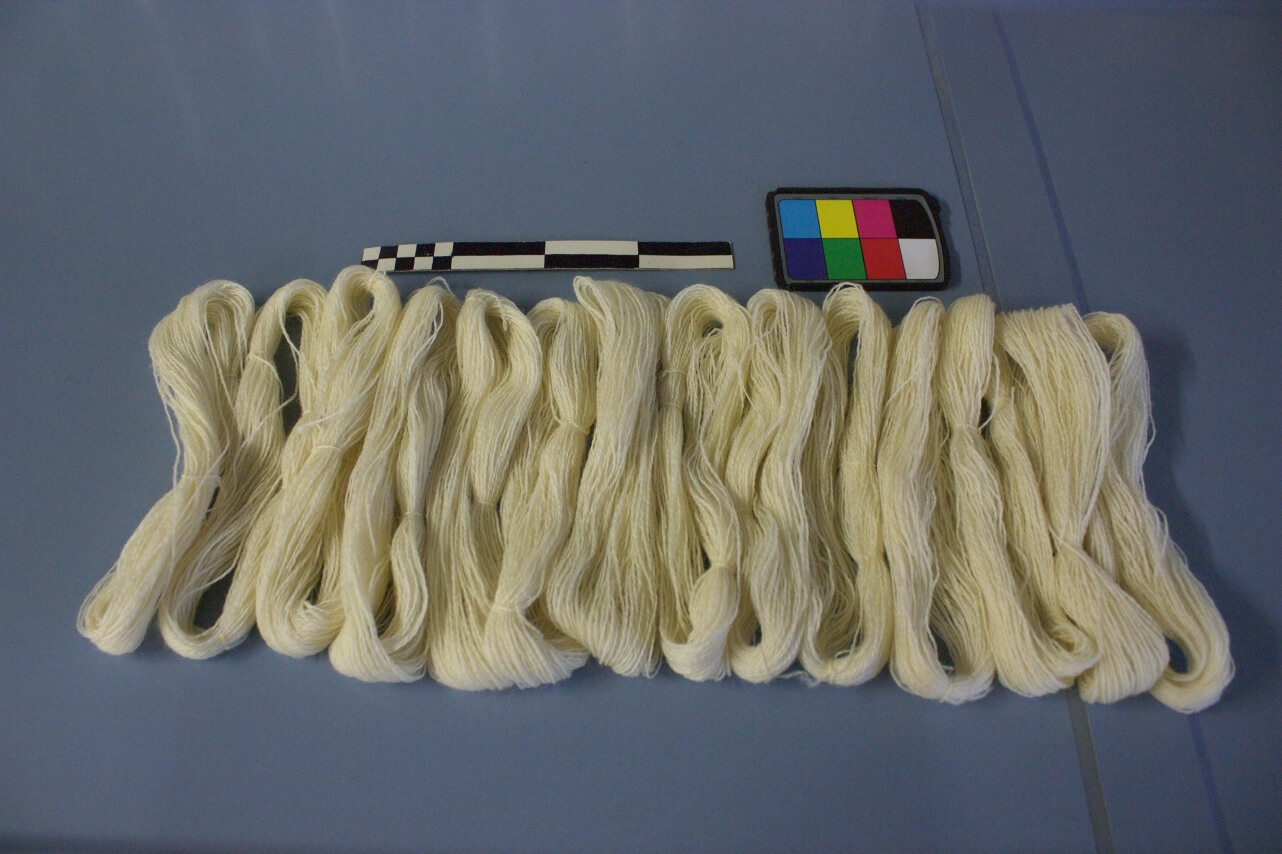
So things happened. Skeins were wound...

IMG_9733
...and mordanted...

IMG_9769
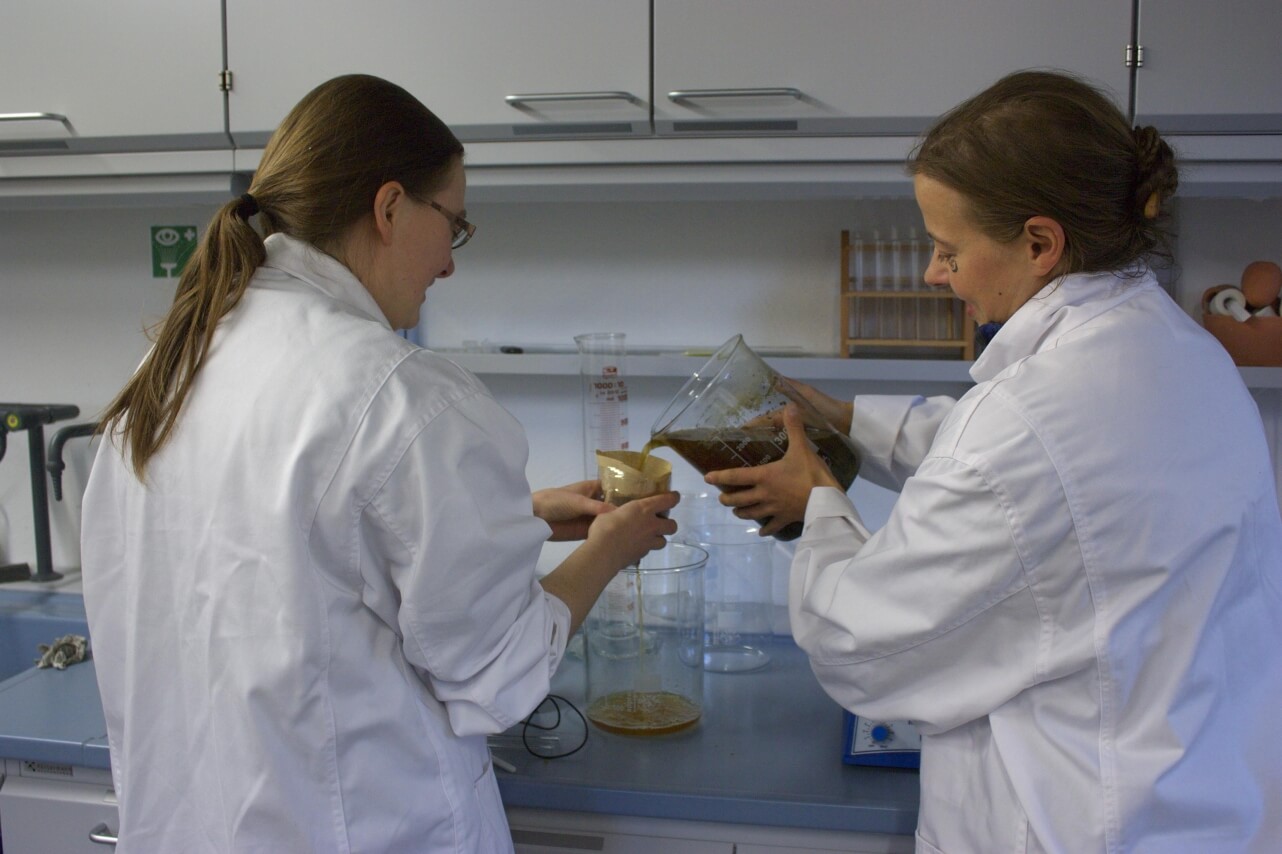
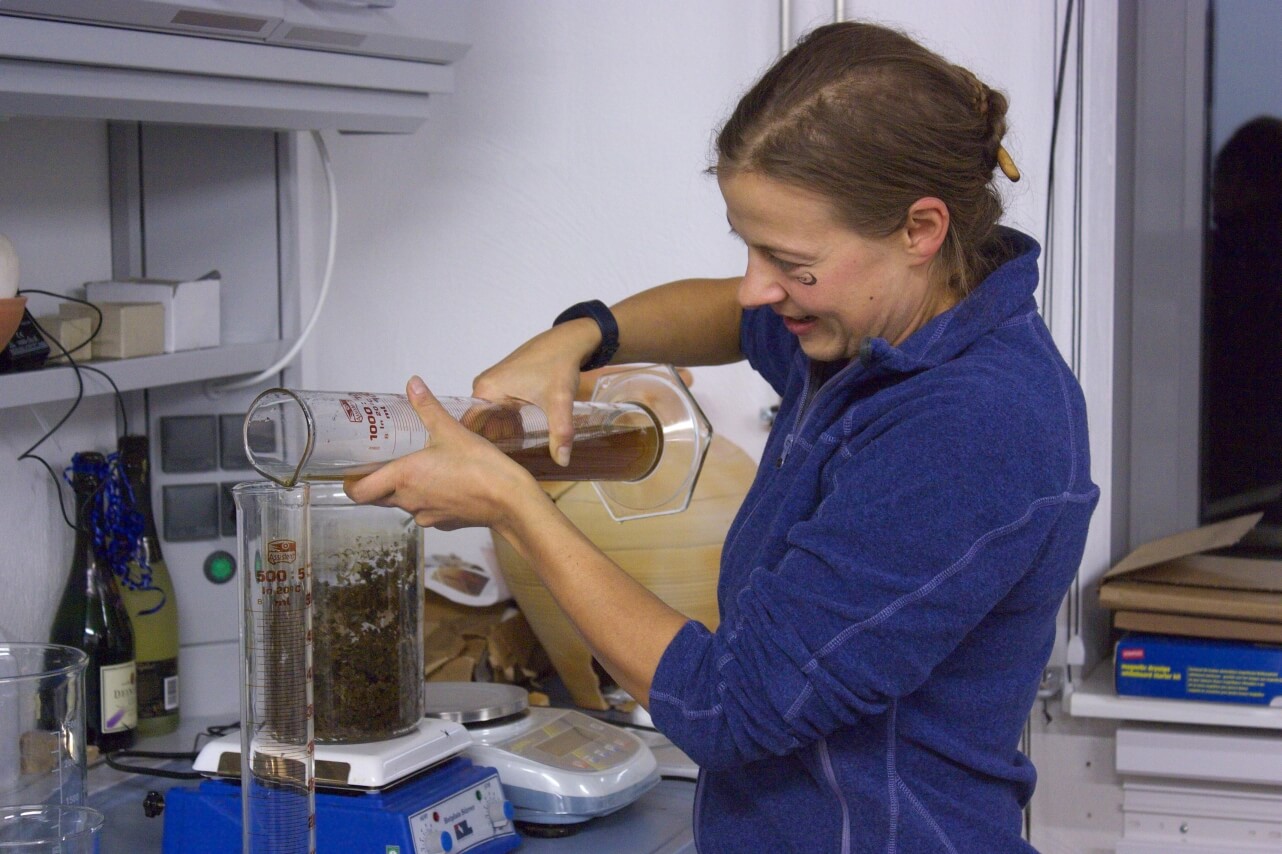
... dye liquid was boiled, and filtered off...

IMG_9926
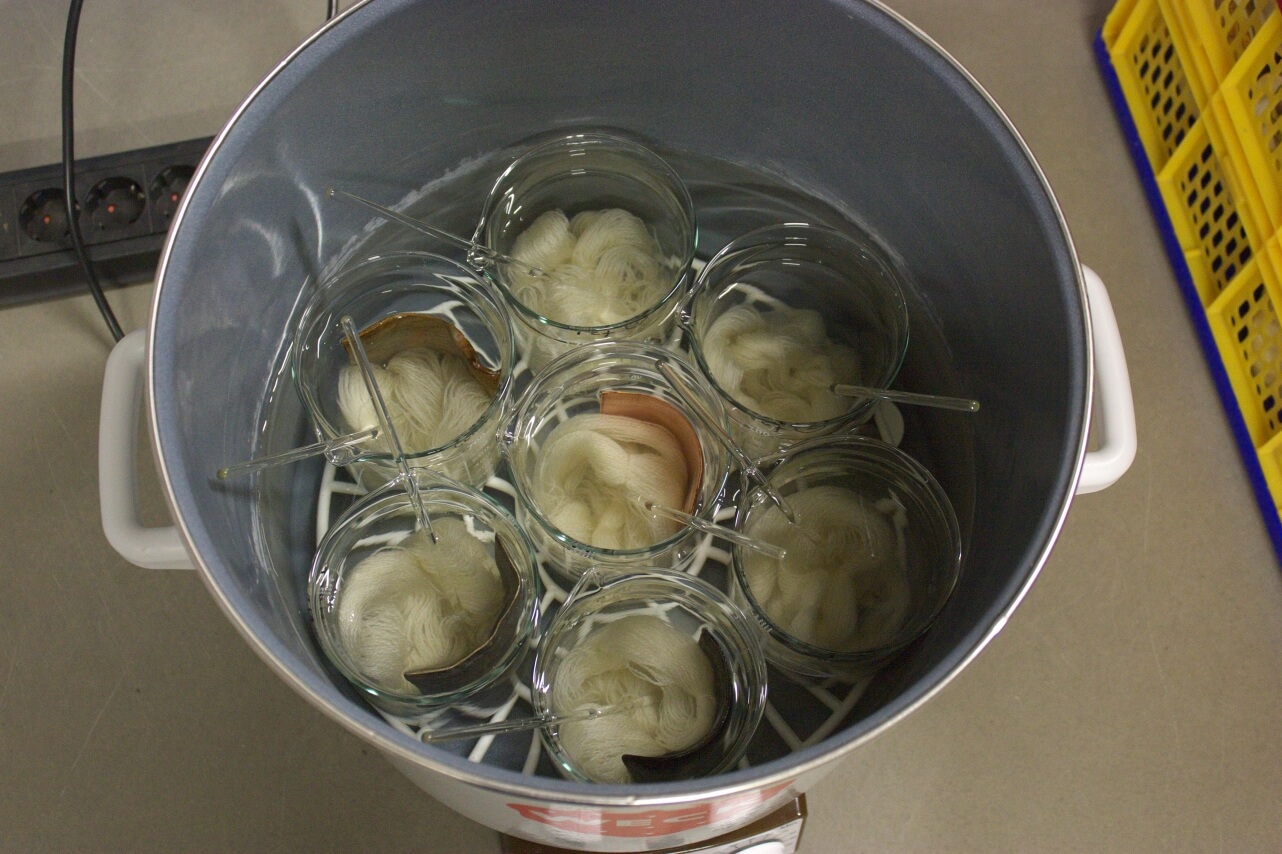
...and split up between fourteen pots.

IMG_0087
Then, skeins were dyed (that was a long night!).

IMG_0108
They were rinsed, and labelled, and dried.

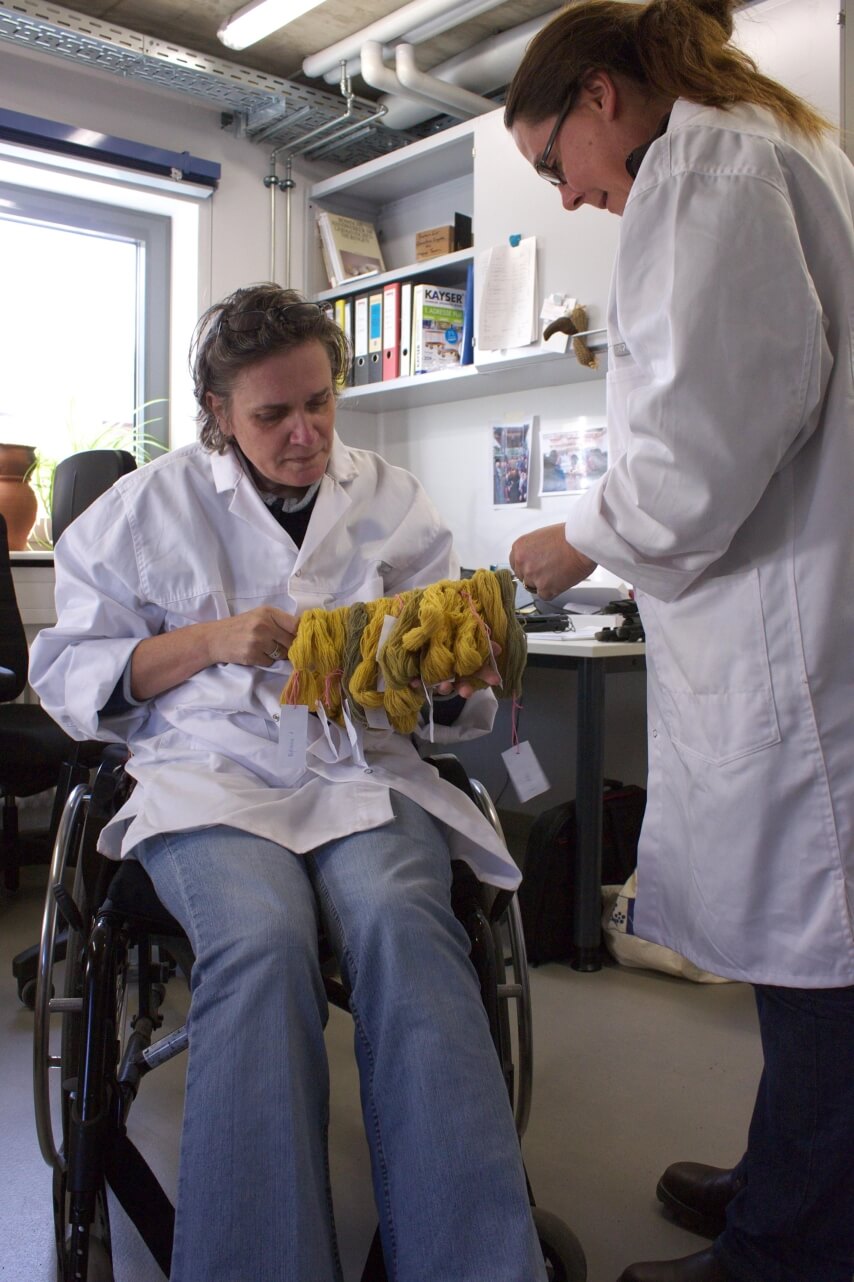
IMG_0700
IMG_0605
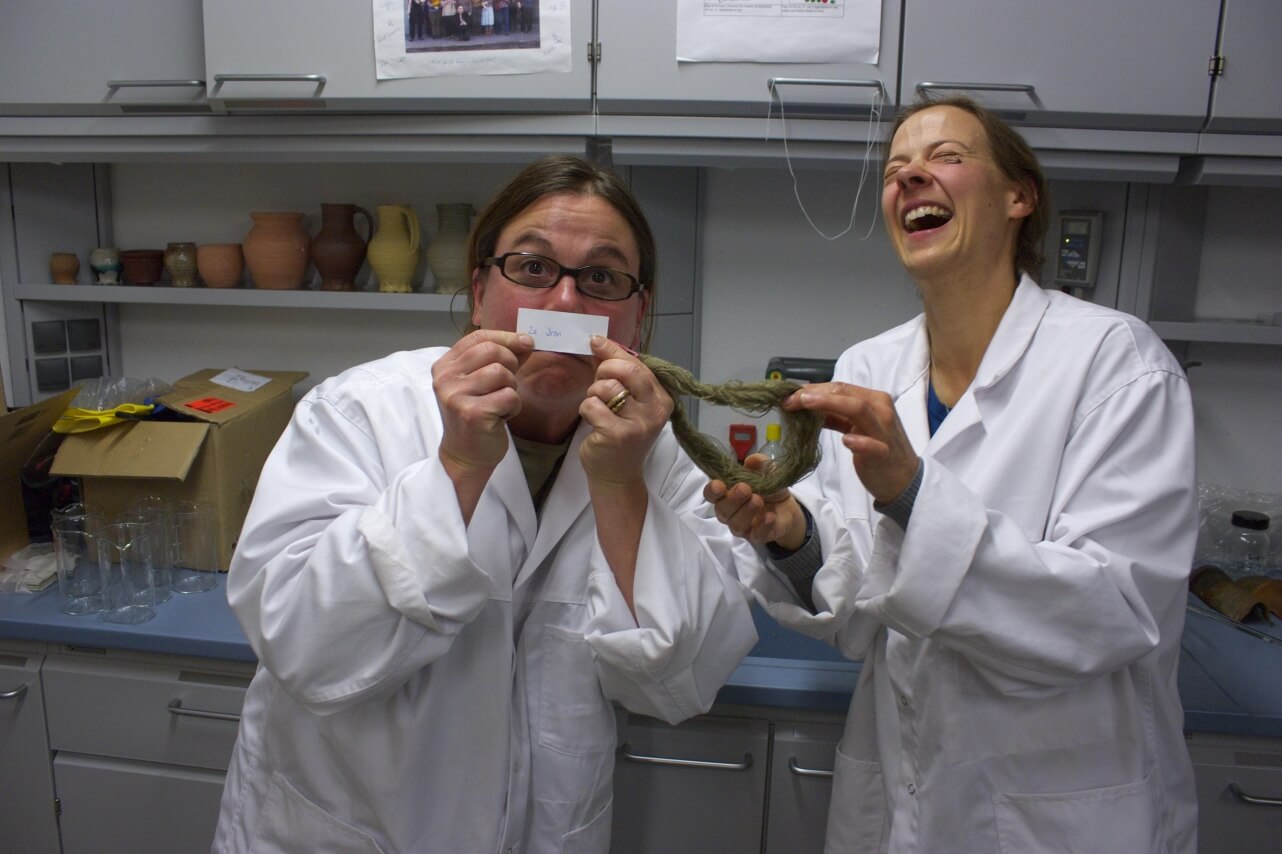
And, of course, they were discussed!

IMG_0816
So, the outcome?

Our experiment was successfull on both counts. One, it does show that there is a more pronounced influence of the kettle wall when dyeing than when mordanting, and that it adds up when the metal is present in both. Two, that it is really important to repeat archaeological experiments, because the natural stuff that is part of almost all of them can result in weird outcomes, or in huge differences.

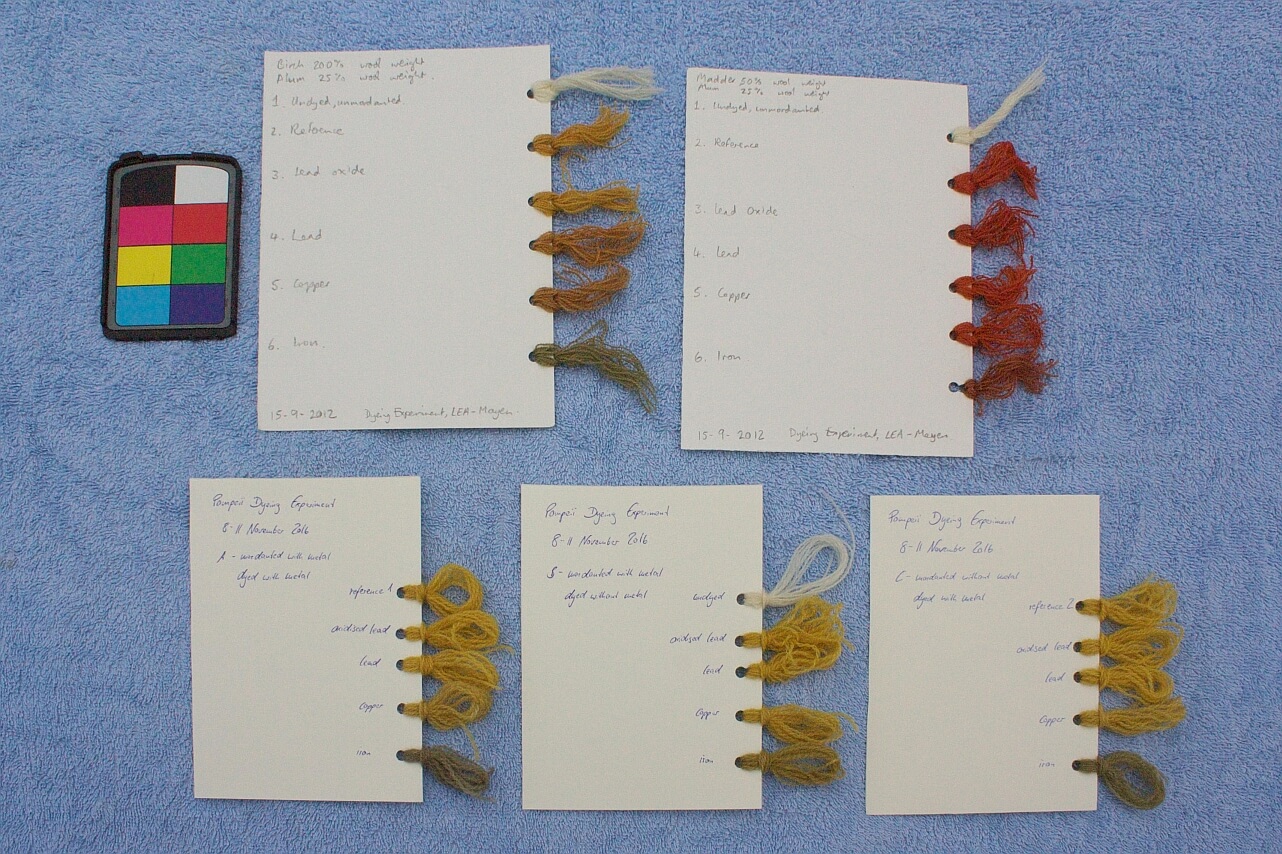
You can see the differences here - top left is the original experiment result in birch (top right was a madder dye run). On the bottom left, metal was present while mordanting and dyeing; bottom middle, metal only when mordanting; bottom right, metal only when dyeing.

IMG_1462
Time well spent, I'd say.
0
NOV
17
1

Textile Forum 2016 - Dye Penetration Experiment

I'm back home!

It was a wonderful time away - both the Nobilitas-Akademie and the Textile Forum were amazing experiences, and I had a blast at both. I'm equally happy to be home again now, though, and ease myself back into the familiar routines in my familiar surroundings. A full week of intense work (which the Forum always turns out to be) really does make a person tired!

It was well worth getting tired over, though. This year's Forum was very, very heavy on experiments, with two full-fledged ones and two additional runs of tests, all of them involving dyeing. Which means we had a lot of work being done for those experiments, by a good number of people... and I learned again that experiments take an insane amount of time. Every time.

One of the experiments was dubbed "Dye Penetration Experiment", and it is exactly that which we were testing.

Dyeing can be done either in the fibre (in the fleece), in the yarn (in the skein) or in the cloth (in the piece). All three have their advantages and disadvantages, and there is evidence pointing towards all three methods having been used in historical times (though there is not always evidence for all three at a similar time in one region).

This has led to quite a bit of debate on which method was the most common one - and it is very hard to tell without knowing how well a method can be seen on the textile. If there are white spots between threads in a fabric, it must have been piece-dyed. If there are white cores in yarn, it must have been dyed in the skein. But what if the dye can penetrate completely? Then it would be impossible to tell whether the textile was dyed in the fleece, in the skein or in the piece.

Which leads to the question at the core of our experiment: How easily does dye penetrate the fabric?

We had two possible influences on the permeability of the fabric - yarn twist (yarns with higher twist are denser) and fabric density. Which resulted in the setup of having three different yarns hand-spun, to about 0.5 mm thickness and with three different twist angles (c. 20°, c. 30° and c. 45°), and three different fabric densities (12, 10 and 8 ends/cm in the warp).

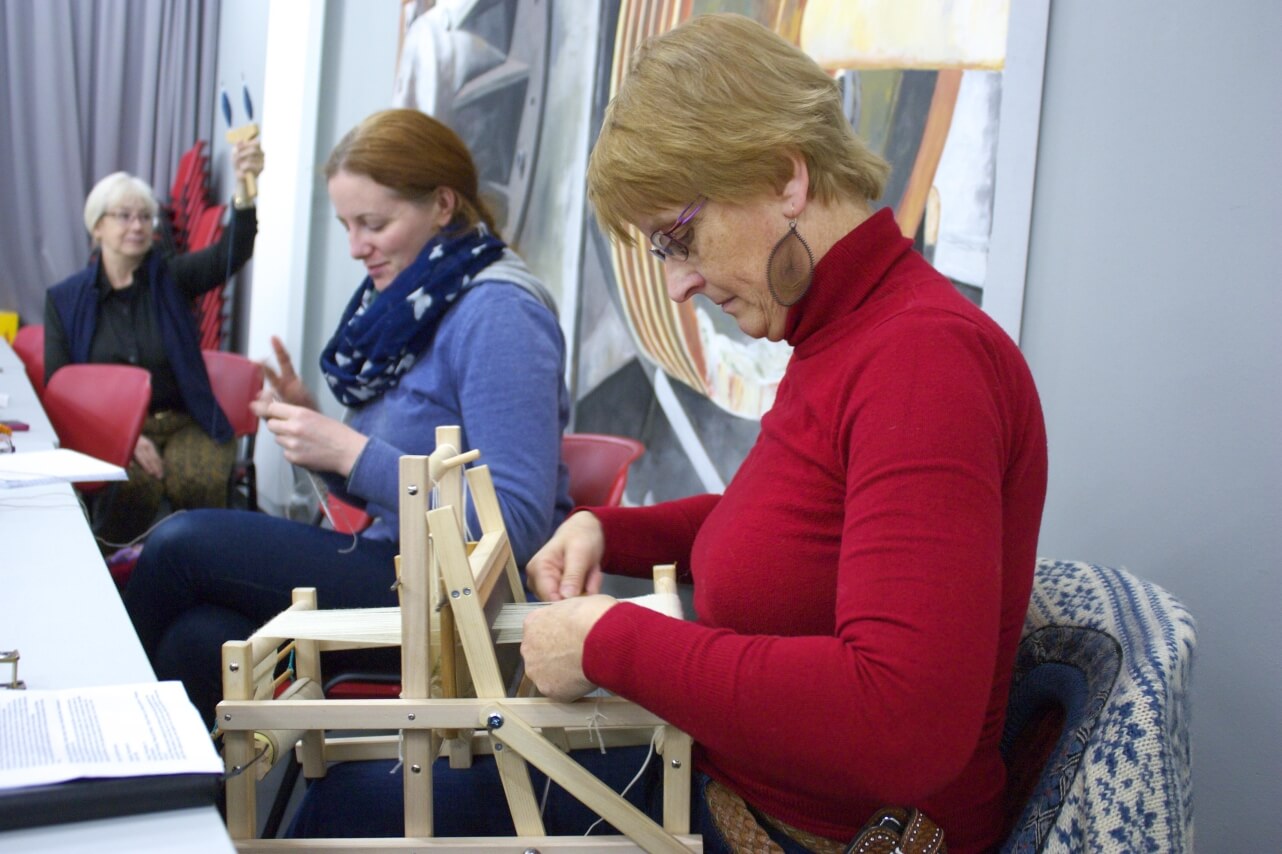
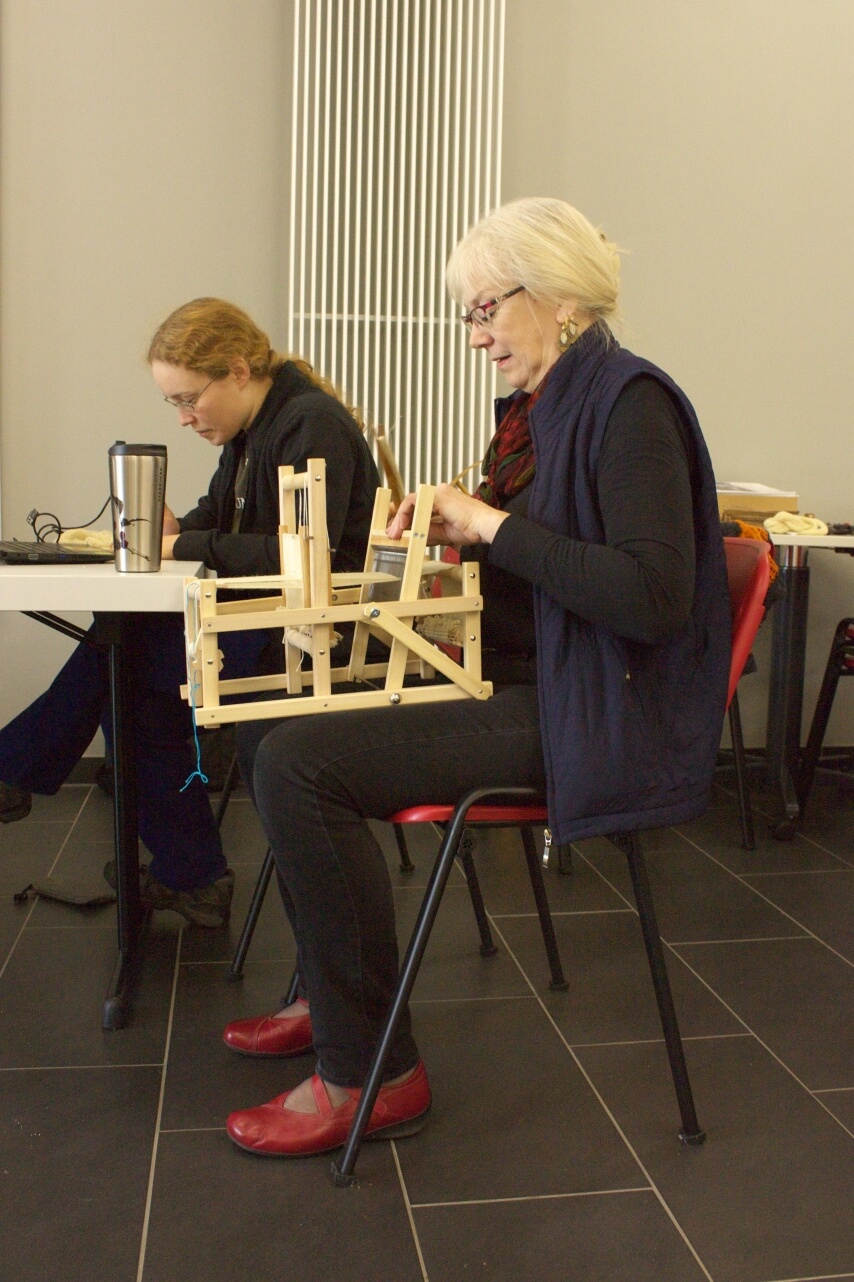
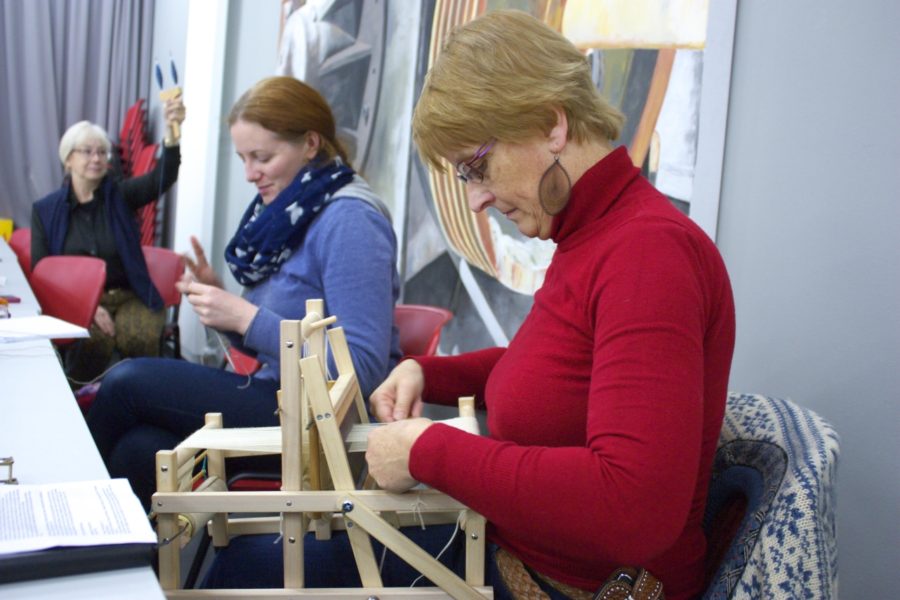
The spinning was finished before the Forum, but there was a lot of weaving being done during it, by Harma Piening and Ruth MacGregor:
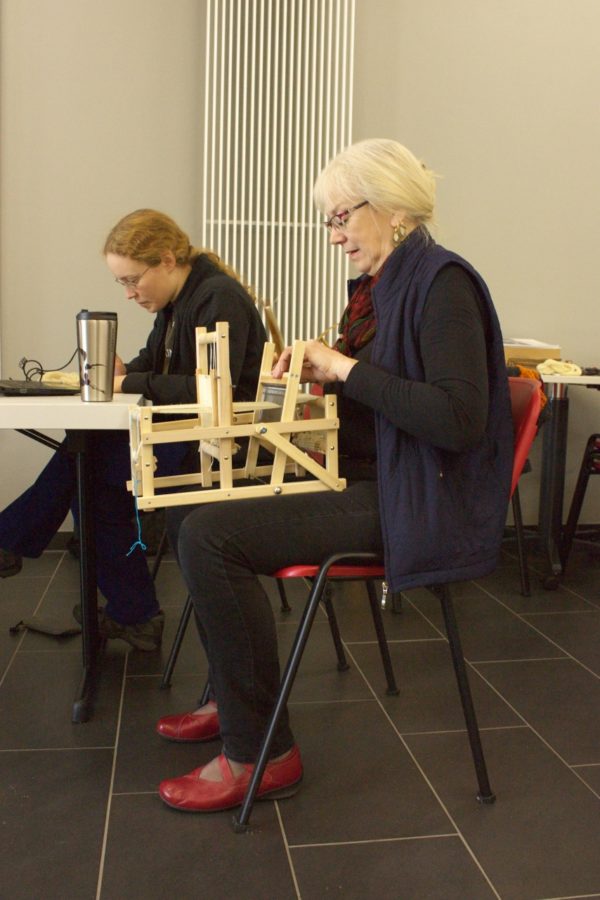
IMG_0072 IMG_0783
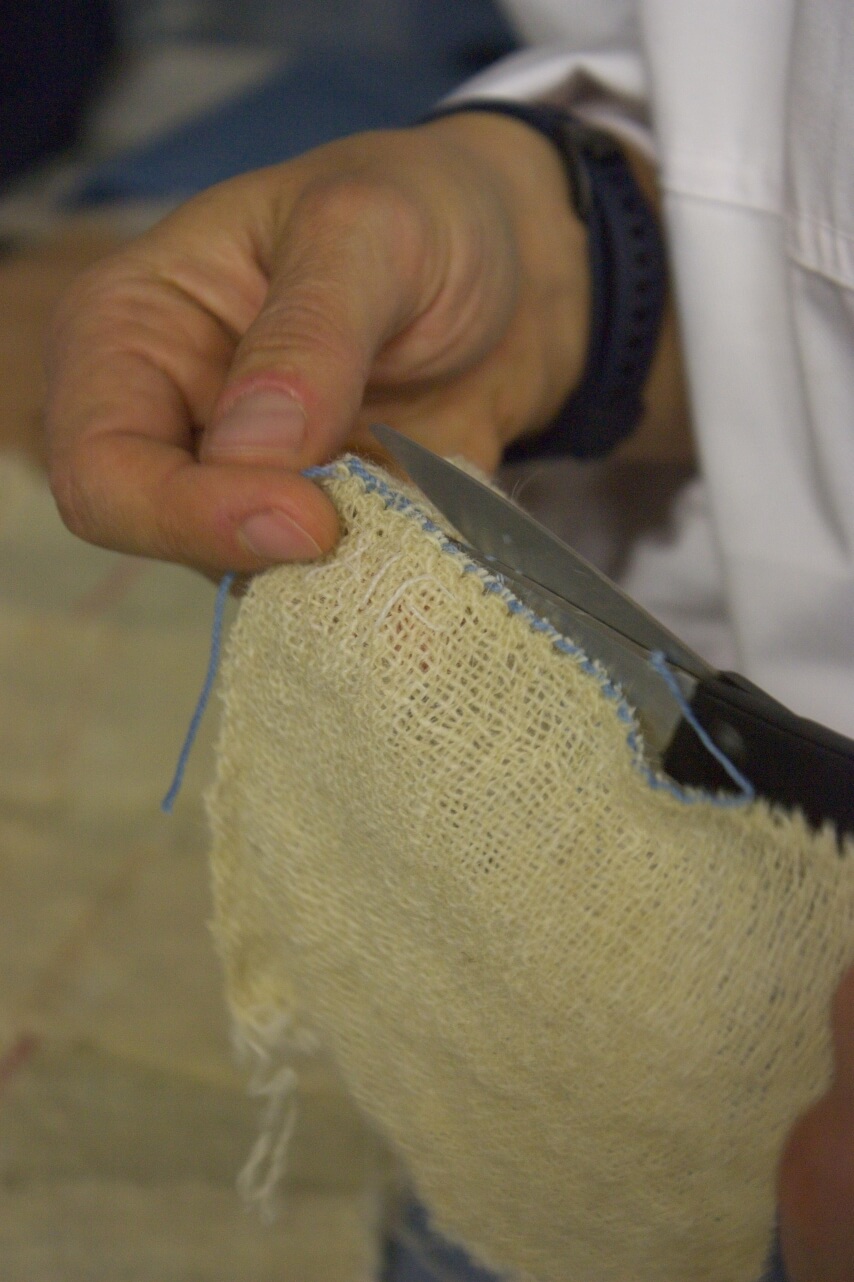
... followed by careful finishing of the fabrics. Then I got to cut them apart:
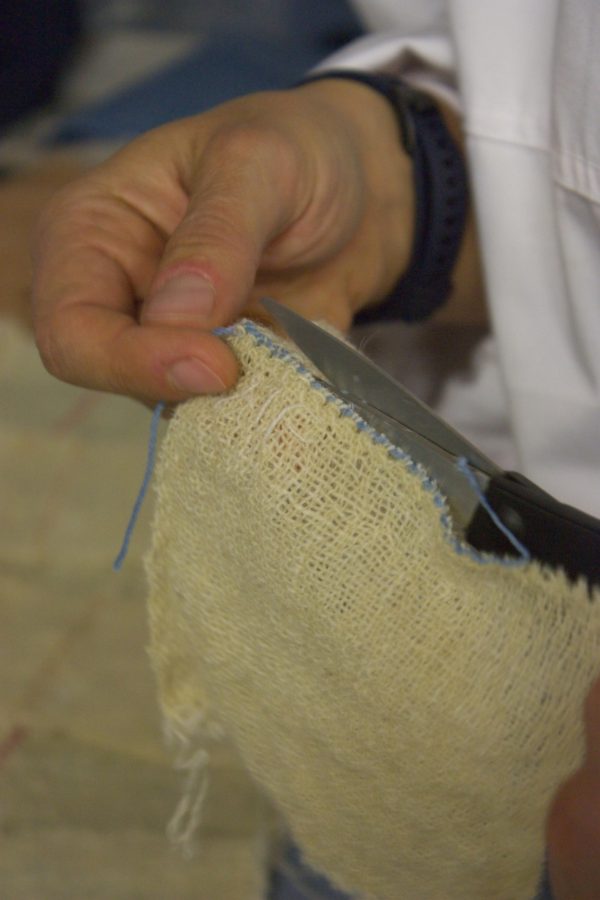
IMG_1141
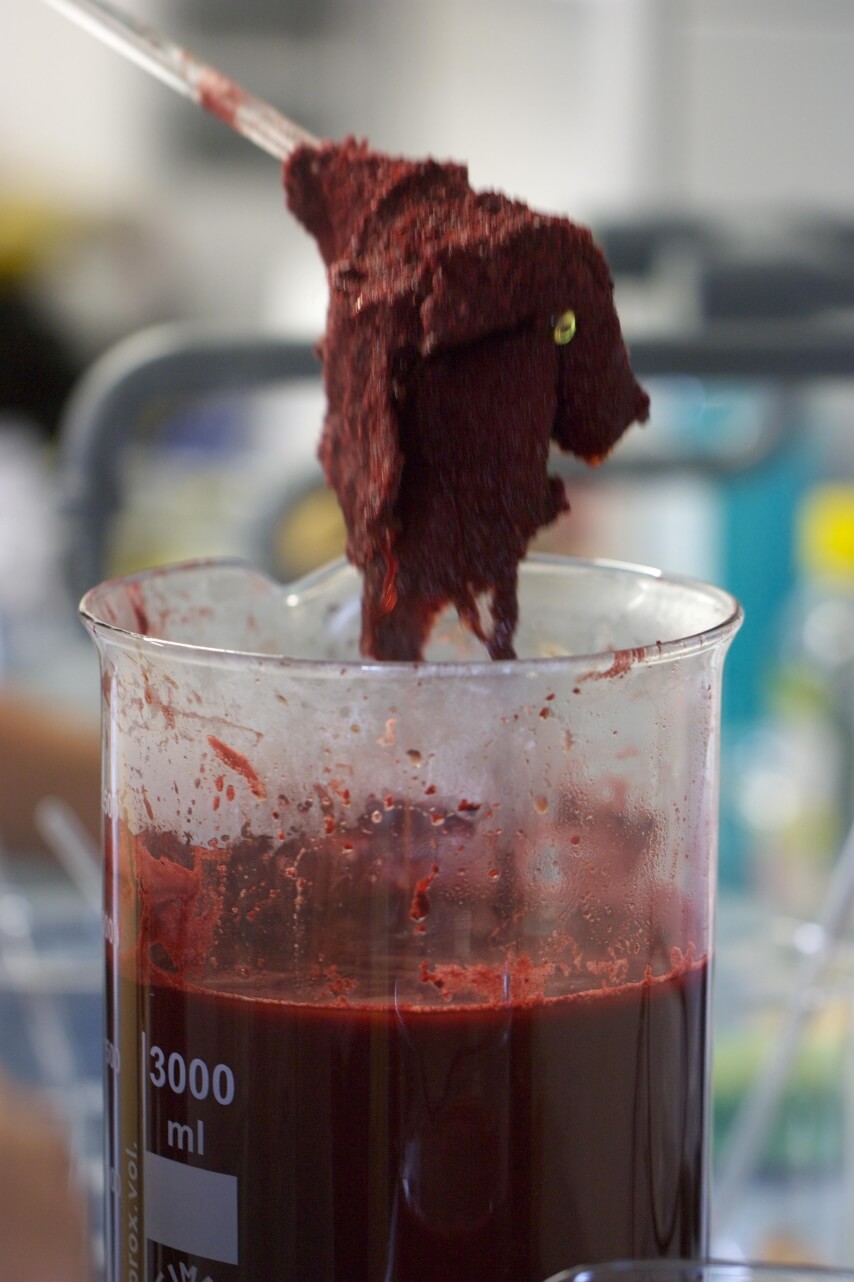
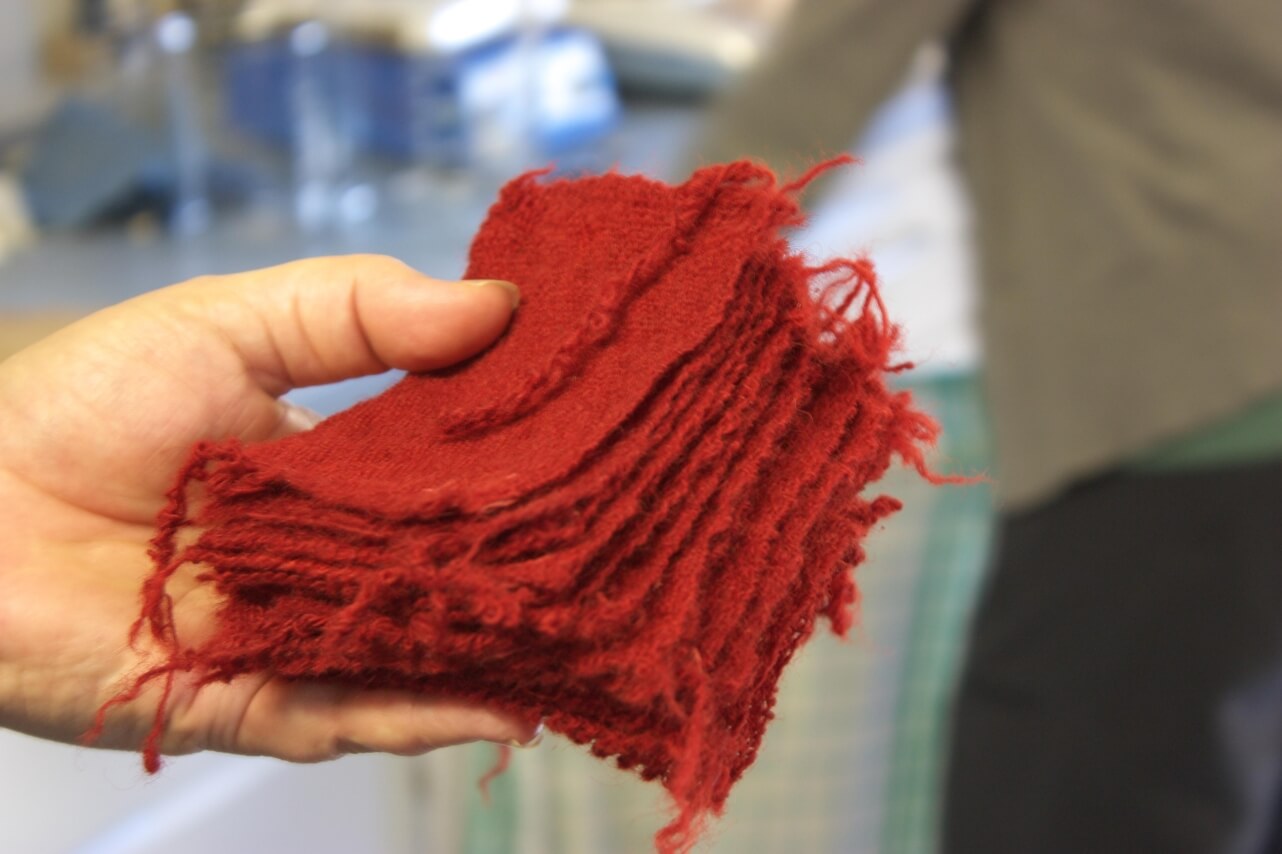
... and then some of them were fulled, and most of them were dyed madder red.
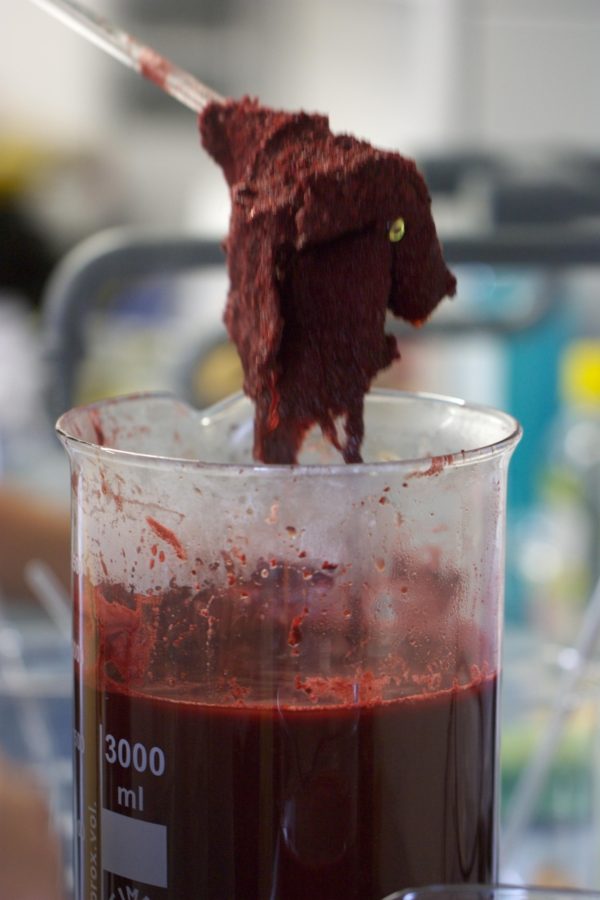
IMG_1310 IMG_1326
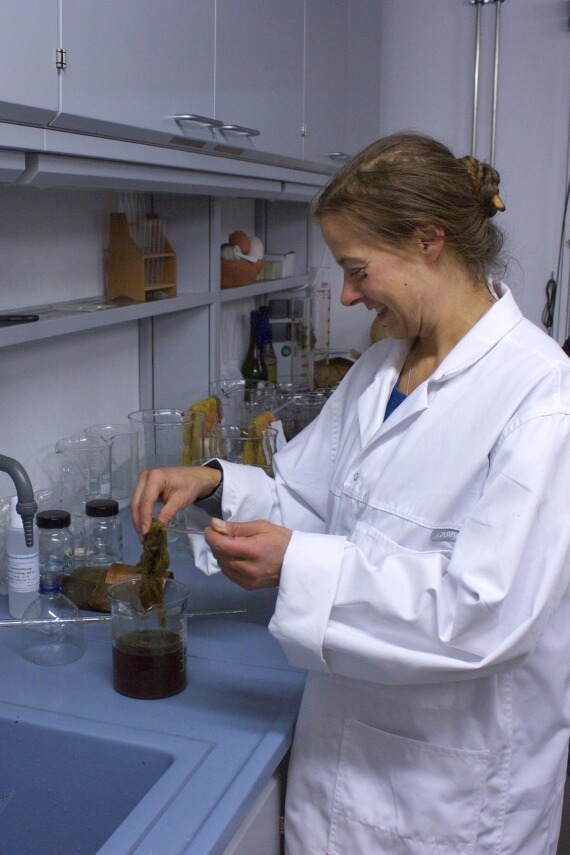
This meant that I got a bonus lesson in how to dye with madder from Sabine Ringenberg - and her speciality from many years of working as a professional historical dyer is red. Small wonder the colour turned out quite nicely!

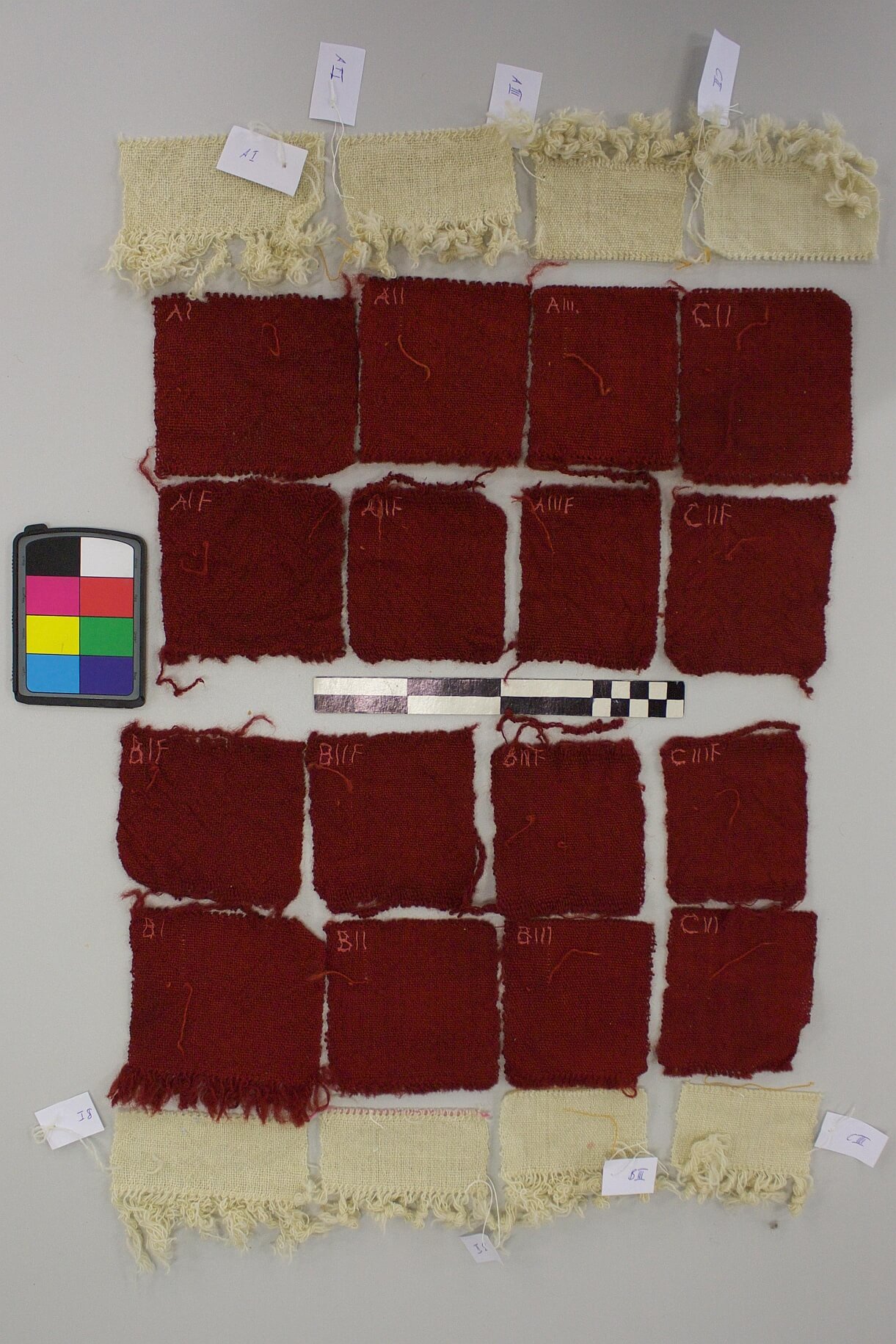
In the end, we had a load of samples to be catalogued and analysed:
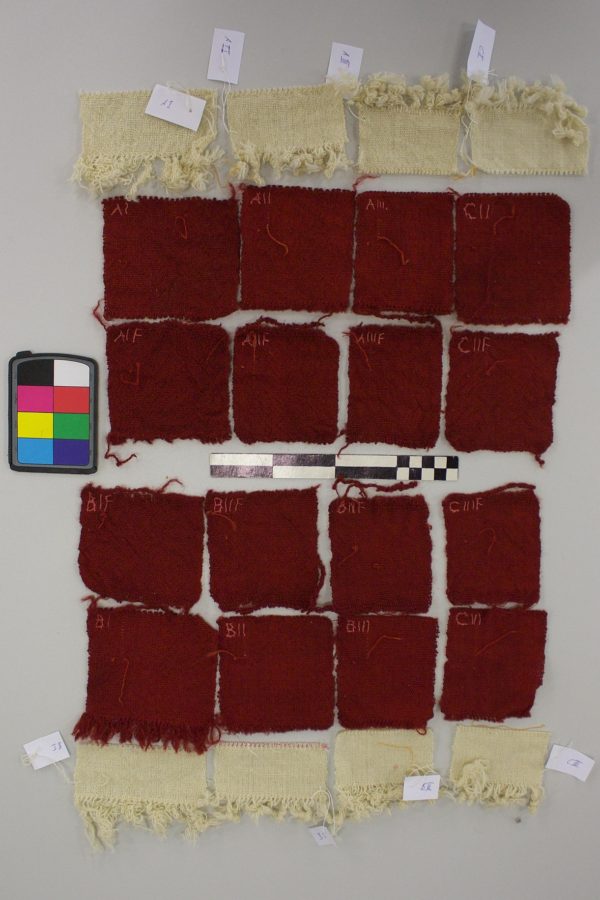
IMG_1460
I'll have to take a careful look at the photos, microscope photos and measurements before giving a real conclusion - but I can tell you at this point already that none of the fabrics was completely dyed through, there were white spots between the threads in all of them.

We also found that the twist angle I was aiming for (with regular checks on my spinner's little helper) was not what the yarn ended up having, and that the angle fluctuated a lot over the length of the yarn. It will be interesting to see whether the angles read out differently in the yarn and in the fabric - one of the things on my list to test in the future.

It was definitely a really interesting experiment to do, and I got a good number of surprises (I'd have suspected at least the looser fabric with the soft-spun yarns to dye through, and my spinning to be a lot more regular than what it turned out to be). It is of course not the ultimate answer to the question whether things were dyed in the skein or in the piece - but it does hint that we might expect white spots when dyed in the piece, and that would be a good thing to know. (As all experiments, this has already generated more ideas, such as making tests with yarn skeins with different twists and thicknesses to see about how well it dyes through...)
0

By accepting you will be accessing a service provided by a third-party external to https://pallia.net/

Contact