
Latest Comments

Guest - Katrin Sprang Discussion
18 September 2026
Hi Rachel, I have looked for more photos of you, but that was not very successful. I found a link on...
Guest - Beatrix Sprang Discussion
15 September 2026
That lozenge pattern element is not a photograph, but a scan. So it should be to scale. But I pinned...
Guest - Katrin Sprang Discussion
15 September 2026
I was not referring to Rachel's reconstruction (is the reconstruction you refer to the one photograp...
Guest - Beatrix Sprang Discussion
14 September 2026
There is something Rachel did not mention. She told me: "Well, I worked with the measurements we too...
Guest - Katrin Sprang Discussion
14 September 2026
Well, this is certainly developing into an interesting discussion. Firstly, going from that lovely l...
JUN
28
0

More Bronze Age Textile Stuff.

Bronze Age! Yes, that's a bit before my usual time span, but I'm getting more and more fascinated by these very early textiles. First of all, I wonder how much of a difference the fibre makes - would you be able to tell, from the touch of the finished cloth, whether the fibre has 15 micron 0r 22, or 30?

I'm also fascinated by an oddness in the weaving technique. The surviving blankets were huge - the one from Egtved was 190 by 258 cm. That is a width that would be hard to handle for a single weaver. Add to that the fact that there are weft crossings in the fabric - there's just one weft per shed, but it's not the same one all the way through. Weft A comes from the left, weft B from the right, and at some point roughly in the middle, both go to the surface of the fabric and cross each other. Then weft A continues its journey to the right in the next shed, while weft b goes to the left, and they turn normally at the selvedge. This sometimes occurs with three weft threads instead of two.

Thanks to the wonderful image database of the Danish National Museum, you can have a look at this weft crossing thing in the Trindhoj blanket here. There's some crossings in the area left of the hole - you can download the image and then go hunting for these oddities with your image viewer of choice.

My suspicion is that two (or even three) weavers worked together on these superwide fabrics, and the crossings are where the spools or sticks or whatever they used changed hands from one weaver to the other.

This is really fascinating, and I'd love to try this out. The only tiny issue is that this requires a superwide loom (with the corresponding large number of weights, and large amounts of yarn), and some other people willing to have a go at weaving... Though a bit of testing might be possible with a loom and fabric with less width, to get an idea of the method, at least.
 
0
JUN
03
1

Weaving!

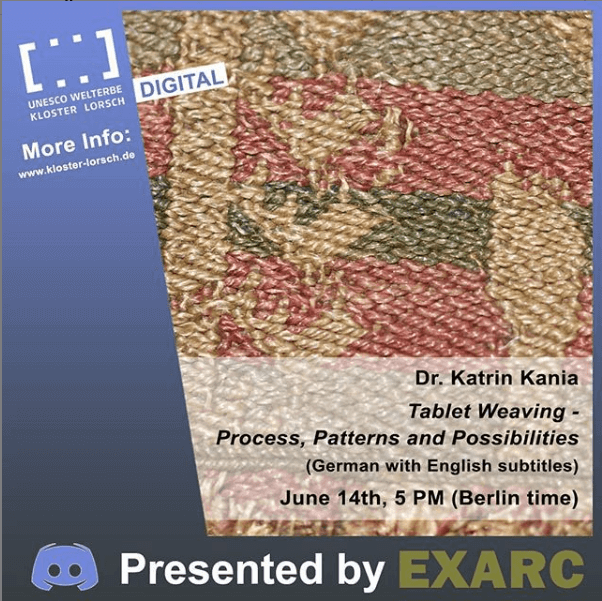
I've spent the day weaving, and preparing things for my little presentation about tablet-weaving due on June 14 - as part of the digital event at Lauresham:


Preparing for this meant I finally got around to do a few things that I've been planning to do or try out for a while - among them brocading over diagonals (as it was done on the Ulrichsmanipel) and warping a new explanation-/demo-band that's not as narrow, ratty, and worn out als my old four-tablet one was.

Tomorrow will be more video-taking for this, and then I will get to do some cutting, and editing, and things like that. Exciting work, and I have finally found an editing programme that I seem to be able to work with... which is a very, very good thing indeed.

 
0
MAR
16
0

Getting back on track.

As usually when I've been away for a few days, there is plenty of things stacking up that need to be de-stacked and processed and done and so on. So I'm trying to get back on track, whittling the mails down to the usual stack sitting in the inbox (where everything sits that still needs some action), plus all the usual suspects of ton the to-do list.

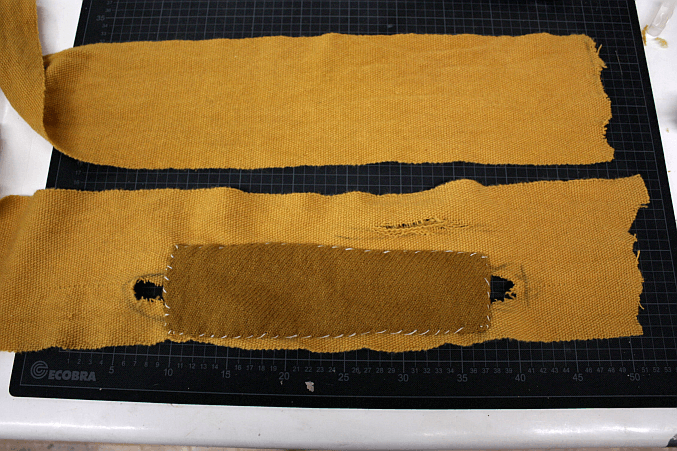
Also there's a private lesson to be given this afternoon, which I'm looking forward to - but which I also have to prepare. So instead of something dep and interesting and whatnot, you are getting a picture of the Bernuthsfeld man's reconstruction legwrap, during the process of giving it the holes and patch that it has on the original:

wadenbinden_kaputtmachen

It's actually not that easy to fake usewear traces. Holes are rather easy, but as soon as you are trying to have different usewear patterns, it really does get more complicated.
0
MAR
15
6

Everyone is home.

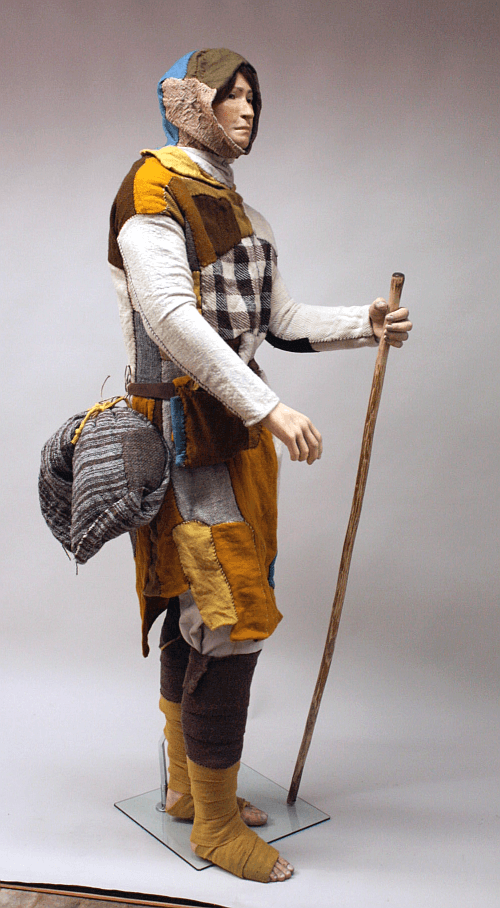
I'm back home, my colleague is back home, and the Bernuthsfeld Man reconstruction is home, too. He has a lovely spot in the OLME in Emden now, right at the end of the exhibition part about the find and the time, so you're getting a look at the original finds, then information about research and the context of how life was in the 8th century, and then, at the very end, he's waiting for you to look him in the eye.

To our great delight, the museum people were just as happy with how our reconstruction turned out as we are, and there was immense interest from the press. We got covered by several papers, such as the Sächsische Zeitung, the General-Anzeiger (behind a paywall, but you can see a pic), and the Hannoversche Allgemeine (again, paywall but a visible pic). We even made it into the TV news!

But obviously, you're waiting for a picture right here, right? Here you go:

[caption id="attachment_3694" align="alignnone" width="294"]bernie1 Our reconstruction, in the setup that he can be seen in at the museum.


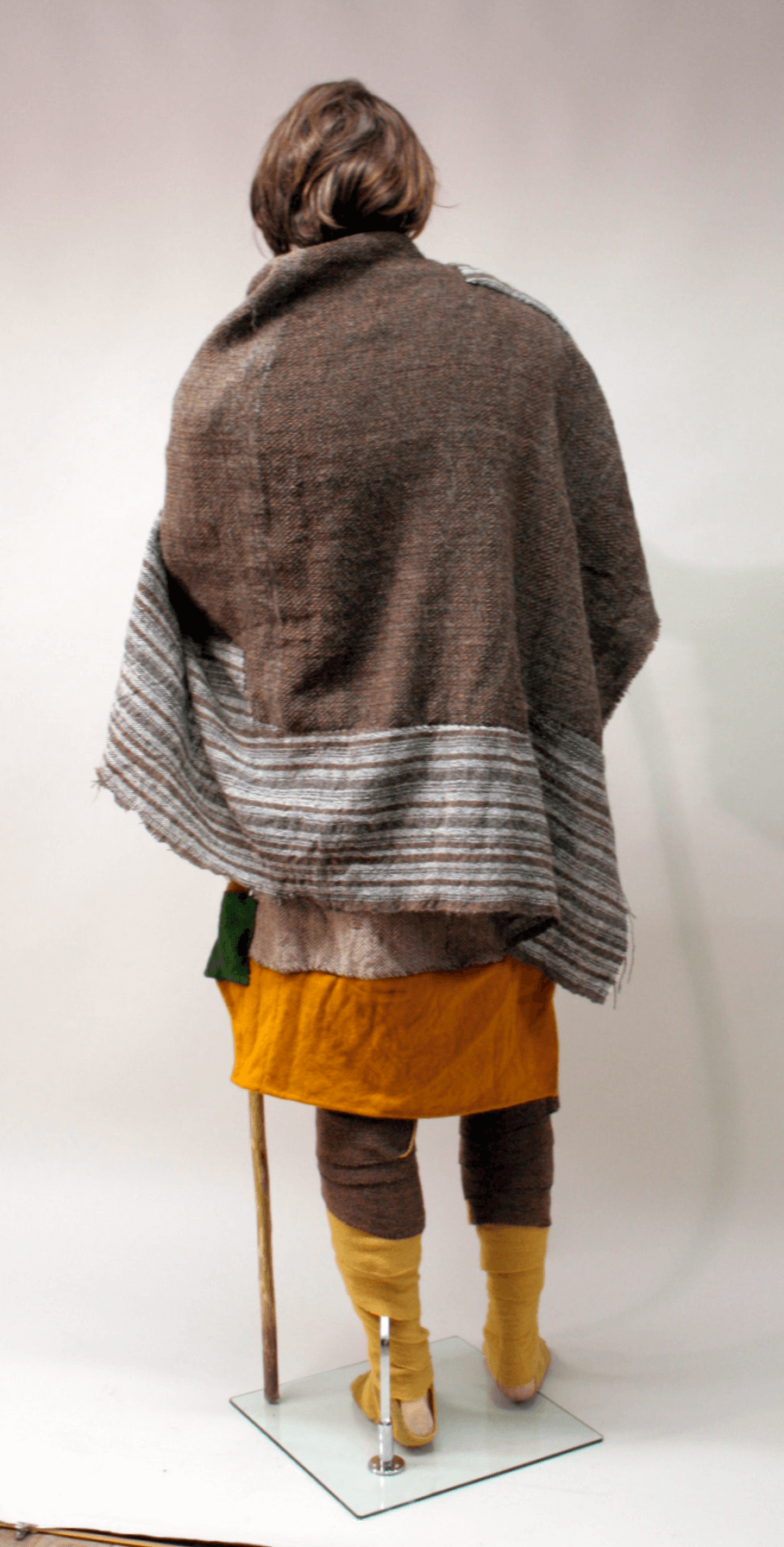
We thought long and hard about how to dress the figurine in a way that shows all his equipment, including the small cloak/blanket he had, and still shows off as much as possible of the tunic. Because while the small cloak would also be interesting to show in action, it will cover up quite a lot of the main piece:

bernie2

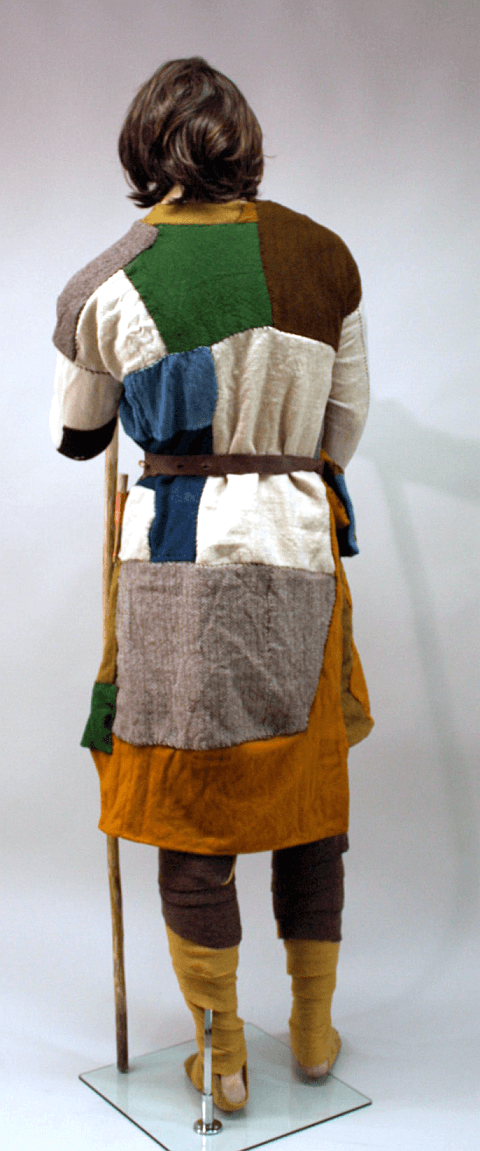
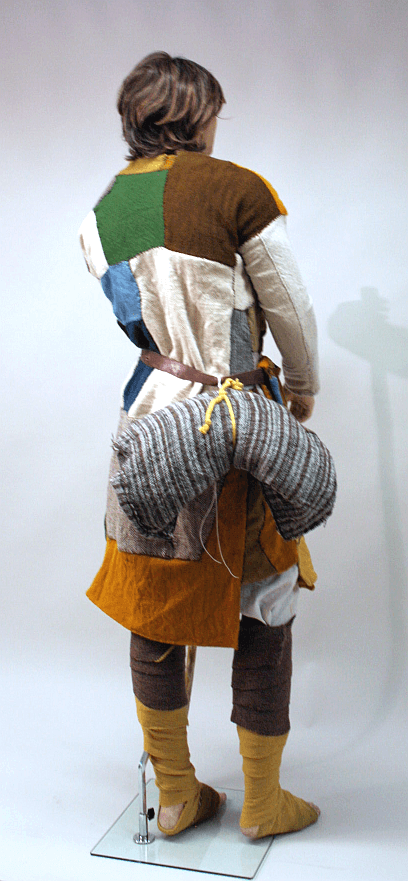
So we decided to wrap it up, tie it together with the wool cord he also had with him, and hang it on his belt. The belt actually had a spot where something heavy obviously hung for a good long time, or very frequently; we placed the blankie-pack in that spot, and you can see what happens in the next two pictures.

bernie4 bernie3

The belt suddenly sits at a bit of an angle, and everything looks a little more lifelike of a sudden. Also the worn spots at the tunic coincide exactly with the places where the belt sits and rubs against the cloth... to our great delight.

So now he's in the museum, and if you're in the area, go visit him in the Ostfriesisches Landesmuseum Emden. And if you do so, say hello from me!

 
1
MAR
09
1

I'm off to destroy stuff.

Well, not completely destroy - but it is finally the time to finish the Bernuthsfeld tunic by adding some bits of usewear, mounting it on the shiny new figurine and then setting it up in the museum. Which means I'm off for exactly that until Tuesday late at night, so you'll get the next blog entry on Thursday next week.

I'm all excited to see how the ensemble will look - and I do hope the museum people will be just as delighted with the outcome of the tunic reconstruction as my colleague and I!

 
0
JAN
17
3

And some more getting there.

Not only is the sweater coming along and almost finished, the Bernuthsfeld tunic is, too!

The last reconstructed patches have gone in (or on, depending), and the only things left to take care of are the still not completely clear finish of the neck area as well as the hems at the bottom and at the sleeves. Otherwise, it is finally done - and most of the bits that looked dodgy or not quite as they should at some stage did fit together beautifully at the end.

That was a lot of rough stitching with wool yarn, I can tell you! The result, though - I find it rather nice. It definitely is something way, way out of the ordinary way people dressed in the Early Middle Ages.

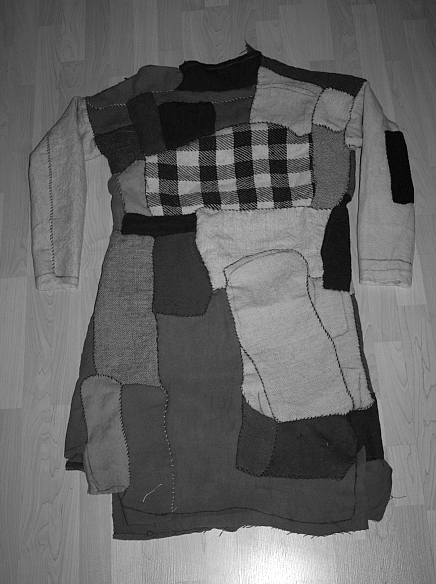
Here's the reconstructed tunic from the front, as it looks now, with the yet unfinished hems and neck:

tunic_front

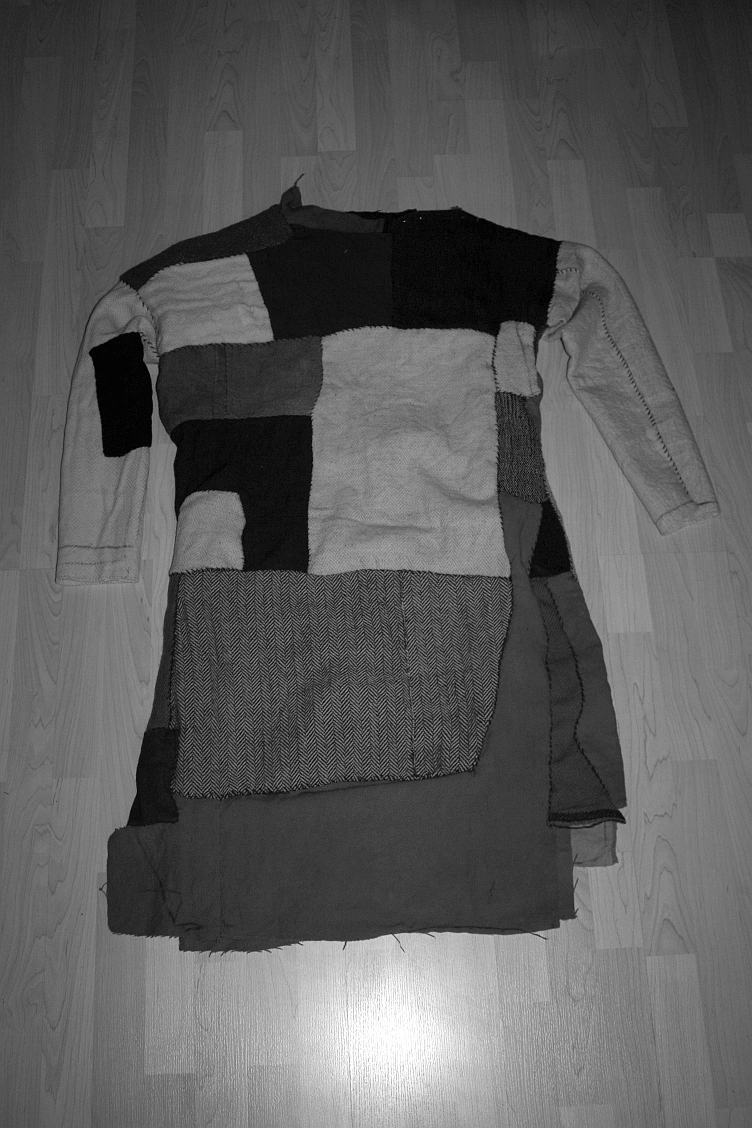
And this is the view from the back:

tunic_back

So that is as good as done, too. Whew!
0
JAN
11
4

Shirt Cutting.

Work on the shirt is progressing - it's a rather simple one, oriented in measurements on the tunic reconstruction, and sewn from hand-woven linen. The cloth has a charmingly large number of weaving faults, which is rather nice for a shirt to fit a probably quite poor man, though my stitching is the usual - I realised too late that I might have done larger, sloppier stitches.

It's fun and a nice feeling, though, to do "proper" seams and hems for a bit after all the many very coarse seams on the tunic itself - which means I'm quite enjoyng myself.

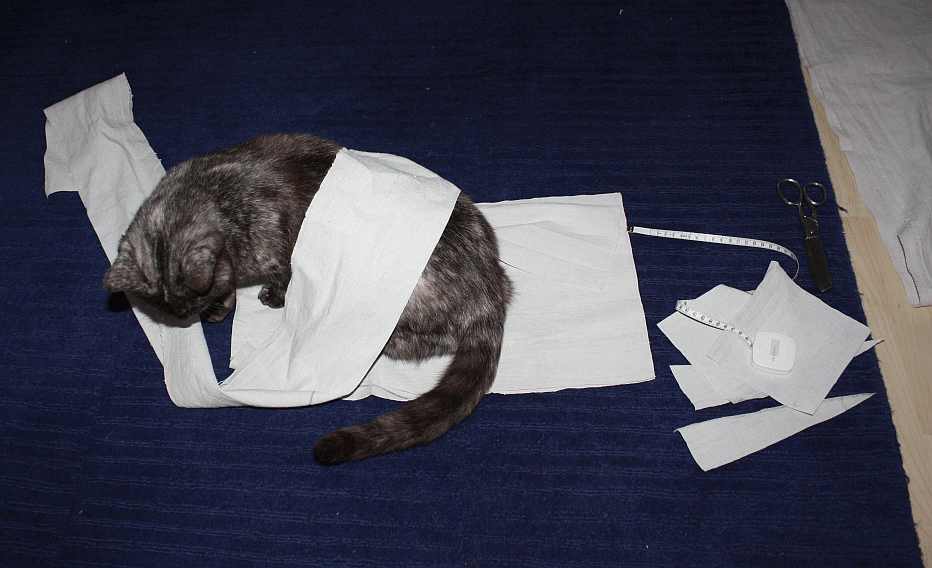
There was a slight, um, complication while cutting, though, in form of not very helpful furry help:

cat_helping

Usually Madame doesn't care very much about my textile shenanigans, apart from having to sit on every bit of fabric that happens to lie on the floor, but she was especially enthusiastic today, and actually attacked the dangerous moving cloth...It did lose its attraction enough after a while, though, so I could go on and finish my work. Everything is lined up for assembly now, and seams will be kept as simple as possible, so it should be finished soon.
0

By accepting you will be accessing a service provided by a third-party external to https://pallia.net/

Contact