Latest Comments

Guest - Katrin Sprang Discussion
18 September 2026
Hi Rachel, I have looked for more photos of you, but that was not very successful. I found a link on...
Guest - Beatrix Sprang Discussion
15 September 2026
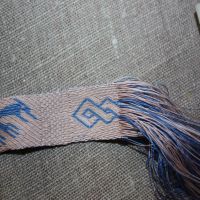
That lozenge pattern element is not a photograph, but a scan. So it should be to scale. But I pinned...
Guest - Katrin Sprang Discussion
15 September 2026
I was not referring to Rachel's reconstruction (is the reconstruction you refer to the one photograp...
Guest - Beatrix Sprang Discussion
14 September 2026
There is something Rachel did not mention. She told me: "Well, I worked with the measurements we too...
Guest - Katrin Sprang Discussion
14 September 2026
Well, this is certainly developing into an interesting discussion. Firstly, going from that lovely l...
MAR
12
0

Links for you.

Time for some links again!

If you like books, and old things, you might be delighted by the item that the Bodleian acquired a while ago, and which is now featured in a display - a 15th century book coffer, one of just over 100 known to exist.

Also related to books, though to more modern ones: The CTR acquired the archive belonging to the Danish textile researcher Margrethe Hald in 2006, and now they have also acquired a grant to digitise this archive, making her work accessible to academic researchers and the public. The digitisation work is taking place right now and is scheduled to be finished on April 30. The plan is to have a full bibliography plus copies of articles, books, slides and photos available on the CTR homepage. This is glorious news, and I'm very much looking forward to this! Here is the info about the project on the CTR homepage (there is nothing of the archive available yet, but some more info about Margrethe Hald and the project).
0
MAR
11
0

Colours!

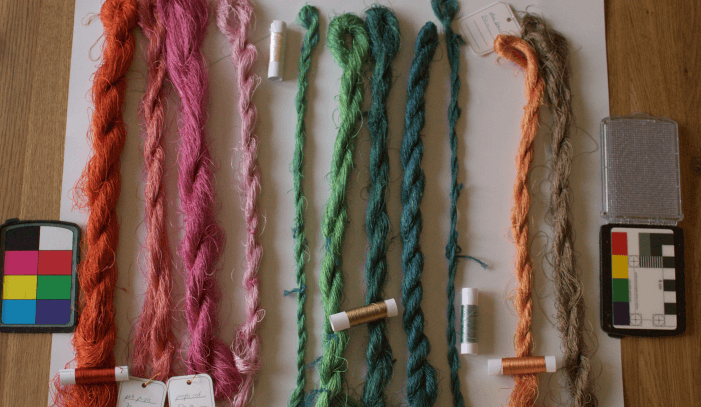
I've gotten involved in a project, sort of, and that led to my finally stocking up on silk colours for the embroidery silks - emptying out the remainder of the undyed silk stock that I had left.

Somehow, this seems to be linked to fellow archaeologists prodding me - I actually started the project "embroidery silks" because a colleague, years ago, was asking me if I knew a source for naturally dyed silk, historically accurate, for embroidery. I looked around a bit and found out that this stuff was hard (read: impossible) to get. Then the usual thing happened - I looked around some more and found appropriate raw material (only slightly twisted mulberry silk), stuck my head together with my dyer, made her sigh and moan, and ended up with an assortment of embroidery silk colours.

Similarly, a few months ago, I got into contact with another colleague, who is working on a reproduction of an embroidery find, looking for appropriate threads to do the stitching... with a range of colours, most of which were not in my stock.


So soon, now, there will be some new colours in the shop for embroidery silk. I'm all excited that the colour range is finally a bit broader - with, among other things, a nice light, bright green, a darker blueish green and three shades of pinkish colours added in!

The new colours are already wound off, so one of the tasks for the next few days is to take photos of the current complete range and list the additional colours in the shop. The biggest challenge in this, by the way, is the photo-taking part, as a) colours and b) silks are notoriously hard to photograph...
0
MAR
05
0

The times, they are...

...a-changing. Things, in my case.

I have mentioned that there has to be some iron gall ink making to be done - which also involves portioning that ink and packing it into suitable vessels.

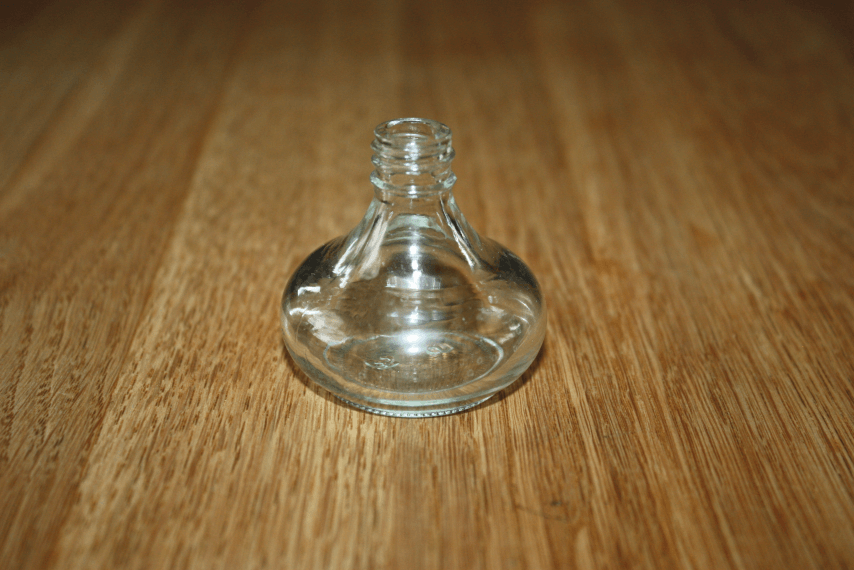
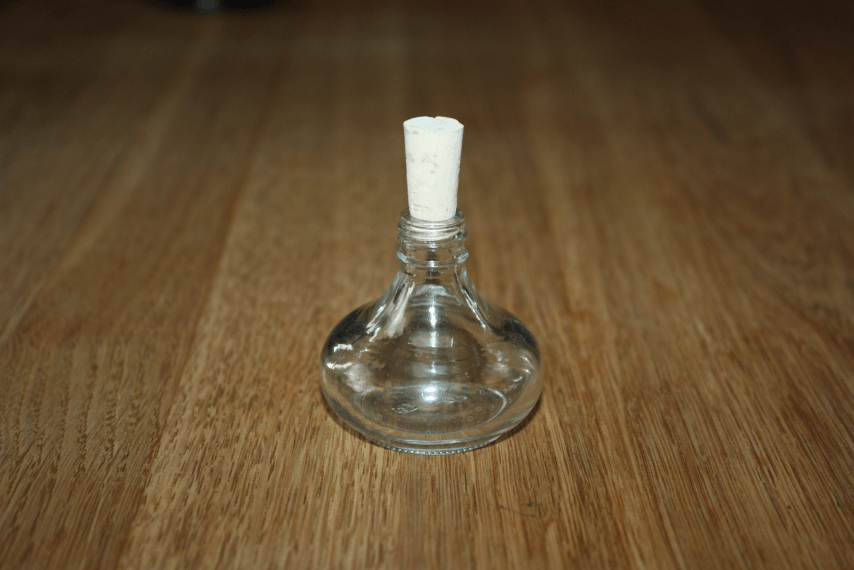
Back when I ordered the first batch of ink, I looked for small bottles that would not look obviously modern. I finally found some that loosely resembled an ink bottle I found on a late medieval image (which, to my chagrin, I did not write down, so I don't know which one it was anymore). So I ordered those, stoppered them with a cork, put on a plastic shrink collar for extra security before selling, and that was it.

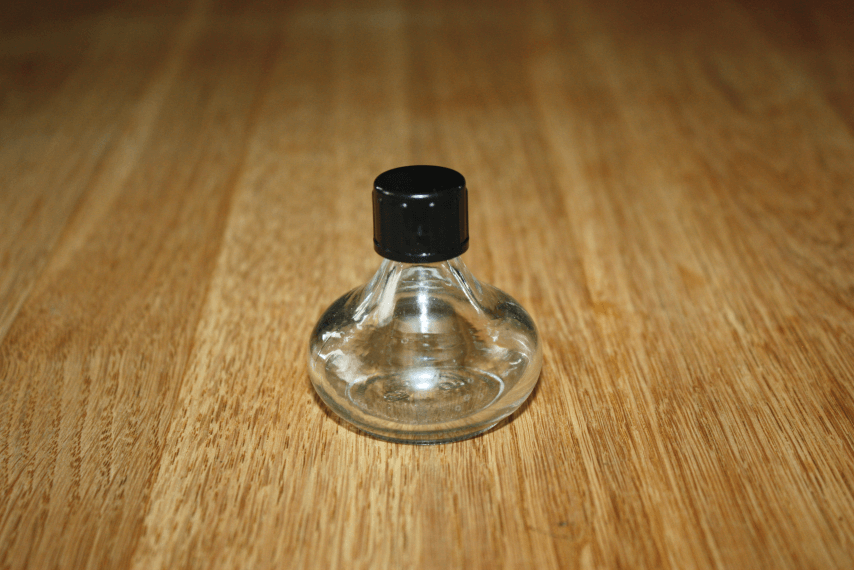
Now, however, these bottles are not available anymore. They have almost-twins, though - with the difference being that my previous ones were corkable only, and the current version has a screw-on top.


Which is, obviously, very much non-medieval. However, it is also a good bit safer against spillage than a cork. So after a good bit of thinking, and looking for an alternative bottle version that resembles medieval forms and is suitably small (which I did not find), I did order the modern twin of my old bottle.

I'd prefer selling the perfect ink bottle - but that is not possible unless I'd get a glassmaker to make the bottles to order, turning one of my lower-price items into something rather expensive. In addition, most images of scribes show the ink being held in horns for writing, and only some show bottles with more ink supply, those being considerably larger than the amounts needed by today's users. So these small bottles are a compromise from the very start.

Which means that in the future, if you buy ink from me, you will get a small bottle with a travel- and transport-safe, modern screw-on lid.


You will also, along with this, get a small cork stopper that you can use instead of the screw-on lid, if you want - because you like corks better, or because you will be using the ink in an environment where things should not be obviously modern.


And now I hope that this is a good enough compromise not only for me, but for my customers, too...
0
FEB
22
0

Hunting for Black.

I've run out of iron gall ink now, so it's time to get some more... or, to put it better, to make some more. Last time, I had a colleague make my batch, but as she's not working anymore, I have decided to do it myself this time. And obviously, the goal is to use an original medieval recipe...

...which poses a slight problem. Not because there are no recipes, no - quite the opposite. There are quite a lot, and though they are similar in regard to the ingredients, the details - and the amounts of the main ingredients that are given - can vary quite a lot. Some of them mention that one should be able to tell, from experience, how much exactly of one of the ingredients should go in.

Yeah. Only problem is that if you have no experience... well, you get the picture.

My search for recipes (which I have collected, and I will soon just pick one and go with it), though, has also brought me across an interesting database project: Colour Context, a database on colour practice and knowledge. It features transcribed recipes from a number of (mainly late-medieval) sources - so if you are interested in medieval colour, or artwork, this may be of interest for you.
0
FEB
21
0

Needles, Haystacks, Pins, Sighs.

One of the things on my list of things I would like to do is make a short overview article about the sources for the different kinds of goods I carry - for myself, for the crafters who make these things for me, and of course for my customers. It's one of the things, however, that are usually a) not urgent, b) not crucial for being able to carry on, and c) taking a lot more time than expected or readily available.

From time to time, though, something comes up that prods me into looking for more info, and trying to collect that, and this has happened recently. The things under my scrutiny? Pins and needles. And oh, I can tell you... it's an abyss.

As is often the case, there is a little bit of literature that is easy to find, and that does give some information. For Germany, it's Stefan Krabath's work Die hoch- und spätmittelalterlichen Buntmetallfunde nördlich der Alpen, and for Britain, Chris Caple has written a number of things about pins. In addition, some pins and needles are listed in the context of works about textiles or garments or textile/garment accessories.

Overall, though, this is a group of finds which is hard to find - and even if pins or needles are listed in some archaeological publication, there is often not much information about them. Ideally, I'd like to know the material (brass? bronze? copper? some other alloy?), the length, the thickness of the shaft, the date (which can be a real problem, as these things are typologically long-lived) and in addition, I'd like to have a drawing or at least a photograph. In many cases, there is none of this apart from the mention and a very rough date... which does not help me at all in looking for pieces to get someone to replicate.

Added difficulty: Germans like to use that "needle in a haystack" idiom, which means that it's a very good idea to put "-heuhaufen" in your searchwords (though that in turn might toss out valid results, the usual dilemma).

So I'm looking into articles and trying to get enough material together - to both write up a little info thing, and to decide on what I would like to have made (and then the next step is to find out if the metalworking people I've contacted can, and will, do it).

And this, of course, is where I segue into a bleg - if you have any nice documentation of pins (preferably high medieval, as the late stuff is way easier to get info about), please let me know - I might end up with replicas of these in my shop...
0
FEB
15
1

The True Cost of Driving a Car.

One of the fun-not-fun things I get to do every year, at the start of the year, is do my car cost calculations for the tax stuff. The car we have (which stands in the garage most of the time) is owned not by us, or myself, but by my company, so its costs are part of my business costs.

I am, of course, allowed to use it for private things as well - but as it's the company's car, this counts, for all bureaucratic purposes, as something called "Leistungsentnahme - Nutzung von Gegenständen für Zwecke außerhalb des Unternehmens" (use of goods for purposes outside of business), and that, in turn, counts as part of the generated income... and that, in its own turn, is what I owe 19% VAT for.

If you are confused now, let me un-confuse you: I have a car (that I paid for), but if I use it for private purposes, I have to calculate the actual costs per kilometre, figure out how many km I have been driving for private stuff (which means keeping and then going through the vehicle log), calculate the value of that, and then pay the 19% of VAT of this value to the state. So I basically have to pay to use my own car... which is in some sense feeling so absurd that it makes me laugh a little inside every time.

The side effect of having a company car and having to do all this mathsy stuff on its costs? Getting a very, very clear picture of how much a klick of driving a car really costs. Now, mind you, our car gets relatively little use - I end up at significantly under 10,000 km per year, unless some really unusual, weirdly long journeys happen - and of course, figures can change. But if you've ever heard of the 0.3 € costs per km that are often used as a basis for calculating driving costs, and thought to yourself "well, that is way more than I pay", you were probably falling into the same trap that I did before changing to company car. Most people only look at the obvious running costs, which is the fuel (and maybe the oil), but really, that's just the tip of the iceberg. Yes, if you only reckon fuel costs, driving 500 km seems to cost very little in comparison to going with public transport, such as metro or train.

What gets forgotten, though, are all the other costs... and there are plenty of these. You have to buy the car. Insurance for the car is obligatory in Germany, plus there's car taxes. Maintenance costs - regular checks to keep things running - as well as repairs. Costs for the garage. New tires, necessary once in a while. Possibly membership in some club for accident and breakdown cover. Costs for TÜV (regular vehicle inspection).

Which means that many years, our car has not cost .3 € per kilometre driven, but something in the range of .34-.35 €. This means ten km cost three € fifty - that's a coffee in a café. Driving a hundred costs 35 €.

Of course, some of the costs per km will go down if you drive more. We have a diesel car, which becomes cheaper (because of high taxes, but low fuel costs, comparatively) if you drive more. (There are studies that come to the conclusion that electric cars are already the more cost-effective solution, though they do not state how many km per year they used as the basis for the calculations.) But then you will also have service intervals coming up faster, and there will be more wear and tear. So let's say I drive more and can calculate with .3 € - even with this number as the actual costs, public transport will often be cheaper. If I manage to get a super saver price, it's sometimes just a fraction of what the car would cost, less than half the price if I'm lucky.

Added bonus? If I'm sitting in the train, I can do whatever I want to. If I am sitting in the car, I have to drive. Maybe I can listen to some podcast on the side, but knitting or reading or writing are right out - which are all things I like to do during train rides. So if I can, I'll use the train for travel.

Obviously, there are things where this is not possible, such as fairs, when I fill the car with stuff - but I've successfully lugged stuff for a workshop or a work meeting in the huge suitcase I have just for these purposes all through Germany and, indeed, across borders. That suitcase fits about 16 clamps plus a lot of extra stuff. It's not fun to lug it up or down stairs when fully loaded, and not fun to run with it when the train is delayed and I have to hurry to catch the next one - but I still love being able to go to a work spot per train. I just try to see these things as free fitness training.

So - are you a train/public transport or car person? Have you ever figured out the true cost of your car kilometres?
0
FEB
14
0

More about Lightfastness Tests (part 2)

 
For the industry, which has a considerable interest in knowing if their products will stand the test of time (especially if stuff is intended for outdoor use), there are a variety of tests and testing apparatus available, from placing things into the Arizona desert (yes really!) to simulating direct sunlight with filtered special lamps. Even there, though, a lot of different parameters are not closely monitored or regulated (there's a nice German pdf here about the challenges, from a symposium on the topic of colour fastness).

So if even the industry has some trouble getting comparable results... well. Let's face it: Our household methods will always be squishy. It's like dyeing tests, or so many other experimental archaeology things using natural resources: a huge amount of variables, many of them not easily measurable or not measurable at all.

I had a chat with a conservator about just the topic of how reliable these tests are, or how helpful, because of anti-UV-coatings on windows, a while ago. Basically, what I remember her saying was that yes, some of the UV is filtered out - but as the coatings also degrade with time, it is hard to say what comes through, and how much of it.

However, these household method lightfastness tests usually serve one of two purposes - an absolute indication or an indication of relative lightfastness, compared between different dyes or procedures.

One, trying to get an "absolute", is of course difficult - but if we accept that the absolute is not necessarily comparable to other tests, or will not give a definite number, it can still be useful. A case for this could be: a dyer wants to know if she can use a specific dye method (type and amount of mordant, type and amount of dyestuff, and method of mordanting and dyeing) to get lightfast results. Or someone has fabric or yarn with unknown dye used on it and wants to figure out if the colour will last when used for a garment before investing knitting or sewing time. In that case, as most of the textiles will be used mostly indoors, having a fastness test inside a window will simulate real life nicely enough - and hanging stuff into a window for 3 or 4 months in summer should show if the fade is strong, or within tolerable limits for everyday use. This will, of course, have different results depending on how sunny the exposure time is, what place the test is taking place at, the humidity, the type of glass and so on, but it should still give an indication for the useability of the dye run.

The relative lightfastness, use number two, is our reason for the lightfastness tests. It's intended to give a direct comparison between different dyes or different procedures, in our case if there is any difference in fading between the samples that have a very similar colour to start with. I fully expect there to be fading, even significant fading, as birch leaf is not the most lightfast yellow to start with, and we used weak end-of-year birch to boot, but no matter how strong the fade will be - as long as there is noticeable fade, we will have the possibility to directly compare the fade between similar colours.

Another use for this relative test would be testing the relative lightfastness of different dyestuffs resulting in a similar colour, such as birch, weld, onion skins (widely famed for their rapid fading) and friends (much of what grows green dyes yellow, so there's no dearth of choice here), or testing the relative lightfastness when using different mordants, or different dyeing temperatures, or different lenghts of immersion, and so on. In these cases, as all the samples are stuck into a given place at the same time, and thus have the same conditions over the course of their test, it is again of little matter whether these conditions are normed or not.

So, to sun, er, sum it all up: Yes, lightfastness tests done by sticking stuff inside windows are not really comparable or give absolute numbers, and it's unknown how much bleaching actually takes place through the glass as compared to unfiltered light, but this very simple test still serves its purpose.

If there is a real necessity to make the results a little more comparable, and get something more in the direction of absolute values, there is a possibility - which is using a comparison scale with known lightfastness values as a benchmark. One of the things used for this is called the Blue Wool Standard, a card with textile strips on it that are dyed blue in progressing depths. These bleach out at a known number of megalux hours, so there is an absolute indication of lightfastness of your candidates. If you are a dyer or an experimental archaeologist who needs something like this, you can buy the scales, for instance here. (No, I'm not affiliated in any way.)
0

By accepting you will be accessing a service provided by a third-party external to https://pallia.net/

Contact