
Latest Comments

Guest - Katrin Sprang Discussion
18 September 2026
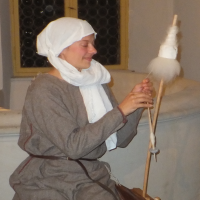
Hi Rachel, I have looked for more photos of you, but that was not very successful. I found a link on...
Guest - Beatrix Sprang Discussion
15 September 2026
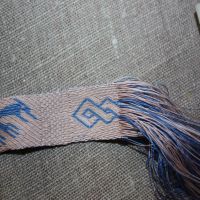
That lozenge pattern element is not a photograph, but a scan. So it should be to scale. But I pinned...
Guest - Katrin Sprang Discussion
15 September 2026
I was not referring to Rachel's reconstruction (is the reconstruction you refer to the one photograp...
Guest - Beatrix Sprang Discussion
14 September 2026
There is something Rachel did not mention. She told me: "Well, I worked with the measurements we too...
Guest - Katrin Sprang Discussion
14 September 2026
Well, this is certainly developing into an interesting discussion. Firstly, going from that lovely l...
APR
12
0

Free Journal Issues!

It seems like Maney Publishing is doing some promotional called "Journal of the Month", which leads to one journal being offered with discounts and, even better, free issues! This months' special journal is the Journal of Field Archeology, and you can access and download the 12 issues here:
http://www.maney.co.uk/jotm/jfa


That's a nice idea, I think, especially since those journals can be quite pricey...
0
APR
11
0

In situ or not in situ?

Open-air-museums and reconstructions of historical buildings are still en vogue - a look at Guedelon in France proves that easily. There is, however, one basic question which often leads to discussion among archaeologists and museum folks: In situ or not in situ? Is it a good idea to build a reconstruction right on top of the excavation site - or is it not?

The EXARC website has a very interesting piece on this question, where ten authors from different positions and places give their answer and opinion. If you like open-air museums or are interested in reconstruction, I heartily recommend reading it.

My own view, by the way, is that it should be avoided - I feel that the danger of sealing in or destroying archaeological information that might be helpful later on is too great, as is the danger of mixing reconstruction and historical reality - both in the visitor's minds and eyes and, once the new structures are also decaying, in the field.
0
DEC
01
0

Archaeology Dictionary

I stumbled across this link a few days ago:

archaeologywordsmith is a page with some kind of archaeology dictionary - so if you ever wanted to read about trowels, ditches, mottes and a gazillion other things, you can do that there. Plus there's a "learn a word" feature when you open or reload the page.

Have fun!
0

By accepting you will be accessing a service provided by a third-party external to https://pallia.net/

Contact