
Latest Comments

Guest - Katrin Sprang Discussion
18 September 2026
Hi Rachel, I have looked for more photos of you, but that was not very successful. I found a link on...
Guest - Beatrix Sprang Discussion
15 September 2026
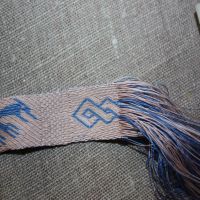
That lozenge pattern element is not a photograph, but a scan. So it should be to scale. But I pinned...
Guest - Katrin Sprang Discussion
15 September 2026
I was not referring to Rachel's reconstruction (is the reconstruction you refer to the one photograp...
Guest - Beatrix Sprang Discussion
14 September 2026
There is something Rachel did not mention. She told me: "Well, I worked with the measurements we too...
Guest - Katrin Sprang Discussion
14 September 2026
Well, this is certainly developing into an interesting discussion. Firstly, going from that lovely l...
MAR
03
0

Calls for Papers! Date for NESAT!

There are two Calls for Papers open currently that have come to my attention (which usually happens through an email in my inbox). The first one is for Assemblage, Sheffield's peer-reviewed graduate journal of archaeology. Assemblage is currently seeking submissions for its 15th issue. Since 1996, assemblage has been run by postgraduate students at the University of Sheffield, and publishes articles and features on a wide array of topics related to the field of archaeology.

The publishers invite postgraduates and early career researchers to email articles between 3,000 and 5,000 words to This email address is being protected from spambots. You need JavaScript enabled to view it. by 1 April, 2016.

You can access previous issues and view submission guidelines at http://www.assemblage.group.shef.ac.uk/.

The second CfP is really exciting, at least to me - as it's for NESAT! The next conference now has not only a place (Liberec in the Czech Republic), but also a date (May 22-26). The CfP is also open and will remain so until May 31. The organisers encourage papers that present lesser-known or recently excavated textiles, techniques and iconography that will generate discussion and exchange of information among conference attendees. In addition, this conference will include a poster session. Posters can be focused on any topic related to
archaeological textiles, but should be primarily visual.

You can find the schedule for the conference preparation here on the NESAT website, and the first entry also links to the full call as a pdf file.
0
MAR
01
1

New technology shows old Roman roads.

In the UK, the Environment Agency has used lidar, a modern laser-based surveying technique, to generate 3D maps. Altogether, the data collected covers about 72% of the land surface, and it amounts to about 11 TB. That is a huge amount of data.

While the Environment Agency used it to track coastlines and do planning of things like flood defenses, they've put it online last summer, so you can find it on their survey Open Data site now.

Of course, this is a wonderful tool for archaeologists as well, as the lidar scans can reveal buried structures. Among the archaeologists who have already used the scan data successfully is David Ratledge, who finally found the "missing" Roman road that connected Ribchester and Lancaster.

I always love it when new technology does wonderful stuff for archaeological research!
0
FEB
19
0

World's Oldest Dress

A dress find from Egypt, called the Tarkhan Dress and housed in the Petrie Museum of Egyptian Archaeology in London, has been radiocarbon-dated - and the result: it's the oldest garment we know of, about 5000 years old. This makes the piece the oldest piece of evidence for something that was tailored from woven fabric - and with a V-neck, decorative pleats in the yoke area and long sleeves, this is definitely and beautifully tailored.

The National Geographic has a short article about this garment, and there's also a more in-depth article about the dating in Antiquity.

This is a really exciting garment, and it does show again how old clothing is - and how important it was for mankind...
0
FEB
02
0

Archaeology Grand Challenges and WWI Knitting

It's the start of February, and Doug has curated all the Blog Carnival entries for the Archaeology Grand Challenges. It's 60+ posts from all over the world, and from a lot of different perspectives - from sex and gender over personal identity challenges to funding, finances, and archaeology and games. If you like to read about archaeology, go check out these blogs - you might find something to put on your reading list!

If you're more interested in knitting, there's a project called "Centenary Stitches" focussing on the knitting done at home for WWI soldiers. The project has also resulted in an exhibition currently being shown at the National Archives in Kew, Surrey (ending March 19).
0
FEB
01
0

Opportunities, Hugo Stuff, and Sleeping Cats.

Jim Hines has posted a long article about the Puppies in 2016, linked to the upcoming Hugo nominations. It looks like there might be less of a kerfuffle and less nastiness this year in the nominations and the voting - at least I hope so. In case you can nominate, or are just interested in current sf/f lit that is eligible, you can take a look at Hugo Recommendations, or jump right to the huge spreadsheet list of eligible nominees here.

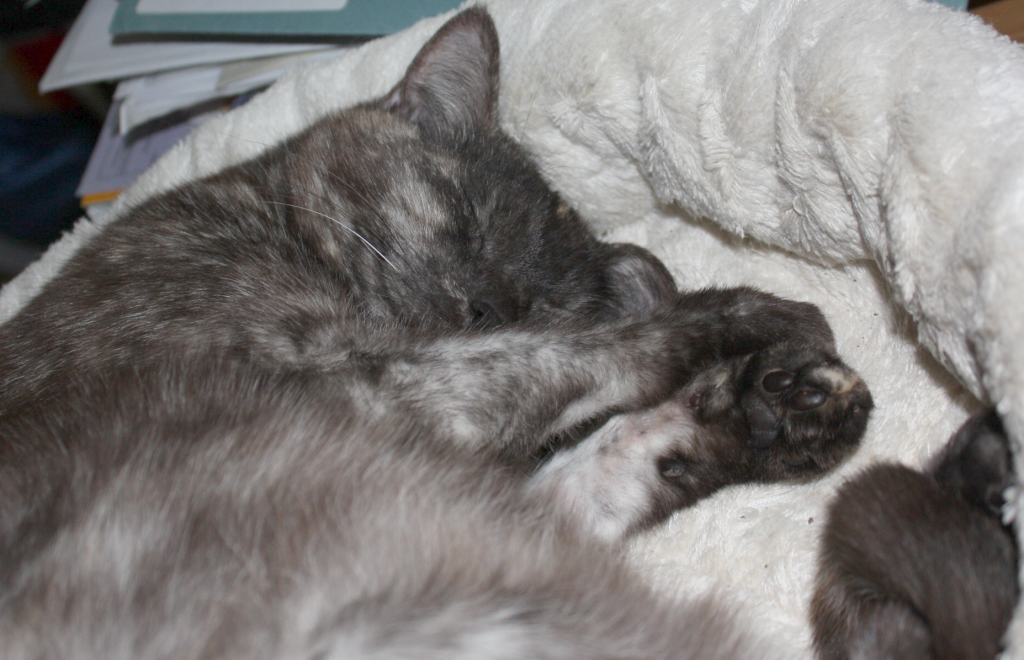
In case you don't care about that stuff at all - here are links to cats doing Extreme Napping, and tiny cats sleeping, also thanks to Jim Hines. Our little cat does some napping at the moment, too, but it's not as spectacular...

madonnapennt

Speaking of spectacular, though - there's been a mammoth find (literally!) that points towards a much earlier human activity in Arctic zones than previously thought. This also could include earlier human presence in North America.

Over at Ossamenta there are links to several opportunities - bursaries for attending the Association for Environmental Archaeology on the Orkneys, their research grant, plus a fully funded PhD in York about Mesolithic bone tools. Check out the blog post to learn more.
0
JAN
27
0

Help save Italy's Archaeology.

 
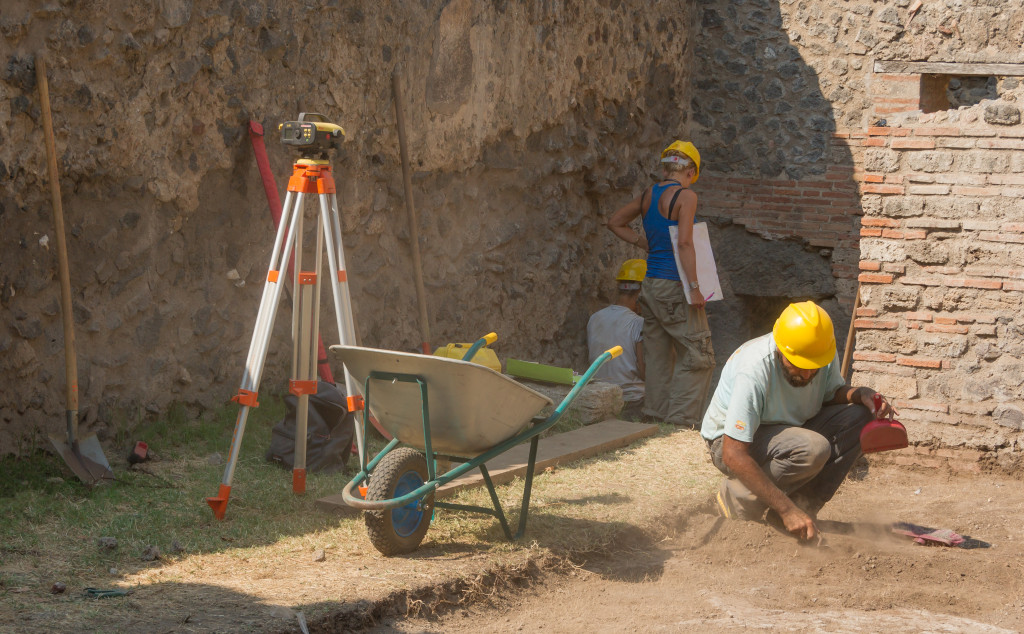
[caption id="attachment_2162" align="alignnone" width="640"] "French archaeologists at work 2015 Pompeii" by Jebulon - Own work. Licensed under CC0 via Wikimedia Commons - https://commons.wikimedia.org/wiki/File:French_archaeologists_at_work_2015_Pompeii.jpg#/media/File:French_archaeologists_at_work_2015_Pompeii.jpg


To me, Italy is the place where the Romans were, the place where culture had its heyday in Antiquity. The place where Things Happened that I had to learn about in school even though they happened in a country far to the South of Germany - because they were so important. (The founding of Rome. The Roman Empire. Latin. Well, that didn't happen, that was spoken, but it was a huge thing for a long time.)

So you'd think that a place like that would be proud of its heritage, right? And take good care of it, including the archaeological sites? Well. That would be nice, but unfortunately, it's not true.

The Italian Ministery of Cultural Heritage is planning to cancel the Archaeological Heritage Offices, through a reform that will impact Italian archaeology, including rescue archaeology. This is major bad news - if anything, Italian archaeology needs more funds, and more support, and more action. Case in point? Pompeii, the world-famous site, has been crumbling for years and is in ever more danger of falling apart completely.

As is usual today in cases like this, there's a petition going on at change.org to make the ministers re-think their decision. It's still fairly new, and thus still fairly small. Please help make a difference and help save Italian archaeology by signing, and spreading the word - thank you!
0
JAN
21
1

Grand Challenges in Archaeology

Doug is running a blogging archaeology carnival again - asking about the Grand Challenges of Archaeology, and I promised him an article. So here you go: these are the Grand Challenges to my archaeology.

First, and biggest, challenge for me? Logistics. Since I'm a freelancer, I have limits to how much money and how much time I can spend on a project. Whether that is a reconstruction project, an experiment, or an article, my ressources are limited. When I am really lucky, I get paid to do some research on a specific topic (or at least paid for a reconstruction project so I can cover part of the research time from that payment), but usually, it's on my own time and bank account.

There is, technically, the possibility to apply for grants, but since I've had few positive experiences with grants yet, and it is usually much easier to get them when you have a network based on a Uni, museum, or similar institution, I haven't spent a lot of time on applications recently. It boils down to time again, here - sometimes I have to struggle to keep up with all the absolutely necessary things like sending out orders, keeping the shop pages updated and conforming to the legal shenanigans the EU likes to toss at us, blogging and then doing the work on current projects. With that, I might not have the time or the energy left for much more.

This is just me, however - it's not directly related to archaeological textiles. One of the Great Challenges there, generally, is that there is so little data available. Textiles are very perishable, and conserving, analysing and publishing them is quite expensive (as it takes a really, really long time to microclean an archaeological textile, and analyse it, and thus it is a pricey thing), which means that by far not all textiles that are preserved are actually analysed and published. With finds that are not frequent in the first place, this does seriously cut down on our possibilities - and skews our understanding of how textiles looked, because the things that do get published are obviously the spectacular pieces.

A second Great Challenge? Terminology. This is a veritable quagmire. We have pictures, we have medieval terms, we have (very few) surviving textiles and garments... but we have no possibility, usually, to firmly link one clothing term to a type found or shown in the pictures. In addition, costuming history has traditionally taken specific old terms and uses them to address certain types of clothes or textiles, though this might be misleading, or even wrong. There's a German term, "Sendelbinde", that has been used with the meaning of "hood" or "chaperon", but the term is not medieval - it originates in early costume history, in the 19th century, and was first used to mean a hat band. If you're looking at stitches in sewing, there's so much variation in modern terms (and so much inaccuracy) even within a single language. It gets even worse when you try to translate things. At least this problem can be solved easily, even if it looks a little awkward, by inserting a schematic drawing in the article or paper, showing which stitch is meant by what term. The other problem is harder; for me, I'm solving it by trying to use modern, general terms for specific types of garments.

These are, for me, the biggest issues - a third one is the fact that it is not easy to find all the (small) publications about clothes, garment fragments, or textile finds, as they are typically written in the language of the country they were found in, and often published in small, hard-to-find journals or books with a small print run. But if we could conquer the problem of money and the problem of terminology, so much of textile or garment research would be made easier.
0

By accepting you will be accessing a service provided by a third-party external to https://pallia.net/

Contact